








 Breitbart
Supreme Court to Hear Cases Against Harvard, UNC on Affirmative Action
- Bias Rating
- Reliability
N/AN/A
- Policy Leaning
-6% Center
- Politician Portrayal
-1% Negative
Continue For Free
Create your free account to see the in-depth bias analytics and more.
By creating an account, you agree to our Terms and Privacy Policy, and subscribe to email updates.
Log In
Log in to your account to see the in-depth bias analytics and more.
Bias Score Analysis
The A.I. bias rating includes policy and politician portrayal leanings based on the author’s tone found in the article using machine learning. Bias scores are on a scale of -100% to 100% with higher negative scores being more liberal and higher positive scores being more conservative, and 0% being neutral.
Sentiments
N/A
- Liberal
- Conservative
| Sentence | Sentiment | Bias |
|---|---|---|
Unlock this feature by upgrading to the Pro plan. | ||
Reliability Score Analysis
Policy Leaning Analysis
Politician Portrayal Analysis
Bias Meter
Extremely
Liberal
Very
Liberal
Moderately
Liberal
Somewhat Liberal
Center
Somewhat Conservative
Moderately
Conservative
Very
Conservative
Extremely
Conservative
-100%
Liberal
100%
Conservative
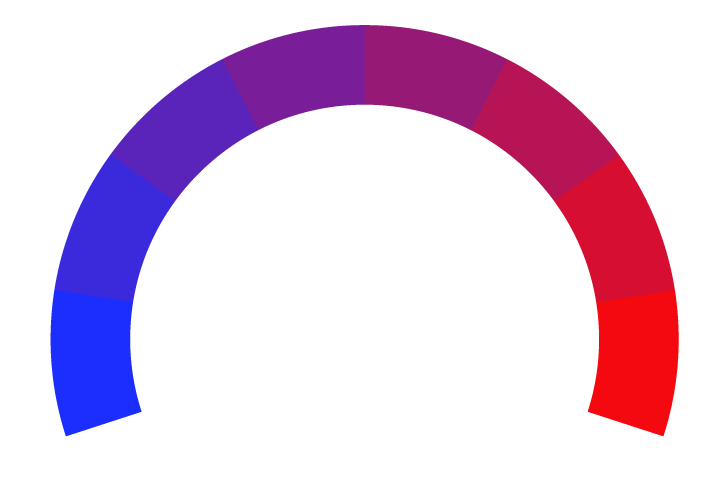
Contributing sentiments towards policy:
52% : The U.S. Supreme Court will hear oral arguments Monday in a pair of cases that could overturn the use of racial preferences in college admissions, focusing on challenges to affirmative action policies at Harvard University and the University of North Carolina.51% : In Regents of the University of California v. Bakke (1978), the Court permitted the use of affirmative action in college admissions to achieve diversity, provided it did not operate like a quota system.
49% : In both cases, the plaintiff is a non-profit group called Students for Fair Admissions (SFFA), which alleges that affirmative action policies discriminate against Asian Americans, who otherwise would comprise a larger share of the student body at both colleges.
*Our bias meter rating uses data science including sentiment analysis, machine learning and our proprietary algorithm for determining biases in news articles. Bias scores are on a scale of -100% to 100% with higher negative scores being more liberal and higher positive scores being more conservative, and 0% being neutral. The rating is an independent analysis and is not affiliated nor sponsored by the news source or any other organization.