









How News Sources Portray Jewish Nation State and Sovereignty Policy
This chart shows how major news sources across the ideological spectrum frame jewish nation state and sovereignty policy, from left to right-leaning perspectives.









The sovereignty of the Jewish nation-state refers to the recognition of Israel as a sovereign state. The Israel-Palestine Conflict is one with political, economic, and religious roots. While both Palestine and Israel claim the same area of land by way of religious legitimacy, Israel is the country that currently holds power in the region. While it is heavily influenced by the religious affiliations of the two groups, the impact of outside nations and their political parties, such as the United States, must also be examined. According to a Gallup poll, in 2022, 81% of Republicans viewed Israel favorably compared to 61% of Democrats. While both parties show favorability towards Israel, it appears that there is a significant divide between Republicans and Democrats.
However, another poll by Brookings shows that just over half of Republicans (52%) say the United States should oppose laws criminalizing the boycott of Israel, compared to over two-thirds of Democrats (82%). But why do these statistics seem to contradict each other? In this article, we will examine the origins of the Israeli-Palestinian conflict and explore how each party has attempted to resolve this longstanding and often misunderstood issue. For more rated publications, check out Biasly’s news sources bias score.
Creating a Sovereign Jewish-Nation State
The sovereignty of the Jewish people dates back to biblical times, from approximately 1000 to 586 BCE, when the kingdoms of Israel and Judah staked their claim to the Land of Israel. However, Israel was incredibly sought after, and these kingdoms fell to the successive empires of the Assyrians, Babylonians, and Romans, forcing the Jewish people into exile. After the destruction of the Second Temple in 70 CE by the Romans, the Jewish people dispersed across Europe, North Africa, and the Middle East. Still, they maintained a collective tie to the Land of Israel, expressing their hope to return in prayer and traditions throughout the centuries.
In the late 19th century, as the Jewish people began to face increasing anti-semitism and nationalist movements in Europe, modern Zionism emerged. This movement emphasized the Jewish desire to return to Israel, with publications such as Theodor Herzl’s 1896 pamphlet “The Jewish State,” arguing that Jews needed sovereignty and a Jewish state to ensure their survival as a people. In 1897, the First Zionist Congress declared the establishment of a Jewish homeland in Palestine and laid the groundwork for the political state of Israel.
During World War I, Britain issued the 1917 Balfour Declaration, in support of establishing a national home for Jewish people in Palestine. Following the war, the League of Nations granted Britain the mandate over Palestine and incorporated the declaration, officially recognizing the Jewish people’s historical ties to the land.
As Jewish immigration to Palestine increased in the 1920s and 1930s, the newcomers often clashed with the Arab population there, with their arrival leading to riots and uprisings. Thus, the UN proposed a partition plan in 1947 to create separate Jewish and Arab states, which the Jews accepted but Arabs rejected. On May 14, 1948, David Ben-Gurion (Israel’s first prime minister) declared the independence of the State of Israel as a sovereign Jewish nation-state, triggering the Arab-Israeli War, which began when neighboring Arab states invaded Israel.
A Brief History of the Israel-Palestine Conflict
Israel managed to repel the invasions of the Arab-Israeli War and even expanded beyond the UN partition borders. The result was the expulsion of over 700,000 Palestinian Arabs, turning them into refugees in what is known in Palestine as the Nakba or catastrophe. In 1949, armistice lines were established with Israel holding West Jerusalem, Jordan controlling the West Bank and East Jerusalem, and Egypt holding dominion over Gaza.
In 1956, the Suez Crisis ensued when Nasser nationalized the Suez Canal, resulting in Israel, Britain, and France attacking Egypt. The Jewish State of Israel briefly occupied Sinai but eventually withdrew under US and UN pressure. However, tensions continued to boil over in the Middle East, eventually leading to the 1967 Six-Day War in which Israel occupied more territory until UN Resolution 242 called for Israel to withdraw and for Arabs to recognize Israel’s sovereignty, neither of which was fully realized.
The Yom Kippur War followed suit when Egypt and Syria launched a surprise attack on Yom Kippur in 1973. Israel eventually pushed back, but suffered heavy casualties, setting the stage for future peace talks. In 1979, Egypt became the first Arab country to recognize Israel, regaining Sinai, but fueling further tension with the Palestinians who felt sidelined by the deal. The tension was eventually realized in the First Intifada from 1987-1993 when Palestine rose against Israeli occupation in the West Bank and Gaza, leading to international attention and the beginning of peace negotiations.
Israel and the Palestine Liberation Organization (PLO) eventually signed the Oslo Accords for limited Palestinian self-rule in the West Bank and Gaza, but the hopes for a two-state solution were never fully realized. After peace talks failed, a more violent Palestinian uprising took place in the Second Intifada from 2000 to 2005. In 2005, Israel withdrew from Gaza, and in 2006 Hamas won Palestinian elections, forcibly taking control of Gaza in 2007. Conflicts over Gaza continued to build tensions between Israel and Palestine, culminating on October 7, 2023. In what is now known as the Black Shabbat, Hamas attacked southern Israel, killing civilians and taking hostages. This attack led to an ongoing military campaign in Gaza that has raised international concern over regional instability.
Partisan Views on the Gaza Conflict
Both Democrats and Republicans support Israel’s right to exist and defend itself as a sovereign Jewish nation-state. Moreover, both sides of the spectrum generally oppose Hamas and recognize it as a terrorist organization. While both parties’ policies understand why state sovereignty is important and support military aid to Israel, the scale of such support is debated, with each expressing concern over the civilian casualties in Gaza. However, Democrats have tended to recently emphasize this concern more strongly.
Democratic Stance on the Gaza Conflict
Left-leaning policymakers affirm Israel’s right to self-defence but are more willing to criticize Israeli military action as disproportionate, increasing calls in the party to condition U.S. aid on Israel’s respect for international law. Democrats continue to support a two-state solution as the only viable long-term resolution. Still, there is a growing concern about Palestinian rights among mostly younger Democrats, such as the “Squad,” who put more pressure on Israel to negotiate a ceasefire. This has fueled a divide within the party between moderate Democrats, such as Joe Biden, who maintain a traditional pro-Israel stance, and progressive Democrats who are more critical of Israeli occupation.
Politicians Who Oppose Jewish Nation State and Sovereignty

61% of Democrats viewed Israel favorably.

Ilhan Omar
“When I see Israel institute laws that recognize it as a Jewish state and does not recognize the other religions that are living in it, and we still uphold it as a democracy in the Middle East, I almost chuckle because I know that if we see that in any other society we would criticize it, call it out... We do that to Iran, we do that to any other place that sort of upholds its religion.”

Pramila Jayapal
“As somebody who's been in the streets and has participated in a lot of demonstrations, I want you to know that we have been fighting to make it clear that Israel is a racist state, that the Palestinian people deserve self-determination and autonomy, and that the dream of a two-state solution is slipping away from us.”
Republican Stance on the Gaza Conflict
Right-wing lawmakers, on the other hand, have shown overwhelming support for Israel’s right to defend itself by any means necessary. Republicans tend to frame the conflict as part of a broader war on terror with Israel as an ally against radical Islamist groups. Additionally, the party has been closely aligned with Israel’s government, regardless of the leading party (and especially under Netanyahu) holding skepticism over conditional aid or imposing restrictions on Israel’s military.
U.S. policy on remains broadly supportive of Israel, though the partisan divide has widened in recent years with Republicans becoming more uniformly pro-Israel and Democrats increasingly split. Shifting opinions in the Democratic Party have pushed to address Palestinian rights more explicitly, leading to debates over conditions, ceasefires, and humanitarian aid in Gaza.
Politicians Who Support Jewish Nation State and Sovereignty

81% of Republicans viewed Israel favorably.
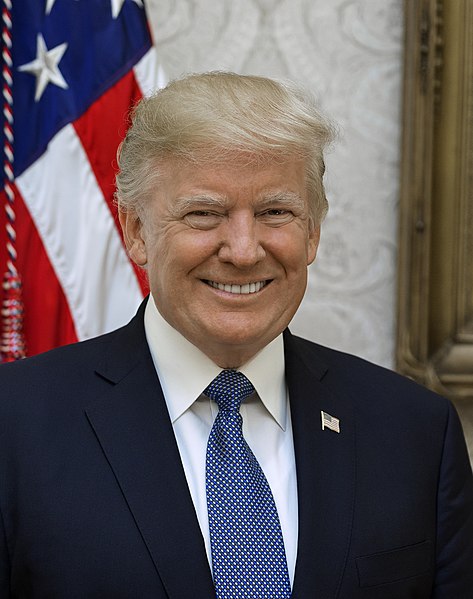
Donald Trump
“Israel is a sovereign nation with the right like every other sovereign nation to determine its own capital. Acknowledging this as a fact is a necessary condition for achieving peace. It was 70 years ago that the United States, under President Truman, recognized the State of Israel. Ever since then, Israel has made its capital in the city of Jerusalem — the capital the Jewish people established in ancient times.”

Tom Cotton
“I'm a Christian, I'm a Zionist. Zionism is that the Jewish people deserve a homeland in the ancient Holy Land where they lived since the dawn of history. ... [Israel] is a living rebuke to their world view. Israel is a strong, vigorous, and growing nation that is grounded in faith, sovereignty, and order.”
Political Implications
Jewish nation-state sovereignty has become a more visibly partisan foreign-policy issue in the United States, even though both parties continue to broadly recognize Israel’s right to exist and defend itself. Biasly’s Jewish Nation State and Sovereignty policy page describes a widening divide over how that support should be expressed, particularly on questions of military conduct, Palestinian rights, and whether U.S. aid to Israel should carry conditions. Public opinion reflects this gap: 81% of Republicans viewed Israel favorably compared with 61% of Democrats, according to the Gallup figures cited by Biasly.
This divide matters politically because it increasingly separates the parties not on Israel’s existence, but on the terms of alliance, accountability, and diplomacy. Republicans generally frame Israel as a key democratic ally and strategic partner in the Middle East, often linking support for Israeli sovereignty to broader national-security concerns and opposition to terrorism. Democrats, while still containing many strongly pro-Israel leaders, have seen growing internal debate over humanitarian law, settlement policy, Palestinian self-determination, and the scope of unconditional U.S. support. That has made the issue a marker of broader differences in foreign-policy philosophy: strategic alignment and military backing on the Republican side, versus a more internally divided coalition balancing support for Israel with scrutiny of its government’s actions on the Democratic side.
The issue also carries implications beyond foreign policy. It shapes donor politics, campus activism, coalition management, and the language elected officials use around religion, nationalism, and human rights. Because support for Israel remains strong in much of the electorate while criticism of Israeli government policy has grown in parts of the Democratic base, Jewish nation-state sovereignty now functions as both a diplomatic issue and a domestic political test of party cohesion.
What the Future Holds
The future of debate over Jewish nation-state sovereignty will likely center less on whether Israel is recognized as a state and more on how U.S. policymakers define the terms of support for that sovereignty. Its indicative that both parties continue to accept Israel’s core legitimacy, but disagreements are intensifying over military aid, ceasefire demands, settlement expansion, and the viability of a two-state solution on the ground. As those questions become more urgent, especially during periods of war or regional instability, the partisan divide is likely to grow sharper.
For Republicans, the future likely points toward continued strong rhetorical and material support for Israel with minimal conditions, especially where Israeli sovereignty is framed as part of a broader struggle against terrorism and regional threats. For Democrats, the future is more likely to involve continued internal tension between establishment figures who prioritize the traditional U.S.-Israel alliance and progressive voices who want stronger human-rights conditions attached to military aid and diplomatic support.
More broadly, the issue is likely to remain tied to the future of the Israeli-Palestinian conflict itself. If prospects for a two-state solution continue to weaken, debate in the United States may shift even further toward questions of equal rights, long-term occupation, annexation, and the meaning of sovereignty in contested territory. In that sense, the future of this policy issue will depend not only on American party politics, but also on how conditions on the ground reshape what support for a Jewish nation-state means in practice.
