




-16% Somewhat Left
Bias Meter
Extremely
Liberal
Very
Liberal
Somewhat Liberal
Center
Somewhat Conservative
Very
Conservative
Extremely
Conservative
-100%
Liberal
100%
Conservative

Biasly determines media bias ratings through a dual-layered approach combining artificial intelligence and analyst review. The platform’s proprietary bias detection engine, Bias Meter, evaluates sentiment, policy position alignment, and language framing across thousands of data points in news articles. Analysts then verify and interpret the AI’s findings, providing additional context where needed. Learn more about ratings
- Profile
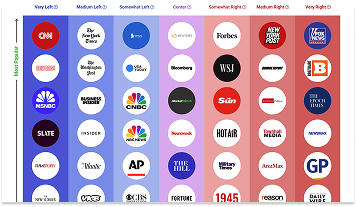
CNBC on the media bias chart

- Bias Rating
-16% Somewhat Left
- Reliability74% Reliable GoodPolicy Leanings
-10% Center
Extremely
LiberalVery
LiberalModerately
LiberalSomewhat Liberal
Center
Somewhat Conservative
Moderately
ConservativeVery
ConservativeExtremely
Conservative-100%
Liberal100%
Conservative
Average Reliability
*Our bias meter rating uses data science including sentiment analysis, machine learning and our proprietary algorithm for determining biases in news articles. Bias scores are on a scale of -100% to 100% with higher negative scores being more liberal and higher positive scores being more conservative and 0% being neutral. The rating is an independent analysis and is not affiliated nor sponsored by the news source or any other organization.
Politician Portrayal17% positive
Continue For Free
Create your free account to see the in-depth bias analytics and more.
By creating an account, you agree to our Terms and Privacy Policy, and subscribe to email updates.
Log In
Log in to your account to see the in-depth bias analytics and more.
Analysis of CNBC Articles
Analysis of Bias in CNBC Online Articles
To evaluate the bias of online articles, we can analyze select CNBC articles through several of Biasly’s bias rating criteria: Tone, Tendency, Author, Diction, and Expediency Bias.
- Tone: The overall attitude conveyed by the article
- Diction: Specific word choices made by the writer
- Author: The background and social presence of the journalist
- Tendency: Patterns of bias in the writer’s broader body of work
- Expediency Bias: Quick visual or textual indicators like headlines and photos that imply bias
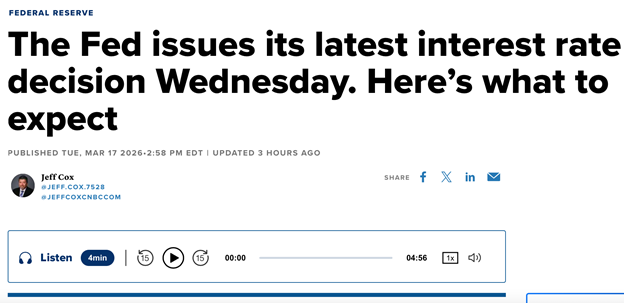
The first article we will look at is titled, “The Fed issues its latest interest rate decision Wednesday. Here’s what to expect.” Jeff Cox discusses how the Federal Reserve will soon provide an update on whether to cut interest rates and what the possible economic outcome will be. The article has a medium-to-very left-leaning tone and expresses negative sentiments toward Republican officials.
Author Jeff Cox’s selection of quotes suggests a bias against President Trump. The article’s title implies that readers are about to learn how upcoming interest rate cuts may affect them. The negative sentiments toward Trump deviate from the article’s true message and may catch viewers off guard. Readers may take a second glance at the article and not see CNBC as a trusted source.
Included in the article are 1 negative sentiment towards Republican U.S. Senator Thom Tillis and 4 negative sentiments toward President Donald Trump.
“President Donald Trump for years has been pressing the central bank, and Powell in particular, to cut rates. In an appearance before media members Monday, Trump again lashed out at the chair, saying that Powell should have called a special meeting….What’s a better time to cut interest rates than now? A third-grade student would know that,” Trump said. However, Trump’s own Justice Department is holding up replacing Powell.”
There are slight digs at Trump through the author’s word choices. Some examples include describing Trump as “pressing” the central bank and saying he “lashed out” at Powell, which frames his criticism as combative rather than simply forceful or persistent. The paragraph also spotlights the “third-grade student” remark, a quote that accentuates ridicule and can make Trump appear less serious or measured to readers.
Negative portrayals can influence how readers perceive the article. If readers encounter negative sentiments in the article, they may question the integrity of the information presented.
Beyond the Trump section, the article is largely standard economics and market reporting, but a few phrases still introduce directional framing. Describing the Fed as having “little choice but to stay on the sidelines” while it navigates “complicated and conflicting forces,” and adding that those factors “all but assure” the Fed will “stand pat,” positions a rate hold as near-inevitable. That wording can presuppose and diminish the sense that policymakers are weighing trade-offs and uncertainty, and instead encourages readers to treat the decision as predetermined by circumstances.
The structure also layers risk factors in a way that shapes interpretation: it lists war, inflation, and labor-market signals, then introduces politics as “On top of everything else.” That sequencing positions political pressure as an additional complication on an otherwise technocratic process, which can lead readers to view politics—particularly Trump’s involvement—as uniquely disruptive rather than as one of several typical and ongoing influences on the Fed.
This seems to be a tendency of CNBC’s political coverage. The pieces typically present politics and economics in a neutral, report-first way, but at times rely on loaded verbs and “however” contrasts—like “Trump’s own Justice Department is holding up replacing Powell”—that can read as a subtle negative sentiment or a dig at Republican figures by emphasizing conflict and implied hypocrisy without much procedural context.
Author Jeff Cox remains mostly neutral on social media. Coff reposts his articles and those of his co-workers, and posts his opinion about the latest sports games.
“Recession odds climb on Wall Street as economy shows cracks beneath the surface. The economy last year lost more than half a million jobs excluding health care.”
Recession odds climb on Wall Street as economy shows cracks beneath the surface. The economy last year lost more than half a million jobs excluding health care. https://t.co/EtRBaEwfsx
— Jeff Cox (@JeffCoxCNBCcom) March 25, 2026
Another article titled, “Trump says he thinks he will have the ‘honor’ of ‘taking Cuba’,” is more centered than the article above. Author Garrett Downs explains Trump’s latest position on Cuba. The article doesn’t use any harsh language, and its tone is neutral.
However, there are slight digs at Trump through the author’s word choices. Some examples of the word choices are “He has threatened” and “aggressive foreign policy.” This seems to be a tendency of CNBC’s articles. The pieces typically present politics and economics in a neutral manner, but sometimes contain negative sentiments or digs at Republican lawmakers.
Bias against political figures can significantly affect the article’s perception. It is important for readers to realize that while an article may present information neutrally, negative sentiments toward lawmakers reflect political bias. It is another way that readers’ political opinions can be influenced or misinformed.
Analysis of CNBC Opinion Articles
There are two different forms of reporting: factual and opinion. While CNBC reports on the intersection of politics and the economy, its opinion pieces mostly focus on economics and U.S. and international markets. CNBC’s op-eds focus on Wall Street and commentary on economic trends.
One article that does involve politics is titled, “Soybeans on steroids: Trump’s grand bargain with China?” In this article, Author David Bach criticizes President Trump’s tariff policy, which created a system where China could obtain cheaper soybeans from Argentina, driving business away from American farmers. Bach states that Trump’s economic policies are unpredictable and claims that Trump is implementing these policies for the wrong reasons.
“However, Trump prizes his popularity above all else, and a winning strategy for him could involve imposing early punitive tariffs on Chinese imports and even on imports from Chinese firms operating in neighboring countries such as Mexico.”
Analysis of Reliability in CNBC’s Online News Articles
The first article we will look at is titled, “Senate Democrats send DHS counteroffer to Trump as shutdown drags on.” Reporter Garrett Downs covers the recent counteroffer made by Senate Democrats regarding DHS funding and the partial government shutdown. The article refrains from editorial commentary and gives readers perspectives from both Democrats and Republicans. The article also sticks to quotes and includes no harsh language.
Another article titled “Senate Democrats oppose SAVE America Act ahead of Republican vote” also maintains a neutral tone and no harsh language. The article is also balanced in political perspectives. There is 1 quote from Senate Majority Leader John Thune and President Trump. There are 2 quotes from Senate Minority Leader Chuck Schumer and 1 quote from the voter-rights organization Democracy Docket, which support the Democrats’ position on the bill.
This helps round out the article and maintain neutrality. The author is able to give readers the full story, including multiple perspectives from lawmakers and a lobbyist who influence the survival of the bill.
Quality of Sources and Facts Used
CNBC often uses credible sources from across the political spectrum. However, some articles lean too heavily toward how comprehensively they present opposing viewpoints.
The article we will look at is titled, “DCCC launches digital ad campaign hitting GOP for gas prices.” The article outlines the new digital ad campaign launched by the Democratic Congressional Campaign Committee. The digital ad campaign targets President Donald Trump and Republicans over rising gas prices ahead of the 2026 midterm elections.
This article heavily relies on the perspective of Democrats and has no response from President Trump or Republicans. Readers only see why Democrats are creating this new digital ad. They don’t see any response from a Republican lawmaker or how Republicans are trying to lower gas prices.
Furthermore, there are only three quotes present in the article. All three quotes are long in length, and two of the quotes are biased in language and tone. The quotes take shots at President Trump and Republicans.
“Trump Tariffs. Health Insurance Costs. Gas Prices. ICE Brutality. Reckless War. Republicans have made America much less affordable and significantly more dangerous. How is that Golden Age thingy working out?”
The language and harsh tone in two of the three quotes in the article suggest bias, as the quotes aren’t intended to inform the reader but to present the political opinions of current Democratic lawmakers and officials. This also isn’t the most reliable. Readers aren’t reading unbiased information. Facts and evidence are reliable. The opinion of an elected official can sometimes be skewed toward their specific political party.
The article has 15 linked sources, and of those, 11 are CNBC’s articles. A variety of sources is important in political reporting because it helps readers trust the information they receive. This also helps boost the reliability CNBC.
Variety helps avoid bias and misinformation and builds a well-rounded understanding of the political issue. Furthermore, two of the links embedded from the article provide data that supports the author’s reporting. One article is from CNBC, and the other is from another publication. This boosts CNBC’s reliability. The information provided from those links gives readers accurate information about the economy and the increase in prices.
- The Democratic Congressional Campaign Committee
- DCCC Communications Director Courtney Rice
- House Minority Leader Hakeem Jeffries (D)
- The AAA
- S. Energy Secretary Chris Wright
- President Donald Trump (R)
The sourcing is biased toward Democrats. The article is filled mostly with opinions from Democratic leaders. Republicans are given little chance to respond or discuss action plans for decreasing gas prices. As stated earlier, the article only includes three quotes. Those quotes are mostly used to disparage President Donald Trump and Republican legislators.
“Another day, another broken promise from Trump and House Republicans,” DCCC Communications Director Courtney Rice said in a statement. “Now, when voters fill up at the pump, they’ll have yet another reminder that D.C. Republicans are squarely to blame for the price of gas, and everything else, being too damn high.”
While the article is factually correct, the digs at President Trump and Republicans undermine its reliability. This can make it harder for readers to trust the article’s factual information. Harsh tone and strong language are the first hints of political bias. One article can change the perception of CNBC as a whole. A more neutral tone and a different selection of quotes can increase this article’s reliability and earn readers’ trust.
Selection and Omission Bias
Selection and omission bias are very important in the context of political reporting. Selection bias is story selection, and omission bias is framing a story to fit a certain narrative. We will take a look to see how selection and omission bias may be present in CNBC’s reporting.
In “Investor ban on buying homes stalls housing affordability bill,” reporter Emily Wilkins discussed the problems with the housing affordability bill. While she notes that the bill has bipartisan support, the article focuses only on what Republicans are doing to move it along.
Wilkins doesn’t highlight any efforts by Democrats to help the bill pass. This is omission bias. The reporter is omitting information that would help readers understand that the bill has full government support and that both parties are working to resolve the problems that have arisen from it.
CNBC Bias Overview
CNBC was created to provide financial news and information to investors and business professionals. Today, CNBC covers business, economic trends, the financial market, and technology. With two Emmys for business and financial reporting, CNBC has positioned itself as a prominent source for economic reporting.
According to CNBC, CNBC reaches half a billion people every month across multiple platforms. With such high viewership, CNBC plays a significant role in shaping how readers view the market and the economy. We will take a look at how CNBC deals with political bias.
Is CNBC Biased?
Based on Biasly’s evaluations, CNBC is rated as Somewhat Left.
By examining content patterns and the broader context of media influence, we aim to offer a balanced perspective on CNBC’s political bias—and contribute to the ongoing discussion about bias in the news.
How Does Biasly Rate News Sources?
Biasly uses proprietary algorithms and a team of analysts to provide comprehensive bias evaluations across thousands of news outlets. Over 200,000 articles from more than 3,200 sources have been analyzed to identify the most accurate and unbiased stories.
Biasly assigns each outlet three key scores:
- Reliability Score – Reflects factual accuracy
- AI Bias Score – Generated via natural language processing
- Analyst Bias Score – Assessed by human political analysts
These scores are based on seven core metrics: Tone, Tendency, Diction, Author Check, Selection/Omission, Expediency Bias, and Accuracy. These elements help analysts and algorithms evaluate the political attitude conveyed by each article.
Biasly’s Bias Meter ranges from -100% (most left) to +100% (most right), with 0% indicating neutrality. The system evaluates individual articles based on political terms, policies, figures, and sentiment to calculate precise bias ratings.
Is CNBC Politically Biased?
CNBC earns a Somewhat Left rating for its AI Bias Score and a Somewhat Left for its Analyst Bias Score. The Analyst Bias Score is generated by reviewers from liberal, moderate, and conservative backgrounds. Analysts reviewed 15 CNBC articles and noted preferences in areas such as coverage of liberal politicians and policy topics like abortion rights and affirmative action. However, the paper maintained objectivity on topics like border control and anti-discrimination laws.
For example, an article titled “As Trump declares inflation tamed, Iran conflict threatens new price pressures” discusses how the recent conflict between the United States and Iran may affect the economy and gas prices. The article mostly maintains a neutral tone, but negative sentiment toward President Donald Trump contributes to its somewhat Liberal bias score.
“Just as President Donald Trump has been insisting that inflation is on the run, the war involving Iran threatens another price spike that could undermine his central case for lower interest rates.”
This one negative sentiment contributed heavily to this article’s bias score. This article illustrates how bias can influence readers’ perception of an article. The negative sentiment present can call the article’s neutrality into question. We will take a look at how other articles by CNBC demonstrate political bias.
How to Evaluate Bias
Although Biasly rates CNBC as Somewhat Left, it’s important to remember that bias can vary from article to article. CNBC also covers a conservative-leaning state with objectivity on many issues, from state legislation to social developments. This complexity underscores the importance of examining each article individually. So, let’s learn how to evaluate media bias.
Recognizing media bias requires awareness and critical thinking. Often, readers trust news sources that affirm their existing beliefs—a psychological tendency known as confirmation bias. This makes it harder to identify slanted narratives or one-sided reporting.
To address this, it’s essential to challenge your assumptions by consulting multiple perspectives and verifying information through third-party analysis. Tools like Biasly’s media bias ratings allow readers to compare the same news story across the political spectrum.
Ultimately, bias isn’t always a matter of what is said—it’s also about what is left out, how topics are framed, and which stories are chosen for coverage. Learning to recognize these patterns can help readers make more informed decisions and develop greater media literacy.
To start comparing news outlets and gain a better understanding of bias, sign up for Biasly’s Media Bias & News Analytics Platform to see how stories vary between sources.
CNBC Reliability Overview
Is CNBC Reliable?
CNBC finds itself with a Good reliability score. Its status as a reputable financial journal contributes to its reliability score. According to USTVDB, as of Sunday, March 8th, 2026, CNBC is the 60th most popular channel on TV. CNBC is watched by an average of 124,000 people per day. With such a high viewership, it is important to evaluate how reliable CNBC is. CNBC also reports on economic and investment data. Readers may make financial decisions based on the information CNBC provides. Let’s look at the reliability of some of CNBC’s articles.
How to Evaluate Reliability?
Reliability refers to how trustworthy or accurate a news source is. If we can’t trust what we read, then continuing to consume content from that outlet serves little purpose. So how do we evaluate a news outlet’s reliability?
There are several key indicators of reliability to consider when assessing a media source. Red flags of an unreliable article can include wild, unsubstantiated claims, facts that depend on other unreliable sources, heavy use of opinionated language, and more. In contrast, hallmarks of a reliable source include:
- Absence of subjective language
- Citing credible sources (e.g., .gov, .edu, academic references)
- Verifiable facts and statistics from multiple outlets
- Use of primary sources, like interviews or transcripts
- Consistency with coverage across other platforms
Biasly’s reliability scores incorporate these elements in evaluating media outlets.
So How Does CNBC Fare in Its Reliability?
The political reliability index developed by Biasly assesses both accuracy and trustworthiness. CNBC currently holds Good Reliability Score, which is calculated as a weighted average of:
- Fact Analysis Score – Evaluates the accuracy of claims, facts, and evidence.
- Source Analysis Score – Assesses the number, diversity, and credibility of sources and quotes used.
CNBC’s Source Analysis Score is Average at 53% Reliable. This suggests moderate trustworthiness in its sourcing practices. The score is AI-generated and considers quote length, frequency, diversity, and quality.
The Fact Analysis Score of CNBC is Good at 80% Reliable. This further shows how well CNBC supports its claims, addresses selection and omission bias, and presents verifiable evidence.
While CNBC leans toward factual reporting, occasional lapses—such as unbalanced viewpoints or incomplete data—can affect its reliability rating. These nuances emphasize the importance of analyzing individual articles.
CNBC’s Accuracy and Reliability
According to Biasly’s analysis, CNBC maintains Good Reliability Score, but individual articles may vary significantly. Let’s dive into the details.
Political orientation plays a crucial role in how audiences perceive reliability. CNBC has been accused of sensationalizing financial information, potentially at the expense of factual reporting. To validate such claims, it’s essential to analyze whether the publication backs its assertions with sufficient evidence and diverse viewpoints.
Two common types of bias that affect factuality include:
- Selection Bias – Highlighting or omitting stories to fit a particular narrative.
- Omission Bias – Leaving out differing perspectives or relevant details to skew perception.
Biasly’s accuracy ratings use a scale from 1% (least accurate) to 100% (most accurate). Factors include supporting evidence, reliable internal and external sources, and balanced viewpoints.
For instance, Biasly gave Yahoo News a Somewhat Left Bias and an Average Analyst Reliability Score. One Yahoo News article titled, “Senior US counterterrorism official resigns to protest Iran war,” showed below-average reliability sources for the limited opposing sources. Negative sentiments toward President Trump also contribute to the reliability score of the article.
So, is CNBC Reliable?
Overall, CNBC can be considered to be an outlet that is very reliable. It demonstrates a consistent goal of journalistic integrity and typically supports claims with sources and quotes. Occasional omissions and framing bias do appear, particularly on culturally sensitive or partisan issues.
As media literacy improves, readers can more easily detect issues with selection bias, omission bias, and factuality. To strengthen your ability to assess reliability across the political spectrum, use Biasly’s News Bias Checker to compare how multiple outlets report the same story.
This empowers you to consume more accurate, balanced, and dependable news.
CNBC Editorial Patterns
CNBC’s coverage of political topics often reflects a Somewhat Left bias, with consistent patterns in phrasing, source selection, and thematic focus that are Slightly Liberal. While CNBC mostly focuses on business and financial news, economics can intersect with politics. The analysis will look at how CNBC connects the financial sector and current politics.
Coverage of Liberal vs. Conservative Topics
CNBC’s articles mostly focus on the financial world. When a political act affects the economy or global market, CNBC is often the first to report on it. Due to this, CNBC mostly remains neutral on other political topics. The only topics where CNBC shows a liberal bias are abortion, affirmative action, the border wall, and Black Lives Matter politicalization. This report will dive deeper into how CNBC reports on topics that are currently affecting everyday Americans, investors, and business professionals.
Policy and Issue Framing
CNBC’s articles mostly focus on economics, but economics and politics interact frequently. CNBC often discusses how changes in the economy and stock market affect consumers and the national and international markets.
When it comes to abortion, affirmative action, and the border wall, CNBC covers the topics with a sympathetic tone and sometimes frames policy discussion in ways that highlight potential benefits of certain legislative actions. Other topics such as anti-discrimination laws, Brexit, and border asylum for refugees.
Coverage and Relevance
CNBC’s reporting often focuses on giving people information about the everyday changes in the market. The economy can be heavily influenced by politics, and CNBC reporting on this topic makes it a compelling case study for how bias influences financial reporting.
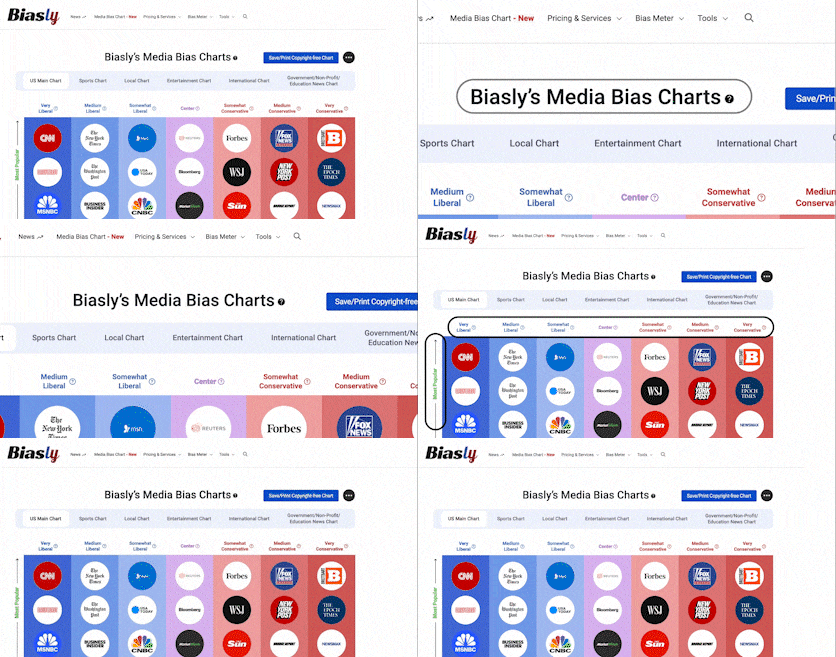
Readers who wish to further explore how CNBC compares with other publications can visit Biasly’s Media Bias Chart to analyze tone and word choice in real time.
Funding and Ownership
Who Owns CNBC?

Brian Roberts, Comcast CEO – Source: Wikimedia Commons
CNBC is owned by Versant Media Group. Versant Media Group is a new independent publicly traded company created by Comcast. The CEO of Comcast is Brian Roberts, who is pictured above. CNBC is run by its President, KC Sullivan. He was previously the President & Managing Director of Global Advertising & Partnerships for NBCUniversal, based in London. He created the global partnerships team and cultivated strong relationships with Sky Media in the United Kingdom, Italy, and Germany. Through that relationship, a new partnership, RTL Ad Alliance, was formed.
Before this, Sullivan was President and Managing Director of CNBC international. When he first joined NBCUniversal in 2009, he served as CNBC’s Chief Financial Officer. Three years later, he became the CFO of NBCUniversal News Group. He has decades of experience in finance and reporting.
Who Funds CNBC?
CNBC is funded by its parent company, NBCUniversal. CNBC is under a subsidiary of the Comcast corporation known as Versant Media Group. CNBC generates revenue through advertising and charges high advertising fees due to its audience of investors and business professionals. The organization also generates revenue through distribution fees for cable networks, partnerships, and CNBC pro, a subscription service.
Additional Insights
News Source Comparison
When comparing news sources, CNBC is often evaluated alongside other regional and national outlets that lean left or center-left. Sources like USA Today, AP News, or NBC News often present similar tones and editorial philosophies. While CNBC maintains a Somewhat Left media bias, it differs from strongly partisan sources in that it occasionally includes opposing viewpoints and strives for a balanced regional coverage.
This contrasts with more biased media outlets that consistently present one-sided narratives without factual counterpoints. Readers seeking balanced political coverage may compare CNBC’s framing of issues with outlets rated as Center or Lean Right on our Media Bias Chart, or explore other regional papers on our Similar Sources page.
Notable Contributors and Authors
CNBC features a diverse range of reporters who are deeply familiar with economics and politics. One notable example is Jeff Cox. Cox’s articles are among the most-viewed for CNBC, and he is one of the most respected economists and analysts in the financial world. Another is Robert Frank, an award-winning journalist and best-selling author.
Other members of CNBC’s teams are well versed in topics including economics, policy, and the financial world. Their work is highly regarded in the financial community.
Related Tools and Resource Pages
To better understand how CNBC fits into the broader media landscape, we recommend exploring these helpful resources:
- Media Bias Chart: See where CNBC ranks among hundreds of media outlets across the political spectrum.
- Political Bias Chart: Visualize political slants of news sources across various policy areas.
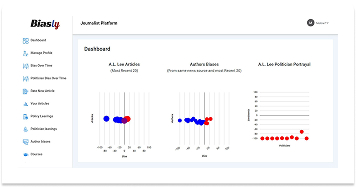
- Journalist Bias Analytics Platform: Explore how individual journalists contribute to bias within their publications.
- Politician Bias Analytics Platform: Compare how politicians are framed differently by CNBC and other outlets.
- Media Literacy Education Platform: Learn how to critically assess media sources, bias techniques, and news reliability.
Frequently Asked Questions
CNBC is rated as Somewhat Left based on Biasly’s media bias algorithm, which assesses sentiment, article framing, and policy favorability.
While CNBC is not widely known for promoting fake news, there have been some instances of misinformation. One example is anchor for CNBC-Awaaz dealing in front-trading. The anchor would buy shares or stocks for himself, recommend them to viewers, and then sell them when prices go up. This instance hurt CNBC’s reputation as a credible financial news organization.
Another instance happened in 2015. CNBC was accused of asking contentious and “gotcha” questions during the 3rd GOP Presidential debate. Many Republican lawmakers and officials felt that the questions were biased and targeted. In response, CNBC’s Vice President of Communications, Brian Steel, stated:
“People who want to be president of the United States should be able to answer tough questions.”
Biasly uses a combination of AI sentiment analysis and human analyst review to assess tone, fact accuracy, source quality, and media bias indicators. Learn more on our Bias Meter page.
Generally, yes, though partisan framing and selective reporting can affect perceived reliability.
Military Spending
| Date | Sentiment | Associated Article | Snippet |
|---|---|---|---|
| 08/25/2019 | 75% For | Trump Family Detentions Flores Agreement (link) | So, of course, the Trump administration is doing the opposite in a baldfaced |