




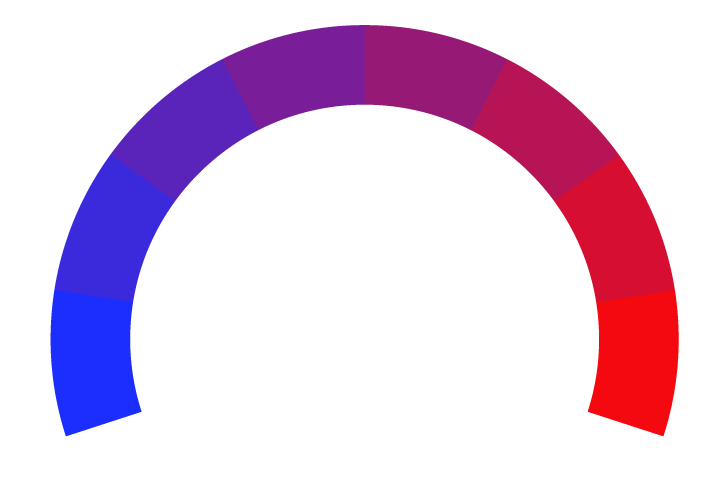
-52% Medium Left
Bias Meter
Extremely
Liberal
Very
Liberal
Somewhat Liberal
Center
Somewhat Conservative
Very
Conservative
Extremely
Conservative
-100%
Liberal
100%
Conservative
Biasly determines media bias ratings through a dual-layered approach combining artificial intelligence and analyst review. The platform’s proprietary bias detection engine, Bias Meter, evaluates sentiment, policy position alignment, and language framing across thousands of data points in news articles. Analysts then verify and interpret the AI’s findings, providing additional context where needed. Learn more about ratings
- Profile
AlterNet on the media bias chart
- Bias Rating
-52% Medium Left
- Reliability65% Reliable AveragePolicy Leanings
2% Center
Extremely
LiberalVery
LiberalModerately
LiberalSomewhat Liberal
Center
Somewhat Conservative
Moderately
ConservativeVery
ConservativeExtremely
Conservative-100%
Liberal100%
Conservative
Average Reliability
*Our bias meter rating uses data science including sentiment analysis, machine learning and our proprietary algorithm for determining biases in news articles. Bias scores are on a scale of -100% to 100% with higher negative scores being more liberal and higher positive scores being more conservative and 0% being neutral. The rating is an independent analysis and is not affiliated nor sponsored by the news source or any other organization.
Politician Portrayal84% negative
Continue For Free
Create your free account to see the in-depth bias analytics and more.
By creating an account, you agree to our Terms and Privacy Policy, and subscribe to email updates.
Log In
Log in to your account to see the in-depth bias analytics and more.
Analysis of AlterNet Articles
To evaluate this, we can analyze select AlterNet articles through several of Biasly’s bias rating criteria: Tone, Tendency, Author, Diction, and Expediency Bias.
- Tone: The overall attitude conveyed by the article
- Diction: Specific word choices made by the writer
- Author: The background and social presence of the journalist
- Tendency: Patterns of bias in the writer’s broader body of work
- Expediency Bias: Quick visual or textual indicators like headlines and photos that imply bias
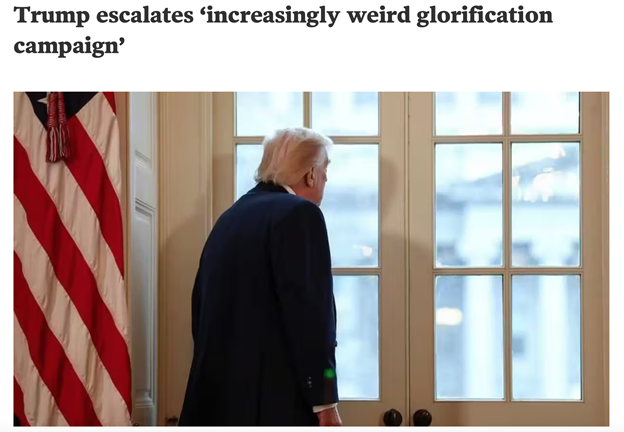
The first article we will look at is titled “Trump escalates ‘increasingly weird glorification campaign.” Biasly rated this article Moderately Liberal because it largely lacks opposing viewpoints and frames Trump negatively throughout. The image above depicts President Trump looking lost in the distance. The image selected by AlterNet can create the impression that Trump appears uncertain or unfocused, and possibly seeking his own vision or glory.
To start, the tone of this article is critical and slightly sarcastic. The author frames facts in a way that signals disapproval. For example,
“President Donald Trump’s “increasingly weird glorification campaign” has become a “ridiculous crusade” that does nothing to flatter the Republican leader.”
The article is also filled with quotes that paint President Trump in a negative light. This reflects a recurring tendency throughout the article. The quotes selected by the author contribute to the narrative that President Trump’s actions are erratic and bizarre.
“He later added, “[E]ven beyond the ‘yuck’ factor, there’s good reason to believe this is a rather poorly conceived move. Indeed, Trump’s efforts to glorify himself appear to be a major and growing problem for him right now.””
“His proposition to [Senate Minority Leader] Schumer practically slaps you across the face in its degree of blatant self-dealing,” Blake wrote. “Republicans should probably start asking themselves how much they’re willing to entertain this level of self-service.”
This article isn’t written as a neutral factual piece, but as an opinion piece. The author makes his feelings about President Trump known throughout the article. This suggests a liberal bias. Through the tone, imagery, and quote selection of this report, it is clear that the article appears more focused on commentary and persuasion than neutral reporting and gives readers the author’s perception of Donald Trump.
Author Matthew Rozsa is very active on social media. Rozsa reposts his articles and advocates for Autism awareness and research. His other article titles are similar to the one above, negative sentiments against President Trump. Some examples are:
Trump is destroying a Jeffersonian legacy.@AlterNethttps://t.co/J9lTtCP0At
— Matthew Rozsa (@MatthewRozsa) March 25, 2026
Trump’s courtroom bullying could end in humiliating 8-1 Supreme Court loss@AlterNethttps://t.co/Z3DCDdQfMq
— Matthew Rozsa (@MatthewRozsa) April 2, 2026
Another article by AlterNet titled “‘Trainwreck’: A new state law has ‘Arizona’s election officials waving red flags’,” demonstrates little to no bias. The language throughout the article is very cut-and-dry. The author’s objectivity is evident in presenting facts and avoiding emotionally charged language that might influence the reader’s opinion.
“Per the report, officials say “the state could miss a crucial deadline to report its vote tallies in the” 2024 presidential election “if state lawmakers don’t solve calendar issues that might arise if there’s an automatic recount.”
Analysis of AlterNet Opinion Articles
Before delving into this topic, it is important to distinguish the difference between factual and opinion reporting. Factual reporting is intended to be neutral and give readers the facts and quotes from primary sources so they can form their own opinions. Opinion pieces are an outlet for reporters to express their own views on political content. In this section, we will focus on opinion pieces published by AlterNet.
The first article we will look at is titled, “‘Petty’ Trump attacks Republicans in this red state while ‘detonating’ GOP chances in November.” Author Adam Lynch doesn’t take any direct shots at President Trump. However, the article pushes negative sentiments about him. The article is filled with quotes that attack Trump’s character and policies.
“Briggs said the whole drama — and Trump’s incessant campaign of vengeance against Republicans who dare defy him — is the purest example of a ‘petty’ man fighting the wrong battles with the wrong people.”
Quote selection is very important when writing an article. For this article, Lynch decided to use the opinion piece to prop up the opinion of another. Authors do this to sometimes boost reliability and reduce bias in the article. While the article is heavily biased against Trump, the opinions highlighted in the article are from a conservative journalist named James Briggs.
This conflict supposedly pertains to Trump’s desire to retain a Republican majority in the U.S. House in November. That was the professed goal of early redistricting. But, in the meantime, Trump is detonating Republicans’ electoral prospects with his Iran war, his depiction of himself as Jesus and other things that make him increasingly unpopular,” said Briggs. “Republicans are going to lose the House in November, and it has nothing to do with anything happening in Indiana.”
The opinion of a conservative journalist from another news organization, being published by a Medium Left news organization, sometimes helps moderate the article’s perceived bias. While the article is heavily biased against Trump, the opinion coming from a conservative journalist can make readers take a second look. Instead of seeing a liberal news organization writing negative sentiments, readers see another political perspective, which helps round out the article.
Let’s look at another article titled “McCarthy plans ‘step forward’ to President Joe Biden impeachment despite GOP opposition.” The article’s title states the events without any pointed remarks or opinions. This second article remains mostly unbiased, only sticking to the facts of the matter. This article is a good example of how opinion pieces don’t have to be heavily biased.
These articles offer a glimpse of the content from AlterNet. In these opinion pieces, there is a diverse level of bias. This highlights the importance of differentiating between subjective and objective reporting.
Analysis of Reliability in AlterNet’s Online News Articles
The outlet presents itself as an independent platform focused on political and social reporting. However, readers should be able to distinguish between factual and opinion reporting to evaluate AlterNet’s credibility.
One notable example is an article titled “Wall Street sends message to Trump: Time is running out.” Author Sarah K. Burris discusses Wall Street’s concern over rising gas prices and the closure of the Strait of Hormuz. The article refrains from editorial commentary and relies on quotes as evidence. This piece demonstrates a more restrained and fact-focused approach.
Quality of Sources and Facts Used
Something interesting about AlterNet is that it uses its opinion section to push the political opinions of others. Authors for AlterNet write about the political opinions of government officials, politicians, and other journalists. They summarize others’ political opinions and publish them on their website. For example, take a look at this article titled “Columnist says Trump’s Iran war ’emasculated’ America.”
The article contains approximately 12 direct or partial quotes. The longest quote is about 48 words, the shortest quote is 3 words, and the average quote length is roughly 18–20 words. This range suggests a mix of sound bites and more developed statements. The longer quotes—especially those attributed to analysts or officials—tend to feel more reliable because they provide fuller context and reduce the risk of distortion. However, shorter quotes, particularly when emotionally charged or selectively framed, introduce more potential for bias. Overall, while the quotes appear credible, their selection reinforces the article’s critical stance rather than offering a balanced spectrum of perspectives.
In terms of sourcing, the article uses around 6–8 distinct linked sources, most of which lean left or center-left, with a smaller number from center outlets and little to no representation from right-leaning sources. This distribution indicates a sourcing pattern that reinforces a single narrative direction, relying heavily on ideologically aligned outlets rather than incorporating a broader ideological spread.
The only person quoted in the article is The Bulwark’s columnist, Jonathan V. Last. The entire article just reiterates his opinion. What AlterNet does is open the door for Last’s opinion to be seen by their readers. No other person or news organization is available or linked in the article.
This appears to be a recurring editorial tendency of AlterNet. Reporters use the opinions of others with a clear bias against Trump or his policies. This suggests that AlterNet has a liberal bias, especially since the articles attack Trump and Republican politics. Here are some more examples of AlterNet’s opinion articles:
- “Law professor tears apart Dershowitz’s book arguing Trump can serve a third term.”
- “Reality check: Angry voters face the consequences of buying the Trump ‘myth’.”
- “WSJ explains Vance’s embrace of a dictator in two words: Tucker Carlson.”
- “‘Has-beens, never-weres and a felon’ comprise candidates in Trump country: conservative.”
Another common trend is that these articles promote the opinion of conservatives who disagree with Trump’s politics. AlterNet is viewed as a Medium Left, so using conservative figures to support the article’s argument can help balance out the article and make readers see the argument as not only an opinion of a liberal news outlet, but as one that some conservatives also support.
Selection and Omission Bias
Let’s look at an article titled “How Joe Biden could really burn Donald Trump.” Reporter Thor Benson focuses on comparing Donald Trump’s and Joe Biden’s views about climate change, yet Benson limits Trump’s views on the environmental issue.
Additionally, none of the quotes comes from a Republican source. There are 5 quotes in total, and most are short. For instance, a quote from Karuna Jagger, California political director at the Center for Biological Diversity Action Fund:
“Biden has said the climate crisis is the existential threat to humanity, and it’s time he acts like it. That means more than talk and more than investment in renewables,”
Throughout the article, Benson uses language that underestimates Donald Trump. Benson omits the ideas, statements, and policies Donald Trump has about climate change. Instead, he focuses only on Joe Biden’s ideas and actions on climate change, and on quotes that include only Joe Biden. The title itself is left-leaning and signals the author’s political opinion.
In another article titled “Why Joe Biden is driving the media crazy?” the author omits any opinion from the Republican Party and also creates a title that is in favor of left-leaning ideology. She does not include any alternative or opposing views and describes the issue from only one perspective, rather than an objective, fact-based point of view. Additionally, all of the sources were left-leaning, for instance:
“As media critic Eric Boehlert noted in the Monday edition of his newsletter, the press is “creating conflict and controversy where none exists,” to the point of absurdity with stories about Biden like when “the New York Times dinged him for being out of touch with voters because of the expensive watch he wears, and the exercise bicycle he uses” while workers were still cleaning up damage to the Capitol from Trump’s insurrection.”
This can be seen as framing Biden’s actions without opposing views. By failing to provide alternative perspectives, the author diminishes the article’s trustworthiness. Any opposition available in the article is criticized by the author.
The author states, “Cruz, of course, is very much the opposite of Biden. He loves trolling for attention and getting into petty culture war fights but doesn’t so much like doing the actual job of governing, which is why he didn’t think twice about abandoning Texas for a Cancun vacation during the winter storm crisis last month.”
The author diminishes the article’s reliability by failing to include additional supporting and alternative viewpoints to mitigate selection and omission bias. The exclusion of relevant and adequate background information harms the reputation and reliability of AlterNet.
AlterNet Bias Overview
AlterNet was founded in 1997 by the non-profit Independent Media Institute. Headquartered in Washington, D.C., some of the main topics AlterNet cover politics, social justice, and civil liberties. With an Utne Independent Press Award, AlterNet positioned itself as an independent source in political media.
According to AlterNet, AlterNet has 200,000 subscribers. With such a consistent viewership, AlterNet serves as a compelling study for how political bias affects the information given to readers.
Is AlterNet Biased?
Based on Biasly’s evaluations, AlterNet is rated as Medium Left.
By examining content patterns and the broader context of media influence, we aim to offer a balanced perspective on AlterNet’s political bias—and contribute to the ongoing discussion about bias in the news.
How Does Biasly Rate News Sources?
Biasly uses proprietary algorithms and a team of analysts to provide comprehensive bias evaluations across thousands of news outlets. Over 200,000 articles from more than 3,200 sources have been analyzed to identify the most accurate and unbiased stories.
Biasly assigns each outlet three key scores:
- Reliability Score – Reflects factual accuracy
- AI Bias Score – Generated via natural language processing
- Analyst Bias Score – Assessed by human political analysts
These scores are based on seven core metrics: Tone, Tendency, Diction, Author Check, Selection/Omission, Expediency Bias, and Accuracy. These elements help analysts and algorithms evaluate the political attitude conveyed by each article.
Biasly’s Bias Meter ranges from -100% (most left) to +100% (most right), with 0% indicating neutrality. The system evaluates individual articles based on political terms, policies, figures, and sentiment to calculate precise bias ratings.
Is AlterNet Politically Biased?
AlterNet earns a Medium Left rating for its AI Bias Score and a Medium Left for its Analyst Bias Score. The Analyst Bias Score is generated by reviewers from liberal, moderate, and conservative backgrounds. Analysts reviewed 15 AlterNet articles and noted preferences in areas like coverage of liberal politicians and policy topics such as affirmative action and border control. However, the paper maintained objectivity on topics like abortion and border asylum for refugees.
For example, coverage of racial minorities and affirmative action laws reflects a mostly neutral tone, but articles involving Black Lives Matter contributed significantly to the liberal score, Medium Left bias.
How to Evaluate Bias
Although Biasly rates AlterNet as Medium Left, it’s important to remember that bias can vary from article to article. AlterNet also covers a conservative-leaning state with objectivity on many issues, from state legislation to social developments. This complexity underscores the importance of examining each article individually. So, let’s learn how to evaluate media bias.
Recognizing media bias requires awareness and critical thinking. Often, readers trust news sources that affirm their existing beliefs—a psychological tendency known as confirmation bias. This makes it harder to identify slanted narratives or one-sided reporting.
To address this, it’s essential to challenge your assumptions by consulting multiple perspectives and verifying information through third-party analysis. Tools like Biasly’s media bias ratings allow readers to compare the same news story across the political spectrum.
Ultimately, bias isn’t always a matter of what is said—it’s also about what is left out, how topics are framed, and which stories are chosen for coverage. Learning to recognize these patterns can help readers make more informed decisions and develop greater media literacy.
To start comparing news outlets and gain a better understanding of bias, sign up for Biasly’s Media Bias & News Analytics Platform to see how stories vary between sources.
AlterNet Reliability Overview
How to Evaluate Reliability?
Reliability refers to how trustworthy or accurate a news source is. If we can’t trust what we read, then continuing to consume content from that outlet serves little purpose. So how do we evaluate a news outlet’s reliability?
There are several key indicators of reliability to consider when assessing a media source. Red flags of an unreliable article can include wild, unsubstantiated claims, facts that depend on other unreliable sources, heavy use of opinionated language, and more. In contrast, hallmarks of a reliable source include:
- Absence of subjective language
- Citing credible sources (e.g., .gov, .edu, academic references)
- Verifiable facts and statistics from multiple outlets
- Use of primary sources, like interviews or transcripts
- Consistency with coverage across other platforms
Biasly’s reliability scores incorporate these elements in evaluating media outlets.
So How Does AlterNet Fare in Its Reliability?
The political reliability index developed by Biasly assesses both accuracy and trustworthiness. AlterNet currently holds Average Reliability Score, which is calculated as a weighted average of:
- Fact Analysis Score – Evaluates the accuracy of claims, facts, and evidence.
- Source Analysis Score – Assesses the number, diversity, and credibility of sources and quotes used.
AlterNet’s Source Analysis Score is Average at 64% Reliable. This suggests moderate trustworthiness in its sourcing practices. The score is AI-generated and considers quote length, frequency, diversity, and quality.
The Fact Analysis Score of AlterNet is Average at 66% Reliable. This further shows how well AlterNet supports its claims, addresses selection and omission bias, and presents verifiable evidence.
While AlterNet leans toward factual reporting, occasional lapses—such as unbalanced viewpoints or incomplete data—can affect its reliability rating. These nuances emphasize the importance of analyzing individual articles.
AlterNet’s Accuracy and Reliability
According to Biasly’s analysis, AlterNet maintains Average Reliability Score, but individual articles may vary significantly. Let’s dive into the details.
Political orientation plays a crucial role in how audiences perceive reliability. AlterNet has been accused of favoring a liberal narrative, potentially at the expense of factual reporting. To validate such claims, it’s essential to analyze whether the publication backs its assertions with sufficient evidence and diverse viewpoints.
Two common types of bias that affect factuality include:
- Selection Bias – Highlighting or omitting stories to fit a particular narrative.
- Omission Bias – Leaving out differing perspectives or relevant details to skew perception.
Biasly’s accuracy ratings use a scale from 1% (least accurate) to 100% (most accurate). Factors include supporting evidence, reliable internal and external sources, and balanced viewpoints.
For instance, Biasly gave Mail Online a Somewhat Left Bias Score and a low Analyst Reliability Score. One Mail Online article titled, “Trump warns Iran over Ceasefire as Tehran issues ‘quagmire’ threat showed a low reliability score because of limited opposing sources and quote selection. This is a clear example of both selection and omission bias. Leaving out key information and perspectives harms the reliability of the article. News organizations must have strong, reliable, credible, and diverse sources and viewpoints to show readers that it is a dependable sources.
So, is AlterNet Reliable?
Overall, AlterNet can be considered to be an outlet that is moderately reliable. It demonstrates a consistent goal of journalistic integrity and typically supports claims with sources and quotes. Occasional omissions and framing bias do appear, particularly on culturally sensitive or partisan issues.
As media literacy improves, readers can more easily detect issues with selection bias, omission bias, and factuality. To strengthen your ability to assess reliability across the political spectrum, use Biasly’s News Bias Checker to compare how multiple outlets report the same story.
This empowers you to consume more accurate, balanced, and dependable news.
AlterNet Editorial Patterns
AlterNet’s coverage of political topics often reflects a Medium Left bias, with consistent patterns in phrasing, source selection, and thematic focus that are Moderately Liberal. AlterNet is known for reporting liberal-leaning content; however, the choice of language, tone, and story selection can indicate a further political slant. This content analysis will examine how AlterNet handles liberal and conservative issues.
Coverage of Liberal vs. Conservative Topics
AlterNet’s article includes many progressive social causes, such as racial injustice, immigration, and abortion. These topics are typically reported on with supportive and sympathetic language. Topics such as racial injustice and immigration use inclusive, affirmative language and urge lawmakers to make changes to support these social causes.
On the other hand, conservative figures or Republican-led initiatives are rarely reported on in a positive light. These articles tend to highlight the controversy surrounding the policies. For example, a Republican administration may face scrutiny for its policies, with an emphasis on potential negative political implications or public backlash.
Policy and Issue Framing
When covering issues such as affirmative action and immigration, AlterNet addresses these topics inclusively, urging readers and lawmakers to expand legal protections. This aligns with AlterNet’s current Biasly rating. Similarly, coverage of the presidential administration encourages readers to follow along and stay current with politics.
Other topics, such as campaign finance restrictions, border asylum for refugees, and abortion, are covered more neutrally. The articles are typically reported objectively and in neutral language.
Coverage and Relevance
AlterNet’s reporting often focuses on current political issues – including elections, legislation, and discourse of political policies. The topics AlterNet reports on range from civil liberties and social justice to the environment and economy.
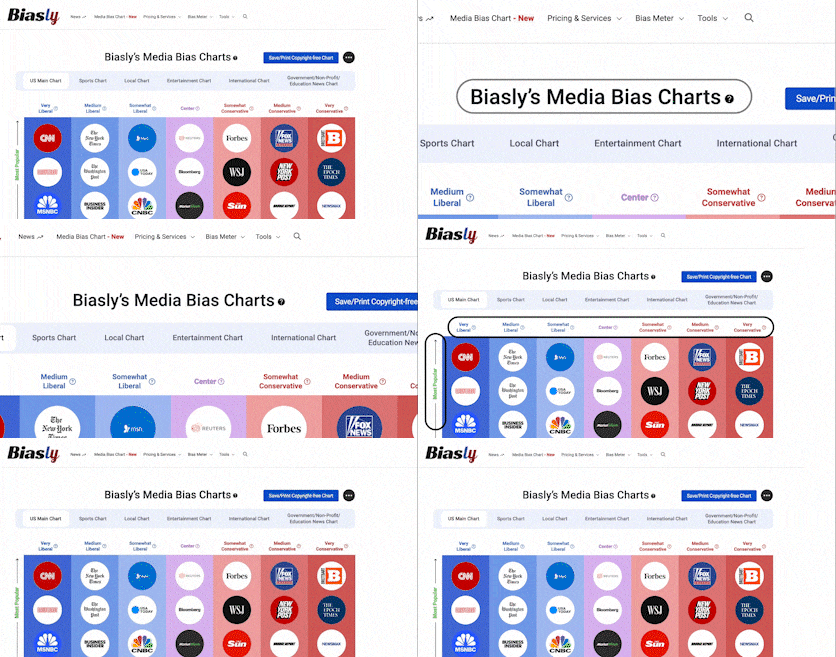
Readers who wish to further explore how AlterNet compares with other publications can visit Biasly’s Media Bias Chart to analyze tone and word choice in real time.
Funding and Ownership
Who Owns AlterNet?

Michael Rogers, Co-founder, AlterNet – Source: Wikipedia
AlterNet was initially launched by the Independent Media Institute and later acquired by Raw Story in 2018. Raw Story was founded in 2004 by John K. Bryne (not pictured) and Michael Rogers. They are both owners of Raw Story and AlterNet. They both also write and publish articles on both sites.
Who Funds AlterNet?
AlterNet was financed by individual donations, advertisement revenues, and major donors until 2018. Now, AlterNet receives most of its funding from its owner, Raw Story, and from membership subscriptions and grants gifted by foundations. AlterNet is an interesting case of a news organization that is still heavily dependent on individual funding.
Additional Insights
News Source Comparison
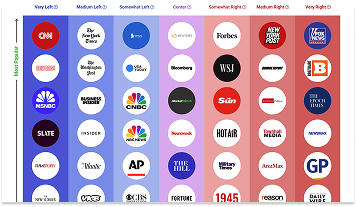
When comparing news sources, AlterNet is often evaluated alongside other regional and national outlets that lean left or center-left. Sources like The New York Times, The Washington Post, or Business Insider often present similar tones and editorial philosophies. While AlterNet maintains a Medium Left media bias, it differs from strongly partisan sources in that it occasionally includes opposing viewpoints and strives for regional coverage balance.
This contrasts with more biased media outlets that consistently present one-sided narratives without factual counterpoints. Readers seeking balanced political coverage may compare AlterNet’s framing of issues with outlets rated as Center or Lean Right on our Media Bias Chart, or explore other regional papers on our Similar Sources page.
Notable Contributors and Authors
AlterNet features a diverse range of reporters and columnists, many of whom are deeply familiar with United States politics. Reporter Adam Lynch, who frequently covers the ins and outs of Washington, highlights the outlet’s journalistic strength.
Another notable example is Nick Hilden, who has over 20 years of experience. Hilden oversees the Writers Talking Writers interview series at Publishers Weekly and has written for many major news organizations.
Related Tools and Resource Pages
To better understand how AlterNet fits into the broader media landscape, we recommend exploring these helpful resources:
- Media Bias Chart: See where AlterNet ranks among hundreds of media outlets across the political spectrum.
- Political Bias Chart: Visualize political slants of news sources across various policy areas.
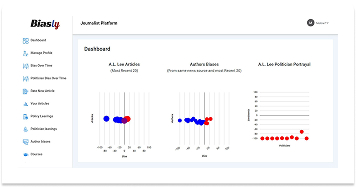
- Journalist Bias Analytics Platform: Explore how individual journalists contribute to bias within their publications.
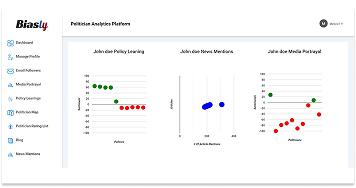
- Politician Bias Analytics Platform: Compare how politicians are framed differently by AlterNet and other outlets.
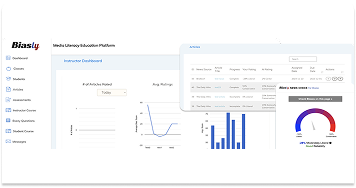
- Media Literacy Education Platform: Learn how to critically assess media sources, bias techniques, and news reliability.
Frequently Asked Questions
AlterNet is rated as Medium Left based on Biasly’s media bias algorithm, which assesses sentiment, article framing, and policy favorability.
While AlterNet is not widely known for promoting fake news, it has been accused of amplifying certain perspectives to help boost or highlight specific political beliefs and ideals. Readers can check the bias and reliability of AlterNet’s authors on the Journalists’ Media Bias Ratings webpage.
In February 2017, AlterNet’s partner site, Alternative Media Syndicate, published a story claiming that police forces had raided and burned a protester camp at the Standing Rock Indian Reservation. The article featured graphic images of flaming tipis as proof of the raid. However, Fact-checkers at Snopes debunked the story, revealing that the image was actually a still from the 2007 HBO film Bury My Heart At Wounded Knee.
AlterNet faced a significant internal scandal that impacted its public perception and editorial standing.
Additionally, Executive Director Don Hazen resigned following accusations of sexual misconduct, including sending explicit emails to employees.
While not “fake news” per se, the scandal raised questions about the organization’s internal standards and culture during a period when it was a leading voice for the Me Too movement.
Biasly uses a combination of AI sentiment analysis and human analyst review to assess tone, fact accuracy, source quality, and media bias indicators. Learn more on our Bias Meter page.
Generally, yes, though partisan framing and selective reporting can affect perceived reliability.
Military Spending
| Date | Sentiment | Associated Article | Snippet |
|---|---|---|---|
| 08/25/2019 | 75% For | Trump Family Detentions Flores Agreement (link) | So, of course, the Trump administration is doing the opposite in a baldfaced |