




-44% Medium Left
Bias Meter
Extremely
Liberal
Very
Liberal
Somewhat Liberal
Center
Somewhat Conservative
Very
Conservative
Extremely
Conservative
-100%
Liberal
100%
Conservative

Biasly determines media bias ratings through a dual-layered approach combining artificial intelligence and analyst review. The platform’s proprietary bias detection engine, Bias Meter, evaluates sentiment, policy position alignment, and language framing across thousands of data points in news articles. Analysts then verify and interpret the AI’s findings, providing additional context where needed. Learn more about ratings
- Profile
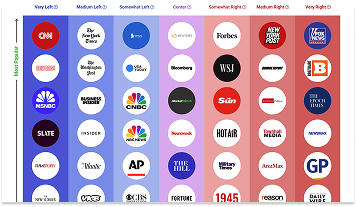
Salon on the media bias chart
- Bias Rating
-44% Medium Left
- Reliability65% Reliable AveragePolicy Leanings
4% Center
Extremely
LiberalVery
LiberalModerately
LiberalSomewhat Liberal
Center
Somewhat Conservative
Moderately
ConservativeVery
ConservativeExtremely
Conservative-100%
Liberal100%
Conservative
Average Reliability
*Our bias meter rating uses data science including sentiment analysis, machine learning and our proprietary algorithm for determining biases in news articles. Bias scores are on a scale of -100% to 100% with higher negative scores being more liberal and higher positive scores being more conservative and 0% being neutral. The rating is an independent analysis and is not affiliated nor sponsored by the news source or any other organization.
Politician Portrayal3% negative
Continue For Free
Create your free account to see the in-depth bias analytics and more.
By creating an account, you agree to our Terms and Privacy Policy, and subscribe to email updates.
Log In
Log in to your account to see the in-depth bias analytics and more.
Analysis of Salon Articles
Analysis of Bias in Salon Online Articles
Salon has found that in-depth coverage of border issues is one of the most effective ways to drive subscriptions. Given that much of its readership is California-based, where liberal issues take precedence, it’s essential to ask: is Salon truly biased?
To evaluate this, we can analyze select Salon articles through several of Biasly’s bias rating criteria: Tone, Tendency, Author, Diction, and Expediency Bias.
- Tone: The overall attitude conveyed by the article
- Diction: Specific word choices made by the writer
- Author: The background and social presence of the journalist
- Tendency: Patterns of bias in the writer’s broader body of work
- Expediency Bias: Quick visual or textual indicators like headlines and photos that imply bias
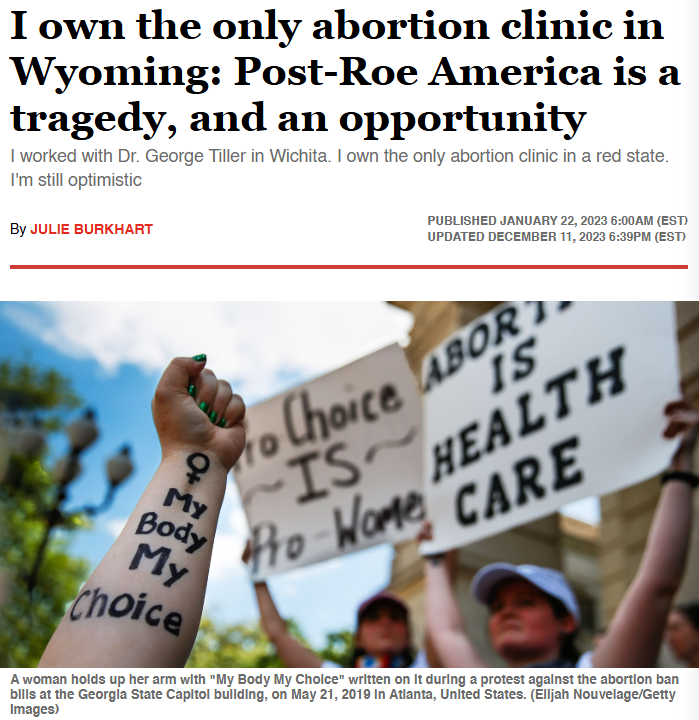
The first article we’ll examine is “I own the only abortion clinic in Wyoming: Post-Roe America is a tragedy, and an opportunity.” Biasly has rated this article on the bias meter as Medium Left. One reason for this is the author’s attitude toward Abortion throughout the article, which is pro-abortion, even though she tries to maintain objectivity. For instance, she uses the following sentence within the article:
“I complained that I already felt deflated about the process before us to defend the right to legal abortion once again.”
The tone is clear when the author argues that abortion is not a new issue in the US. It is on the agenda again, with state-level restrictions and how these affect women. Although the article’s diction is not necessarily extreme, she disagrees with anti-abortion laws. This shows a left-leaning bias that they are more likely to argue against anti-abortion laws.
The left-leaning bias is also visible within the author’s perspective toward Republicans. The author does not refrain from using strong language and an accusatory view toward Republicans about the anti-abortion laws:
“It will take years, even decades, to undo the harm that the Supreme Court unleashed and that abortion bans have wrought. It will likely get worse before it gets better. House Republicans are already moving to advance national abortion bans.”
In the article, she strives to protect objectivity by showing pro-abortion examples from Republican states. While she did include a left-leaning perspective in the article, mentioning the other side adds neutrality.
“Even in “red states” like Kentucky and Montana, anti-abortion ballot measures were decisively shot down by voters.”
Moreover, the author indicates the importance of abortion rights for inclusive health care for women. She explains that this anti-abortion law forces women to travel to find a solution, which will hit mostly low-income women and women of color. For instance:
“The burdens of a post-Roe America will disproportionately impact the most marginalized. Low-income women, especially women of color, lacked access to abortion care even while Roe was the law of the land.”
Regarding the author herself, Julie Burkhart’s Twitter profile reveals many of her opinions, specifically about abortion, in her tweets and retweets. It is visible that she is against anti-abortion laws and supports women having the right to access abortion. In 2024, she said:
“I’ve dedicated my life to fighting for reproductive justice, and now more than ever, I refuse to give up in the face of resistance.”
I’ve dedicated my life to fighting for reproductive justice, and now more than ever, I refuse to give up in the face of resistance. Thank you for this piece, @NYTimes https://t.co/kxzBB8CNQb
— Julie Burkhart (@julieburkhart) March 25, 2024
However, another article shows little to no bias and comes from Salon: “Trump says that communists and Marxists led by Biden are violating his civil rights.” Biasly’s A.I. rating is Left Center for this article since the author uses more fair language and directly explains the topic. The author avoids presenting personal ideas and sentences that may influence the reader. For instance:
“On the topic of the perceived communists and Marxists led by Biden, he believes are ‘coming after him,’ the former president aired his grievances, saying, “The only civil rights that have been violated in this matter are my civil rights and those of the countless people that Biden and the communists have been persecuting.”
In this quotation, the author, Kelly McClure, presents Trump’s words directly, avoiding emotionally charged language and informing the reader. The article does not have a strong bias and produces a neutral and non-partisan article about Donald Trump.
Analysis of Salon Opinion Articles
To fully understand political bias in media, it’s important to distinguish between factual reporting and opinion pieces. While reporting aims to present facts and let readers form their own conclusions, opinion articles express personal viewpoints on current issues. Although the previous section examined factual reporting, this section turns to how bias surfaces through Salon’s selection and tone of opinion content.
Consider the opinion article “Donald Trump has gone off the deep end for real: He’s a danger to humanity.” The title is loaded with liberal bias because it implies strong language and negative judgment regarding Donald Trump. In particular, the sentence “He’s a danger to humanity” carries strong implications and unfavorably affects the audience’s view of Trump before reading the article. Throughout the article, Trump’s actions and words are underestimated and interpreted through the author’s view. For instance:
“Perhaps he’s setting himself up to plead diminished mental capacity after a slew of recent posts on his favorite social media platform that sound like a horrible cry for help.”
This quotation, “sounds like a horrible help,” can direct the reader about Trump, something he did not do. In the article, the author does not refrain from using harsh language, which can undermine the article’s objectivity and neutrality. For instance:
“He is unquestionably insane, either temporarily or for good.”
On the other hand, the article “Trump wants trial for election case pushed to 2026” has a more objective title and focuses on informing readers rather than pushing a political agenda. In the article title, the author avoids personal opinions to inform the readers. She refrains from using negative sentiments about Trump. Reliable articles are marked by neutral language and facts from credible sources, and this article complies with both. The author quotes relevant people without adding personal opinion and delivers the news directly.
This tendency underscores the importance of distinguishing subjective viewpoints from straight reporting, especially when interpreting the political leanings of any news organization.
Analysis of Reliability in Salon’s Online News Articles
Salon aims to serve its readers with objective, fact-based reporting. Its staff includes writers from varying ideological backgrounds, which can help balance coverage. However, readers should distinguish between news reporting and opinion pieces to evaluate credibility effectively.
Salon has an article titled, “Study finds risk of death related to pregnancy more than doubled between 1999 and 2019 in the U.S.” This article is rated at a center-leaning bias. Regarding selection and omission bias, the authors provide data on pregnancy-related deaths in the U.S. The general reasons for maternal deaths are given, but the causes of increased maternal deaths between 1999 and 2019 are not given. The article could be more explanatory and holistic by including the reasons for this increase. Because it leads the focus toward the increase in maternal death, but not why it has doubled. For instance:
“Black women were more likely to die during pregnancy or soon after in every year from 1999 through 2019, compared with Hispanic, American Indian and Alaska Native, Asian, Native Hawaiian or other Pacific Islander, and white women. That is a key finding of our recent study published in the Journal of the American Medical Association.”
This quote informs the reader about increases in maternal deaths across different groups, but does not explain the causes. The article displayed a stance near the Left-Center primarily because of official nonpartisan sources. Also, the article has “Good” reliability because the authors avoid personal opinions and present only objective results, thereby increasing its reliability. They clearly delivered the issue using official, credible sources. Therefore, this article is mostly reliable.
Another article, titled “Don Lemon’s Arrest Turned Into a MAGA Misfire”, shows similar bias with less reliability. This article does a good job of using as many sources as possible. However, pretty much every source they use reaffirms their liberal-leaning bias. Along with that, the quotes used are relatively limited in their ability to provide new information. Overall, this article is considered to have average reliability by Biasly.
Quality of Sources and Facts Used
Salon often uses credible sources from across the political spectrum. However, some articles skew in how comprehensively they present opposing viewpoints.
The Salon is successful at using sources that reflect both sides of the political aisle and citing facts as evidence, but this is not the case for every article. For example, the article titled, “We call that kind of love a cult”: Experts on the latest disturbing poll of Trump supporters”. The article by Chauncey Devega utilizes 13 quotes of different lengths. Of those 13 quotes, four of them are short, two of them are medium, and seven of them are long. This many quotes indicate a healthy amount of sources. Now, we will determine the quality and accuracy of such sources. These sources included:
- Justin Frank, a mental health expert
- Jen Senko, director of the documentary “The Brainwashing of My Dad,”
- Rich Logis, a former right-wing pundit
- Joe Walsh, former Republican congressman
- Salon article by Chauncey Devaga
- Salon article by Chauncey Devaga
- NY Times article by Maggie Haberman
- CBS News article by Anthony Salvanto
Overall, the quality of the sources looks fairly reliable. The biggest problem is that two of them are not experts compared to the other sources, and the credibility of their quotes diminishes as a result. The title indicates that the issue is explained by using experts. However, a right-wing pundit and documentary maker were cited as sources, which makes the article questionable since they are not experts. Therefore, the article’s credibility may be negatively affected. Furthermore, most of the quotes are negative personal opinions and experiences from their sources and are not as much about statistical or objective facts, as seen in the example below.
On the other hand, the article “Were the Hiroshima and Nagasaki bombings “nuclear tests”? The U.S. government said so” presents a well-written article example that uses qualified sources. In the article, the author, Norman Solomon, explained the Hiroshima and Nagasaki bombings. He utilizes non-political sources, primarily scientists, such as the Manhattan Project’s director, Gen. Leslie Groves, and a physicist from the Manhattan Project, David H. Frisch. The author avoided using unofficial sources and personal opinions; instead, he used experts and researchers. The article shows an excellent example of an opinion piece by using expert quotes and reliable sources.
Selection and Omission Bias
Salon provides extensive coverage of political leaders. However, bias may still emerge through framing and story selection.
In a more extreme example from the Salon, the author presents selection bias, though she tries to be objective. The article “There is no magic legal wand to make Trump go away”: “Experts split on whether Trump is disqualified” by Areeba Shah focuses on whether Trump is disqualified or not. The author quotes experts, but the quotes often portray Trump as disqualified while omitting counterarguments. For example, the author references a New York Times article as a source that includes a quote about Donald Trump:
“cannot be president — cannot run for president, cannot become president, cannot hold office — unless two-thirds of Congress decides to grant him amnesty for his conduct on Jan. 6.”
According to experts, the author fails to explore the reasoning behind the conclusion presented in The New York Times article on Trump’s disqualification. Nevertheless, the author clarifies the viewpoint of a federal judge, quoted in the article, who explained the reason for Trump’s disqualification. In other words, the author tends to omit information about the reasons for disqualification and only presents conclusions stating that Trump is disqualified. Throughout the article, the author gives information that conveys a negative attitude toward Trump and barely discusses alternative views. In the article, there is only one alternative argument from an expert who disagrees with Trump’s disqualification from future presidential office.
Another article, called “Philadelphia’s Ambitious Plan to Scare off ICE,” does a better job of sourcing, but still maintains a strong bias. The article makes several claims about President Trump and ensures that it provides a link for each. As stated earlier, the article does suffer from deep bias, but at the very least, it does feel as if Salon is attempting to paint a somewhat fair picture of the President.
Salon Bias Overview
Salon is an online news and opinion website that was founded in 1995 by David Talbot, a journalist and author. Talbot launched Salon with the goal of creating a digital publication that would provide a platform for in-depth, progressive commentary and analysis on a wide range of topics. The website was one of the earliest online-only news publications, emerging during the early days of the internet when the digital media landscape was still taking shape.
While Salon’s primary coverage areas include national politics, social issues, and cultural trends, the website also features content on technology, science, and lifestyle topics.
As a leading media outlet in San Francisco, Salon plays a significant role in shaping public perception. This article delves into Salon’s editorial tendencies to explore whether political bias is present and, if so, to what degree.
Is Salon Biased?
Based on Biasly’s evaluations, Salon is rated as Medium Left.
By examining content patterns and the broader context of media influence, we aim to offer a balanced perspective on Salon’s political bias—and contribute to the ongoing discussion about bias in the news.
How Does Biasly Rate News Sources?
Biasly uses proprietary algorithms and a team of analysts to provide comprehensive bias evaluations across thousands of news outlets. Over 200,000 articles from more than 3,200 sources have been analyzed to identify the most accurate and unbiased stories.
Biasly assigns each outlet three key scores:
- Reliability Score – Reflects factual accuracy
- AI Bias Score – Generated via natural language processing
- Analyst Bias Score – Assessed by human political analysts
These scores are based on seven core metrics: Tone, Tendency, Diction, Author Check, Selection/Omission, Expediency Bias, and Accuracy. These elements help analysts and algorithms evaluate the political attitude conveyed by each article.
Biasly’s Bias Meter ranges from -100% (most left) to +100% (most right), with 0% indicating neutrality. The system evaluates individual articles based on political terms, policies, figures, and sentiment to calculate precise bias ratings.
Is Salon Politically Biased?
Salon earns a Medium Left rating for its AI Bias Score and a Medium Left for its Analyst Bias Score. The Analyst Bias Score is generated by reviewers from liberal, moderate, and conservative backgrounds. Analysts reviewed Salon articles and noted preferences in areas such as coverage of liberal politicians and policy topics, including civil rights and Black Lives Matter. However, the paper maintained objectivity on topics like abortion and clean energy.
San Francisco leans more liberal, which could explain differing perceptions of Salon’s content. The paper may draw mixed reactions depending on readers’ political orientations.
This Bias score is determined through natural language processing that evaluates the tone, word choice, and opinion embedded in the reporting. Recent AI evaluations highlight liberal-leaning narratives in articles discussing the Republican Party and LGBTQ+ issues.
How to Evaluate Bias
Although Biasly rates Salon as Medium Left, it’s important to remember that bias can vary from article to article. Salon also covers a conservative-leaning state with objectivity on many issues, from state legislation to social developments. This complexity underscores the importance of examining each article individually. So, let’s learn how to evaluate media bias.
Recognizing media bias requires awareness and critical thinking. Often, readers trust news sources that affirm their existing beliefs, a psychological tendency known as confirmation bias. This makes it harder to identify slanted narratives or one-sided reporting.
To combat this, it’s essential to challenge your assumptions by consulting multiple viewpoints and verifying news through third-party analysis. Tools like Biasly’s media bias ratings allow readers to compare the same news story across the political spectrum.
Ultimately, bias isn’t always a matter of what is said; it’s also about what is left out, how topics are framed, and which stories are chosen for coverage. Learning to recognize these patterns can help readers make more informed decisions and develop greater media literacy.
To start comparing news outlets and gain a better understanding of bias, sign up for Biasly’s Media Bias & News Analytics Platform to see how stories vary between sources.
Salon Reliability Overview
Is Salon Reliable?
Salon finds itself toward the middle of the spectrum, with neither high nor low accuracy. Its status as a local news outlet contributes to its moderate reputation for reliability.
At Biasly, we specialize in evaluating not just bias but also the reliability of media outlets. Let’s explore the accuracy and trustworthiness of Salon.
How to Evaluate Reliability?
Reliability refers to how trustworthy or accurate a news source is. If we can’t trust what we read, then continuing to consume content from that outlet serves little purpose. So how do we evaluate a news outlet’s reliability?
There are several potential measures of reliability to look out for when determining whether a media source is reliable. Red flags for an unreliable article can include wild, unsubstantiated claims, facts that depend on other unreliable sources, heavy use of opinionated language, and more. In contrast, hallmarks of a reliable source include:
- Absence of subjective language
- Citing credible sources (e.g., .gov, .edu, academic references)
- Verifiable facts and statistics from multiple outlets
- Use of primary sources, like interviews or transcripts
- Consistency with coverage across other platforms
Biasly’s reliability scores incorporate these elements in evaluating media outlets.
So How Does Salon Fare in Its Reliability?
The political reliability index developed by Biasly assesses both accuracy and trustworthiness. Salon currently holds Average Reliability Score, which is calculated as a weighted average of:
- Fact Analysis Score – Evaluates the accuracy of claims, facts, and evidence.
- Source Analysis Score – Assesses the number, diversity, and credibility of sources and quotes used.
Salon’s Source Analysis Score is Average at 64% Reliable. This suggests moderate trustworthiness in its sourcing practices. The score is AI-generated and considers quote length, frequency, diversity, and quality.
The Fact Analysis Score of Salon is Average at 66% Reliable. This further shows how well Salon supports its claims, addresses selection and omission bias, and presents verifiable evidence.
While Salon leans toward factual reporting, occasional lapses, such as unbalanced viewpoints or incomplete data, can affect its reliability rating. These nuances emphasize the importance of analyzing individual articles.
Salon’s Accuracy and Reliability
According to Biasly’s analysis, Salon maintains Average Reliability Score, but individual articles may vary significantly. Let’s dive into the details.
Political orientation plays a crucial role in how audiences perceive reliability. Salon has been accused of favoring a liberal narrative, potentially at the expense of factual reporting. To validate such claims, it’s essential to analyze whether the publication backs its assertions with sufficient evidence and diverse viewpoints.
Two common types of bias that affect factuality include:
- Selection Bias – Highlighting or omitting stories to fit a particular narrative.
- Omission Bias – Leaving out differing perspectives or relevant details to skew perception.
Biasly’s accuracy ratings use a scale from 1% (least accurate) to 100% (most accurate). Factors include supporting evidence, reliable internal and external sources, and balanced viewpoints.
Biasly assigns Salon a Left bias score with Mixed overall reliability, reflecting an opinionated editorial voice and frequent use of interpretive framing. A clear example is Salon’s Dec. 10, 2023 article, “‘Trump derangement syndrome’ is real — but it’s not what they say it is” by Kirk Swearingen, which uses an explicitly adversarial lens toward Trump and his supporters. The piece characterizes Trump in highly evaluative terms (e.g., describing him as an “infamous deranged criminal”) and argues that accusations of “Trump Derangement Syndrome” are a form of projection used to discredit critics—signals that align with a left-leaning bias assessment because the article is structured primarily as persuasion/argument, not neutral reportage.
In this article, the outlet’s topic selection and tone emphasize a moral and psychological indictment of Trump-world rather than a balanced presentation of competing interpretations. The author supports the argument largely through analogy and commentary—invoking Nazi-propaganda comparisons (e.g., referencing Joseph Goebbels) and citing like-minded commentary sources (including Rachel Maddow, Adam Gopnik, and historian Timothy Snyder) to reinforce the framing. While the piece does reference real, checkable claims (for instance, it points to Trump’s rhetoric about opponents and recounts his “fight like hell” exhortation), it provides limited space for countervailing perspectives or neutral sourcing, which is consistent with why individual Salon articles may land as more rhetorically strong than evidentiary—a pattern that can fit a Mixed reliability profile even when the core argument is grounded in widely reported events.
We will take a closer look at more examples like this below to provide a further investigation into the reliability of Salon’s articles. This will include its use of selection bias and omission bias, as well as the quality of its sources and the facts it uses.
So, is Salon Reliable?
Overall, Salon can be considered an outlet with moderately reliability. The site often prioritizes opinion-driven content, with variable sourcing and occasional editorial framing on sensitive international topics. While some claims are supported with evidence, consistency in sourcing and balance could be improved to meet stronger journalistic standards.
As media literacy improves, readers can more easily detect issues with selection bias, omission bias, and factuality. To strengthen your ability to assess reliability across the political spectrum, use Biasly’s News Bias Checker to compare how multiple outlets report the same story.
This empowers you to consume more accurate, balanced, and dependable news.
Salon Editorial Patterns
Salon’s coverage of political topics often reflects a Medium Left bias, with consistent patterns in phrasing, source selection, and thematic focus that are Moderately Liberal. While the publication demonstrates journalistic standards in many of its reports, the choice of issues, framing, and word usage can indicate a political slant. The editorial patterns tend to be center-leaning.
Coverage of Liberal vs. Conservative Topics
Salon’s articles include hot-button issues for the left, such as ICE, racial discrimination, and foreign policy. These articles tend to show favoritism to the liberal side of the argument. However, its coverage of topics related to abortion rights, clean energy, and anti-discrimination laws frequently aligns with liberal viewpoints, using inclusive and affirmative language to frame these policies as necessary reforms.
On the other hand, articles covering conservative figures or Republican-led initiatives often employ a more critical tone. Biasly’s analysis of recent Salon articles reveals a tendency to highlight controversies or opposition surrounding Republican policies, while downplaying positive aspects or conservative rationale. For example, in political campaign coverage, Republican candidates may receive more scrutiny, with an emphasis on potential missteps or public backlash.
This news media bias manifests in subtle ways, such as placing greater prominence on Democratic voices or using emotional diction when describing liberal causes, while offering more detached language in conservative contexts. Words like “justice,” “equality,” and “rights” appear more frequently in liberal-oriented reporting, while conservative views are often framed as “pushbacks,” “restrictions,” or “oppositions.”
Policy and Issue Framing
Despite being rated Medium Left, Salon does not always show this bias in their coverage of certain issues. On issues like campaign finance restrictions and clean energy, they tend to be more center-leaning. Biasly has reviewed over 100 Salon articles relating to abortion according to Biasly’s policy leaning analysis of Salon. The fact that they don’t take a strong stance on a bread-and-butter liberal issue is surprising.
Meanwhile, on issues like border control, charter schools, and civil rights, they show more of their bias. Border control is an issue they cover pretty frequently. Although they write articles about this issue from a center-leaning perspective, some articles fall victim to liberal bias.
Even in neutral coverage, phrasing choices shape perception.
Coverage and Relevance
Salon’s reporting often touches on key issues central to the media political discussion, including border control, abortion, and foreign affairs. As such, it serves as a compelling case study for examining source bias and news media bias in reporting.
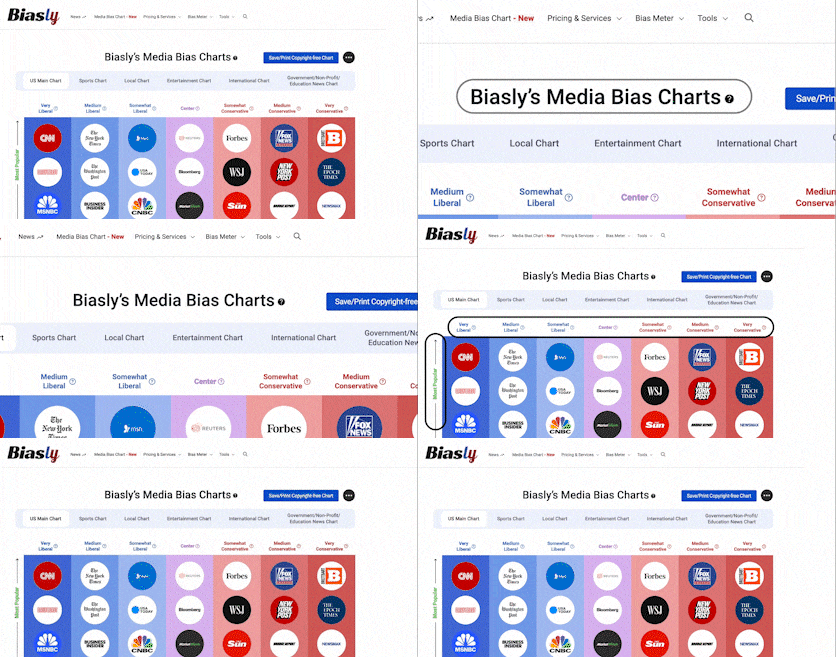
Readers who wish to further explore how Salon compares with other publications can visit Biasly’s Media Bias Chart to analyze tone and word choice in real time.
Funding and Ownership
Who Owns Salon?
David Talbot left the company in 2005. They faced severe economic struggles after his departure. This led to the company’s sale to Proper Media in 2019. Proper Media did a strong job of rebuilding the company. In 2023, Find.Co bought 100 percent of the company’s assets. It’s estimated that Proper Media made over $50 million in its four years of ownership. Find.co is led by CEO Mendel Benoit.
Who Funds Salon?
Salon makes nearly all of its money from advertising revenue. Although they do have a subscription service, nearly all of their content is free to view. Since 2019, they have been modernizing by adding video content and newsletters. This content has helped increase traffic. Advertisers, generally speaking, prefer to advertise on video content.
Additional Insights
News Source Comparison
When it comes to news source comparison, Salon is often evaluated alongside other regional and national outlets that lean left. Sources like The Washington Post, The Atlantic, and Vice often present similar tones and editorial philosophies. While Salon maintains a Medium Left media bias, it differs from strongly partisan sources in that it occasionally includes opposing viewpoints and strives for regional coverage balance.
This puts it in contrast to more biased media outlets that consistently present one-sided narratives without factual counterpoints. Readers seeking balanced political coverage may compare Salon’s framing of issues with outlets rated as Center or Lean Right on our Media Bias Chart, or explore other regional papers on our Similar Sources page.
Notable Contributors and Authors
Salon features a diverse range of reporters and columnists, many of whom are deeply familiar with the political and social climate.
Sophia Tesfaye is one of the most notable writers currently working for Salon. She has a master’s degree in political communication from American University. Before entering the news industry, she had a three-year career in research. She joined Salon in 2015 as the deputy political editor. She was promoted to Senior Politics Editor in 2019, a role she holds to this day.
Amanda Marcotte is also a notable writer for Salon. Time Magazine has called her one of the most prominent voices of the American left. She started off as a blogger, which included work for the Presidential campaign of John Edwards in 2008. After the campaign ended, she went on to write several books. In 2021, she joined Salon as a full-time writer.
Related Tools and Resource Pages
To better understand how Salon fits into the broader media landscape, we recommend exploring these helpful resources:
- Media Bias Chart: See where Salon ranks among hundreds of media outlets across the political spectrum.
- Political Bias Chart: Visualize political slants of news sources across various policy areas.
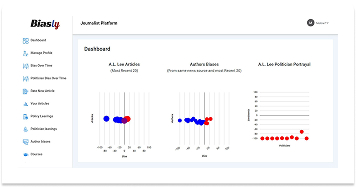
- Journalist Bias Analytics Platform: Explore how individual journalists contribute to bias within their publications.
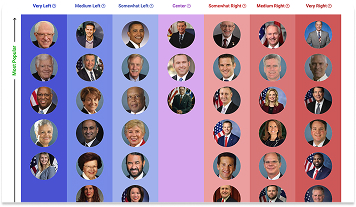
- Politician Bias Analytics Platform: Compare how politicians are framed differently by Salon and other outlets.
- Media Literacy Education Platform: Learn how to critically assess media sources, bias techniques, and news reliability.
Frequently Asked Questions
Salon is rated as Medium Left based on Biasly’s media bias algorithm, which assesses sentiment, article framing, and policy favorability.
In 2021, Salon faced criticism over its coverage of Florida Governor Ron DeSantis and HB 233. Some readers and commentators argued that the outlet’s headline suggested the law would require students and professors to “register” their political beliefs with the state, an interpretation critics said overstated the legislation’s scope. HB 233 aimed to survey colleges about campus climate and political expression, with the surveys described as optional and anonymous. There was no provision establishing a public registry of political beliefs. The following year, the executive editor acknowledged that the original headline did not meet the publication’s editorial standards, and it was later revised to: “Rising GOP star Ron DeSantis goes after campus thoughtcrime with vague, threatening new law.”
Biasly uses a combination of AI sentiment analysis and human analyst review to assess tone, factual accuracy, source quality, and media-bias indicators. Learn more on our Bias Meter page.
Generally, yes, though partisan framing and selective reporting can affect perceived reliability.
Military Spending
| Date | Sentiment | Associated Article | Snippet |
|---|---|---|---|
| 08/25/2019 | 75% For | Trump Family Detentions Flores Agreement (link) | So, of course, the Trump administration is doing the opposite in a baldfaced |