




 Jewish News Syndicate Article Rating
In civilian talks, Israel and Lebanon confront Hezbollah's grip
- Bias Rating
- Reliability
30% ReliableAverage
- Policy Leaning
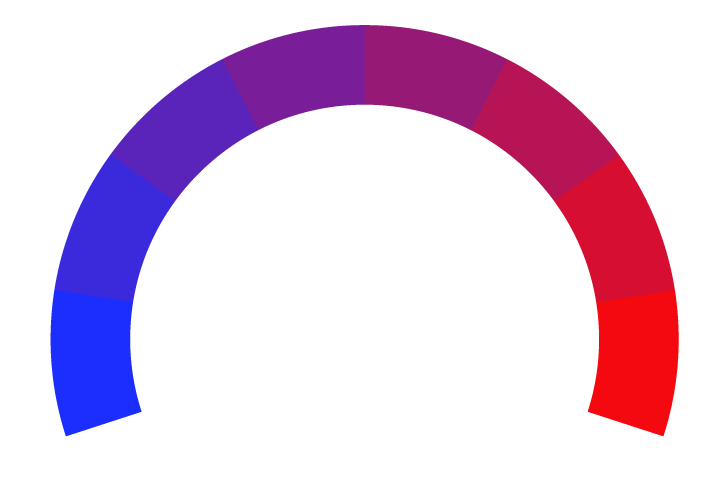
-10% Center
- Politician Portrayal
N/A
Continue For Free
Create your free account to see the in-depth bias analytics and more.
By creating an account, you agree to our Terms and Privacy Policy, and subscribe to email updates.
Bias Score Analysis
The A.I. bias rating includes policy and politician portrayal leanings based on the author’s tone found in the article using machine learning. Bias scores are on a scale of -100% to 100% with higher negative scores being more liberal and higher positive scores being more conservative, and 0% being neutral.
Sentiments
30% Positive
- Liberal
- Conservative
| Sentence | Sentiment | Bias |
|---|---|---|
Unlock this feature by upgrading to the Pro plan. | ||
Reliability Score Analysis
Policy Leaning Analysis
Politician Portrayal Analysis
Bias Meter
Extremely
Liberal
Very
Liberal
Moderately
Liberal
Somewhat Liberal
Center
Somewhat Conservative
Moderately
Conservative
Very
Conservative
Extremely
Conservative
-100%
Liberal
100%
Conservative
Contributing sentiments towards policy:
56% : The Prime Minister's Office in Jerusalem said the meeting was held in a "positive atmosphere" and that the sides agreed to formulate "ideas for potential economic cooperation between Israel and Lebanon."53% : Earlier statements described the meeting as a first attempt to lay the groundwork for economic cooperation and a future relationship between Israel and Lebanon.
51% : The talks were mediated by Morgan Ortagus, deputy United States special envoy to the Middle East, and included representatives from the IDF, the Lebanese Armed Forces and the United Nations.
51% : In parallel, Israel and Lebanon will conduct civilian-level talks.
51% : Many of those displaced are Christians, whose return Israel views as a moderating influence compared with Shi'ite communities, many of whose members have supported or belonged to Hezbollah.
48% : This was reflected in a meeting in Naqoura, Lebanon, north of the Israeli border and Rosh Hanikra, between a team led by Uri Resnick, deputy head of foreign policy at Israel's National Security Council, and a delegation headed by Simon Karam, the former Lebanese ambassador to the U.S.
47% : Israel and Lebanon have launched their first ever direct talks at the civilian level to explore potential economic and other cooperative initiatives that are not tied to the ongoing military campaign against Hezbollah.
47% : The U.S. administration has given Israel a green light to continue its military actions against Hezbollah, while simultaneously pressing Jerusalem to support steps that bring the Lebanese government and President Joseph Aoun closer to Washington and advance confidence-building measures.
46% : Even then, Beirut participated only after Israel agreed to relinquish nearly all of the disputed maritime area.
44% : Still, the official noted that as long as Hezbollah remains active, progress on matters such as an IDF withdrawal from positions inside Lebanon or a halt to Israeli strikes on Hezbollah operatives and infrastructure will remain extremely difficult. Originally published by Israel Hayom.
42% : Israel clarified that "disarming Hezbollah is a fundamental requirement that stands independently of any progress on economic issues."
42% : For Israel, this marks a policy shift coordinated with and encouraged by Washington.
38% : Israel will continue to strike Hezbollah targets as the organization works to rebuild and rearm, while Lebanon's government pursues its stated commitment to disarm the terrorist group.
36% : According to an Israeli political official, the dialogue is expected to lay the foundation for broader negotiations between Israel and Lebanon on all outstanding issues, including formalizing the land border and resolving disputes largely driven by Hezbollah.
*Our bias meter rating uses data science including sentiment analysis, machine learning and our proprietary algorithm for determining biases in news articles. Bias scores are on a scale of -100% to 100% with higher negative scores being more liberal and higher positive scores being more conservative, and 0% being neutral. The rating is an independent analysis and is not affiliated nor sponsored by the news source or any other organization.