









How News Sources Portray COVID-19 Stimulus Relief Policy
This chart shows how major news sources across the ideological spectrum frame covid-19 stimulus relief policy, from left to right-leaning perspectives.









The COVID-19 pandemic prompted an unprecedented fiscal response from the U.S. government, aiming to mitigate the economic fallout and support public health initiatives. Central to this response was the implementation of various stimulus packages, including the $1.9 trillion American Rescue Plan Act of 2021. These measures have been subject to political debate, reflecting differing perspectives on the role of government in economic recovery and exposing patterns of political bias in how the media and politicians frame fiscal policy.
Democratic Stance on COVID-19 Stimulus Relief
The Democratic Party has largely advocated for expansive fiscal policies to address the economic challenges posed by the pandemic. They emphasize the importance of direct financial assistance to individuals, support for small businesses, and funding for public health measures. The American Rescue Plan Act, championed by President Biden, included provisions such as $1,400 direct payments to eligible Americans, extended unemployment benefits, and substantial funding for vaccine distribution and school reopenings.
Public support for these measures was significant. A Pew Research Center survey conducted in March 2021 found that 94% of Democrats and Democratic-leaning independents favored the $1.9 trillion aid package. Moreover, 57% of the overall public believed the Biden administration made a good faith effort to work with Republican leaders on the relief bill.
Politicians Who Support COVID-19 Stimulus Relief
94% of Democrats and Democratic-leaning independents favored the $1.9 trillion aid package.
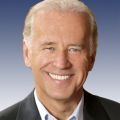
Joe Biden
“The American Rescue Plan is working. America is getting vaccinated. Job creation is soaring. The economy is growing. And our country is on the move again. ... The message is clear: Help is here.”
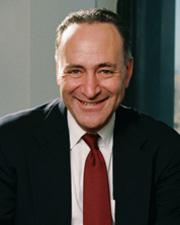
Charles E. Schumer
“Senate Democrats made a promise to the American people to deliver the bold COVID relief they need, and we have fulfilled that promise with the #AmericanRescuePlan. Americans demanded help, and Democrats promised to get it to them: For families and people, For those who lost their job through no fault of their own, For food, rent, utilities, For small businesses, For the vaccine.”
Republican Stance on COVID-19 Stimulus Relief
Republican perspectives on stimulus relief have been more varied. While acknowledging the need for economic support during the crisis, many Republicans expressed concerns about the size and scope of the relief packages. They advocated for more targeted assistance, emphasizing fiscal responsibility and cautioning against increasing the national debt.
Despite these reservations, a notable portion of the Republican base supported additional relief. According to Pew Research Center, 65% of Republicans and Republican-leaning independents believed another economic assistance package was necessary. However, when it came to the American Rescue Plan, only 41% of Republicans supported the legislation, reflecting concerns about its breadth and cost.
Politicians Who Oppose COVID-19 Stimulus Relief
65% of Republicans and Republican-leaning independents believed another economic assistance package was necessary.
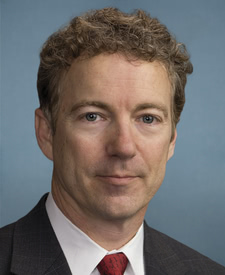
Rand Paul
“To so-called conservatives who are quick to identify the socialism of Democrats: If you vote for this spending monstrosity, you are no better. ... If free money was the answer... if money really did grow on trees, why not give more free money? Why stop at $600 a person? Why not $1,000? Why not $2,000? ... If we can print out money with impunity, why not do it? ... Now is perhaps the most inappropriate time to spend more taxpayer dollars on a poorly targeted spending spree while Americans struggle with the effects of price increases and supply chain issues caused by Congress' last $6 trillion COVID spending extravaganza.”

Deb Fischer
“This plan would give you a check even if you never lost your job and struggled to pay your bills. That is not right. ... Instead, people who never lost their job, get a check. ... Even worse, this bill tallies states and localities' level of funding based on raw unemployment numbers, not unemployment rate. That would punish both red and blue states that have handled the pandemic well. It leaves behind states like Nebraska, which has the lowest unemployment rate in the country... When you look under the hood, this bill is more about passing a partisan wish list than getting the United States through the worst public health crisis we've faced in over a century.”
Economic Impact of the Stimulus Packages
The stimulus measures had a profound impact on the U.S. economy. They provided immediate relief to millions of Americans, reduced poverty rates, and supported consumer spending, which is vital for economic recovery. However, the influx of government spending also contributed to debates about inflation and long-term fiscal sustainability.
Lower- and middle-income families, in particular, benefited from the relief packages. The financial hardships caused by the COVID-19 recession were endured mostly by these groups. From 2019 to 2020, the median income of lower-income households decreased by 3.0%, and the median income of middle-income households fell by 2.1%. The stimulus payments helped to cushion these losses and support household spending.
Public Opinion and Partisan Perspectives
Public opinion on the stimulus relief measures revealed both consensus and division. While there was broad support for government intervention to address the economic crisis, opinions diverged along partisan lines regarding the specifics of the relief packages.
According to Pew Research Center, 70% of U.S. adults favored the $1.9 trillion aid package. However, only 41% of Republicans supported the legislation, compared to 94% of Democrats. This division underscores the differing philosophies regarding the role of government in economic recovery.
Final Remarks
The COVID-19 stimulus relief efforts represent a significant chapter in U.S. economic policy, highlighting the challenges of responding to a global crisis and the complexities of bipartisan governance. While the relief packages provided essential support to many Americans, they also sparked important debates about fiscal responsibility, the scope of government intervention, and the best path forward for economic recovery.
For readers seeking deeper insight into how politicians approach trade, foreign relations, and economic policy, sign up for the Biasly Premium News Membership to receive personalized, unbiased updates on political and economic developments.
