









How News Sources Portray Social Security Privatization Policy
This chart shows how major news sources across the ideological spectrum frame social security privatization policy, from left to right-leaning perspectives.













Social security privatization is the notion of moving Social Security from the public sector to the private sector. Social security is a social policy in the United States that provides monthly payments to retirees, disabled individuals, or the families of retirees, disabled persons, and deceased individuals. Workers in the country pay into the Social Security fund and, once eligible, receive monthly payments back. The estimated average monthly Social Security payment is $1,976 as of January 2025.
In 2021, approximately 176 million people were covered by government spending on Social Security, constituting about 94 percent of all jobs in the United States. However, a small subset of jobs provides their own retirement plan in lieu of Social Security; this is particularly true for state and local government employees, as well as teachers.
Privatization of social security would mean a significant shift away from the current system. The government would need to cover the cost of workers who have already contributed to Social Security for decades and are retired or nearly retired. Meanwhile, the new system would need to provide a path for younger generations to accumulate wealth in their private accounts. Due to these factors, it is possible that benefits would need to be cut to new retirees to cover the costs.
The History of Privatization
Privatization of the Social Security system has rarely been explored in the United States. Despite modern opposition to privatization in the Democratic Party, the concept was temporarily pursued between Democratic President Bill Clinton and Republican House Speaker Newt Gingrich in 1998, with plans to provide personal retirement savings accounts for workers. However, the effort collapsed as attention shifted to impeachment efforts against the president in 1998 and 1999, and the original agreement was never realized.
In 2005, Republican President George W. Bush pursued a policy to partially privatize Social Security. However, even as the president traveled around the country and campaigned on it, the initiative rapidly lost popularity and was ultimately discarded prior to Democrats gaining control of Congress in 2006.
In modern times, the Democratic and Republican parties face substantial differences on government spending policies such as Social Security.
The Democratic Response on Privatization
The Democratic Party stance on Social Security privatization is strongly oppositional. Most Americans agree with this position. In a 2022 Data For Progress poll, 79 percent of Democrats or Democratically-aligned voters responded that the United States should leave Social Security as is. Only 13 percent of those same voters responded that Social Security should be privatized. Among all frequent voters in the United States, 77 percent said that Social Security should remain unchanged; only 15 percent felt it should be privatized.
Liberals frequently argue that the government has an obligation to provide social insurance to its citizens. They suggest that the program should be further expanded to remedy wealth inequality across the country. Liberals often criticize conservatives for playing politics with the livelihoods of seniors who have paid into the program their entire lives.
Politicians Who Oppose Social Security Privatization
79% of Democrats or Democratically-aligned voters responded that the United States should leave Social Security as is.
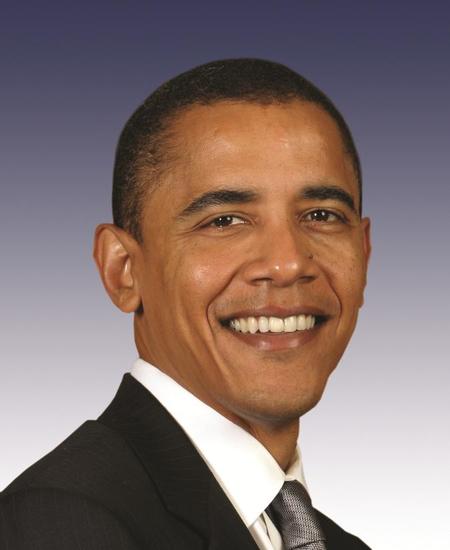
Barack Obama
“One thing we can't afford to do though is privatize Social Security – an ill-conceived idea that would add trillions of dollars to our budget deficit while tying your benefits to the whims of Wall Street traders and the ups and downs of the stock market.”

Nancy Pelosi
“Rather than safeguarding and strengthening these essential benefits, extreme MAGA Republicans are seeking to destroy Social Security as we know it. A majority of House Republicans are rallying around a budget that would hike the retirement age, slash benefits and push privatization – turning Social Security benefits over to Wall Street. ... We will never relent in safeguarding Social Security and strengthening the economic security of every family.”
The Republican Response on Privatization
The conservative stance on Social Security privatization is unclear. While the GOP has strongly advocated against any increases to the program, given their long-standing policy stance on reducing government dependency, there has not been a sustained effort to privatize Social Security. In a 2022 Data For Progress poll, 76 percent of Republicans and Republican-aligned voters favored leaving Social Security as is rather than privatizing it.
Privatizing Social Security is advocated by conservatives, who argue that private accounts would provide a greater return on investments for workers. They claim that individuals should have greater freedom over their investment decisions rather than deferring to the government. They also point to other countries, such as the United Kingdom, Sweden, and Chile, all of which have private systems.
Politicians Who Support Social Security Privatization

76 percent of Republicans and Republican-aligned voters favored leaving Social Security as is rather than privatizing it.

George Bush
“As we fix Social Security, we also have the responsibility to make the system a better deal for younger workers. And the best way to reach that goal is through voluntary personal retirement accounts. ... Your money will grow, over time, at a faster rate than anything the current system can pay.”
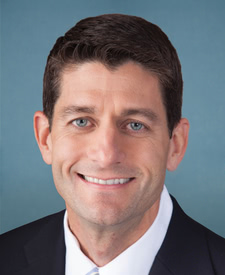
Paul Ryan
“It's managed by the government in safe index funds. It harnesses the power of compound interest so they grow their money at five percent or six percent per year instead of negative one percent. They get better benefits. It's a nest egg they control that goes to their property.”
Political Implications
Social Security privatization is politically significant because it touches one of the most widely supported and broadly used government programs in the United States. Although partisan labels around privatization can suggest a sharp ideological divide, public opinion shows that most voters in both parties are cautious about changing the current system. According to the figures cited on this Biasly page, 79% of Democrats believe Social Security should be left as is, while only 13% support privatization. Among Republicans, 76% also favor leaving Social Security unchanged. Those numbers suggest that privatization remains politically risky even among voters who are otherwise more open to market-based reforms.
For Democrats, opposition to privatization reinforces a broader commitment to social insurance and the idea that retirement security should not be tied to private market volatility. For Republicans, the issue is more complicated. While conservative arguments for privatization often emphasize personal control, investment returns, and reduced dependence on government management, modern Republican voters have not shown strong enthusiasm for replacing the existing system. That tension makes privatization an important example of how ideological preference for private-sector solutions can collide with voter attachment to a familiar and popular public benefit.
The issue also carries strong electoral consequences because any proposal to privatize Social Security can be framed as a threat to guaranteed retirement income. That makes the subject especially sensitive among older voters and near-retirees, who tend to be highly engaged electorally. As a result, Social Security privatization remains one of those issues that can generate significant debate in theory but substantial caution in practice.
What the Future Holds
The future of Social Security privatization is likely to depend less on abstract ideological support for private accounts and more on whether policymakers can persuade voters that privatization would improve retirement security without increasing risk. Based on current opinion data, that remains a difficult case to make. The fact that 77% of frequent voters say Social Security should remain unchanged, according to the figures cited on this Biasly page, suggests that large-scale privatization proposals are unlikely to gain broad popular traction in the near term.
For Democrats, the future likely involves continued resistance to privatization and renewed emphasis on preserving or expanding guaranteed benefits through the public system. For Republicans, the future is more uncertain. While some conservative policymakers may continue to favor personal accounts or private investment options in principle, the lack of strong modern voter demand means that full or partial privatization is unlikely to become a dominant reform path unless broader economic or fiscal pressures significantly change the debate.
More broadly, future discussions of privatization may emerge indirectly through conversations about solvency, retirement age, payroll taxes, and long-term reform rather than through explicit calls to replace Social Security with private accounts. In that sense, privatization may continue to function more as a symbolic marker of philosophical disagreement over the role of government than as an imminent legislative outcome. Even so, because Social Security’s long-term financial pressures are real, debates over how much of retirement security should remain publicly guaranteed versus privately managed are likely to persist.
