









How News Sources Portray Taxes Policy
This chart shows how major news sources across the ideological spectrum frame taxes policy, from left to right-leaning perspectives.








In contemporary politics, many topics are becoming increasingly polarizing and highly partisan, one of which is tax policies. Many news sites often contain news bias that may sway the consumer to one side or another. Tax policies have always been a defining factor for presidential candidates and often significantly vary from one candidate to another. Many voters prioritize a candidate’s tax policies as they often affect the voters themselves, along with any property or businesses they may own.
Tax Policy Explained
Tax policy refers to the guidelines that a government establishes for imposing and collecting taxes, and can significantly vary from one political candidate to another. Generally, government taxation policies seek to balance securing necessary revenues to finance social and economic programs and strengthening the tax system’s contributions to inclusive economic growth. There are various types of tax policies (such as income, consumption, property, and corporate income taxes) that the government may adjust to achieve the best balance for the economy at a given time. Tax policies affect everything from an individual level to a federal level.
Tax Policy History
Before the Civil War, the nation obtained most of its income from banknotes, a form of currency. The tax rate imposed on individuals at this time was minimal (from 1% to 1.5%). In 1862, President Lincoln enacted the first version of an income tax to fund the Civil War, called the Commissioner of Internal Revenue, and imposed an income tax on individuals. This ranged from rates of 3% on incomes of $600 to $10,000 and 5% on incomes over $10,000. This was later repealed and eventually declared unconstitutional by the Supreme Court.
The addition of the 16th Amendment to the Constitution in 1913 officially declared a new federal income tax, stating that Congress had the power to collect taxes on income without approval from the states. Few Americans had to pay the tax due to taxpayer-friendly deductions. The Revenue Act of 1942, however, increased tax rates and the number of citizens who had to pay them. The Current Tax Payment Act was passed in 1943, which marked the beginning of the tax withholding process. Since then, there have been minor alterations made to find a more efficient and effective way of collecting taxes from the people, which varies from year to year due to changes in presidential candidates.
Republican Stance on Taxes
The Republican stance on tax policy tends to disapprove of high tax rates and greatly favor tax cuts instead, most likely because it can encourage individual prosperity and promote entrepreneurial activity. Republicans oppose a large government and government intervention, which corresponds to their opinions on taxes. Most Republicans (71%) approved of the Trump Administration’s 2017 tax code, which implemented broad tax cuts for corporations and individuals, increased the standard deduction, eliminated personal expenses, and more.
Overall, Republicans generally favor lower taxes, especially on income, businesses, investments, capital gains, and estates. They argue that reducing taxes allows individuals and companies to keep more of their money, encourages investment, supports job creation, and promotes economic growth. Republican tax policy often includes extending or expanding the 2017 Trump tax cuts, lowering corporate taxes, reducing taxes on pass-through businesses, and limiting taxes on wealthy individuals, investors, and estates.
Republicans also tend to connect tax cuts with a broader goal of smaller government and reduced federal spending. They often support cutting or limiting domestic programs to offset lower tax revenue and reduce the size of government. Critics argue that Republican tax policies mainly benefit corporations and high-income households while increasing deficits, but Republicans generally defend them as pro-growth, pro-business, and supportive of economic freedom.
Politicians Who Oppose Taxes
Most Republicans (71%) approved of the Trump Administration’s 2017 tax code.

Ronald Reagan
“We don't have deficits because people are taxed too little. We have deficits because big government spends too much.”
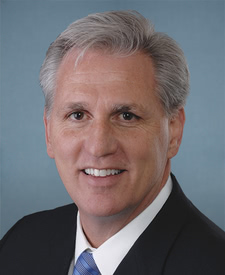
Kevin McCarthy
“You're bringing in more money at a higher percentage than at any other time now, so why are we in such a problem? The expenditures, the amount of money government spends.”
Democratic Stance on Taxes
The Democratic stance on tax policy mostly approves of higher taxes, specifically on big corporations and high-income individuals, to fund and improve social programs and infrastructure. Democrats favor a large government and government intervention, while also seeking to benefit the poor and harm the wealthy. Most Democrats (79%) disapproved of the Trump Administration’s 2017 tax code.
Overall, Democrats generally support a more progressive tax system, meaning they believe higher-income individuals and large corporations should pay more while lower- and middle-income families receive more relief. They often support protecting households earning under about $400,000 from tax increases, expanding tax credits like the Child Tax Credit and Earned Income Tax Credit, and offering targeted help for families, workers, renters, and first-time homebuyers. Their tax approach focuses less on broad tax cuts and more on using the tax code to address affordability and economic inequality.
At the same time, Democrats usually favor raising revenue from wealthy individuals, large corporations, investors, and multinational companies. They support policies such as higher taxes on high incomes and investment income, limits on corporate tax breaks, stronger rules against tax avoidance, and higher taxes on stock buybacks or excessive executive compensation. Overall, Democrats argue that their tax policies make the system fairer, fund public programs, and provide targeted support to working- and middle-class Americans.
Politicians Who Support Taxes
Most Democrats (79%) disapproved of the Trump Administration’s 2017 tax code.
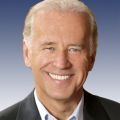
Joe Biden
“Just pay your fair share in taxes. A fair tax code. That's how we invest things to make this country great—health care, education, defense, and so much more. ... No billionaire should pay a lower federal tax rate than a teacher or sanitation worker or a nurse.”
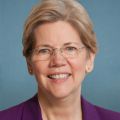
Elizabeth Warren
“There is nobody in this country who got rich on his own. Nobody. You built a factory out there—good for you. But I want to be clear: you moved your goods to market on the roads the rest of us paid for. You hired workers that the rest of us paid to educate. ... Part of the underlying social contract is you take a hunk of that and pay forward for the next kid who comes along.”
Candidate Tax Policies
In the recent 2024 presidential election, candidates described their different tax policies while campaigning. Donald Trump’s tax policy, for example, consisted of a universal tariff on U.S. imports, lowering the corporate income tax, taxing large private university endowments, exempting Social Security benefits, overtime pay, and tips from taxation, etc. He also sought to make the expiring estate tax cuts from his 2017 Tax Cuts and Jobs Act permanent.
Kamala Harris’s tax plan, on the other hand, consisted of expanding the child tax credit, creating tax credits for certain types of business activity, increasing tax rates on corporations, and more. Trump and Harris both sought to eliminate the tax on tips, but directly disagreed in their tax rates on corporations, as Trump would decrease them while Kamala would increase them.
Why is Tax Policy Important?
Tax policy is essential because it significantly impacts everything from an individual level to a federal economic level. Individuals are directly affected by a candidate’s tax policy, as they may have to pay more or less in taxes based on the policy. Any taxes they owe on property, businesses, and income they earn are entirely dependent on the current tax policy. For example, large corporations would pay less in taxes under Trump’s plan, but more under Harris’s plan.
Furthermore, taxes are the primary source of revenue and income for governments at all levels (federal, state, and local). This revenue funds public services that also affect the individual, such as education, healthcare, infrastructure, public safety, and defense. Without these funds, many services may be cut or defunded as the government could no longer afford them. Taxes are meant to provide some amount of equity. Public schools, for one, are entirely government-funded to ensure that the individuals (parents) can send their children to school for free.
Building on equity, tax systems are meant to address income and wealth inequality. Many policies promote increased taxes for the wealthy and large corporations, as outlined in Harris’s plan, which seek to redistribute wealth from the rich to the poor. These can potentially reduce economic and social disparities and promote social equity.
Recent Tax News (2025)
President Trump’s One Big Beautiful Bill Act (OBBBA) was passed in the House in July 2025. This bill (now law) included major tax cuts, including no tax on tips and overtime, and extended a larger standard deduction. It also makes individual income taxes more stable by securing the permanent extension of the rates and brackets of the 2017 individual income tax cuts. However, the OBBBA severely complicates the tax code, and sends taxpayers through new rules and regulations that may outweigh the extra money.
To learn more about biases and party affiliation, visit www.biasly.com. Biasly also offers a Premium Membership for an in-depth analysis of current news and access to bias analytics, discussions, and more.
