









How News Sources Portray Travel Ban Policy
This chart shows how major news sources across the ideological spectrum frame travel ban policy, from left to right-leaning perspectives.











New travel bans from the Trump Administration restricting entry into the U.S. have become a highly partisan topic. Media bias has exacerbated the polarization of many issues, as more people are susceptible to biased news. As of July 2025, the travel bans have become the subject of debate due to new extensions and additions to the travel ban list. Many countries face restricted or fully banned entry into the U.S. after executive orders from President Trump.
The U.S. travel ban refers to President Trump’s executive order to inhibit the travel and refugee resettlement of people from certain nations. It limits immigration to the U.S. from several high-risk countries and was proposed/implemented during the Trump Administration. The travel ban is a largely partisan and highly polarizing issue – most Republicans approve of the ban, while most Democrats disapprove of it. Of all Americans, 59% disapprove of the ban, while 38% approve of it.
Republican Stance on the Travel Ban
Republicans are largely in support of limiting and banning travel from high-risk countries. According to a 2017 Pew Study, 81% of Republicans approve of some policies to stop refugees and to prevent people from majority Muslim countries from entering the U.S, and 16% disapprove. However, according to a 2022 Pew Study, 58% of Republicans support taking in civilian refugees trying to escape violence and war. And, 51% would like to make it easier to sponsor family members to immigrate to the U.S. In their foreign policy post-9/11 under the Bush Administration, more Republicans favored restricting travel, particularly from countries that were susceptible to terrorism (according to the government), to protect the U.S. from another terrorist attack.
Republicans generally defended President Trump’s travel ban as a national security and public safety measure. They argued that the U.S. government has the authority to restrict entry from countries where vetting systems are weak, identity records are unreliable, terrorism risks are higher, or governments do not cooperate enough with U.S. security and immigration enforcement. Republicans also framed the policy as country-specific rather than religious, saying it was based on concerns like information-sharing, visa overstays, and the ability to properly screen travelers and refugees.
Republicans also saw the travel ban as part of a broader effort to tighten immigration controls, strengthen border security, and pressure foreign governments to meet U.S. security standards. They supported using presidential authority to limit travel and refugee admissions when officials believed entry could harm U.S. interests. While the policy included some exceptions and waivers for certain individuals, Republicans generally opposed Democratic efforts to repeal it and argued that selective restrictions were necessary to protect the country.
Politicians Who Support Travel Ban
81% of Republicans approve of some policies to stop refugees and to prevent people from majority Muslim countries from entering the U.S.
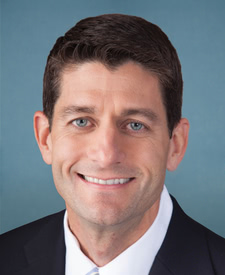
Paul Ryan
“The president has a responsibility to the security of this country. ... What is happening is something that we support, which is we need to pause, and we need to make sure that the vetting standards are up to snuff, so that we can guarantee the safety and security of this country. That is what this does.”
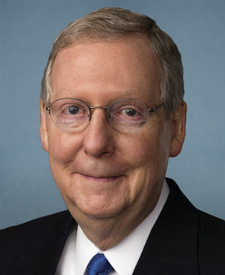
Mitch McConnell
“As you know, there were several earlier iterations of the so-called travel ban. ... I think the administration finally got it right, and the Supreme Court agreed with that.”
Democratic Stance on the Travel Ban
Democrats generally oppose the travel ban, with 89% disapproving of policies that prevent refugees and people from majority Muslim countries from entering the U.S., and 9% approve of it. Democrats mainly disapprove of the ban due to its emphasis on Muslim countries, and they contend that these bans are unfairly religion- and ethnicity-based. These data are virtually flipped from Republicans – the percentage of Republicans who support it (81%) is quite similar to Democrats who oppose it (89%) and vice versa.
Overall, Democrats tended to oppose Trump’s travel ban because they viewed it as discriminatory, anti-Muslim, harmful to refugees, damaging to America’s global reputation, and disruptive to universities and international students. They argued that the policy conflicted with values of religious freedom, immigrant inclusion, humanitarian protection, and international openness.
Democrats also questioned the national-security justification for the ban, arguing that it relied too heavily on broad presidential power and did not clearly make the country safer. While Republicans defended the policy as a protective security measure, Democrats tended to see it as an exclusionary and morally troubling policy that should be challenged through courts, public pressure, and legislative action.
Politicians Who Oppose Travel Ban
89% of Democrats disapprove of policies that prevent refugees and people from majority Muslim countries from entering the U.S.
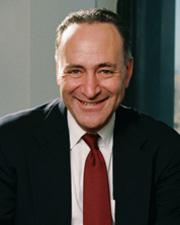
Charles E. Schumer
“We're demanding the president reverse these executive orders that go against what we are, everything we have always stood for. ... Executive orders make us less safe and secure and turn much of the world against us. It must be reversed immediately.”

Nancy Pelosi
“The Trump Administration's expansion of its outrageous, un-American travel ban threatens our security, our values and the rule of law. The sweeping rule... is discrimination disguised as policy. ... With this latest callous decision, the President has doubled down on his cruelty and further undermined our global leadership, our Constitution and our proud heritage as a nation of immigrants.”
U.S. Policy on Immigration
The U.S. immigration policy varies from year to year, with immigration being a highly partisan topic. For example, Republicans tend to enforce stricter immigration policies and advocate for closed borders, whereas Democrats generally prefer open borders and have more lenient immigration policies.
The Trump Administration has acted quickly on its campaign immigration promises, including aggressively and efficiently pursuing the removal of noncitizens, limiting access to humanitarian forms of relief, and closing the southern border. Republicans are largely in support of stricter border control and of tightening border control to limit immigration into the U.S. Republicans (82%) strongly endorse the construction of a wall along the U.S.-Mexico border.
Outside of the U.S.-Mexico border, Trump fully suspended travel from the following 12 countries in 2025: Afghanistan, Burma, Chad, the Republic of the Congo, Equatorial Guinea, Eritrea, Haiti, Iran, Libya, Somalia, Sudan, and Yemen. Some were due to the presence of the Taliban and other terrorist organizations, others were because many of the people from these countries tended to overstay their visas. This became the forerunner of Trump’s foreign policy.
The Travel Ban’s Effect on the Economy
Travel bans can negatively affect the economy, as they reduce tourism, trade, and working-age people. Tourism greatly decreases with the presence of travel bans, which harms industries or locations that rely on tourism as income. Hotels, restaurants, entertainment venues, and transportation are some industries that would be negatively affected by the implementation of travel bans. Major cities and destinations, such as Los Angeles and Las Vegas, and popular travel states, like Florida and California, rely heavily on tourism. The lack of tourism caused by travel bans can cause these economies to suffer.
Travel bans can also disrupt and delay international trade. Restrictions on crew members and transit passengers can affect the international transportation of goods and supply chains. Preventing passengers from entering the U.S. may limit trade and harm the workforce. Those of working age in countries where a travel ban is in place will not be able to enter or work in the U.S. This can exacerbate existing labor shortages in fields such as healthcare and technology. Travel bans will also reduce the approval of student visas, which will significantly reduce workers in fields that require higher education.
The Future of Travel Bans
Travel bans are expected to drastically change throughout the Trump Administration. As of July 2025, the most recent travel ban fully suspended travel from 12 countries and partially suspended travel from seven others. The full ban applies to nationals for both immigrant and nonimmigrant entry, while a partial ban restricts immigration visas and certain nonimmigration visas. Reports indicate that the administration is considering adding up to 36 more countries to the travel ban list, for a total of 55 countries that would have restricted access to traveling to the U.S.
To learn more about biases and party affiliation, visit www.biasly.com. Biasly also offers a Premium Membership for an in-depth analysis of current news and access to bias analytics, discussions, and more.
