




-12% Somewhat Left
Bias Meter
Extremely
Liberal
Very
Liberal
Somewhat Liberal
Center
Somewhat Conservative
Very
Conservative
Extremely
Conservative
-100%
Liberal
100%
Conservative

Biasly determines media bias ratings through a dual-layered approach combining artificial intelligence and analyst review. The platform’s proprietary bias detection engine, Bias Meter, evaluates sentiment, policy position alignment, and language framing across thousands of data points in news articles. Analysts then verify and interpret the AI’s findings, providing additional context where needed. Learn more about ratings
- Profile
Anchorage Daily News on the media bias chart
- Bias Rating
-12% Somewhat Left
- Reliability38% Reliable AveragePolicy Leanings
-4% Center
Extremely
LiberalVery
LiberalModerately
LiberalSomewhat Liberal
Center
Somewhat Conservative
Moderately
ConservativeVery
ConservativeExtremely
Conservative-100%
Liberal100%
Conservative
Average Reliability
*Our bias meter rating uses data science including sentiment analysis, machine learning and our proprietary algorithm for determining biases in news articles. Bias scores are on a scale of -100% to 100% with higher negative scores being more liberal and higher positive scores being more conservative and 0% being neutral. The rating is an independent analysis and is not affiliated nor sponsored by the news source or any other organization.
Politician Portrayal10% negative
Continue For Free
Create your free account to see the in-depth bias analytics and more.
By creating an account, you agree to our Terms and Privacy Policy, and subscribe to email updates.
Log In
Log in to your account to see the in-depth bias analytics and more.
Analysis of Anchorage Daily News Articles
Analysis of Bias in Anchorage Daily News Online Articles
Anchorage Daily News has found that in-depth coverage of Alaskan problems alongside national politics is a great way to drive up viewership. Given that much of its readership is Alaska-based, where regional issues take precedence, it’s essential to ask: is Anchorage Daily News truly biased?
To evaluate this, we can analyze select Anchorage Daily News articles through several of Biasly’s bias rating criteria: Tone, Tendency, Author, Diction, and Expediency Bias.
- Tone: The overall attitude conveyed by the article
- Diction: Specific word choices made by the writer
- Author: The background and social presence of the journalist
- Tendency: Patterns of bias in the writer’s broader body of work
- Expediency Bias: Quick visual or textual indicators like headlines and photos that imply bias

Source: Anchorage Daily News
One such article features a headline that draws a correlation between the current federal shutdown and the potential impact of it upon those in Alaska who rely on food assistance. The photo shown is of the Division of Public Assistance in Anchorage. The article begins rather negatively, emphasizing how the government shutdown will affect Alaskans in need of SNAP the longer it continues.
Reporter Iris Samuels outlines how the state will be affected. She slightly blames the Republicans, as she perceives them as the ones at the root cause of the shutdown. For instance, Alaska’s current all-Republican congressional delegation is quoted. Specifically, Alaskan Senator Lisa Murkowski, who calls for a resolution to the issue by working together, is quoted multiple times. While this lends weight to the article, it also reveals Samuels’ personal admiration for Murkowski, as her perspective is highlighted positively.
“U.S. Sen. Dan Sullivan and U.S. Rep. Nick Begich have blamed the shutdown on Democrats. U.S. Sen. Lisa Murkowski blasted her colleagues on Saturday for blaming the opposite party for the shutdown rather than working across the aisle to end it.”
The article leans progressive in its portrayal of the government shutdown, criticising it and the Republicans. By linking Samuels’ own point of view to Senator Lisa Murkowski’s desire to collaborate and end the shutdown, the author aligns the narrative with left-leaning ideals. Moral leadership and advocacy are central themes in this article. This framing, while uplifting, subtly situates the subjects within a progressive ideological lens, further underscoring the article’s ideological slant.
Iris Samuels’ Twitter activity reflects a professional, process-oriented approach to political reporting, with a strong emphasis on election mechanics, voter access, and institutional accountability rather than overt ideological advocacy. Her posts primarily highlight reporting collaborations, podcast discussions, and contextual background drawn from her own interviews, often amplifying work by fellow Alaska journalists and local outlets. While her focus on ranked-choice voting, Indigenous representation, and electoral transparency aligns more closely with progressive civic concerns, her tone remains measured and informational, centering on how political systems function rather than promoting partisan outcomes. Let’s take a closer look at one of Samuels’ tweets that illustrates her emphasis on contextual reporting and the electoral process over political rhetoric:
The news on Alaska’s US House race is still reverberating, but don’t forget we also have a pivotal US Senate election in November. Sen. Lisa Murkowski faces challenges from the left (Pat Chesbro) and right (Kelly Tshibaka). Here they are literally in that order on stage today. pic.twitter.com/6KTLXScvjK
— Iris Samuels (@iris_samuels) September 1, 2022
By highlighting electoral context rather than partisan conflict, Samuels reinforces her role as a reporter focused on explaining political processes rather than shaping reader sentiment. The tweet underscores her consistent interest in how elections unfold in Alaska, particularly in a political environment shaped by ranked-choice voting and cross-ideological competition. While her coverage often aligns with themes valued by progressive audiences, such as collaboration and institutional accountability, her public-facing commentary maintains a restrained, explanatory tone aligned with traditional journalistic norms.
Another article titled “Gaza ceasefire tested as Israel and Hamas exchange fire and blame” is much more balanced. It lays out the situation without any opinionated language. Phrases and diction like “called”, “said in a statement”, and “reported strikes” reinforce neutrality. Even though it is a sensitive topic, it is presented only factually:
“There are still 13 bodies of hostages in Gaza and their slow return is complicating efforts to proceed to the ceasefire’s next phases, which addresses even thornier issues, including the disarmament of Hamas, deployment of an international security force in Gaza and deciding who will govern the territory.”
The article employs language that is notably restrained and formal, contributing to its overall neutral tone. Terms like “reported” and “spoke on condition of anonymity” are informative but measured, conveying the dynamics of the ceasefire without opinionating on it. The author also avoids emotionally charged words or loaded phrases often seen in more partisan outlets. Instead of framing the ceasefire as either positive or negative, the authors refer to it only in professional terms, explaining the situation and backing their claims up with verifiable quotes.
To sum it up, Anchorage Daily News shows inconsistent bias across its reporting. While the Gaza ceasefire article maintains neutrality through balanced presentation and restrained language, the government shutdown affecting SNAP article reveals a progressive slant by framing the current government shutdown as the fault. It also uses quotes from Alaskan senators in a way that agrees with Democratic perspectives. Despite attempts at balance in some reporting, Anchorage Daily News’s tendency to highlight progressive initiatives and frame stories through a social justice lens indicates an overall left-leaning orientation.
Analysis of Anchorage Daily News Opinion Articles
To fully understand political bias in media, it’s important to distinguish between factual reporting and opinion pieces. While reporting aims to present facts and let readers form their own conclusions, opinion articles express personal viewpoints on current issues. Although the previous section examined factual reporting, this section turns to how bias surfaces through Anchorage Daily News’s selection and tone of opinion content.
One prominent example is the opinion article titled “These are terrible times, to be sure. But we will triumph.” The title itself signals a persuasive tone and a clear alignment with progressive values. It implies dissatisfaction with the current Trump administration. It calls for resistance and eventual triumph, suggesting that the author prioritizes persuasion over balanced information delivery.
Analysis of Reliability in Anchorage Daily News’s Online News Articles
Anchorage Daily News aims to serve Alaskans with objective, fact-based reporting. Its staff includes writers from varying ideological backgrounds, which can help balance coverage. However, readers should distinguish between news reporting and opinion pieces to evaluate credibility effectively.
One notable example is the article titled “Rally dates are set. Venues are chosen. The only thing missing for Harris’ blitz is her VP choice”. Reporter Colleen Long covered Kamala Harris’ debate over who to choose as her Vice President. There are quotes from the three most prominent choices at the time (Josh Shapiro, Mark Kelly, and Tim Walz), with hyperlinks that the audience can check for themselves. The article refrains from editorial commentary, sticking to quotes and fact-based language. Despite Anchorage Daily News’s Somewhat Left rating, this piece illustrates factual neutrality.
Quality of Sources and Facts Used
Anchorage Daily News often uses credible sources from across the political spectrum. However, some articles skew in how comprehensively they present opposing viewpoints.
Consider the headline: “Senate passes measure to remove protections in National Petroleum Reserve-Alaska”. While well-documented and supported by nonprofit data and legal references, the article lacks a full view of all the differing perspectives on this issue. The article centers only on criticizing the measure, and bolsters that thought with quotes and statements that back this perspective up. This absence creates a perception that the majority of people are against the measure, despite there being vocal support for it from some groups.
Alex DeMarban, the author, includes quotes such as this one to push his point:
“Two Alaska groups said in a statement Thursday that the rollback of the plan would leave more than 13 million acres of protected Special Areas vulnerable. Those lands consist of the Utukok River Uplands, Colville River, Kasegaluk Lagoon, Peard Bay and the Teshekpuk Lake area that’s considered vital for caribou needed for subsistence hunts.”
In contrast, the article “Governor prioritizes ‘recovery and relief’ amid larger questions about the future of typhoon-ravaged Western Alaska villages” maintains objectivity. It features multiple quotes and statements from Governor Mike Dunleavy and Kelly Loeffler without any editorial slant. The author refrains from making any personal assessments, remaining focused on the affected villages and what Governor Dunleavy has promised to do. This allows readers to interpret the differences in thought on their own.
The article gains credibility through its 12 quotes from political candidates, 8 long and 4 short. These extensive quotations strengthen reliability by providing full context and minimizing misrepresentation, offering readers a more authentic and trustworthy account from primary sources.
The article features over seven sources, primarily officials working to help the villages and politicians who have made statements.
- Mike Dunleavy, Governor of Alaska
- Kelly Loeffler, Administrator of U.S. Small Business Administration
- State Emergency Operations Center
- Alaska Community Foundation
The article relies on primary sources, which are highly valid and enhance its reliability. This reliability helps, given its focus on the actions taken to help the people in villages damaged by Typhoon Halong. There is no editorialization within the article, and the focus is entirely factual. All the data is cross-referenced, which adds an additional layer of trust that sits well with the audience.
Selection and Omission Bias
Anchorage Daily News provides extensive coverage of Alaska’s issues, which is reasonable given that the main viewers reside in Alaska. However, bias may still emerge through framing and story selection.
In “Defending editorial independence”, selection bias surfaces through the article’s emphasis on negative aspects of the situation that unfolded. The article does not explore positive initiatives led by the Carpenter Media Group, nor does it present contrasting viewpoints. Still, it remains rooted in verifiable quotes.
The article does not highlight any proactive or positive measures taken by the Carpenter Media Group, and focuses only on the problem that the removal of this article caused. There had been an article published on their website, and after pressure from Representative Sarah Vance, it was taken down. They republished a modified version of the article without providing an explanation to the readers. The author addresses this in a very negative light, using the four employees who resigned in protest to back up her point. That said, the reporting does not cross into overt editorializing and is still grounded in verifiable facts and quotes for the most part.
By comparison, the article “Judge appears likely to order the Trump administration to keep funding SNAP food aid during the shutdown” shows a stronger balance. Reporters Michael Casey and Geoff Mulvihill include quotes from officials and judges familiar with the program. A notable example of left-leaning bias comes from a source quote:
“With the suspension of SNAP benefits, the nutritional needs of millions of school aged children in Plaintiff States will not be met,” plaintiffs wrote. “Hungry children have a harder time paying attention, behaving, and learning in school. States will have to devote additional state resources, including healthcare expenditures and additional educational resources, to address these challenges.”
Casey and Mulvihill use an extensive number of sources that cover all aspects of the situation. The article integrated conversations that involved politicians and included parts of the hearing where the plaintiffs spoke. They also referenced legal documentation that is readily available to the public for cross-examination and further analysis, which stands out as particularly objective fact reporting. Overall, Casey and Mulvihill used a well-rounded approach to delivering unbiased news to readers of Anchorage Daily News.
In opinion pieces, issues with factuality, sources, selection, and omission are frequently present. The articles we’ve covered so far reflect Anchorage Daily News’s Somewhat Left views, but this is not detrimental to its reliability. Its story selection favors issues that are more likely to concern liberals, making it safe to assume it neglects positions within Alaska that are favorable to conservatives.
Anchorage Daily News Bias Overview
Anchorage Daily News was established as the Anchorage Daily News in 1946. Today, it functions as an innovative news organization, with its main source of income coming from advertisements. With three Pulitzer Prizes to its name, Anchorage Daily News positions itself as a community asset focused on being a voice for Alaskan citizens, even those living in the most rural areas.
According to SimilarWeb, Anchorage Daily News reached an average of 1.9 million views per month in the previous year. When it comes to media bias, both AI and media analysts have evaluated its content, sources, and funding to determine its political leaning.
Source: Pew Research
As a leading local media outlet in Alaska, Anchorage Daily News plays a significant role in shaping public perception. Readers’ trust in the accuracy of local news may mirror the conclusions reached by Biasly’s media bias ratings. This article delves into Anchorage Daily News’s editorial tendencies to explore whether political bias is present and, if so, to what degree.
Is Anchorage Daily News Biased?
Based on Biasly’s evaluations, Anchorage Daily News is rated as Somewhat Left.
By examining content patterns and the broader context of media influence, we aim to offer a balanced perspective on Anchorage Daily News’s political bias and contribute to the ongoing discussion about bias in the news.
How Does Biasly Rate News Sources?
Biasly uses proprietary algorithms and a team of analysts to provide comprehensive bias evaluations across thousands of news outlets. Over 200,000 articles from more than 3,200 sources have been analyzed to identify the most accurate and unbiased stories.
Biasly assigns each outlet three key scores:
- Reliability Score – Reflects factual accuracy
- AI Bias Score – Generated via natural language processing
- Analyst Bias Score – Assessed by human political analysts
These scores are based on seven core metrics: Tone, Tendency, Diction, Author Check, Selection/Omission, Expediency Bias, and Accuracy. These elements help analysts and algorithms evaluate the political attitude conveyed by each article.
Biasly’s Bias Meter ranges from -100% (most left) to +100% (most right), with 0% indicating neutrality. The system evaluates individual articles based on political terms, policies, figures, and sentiment to calculate precise bias ratings.
Is Anchorage Daily News Politically Biased?
Anchorage Daily News earns a Somewhat Left rating for its AI Bias Score and a Somewhat Left for its Analyst Bias Score. The Analyst Bias Score is generated by reviewers from liberal, moderate, and conservative backgrounds. Analysts reviewed Anchorage Daily News articles and noted preferences in areas like coverage of liberal politicians and policy topics such as clean energy and healthcare. However, the paper maintained objectivity on topics like affirmative action and education.
Alaska’s demography presents a contrasting backdrop. According to 270ToWin, Alaska has voted reliably Republican since its inauguration into the Union in 1959. Throughout all that time, it has only voted Democrat once, in 1964. It is a state that votes red, a trend that has not changed in many years.
Alaska leans more conservative, which could explain differing perceptions of Anchorage Daily News’s content. The paper may draw mixed reactions depending on readers’ political orientations.
This Bias score is determined through natural language processing that evaluates the tone, word choice, and opinion embedded in the reporting. Recent AI evaluations highlight liberal-leaning narratives in articles discussing the Republican Party and scientific legislation.
How to Evaluate Bias
Although Biasly rates Anchorage Daily News as Somewhat Left, it’s important to remember that bias can vary from article to article. Anchorage Daily News also covers a conservative-leaning state with objectivity on many issues, from state legislation to social developments. This complexity underscores the importance of examining each article individually. So, let’s learn how to evaluate media bias.
Recognizing media bias requires awareness and critical thinking. Often, readers trust news sources that affirm their existing beliefs, a psychological tendency known as confirmation bias. This makes it harder to identify slanted narratives or one-sided reporting.
To combat this, it’s essential to challenge your assumptions by consulting multiple viewpoints and verifying news through third-party analysis. Tools like Biasly’s media bias ratings allow readers to compare the same news story across the political spectrum.
Ultimately, bias isn’t always a matter of what is said; it’s also about what is left out, how topics are framed, and which stories are chosen for coverage. Learning to recognize these patterns can help readers make more informed decisions and develop greater media literacy.
To start comparing news outlets and gain a better understanding of bias, sign up for Biasly’s Media Bias & News Analytics Platform to see how stories vary between sources.
Anchorage Daily News Reliability Overview
Is Anchorage Daily News Reliable?
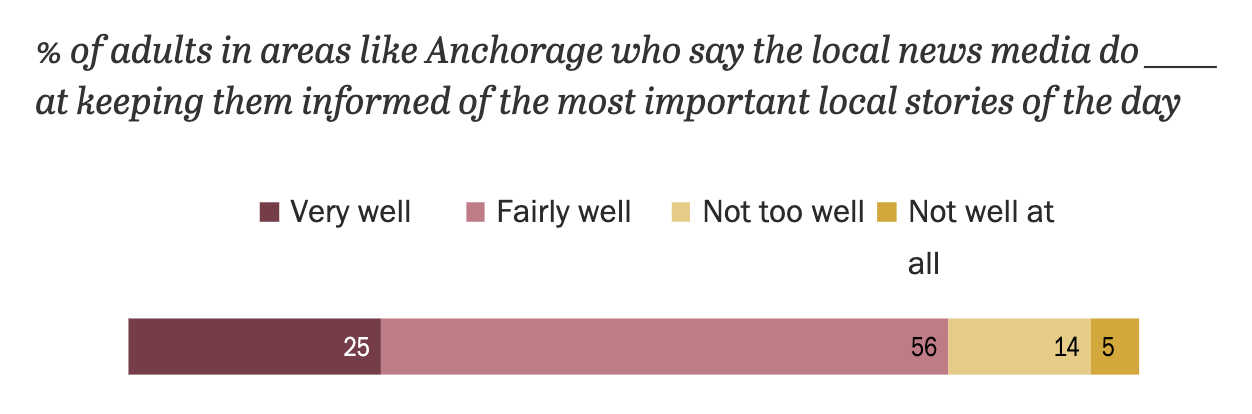
Anchorage Daily News finds itself toward the middle of the spectrum, with neither high nor low accuracy. Its status as a local news outlet contributes to its moderate reputation for reliability. According to Pew Research, Americans generally hold less politically polarized views toward local news compared to national media. In fact, 85% of adults regard local journalism as at least somewhat important to their community. However, another Pew study reports that satisfaction with local political news coverage remains disproportionately low relative to its airtime.
This suggests that Anchorage Daily News’s popularity among Alaskan residents may not stem from the reliability of its political news coverage. Further investigation is needed to determine whether bias or other factors are affecting its accuracy. At Biasly, we specialize in evaluating not just bias but also the reliability of media outlets. Let’s explore the accuracy and trustworthiness of Anchorage Daily News.
How to Evaluate Reliability?
Reliability refers to how trustworthy or accurate a news source is. If we can’t trust what we read, then continuing to consume content from that outlet serves little purpose. So how do we evaluate a news outlet’s reliability?
There are several potential measures of reliability to look out for when trying to determine whether a media source is reliable or not. Red flags for an unreliable article can include the presence of wild, unsubstantiated claims, facts dependent on other unreliable sources, heavy use of opinionated language, and more. In contrast, hallmarks of a reliable source include:
- Absence of subjective language
- Citing credible sources (e.g., .gov, .edu, academic references)
- Verifiable facts and statistics from multiple outlets
- Use of primary sources, like interviews or transcripts
- Consistency with coverage across other platforms
Biasly’s reliability scores incorporate these elements in evaluating media outlets.
So How Does Anchorage Daily News Fare in Its Reliability?
The political reliability index developed by Biasly assesses both accuracy and trustworthiness. Anchorage Daily News currently holds Average Reliability Score, which is calculated as a weighted average of:
- Fact Analysis Score – Evaluates the accuracy of claims, facts, and evidence.
- Source Analysis Score – Assesses the number, diversity, and credibility of sources and quotes used.
Anchorage Daily News’s Source Analysis Score is Average at 38% Reliable. This suggests moderate trustworthiness in its sourcing practices. The score is AI-generated and considers quote length, frequency, diversity, and quality.
While Anchorage Daily News leans toward factual reporting, occasional lapses, such as a lack of sources or no opposing perspectives, can affect its reliability rating. These nuances emphasize the importance of analyzing individual articles.
Anchorage Daily News’s Accuracy and Reliability
According to Biasly’s analysis, Anchorage Daily News maintains Average Reliability Score, but individual articles may vary significantly. Let’s dive into the details.
Political orientation plays a crucial role in how audiences perceive reliability. Anchorage Daily News has been accused of favoring a liberal narrative, potentially at the expense of factual reporting. To validate such claims, it’s essential to analyze whether the publication backs its assertions with sufficient evidence and diverse viewpoints.
Two common types of bias that affect factuality include:
- Selection Bias – Highlighting or omitting stories to fit a particular narrative.
- Omission Bias – Leaving out differing perspectives or relevant details to skew perception.
Biasly’s accuracy ratings use a scale from 1% (least accurate) to 100% (most accurate). Factors include the presence of supporting evidence, internal and external reliable sources, and balanced viewpoints.
For instance, Biasly gave USA Today a Somewhat Liberal Bias and a Good Analyst Reliability Score. One USA Today article, titled “Trump Midway Blitz leader called to testify in Chicago”, showed an Average reliability rating for failing to include diverse viewpoints and for employing inflammatory language. The critical language towards the current U.S. Customs and Border Patrol Commander, Gregory Bovino, is rampant within the article. Reporter Michael Loria failed to complement his selection of liberal opinions with views belonging to any other school of thought. In contrast, another piece from the outlet, titled “Government shutdown latest: states sue over SNAP cutoff” featuring legal and political sources with balanced quotes, was rated as Center and average for accuracy. The most inflammatory language here belongs to a politician in the Democratic Party, who is completely opposed to the shutdown. The article states:
“New York state Attorney General Letitia James said in a statement. “There is no excuse for this administration to abandon families who rely on SNAP, or food stamps, as a lifeline.”
We will take a closer look at more examples like this below to provide a further investigation into the reliability of Anchorage Daily News’s articles. This will include its use of selection bias, omission bias, and the quality of its sources and the facts it uses.
So, Is Anchorage Daily News Reliable?
Overall, Anchorage Daily News can be considered to be an outlet that is moderately reliable. The site may prioritize opinion-driven content, with occasional editorial framing on sensitive topics. While some claims are supported with evidence, consistency in sourcing could be improved to meet stronger journalistic standards.
As media literacy improves, readers can more easily detect issues with selection bias, omission bias, and factuality. To strengthen your ability to assess reliability across the political spectrum, use Biasly’s News Bias Checker to compare how multiple outlets report the same story.
This empowers you to consume more accurate, balanced, and dependable news. However, the contents of Anchorage Daily News’s article maintain accuracy and tend to cite evidence from numerous and varied sources.
Anchorage Daily News Editorial Patterns
Anchorage Daily News’s coverage of political topics often reflects a Somewhat Left bias, with consistent patterns in phrasing, source selection, and thematic focus that are Slightly Liberal. While the publication demonstrates journalistic standards in many of its reports, the choice of issues, framing, and word usage can indicate a political slant. This content analysis examines how Anchorage Daily News handles liberal and conservative issues, and evaluates its language choices and editorial tendencies.
Coverage of Liberal vs. Conservative Topics
Anchorage Daily News’s articles include constant discussion about the current United States’ political climate, especially in Alaska. These are areas such as governmental rulings, healthcare, and the environment, to which Anchorage Daily News tends to adopt sympathetic and supportive language. For instance, its coverage of topics related to clean energy, the Israeli-Palestinian conflict, and rural Alaska’s hardships frequently aligns with liberal viewpoints, using inclusive language to frame these policies in a way that appeals to Democrats.
On the other hand, articles covering conservative figures or Republican-led initiatives often employ a more critical tone. Biasly’s analysis of recent Anchorage Daily News articles reveals a tendency to highlight controversies or opposition surrounding Republican policies, while downplaying positive aspects or conservative rationale. For example, when analyzing congressional laws passed, Republican proposals may receive more scrutiny, with an emphasis on potential ramifications or public outcry.
This news media bias manifests in subtle ways, such as placing greater prominence on Democratic voices or using emotional diction when describing liberal causes, while offering more detached language in conservative contexts. Words like “freedom,” “intervention,” and “equality” appear more frequently in liberal-oriented reporting, while conservative views are often framed as “repeals” or “falsehoods”.
Policy and Issue Framing
When covering healthcare, Anchorage Daily News often highlights supportive opinions and backs movements for expanded legal protections. This aligns with its Anchorage Daily News media bias. This is rarer in Alaska, as Alaska has consistently voted Republican since 1960. Similarly, coverage of environmental issues reflects an urgency consistent with climate advocacy narratives, often featuring voices from scientists, community leaders, and activists in favor of green legislation.
In contrast, issues like limited government intervention, stricter abortion laws, or religious liberties typically associated with conservative platforms are covered in a more cautious or critical tone. These stories are often contextualized through the lens of their impact on marginalized groups or framed as polarizing.
Even in neutral coverage, phrasing choices shape perception. Articles will describe liberal proposals as “people-positive” or “protecting the needy,” while conservative legislation may be described as “restricting liberty” or “removing autonomy”. This consistent choice of words reflects an editorial decision that, even unintentionally, can contribute to bias in news media.
Coverage and Relevance
Anchorage Daily News’s reporting often touches on key issues central to the media political bias discussion, including discussion of Alaska’s political climate, politics in the greater United States, and dilemmas that directly affect Alaskan residents. As such, it serves as a compelling case study for examining source bias and news media bias in state-focused reporting.
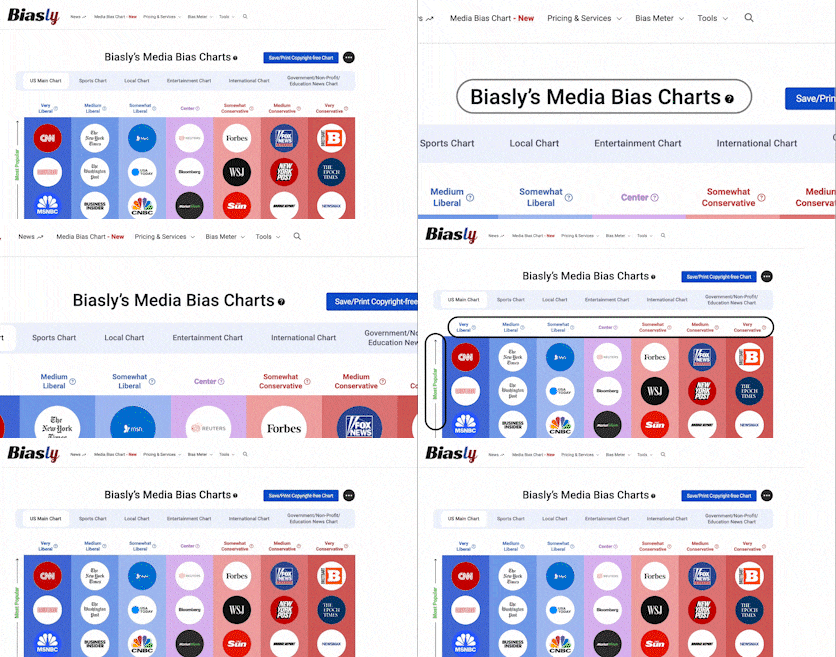
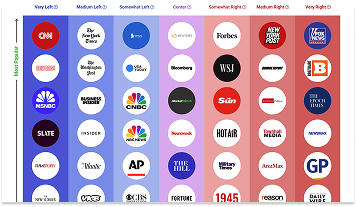
Readers who wish to further explore how Anchorage Daily News compares with other publications can visit Biasly’s Media Bias Chart to analyze tone and word choice in real time.
Funding and Ownership
Who Owns Anchorage Daily News?
Anchorage Daily News is currently owned by Binkley Co., which became its official owner in 2017. Influential figures such as John Binkley, a previous member of the Alaska House of Representatives, form part of Binkley Co. As of 2025, the current CEO is Ryan Binkley. The paper has earned three Pulitzer Prizes (in 1976, 1989, and 2020).

John Binkley, Republican politician from Alaska – Source: Wikipedia
Under its current structure, the newspaper’s editorial board operates with a commitment to attempt to express different points of view in its opinionated articles. Its opinionated articles are turned in by residents of Alaska and Anchorage, and different viewpoints are encouraged. Anchorage Daily News’s opinion tab asserts:
“We welcome and publish a broad range of viewpoints on state, local and national issues. Please read our guidelines for letters and commentaries.”
This reinforces the paper’s public commitment to transparency in journalism, helping ensure that all voices may be heard, while trying to exclude biases in their typical reporting. While some biases may still arise due to staff perspectives or editorial practices, they are not easily attributed to external funding.
This locally owned, advertising-supported model may provide added reassurance to readers seeking a news outlet that values independence and editorial integrity.
Who Funds Anchorage Daily News?
Anchorage Daily News is owned and operated by Binkley Co., since purchasing it from the Alaska Dispatch in 2017. The outlet has used advertisements as a source of income ever since its creation in 1946.
Today, it has an online store that readers can buy items from. Its funding comes primarily from advertisements and a percentage of the money when viewers buy items through the ADN Store, and advertising sales.
As of now, Anchorage Daily News’s sources of income rarely affect the quality of its reporting. Nevertheless, as with any outlet, funding sources and board priorities can shape newsroom incentives over time and should be monitored by readers.
Additional Insights
News Source Comparison
When it comes to news source comparison, Anchorage Daily News is often evaluated alongside other regional and national outlets that lean left or center-left. Sources like The Guardian, MSN, or NBC News often present similar tones and editorial philosophies. While Anchorage Daily News maintains a Somewhat Left media bias, it differs from strongly partisan sources in that it occasionally includes opposing viewpoints and strives for Alaska-specific coverage.
This puts it in contrast with more biased media outlets that present consistently one-sided narratives without factual counterpoints. Readers seeking balanced political coverage may compare Anchorage Daily News’s framing of issues with outlets rated as Center or Lean Left on our Media Bias Chart, or explore other regional papers on our Similar Sources page.
Notable Contributors and Authors
Anchorage Daily News features a diverse range of reporters and columnists, many of whom are deeply familiar with Alaska’s social climate. Reporters like Colleen Long, who frequently covers political controversies and election matters, exemplify the outlet’s strength in local investigative journalism.
Other contributors focus on the environment, healthcare, or important court cases—topics central to Alaskan communities. While some contributors may be seen as leaning left in tone or topic selection, their work is generally grounded in factual reporting. The presence of recurring bylines helps readers evaluate individual journalists’ bias over time.
Related Tools and Resource Pages
To better understand how Anchorage Daily News fits into the broader media landscape, we recommend exploring these helpful resources:
- Media Bias Chart: See where Anchorage Daily News ranks among hundreds of media outlets across the political spectrum.
- Political Bias Chart: Visualize political slants of news sources across various policy areas.
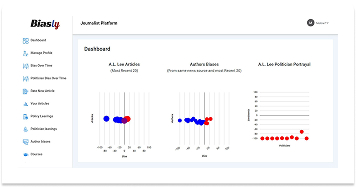
- Journalist Bias Analytics Platform: Explore how individual journalists contribute to bias within their publications.
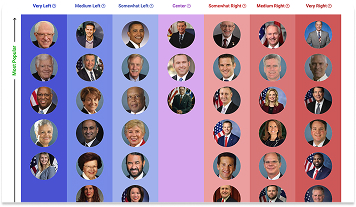
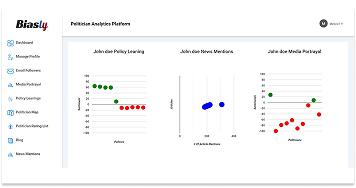
- Politician Bias Analytics Platform: Compare how politicians are framed differently by Anchorage Daily News and other outlets.
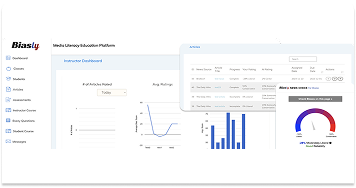
- Media Literacy Education Platform: Learn how to critically assess media sources, bias techniques, and news reliability.
Frequently Asked Questions
Anchorage Daily News is rated as Somewhat Left based on Biasly’s media bias algorithm, which assesses sentiment, article framing, and policy favorability.
While Anchorage Daily News is not widely known for promoting fake news, some articles have shown selection and omission bias, especially in political reporting. Its rating leans to the left, which exemplifies this. However, its factual reporting is generally sound.
Biasly uses a combination of AI sentiment analysis and human analyst review to assess tone, fact accuracy, source quality, and media bias indicators. Learn more on our Bias Meter page.
Generally, yes, though partisan framing and selective reporting can affect perceived reliability.
Military Spending
| Date | Sentiment | Associated Article | Snippet |
|---|---|---|---|
| 08/25/2019 | 75% For | Trump Family Detentions Flores Agreement (link) | So, of course, the Trump administration is doing the opposite in a baldfaced |