




-12% Somewhat Left
Bias Meter
Extremely
Liberal
Very
Liberal
Somewhat Liberal
Center
Somewhat Conservative
Very
Conservative
Extremely
Conservative
-100%
Liberal
100%
Conservative

Biasly determines media bias ratings through a dual-layered approach combining artificial intelligence and analyst review. The platform’s proprietary bias detection engine, Bias Meter, evaluates sentiment, policy position alignment, and language framing across thousands of data points in news articles. Analysts then verify and interpret the AI’s findings, providing additional context where needed. Learn more about ratings
- Profile
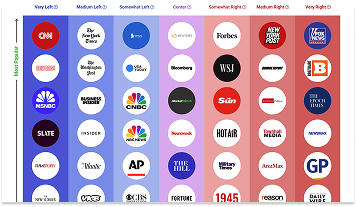
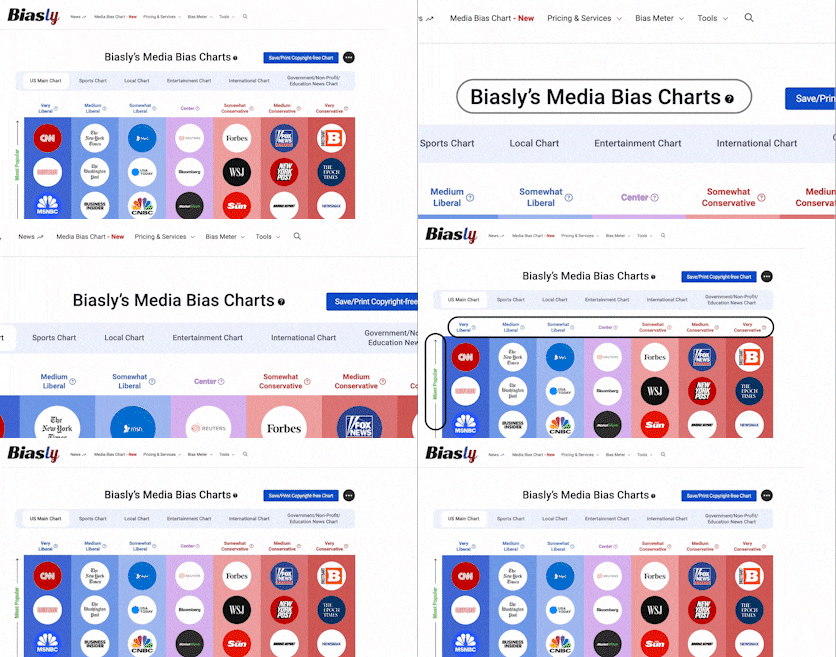
Bleacher Report on the media bias chart
Bleacher Report has a Bias Score of -12% Somewhat Left which is based on a variety of factors including its policy and politician leanings, article ratings, and the use of biased language. Its Reliability is rated as Average, and additional analytical insights are available in the other tabs.

- Bias Rating
-12% Somewhat Left
- Reliability43% Reliable AveragePolicy Leanings
-6% Center
Extremely
LiberalVery
LiberalModerately
LiberalSomewhat Liberal
Center
Somewhat Conservative
Moderately
ConservativeVery
ConservativeExtremely
Conservative-100%
Liberal100%
Conservative
Average Reliability
*Our bias meter rating uses data science including sentiment analysis, machine learning and our proprietary algorithm for determining biases in news articles. Bias scores are on a scale of -100% to 100% with higher negative scores being more liberal and higher positive scores being more conservative and 0% being neutral. The rating is an independent analysis and is not affiliated nor sponsored by the news source or any other organization.
Politician Portrayal18% negative
Continue For Free
Create your free account to see the in-depth bias analytics and more.
By creating an account, you agree to our Terms and Privacy Policy, and subscribe to email updates.
Log In
Log in to your account to see the in-depth bias analytics and more.
Policy Leanings Analysis
Policy | Bias score |
|---|
Bleacher Report Editorial Patterns
Bleacher Report’s coverage of political topics often reflects a Somewhat Left bias, with consistent patterns in phrasing, source selection, and thematic focus that are Slightly Liberal. While Bleacher Report mostly focuses on sports, its coverage can intersect with politics when the two topics align. This content analysis will examine how Bleacher Report discusses both politics and sports, and if any liberal and conservative bias is present in reporting.
Coverage of Liberal vs. Conservative Topics
Bleacher Report typically remains neutral when handling different political topics. For example, coverage on gun control, public education spending, and the death penalty has a neutral tone and no emotionally charged language. Other topics such as Iran and LGBTQ equality, are covered more liberally and often include inclusive language and calls for political action. For example, if a group of lawmakers called for a decrease in sales taxes, Bleacher Report would cover how that would affect stadium prices.
Policy and Issue Framing
When covering topics such as LGBTQ equality, Bleacher Report tends to approach the topic with supportive and affirmative language, calling for changes and inclusivity in sports. Bleacher Report will report on the opinions of players and league officials, and boost X posts about commentary on recent sports games. Some articles will be one-sided and only portray a single perspective, while others will include both and encourage viewers to form their own opinions about the situation.
Coverage and Relevance
Bleacher Report reports on various sports, including golf, basketball, football, and soccer. According to SimilarWeb, Bleacher Report reaches an average of over 39 million monthly visitors. Occasionally, when sports and politics connect, Bleacher Report will offer a report to readers. As such, it serves as a compelling case for studying bias and reliability in sports media.
Readers who wish to further explore how Bleacher Report compares with other publications can visit Biasly’s Media Bias Chart to analyze tone and word choice in real time.
Bleacher Report Bias Analysis
Bleacher Report was founded in 2007 by Bryan Goldberg, Dave Nemetz, and Matt McIntrye for sports fans to share their insights and opinions. Today, Bleacher Report features articles, videos, and is known for using social media to interact with readers. Erlang Solutions reported that Bleacher Report’s mobile app reaches over 250 million people each month.
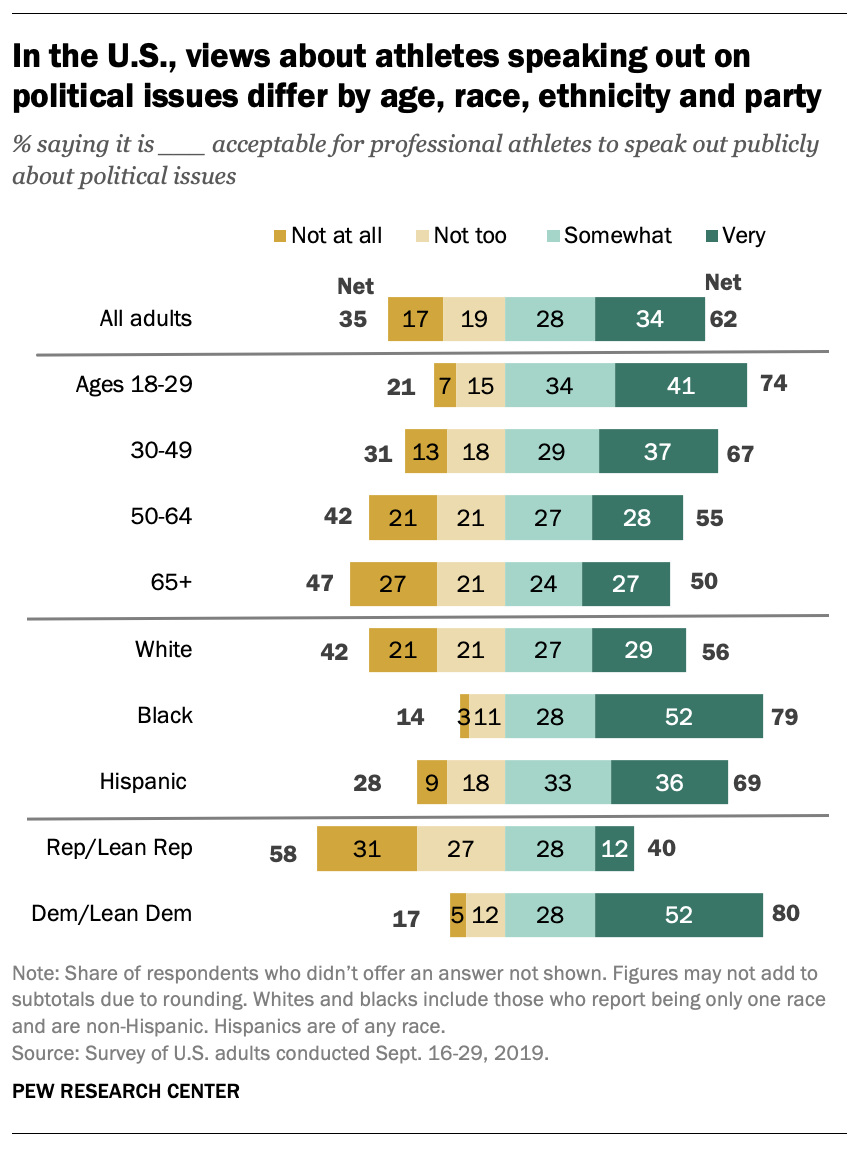
Source: Pew Research Center
Consider this study by the Pew Research Center. A majority of Americans are willing to hear the political opinions of athletes. With politics becoming more infused into sports, it is important to understand how and if Bleacher Report demonstrates political bias.
Is Bleacher Report Biased?
Based on Biasly’s evaluations, Bleacher Report is rated as Somewhat Left.
By examining content patterns and the broader context of media influence, we aim to offer a balanced perspective on Bleacher Report’s political bias—and contribute to the ongoing discussion about bias in the news.
How Does Biasly Rate News Sources?
Biasly uses proprietary algorithms and a team of analysts to provide comprehensive bias evaluations across thousands of news outlets. Over 200,000 articles from more than 3,200 sources have been analyzed to identify the most accurate and unbiased stories.
Biasly assigns each outlet three key scores:
- Reliability Score – Reflects factual accuracy
- AI Bias Score – Generated via natural language processing
- Analyst Bias Score – Assessed by human political analysts
These scores are based on seven core metrics: Tone, Tendency, Diction, Author Check, Selection/Omission, Expediency Bias, and Accuracy. These elements help analysts and algorithms evaluate the political attitude conveyed by each article.
Biasly’s Bias Meter ranges from -100% (most left) to +100% (most right), with 0% indicating neutrality. The system evaluates individual articles based on political terms, policies, figures, and sentiment to calculate precise bias ratings.
Is Bleacher Report Politically Biased?
Bleacher Report earns a Somewhat Left rating for its AI Bias Score and a Somewhat Left for its Analyst Bias Score. The Analyst Bias Score is generated by reviewers from liberal, moderate, and conservative backgrounds. Analysts reviewed 15 Bleacher Report articles and noted preferences in areas like coverage of liberal politicians and policy topics such as LGBTQ rights and Iran. However, the paper maintained objectivity on topics like education spending and the death penalty.
An article titled, “Biden Administration Proposes Rule Prohibiting School Bans on Transgender Athletes” is an example of Bleacher Report’s preference in LGBTQ rights. The article discusses the Biden Administration’s proposal in an encouraging tone, citing hope for the proposal to be finalized in May. Additionally, the article includes quotes from Democratic officials that promote equality and equal access to education.
“Every student should be able to have the full experience of attending school in America, including participating in athletics, free from discrimination,” Miguel Cardona, who is President Joe Biden’s education secretary, said in a statement.”
Analysis of Bias in Bleacher Report Online Articles
Bleacher Report’s possible bias is important for readers to know because bias can influence the opinions of readers. Let’s take a look at an article to see how Bleacher Report displays political bias.
To evaluate this, we can analyze select Bleacher Report articles through several of Biasly’s bias rating criteria: Tone, Tendency, Author, Diction, and Expediency Bias.
- Tone: The overall attitude conveyed by the article
- Diction: Specific word choices made by the writer
- Author: The background and social presence of the journalist
- Tendency: Patterns of bias in the writer’s broader body of work
- Expediency Bias: Quick visual or textual indicators like headlines and photos that imply bias
Source: Bleacher Report
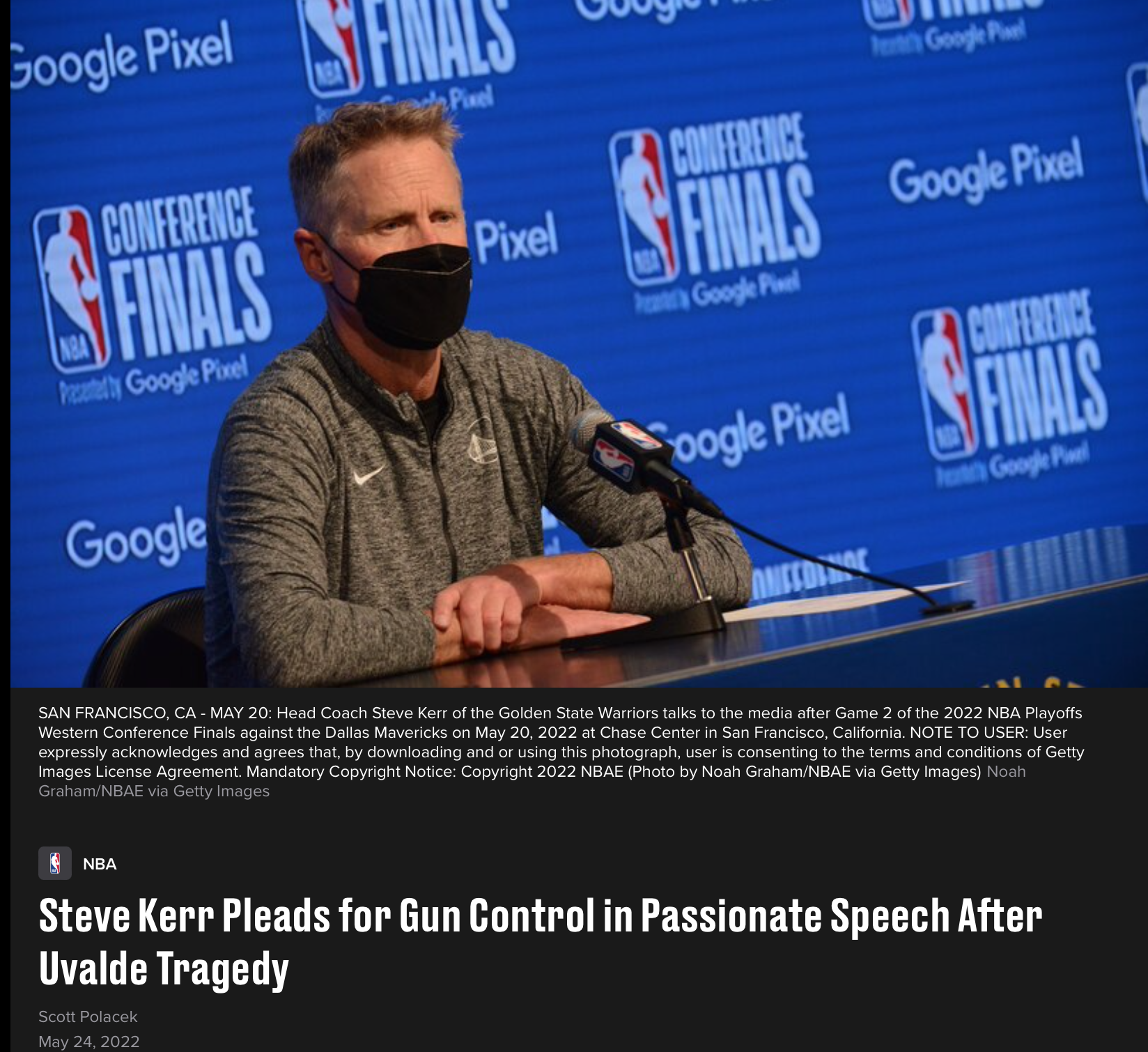
The article titled “Steve Kerr Pleads for Gun Control in Passionate Speech After Uvalde Tragedy” discusses comments made by Golden State Warriors Head Coach Steve Kerr regarding the Uvalde mass shooting. The author’s tone and tendency is slightly liberal due to the quote selection and positive sentiments for Steve Kerr.
One statement quoted from Kerr that is featured in the article is:
“There’s 50 senators right now who refuse to vote on H.R.8, which is a background check rule that the House passed a couple years ago. It’s been sitting there for two years. And there’s a reason they won’t vote on it. To hold on to power. So I ask you, Mitch McConnell, I ask all of you senators who refuse to do anything about the violence and school shootings and supermarket shootings.”
“I ask you, are you going to put your own desire for power ahead of the lives of our children and our elderly and our churchgoers? Because that’s what it looks like.”
The author also references Kerr positively:
“Kerr spoke ahead of Tuesday’s Western Conference Finals game against the Dallas Mavericks and grew quite emotional during comments that lasted for nearly three minutes”
“Kerr has long been a public advocate for stronger gun control measures. His father, Malcolm Kerr, was assassinated by gunmen when the Warriors head coach was in college.”
Throughout the article, the author maintains a positive tone towards Kerr, and does not challenge any of Kerr’s statements throughout the article’s tone. Additionally, the author provides no opposing viewpoints or sources to provide readers with a different perspective, as he only uses quotes from Kerr. The author’s lack of diverse viewpoints and positive tone towards Kerr suggests a left-leaning bias in the article.
The author could have provided a statement or previous statements made by Mitch McConnell, whom Kerr explicitly calls out, and other conservative senators don’t support that specific bill. The reader could be led to believe that conservative senators do not care for the lives of the citizens they represent, as Steve Kerr claimed in his press conference.
Diction, or the use of emotionally charged language, was not significantly present in the article; however, some questionable phrases were used. For example,
“Kerr was not the only high-profile figure in the NBA who called for change after yet another mass shooting in the United States. Los Angeles Lakers star LeBron James, who has a personal connection to education after he helped start the I PROMISE School in Akron, Ohio, also said enough is enough.”
The phrase “yet another” is suggestive language. It implies to the reader that mass shootings are more common than they may be in reality. Since the author offered no statistics regarding the issue, it would be easy for the reader to overestimate the number of mass shootings that have occurred.
Expediency bias, or the title and imagery present in the article, can sway articles in a certain direction. In this article, expediency bias is somewhat prevalent. The image above the headline shows head coach Kerr sitting behind his desk at the press conference where he provided his speech. This is an accurate portrayal and doesn’t sway the reader in any direction. The title, however, use of the words “passionate” and “tragedy” may lead the reader to agree with Kerr’s statements regarding the issue.
The author, Scott Polacek, on his X account rarely posts anything about politics. His posts mostly center around sports and reposting commentary about recent sports events. On Polacek’s Biasly profile, however, it can be seen that he has posted articles that have also been rated as liberal; this may be an indication of his tendencies.
“Combat sports now are either sad retirement tours or sad maga rallies, and that’s pretty much it.”
Combat sports now are either sad retirement tours or sad maga rallies, and that’s pretty much it https://t.co/4A5G6uHBNQ
— Scott Polacek (@ScottPolacek) February 23, 2026
An article titled, “Marshawn Lynch on Donald Trump: ‘That Mother–ker Say a Lot of S–t” is rated Somewhat Left by Biasly. The article maintains a neutral tone, and there is no harsh language present. This issue with this article, however, and the reason the article was rated Somewhat Left, is that the article has no opposing viewpoints. The article only showing one perspective is an example of bias because readers are not getting both sides of the story. Imagine you were being picked up by a friend to go to work. The friend was late picking you up, and you ended up late for work. You are mad at your friend for making you late, but you don’t know why she was late. Later, you find out that she had a family emergency, and that’s why she was late. That changed your perspective and feelings toward the situation. Learning about her side of the story changed the perception of the situation. The same thing can be said about this article.
Analysis of Bleacher Report Opinion Articles
It is important for readers to know the difference between factual and opinion reporting. Opinion pieces explicitly state the opinion of the author about a specific topic. Factual reporting is supported by sources and facts, and is written to allow readers to come up with their own opinions. Bleacher Report is no different from this, providing their own opinions about sports.
Bleacher Report has no political analysis in its opinion section. As a major sports publication, Bleacher Report has news and opinion pieces that mostly focus on sports like football, basketball, and soccer. If Bleacher Report covers any politics at all, it is only indirectly and relates to the sports world. No opinions or personal statements from Bleacher Report or a Bleacher Report author are present in the article.
How to Evaluate Bias
Although Biasly rates Bleacher Report as Somewhat Left, it’s important to remember that bias can vary from article to article. Bleacher Report also covers a conservative-leaning state with objectivity on many issues, from state legislation to social developments. This complexity underscores the importance of examining each article individually. So, let’s learn how to evaluate media bias.
Recognizing media bias requires awareness and critical thinking. Often, readers trust news sources that affirm their existing beliefs—a psychological tendency known as confirmation bias. This makes it harder to identify slanted narratives or one-sided reporting.
To combat this, it’s essential to challenge your assumptions by consulting multiple viewpoints and verifying news through third-party analysis. Tools like Biasly’s media bias ratings allow readers to compare the same news story across the political spectrum.
Ultimately, bias isn’t always a matter of what is said—it’s also about what is left out, how topics are framed, and which stories are chosen for coverage. Learning to recognize these patterns can help readers make more informed decisions and develop greater media literacy.
To start comparing news outlets and gain a better understanding of bias, sign up for Biasly’s Media Bias & News Analytics Platform to see how stories vary between sources.
Bleacher Report Reliability Analysis
Is Bleacher Report Reliable?
Bleacher Report finds itself with an average reliability. Its status as a prominent sports media company contributes to its moderate reputation for reliability. According to Shorty Awards, in 2020, Bleacher Report garnered over 25.7 billion video views across multiple social media apps. With such a high viewership, Bleacher Report serves as a compelling study for how reliable a sports media company is in covering politics. Let’s evaluate the reliability and credibility of Bleacher Report.
How to Evaluate Reliability?
Reliability refers to how trustworthy or accurate a news source is. If we can’t trust what we read, then continuing to consume content from that outlet serves little purpose. So how do we evaluate a news outlet’s reliability?
There are several potential measures of reliability to look out for when trying to determine whether a media source is reliable or not. Red flags for an unreliable article can include the presence of wild, unsubstantiated claims, facts dependent on other unreliable sources, heavy use of opinionated language, and more. In contrast, hallmarks of a reliable source include:
- Absence of subjective language
- Citing credible sources (e.g., .gov, .edu, academic references)
- Verifiable facts and statistics from multiple outlets
- Use of primary sources, like interviews or transcripts
- Consistency with coverage across other platforms
Biasly’s reliability scores incorporate these elements in evaluating media outlets.
So How Does Bleacher Report Fare in Its Reliability?
The political reliability index developed by Biasly assesses both accuracy and trustworthiness. Bleacher Report currently holds Average Reliability Score, which is calculated as a weighted average of:
- Fact Analysis Score – Evaluates the accuracy of claims, facts, and evidence.
- Source Analysis Score – Assesses the number, diversity, and credibility of sources and quotes used.
Bleacher Report’s Source Analysis Score is Average at 43% Reliable. This suggests moderate trustworthiness in its sourcing practices. The score is AI-generated and considers quote length, frequency, diversity, and quality.
The Fact Analysis Score of Bleacher Report is Pending at N/A. This further shows how well Bleacher Report supports its claims, addresses selection and omission bias, and presents verifiable evidence.
While Bleacher Report leans toward factual reporting, occasional lapses—such as unbalanced viewpoints or incomplete data—can affect its reliability rating. These nuances emphasize the importance of analyzing individual articles.
Bleacher Report’s Accuracy and Reliability
According to Biasly’s analysis, Bleacher Report maintains Average Reliability Score, but individual articles may vary significantly. Let’s dive into the details.
Political orientation plays a crucial role in how audiences perceive reliability. Bleacher Report has been accused of favoring a liberal narrative, potentially at the expense of factual reporting. To validate such claims, it’s essential to analyze whether the publication backs its assertions with sufficient evidence and diverse viewpoints.
Two common types of bias that affect factuality include:
- Selection Bias – Highlighting or omitting stories to fit a particular narrative.
- Omission Bias – Leaving out differing perspectives or relevant details to skew perception.
Biasly’s accuracy ratings use a scale from 1% (least accurate) to 100% (most accurate). Factors include the presence of supporting evidence, internal and external reliable sources, and balanced viewpoints.
Analysis of Reliability in Bleacher Report’s Online News Articles
Reliability assesses the quality of sources Bleacher Report uses as evidence for its articles. We will take a look at how Bleacher Report fairs in reliability and if readers can trust the information they are getting.
Quality of Sources and Facts Used
We will take another look at the article highlighted above: “Biden Administration Proposes Rule Prohibiting School Bans on Transgender Athletes.” This article discusses the potential changes in sports around the country due to a policy implementation from the Biden administration. The article uses 5 quotes total, which is a good amount. The author only uses one long quote and four short quotes, with 3 or fewer words.
This is not an ideal ratio for quotes and quote length. An abundance of long quotes is preferred because it gives the author fewer chances to take words out of context. Short quotes are easier to take out of context because the lack of information surrounding the quote can allow the author to use the person’s words in an incorrect manner. Although the author did use shorter quotes, it should be noted that the author did not take these quotes out of context.
Throughout the article, the author used three sources:
- “Biden Proposal Would Bar Schools from Enacting Outright Bans on Trans Athletes” (AP News, Somewhat Left)
- Miguel Cardona, Education Secretary (Biden Administration)
- “High court: Trans Girl Can Run Girls Track in West Virginia” (AP News, Somewhat Left)
More sources to support the claims in the article help the credibility of the overall report. Although the article provided factual information, an increased number of trustworthy sources helps increase the reliability of the article.
Selection and Omission Bias
Selection bias occurs when stories are selected or deselected to fit a specific narrative. Omission bias occurs when different opinions or political views regarding a situation are left out, so readers can only be exposed to a specific viewpoint. It is important to keep these two in mind when reading articles because selection and omission bias can influence the opinions of readers.
One article that portrays omission and selection bias is “NFL Threatened with Investigation over Treatment of Female Employees by Attorneys.” The author of this article describes how the NFL is being investigated by several states over allegations of the mistreatment of employees. The author provides a comment from NFL Commissioner Roger Goodell about the investigation:
“If we see evidence of discrimination, we will deal with that in a very serious way that would reflect the fact that we won’t tolerate it, and I think our clubs understand that,’ Goodell, who has served as commissioner since 2006, told reporters.”
“Last week, Liz Clarke, Paul Kane and Mark Maske of the Washington Post reported the committee reviewed more than 80,000 documents related to the Commanders workplace and expanded the investigation to include alleged financial impropriety.”
The issue here is that the article in total has only three sources representing the NFL, while using eight liberal leaning sources is opposition to the NFL. The imbalance of sources may lead to the perception that the issue facing the NFL is larger than reality. Additionally, the author did not use any conservative sources regarding the investigation, which also leads the reader to a lack of context surrounding the issue.
Let’s examine the article discussed previously, “Biden Administration Proposes Rule Prohibiting School Bans on Transgender Athletes.” This article faces similar issues. The author’s sources were all liberal leaning, meaning that there were no conservative viewpoints and a lack of balance in the article. If the author included opposing sources, it would have given readers a better opportunity to come to their own conclusions about the issue, rather than the author framing the issue in a certain political direction.
So, is Bleacher Report Reliable?
Overall, Bleacher Report can be considered to be an outlet that is moderately reliable. It demonstrates a consistent goal of journalistic integrity and typically supports claims with sources and quotes. Occasional omissions and framing bias do appear, particularly on culturally sensitive or partisan issues.
As media literacy improves, readers can more easily detect issues with selection bias, omission bias, and factuality. To strengthen your ability to assess reliability across the political spectrum, use Biasly’s News Bias Checker to compare how multiple outlets report the same story.
This empowers you to consume more accurate, balanced, and dependable news
Funding and Ownership
Who Owns Bleacher Report?

Source: Wikimedia Commons
TNT Sports, a proxy of Warner Bros Discovery, owns Bleacher Report. The current CEO of Bleacher Report is Lenny Daniels. Daniels has been involved in the athletic industry since 1988. His influence on any political matters of interest in Bleacher Report’s articles is likely limited because his history in anything politics-related is nonexistent.
Who Funds Bleacher Report?
Bleacher Report is funded by its parent company, Warner Bros Discovery. It was acquired by Warner Bros Discovery in 2012 for a reported price of between $175 million and $200 million. Bleacher Report also creates revenue through money from investors and social media.
Additional Insights
News Source Comparison
When it comes to news source comparison, Bleacher Report is often evaluated alongside other regional and national outlets that lean left or center-left. Sources like Forbes, NBC News, or ABC News often present similar tones and editorial philosophies. While Bleacher Report maintains a Somewhat Left media bias, it differs because of its coverage of both sports and politics, highlighting how the two can intersect.
This puts it in contrast with more biased media outlets that consistently only cover politics. Readers seeking balanced political coverage may compare Bleacher Report’s framing of issues with outlets rated as Center or Lean Right on our Media Bias Chart, or explore other regional papers on our Similar Sources page.
Notable Contributors and Authors
Bleacher Report employs a wide range of reporters who are widely educated in the world of sports. One notable example is Ric Bucher, a senior writer at Bleacher Report who was drafted for the Sacramento Kings in 1994. He offers strong commentary for Basketball that is much appreciated by viewers. Another notable example is Scott Polacek, a breaking news writer for Bleacher Report. Polacek has written many articles regarding the intersection of both sports and politics.
Related Tools and Resource Pages
To better understand how Bleacher Report fits into the broader media landscape, we recommend exploring these helpful resources:
- Media Bias Chart: See where Bleacher Report ranks among hundreds of media outlets across the political spectrum.
- Political Bias Chart: Visualize political slants of news sources across various policy areas.
- Journalist Bias Analytics Platform: Explore how individual journalists contribute to bias within their publications.
- Politician Bias Analytics Platform: Compare how politicians are framed differently by Bleacher Report and other outlets.
- Media Literacy Education Platform: Learn how to critically assess media sources, bias techniques, and news reliability.
Frequently Asked Questions
Bleacher Report is rated as Somewhat Left based on Biasly’s media bias algorithm, which assesses sentiment, article framing, and policy favorability.
While Bleacher Report is not widely known for promoting fake news, some articles have shown selection and omission bias, especially in political reporting. Its factual reporting is generally sound.
Biasly uses a combination of AI sentiment analysis and human analyst review to assess tone, fact accuracy, source quality, and media bias indicators. Learn more on our Bias Meter page.
Generally, yes, though partisan framing and selective reporting can affect perceived reliability.
Ratings are based on recent news using data science and A.I. technology.
Military Spending
| Date | Sentiment | Associated Article | Snippet |
|---|---|---|---|
| 08/25/2019 | 75% For | Trump Family Detentions Flores Agreement (link) | So, of course, the Trump administration is doing the opposite in a baldfaced |