




2% Center
Bias Meter
Extremely
Liberal
Very
Liberal
Somewhat Liberal
Center
Somewhat Conservative
Very
Conservative
Extremely
Conservative
-100%
Liberal
100%
Conservative
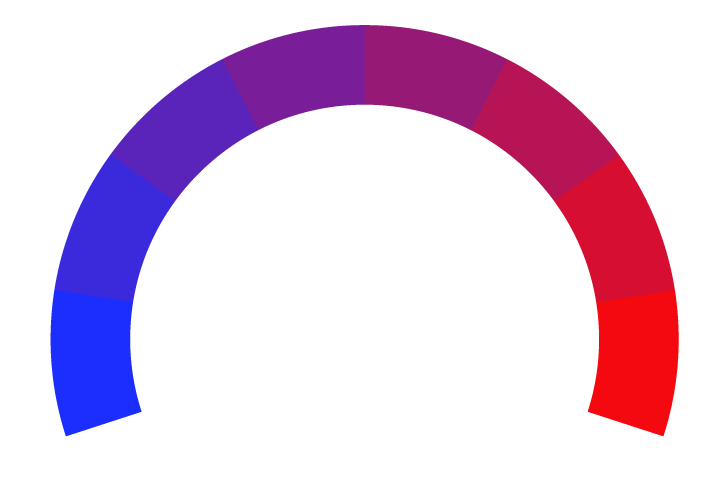
Biasly determines media bias ratings through a dual-layered approach combining artificial intelligence and analyst review. The platform’s proprietary bias detection engine, Bias Meter, evaluates sentiment, policy position alignment, and language framing across thousands of data points in news articles. Analysts then verify and interpret the AI’s findings, providing additional context where needed. Learn more about ratings
- Profile
CNet on the media bias chart
- Bias Rating
2% Center
- Reliability59% Reliable AveragePolicy Leanings
-6% Center
Extremely
LiberalVery
LiberalModerately
LiberalSomewhat Liberal
Center
Somewhat Conservative
Moderately
ConservativeVery
ConservativeExtremely
Conservative-100%
Liberal100%
Conservative
Average Reliability
*Our bias meter rating uses data science including sentiment analysis, machine learning and our proprietary algorithm for determining biases in news articles. Bias scores are on a scale of -100% to 100% with higher negative scores being more liberal and higher positive scores being more conservative and 0% being neutral. The rating is an independent analysis and is not affiliated nor sponsored by the news source or any other organization.
Politician Portrayal5% negative
Continue For Free
Create your free account to see the in-depth bias analytics and more.
By creating an account, you agree to our Terms and Privacy Policy, and subscribe to email updates.
Log In
Log in to your account to see the in-depth bias analytics and more.
Analysis of CNet Articles
Analysis of Bias in CNet Online Articles
CNet has found that in-depth coverage of technology is one of the most effective ways to drive subscriptions. It’s essential to ask: is CNet truly biased?
To evaluate this, we can analyze select CNet articles through several of Biasly’s bias rating criteria: Tone, Tendency, Author, Diction, and Expediency Bias.
- Tone: The overall attitude conveyed by the article
- Diction: Specific word choices made by the writer
- Author: The background and social presence of the journalist
- Tendency: Patterns of bias in the writer’s broader body of work
- Expediency Bias: Quick visual or textual indicators like headlines and photos that imply bias
Source: CNet
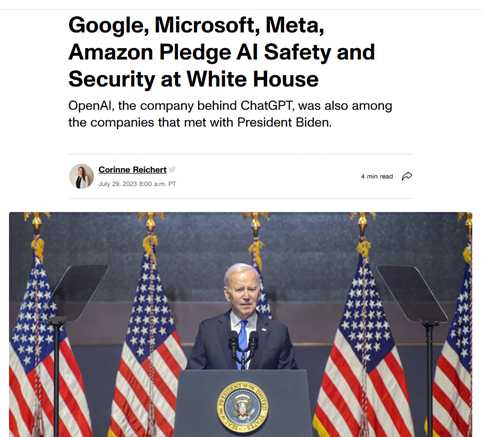
The first article we’ll look at is titled “Google, Microsoft, Meta, Amazon Pledge AI Safety and Security at White House.” Biasly has rated this article as Center-right, indicating that it includes limited media bias. Genuine news reporting has a neutral tone, objective diction, and a non-biased author.
For example, the tone of this article is impartial, reporting facts such as the following:
“TikTok CEO Shou Chew is in Washington, DC, today to try and convince Congress that TikTok can protect US users’ data and maintain safety for the millions of Americans who use the popular video app.”
“Officials are concerned US user data could be passed on to the Chinese government or that the Chinese government could dictate what content is shown on TikTok in a bid to influence public opinion in the US.”
The above quote highlights the tension between technological globalization and national security concerns, centering on Shou Chew’s effort to defend TikTok before the United States Congress. While Chew emphasizes the platform’s commitment to protecting user data and ensuring safety, government officials remain skeptical due to TikTok’s ties to China, raising fears about potential influence from the Chinese government.
The concern is twofold: not only could sensitive data be accessed by a foreign power, but the algorithm that controls content visibility might be manipulated to subtly shape public opinion. This situation reflects a broader debate about digital privacy, corporate accountability, and the geopolitical risks embedded in widely used technology platforms, especially when they operate across competing political systems.
Similar to its diction, no extreme or emotionally loaded language is included– words such as “safety,” “security,” and “trust” are used in addition to general words of basic news reporting and quotations without author opinion, such as:
“You can read the entire voluntary agreement between the companies and the White House here. It follows more than 1,000 people in tech, including Musk, signing an open letter in March urging labs to take at least a six-month pause in AI development due to “profound risks” to society from increasingly capable AI engines.”
Lastly, author Corinne Reichert is a senior writer for CNet covering social media, security, pop culture, politics, and movies. Nearly all of her content centers on technology, and she avoids inserting personal bias into her writing.
Another article we’ll look at is titled “What the Supreme Court Ruling Means for Biden’s Student Loan Plan.” Biasly has rated this article as Center-right. This rating indicates that a neutral tone, diction, and no authorial bias have been recorded. For example, the tone is slightly right, but the language is fairly cut and dry:
“On Friday, the US Supreme Court struck down President Joe Biden’s plan to forgive up to $20,000 in federal student loan debt per eligible borrower… In a 6-3 split along ideological lines, the court agreed with six state attorneys general who argued that the forgiveness plan wasn’t authorized under the Higher Education Relief Opportunities for Students Act of 2003.”
The quote illustrates the ongoing conflict between executive authority and judicial interpretation in U.S. governance, as the Supreme Court of the United States limits the policy ambitions of Joe Biden. By rejecting the student loan forgiveness plan in a sharply divided 6–3 decision, the Court underscores how ideological differences shape legal outcomes, particularly on issues with major economic and political consequences.
The ruling hinges on the interpretation of the Higher Education Relief Opportunities for Students Act of 2003, with the majority agreeing that the law did not grant the executive branch broad enough authority to cancel such large amounts of debt. This reflects a broader debate about the limits of presidential power, the role of the judiciary in checking that power, and the challenges of addressing widespread financial burdens like student debt within existing legal frameworks. Additionally, the article uses reliable statistics from the White House, stating:
“According to the White House, 44 million Americans would have benefited from the education debt forgiveness program, with 20 million seeing their balances erased entirely.”
While it is clear that the Biden administration wanted this student debt forgiveness act to pass, the article does not insert a bias in its tone, indicating the author’s preference for the bill.
The diction is also neutral in its reporting and does not include any emotionally loaded language, stating that the President was “disappointed” in the ruling, but insists that the fight for education debt forgiveness is not over. Additionally, the court’s opinion is seen as a “major blow to Biden’s campaign promise to tackle education debt.”
Last, author Dan Avery was a writer for CNet with an expertise in personal finance, consumer affairs, and government and policy. His personal Twitter account doesn’t reveal many other biases.
I have been trying to cancel my @paramountplus account for three months! The website says I need to cancel on Apple and Apple says I need to cancel on Paramount site. And there is no phone number to call.
— Dan Avery (@itsdanavery) October 13, 2024
In summary, CNet shows minimal bias in its reporting.
Analysis of CNet Opinion Articles
To fully understand political bias in media, it’s important to distinguish between factual reporting and opinion pieces. While reporting aims to present facts and let readers form their own conclusions, opinion articles express personal viewpoints on current issues. Although the previous section examined factual reporting, this section turns to how bias surfaces through CNet’s selection and tone of opinion content. It’s important to note that most of CNet’s opinion pieces focus on their niche of technology.
Consider this example titled “In praise of (media) bias” by Matt Asay. Biasly rates this article “Somewhat Liberal.” Let’s take a look at some examples of opinions in the article. Many indications of the author’s intentional bias are included, such as;
“Some time ago I discovered that I didn’t like reading ‘the news’ very much. Perhaps this resulted from reading too many British newspapers, which don’t try very hard to disguise their angle on a story. Some are pro-monarchy, some are pro-business, some are pro-Left, some are pro-Right. You choose the paper that matches your bias.”
“In the United States, we still pretend to be unbiased. I’m not sure why.”
This blog post, while informing the public about inherent media bias in American writing, is quite informative and interesting, and is very beneficial for someone to read to broaden their perspective. Although some emotionally loaded language is used, this example is an opinion article in which the author clearly expresses their point of view to readers.
The article “The Only Bad Thing I Can Say About Bowers & Wilkins’ Exceptional New PX8 S2 Headphones Is Their Price Hurts” presents a largely positive review of the Bowers & Wilkins PX8 S2 headphones while acknowledging a key downside: their high price. The overall tone of the piece slightly favors the consumer perspective, especially regarding cost, but it remains relatively balanced and not unfair.
The article leans mildly toward the consumer side rather than the manufacturer. It emphasizes whether the product’s benefits justify its price and highlights the potential impact of rising costs on buyers. For example, the review notes that the headphones launch at about $799, roughly $100 more than the previous model, raising the question of whether most consumers will consider them worth the expense.
By framing the review around value for money, the author prioritizes the consumer’s purchasing decision, which is a common perspective in technology journalism.
Despite the cost criticism, the article strongly praises the headphones’ performance. It describes the model as one of the reviewer’s favorite over-ear headphones and highlights improvements in sound quality compared with the original model.
Other reviews similarly note that the Px8 S2 offers premium audio performance, luxury materials, and advanced features such as high-resolution Bluetooth audio, improved noise cancellation, and long battery life.
Because the article devotes considerable time to discussing these strengths, it exhibits a positive bias toward the product, suggesting the reviewer genuinely believes the headphones are excellent.
The article’s main criticism is the price, which it frames as the “only bad thing.” This wording signals a consumer-centered perspective, as the author acknowledges that most people may find the $799 price too high, even if the product is impressive.
This framing subtly advocates for buyers by asking whether the value matches the cost. However, the criticism is limited to price and does not heavily challenge the product’s performance or design.
Even though the article leans toward the consumer viewpoint, it remains fair because it acknowledges both strengths and weaknesses, provides context about price increases and product improvements, and avoids exaggerating flaws or ignoring positive aspects.
Rather than attacking the product, it simply argues that the biggest barrier for many buyers will be the cost.
Overall, the article demonstrates mild consumer-leaning bias but remains balanced. It praises the high quality of the Px8 S2 headphones while questioning whether their premium price is justified. This approach supports readers in making informed purchasing decisions without unfairly criticizing the product or the company.
Analysis of Reliability in CNet’s Online News Articles
CNet aims to serve its readers with objective, fact-based reporting. Its staff includes writers from varying ideological backgrounds, which can help balance coverage. However, readers should distinguish between news reporting and opinion pieces to evaluate credibility effectively.
The article “Animal Crossing Update Adds Lego Furniture, With a Switch 2 Version Arriving the Same Day,” is considered to have limited reliability by Biasly. This article heavily relies on past CNet articles for its information. Although there are some external links, such as one to Amazon for the game’s price, they’re rare. Using official Nintendo Press releases or other primary sources could have strengthened this article’s reliability.
However, this doesn’t mean that all CNet articles are unreliable. The article “Daylight Saving Time Ended Today. Why Clocks Went Back An Hour” fares much better in reliability evaluations. This article discusses daylight saving time, particularly the possibility of its ending soon, and how to adjust. CNet uses reliable polls to prove that a lot of people want daylight saving time to end. They cite a sleep expert to help readers improve their sleep habits and adjust to the time change. Although there are no sources that attempt to counter any of the points made in this article, Biasly still considers it to be mostly reliable.
Quality of Sources and Facts Used
CNet often uses credible sources from across the political spectrum. However, some articles rely too heavily on one perspective rather than presenting opposing viewpoints comprehensively.
CNet can be good at using reliable sources from both sides of the ideological divide, given their media bias score of Center. Consider this article, titled “US trade agency bans imports of some Google devices in Sonos patent fight.” Author Steven Musil, in his short article, uses three quotes, one being short and two medium. Further, he utilizes four sources, listed below:
- US International Trade Commission
- Past CNet Media articles
- Sonos
- Google spokesperson Jose Castaneda
While the quality of sources is ample to cover the topic at hand, including both parties in the patent fight and consulting the US International Trade Commission and their documents, it is safe to say that CNet provides a holistic view of the issue, as well as consulting both sides of the story in an objective piece.
It relies heavily on official institutions, such as the US International Trade Commission, which gives the article legal credibility. This creates a moderately balanced sourcing structure, but it is still somewhat limited. The article aims for neutrality, but subtle bias can still emerge from the voices that are prioritized. The article leans heavily on legal rulings (like those from the ITC), which creates a fact-based tone. However, this can also introduce institutional bias, since government/legal bodies are treated as authoritative without much critique.
The article is informationally reliable but not deeply analytical. Its sourcing is balanced in a surface-level “both sides” sense, but lacks diversity in viewpoints, which can lead to a soft bias toward corporate and institutional narratives rather than a fully rounded perspective.
The article “TikTok CEO to Face Congress, Say It Has Solutions to Data Concerns” from CNet reports on the planned congressional testimony of Shou Zi Chew and the debate in the United States about whether the social media platform poses a national-security risk.
The piece uses a mix of statements from U.S. lawmakers and TikTok officials to explain the controversy around data privacy and Chinese ownership. Although the article presents arguments from both sides, it mainly relies on claims from politicians and the company itself rather than independent or neutral experts.
The article relies primarily on official statements and publicly known facts about TikTok and its parent company, ByteDance. One key fact cited is that TikTok has a massive U.S. user base of around 150 million, which is why lawmakers consider the platform’s data practices significant in national security debates.
It also refers to the planned congressional hearing where Chew would answer questions from the U.S. House Energy and Commerce Committee about privacy, data access, and Chinese government influence. Congressional scrutiny has been growing since 2020, when U.S. officials began warning that ByteDance’s ties to China could theoretically allow Beijing to access user data.
Another factual element mentioned in coverage of this issue is TikTok’s proposal called “Project Texas.” This initiative aims to store U.S. user data on American soil and have it overseen by the U.S. company Oracle Corporation to reduce the risk of foreign access.
The article also relies on statements from TikTok itself. Chew and other company representatives argue that the platform has never provided U.S. user data to the Chinese government and that the new security structure would prevent unauthorized foreign access.
The article includes two main perspectives. Many politicians argue that TikTok could be used for surveillance or influence operations because it is owned by a Chinese company. Some also warn about the platform’s impact on children and its ability to spread harmful content. The company claims these fears are exaggerated and says it is implementing technical safeguards such as Project Texas to protect American data.
Although both sides of the dispute are represented, the article mainly quotes political figures and TikTok executives, so the information comes directly from stakeholders involved in the debate. It does not feature independent cybersecurity experts, academic researchers, or non-partisan policy analysts who could evaluate the claims from a neutral perspective. Because of this, readers see competing arguments but little objective assessment of whether the proposed solutions would actually address the security concerns.
The article is based largely on official statements, known policy proposals, and background facts about TikTok’s ownership and user base. It explains the political conflict surrounding TikTok in the U.S., but its sourcing focuses on the two opposing parties, lawmakers, and the company rather than including neutral expert analysis that might help readers judge the claims made by each side.
Selection and Omission Bias
The article titled “Jan. 6 Capitol Hill riot forces social networks to look at their ugly side,” takes a deep dive into social networks such as Facebook and Twitter for scrutiny faced on how they police political misinformation.
The author consults ProPublica and The Washington Post, determining that Facebook played a critical role in spreading misinformation and lies leading up to January 6th.
“At least 650,000 posts in Facebook groups attacked the legitimacy of Joe Biden’s presidential victory over Donald Trump and many called for political violence.”
The author seeks to address both political parties, mentioning Trump and Biden and their respective claims. The article mentions:
“Trump and his supporters continue to peddle unfounded claims on social networks that the election was stolen from him.”
Addressing selection and omission bias, one could argue that there is an effort to craft a narrative in support of the Biden administration and against Trump and his supporters. Provided that the election has been proven not to have been stolen, this also indicates that the author is trying to be fair in their reporting, presenting outstanding facts and not picking a side. However, they must continue to navigate down a neutral path without picking sides.
Similarly, the author gives space for differing opinions and political views; however, one can argue that the reader is being exposed to the ideological perspective of the author, which is the position that social networks need to find a solution to limit misinformation on their platforms, as well as the spread of misinformation leading to the Jan. 6 attack.
While opinion pieces offer plenty of room for expression, they also have the potential to lead to issues with factuality, sources, and selection and omission bias. The articles we’ve covered so far haven’t shown significant bias. Accordingly, one can argue that their pieces are also, for the most part, reliable, given that no failed fact checks have occurred and no severe occurrences of selection and omission bias are present in their articles.
Consider also that, as a news organization with a centrist political orientation, they have an incentive to continue appealing to both sides of the spectrum, or simply to those who find themselves in the middle. Now that we’ve addressed these topics surrounding reliability and factuality in articles, it will help to stay current and informed on the most accurate news.
The article “Anthropic Claude Pentagon Surveillance Weapons Concerns Trump Order” discusses the conflict between the U.S. government and the AI company Anthropic over restrictions placed on its AI model, Claude. While the article presents the disagreement between the Trump administration and Anthropic, it shows signs of selection and omission bias by favoring certain perspectives and facts while omitting others that could provide a more balanced understanding of the issue.
One example of selection bias is the article’s prioritization of statements from government officials and company representatives over independent experts. The story focuses heavily on the political conflict: the Pentagon and the Trump administration want AI tools to be available for “all lawful uses,” while Anthropic insists on keeping restrictions that prevent its technology from being used for mass surveillance of Americans or fully autonomous weapons.
These perspectives frame the issue mainly as a dispute between the government and a private technology company. However, the article selectively highlights these opposing viewpoints rather than including neutral analysis by AI ethics researchers, legal scholars, or cybersecurity experts who could evaluate the risks and benefits of either side’s position.
The article also demonstrates omission bias, meaning it leaves out relevant information that could change how readers interpret the story. For example, it may mention the Pentagon’s argument that unrestricted AI use is important for national security, but it does not fully explain the broader debate among researchers about the dangers of autonomous weapons.
Studies on AI-powered weapons warn that such systems can behave unpredictably and raise serious concerns about accountability and civilian safety. Including this type of context would help readers understand why some companies and experts want strict limits on military AI.
Another important omission is the wider history of AI in military projects. Systems like Project Maven, which uses machine learning to analyze surveillance data and identify targets, show that AI is already deeply integrated into defense operations. By not fully discussing existing military AI programs or how they operate, the article leaves readers without important background about how such technology is currently used and why the debate about restrictions is significant.
Overall, the article contains both selection and omission bias. It selects quotes and information from the main parties in the conflict, the government and Anthropic, while omitting broader perspectives from neutral experts and missing deeper context about AI ethics, autonomous weapons, and existing military AI systems. As a result, readers see the disagreement but may not have enough information to fully evaluate the implications of the policies under discussion.
CNet Bias Overview
Founded in 1994 by Halsey Minor, CNet was created to provide news about technology and consumer electronics. The founders recognized a growing consumer interest in technology and wanted to create a platform to help people understand and navigate the rapidly changing tech landscape.
Source: Pew Research
Based in San Francisco, California, CNet serves a global audience interested in technology and consumer electronics. It was one of the first websites to focus exclusively on technology news and reviews.
Is CNet Biased?
Based on Biasly’s evaluations, CNet is rated as Center.
By examining content patterns and the broader context of media influence, we aim to offer a balanced perspective on CNet’s political bias—and contribute to the ongoing discussion about bias in the news.
How Does Biasly Rate News Sources?
Biasly uses proprietary algorithms and a team of analysts to provide comprehensive bias evaluations across thousands of news outlets. Over 200,000 articles from more than 3,200 sources have been analyzed to identify the most accurate and unbiased stories.
Biasly assigns each outlet three key scores:
- Reliability Score – Reflects factual accuracy
- AI Bias Score – Generated via natural language processing
- Analyst Bias Score – Assessed by human political analysts
These scores are based on seven core metrics: Tone, Tendency, Diction, Author Check, Selection/Omission, Expediency Bias, and Accuracy. These elements help analysts and algorithms evaluate the political attitude conveyed by each article.
Biasly’s Bias Meter ranges from -100% (most left) to +100% (most right), with 0% indicating neutrality. The system evaluates individual articles based on political terms, policies, figures, and sentiment to calculate precise bias ratings.
Is CNet Politically Biased?
CNet earns a Center rating for its AI Bias Score and a Center for its Analyst Bias Score. The Analyst Bias Score is generated by reviewers from liberal, moderate, and conservative backgrounds.
This bias score is determined through natural language processing that evaluates the tone, word choice, and opinion embedded in the reporting.
How to Evaluate Bias
Although Biasly rates CNet as Center, it’s important to remember that bias can vary from article to article. This complexity underscores the importance of examining each article individually. So, let’s learn how to evaluate media bias.
Recognizing media bias requires awareness and critical thinking. Often, readers trust news sources that affirm their existing beliefs—a psychological tendency known as confirmation bias. This makes it harder to identify slanted narratives or one-sided reporting.
To address this, it’s essential to challenge your assumptions by consulting multiple perspectives and verifying information through third-party analysis. Tools like Biasly’s media bias ratings allow readers to compare the same news story across the political spectrum.
Ultimately, bias isn’t always a matter of what is said—it’s also about what is left out, how topics are framed, and which stories are chosen for coverage. Learning to recognize these patterns can help readers make more informed decisions and develop greater media literacy.
To start comparing news outlets and gain a better understanding of bias, sign up for Biasly’s Media Bias & News Analytics Platform to see how stories vary between sources.
CNet Reliability Overview
Is CNet Reliable?
CNet finds itself toward the middle of the spectrum, with neither high nor low accuracy. They are good at using quotes and different sources, but their usage of facts and reliable sourcing is weaker.
At Biasly, we specialize in evaluating not just bias but also the reliability of media outlets. Let’s explore the accuracy and trustworthiness of CNet.
How to Evaluate Reliability?
Reliability refers to how trustworthy or accurate a news source is. If we can’t trust what we read, then continuing to consume content from that outlet serves little purpose. So how do we evaluate a news outlet’s reliability?
There are several key indicators of reliability to consider when assessing a media source. Red flags of an unreliable article can include wild, unsubstantiated claims, facts that depend on other unreliable sources, heavy use of opinionated language, and more. In contrast, hallmarks of a reliable source include:
- Absence of subjective language
- Citing credible sources (e.g., .gov, .edu, academic references)
- Verifiable facts and statistics from multiple outlets
- Use of primary sources, like interviews or transcripts
- Consistency with coverage across other platforms
Biasly’s reliability scores incorporate these elements in evaluating media outlets.
So How Does CNet Fare in Its Reliability?
The political reliability index developed by Biasly assesses both accuracy and trustworthiness. CNet currently holds Average Reliability Score, which is calculated as a weighted average of:
- Fact Analysis Score – Evaluates the accuracy of claims, facts, and evidence.
- Source Analysis Score – Assesses the number, diversity, and credibility of sources and quotes used.
CNet’s Source Analysis Score is Average at 59% Reliable. This suggests moderate trustworthiness in its sourcing practices. The score is AI-generated and considers quote length, frequency, diversity, and quality.
The Fact Analysis Score of CNet is Pending at N/A. This further shows how well CNet supports its claims, addresses selection and omission bias, and presents verifiable evidence.
While CNet leans toward factual reporting, occasional lapses such as unbalanced viewpoints or incomplete data can affect its reliability rating. These nuances emphasize the importance of analyzing individual articles.
CNet’s Accuracy and Reliability
According to Biasly’s analysis, CNet maintains Average Reliability Score, but individual articles may vary significantly. Let’s dive into the details.
Two common types of bias that affect factuality include:
- Selection Bias – Highlighting or omitting stories to fit a particular narrative.
- Omission Bias – Leaving out differing perspectives or relevant details to skew perception.
Biasly’s accuracy ratings use a scale from 1% (least accurate) to 100% (most accurate). Factors include supporting evidence, reliable internal and external sources, and balanced viewpoints.
For example, according to Biasly, UNILAD has Average as a news source. This means its content can generally be trusted, but may not always meet the standards of highly reliable journalism. The outlet is also rated Center with a bias score of Center, suggesting that some of its reporting and language may lean slightly toward liberal viewpoints.
UNILAD mainly focuses on entertainment, lifestyle, technology, and viral stories aimed at a younger audience, sometimes prioritizing engaging or sensational content over in-depth reporting. Overall, while it can provide interesting and widely shared stories, readers should approach it critically and compare its information with more established news sources to ensure accuracy.
So, is CNet Reliable?
Overall, CNet can be considered an outlet that is moderately reliable. The site often prioritizes opinion-driven content, with variable sourcing and occasional editorial framing on sensitive international topics. While some claims are supported with evidence, consistency in sourcing and balance could be improved to meet stronger journalistic standards.
As media literacy improves, readers can more easily detect issues with selection bias, omission bias, and factuality. To strengthen your ability to assess reliability across the political spectrum, use Biasly’s News Bias Checker to compare how multiple outlets report the same story.
This empowers you to consume more accurate, balanced, and dependable news.
CNet Editorial Patterns
CNet’s coverage of political topics often reflects a Center bias, with consistent patterns in phrasing, source selection, and thematic focus that are Neutral. The publication demonstrates journalistic standards in many of its reports. This content analysis examines how CNet handles liberal and conservative issues and evaluates its language choices and editorial tendencies.
Coverage of Liberal vs. Conservative Topics
CNet’s niche is more focused on technology than political issues. They make content like hands-on reviews, how-to guides, videos, podcasts, and deal coverage. Although technology can intersect with politics, particularly the rise of A.I., they rarely cover this intersection. When they do, they tend not to take sides.
Outside of technology, they also cover personal finance, lifestyle, health, the auto industry, and entertainment. As with technology, they rarely cover the political intersections that many of these issues can have, and when they do, they usually do not take sides.
Policy and Issue Framing
Despite not focusing on traditional political issues, they do cover them. Their coverage of traditional political issues varies in terms of editorial slant.
Criminal justice and a flat tax rate are issues where CNet show the most liberal bias. Although not a major part of their coverage, CNet covers criminal justice surprisingly well.
Anti-discrimination laws and environmental regulations see little bias in CNet coverage. Neither of these issues is covered extensively by CNet, but it’s still important to note their lack of bias.
Meanwhile, abortion and the European Union have a slightly concservative lean in CNet coverage. These issues do take a back seat to the publication’s main focus, but are among the most covered traditional political issues by CNet.
Coverage and Relevance
CNet’s reporting often touches on key issues central to technology. As such, it serves as a compelling case study for examining source bias and news media bias.
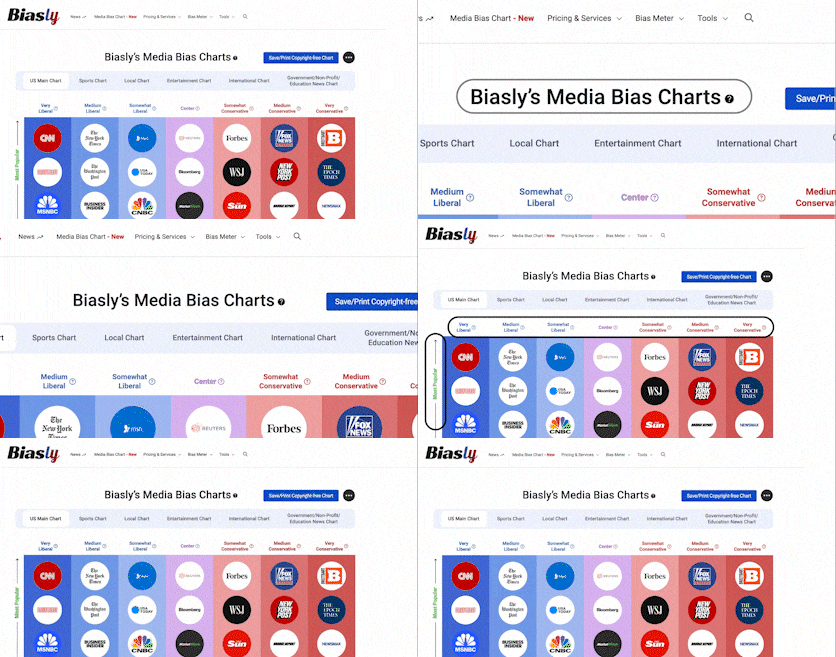
Readers who wish to further explore how CNet compares with other publications can visit Biasly’s Media Bias Chart to analyze tone and word choice in real time.
Funding and Ownership
Who Owns CNet?

Ziff Davis Logo, Source: Wikipedia
In 2008, the publication was sold to CBS Interactive. Despite strong growth in the previous years, the 2008 financial crisis caused instability throughout the economy. CBS Interactive had success until the next financial crisis, the 2020 COVID-19 recession. CBS Interactive sold CNet to Red Venture in 2020. During the Red Venture ownership, CNet was criticized in 2023 for publishing A.I. content with factual errors and biased reviews. CNet, acquired by Ziff Davis in October 2024, is led by a team of editorial and content executives, with David Katzmaier as Editor in Chief.
Who Funds CNet?
Previously, CNet generated revenue through advertising, affiliate commerce links, and partnerships with retailers. This practice is controversial because some readers feel it undermines a publication’s independence. Since being acquired by Ziff Davis Inc., they have moved towards a more traditional journalism business model with ads and subscriptions. They still occasionally do branded content with Amazon or Best Buy.
Additional Insights
News Source Comparison
When comparing news sources, CNet is often evaluated alongside other technology outlets. Sources like The Verge, TechCrunch, and WIRED often present similar tones and editorial philosophies. While CNet maintains a Center media bias, it differs from strongly partisan sources in that it occasionally includes opposing viewpoints and strives for a balanced regional coverage.
This contrasts with more biased media outlets that consistently present one-sided narratives without factual counterpoints. Readers seeking balanced political coverage may compare CNet’s framing of issues with outlets rated as Center or Lean Right on our Media Bias Chart, or explore other regional papers on our Similar Sources page.
Notable Contributors and Authors
CNet features a diverse range of reporters and columnists, many of whom are deeply familiar with technology.
Jeff Carlson is one of CNet’s most experienced writers. He got his career started in 1994 as a managing editor for Open House Books. He joined CNet in 2025 as a senior writer. Despite a short time with the company, his experience has proven valuable.
Antuan Goodwin is another CNet writer with lots of experience. He was hired by CNet in 2008. In his early days, he focused on automotive content and eventually electric vehicles as well. He is currently a senior editor who still focuses on auto while writing about other consumer products as well.
Related Tools and Resource Pages
To better understand how CNet fits into the broader media landscape, we recommend exploring these helpful resources:
- Media Bias Chart: See where CNet ranks among hundreds of media outlets across the political spectrum.
- Political Bias Chart: Visualize political slants of news sources across various policy areas.
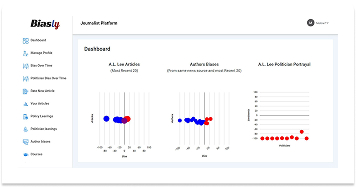
- Journalist Bias Analytics Platform: Explore how individual journalists contribute to bias within their publications.
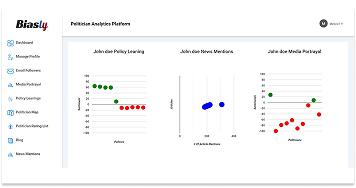
- Politician Bias Analytics Platform: Compare how politicians are framed differently by CNet and other outlets.
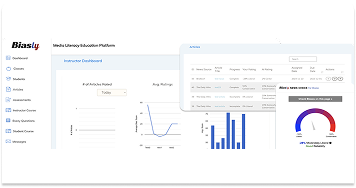
- Media Literacy Education Platform: Learn how to critically assess media sources, bias techniques, and news reliability.
Frequently Asked Questions
CNet is rated as Center based on Biasly’s media bias algorithm, which assesses sentiment, article framing, and policy favorability.
As stated earlier in the article, CNet has been accused of writing biased reviews because of brand deals with a company. In 2023, they were accused of using A.I. to produce content without the writing staff’s knowledge, prompting the staff to try to unionize. This led Wikipedia to label them as generally unreliable in 2024. However, their new parent company is attempting to revive the publication’s reputation. On March 8, 2026, CNet had an Average reliability rating according to Biasly.
Biasly uses a combination of AI sentiment analysis and human analyst review to assess tone, fact accuracy, source quality, and media bias indicators. Learn more on our Bias Meter page.
Generally, yes, though partisan framing and selective reporting can affect perceived reliability.
Military Spending
| Date | Sentiment | Associated Article | Snippet |
|---|---|---|---|
| 08/25/2019 | 75% For | Trump Family Detentions Flores Agreement (link) | So, of course, the Trump administration is doing the opposite in a baldfaced |