




-26% Somewhat Left
Bias Meter
Extremely
Liberal
Very
Liberal
Somewhat Liberal
Center
Somewhat Conservative
Very
Conservative
Extremely
Conservative
-100%
Liberal
100%
Conservative
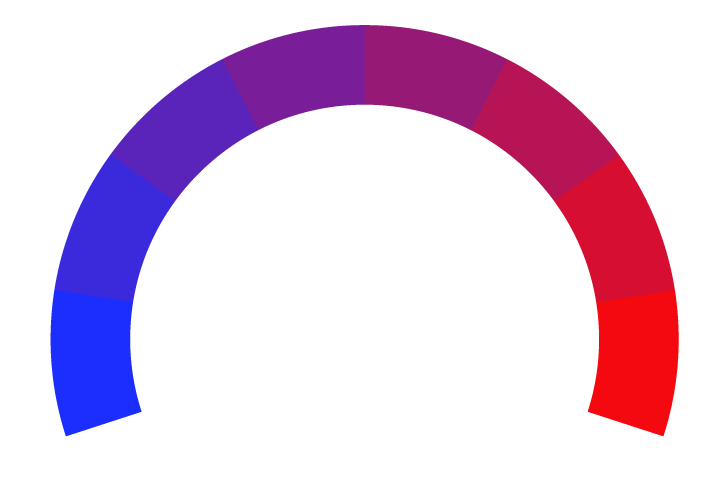
Biasly determines media bias ratings through a dual-layered approach combining artificial intelligence and analyst review. The platform’s proprietary bias detection engine, Bias Meter, evaluates sentiment, policy position alignment, and language framing across thousands of data points in news articles. Analysts then verify and interpret the AI’s findings, providing additional context where needed. Learn more about ratings
- Profile
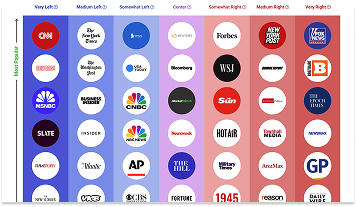
Deadline on the media bias chart
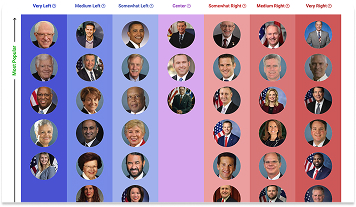
Deadline has a Bias Score of -26% Somewhat Left which is based on a variety of factors including its policy and politician leanings, article ratings, and the use of biased language. Its Reliability is rated as Average, and additional analytical insights are available in the other tabs.
- Bias Rating
-26% Somewhat Left
- Reliability43% Reliable AveragePolicy Leanings
6% Center
Extremely
LiberalVery
LiberalModerately
LiberalSomewhat Liberal
Center
Somewhat Conservative
Moderately
ConservativeVery
ConservativeExtremely
Conservative-100%
Liberal100%
Conservative
Average Reliability
*Our bias meter rating uses data science including sentiment analysis, machine learning and our proprietary algorithm for determining biases in news articles. Bias scores are on a scale of -100% to 100% with higher negative scores being more liberal and higher positive scores being more conservative and 0% being neutral. The rating is an independent analysis and is not affiliated nor sponsored by the news source or any other organization.
Politician Portrayal82% positive
Continue For Free
Create your free account to see the in-depth bias analytics and more.
By creating an account, you agree to our Terms and Privacy Policy, and subscribe to email updates.
Log In
Log in to your account to see the in-depth bias analytics and more.
Policy Leanings Analysis
Policy | Bias score |
|---|
Deadline Editorial Patterns
Deadline’s coverage of political topics often reflects a Somewhat Left bias, with consistent patterns in phrasing, source selection, and thematic focus that are Slightly Liberal. While the publication demonstrates journalistic standards in many of its articles, the choice of issues, framing, and word usage can indicate a political slant. Deadline tends to show some bias.
Coverage of Liberal vs. Conservative Topics
Deadline’s articles include progressive social causes, such as local politics, foreign affairs, and controversy, which sometimes adopt sympathetic and supportive language. For instance, its coverage of topics related to abortion rights, clean energy, and anti-discrimination laws sometimes aligns with liberal viewpoints, using inclusive and affirmative language to frame these policies as necessary reforms.
On the other hand, articles covering conservative figures or Republican-led initiatives sometimes employ a more critical tone. Biasly’s analysis of recent Deadline articles reveals that Deadline sometimes highlights controversies or opposition surrounding Republican policies, while downplaying positive aspects or conservative rationale. For example, in political campaign coverage, Republican candidates may receive more scrutiny, with an emphasis on potential missteps or public backlash.
This news media bias manifests in subtle ways, such as placing greater prominence on Democratic voices or using emotional diction when describing liberal causes, while offering more detached language in conservative contexts. Words like “justice,” “equality,” and “rights” appear more frequently in liberal-oriented reporting, while conservative views are often framed as “pushbacks,” “restrictions,” or “oppositions.”
Policy and Issue Framing
Staying true to their grade, Deadline very often covers issues from a Somewhat Left lean. An issue they often cover is criminal justice. Biasly has received 14 criminal justice articles from Deadline. They push closer to liberal on this issue than most, but there were still a couple of articles that covered this issue from a center perspective.
On some issues, like the border wall, civil rights, and the European Union, Deadline took a center approach. None of these issues is covered extensively by Deadline, with all these issues only having one to two examples, but it shows Deadline’s willingness to cover issues from the center.
Coverage and Relevance
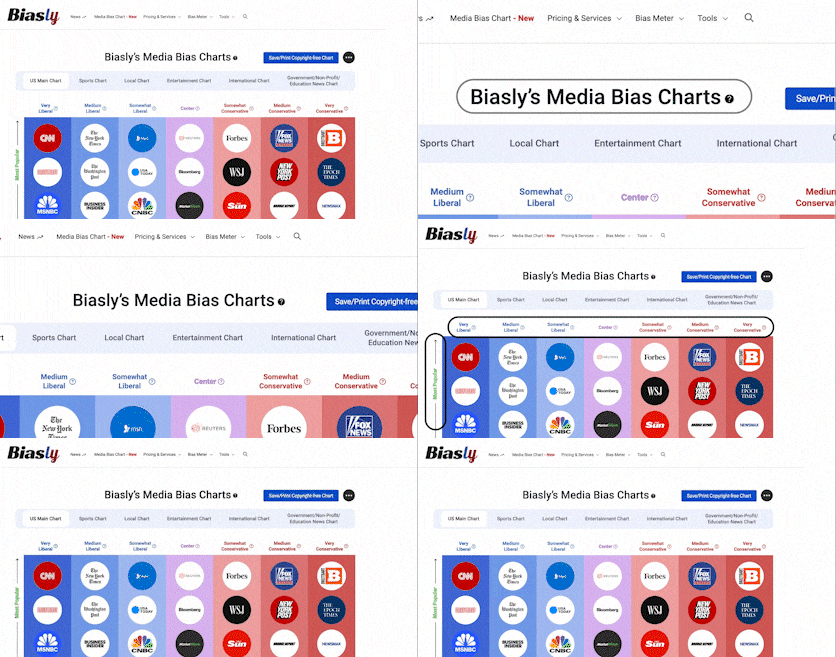
Deadline tends to cover many of the top issues in the conservative political space. Readers who wish to further explore how Deadline compares with other publications can visit Biasly’s Media Bias Chart to analyze tone and word choice in real time.
Deadline Bias Analysis
Deadline was founded in 2006 by Nikki Finke. Deadline was created to provide breaking news and information about the entertainment industry, particularly focusing on Hollywood. Nikki, a seasoned journalist, saw the need for a platform to cover the latest developments in film, television, and the business of entertainment in a timely, engaging manner.
Today, Deadline covers a wide range of issues. They have a strong reputation in the entertainment industry for consistently breaking stories first. They also cover political issues at both the state and federal levels.
This graph shows Deadline’s ability to cover the entertainment industry at a high level.
Is Deadline Biased?
Based on Biasly’s evaluations, Deadline is rated as Somewhat Left.
By examining content patterns and the broader context of media influence, we aim to offer a balanced perspective onDeadline’s political bias—and contribute to the ongoing discussion about bias in the news.
How Does Biasly Rate News Sources?
Biasly uses proprietary algorithms and a team of analysts to provide comprehensive bias evaluations across thousands of news outlets. Over 200,000 articles from more than 3,200 sources have been analyzed to identify the most accurate and unbiased stories.
Biasly assigns each outlet three key scores:
- Reliability Score – Reflects factual accuracy
- AI Bias Score – Generated via natural language processing
- Analyst Bias Score – Assessed by human political analysts
These scores are based on seven core metrics: Tone, Tendency, Diction, Author Check, Selection/Omission, Expediency Bias, and Accuracy. These elements help analysts and algorithms evaluate the political attitude conveyed by each article.
Biasly’s Bias Meter ranges from -100% (most left) to +100% (most right), with 0% indicating neutrality. The system evaluates individual articles based on political terms, policies, figures, and sentiment to calculate precise bias ratings.
Is Deadline Politically Biased?
Deadline earns a Somewhat Left rating for its AI Bias Score and Somewhat Left for its Analyst Bias Score. The Analyst Bias Score is generated by reviewers from liberal, moderate, and conservative backgrounds. Analysts reviewed Deadline articles and noted preferences regarding coverage of liberal politicians and policy topics such as abortion rights and criminal justice. However, the paper maintained objectivity on topics like the border wall and civil rights.
Deadline is headquartered in Los Angeles, California. California is consistently one of the most liberal states in the nation. According to Pew Research, around 45 percent of Californians are registered Democrats, which means they outnumber Republicans two to one. With this population spread, it makes sense that Deadline would lean Somewhat Left. In fact, they are likely one of the more moderate voices within such a Democratic stronghold.
This Bias score is determined through natural language processing that evaluates the tone, word choice, and opinion embedded in the reporting.
Analysis of Bias in Deadline’s Online Articles
Deadline has found that in-depth coverage of criminal justice is one of the most effective ways to drive subscriptions. It’s essential to ask: is Deadline truly biased?
To evaluate this, we can analyze selectDeadline’s articles through several of Biasly’s bias rating criteria: Tone, Tendency, Author, Diction, and Expediency Bias.
- Tone: The overall attitude conveyed by the article
- Diction: Specific word choices made by the writer
- Author: The background and social presence of the journalist
- Tendency: Patterns of bias in the writer’s broader body of work
- Expediency Bias: Quick visual or textual indicators like headlines and photos that imply bias
One example is- “Not guilty of murder” Nick Reiner’s Ex-Lawyer Says; DA Insists Otherwise in Parents’ Death
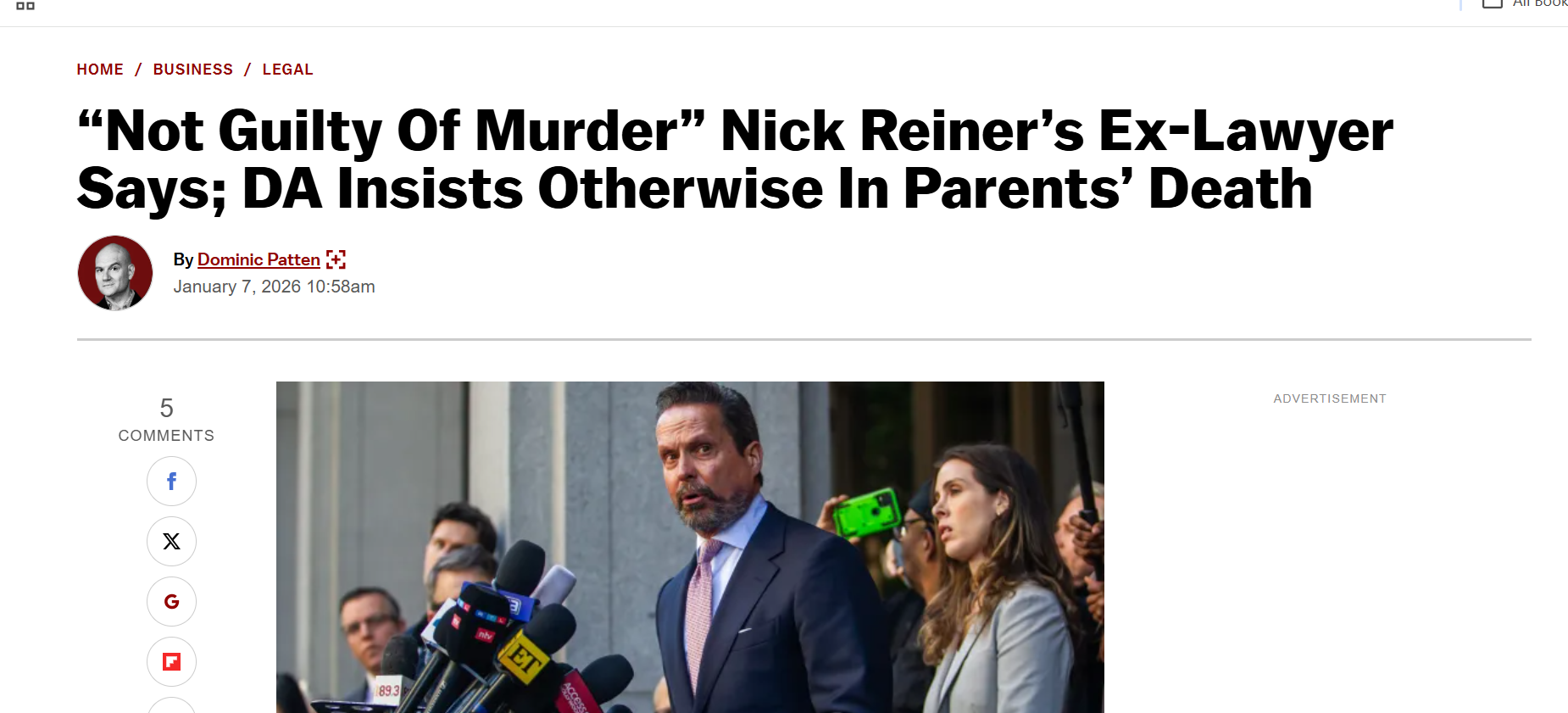
The article is written in a tone that emphasizes the accused. Generally, in crime stories, you should try to avoid taking sides. This could open you up to lawsuits if the party feels as if you’re hurting their chances of winning a possible trial.
“He was arrested mere hours afterwards by the LAPD and placed in solitary confinement in a DTLA cell.”
Although it’s small, the use of the word mere showcases that they have some sort of doubt about his guilt. He has written about crime in Hollywood for many years. The writer is generally pretty balanced; this is one of his more unbalanced stories. Patten also covered this story closely on X, formerly known as Twitter. Putting the quote of the lawyer before what the DA said is an active choice. So it is not a direct quote of the DA. This feels like favoritism.
Awaiting explanation from now ex-Nick Reiner defense attorney Alan Jackson on why. He suddenly walked away from the high profile first-degree murder case in court just now…more on @DEADLINE pic.twitter.com/Byjuj8qzmV
— Dominic Patten (@DeadlineDominic) January 7, 2026
The article “Tyler Perry & Lionsgate Hit With $77M Christmas Day Sexual Assault Suit From ‘A Madea Halloween’ Actor’; “Failed Money Grab,” Perry’s Lawyer Says” tone leans heavily into the allegations against Perry, which in stories about legal claims can risk appearing one-sided if not balanced with proper context. In journalism, especially with accusations this serious, it’s important to avoid language that might imply guilt before any legal finding, both to maintain credibility and to reduce legal risk. For instance, the lawsuit “seeks at least $77 million in damages and accuses Perry and Lionsgate of ignoring alleged misconduct,” a phrasing that centers the plaintiff’s claims rather than established facts. While the article quotes Perry’s lawyer denying the allegations, the placement and emphasis on the accuser’s narrative before the denial could be interpreted as subtly prioritizing one perspective. This article is also written by Platten.
To sum it up, Deadline shows inconsistent bias across its reporting. Despite attempts at balance in some reporting,Deadline’s tendency to highlight progressive initiatives and frame stories through a social justice lens indicates an overall left-leaning orientation, particularly when covering abortion and criminal justice issues.
Analysis of Deadline’s Opinion Articles
To fully understand political bias in media, it’s important to distinguish between factual reporting and opinion pieces. While reporting aims to present facts and let readers form their own conclusions, opinion articles express personal viewpoints on current issues. Although the previous section examined factual reporting, this section examines how bias surfaces in Deadline’s selection and tone of opinion content.
One example is “Is Warner Bros Sale To Netflix Or Paramount A Sign Of The Apocalypse For Hollywood Ecosystem? – Guest Column”
The article has a willingness to hear both sides’ tone. No major red flags with language choice. Features a guest writer who is more known for screenwriting and acting. As such, we have no idea what his writing tendencies would be. The question in the headline suggests that both sides will be heard.
Another example is- “Peter Bart: Timothée Chalamet’s Mighty ‘Marty Supreme’ Campaign Energizes Awards Circuit”
As the title suggests, the article takes Chalamet’s side. It believes his campaign is a good thing for the movie industry, particularly during award season. Despite an obvious lean, it avoids any extreme bias. Writer Peter Cart has been a movie journalist since 1989 and joined Deadline in 2016.
This shows that although Deadline tends to cover issues from a Somewhat Left perspective, they are willing to listen to voices that cover both sides of an issue.
This tendency underscores the importance of distinguishing subjective viewpoints from straight reporting, especially when interpreting the political leanings of any news organization.
How to Evaluate Bias
Although Biasly rates Deadline as Somewhat Left, it’s important to remember that bias can vary from article to article. Deadline covers many issues, from state legislation to social developments. This complexity underscores the importance of examining each article individually. So, let’s learn how to evaluate media bias.
Recognizing media bias requires awareness and critical thinking. Often, readers trust news sources that affirm their existing beliefs, a psychological tendency known as confirmation bias. This makes it harder to identify slanted narratives or one-sided reporting.
To combat this, it’s essential to challenge your assumptions by consulting multiple viewpoints and verifying news through third-party analysis. Tools like Biasly’s media bias ratings allow readers to compare the same news story across the political spectrum.
Ultimately, bias isn’t always a matter of what is said—it’s also about what is left out, how topics are framed, and which stories are chosen for coverage. Learning to recognize these patterns can help readers make more informed decisions and develop greater media literacy.
To start comparing news outlets and gain a better understanding of bias, sign up for Biasly’s Media Bias & News Analytics Platform to see how stories vary between sources.
Deadline Reliability Analysis
Is Deadline Reliable?
Deadline finds itself toward the middle of the spectrum, with neither high nor low accuracy. Deadline generally prides itself in delivering news at a rapid speed rather than extreme accuracy. Despite this, they do generally get the news correct.
How to Evaluate Reliability?
Reliability refers to how trustworthy or accurate a news source is. If we can’t trust what we read, then continuing to consume content from that outlet serves little purpose. So how do we evaluate a news outlet’s reliability?
There are several potential measures of reliability to look out for when trying to determine whether a media source is reliable or not. Red flags for an unreliable article can include the presence of wild, unsubstantiated claims, facts dependent on other unreliable sources, heavy use of opinionated language, and more. In contrast, hallmarks of a reliable source include:
- Absence of subjective language
- Citing credible sources (e.g., .gov, .edu, academic references)
- Verifiable facts and statistics from multiple outlets
- Use of primary sources, like interviews or transcripts
- Consistency with coverage across other platforms
Biasly’s reliability scores incorporate these elements in evaluating media outlets.
So How Does Deadline Fare in Its Reliability?
The political reliability index developed by Biasly assesses both accuracy and trustworthiness. Deadline currently holds a Average Reliability Score, which is calculated as a weighted average of:
- Fact Analysis Score – Evaluates the accuracy of claims, facts, and evidence.
- Source Analysis Score – Assesses the number, diversity, and credibility of sources and quotes used.
Deadline Source Analysis Score is Average. This suggests moderate trustworthiness in its sourcing practices. The score is AI-generated and considers quote length, frequency, diversity, and quality.
The Fact Analysis Score of Deadline is Pending. This further shows how well CNN supports its claims, addresses selection and omission bias, and presents verifiable evidence.
While Deadline leans toward factual reporting, occasional lapses—such as unbalanced viewpoints or incomplete data can affect its reliability rating. These nuances emphasize the importance of analyzing individual articles.
Deadline’s Accuracy and Reliability
According to Biasly’s analysis, Deadline maintains a 43% Reliable Reliability Score, but individual articles may vary significantly. Let’s dive into the details.
Political orientation plays a crucial role in how audiences perceive reliability. Deadline has been accused of sometimes favoring a liberal narrative, potentially at the expense of factual reporting. To validate such claims, it’s essential to analyze whether the publication backs its assertions with sufficient evidence and diverse viewpoints.
Two common types of bias that affect factuality include:
- Selection Bias – Highlighting or omitting stories to fit a particular narrative.
- Omission Bias – Leaving out differing perspectives or relevant details to skew perception.
We will take a closer look at some examples like this below to provide a further investigation into the reliability of Deadline’s articles. This will include its use of selection bias, omission bias, and the quality of its sources and the facts it uses.
Analysis of Reliability in Deadline Online News Articles
Deadline aims to serve its readers with high-speed and high-accuracy reporting. Its staff includes writers from varying ideological backgrounds, which can help balance coverage. However, readers should distinguish between news reporting and opinion pieces to evaluate credibility effectively.
One notable example is “Tim Walz Drops out of Minnesota Governor’s Race.”
This article informs readers of Minnesota Governor Tim Walz’s decision not to run for a third term. Although this article is limited in source variety, we do see multiple quotes, and the quotes take a good chunk of the story. This shows that on hard news issues, Deadline is willing to listen to an expert and not overtly express political bias.
Quality of Sources and Facts Used
Deadline often uses credible sources from across the political spectrum. However, some articles skew in how comprehensively they present opposing viewpoints.
“Trump Confirms U.S. Attack On Venezuela, Capturing Nicolás Maduro” is a breaking-news report by Deadline political editor Ted Johnson that mixes two things: what President Trump claimed happened in Venezuela and how major TV networks covered the news overnight. The writing is mostly straightforward and time-stamped, with the article relying heavily on attribution (“Trump posted…,” “Warner said…”). The tone is urgent but generally restrained, and the main “angle” is not partisan so much as procedural—what happened, what officials are saying, and whether the action required congressional authorization.
The article contains 11 direct quotes in quotation marks (including short quoted phrases). The shortest quote is 2 words (“large scale”), the longest quote is 120 words (Sen. Mark Warner’s statement about precedent and constitutional authority), and the average quote length is about 21 words. Longer quotes are usually a reliability plus because they let readers see a source’s meaning without heavy paraphrasing. In this piece, the longer official statements are presented with minimal editorial tone, which helps. The short quotes are mostly punchy phrases, and they depend on the surrounding context to avoid feeling selective.
The story uses 10 distinct hyperlinks, but most are internal Deadline links (tags and category pages), not to external documents or independent reporting. Counting those links by general lean, there are 3 Left, 2 Center, and 5 Right links—though that split is more about site navigation than viewpoint diversity. In practice, the reporting is driven by the named voices it cites (Trump, senators, the attorney general) and by brief descriptions of network coverage, not by linked evidence readers can click to verify.
Sources referenced:
- President Donald Trump (Truth Social post; remarks to Fox News)
- Mike Lee (R-Utah)
- Secretary of State Marco Rubio (described via Lee’s account)
- Mark Warner (D-Va.)
- Attorney General Pam Bondi
- NBC News (Peter Alexander; special reports)
- ABC News (Alison Kosik; special reports)
- CBS News (Jennifer Jacobs; reporting referenced)
- Fox News (Chanley Painter, Eric Shawn, Griff Jenkins; Trump phone interview)
- CNN (Elex Michaelson; interview with journalist Mary Mena)
- MS NOW (Rachel Maddow; Ali Velshi)
- NewsNation (Hena Doba; Kellie Meyer)
Is the sourcing balanced? Partially. The article includes both a Republican critique (Lee) and a Democratic critique (Warner), and it references coverage across networks with different reputations. But the largest roles are played by Trump’s account (which provides the central claim) and Warner’s statement (which gets the longest quote). No Venezuelan officials, international organizations, or independent experts appear, so most of the perspective comes from U.S. political figures and U.S. television coverage.
The author mostly keeps a neutral posture, but the sources set the frame. Trump defines what the operation was and why it happened; Lee frames the constitutional question; Warner frames the global precedent risk; Bondi frames the legal justification and charges. Several key details are presented through attribution rather than independent confirmation inside the story (for example, specifics of how the capture occurred). That’s common in fast-breaking coverage, but it does limit how definitive the article can be. Based on the mix and treatment of sources, the author’s bias is best described as Center.
On accuracy, the piece is strongest when it sticks to verifiable items—timestamps, who aired what, and direct statements from officials. The weaker point is verification of the underlying event, which is extraordinary and would normally be confirmed through multiple independent outlets, official Defense Department briefings, and international reporting. A careful reader should treat this as an early, well-attributed account and then look for confirmation and additional detail from other major news organizations and official statements as the story develops.
Selection and Omission Bias
Deadline provides extensive coverage of entertainment and political issues. However, bias may still emerge through framing and story selection.
For instance, this Deadline article titled, “Netflix Co-CEO Ted Sarandos Defends Dave Chappelle, Ricky Gervais Free Speech: ‘It Used To Be A Very Liberal Issue” has a conservative bias. Concerning the selection and omission bias, the author Bruce Haring does a good job of quoting an important source to the story, Netflix CEO Ted Sarandos. However, Haring failed to include any other perspectives on the issue at hand, resulting in a biased view as to whether Chapple and Gervais should be condemned for anti-trans rhetoric in their acts. Haring writes about what Sarandos is quoted as saying:
“He added that the only way comedians can figure out what’s acceptable is by ‘crossing the line every once in a while. I think it’s very important to the American culture generally to have free expression.”
This article portrays a mostly conservative stance by promoting Sarandos’s perspective while not addressing the roots of the complaints against Chappelle and Gervais. Furthermore, Sarandos’s opinion on the matter garnered support from conservatives, according to Haring. This aligns with Sarandos’s argument, making for an overall conservative article. If Haring had gone into depth about why Chappelle and Gervais were being criticized and why more left-leaning people were outraged by their comments, it would provide a more balanced view of the topic. Therefore, this article can be considered somewhat reliable.
Another article titled “Trump, Netflix, Warner Bros. Discovery & The Entertainment Industry’s Political Crossroads” demonstrates a largely center-leaning perspective. In terms of selection and omission bias, the author presents statements and reactions from multiple sides of the political and corporate spectrum, helping the article avoid strongly favoring any single ideological position. The piece references Trump’s public comments while also incorporating responses from major media corporations such as Netflix and Warner Bros. Discovery, allowing readers to understand how different stakeholders are reacting. However, while the article does acknowledge both political and industry viewpoints, it does not deeply interrogate the broader implications of Trump’s rhetoric or how it might affect marginalized groups or long-term media policy, which slightly limits its depth. By focusing more on reactions and statements rather than analysis, the article maintains a neutral, informational tone rather than advocating for or against Trump’s stance. This balance places the article near the political center, though the lack of a deeper contextual critique results in only average reliability. If the author had expanded on the historical context or included more critical perspectives from policy experts, the article would provide a more comprehensive and balanced view of the issue.
So, is Deadline Reliable?
Overall, Deadline can be considered an outlet with Average reliability. The site often prioritizes opinion-driven content, with variable sourcing and occasional editorial framing on sensitive international topics. While some claims are supported with evidence, consistency in sourcing and balance could be improved to meet stronger journalistic standards.
As media literacy improves, readers can more easily detect issues with selection bias, omission bias, and factuality. To strengthen your ability to assess reliability across the political spectrum, use Biasly’s News Bias Checker to compare how multiple outlets report the same story.
This empowers you to consume more accurate, balanced, and dependable news.
Funding and Ownership
Who Owns Deadline?
Deadline is currently owned by the Penske Media Company. They purchased it in 2009 from the original owner, Finke. Penske Media Company also owns Variety, Rolling Stones, and about 20 other publications.
Deadline logo, Source: Wikimedia Commons
Penske Media Company was created by Jay Penske in 2007. In less than 20 years, Penske has created one of the most powerful media empires in the country. His publications are generally based on New York City or Los Angeles.
Deadline receives almost all of its money from ad revenue. Although their parent company does back them up when needed.
According to Zoominfo, Deadline had $27 million in revenue in 2025. This is more than most of their competitors’ projected revenue.
Who Funds Deadline?
As stated earlier, Deadline makes its money through ad revenue. It’s unclear how much their parent company helps them. As a private company, they rarely receive support from individuals.
Additional Insights
News Source Comparison
Although Deadline does cover political issues, their main focus is on entertainment news. This means that Deadline is most commonly compared to other entertainment news-sites like Variety and The Hollywood Reporter. These publications are both rated “center” by Biasly. This means that Deadline is slightly left-leaning than their counterparts.
Notable Contributors and Authors
Although the original founder, Finke, has unfortunately passed away, Deadline still has many reporters who help keep her legacy alive. Nellie Andreeve is the co-editor and chief of Deadline. She started out with The Hollywood Reporter from 2000 to 2009 before joining Deadline in 2010. She is most known for her writing about TV shows.
Mike Fleming Jr. is the Editor-at-Large for Deadline. He worked 20 years for Variety before joining Deadline in 2010. He is most known for his work on movie news. He has many industry contacts and is able to break news quickly.
Related Tools and Resource Pages
To better understand how Deadline fits into the broader media landscape, we recommend exploring these helpful resources:
- Media Bias Chart: See where Deadline ranks among hundreds of media outlets across the political spectrum.
- Political Bias Chart: Visualize political slants of news sources across various policy areas.
- Journalist Bias Analytics Platform: Explore how individual journalists contribute to bias within their publications.
- Politician Bias Analytics Platform: Compare how politicians are framed differently by Deadline and other outlets.
- Media Literacy Education Platform: Learn how to critically assess media sources, bias techniques, and news reliability.
Frequently Asked Questions
Deadline is rated as Somewhat Left based on Biasly’s media bias algorithm, which assesses sentiment, article framing, and policy favorability.
During events like the Writers Guild of America (WGA) strikes, Deadline and other major Hollywood trade publications faced some criticism from striking writers for perceived bias in their headlines and reporting. Many readers felt their coverage was corporate-leaning. One notable example was comparing the picketing efforts of strikers to a “hit-squad”. Despite this, Deadline did provide extensive coverage of the strike and occasionally let union voices be heard.
Biasly uses a combination of AI sentiment analysis and human analyst review to assess tone, fact accuracy, source quality, and media bias indicators. Learn more on our Bias Meter page.
Generally, yes, though partisan framing and selective reporting can affect perceived reliability.
Ratings are based on recent news using data science and A.I. technology.
Military Spending
| Date | Sentiment | Associated Article | Snippet |
|---|---|---|---|
| 08/25/2019 | 75% For | Trump Family Detentions Flores Agreement (link) | So, of course, the Trump administration is doing the opposite in a baldfaced |