




-6% Center
Bias Meter
Extremely
Liberal
Very
Liberal
Somewhat Liberal
Center
Somewhat Conservative
Very
Conservative
Extremely
Conservative
-100%
Liberal
100%
Conservative

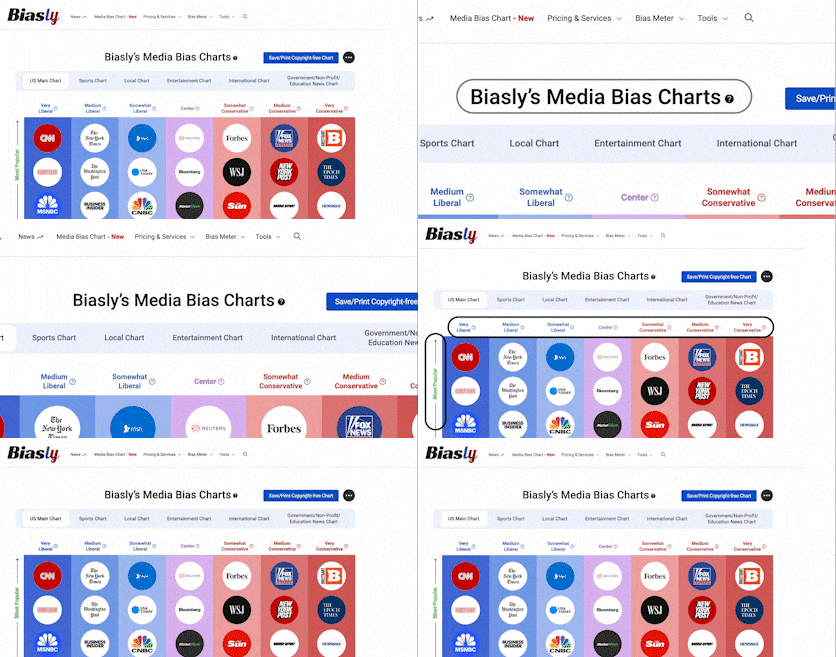
Biasly determines media bias ratings through a dual-layered approach combining artificial intelligence and analyst review. The platform’s proprietary bias detection engine, Bias Meter, evaluates sentiment, policy position alignment, and language framing across thousands of data points in news articles. Analysts then verify and interpret the AI’s findings, providing additional context where needed. Learn more about ratings
- Profile
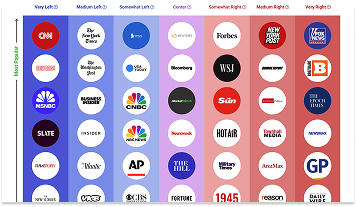
Defense News on the media bias chart

- Bias Rating
-6% Center
- Reliability55% Reliable AveragePolicy Leanings
-2% Center
Extremely
LiberalVery
LiberalModerately
LiberalSomewhat Liberal
Center
Somewhat Conservative
Moderately
ConservativeVery
ConservativeExtremely
Conservative-100%
Liberal100%
Conservative
Average Reliability
*Our bias meter rating uses data science including sentiment analysis, machine learning and our proprietary algorithm for determining biases in news articles. Bias scores are on a scale of -100% to 100% with higher negative scores being more liberal and higher positive scores being more conservative and 0% being neutral. The rating is an independent analysis and is not affiliated nor sponsored by the news source or any other organization.
Politician Portrayal25% negative
Continue For Free
Create your free account to see the in-depth bias analytics and more.
By creating an account, you agree to our Terms and Privacy Policy, and subscribe to email updates.
Log In
Log in to your account to see the in-depth bias analytics and more.
Analysis of Defense News Articles
Analysis of Bias in Defense News Online Articles
Since Defense News was rated Center in Biasly’s Computer A.I. Score for Bias overall, one may presume its articles are free of bias. However, this may not be the case, as many factors can contribute to bias, such as bias among individual authors. This section will endeavor to uncover any bias within articles published by the media source.
- Tone: The attitude conveyed in the article
- Diction: The writer’s word choices
- Author: The background and social media presence of the author
- Tendency: Bias patterns in the writer’s total body of work
- Expediency Bias: Quick visual/textual indicators like headlines or photos that can be used to imply bias
Source: Defense News
In the article “Granger, Gallagher Leave Committee Posts as House GOP Majority Shrinks,” Bryant Harris reports that the two Representatives have both committed to vacating their positions within the Committee on the Chinese Communist Party. The headline demonstrates slight expediency bias by framing the GOP as an unpopular group losing power in the House. It is factually demonstrable that the Republican majority in the House is by a narrow margin, but framing a story with a headline of this manner may imply framing biases.
The article presents a pessimistic Tone regarding the future of the House Republican Party, with statements such as these emphasizing it:
“At the same time, Gallagher said he would resign in April, further narrowing the House GOP’s thin majority and creating a vacant position atop the China-focused panel.”
This quote emphasizes the shrinking Republican majority within the House without qualifying the extent of the issue, allowing the reader to gather their own conclusion.
“Gallagher championed policies to ‘arm Taiwan to the teeth’ to deter a possible Chinese invasion, while framing the Sino-U.S. rivalry as a ‘new Cold War’.”
The verb ‘framing’ subtly distances the reporter from Gallagher’s characterization, which may lead the reader to assume that the following statement he made is unreasonable.
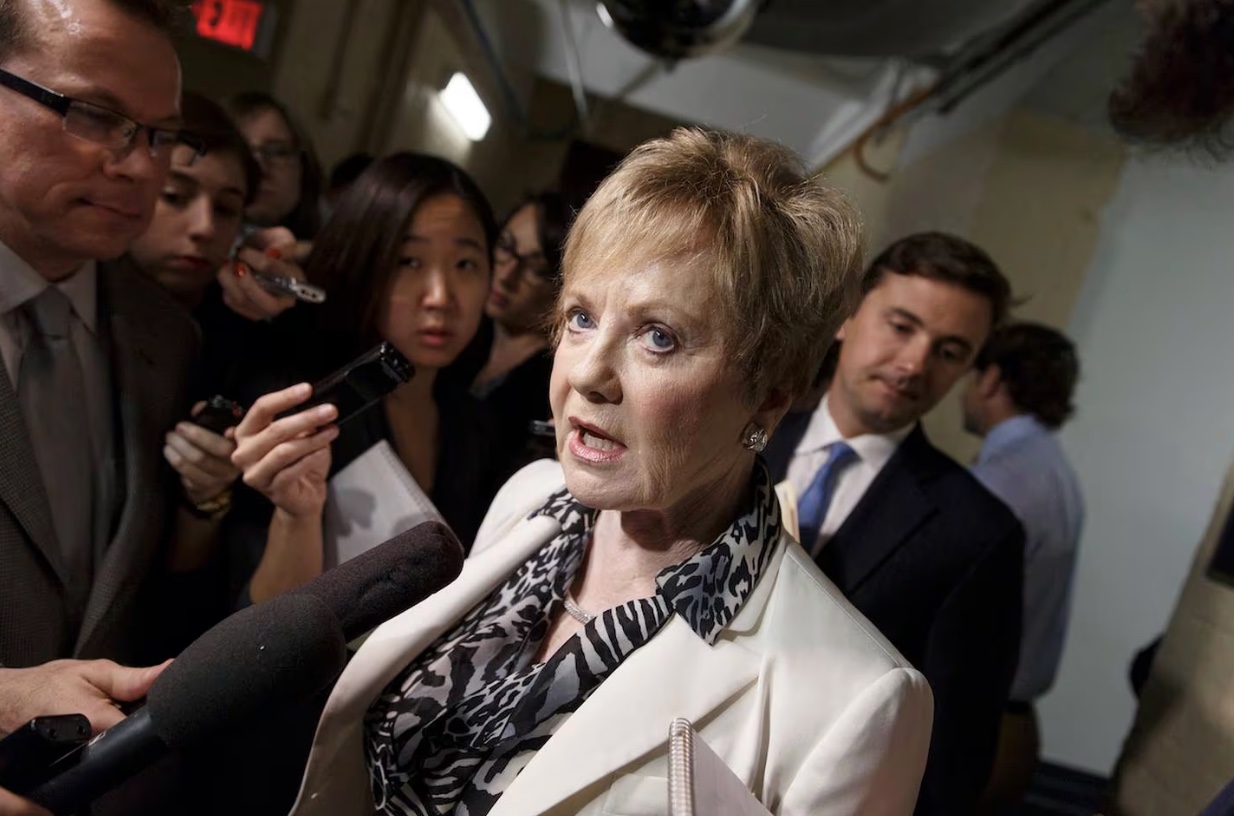
As seen above, images portraying this event were used to command the emotion of the situation. Concerned faces of reporters hounding the representative and a somewhat distressed facial expression of Rep. Granger emphasize the controversy of the situation. This may lead the reader to assume that her exit from the committee and her choice to retire from Congress are more controversial than they are in reality.
Additionally, the author himself has revealed that some of his views may skew in a certain direction. On his X account, he has reposted several posts of left-leaning ideas, such as:
#Syria‘s refugees are victims of the 21st Century’s most barbaric crimes & have been forced to flee for survival, often multiple times, into squalor.
They deserve nothing but sympathy & assistance — not further discrimination, victimization or God forbid, expulsion.
— Charles Lister (@Charles_Lister) June 5, 2024
A convicted felon should be allowed to run for president
GOP Voters
April – 17%
June 58%YouGov #4 – 472 RV
— Political Polls (@PpollingNumbers) June 5, 2024
Analyzing the tendency bias of the author in this story, it can be seen that the author consistently portrays the Republican Party in a negative light. More specifically, both the Republican Party as a whole, in addition to the member politicians mentioned throughout the article, were presented as weak and losing influence. While the events he reported were factual, he used language in multiple areas that may mislead the reader into believing the events that occurred were more significant than reality.
In this article, Harris’s Tone, or attitude of writing, is fairly negative towards conservatives throughout. Additionally, there are a few words in his Diction that may emphasize some of this bias. His emphasis on the number of Republican congress members who have recently retired, for example:
“[Rep. Granger, Rep. Gallagher] had already announced they would not seek reelection this November amid a slew of Republican retirements.”
The word “slew” exemplifies a large number, which may lead the reader to overestimate the number of congress members affected.
Another example:
“Gallagher’s early departure will reduce the embattled House Republican majority to a one-vote margin, given the resignation of Rep. Ken Buck, R-Colo., on Friday.”
The use of “embattled” may imply to the reader an excessive level of distress regarding the Republican Party, since the author did not mention specific metrics concerning the number of resignations in the story.
Most articles published by Defense News are rated Center according to Biasly. One example of this is the article “Chinese Defense Head Warns of ‘Self-Destruction’ for Taiwan Supporters,” where Noah Robertson used a neutral Tone and Diction:
“Two years ago, after then-House Speaker Nancy Pelosi, D-Calif., visited Taiwan, China ended military talks with the U.S.”
Instances such as the bias reported in the former article are rare, and the majority, according to Biasly, represent the latter similarly, leading to its overall Bias Rating of Center.
Analysis of Defense News Opinion Articles
Before our analysis, the distinction between opinionated articles and articles that report facts must be found. Reporting is expected to be both factual and neutral. When a person reads a report, they should expect to see primary source information that provides evidence for the claim. An opinion piece, in contrast, is an article where the author forms their own opinion, straying away from a purely fact-based report.
Bias is far more likely to exist when an author makes a direct opinion; this can be seen even in the title, for example, in the article “Can Biden’s New Arms Policy Lead to Real Accountability for Israel?” Here, we can see that this title signals that the author intends to argue that stronger accountability toward Israel is warranted.
Another opinion article, “Three Directions The US Defense Budget Could Go,” has a title that does not contain bias, thus preventing the reader from being exposed to bias before even reading the article.
Articles focused on opinion are quite rare on Defense News; as a result, these specific instances do not reflect the publication in its entirety. It is important, however, to understand the differences between fact-based reporting and opinionated articles, which inherently will always contain a level of bias.
Analysis of Reliability in Defense News’s Online News Articles
Credibility may be the most important factor in how individuals view a news source. Reliability is especially important for the Defense News, particularly since they mainly report on defense and war-related issues, an area that is both highly controversial and difficult to obtain proper sources for.
One can see from this Pew Research Survey that the sources cited within a story are at the forefront of importance when it comes to how trustworthy a news story is, along with that specific news outlet’s prior reputation. Many in the current media landscape have become sensitive to misinformation; it is important to understand the factors that allow it to persist.
Bias can come in many different formats; some may be easier to identify than others. Defense issues have a problem with sourcing, since much of their information may come from government or private sources that have an agenda regarding a conflict or politics. Therefore, it is of the utmost importance to assess the correctness and factuality of these articles.
Selection bias is when stories and facts are selected or deselected, often on ideological grounds, to create a narrative in support of the new sources’ ideology. Omission bias, on the other hand, is when different opinions and political views regarding a situation are left out so that the reader is only exposed to the ideological perspective supported by the author. It’s important to keep in mind these two types of biases when trying to assess an article’s level of accuracy.
As previously stated, Biasly has rated Defense News’ reliability as Fair, meaning that overall the publication often gets sourcing correct; however, there are a few aspects that are below par on average. As stated previously, each article will vary in its reliability. For example, we can see the news source CNN, according to Biasly, has a Somewhat Liberal analyst score in addition to a Good overall reliability score.
Looking further, however, we can see that the article “UN Adds Israel to Global List of Offenders that Harm Children,” according to Biasly, received a reliability rating of Good. In contrast, CNN’s article “Opinion: The One Number that Could Decide the Fate of Biden and Trump” received a score of Fair. These cases, while not representing CNN in general, show that in cases where articles display the author’s opinion, reliability, such as sourcing of opposing viewpoints and selection/omission bias, can often be an issue.
The article “China’s Defense Minister Defends Country’s Response to ‘Provocation’” received a Bias Rating of Center and a reliability rating of Fair. Within the story, they display the Chinese Defense Minister’s response to a recent naval altercation in the Taiwan Strait:
“Li said that the Canadian-U.S. voyage cannot be considered ‘innocent passage’,” and “[Foreign Militaries] should mind their own business”.
Even though this article maintains a mostly neutral bias throughout, the selection of these quotes, along with the omission of the United States’ response to the situation could leave the reader with the assumption that the United States had or believed that they knew the activities they engaged in were provocative.
Quality of Sources and Facts Used
The Defense News opinion piece, “Adopt a Treaty for Semiconductor Export Control”, is a policy argument, not a neutral reported article. André Brunel is clearly advocating for a stronger international system to control semiconductor exports.
That distinction matters. The key question is not whether the piece gives both sides equal time, but whether it supports its proposal with enough evidence, sourcing, and engagement with serious objections.
The article contains three direct quotes or quoted phrases. The longest quote is 3 words, the shortest is 2 words, and the average quote length is approximately 2.3 words.
These quotations are extremely short. They work more like emphasized phrases than like meaningful sourced evidence.
In general, longer quotes can improve reliability because they let readers judge a source’s wording and intent for themselves. Here, the quotes do very little of that. They add rhetorical emphasis, but not much evidentiary depth.
The article appears to rely on a small number of linked or directly referenced sources. Most of them fall within a policy, export-control, or defense-oriented frame rather than a broad range of ideological or commercial perspectives.
Sources used in the article include:
- Arms Control Association, for background on the Wassenaar Arrangement and multilateral export controls
- Defense News commentary by Mark Aslett, used as a related supporting argument on semiconductor strategy
- André Brunel, the author, writing from the perspective of an international technology attorney
- A Journal of Business & Technology Law article adapted by Brunel, which appears to provide part of the article’s conceptual basis
The sourcing is credible, but narrow. Most of the evidence comes from voices and institutions that already accept the idea that semiconductors are a major national-security issue.
What is missing is just as important. The article does not seriously engage opposite-side perspectives such as free-trade advocates, commercial semiconductor firms, allied officials concerned about enforcement, or analysts who might prefer reforming existing export-control structures rather than creating a new treaty.
That makes the sourcing one-sided. It does not make the article factually wrong, but it does mean the argument is built inside a fairly closed strategic-policy frame.
The author uses sources mainly to support his position, not to test it. The Arms Control Association reference helps establish weaknesses in the current Wassenaar system. The related Defense News commentary reinforces the broader strategic concern around semiconductor competition.
But the article does not apply equal skepticism to its own proposal. The weaknesses of the current system are treated as well established. The proposed treaty, by contrast, is presented as a logical solution without much scrutiny of whether it would actually be politically workable or more effective.
That missing opposite-side analysis is one of the section’s biggest weaknesses. A stronger article would at least grapple with a few serious counterarguments.
For example, it could ask whether allies would accept a veto-based treaty framework. It could examine whether treaty negotiations would move too slowly for a fast-changing technology sector. It could also address whether stricter controls might create commercial costs or accelerate rival countries’ domestic alternatives.
In ideological terms, the article reads as hawkish and national-security oriented. Its worldview fits more naturally within a defense-establishment or strategic-competition framework than within ordinary domestic partisan debate.
If a directional bias label is required, Somewhat Right is plausible in the sense that the piece favors a harder strategic posture toward geopolitical rivals. Still, the more precise description is that the article reflects a security-first policy orientation.
Most of the factual claims in the piece are broadly consistent with outside reporting. It is true that the U.S. expanded major semiconductor export controls in 2022 and 2023. It is also true that the U.S. has been coordinating more closely with allies on chip restrictions and that criticism of the Wassenaar Arrangement has grown.
Where the article becomes less rigorous is in the jump from problem diagnosis to policy certainty. The case that semiconductors matter strategically is well supported. The case that a binding treaty is the best answer is argued much more than it is demonstrated.
Overall, the factual base is generally solid. But the source pool is limited, the quotes are thin, and the article gives too little attention to serious counterarguments. That makes it credible as a defense-policy opinion piece, but less convincing as a fully rounded analysis.
Selection and Omission Bias
One example of Selection and Omission bias on Defense News can be found in the opinion article “Outsourcing Navy Shipbuilding Weakens the United States”, which singularly focuses on how the United States’ outsourcing shipbuilding weakens the country, leaving out any argument corresponding with the opposite viewpoint. The article also uses biased language, favoring right-leaning talking points.
“Many of the capabilities Navy leaders recently touted during overseas travel can be found right here at home, in American shipyards operated by an American workforce.”
Statements like this omit any benefit to the program, even if only in design, instead emphasizing bringing jobs back to America, along with others like national security and hostile foreign adversaries. These arguments emphasize a Conservative policy stance, by proxy de-emphasizing a liberal one. For example, the author could have made readers aware of a Liberal argument like global trade deals offering savings to consumers, in this case, the government.
The article discussed in the previous section, “Adopt a Treaty for Semiconductor Export Control,” does not have the same degree of Selection and Omission bias. The author, as mentioned previously, used a variety of sources with opposing tendencies; he underscores within the article that the Wassenaar Arrangement has many shortcomings while also promoting its importance. This offers the reader an equitable perspective on the proposal within his opinion.
It must be emphasized again that the articles analyzed within this section are opinion articles; the majority of articles published by Defense News do not contain the same level of bias. This is because the authors are purposefully making arguments in favor of a certain position, which incentivizes them to select and omit certain data to cultivate a favorable view. Understanding these biases is important, however, as they allow one to gain a more knowledgeable perspective not just on opinion articles but on all.
Defense News Bias Overview
According to Biasly, Defense News has an Overall Reliability rating of Fair. The publication, according to Similar Web, had 3.2 million total monthly viewers in May 2024, making it one of the leading defense-oriented outlets. Considering the volatility and bias that can be associated with defense and international policy issues, it is exceedingly important to examine whether the information being presented by Defense News is reliable.
Source: Pew Research
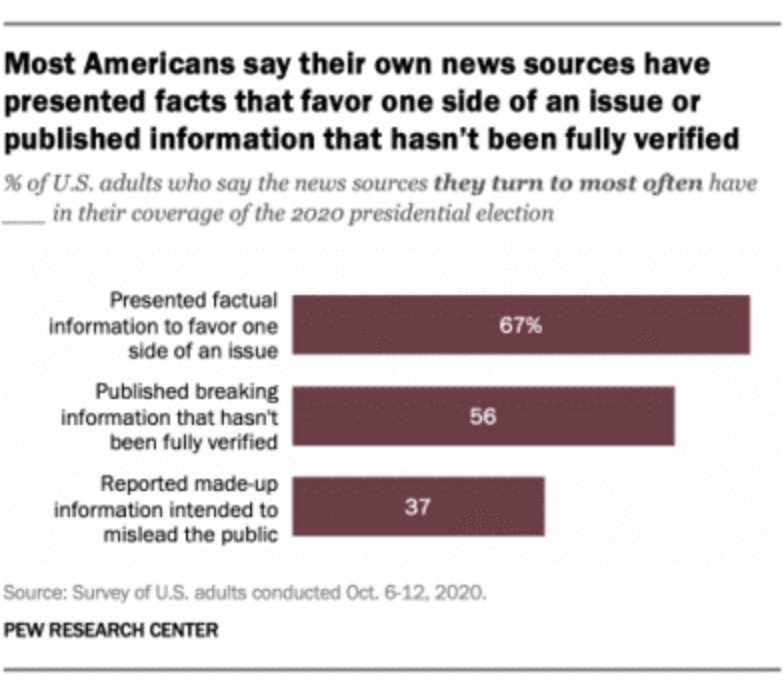
Pew Research has found that 56% of Americans believe that their chosen news source has reported unverified information. Given that a large majority of people in the country perceive the media as at least somewhat unreliable, investigating sources such as Defense News is pertinent.
Is Defense News Biased?
Based on Biasly’s evaluations, Defense News is rated as Center.
By examining content patterns and the broader context of media influence, we aim to offer a balanced perspective on Defense News’s political bias—and contribute to the ongoing discussion about bias in the news.
How Does Biasly Rate News Sources?
Biasly uses proprietary algorithms and a team of analysts to provide comprehensive bias evaluations across thousands of news outlets. Over 200,000 articles from more than 3,200 sources have been analyzed to identify the most accurate and unbiased stories.
Biasly assigns each outlet three key scores:
- Reliability Score – Reflects factual accuracy
- AI Bias Score – Generated via natural language processing
- Analyst Bias Score – Assessed by human political analysts
These scores are based on seven core metrics: Tone, Tendency, Diction, Author Check, Selection/Omission, Expediency Bias, and Accuracy. These elements help analysts and algorithms evaluate the political attitude conveyed by each article.
Biasly’s Bias Meter ranges from -100% (most left) to +100% (most right), with 0% indicating neutrality. The system evaluates individual articles based on political terms, policies, figures, and sentiment to calculate precise bias ratings.
Is Defense News Politically Biased?
Defense News earns a Center rating for its AI Bias Score and a Center for its Analyst Bias Score. The Analyst Bias Score is generated by reviewers from liberal, moderate, and conservative backgrounds. Biasly rates Defense News based on A.I.-based algorithms; they rated Defense News with a Computer Bias Score of Center. With a score of Center, this outlet shows that they generally have a balanced point of view when it comes to the portrayal of information and opinions.
This balance can also be found within their general audience, with many of their readers on social media providing feedback with a range of political beliefs. In one of their recent posts on X, promoting an article “Opinion: Washington Cannot Change the Outcome of This Conflict With Military Aid, nor Can it Enter The Conflict Directly Without Risking Nuclear War”, commenters provided a variety of opinions:
“Took people this long to realize this? It’s a costly, unwinnable war. If the US wants to hedge against Russian ambitions, it should probably be doing better PR around the world. The US is losing support.”
Opinion: Washington cannot change the outcome of this conflict with military aid, nor can it enter the conflict directly without risking nuclear war. https://t.co/4fd6GfFrD9
— Defense News (@defense_news) May 24, 2024
While there are varying biases in each opinion, these statements show that there is not a substantial majority of viewers who hold beliefs of a single side. This displays an important factor for a Center-Leaning outlet: a variety of opinions in responses result from having minimal bias towards a single side. This is one way a person can recognize whether bias exists. In attempting to navigate today’s media, understanding and uncovering bias can help one understand information better.
Bias is a natural function of humans, and we can express it both consciously and unconsciously. Bias is one of the most fundamental forms of pattern recognition in humans. This isn’t to lower the bar and say that “all things are biased,” but to explain how we may come to trust certain news organizations that display coverage patterns.
On the media’s part, there is an incentive to retain audiences, encourage them to purchase subscriptions, and rate products positively. Bias is a two-way street; people want to see news stories about things they care about, and the media needs viewers to continue their operations. This creates a positive feedback loop that influences what stories are covered and from what perspective. This also explains the actions of many news organizations.
How to Evaluate Bias
Although Biasly rates Defense News as Center, it’s important to remember that bias can vary from article to article. This complexity underscores the importance of examining each article individually. So, let’s learn how to evaluate media bias.
Recognizing media bias requires awareness and critical thinking. Often, readers trust news sources that affirm their existing beliefs—a psychological tendency known as confirmation bias. This makes it harder to identify slanted narratives or one-sided reporting.
To address this, it’s essential to challenge your assumptions by consulting multiple perspectives and verifying information through third-party analysis. Tools like Biasly’s media bias ratings allow readers to compare the same news story across the political spectrum.
Ultimately, bias isn’t always a matter of what is said—it’s also about what is left out, how topics are framed, and which stories are chosen for coverage. Learning to recognize these patterns can help readers make more informed decisions and develop greater media literacy.
To start comparing news outlets and gain a better understanding of bias, sign up for Biasly’s Media Bias & News Analytics Platform to see how stories vary between sources.
Defense News Reliability Overview
Is Defense News Reliable?
Defense News is a moderately reliable news source. Although its opinion pieces may contain a fair amount of bias and reliability issues, they are a small minority of what is published. Their fact-based journalism is mostly neutral in bias and Fair in reliability, apart from rare exceptions. Understanding media reliability will allow the reader to make more conscious and informed decisions about their media consumption habits. One way to ease this process is by using Biasly’s News Bias Checker to help identify reliability-related issues in addition to bias in articles.
How to Evaluate Reliability?
Reliability refers to how trustworthy or accurate a news source is. If we can’t trust what we read, then continuing to consume content from that outlet serves little purpose. So how do we evaluate a news outlet’s reliability?
There are several key indicators of reliability to consider when assessing a media source. Red flags of an unreliable article can include wild, unsubstantiated claims, facts that depend on other unreliable sources, heavy use of opinionated language, and more. In contrast, hallmarks of a reliable source include:
- Absence of subjective language
- Citing credible sources (e.g., .gov, .edu, academic references)
- Verifiable facts and statistics from multiple outlets
- Use of primary sources, like interviews or transcripts
- Consistency with coverage across other platforms
Biasly’s reliability scores incorporate these elements in evaluating media outlets.
So How Does Defense News Fare in Its Reliability?
The political reliability index developed by Biasly assesses both accuracy and trustworthiness. Defense News currently holds Average Reliability Score, which is calculated as a weighted average of:
- Fact Analysis Score – Evaluates the accuracy of claims, facts, and evidence.
- Source Analysis Score – Assesses the number, diversity, and credibility of sources and quotes used.
Defense News’s Source Analysis Score is Average at 55% Reliable. This suggests moderate trustworthiness in its sourcing practices. The score is AI-generated and considers quote length, frequency, diversity, and quality.
The Fact Analysis Score of Defense News is Pending at N/A. This further shows how well Defense News supports its claims, addresses selection and omission bias, and presents verifiable evidence.
While Defense News leans toward fact-based reporting, occasional lapses, like partisan framing, can affect the source’s general reliability. These nuances emphasize the importance of analyzing articles on an individual basis.
Defense News’s Accuracy and Reliability
According to Biasly’s analysis, Defense News maintains Average Reliability Score, but individual articles may vary significantly. Let’s dive into the details.
Political orientation plays a crucial role in how audiences perceive reliability. Defense News has been accused of favoring a liberal narrative, potentially at the expense of factual reporting. To validate such claims, it’s essential to analyze whether the publication backs its assertions with sufficient evidence and diverse viewpoints.
Two common types of bias that affect factuality include:
- Selection Bias – Highlighting stories to fit a particular narrative.
- Omission Bias – Omitting certain perspectives or details to skew perception.
Biasly’s accuracy ratings use a scale from 1% (least accurate) to 100% (most accurate). Factors include supporting evidence, reliable internal and external sources, and balanced viewpoints.
One example is in an article by Aaron Mehta titled, “US Noncommital on Strategic, Missile Defense Assets for Korea.” Biasly rates the article as 10% Center, which means the article is mostly void of bias. Additionally, it contains excellent quote length and quantity of quotes as supporting evidence.
This article gives a complete and well-rounded idea of the story that does not favor any one voice over another. Sources from different American diplomatic perspectives are quoted in the article, and the author does a fantastic job of presenting both sides without selection or omission bias in a partisan sense.
The article may frame the United States as preferred or adversarial with the nations of North Korea or China, which could be considered a type of framing bias. Although considering the context of this news source and its publications, these framings are nonpartisan and unsurprisingly pro-American when discussing foreign policy.
So, is Defense News Reliable?
Overall, Defense News can be considered to be an outlet that is moderately reliable. It demonstrates a consistent goal of journalistic integrity and typically supports claims with sources and quotes. Occasional omissions and framing bias do appear, particularly on culturally sensitive or partisan issues.
As media literacy improves, readers can more easily detect issues with selection bias, omission bias, and factuality. To strengthen your ability to assess reliability across the political spectrum, use Biasly’s News Bias Checker to compare how multiple outlets report the same story.
This empowers you to consume more accurate, balanced, and dependable news.
Defense News Editorial Patterns
Defense News’s coverage of political topics often reflects a Center bias, with consistent patterns in phrasing, source selection, and thematic focus that are Neutral. While the publication demonstrates journalistic standards in many of its reports, the choice of issues, framing, and word usage can indicate a political slant. This content analysis examines how Defense News handles liberal and conservative issues and evaluates its language choices and editorial tendencies.
Coverage of Liberal vs. Conservative Topics
Defense News’s article mainly covers foreign policy topics, largely related to the movements of the United States. The source tends to favor the United States when covering foreign policy issues and international relations. With that said, the source is mostly free of partisan bias because its coverage revolves around foreign affairs. Without discussion of social, domestic, or cultural issues, there is not much room for politicization, although it can occur.
For example, the source can occasionally frame a policy or ideology, like support for the military or military spending, in a specific way in its stories. This happens in the ways previously discussed in the article, like using emotionally charged language or word choice to subtly mislead the audience about a position. This is represented through the source’s slight leftward lean in Biasly’s analysis. The source’s bias score is Center, and sometimes left-leaning positions are bolstered in articles by covering a story with a negative opinion of military spending, for example.
The example does this by explaining the pro-military spending government of the UK as,
“…shaken by internal dissent…”
Using this type of language to describe a government with a certain position paints the idea as negative in the article’s connotation.
Policy and Issue Framing
Biasly rates Defense News as having remarkable centrality regarding nearly all policy issues. The source’s bias rank is Center, but the two outliers among its policy leanings concern somewhat right-leaning coverage of both Iran and non-renewable energy. Both Iran and non-renewable energy are current stories, which shed light on current right-leaning policy biases within the organization.
Beyond those two right-leaning topics, which are likely being influenced to sway public opinion about current events, given the current Republican government, the source has an outstanding record of representing policies without bias.
Coverage and Relevance
Defense News’s reporting specifically covers foreign affairs, defense, the military, and surrounding topics and stories. Every type of deployed military unit is featured with its own page on the magazine’s website, including military applications in space. The legislative side receives its own page as well, where the source covers the policy side of defense topics and warfare.
Readers who wish to further explore how Defense News compares with other publications can visit Biasly’s Media Bias Chart to analyze tone and word choice in real time.
Funding and Ownership
Who Owns Defense News?

Venture Capital and Private Equity Principals – LinkedIn
Defense News is ultimately owned by Regent, a private equity firm based in Beverly Hills, California. The founder and chairman of the board, Michael Reistein, who worked as an intern under the Reagan Administration in the early stages of his career, can exert significant influence over the news source. However, this early step in his career did not seem to skew his influence on his subsidiary in Defense News, as they remain relatively neutral in their reporting.
Who Funds Defense News?
Defense News does not publicly disclose its profit structure, but it is produced by Sightline Media, which is owned by Regent. Without knowing for sure, advertising, subscription, and sponsorship revenue likely support the source. Sightline Media has stated that,
“Sightline Media Group Defense News and DefenseNews.com are produced by Sightline Media Group, the world’s leading publisher of news about military and government…”
Defense News is a part of a broader array of outlets owned by Sightline and Regent to produce military and government media. Regent also owns The Military Times, The Army Times, the Air Force Times, and the Federal Times, to name a few. Outside of educated assumptions about the profit structure, the private investment firm Regent has disclosed no public revenue data.
Additional Insights
News Source Comparison
When comparing news sources, in addition to the sources that Regent and Slightline own, such as The Navy Times and the Marine Corps Times, other comparable sources include Breaking Defense, Defense One, and Naval News. These sources compare because they often cover U.S. foreign policy, Pentagon analysis, defense coverage, and international affairs.
Not all of these sources, but many of them, form narratives from the perspective of the United States’ foreign policy strategies. This is because many of them are writing to an audience of Western policymakers and those with the national security interests of the United States. The difference between these sources and Defense News is the level of discussion surrounding policy vs. the defense industry and equipment subjects.
Notable Contributors and Authors
Defense News features a range of reporters that specialize in different areas of military and policy analysis. One example is Jen Judson, an award-winning reporter covering land warfare. Some other notable contributors include Carla Babb, JD Durkin, Aaron Mehta, and Valerie Insinna. Some specialize in Pentagon coverage, and others paved their way in on-air warfare coverage.
Related Tools and Resource Pages
To better understand how Defense News fits into the broader media landscape, we recommend exploring these helpful resources:
- Media Bias Chart: See where Defense News ranks among hundreds of media outlets across the political spectrum.
- Political Bias Chart: Visualize political slants of news sources across various policy areas.
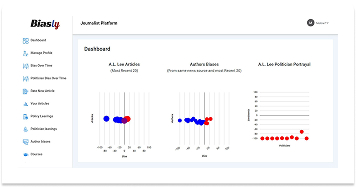
- Journalist Bias Analytics Platform: Explore how individual journalists contribute to bias within their publications.
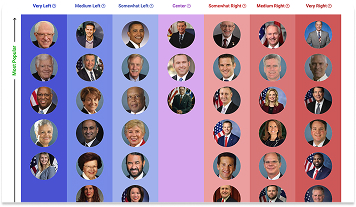
- Politician Bias Analytics Platform: Compare how politicians are framed differently by Defense News and other outlets.
- Media Literacy Education Platform: Learn how to critically assess media sources, bias techniques, and news reliability.
Frequently Asked Questions
Defense News is rated as Center based on Biasly’s media bias algorithm, which assesses sentiment, article framing, and policy favorability.
Defense News has no widely known instances of misinformation or fake news allegations. Occasionally, this source has used framing or subtle bias in its articles, but it has never been accused of fake news or misinformation.
Biasly uses both AI sentiment analysis and human analysis to assess tone, fact accuracy, source quality, and media bias indicators. Learn more on our Bias Meter page.
Yes, though framing and occasional bias can affect perceived reliability.
Military Spending
| Date | Sentiment | Associated Article | Snippet |
|---|---|---|---|
| 08/25/2019 | 75% For | Trump Family Detentions Flores Agreement (link) | So, of course, the Trump administration is doing the opposite in a baldfaced |