




2% Center
Bias Meter
Extremely
Liberal
Very
Liberal
Somewhat Liberal
Center
Somewhat Conservative
Very
Conservative
Extremely
Conservative
-100%
Liberal
100%
Conservative

Biasly determines media bias ratings through a dual-layered approach combining artificial intelligence and analyst review. The platform’s proprietary bias detection engine, Bias Meter, evaluates sentiment, policy position alignment, and language framing across thousands of data points in news articles. Analysts then verify and interpret the AI’s findings, providing additional context where needed. Learn more about ratings
- Profile
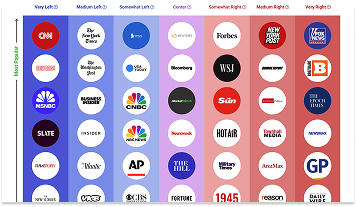
Economic Times on the media bias chart
- Bias Rating
2% Center
- Reliability34% Reliable AveragePolicy Leanings
0% Center
Extremely
LiberalVery
LiberalModerately
LiberalSomewhat Liberal
Center
Somewhat Conservative
Moderately
ConservativeVery
ConservativeExtremely
Conservative-100%
Liberal100%
Conservative
Average Reliability
*Our bias meter rating uses data science including sentiment analysis, machine learning and our proprietary algorithm for determining biases in news articles. Bias scores are on a scale of -100% to 100% with higher negative scores being more liberal and higher positive scores being more conservative and 0% being neutral. The rating is an independent analysis and is not affiliated nor sponsored by the news source or any other organization.
Politician Portrayal44% negative
Continue For Free
Create your free account to see the in-depth bias analytics and more.
By creating an account, you agree to our Terms and Privacy Policy, and subscribe to email updates.
Log In
Log in to your account to see the in-depth bias analytics and more.
Analysis of Economic Times Articles
Analysis of Bias in Economic Times Online Articles
Economic Times has found that in-depth coverage of the US Presidency under the Trump administration is one of the most effective ways to drive subscriptions. Given that much of its readership is India-based—where international and specifically US issues matter—it’s essential to ask: is Economic Times truly biased?
To evaluate this, we can analyze select Economic Times articles through several of Biasly’s bias rating criteria: Tone, Tendency, Author, Diction, and Expediency Bias.
- Tone: The overall attitude conveyed by the article
- Diction: Specific word choices made by the writer
- Author: The background and social presence of the journalist
- Tendency: Patterns of bias in the writer’s broader body of work
- Expediency Bias: Quick visual or textual indicators like headlines and photos that imply bias
Source: Economic Times
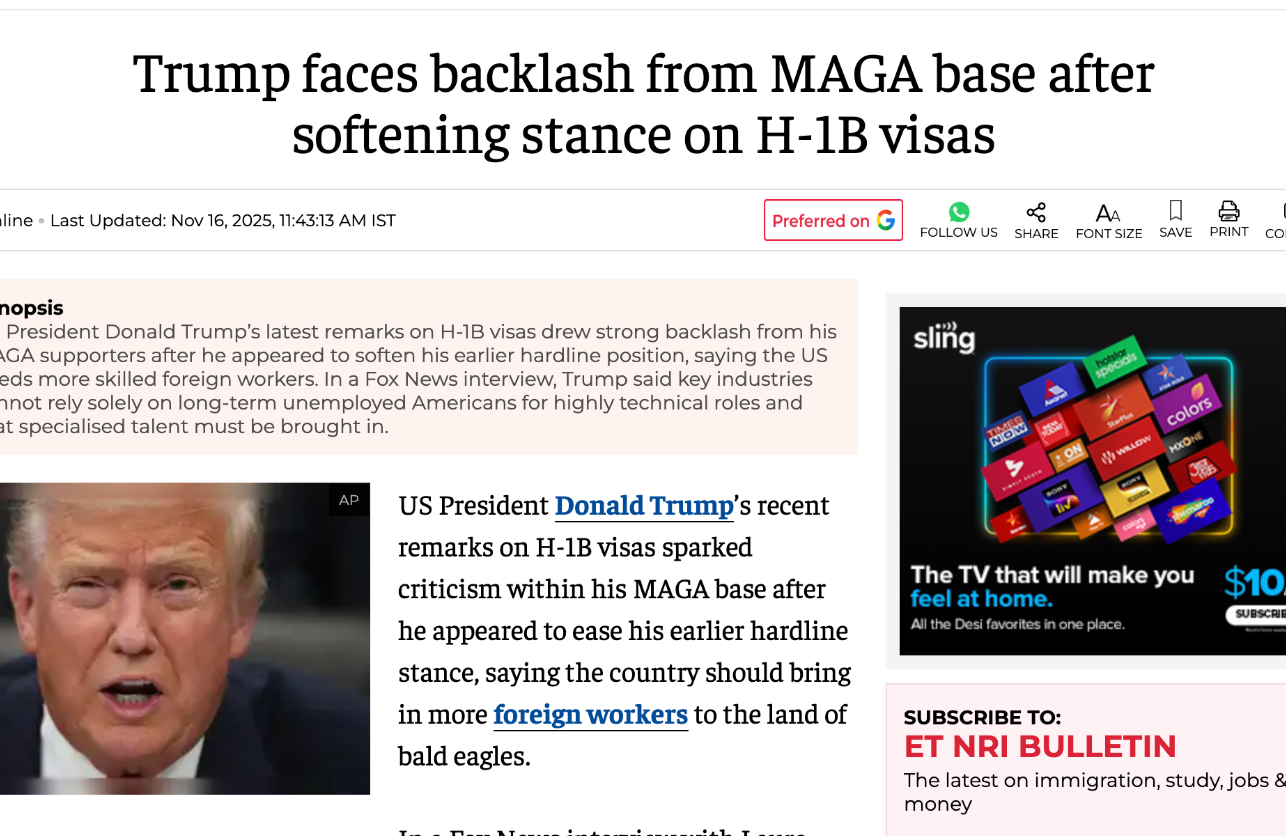
One particular article features a headline with an immediate negative portrayal of US President Donald Trump, “Trump faces backlash from MAGA base after softening stance on H-1B visas.” A photo of Trump mid-interview discussing how H-1B visas are still needed in the US economy is placed at the beginning of the article. The article begins by explaining Trump’s campaign expectation of a total reform for the H-1B visa for specialized foreign workers. However, the article goes on to discuss his recent interview, where he went back on this expectation, saying that these specialized foreign workers were very necessary for the United States.
“The GOP leader also argued that industries requiring specialised expertise cannot be filled by untrained or long-term unemployed workers. “You can’t just say a country is coming in, going to invest $10 billion to build a plant, and take people off the unemployment line who haven’t worked in five years, and they’re going to start making missiles. It doesn’t work that way,” he said.”
The article leans progressive in its negative portrayal of Donald Trump’s recent interview responses. It additionally emphasizes the comments Trump made regarding the necessity of foreign workers, a belief often associated with left-leaning values. The article even directly addresses the backlash from Trump’s own supporters, stating, “MAGA supporters were not happy and erupted online over the president’s comments.” By linking Trump’s false campaign expectations with the importance of H-1B biases, the author aligns the narrative with left-leaning ideals. This framing, while negative, subtly situates the subjects within a progressive ideological lens, further underscoring the article’s biased slant.
On the other hand, another article titled “Donald Trump approval ratings higher than his first term even after Republicans lost in New York City, Georgia, New Jersey, Pennsylvania, Virginia” is slightly more balanced. It lays out the statistics of Trump’s popularity despite recent Democratic victories. Hot-button issues like recent democratic election wins are presented factually in relation to Republican statements:
“Almost two weeks after Republicans lost badly in elections in New York City, Georgia, New Jersey, Pennsylvania, and Virginia, many GOP leaders insist there is no problem with the party’s policies, its message, or President Donald Trump’s leadership.”
The article attempts to employ diction that is restrained and formal, but a slight left-leaning author bias is visible. Words like “claims” or “insists” are used when explaining Republican statements of support for the President despite the Democratic victories. The author does avoid loaded aggression or favoritism, which can be seen on a larger scale in more partisan outlets.
The article employs diction and language that are notably restrained and formal, contributing to its overall neutral tone. Terms like “challenges” and “advocate” are informative but measured, conveying the dynamics of the race without implying aggression or favoritism. The author also avoids emotionally charged words or loaded phrases often seen in more partisan outlets. The author from Global Desk refrains from personal commentary but fails to employ completely non-partisan reporting on this recent issue.
To conclude, Economic Times shows inconsistent bias across its reporting, but manages to often maintain a neutral tone. Both articles discussed in this section regarding President Trump convey a slight left-leaning bias. The author’s details are not available, and so it is not possible to determine personal connections the author may have to the election outcomes. Despite bias in some reporting, Economic Times’s tendency to create a non-partisan, fact-based argument in the majority of its work indicates an overall center orientation.
Analysis of Economic Times Opinion Articles
To fully understand political bias in media, it’s important to distinguish between two types of reporting, factual reporting and opinion pieces. While opinion articles express personal viewpoints on current issues, reporting aims to present facts and let readers form their own conclusions. Although the previous section examined factual reporting, this section turns to how bias surfaces through Economic Times’s tone and selection of opinion editorials (op-eds).
One example is the op-ed titled “Record Diwali consumer spending expected to boost India’s economy.” The title reveals that the article is about the Diwali economy surges in India. The op-ed discusses how the economic surge usually dies down after the festival concludes, but recent studies show this may continue past the festival. If this happens, it would lessen the negative impact of US tariffs on the country. While President Trump’s tariffs are mentioned, the article does not share a viewpoint on them, making it neutral. This suggests the author prioritizes facts over persuading the audience towards a conclusion, and leaves it open to the reader’s interpretation.
However, another opinion editorial titled “Mark a fake for legal protection’s sake” employs more neutral, centrist language. Its title does not lean toward either political side and displays the issue as a desire to label AI usage online. The synopsis is neutral and states India will soon enact a law requiring AI usage to be clearly cited, and avoids framing the issue as liberal or conservative. This means the piece is less likely to lean to one side over another.
These examples show that while not all Economic Times opinion pieces are overtly neutral, the platform frequently publishes content that does not align with either liberal or conservative media narratives. This consistent selection of opinion pieces can contribute to perceptions of systemic bias. However, consistently neutral presentation of information helps the reader to make their own conclusions.
This tendency underscores the importance of distinguishing subjective viewpoints from straight factual reporting, especially when interpreting the political leanings of any news organization as liberal or conservative.
Analysis of Reliability in Economic Times’s Online News Articles
Economic Times aims to serve the people of India with objective, fact-based reporting. Its staff includes writers from varying ideological and professional backgrounds, which helps to balance coverage. However, distinguishing between news reporting and opinion pieces is necessary for readers to evaluate credibility effectively.
One example is the article titled “There are people who only talk (RJD) and who act (NDA) Bihar Deputy CM Samrat Chaudhary.” The unnamed reporter covered accusations from Samrat Chaudhary regarding the lack of action from the RJD on its campaign promises, amidst the upcoming election. The article refrains from editorial commentary or personal opinions, sticking to quotes and fact-based diction. Despite Economic Times’s Center rating, this piece illustrates factual neutrality.
Quality of Sources and Facts Used
Economic Times often uses credible sources from across the political spectrum. However, some articles skew in their presentation of opposing viewpoints.
Consider the headline: “BJP achieves ‘highest-ever’ strength in assemblies; to cross 1,800-mark in 2 years: Amit Malviya.” While well-documented and supported by data and politician quotes, the article lacks insight into why the BJP has gained such power and who its opposition is. This absence creates a perception that the opposition argument to the BJP’s rise in power is nonexistent.
But can readers find evidence opposing the claim made in this article? Economic Times’s journalist from the Press Trust of India mentions the BJP’s winning and their leader’s claim of hard work and consistency. However, the losing candidates are not mentioned, nor are concrete facts as to why the BJP has grown in popularity.
“It was easier then to consolidate power and sway the electorate,” he said, adding, “The difference is clear: Congress inherited its peak. BJP has earned and endured its rise – seat by seat, state by state, struggle by struggle.”
Concerning the remainder of Indian citizens who voted against the BJP, there is no mention of the data or reasoning behind their support, or lack thereof. This lack of information gives readers the impression that the BJP simply won based on luck and popularity against their opponents, which is likely not the full story.
In contrast, the article “25 oil-supplying states accused of ‘complicity’ in Gaza war” maintains objectivity. The article discusses how many countries have continued to air Israel via oil shipments during the war in Gaza. The article contains diverse viewpoints and facts from many different sources. Also, the author refrains from making any personal assessments. This allows readers to interpret the differences in thought on their own.
The article gains credibility through its 5 quotes from political candidates—1 short and 4 medium-length. These quotations strengthen reliability by providing full context and minimizing misrepresentation, offering readers a more authentic account from primary sources.
The article features over ten sources, primarily the United Nations, the International Court of Justice, and oil company leaders. While the defense argument from the countries being accused is not included, the accusations have not become official yet, and so including the defense would be difficult. The organizations below help include fact-based statements to enhance the article’s credibility.
- Oil Change International
- UN climate summit in Brazil
- Shady Khalil- Oil Change International
- Data Desk- Research firm
- Gaza’s health ministry
- International Court of Justice
- Irene Pietropaoli- British Institute of International and Comparative Law
- Ana Sanchez Mera- Coordinator for the Global Energy Embargo for Palestine
- Head of the Rio de Janeiro Oil Workers Union
- Gustavo Petro- Colombian president
The article accurately reflects recent accusations of oil-supplying states and uses facts from credible sources to defend their claims.
The article primarily relies on primary sources, which are highly valid and enhance its reliability. Given its focus on the countries complicit in Israel’s genocide, and lack of defense of Israel and these countries, this may hinder reliability. However, this may not apply here, as the article’s purpose is specifically to highlight the countries recently accused of supplying oil.
Selection and Omission Bias
Economic Times provides extensive coverage of India’s leaders, which is reasonable given the country’s political makeup. However, bias may still emerge through framing and non-partisan story selection.
In “NDA’s Bihar victory reflects people’s trust in progressive governance, says Andhra CM ”, selection bias surfaces through the article’s emphasis on positive aspects of the Prime Minister of India’s progressive governance ambitions. The article does not explore the negative outcomes of the Bihar victory or the opposing views of those who did not support it.
The article does not highlight any proactive or positive measures taken by non NDA or BJP leaders in India. Therefore, the article leans slightly right in its framing, as the BJP is considered the conservative majority party in India. The author addresses the election results with only positive sentiment, leaving out the opposing viewpoints.
By comparison, the article about RK Singh shows a stronger balance. The ANI includes quotes from the BJP regarding why RK Singh, as well as other members, are being let go. A notable example comes from a source quote:
“… Singh stated that he had received a letter regarding the party’s decision to suspend him, citing anti-party activities, and requested an explanation for why he should not be expelled. However, the letter did not specify the anti-party activities.”
ANI utilizes a decent range of sources that display a diversity of opinion when combined. The article incorporated statements from both the BJP party and RK Singh. The article also stated that the BJP party never explicitly stated why the members were let go. Overall, the ANI journalist used a well-rounded approach to delivering unbiased news to readers of Economic Times.
In opinion pieces, issues with factuality, sources, selection, and omission are sometimes present. The articles covered so far show Economic Times’s Center views, but this is not detrimental to its reliability. Its story selection tends to remain neutral and focus on issues central to India. However, the contents of Economic Times’s article maintain accuracy and tend to cite evidence from numerous and varied sources.
Economic Times Bias Overview
Economic Times began as “The Economic Times”, published by the Times Group in 1961. Today, it is one of the largest business newspapers in English. Economic Times has won the SOPA award for its podcast for excellence in audio reporting, and the IE Business School award for economic journalism. It positions itself as a community asset focused on being an independent voice for the people of India and around the world.
Source: Pew Research
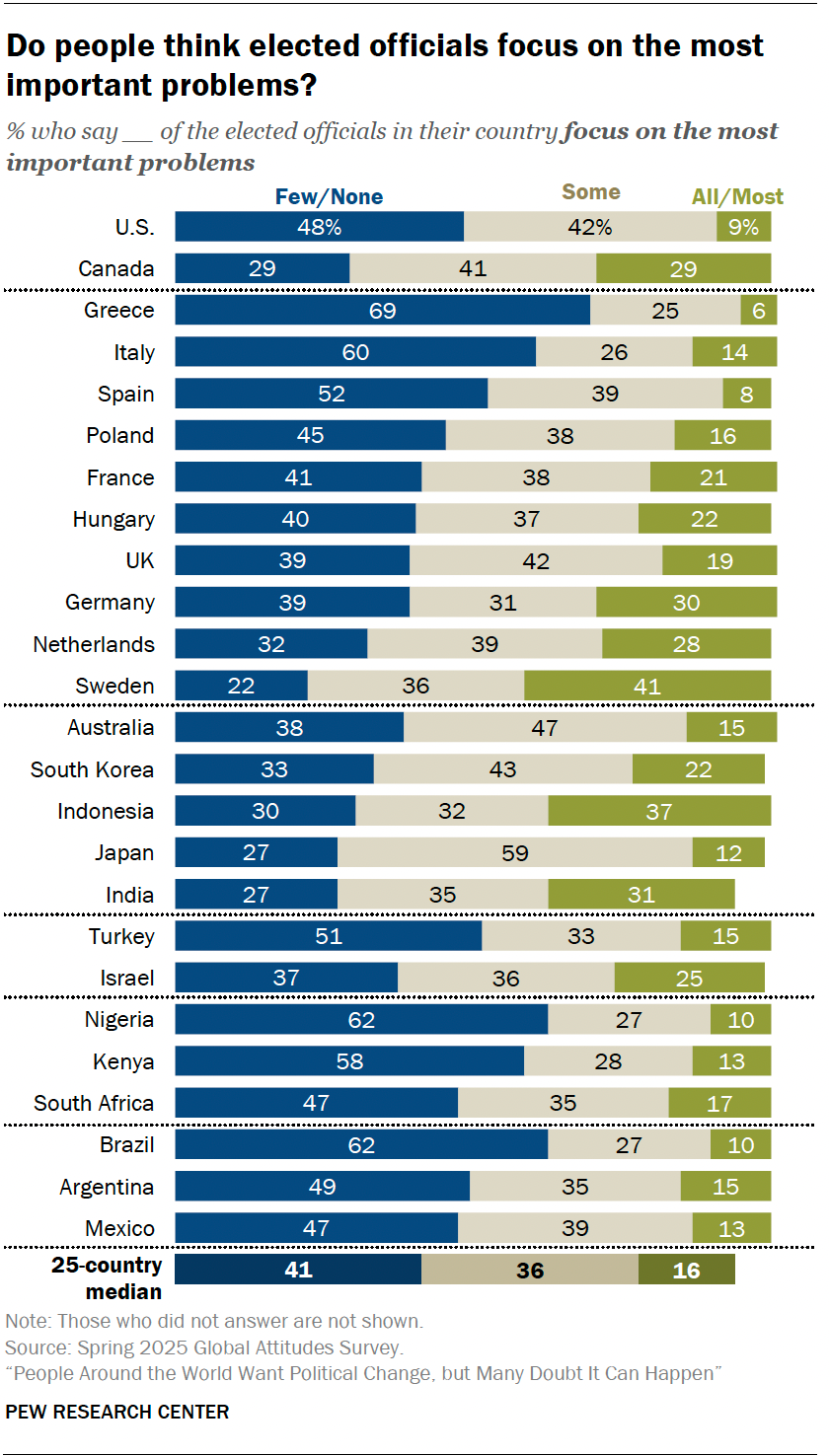
Economic Times is India-based and therefore reports on issues most relevant to the country. According to a Pew Research poll, when asked if elected officials focus on their country’s most important problems, these were the results in India. “In Indonesia, 37% hold this view, as do roughly three-in-ten in Canada, Germany, India, and the Netherlands.” Because this number is so low in India, mostly neutral news outlets like this one must continue to report on issues, even if they are ignored by elected officials. This commitment makes it a reputable choice to get news for those living in India.
According to its May 2024 report, Economic Times received 2.34 million page viewers per month. When it comes to media bias, both AI and media analysts have evaluated its content, sources, and funding to determine its political leaning.
As one of the leading news media outlets with a focus on India and business, and worldwide issues, Economic Times plays a significant role in shaping public perception of international, domestic, and India-specific issues. Readers’ trust in the accuracy of Economic Times local news may mirror the conclusions reached by Biasly’s media bias ratings. This article delves into Economic Times’s written and editorial tendencies to explore present political bias and to what extent.
Is Economic Times Biased?
Based on Biasly’s evaluations, Economic Times is rated as Center.
By examining content patterns and the broader context of media influence, we aim to offer a balanced perspective on Economic Times’s political bias—and contribute to the ongoing discussion about bias in the news.
How Does Biasly Rate News Sources?
Biasly uses proprietary algorithms and a team of analysts to provide comprehensive bias evaluations across thousands of news outlets. Over 200,000 articles from more than 3,200 sources have been analyzed to identify the most accurate and unbiased stories.
Biasly assigns each outlet three key scores:
- Reliability Score – Reflects factual accuracy
- AI Bias Score – Generated via natural language processing
- Analyst Bias Score – Assessed by human political analysts
These scores are based on seven core metrics: Tone, Tendency, Diction, Author Check, Selection/Omission, Expediency Bias, and Accuracy. These elements help analysts and algorithms evaluate the political attitude conveyed by each article.
Biasly’s Bias Meter ranges from -100% (most left) to +100% (most right), with 0% indicating neutrality. The system evaluates individual articles based on political terms, policies, figures, and sentiment to calculate precise bias ratings.
Is Economic Times Politically Biased?
Economic Times earns a Center rating for its AI Bias Score and a Center for its Analyst Bias Score. The Analyst Bias Score is generated by reviewers from liberal, moderate, and conservative backgrounds. Analysts reviewed 15 Economic Times articles and noted very few preferences one way or the other when covering liberal versus conservative topics. The paper additionally maintained objectivity on topics like education and national security.
For example, coverage of LGBTQ+ constrictions in China had a mostly neutral tone, as seen below. This contributes to Economic Times’s Center.
A Economic Times writer noted in a report:
“China’s LGBTQ+ community and advocacy groups are under intensifying pressure from authorities, even though the country decriminalized homosexuality in 1997. Some LGBTQ+ groups have been forced to cease operations in recent years in China, and activism has been constrained.”
The demography of India, especially religiously, displays a contrasting backdrop to the arguments seen above. Pew Research shows that close to 80% of India’s population identifies as Hindu, with another approximately 15% identifying as Muslim. Studies show that many Hindus align with conservative ideas and support the BJP. The Bharatiya Janata Party is the current ruling political party in India under the prime minister, Narendra Modi. The BJP supports conservative ideals and is a pro-Hindu party. This makes for conservative, often Hindu-favoring, legislation in India.
This means India as a whole tends to lean more conservatively, which can explain differing perceptions of Economic Times’s content. The news outlet may draw mixed reactions depending on readers’, specifically those living in India, political and religious orientations.
How to Evaluate Bias
Although Biasly rates Economic Times as Center, it’s important to remember that bias can vary from article to article. Economic Times also covers a conservative-leaning country with objectivity on many issues, from government legislation to world news. This complexity underscores the importance of examining each article as an individual. So, let’s learn how to evaluate media bias.
Recognizing media bias requires awareness and critical thinking. Often, readers trust news sources that affirm their existing beliefs—a psychological tendency known as confirmation bias. This makes it harder to identify slanted narratives or one-sided reporting.
To combat this, it’s essential to challenge your assumptions by consulting multiple viewpoints and verifying news through third-party analysis. Tools like Biasly’s media bias ratings allow readers to compare the same news story across the political spectrum.
Ultimately, bias isn’t always a matter of what is said—it’s also about what is left out, how topics are framed, and which stories are chosen for coverage. Learning to recognize these patterns can help readers make more informed decisions and develop greater media literacy.
To start comparing news outlets and gain a better understanding of bias, sign up for Biasly’s Media Bias & News Analytics Platform to see how stories vary between sources.
Economic Times Reliability Overview
Is Economic Times Reliable?
Economic Times finds itself with generally high accuracy, despite occasional mistakes or biased reporting. Its status as a longstanding reputable economic and business news outlet for the population of India contributes to its well-regarded reputation for reliability. According to Pew Research, about 51% of people in India believe they have complete free speech under their current government. This proves to be true because of the article topics covered by Economic Times, which occasionally include negative portrayals of India’s ruling party, the BJP, which would not be possible to publish if free speech were not upheld.
This suggests that Economic Times’s popularity among India’s residents, and more specifically the business-involved portion of the population, may stem from the reliability of its political news coverage, in addition to its article diversity regarding stance on government in India. Further investigation is needed to determine whether bias or other factors are affecting its accuracy. At Biasly, we specialize in evaluating not just bias but also the reliability of media outlets. Let’s explore the reliability and reputability of Economic Times.
How to Evaluate Reliability?
Reliability refers to how trustworthy or accurate a news source is. If we can’t trust what we read, then continuing to consume content from that outlet serves little purpose. So how do we evaluate a news outlet’s reliability?
There are several potential measures of reliability to look out for when trying to determine whether a media source is reliable or not. Red flags for an unreliable article can include the presence of wild, unsubstantiated claims, facts dependent on other unreliable sources, heavy use of opinionated language, and more. In contrast, hallmarks of a reliable source include:
- Absence of subjective language
- Citing credible sources (e.g., .gov, .edu, academic references)
- Verifiable facts and statistics from multiple outlets
- Use of primary sources, like interviews or transcripts
- Consistency with coverage across other platforms
Biasly’s reliability scores incorporate these elements in evaluating media outlets.
So, How Does Economic Times Fare in Its Reliability?
The political reliability index developed by Biasly assesses both accuracy and trustworthiness. Economic Times currently holds Average Reliability Score, which is calculated as a weighted average of:
- Fact Analysis Score – Evaluates the accuracy of claims, facts, and evidence.
- Source Analysis Score – Assesses the number, diversity, and credibility of sources and quotes used.
Economic Times’s Source Analysis Score is Average at 34% Reliable. This suggests moderate trustworthiness in its sourcing practices. The score is AI-generated and considers quote length, frequency, diversity, and quality.
The Fact Analysis Score of Economic Times is Pending at N/A. This further shows how well Economic Times supports its claims, addresses selection and omission bias, and presents verifiable evidence.
While Economic Times leans toward factual reporting, lapses may occur. Examples of this are unbalanced viewpoints or incomplete data, as they can affect the reliability rating. These variations in reliability emphasize the importance of analyzing individual articles.
Economic Times’s Accuracy and Reliability
According to Biasly’s analysis, Economic Times maintains Average Reliability Score, but individual articles may vary significantly. Let’s dive into the details.
Political orientation plays a crucial role in how audiences perceive reliability. Economic Times has been accused of favoring a liberal narrative, potentially at the expense of factual reporting. To validate such claims, it’s essential to analyze whether the news site backs its assertions with sufficient facts and diverse analysis.
Two common types of bias that affect factuality include:
- Selection Bias – Highlighting or omitting stories to fit a particular narrative.
- Omission Bias – Leaving out differing perspectives or relevant details to skew perception.
Biasly’s accuracy ratings use a scale from 1% (least accurate) to 100% (most accurate). Factors include the presence of supporting evidence, internal and external reliable sources, and balanced viewpoints.
For instance, Biasly gave The Siasat Daily a Center Bias and an Average Analyst Reliability Score. One Siasat article, titled “At least 11 more flotilla ships sailing for Gaza to break Israeli blockade”, showed an Average reliability rating for failing to include diverse viewpoints and for employing inflammatory language. This article fails to add anything supporting the Israeli perspective. There is no reason mentioned as to why they continue the blockade or why the flotilla ships were captured. This absence creates a pro-Palestine bias, whether intended or not. In contrast, another piece from the outlet, titled “After a gap of 5 years, India, China to resume direct flight services this month,” comes after flights were suspended for multiple years due to poor India-China relations. The article refrains from editorial commentary, sticking to quotes and fact-based language.
Below, we will take a closer look at more examples like this to provide a further analysis of the reliability of Economic Times’s articles. This will include its use of selection bias, omission bias, and the quality of its sources and the facts it uses.
So, is Economic Times Reliable?
Overall, Economic Times can be considered to be an outlet that is moderately reliable. It demonstrates a consistent goal of journalistic integrity and typically supports claims with sources and quotes. Occasional omissions and framing bias do appear, particularly on culturally sensitive or partisan issues.
As media literacy improves, readers can more easily detect issues with selection bias, omission bias, and factuality. To strengthen your ability to assess reliability across the political spectrum, use the News Bias Checker to compare how multiple outlets report the same story.
This empowers you to consume more accurate, balanced, and dependable news.
Economic Times Editorial Patterns
Economic Times’s coverage of political topics often reflects a Center bias, with consistent patterns in phrasing, source selection, and thematic focus that are Neutral. While the news site consistently employs journalistic standards in its reports, the choice of issues, framing, and word usage can reveal a political slant of Center. This content analysis will examine how Economic Times displays liberal and conservative issues in a generally neutral light and evaluate its language choices and editorial boundaries.
Coverage of Liberal vs. Conservative Topics
Economic Times’s articles include progressive social causes, such as abortion rights, anti-discrimination laws, and clean energy, which tend to adopt neutral language. For instance, its coverage of these topics frequently aligns with center viewpoints, using non-partisan language to frame these policies as possible reforms.
Economic Times’s articles include a mix of progressive and conservative topics. However, they are generally presented neutrally, without taking a stance one way or the other. LGBTQ+ rights are mentioned concerning the recent US government shutdown and the anti-LBGTQ republican provisions. Both republican and democratic viewpoints are addressed factually in the article.
On the other hand, there are a few instances where articles covering conservative figures or Republican-led initiatives can take a more critical tone. Biasly’s analysis of a recent Economic Times articles may reveal a tendency to highlight controversies or opposition surrounding Republican policies. For example, in this article, the Trump administration’s cutting of clean energy initiatives, the author is slightly critical. Additionally, it positively highlights the recent JP Morgan initiatives in clean energy, presenting a viewpoint favoring clean energy policies.
This news media bias manifests in subtle ways — such as placing greater prominence on Democratic or Republican voices, or using emotional diction when describing specific liberal or conservative causes. Words like “justice,” “equality,” and “rights” may appear more frequently in left-leaning articles, while conservative views could be reported as “pushbacks,” “restrictions,” or “oppositions.”
Policy and Issue Framing
When covering gender rights, Economic Times references inclusivity and representation, not voing support either way for expanded legal protections. This aligns with a center media bias, especially in India, where local culture tends to be more conservative under the ruling majority party of the BJP. Coverage of environmental issues and clean energy differs in that they reflect the necessity of clean energy, especially in India, where climate change has taken a strong toll.
However, issues like religious liberties, typically associated with liberal platforms, are covered in a mostly neutral tone. These stories are often contextualized through the lens of their impact on marginalized religious groups in India or framed as somewhat polarizing.
Even in non-partisan journalism, diction and tone choices shape reader perception. This consistent choice of words reflects the editorial direction that, even unintentionally, can add to bias in media.
Coverage and Relevance
Economic Times’s reporting and journalism often touch on key issues central to the media political bias discussion, including newspaper bias, bias in journalism, and biased media narratives. However, it maintains objectivity in much of its publications, earning it a Center bias rating. As such, it serves as a relevant case study for researching source bias and news media bias in country-focused reporting.
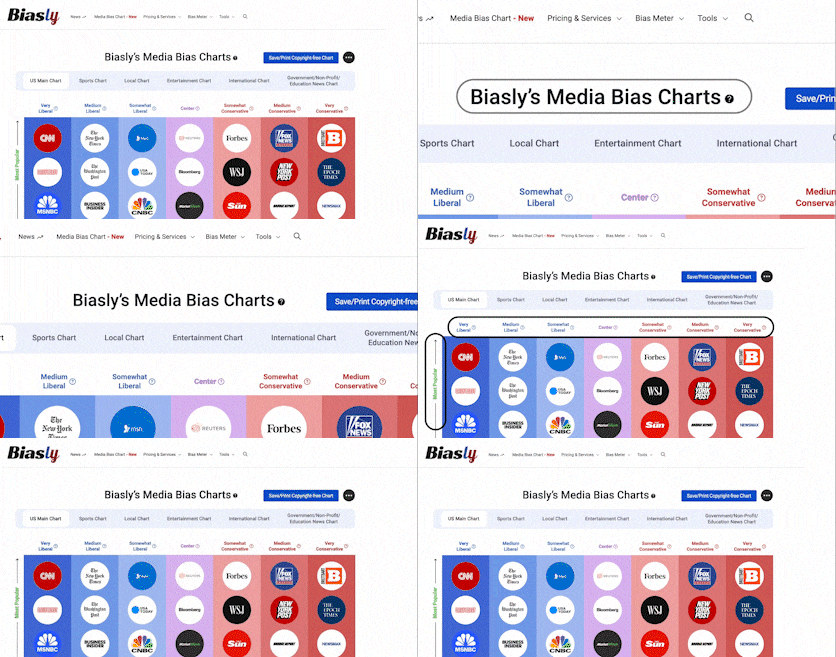
Readers who wish to explore further how Economic Times compares with other publications can visit Biasly’s Media Bias Chart to analyze tone and word choice in real time.
Funding and Ownership
Who Owns Economic Times?
Economic Times is owned by a company called the Times Group, aka Bennett, Coleman, and Co Ltd. Muqbil Ahmar and Pankaj Gutpa are both important figures serving on the executive board in executive editor and head of sales positions.
This strengthens the paper’s commitment to transparent, fact-based journalism, ensuring that funding does not influence editorial and journalistic content. While some biases may still arise due to staff perspectives or editorial practices, they are not easily attributed to the external funding received by Economic Times.
This transparent for-profit approach and the lack of politician funding may provide added reassurance to readers seeking a news outlet that values journalistic independence and editorial integrity.
Who Funds Economic Times?
Economic Times operates under a for-profit business model by a private company called the Times Group, aka Bennett, Coleman, and Co Ltd. The Jain family owns the Times Group, so Economic Times is indirectly owned by them. Muqbil Ahmar and Pankaj Gutpa are both important figures serving on the executive board in executive editor and head of sales positions.
The majority of funding for Economic Times comes from its subscription services available on its online site, as well as advertising online through ads and pop-ups. This means they are not mainly funded by politicians or government programs, allowing them to take a non-partisan stance on most issues.
Additionally, it is supported financially by reader contributions and philanthropic support through its membership portal and publishes legal/financial documents on its site for transparency. Its funding now comes primarily from reader memberships, philanthropic foundations, corporate sponsorships, and advertising sales.
Additional Insights
News Source Comparison
In terms of news source comparison, Economic Times is often. Sources like The Siasat Daily or The New India Express often present similar tones and editorial tendencies. While Economic Times maintains a Center media bias, it differs from strongly partisan, one-sided sources in that it generally includes opposing viewpoints and strives for regional and international coverage balance.
This puts it with biased media outlets that present consistently one-sided narratives without factual counterpoints. Readers looking for balanced political coverage may compare Economic Times.
Notable Contributors and Authors
Economic Times features a diverse range of reporters and columnists, many of whom are deeply familiar with India’s political, religious, and social climate. Reporters like Shishir Prasad, who is the author of the ET Prime subscription component of Economic Times, exemplify the outlet’s strength in local and international investigative journalism.
Other contributors focus on religion, environment, or government—topics central to India’s communities. While some contributors may be seen as centered in their topic selection, their work is grounded in factual reporting.
Related Tools and Resource Pages
To better understand how Economic Times fits into the larger media landscape, we recommend browsing these resources:
- Media Bias Chart: See where Economic Times ranks among hundreds of media outlets across the political spectrum.
- Political Bias Chart: Visualize political slants of news sources across various policy areas.
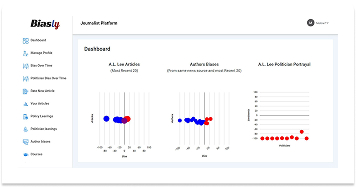
- Journalist Bias Analytics Platform: Explore how individual journalists contribute to bias within their publications.
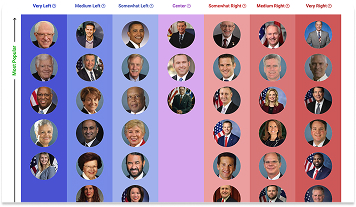
- Politician Bias Analytics Platform: Compare how politicians are framed differently by Economic Times and other outlets.
- Media Literacy Education Platform: Learn how to critically assess media sources, bias techniques, and news reliability.
Frequently Asked Questions
Economic Times is rated as Center based on Biasly’s media bias algorithm, which assesses sentiment, article framing, and policy favorability.
While Economic Times has not been reported officially or published fake news, some selection and omission bias can sometimes be marked. Overall, its factual reporting is generally sound.
Biasly uses a combination of AI sentiment analysis in addition to human analyst review to assess tone, fact accuracy, source quality, and media bias indicators. Learn more on our Bias Meter page.
Yes, but with caution. Economic Times typically upholds fact-based journalism, though occasional partisan framing and selective reporting, as well as selection and omission bias, may impact overall news reliability.
Military Spending
| Date | Sentiment | Associated Article | Snippet |
|---|---|---|---|
| 08/25/2019 | 75% For | Trump Family Detentions Flores Agreement (link) | So, of course, the Trump administration is doing the opposite in a baldfaced |