




-34% Somewhat Left
Bias Meter
Extremely
Liberal
Very
Liberal
Somewhat Liberal
Center
Somewhat Conservative
Very
Conservative
Extremely
Conservative
-100%
Liberal
100%
Conservative
Biasly determines media bias ratings through a dual-layered approach combining artificial intelligence and analyst review. The platform’s proprietary bias detection engine, Bias Meter, evaluates sentiment, policy position alignment, and language framing across thousands of data points in news articles. Analysts then verify and interpret the AI’s findings, providing additional context where needed. Learn more about ratings
- Profile
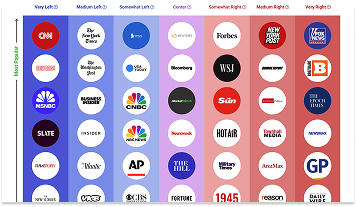
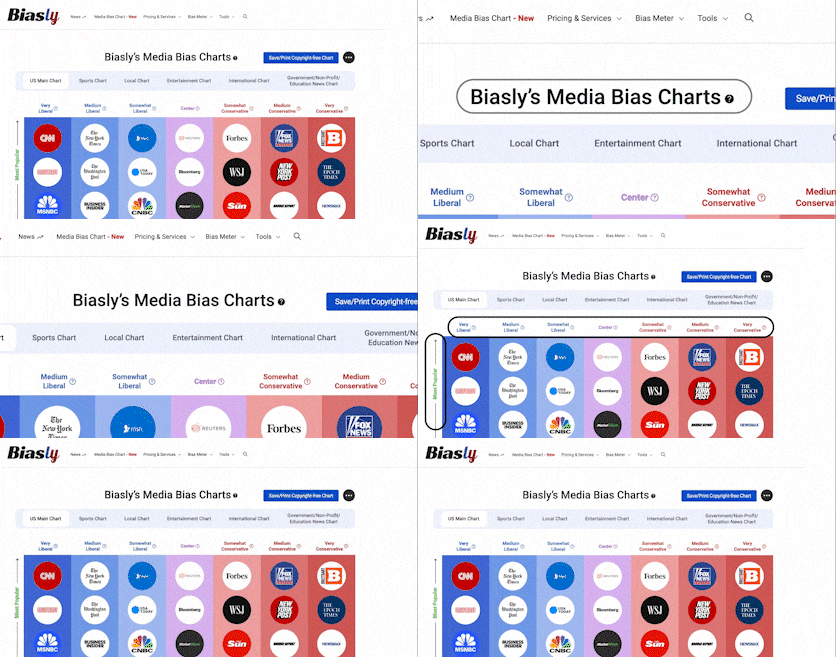
Business Insider on the media bias chart
- Bias Rating
-34% Somewhat Left
- Reliability76% Reliable GoodPolicy Leanings
-2% Center
Extremely
LiberalVery
LiberalModerately
LiberalSomewhat Liberal
Center
Somewhat Conservative
Moderately
ConservativeVery
ConservativeExtremely
Conservative-100%
Liberal100%
Conservative
Average Reliability
*Our bias meter rating uses data science including sentiment analysis, machine learning and our proprietary algorithm for determining biases in news articles. Bias scores are on a scale of -100% to 100% with higher negative scores being more liberal and higher positive scores being more conservative and 0% being neutral. The rating is an independent analysis and is not affiliated nor sponsored by the news source or any other organization.
Politician Portrayal82% negative
Continue For Free
Create your free account to see the in-depth bias analytics and more.
By creating an account, you agree to our Terms and Privacy Policy, and subscribe to email updates.
Log In
Log in to your account to see the in-depth bias analytics and more.
Analysis of Business Insider Articles
Analysis of Bias in Business Insider Online Articles
To evaluate the bias of this source, we can analyze Business Insider articles using Biasly’s bias rating criteria: Tone, Tendency, Author, Diction, and Expediency Bias.
- Tone: The attitude conveyed in the article
- Diction: Word choices made by the author
- Author: The background and social media presence of the journalist
- Tendency: Patterns of bias in the writer’s other pieces of writing
- Expediency Bias: Visual or textual indicators like headlines and photos that might subtly imply bias
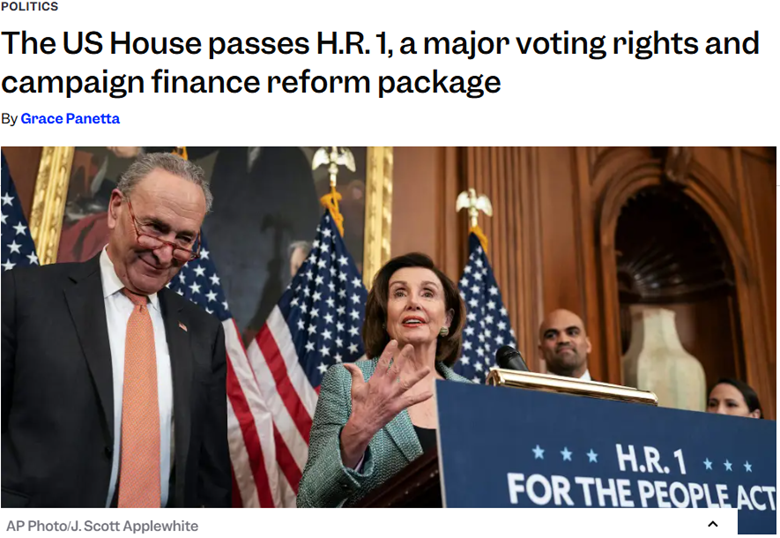
Source: Business Insider
The article featured above is a good example of tone and expediency bias. In both the headline and accompanying image, the article frames the bill’s passage in a favorable light. The headline uses positive, value-laden terms such as “major,” “rights,” “reform,” and “enhancement,” which can lead readers to view the legislation as inherently beneficial rather than as a contested political measure. The image of Nancy Pelosi and Chuck Schumer smiling reinforces that framing by presenting the bill’s passage as a celebratory, positive development. Together, these choices create expediency bias by encouraging readers to see the resolution’s passage as obviously good.
A second example of tone bias appears in the article’s language itself. The author includes wording that describes the bill as a “landmark effort” and repeatedly characterizes it in sympathetic terms rather than using more neutral phrasing. This positive tone can shape the reader’s perception before they have the chance to evaluate the policy on its merits. By combining approving language with upbeat visual cues, the article adopts a tone that favors the legislation instead of presenting it with full neutrality.
“The bill also takes aim at the political influence industry, beefing up existing laws and regulations governing lobbying and ethics requirements for federal officials. The package also includes sweeping, large-scale election administration reforms and enhancements to election security procedures.”
Using these words contributes to the article’s overall supportive tone toward the Democratic-led bill. Additionally, this can be classified as diction bias, or using language to express sympathy for liberal positions. Since the author explicitly uses these words to describe the bill in a supportive manner, the article exhibits diction bias. Using tone and diction bias can frame the story in a specific way and shift articles away from strict neutrality.
The Republican objections to this bill are briefly noted, but mostly sidelined compared to the positive language associated with the Democratic viewpoint.
“In 2021, the bill passed largely along party lines by a vote of 220-210 with Rep. Bennie Thompson of Mississippi the sole Democrat to vote against the legislation. No Republicans voted in favor of the bill.”
Compared to the previously featured quote about the enhancements this bill can offer, this quote makes Republican opposition appear firm and unreasonable. By representing the opposition viewpoint in this way, this may indicate another example of tone bias in this article.
When discussing author bias present in Business Insider’s articles, a good example is contributor Brittany Stephanis. Analyzing Stephanis’ personal social media page and her other articles shows evident liberal leanings. For instance, she reposted a post by Democratic President Barack Obama, imploring people to vote blue during the 2020 election.
We’re 100 days away from Election Day and there is too much at stake to sit this one out. Now’s a good time to make sure you’re registered to vote––and to make sure your friends and family are, too. https://t.co/XdZz4dh82T
— Barack Obama (@BarackObama) July 26, 2020
When an author clearly supports one political party over another, whether in their writing for a source or their public social media account, it indicates an overall supportive leaning. In the case of Brittany Stephanis, her writing for the source appears largely neutral, but her public social media account proves a degree of author bias. Tendency bias, on the other hand, looks at multiple articles by a specific author for any patterns of bias or consistent partisan leanings over time.
For instance, one Business Insider author, Yelena Dzhanova, exhibits left-leaning patterns in some of her articles. In their article, “Gas, food, and a hotel: Americans seeking an abortion out of state already shell out up to $10,000 for the procedure. Experts warn that cost could rise,” the author frames the complex recent overturning of Roe v. Wade through the lens of those who are negatively affected. The article specifically covers the topic from the perspective of victims of the increasing cost of an abortion and thereby leans toward a liberal viewpoint on abortion policy.
In a different article by Dzhanova, the headline reads, “Texas abortion law could have ‘traumatic’ consequences for trans and nonbinary people who are forced to carry out a pregnancy, experts say.” This article, while also exhibiting expediency bias by labeling the effects as “traumatic” in the headline, reveals a pattern of Dzhanova’s reporting that indicates authorial bias toward the left.
Lastly, expediency bias is evident in the headline of an article condemning Donald Trump’s economic policies. The article is titled “We’ve entered the era of scaredy-cat capitalism,” with a subheading that reads, “Trump has upended the economy – and that’s bad for business.” These last two examples show expediency bias because they frame the story’s topic in one way in the headline. This can also appear in photographs that paint a story in a specific light or give the reader a quick indication that the story should be understood one particular way.
Analysis of Business Insider Opinion Articles
To fully comprehend political bias in media, it is important to distinguish between straight news coverage and opinion content. While Business Insider’s reporting generally aims to report facts about expert opinions and market data, its opinion pieces tend to reveal the source’s ideological lean. This section analyzes the tone and selection of Business Insider’s opinion content, specifically concerning Donald Trump and Republican policy.
An article used above as an example of expediency bias surrounding Donald Trump’s economic policy is an opinion article. The headline alone, which states, “We’ve entered an era of scaredy-cat capitalism; Trump has upended the economy – and that’s bad for business,” is fraught with emotionally charged terms. The tone of the headline frames the business climate as chaotic and blames Trump’s policies on immigration and tariffs. The article’s clearly critical, anti-Trump tone does not objectively cover the story, which is common for opinion pieces in a left-leaning organization.
A separate opinion column headline by the source states, “Republicans are using baffling legalese and underhanded tactics to quietly push through their deeply unpopular policies. Don’t fall for their shady tricks.” Debatably more biased than the last, this headline accuses the vague and impersonal term “Republicans” of using shady tricks to misrepresent their constituency.
The framing here is critical, as the author frames the conservative stance on abortion as limiting reproductive healthcare access. Using the context clues in the article and the headline as evidence, this opinion piece demonstrably leans left.
Analysis of Reliability in Business Insider’s Online News Articles
Business Insider aims to write using fact-based coverage of stories, but sometimes opinion articles, and hyperpolitical ones too, can contain bias. With this in consideration, every article from this source must be analyzed individually because not all are guilty of using biased editorial techniques or framings.
One uncommon topic to be written in a straight manner for the source is political economy, but an article entitled “Why SCOTUS’ rejection of Biden’s student-loan forgiveness plays a big role in its Trump tariff decision” is an exception. The article maintains even-handedness throughout the discussion of the legal topic and quotes a conservative judge, Neil Gorsuch, while also including some instances of public backlash following the SCOTUS decision.
Quality of Sources and Facts Used
Business Insider often uses credible sources from across the political spectrum, but sometimes their sources can slant toward one perspective.
One Business Insider article, “Biden Student-Loan Relief Ruling Plays Into Trump Tariff Decision,” explores how the Supreme Court’s conservative majority applied the “major questions doctrine” to block both Biden’s student debt relief and Trump’s tariffs, drawing parallels in executive overreach.
This piece maintains a neutral, analytical tone, avoiding partisan cheerleading while highlighting judicial consistency across party lines. The analysis below breaks down its quoting strategy, sourcing diversity, balance, and factual accuracy to assess overall reliability.
The article features 8 direct quotes, ranging from a shortest of 5 words to a longest of 28 words, with an average length of 14 words. Longer quotes, particularly those from Justices Roberts and Gorsuch, stand out for their lack of loaded language, lending high reliability by letting judicial reasoning speak verbatim without spin. Shorter quotes, like Trump’s 5-word outburst, add color but risk emotional skew; overall, the mix favors substantive, unbiased excerpts that bolster credibility.
The article links to 6 distinct sources, with a balanced breakdown: 1 left-leaning (Trump’s statement via progressive-leaning outlets), 3 center (SCOTUSblog, Reuters, court filings), and 2 right-leaning (conservative justices’ opinions and GOP reactions). This spread reflects a deliberate effort to draw on judicial documents and present neutral facts rather than create echo chambers.
- Chief Justice John Roberts, SCOTUS majority opinion author
- Justice Neil Gorsuch, concurring opinion
- President Donald Trump, post-ruling statement
- Biden administration lawyers, HEROES Act defense
- SCOTUS blog analysis on major questions doctrine
- Reuters report on tariff challenges
Sourcing here strikes a strong balance, with center sources slightly dominating and quotes featuring varied outlooks; no single side is overwhelmed by prominence or volume. The author uses sources objectively: judicial opinions frame the core narrative, Trump’s claim is met with implicit skepticism, and Biden’s defense goes unchallenged but is subordinated to the ruling. Skepticism targets executive overreach equally, regardless of party. This objective, “stick to the facts” reporting, earned a Center author-bias rating.
Factually, the article holds up well when cross-checked against outlets like Reuters and SCOTUSblog, accurately recapping the 6-3 Biden debt ruling (Biden v. Nebraska) and explaining Trump’s IEEPA tariffs without exaggeration. Minor disagreements exist (e.g., projected tariff impacts, not finalized), but core claims about the doctrine’s application and the 430-billion-dollar debt figure align precisely with court records and peer coverage, making it highly accurate.
Selection and Omission Bias
Two common types of bias that affect factuality include:
- Selection Bias – Highlighting stories to fit a particular narrative.
- Omission Bias – Leaving out perspectives or relevant information to skew perception.
One example of selection and omission bias is in a Business Insider article titled “Tesla investors tell Elon Musk to stop wasting time on Twitter as his erratic tweets prompt them to sell shares.” The article extensively highlights negative criticism, sometimes from unqualified sources, while omitting any neutral or positive sentiment.
“Earl Banning, a psychologist from Anchorage, Alaska, has been a Tesla fan and investor since 2015. He told Bloomberg that he’s defended Musk online like many of the billionaire’s acolytes, but the latest episode ‘has lost a lot of us.’”
The article repeats three anecdotal negative comments about Elon Musk’s behavior without any supporting statements. Since the article emphasizes these comments and opinions while omitting any contradictory ones, we can deduce that selection and omission biases are present.
Conversely, a piece by Business Insider called “SCOTUS is hearing 2 cases about political censorship on social media that could change how the internet works forever,” represents both viewpoints equally. This article, however, features dozens of sources and responsibly represents the conservative policy and the liberal counterarguments. There is no slant in the viewpoints included, and many sources from varying perspectives support both sides of the story.
Business Insider Bias Overview
Business Insider, launched in 2007 as Silicon Alley Insider, was founded by Kevin P. Ryan, Dwight Merriman, and Henry Blodget. The source eventually expanded into a global newsroom that operates under Insider, Inc., in New York. The source’s owning publishing company, Axel Springer, is based in Europe and focuses on expanding its vast digital audience.
Public online metrics for Business Insider indicate that it plays a substantial role in the current media landscape. The source enjoys tens of millions of monthly visits and a reputation for mostly reliable news despite its bias. This article will delve into Business Insider’s editorial tendencies to explore whether political bias is present and, if so, to what degree.
Is Business Insider Biased?
Based on Biasly’s evaluations, Business Insider is rated as Somewhat Left.
By examining content patterns and the broader context of media influence, we aim to offer a balanced perspective on Business Insider’s political bias—and contribute to the ongoing discussion about bias in the news.
How Does Biasly Rate News Sources?
Biasly uses proprietary algorithms and a team of analysts to provide comprehensive bias evaluations across thousands of news outlets. Over 200,000 articles from more than 3,200 sources have been analyzed to identify the most accurate and unbiased stories.
Biasly assigns each outlet three key scores:
- Reliability Score – Reflects factual accuracy
- AI Bias Score – Generated via natural language processing
- Analyst Bias Score – Assessed by human political analysts
These scores are based on seven core metrics: Tone, Tendency, Diction, Author Check, Selection/Omission, Expediency Bias, and Accuracy. These elements help analysts and algorithms evaluate the political attitude conveyed by each article.
Biasly’s Bias Meter ranges from -100% (most left) to +100% (most right), with 0% indicating neutrality. The system evaluates individual articles based on political terms, policies, figures, and sentiment to calculate precise bias ratings.
Is Business Insider Politically Biased?
Business Insider earns a Somewhat Left rating for its AI Bias Score and a Somewhat Left for its Analyst Bias Score. The Analyst Bias Score is generated by reviewers from liberal, moderate, and conservative backgrounds. Analysts reviewing Business Insider’s content generally find a consistent lean toward liberal positions. Specifically, the coverage of Democratic politicians and progressive policies such as voting rights, climate change, and LGBTQ+ rights. At the same time, this source is capable of providing straightforward reporting on subjects such as economic trends and some foreign policy issues. This pattern aligns with Biasly’s rating of the source as leaning demonstrably left.
Many analyses of articles by Business Insider indicate an overall left-leaning bias. One example of a topic that demonstrates this bias is climate change. This subject, along with some others, can be classified as distinctly liberal through editorial choices.
While these articles may not be unreliable, in terms of sources and facts used, the articles may use these facts to support the source’s viewpoint. An analyst distinguished one article entitled, “Climate scientists blame Exxon lobbyists for disinformation that undermines efforts to reduce emissions and global warming,” as one of these articles with factual information spun to represent a liberal position.
The bias varies from article to article and can appear in clearer forms or present itself more subtly. In the previously presented article, the author emphasizes climate risks when discussing climate change. By choosing this editorial approach, the article indirectly advocates for climate regulation by stoking the risks involved if these policies are not enacted.
How to Evaluate Bias
Although Biasly rates Business Insider as Somewhat Left, it’s important to remember that bias can vary from article to article. Business Insider also covers a conservative-leaning state with objectivity on many issues, from state legislation to social developments. This complexity underscores the importance of examining each article individually. So, let’s learn how to evaluate media bias.
Recognizing media bias requires awareness and critical thinking. Often, readers trust news sources that affirm their existing beliefs—a psychological tendency known as confirmation bias. This makes it harder to identify slanted narratives or one-sided reporting.
To address this, it’s essential to challenge your assumptions by consulting multiple perspectives and verifying information through third-party analysis. Tools like Biasly’s media bias ratings allow readers to compare the same news story across the political spectrum.
Ultimately, bias isn’t always a matter of what is said—it’s also about what is left out, how topics are framed, and which stories are chosen for coverage. Learning to recognize these patterns can help readers make more informed decisions and develop greater media literacy.
To start comparing news outlets and gain a better understanding of bias, sign up for Biasly’s Media Bias & News Analytics Platform to see how stories vary between sources.
Business Insider Reliability Overview
Is Business Insider Reliable?
Business Insider, according to Biasly, fares well in terms of reliability. The source maintains good standards for fact analysis and the length and number of quotes used in articles. Additionally, it tends to use multiple sources in an article, which increases the article’s reliability score. But as previous articles have shown, the source can exhibit a partisan slant on occasion.
These clear biases may be explained by Business Insider’s popular online readership, which tends to prefer fast coverage and a provocative headline. Some conservative readers may determine that this source is less reliable than others because of previous biases, but, to the contrary, this source is commonly capable of fact-based reporting. With this in mind, it is always important to check the reliability of every article from a source with biased tendencies.
How to Evaluate Reliability?
Reliability refers to how trustworthy or accurate a news source is. If we can’t trust what we read, then continuing to consume content from that outlet serves little purpose. So how do we evaluate a news outlet’s reliability?
There are several key indicators of reliability to consider when assessing a media source. Red flags of an unreliable article can include wild, unsubstantiated claims, facts that depend on other unreliable sources, heavy use of opinionated language, and more. In contrast, hallmarks of a reliable source include:
- Absence of subjective language
- Citing credible sources (e.g., .gov, .edu, academic references)
- Verifiable facts and statistics from multiple outlets
- Use of primary sources, like interviews or transcripts
- Consistency with coverage across other platforms
Biasly’s reliability scores incorporate these elements in evaluating media outlets.
So How Does Business Insider Fare in Its Reliability?
The political reliability index developed by Biasly assesses both accuracy and trustworthiness. Business Insider currently holds Good Reliability Score, which is calculated as a weighted average of:
- Fact Analysis Score – Evaluates the accuracy of claims, facts, and evidence.
- Source Analysis Score – Assesses the number, diversity, and credibility of sources and quotes used.
Business Insider’s Source Analysis Score is Average at 52% Reliable. This suggests moderate trustworthiness in its sourcing practices. The score is AI-generated and considers quote length, frequency, diversity, and quality.
The Fact Analysis Score of Business Insider is Good at 82% Reliable. This further shows how well Business Insider supports its claims, addresses selection and omission bias, and presents verifiable evidence.
While Business Insider is capable of factual reporting, occasional lapses—such as biased viewpoints or data—can affect its reliability rating. These nuances emphasize the importance of analyzing individual articles.
Business Insider’s Accuracy and Reliability
According to Biasly’s analysis, Business Insider maintains Good Reliability Score, but individual articles may vary significantly. Let’s dive into the details.\
So, is Business Insider Reliable?
Overall, Business Insider can be considered to be an outlet that is very reliable. It demonstrates a consistent goal of journalistic integrity and typically supports claims with sources and quotes. Occasional omissions and framing bias do appear, particularly on culturally sensitive or partisan issues.
As media literacy improves, readers can more easily detect issues with selection bias, omission bias, and factuality. To strengthen your ability to assess reliability across the political spectrum, use Biasly’s News Bias Checker to compare how multiple outlets report the same story.
This empowers you to consume more accurate, balanced, and dependable news.
Business Insider Editorial Patterns
Business Insider’s coverage of political topics often reflects a Somewhat Left bias, with consistent patterns in phrasing, source selection, and thematic focus that are Slightly Liberal. While the publication maintains journalistic standards, the issues discussed, framing, and word choice do indicate a political slant. This content analysis will examine how Business Insider covers liberal vs. conservative issues while evaluating its editorial tendencies and language decisions.
Coverage of Liberal vs. Conservative Topics
Business Insider’s coverage of political topics tends to frame liberal causes in more favorable and empathetic terms while applying comparatively sharper scrutiny to conservative topics. It’s reporting on Democratic-backed voting-rights legislation, for example, often uses terms like “democracy reform” to describe these policies as corrective or strengthening the current system. Similarly, coverage of issues like climate policy or anti-discrimination efforts frequently uses terms like “rights,” “access,” and “protections,” echoing liberal framings. This verbiage presents these movements as necessary steps for greater justice and equality.
In contrast, Business Insider’s articles on conservative topics often spotlight controversy, pushback, or potential harm. Georgia’s GOP-backed voting law, for instance, is labeled in headlines that emphasize the “restrictions,” while highlighting leaders who denounce the policy. This type of asymmetry is defined by how the source associates words such as “crackdowns” and “backlash” with conservative positions, and “reform” and “expansion” with liberal causes. This reinforces the news source’s liberal tilt, treating liberal causes as advances and conservative causes as direct opposition to those advances.
Policy and Issue Framing
When covering voting rights and election law, Business Insider often emphasizes access and protections, highlighting how proposed changes might affect turnout, minority communities, and the health of democracy. This framing aligns with a left-of-center bias, especially given the source’s emphasis on expanding safeguards such as mail-in voting protections. Liberal-backed bills are presented much more favorably and often framed as reforms to specific systemic problems.
Conversely, issues like border enforcement, crime policy, and conservative-led changes to education are more likely to be framed through their potential harms or social costs. For example, reporting on stricter immigration measures often discusses the impact on migrant families rather than border-security arguments. Coverage of “tough on crime” policies will stress risks of over-policing rather than risks of increased crime in minority communities.
Conservative legislation is often framed through the lens of tightening rules or imposing restrictions, while liberal legislation is often highlighted for strengthening protections. The recurring problem of issue framing in this news source reinforces the left-leaning bias that Biasly identified.
Coverage and Relevance
Business Insider’s reporting specifically covers topics related to business, markets, lifestyle, tech, and military defense. Along with current events and breaking news, the source’s coverage mainly focuses on political discussion.
Readers who wish to further explore how Business Insider compares with other publications can visit Biasly’s Media Bias Chart to analyze tone and word choice in real time.
Funding and Ownership
Who Owns Business Insider?

Friede Springer and Mathias Döpfner (middle), Source: Wikimedia Commons
Business Insider was founded by partners Henry Blodget and Kevin P. Ryan originally as “Silicon Valley Insider” in 2008. Blodget was the platform’s first editor-in-chief, and Ryan was the initial investor. In September of 2015, German publishing company Axel Springer acquired an additional 88% of the 9% of Business Insider they had purchased earlier that year in January, making them the majority shareholders. Axel Springer SE is owned by Friede Springer and Mathias Döpfner, photographed above. Jeff Bezos is also a small stakeholder in the organization through Bezos Expeditions.
Who Funds Business Insider?
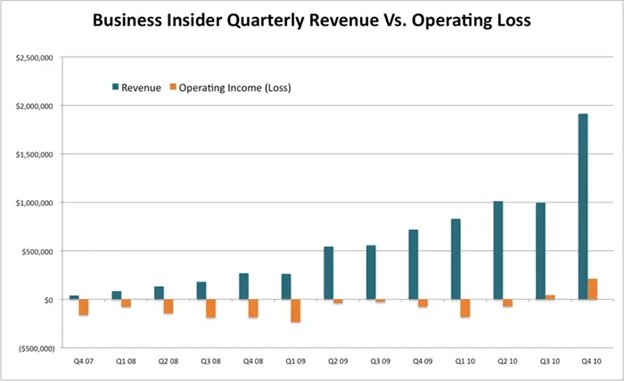
Business Insider is primarily funded through advertisement revenue and subscriptions. The source is additionally funded by their parent company, Axel Springer SE, but relies heavily on their popular online traffic as supportive income. An example of an online service that Business Insider provides is BI Prime, its premium subscription service that offers in-depth reports on topics and ad-free access for paying members.
Source: Business Insider
Other key investors in this organization during its beginning were Institutional Venture Partners, RRE Ventures, Allen & Co., and Gordon Crovitz. As the company grew over time, the initial investors were diluted, and the venture founders, including the two cofounders, mainly exited during Axel Springer’s acquisition.
Additional Insights
News Source Comparison
When it comes to news source comparison, Business Insider is often evaluated alongside sources like Forbes, CNBC, or Bloomberg Businessweek. These sources, similarly, often cover business or economic topics with an emphasis, but can additionally weigh in on politics.
The audience for Business Insider would also be targeted by these similar news media institutions due to convergence on other, more niche subjects like tech, finance, and lifestyle news. Many of these outlets also prioritize online viewership and premium content models for revenue, leading to similar article tones at times.
Notable Contributors and Authors
Business Insider features many different types of reporters and columnists, many of whom write about different subjects. Some examples include Pulitzer-winning editor Walt Hickey and former Wall Street Journal senior editor Jamie Heller.
There are many other writers for the organization that cover vastly different topics than those discussed today. While some contributors may be seen leaning left in articles, their work can be grounded in factual reporting.
Related Tools and Resource Pages
To better understand how Business Insider fits into the broader media landscape, we recommend exploring these helpful resources:
- Media Bias Chart: See where Business Insider ranks among hundreds of media outlets across the political spectrum.
- Political Bias Chart: Visualize political slants of news sources across various policy areas.
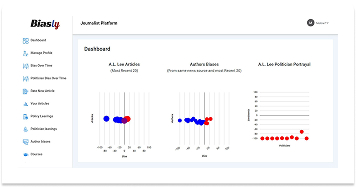
- Journalist Bias Analytics Platform: Explore how individual journalists contribute to bias within their publications.
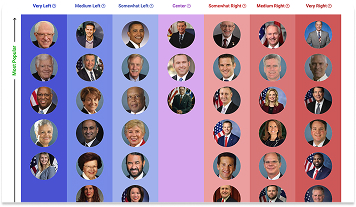
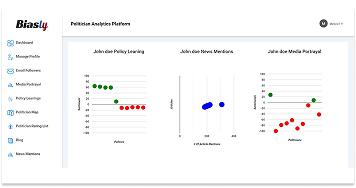
- Politician Bias Analytics Platform: Compare how politicians are framed differently by Business Insider and other outlets.
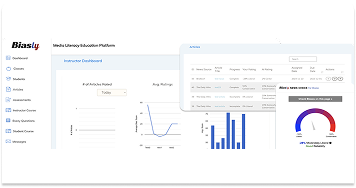
- Media Literacy Education Platform: Learn how to critically assess media sources, bias techniques, and news reliability.
Frequently Asked Questions
Business Insider is rated as Somewhat Left based on Biasly’s media bias algorithm, which assesses sentiment, article framing, and policy favorability.
Yes, in 2025, the news company was accused of publishing AI-fabricated articles with unverifiable sources and photos. Business Insider removed upwards of forty articles due to this widespread instance of fabrication and was called out by institutions like The Daily Beast. Many of the articles were written by fictitious authors, and some sources, like the Press Gazette and Grand Pinnacle Tribune, believed it was Business Insider’s failed attempt to increase efficiency.
Biasly uses both AI sentiment analysis and human review to assess tone, fact accuracy, source quality, and media bias indicators. Learn more on our Bias Meter page.
Generally, yes, but partisan framing, selective reporting, and author bias can affect perceived reliability. It is crucial to distinguish the fact-based pieces in this source from the opinion section, which can be biased.
Military Spending
| Date | Sentiment | Associated Article | Snippet |
|---|---|---|---|
| 08/25/2019 | 75% For | Trump Family Detentions Flores Agreement (link) | So, of course, the Trump administration is doing the opposite in a baldfaced |