




44% Medium Right
Bias Meter
Extremely
Liberal
Very
Liberal
Somewhat Liberal
Center
Somewhat Conservative
Very
Conservative
Extremely
Conservative
-100%
Liberal
100%
Conservative

Biasly determines media bias ratings through a dual-layered approach combining artificial intelligence and analyst review. The platform’s proprietary bias detection engine, Bias Meter, evaluates sentiment, policy position alignment, and language framing across thousands of data points in news articles. Analysts then verify and interpret the AI’s findings, providing additional context where needed. Learn more about ratings
- Profile
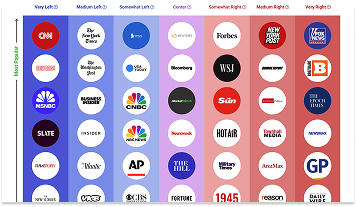
National Review on the media bias chart

- Bias Rating
44% Medium Right
- Reliability78% Reliable GoodPolicy Leanings
22% Somewhat Right
Extremely
LiberalVery
LiberalModerately
LiberalSomewhat Liberal
Center
Somewhat Conservative
Moderately
ConservativeVery
ConservativeExtremely
Conservative-100%
Liberal100%
Conservative
Average Reliability
*Our bias meter rating uses data science including sentiment analysis, machine learning and our proprietary algorithm for determining biases in news articles. Bias scores are on a scale of -100% to 100% with higher negative scores being more liberal and higher positive scores being more conservative and 0% being neutral. The rating is an independent analysis and is not affiliated nor sponsored by the news source or any other organization.
Politician Portrayal7% negative
Continue For Free
Create your free account to see the in-depth bias analytics and more.
By creating an account, you agree to our Terms and Privacy Policy, and subscribe to email updates.
Log In
Log in to your account to see the in-depth bias analytics and more.
Analysis of National Review Articles
Analysis of Bias in National Review Online Articles
This analysis will examine several metrics commonly used to measure bias in writing: Tone, Tendency, Author, Diction, and Expediency Bias.
- Tone: The emotional core of the writing
- Diction: Specific word choices made by the author
- Author: The background and social media presence of the writer
- Tendency: How frequently the writer’s broader body of work expresses bias
- Expediency Bias: Using a headline, image, or summary to provoke an immediate emotional response as a first impression
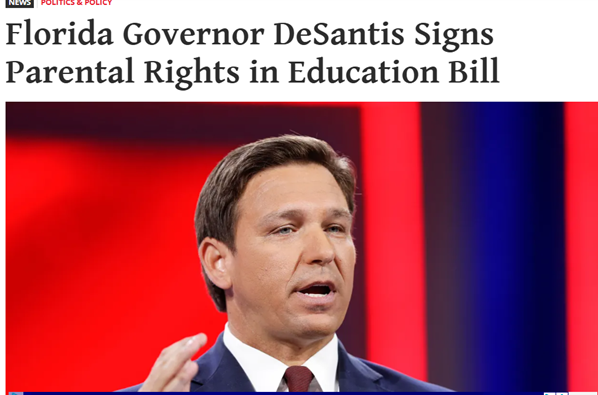
Simply looking at the headline of this article indicates expediency bias in support of DeSantis, since it frames him as a protector of parental rights through an education bill. Caroline Downey’s article, “Florida Governor DeSantis Signs Parental Rights in Education Bill,” presents several other indicators of the author’s underlying bias. This sentiment is further supported by Biasly, which assigns the article a Somewhat Conservative rating of 12% and a Policy leaning score of 22%, both of which fall within the Somewhat Conservative range.
From the beginning, Downey’s choice of phrasing hints at her unique political perspective. The article’s introduction employs the term “backlash”—a word with inherently negative connotations—which sets the tone for opposition to the bill as potentially reactionary or excessive. This choice suggests that ideology, rather than objective or merit-based reasoning, drives the resistance to the account.
“After weeks of progressive backlash and corporate protest from the Walt Disney Company…”
In another segment, Downey aims to correct or clarify what she perceives to be a common misconception about the “Don’t Say Gay” bill:
“Contrary to its misleading nickname, the bill does not outlaw teachers, administrators, or students from using that word.”
By asserting that the bill has a “misleading nickname,” Downey takes a defensive stance, suggesting that critics or the public might not fully understand the bill’s purpose.
Furthermore, she provides a counter-narrative to the primary criticisms of the bill:
“Rather than a bigoted effort to ostracize LGBTQ students and faculty, the bill is explicit that it is designed to keep curriculum about sexuality out of kindergarten through third-grade classrooms.”
Downey juxtaposes “bigoted effort” with the bill’s intent, subtly insinuating that critics might be blowing the legislation out of proportion.
When it comes to representing Governor DeSantis’s perspective, Downey strategically amplifies his voice, emphasizing a narrative that highlights the tension between state policies and corporate views:
“Florida’s policies must be based on the best interests of Florida citizens, not on the musings of woke corporations.”
By using the term “woke corporations,” this quote further reinforces the conservative bias by casting entities like Disney in a dismissive or derogatory light.
In summary, Downey’s article contains undertones suggesting a defense of the bill and of Governor DeSantis’s stance. Her choice of phrases, narrative framing, and selected quotations all converge to paint a more skeptical picture of the bill’s critics and lend weight to the article’s conservative bias, as determined by Biasly.
Although Biasly labels National Review as Very Conservative, partisanship will vary across articles. Therefore, it would be unfair to neglect the minority pieces that fall on the opposing end of the political spectrum. Case in point, specific authors affiliated with National Review, like Ed Barchrach and Austin Berg, wrote an article entitled “Why Chicago Can’t Get a Grip on Its Murder Crisis,” which Biasly classifies as -10% Liberal.
It covers the rising murder rates in Chicago and how the killings intertwine with a complex intersection of politics, public safety, and police oversight. It also addresses structural issues, systemic challenges, and the need for reform, often aligning with left or center-left policy leanings.
While the article highlights problems often associated with liberal agendas (such as addressing racial inequalities, rebuilding trust in communities, and reforming police practices), it also critiques the political theater and the potential for misgovernance in the current system. This kind of critique could align with a conservative viewpoint, especially when it questions the efficacy of multiple oversight bodies or points to political maneuvering rather than genuine leadership.
Let’s dive into three specific quotes from the article and analyze their leanings.
“Some reasons for the spike will be familiar to residents of other big cities that have recently experienced a violent-crime surge. These include the isolation and economic carnage of the COVID-19 pandemic, alienated young people, and demoralized police. Some point to root causes such as generational poverty and discrimination against communities of color.”
The statement, “Some point to root causes such as generational poverty and discrimination against communities of color,” can be interpreted as liberal-leaning because it emphasizes structural and systemic issues as the primary drivers of crime. This aligns with the left-leaning viewpoint on crime in cities, and providing a voice to this perspective in the article indicates a liberal bias. This next quote examines a different voicing that indicates a more neutral form of bias or framing.
“No, the problem is profound misgovernance — a system that incentivizes the politicization of policing, rather than professional management.”
This statement could be neutral or centrist, as both sides typically agree on avoiding politicized policing and the need for professionalism. However, liberals and conservatives may differ in how to undertake these initiatives, as conservatives tend to oppose police reform. Through emphasizing a description of the system that incentivizes politicization of policing, the author is not taking a side or appearing sympathetic to one viewpoint over another.
“Some of the changes are shockingly basic — reforms such as maintaining records of officer-performance reviews and creating a process to evaluate whether officer training is effective. But the department has continuously failed to meet even the simplest of its obligations under the consent decree.”
This quote, on the other hand, illustrates a biased narrative. This passage delves into the repercussions of Laquan McDonald’s murder, highlighting the tepid execution of “shockingly basic” reforms by the Chicago Police Department. The narrative implies a notable absence of commitment or efficiency, even in instituting the most rudimentary progressive measures. The anti-police sentiment that the reader feels from this quote is indicative of liberal leanings rather than an objective look into the story of the murder.
Considering all this, National Review is a publication that may sometimes feature perspectives from more left-leaning and center voices.
For instance, this article by Brittany Bernstein, “Trump Pleads Not Guilty to All Four Counts in January 6 Case,” aims to provide a factual report on Trump’s legal proceedings concerning his plea of not guilty to federal charges tied to the January 6 riots.
Overall, we can characterize the tone of the article as primarily neutral or centrist, as it mostly refrains from introducing personal emotions or subjective feelings:
“Former president Donald Trump on Thursday pleaded not guilty to four federal charges related to his attempts to overturn the 2020 election.”
This sentence is a prime example, offering a straightforward recounting of events without an emotional undertone.
Most of the article’s word choices are neutral. However, there are instances where the word choice could imply a stronger sentiment:
“…the Defendant spread lies…”
The term “lies” is potent and could be viewed as indicative of a bias. Nevertheless, it’s important to note that this is language from the charge itself, not the author’s words.
Regarding the author’s social media activity, Brittany Bernstein’s Twitter account does not exemplify any overt bias. The posts that do not revolve around her personal life and explicitly discuss politics tend to adopt a neutral or centrist tone.
Although in 2021, she did retweet a post that Chuck Schumer made on April 20, which is a day that traditionally celebrates cannabis culture. This point is relevant because, in the tweet, Schumer’s face is photoshopped crudely onto a screenshot from the movie Mean Girls. The post parodies a scene where one of the characters says, “I’m not a regular mom, I’m a cool mom.” However, the word “mom” was blacked out and changed to “senator,” recognizing Schumer’s pro-marijuana stance. Below the picture, Schumer wrote a caption saying:
https://t.co/ud2kgX0nvt pic.twitter.com/mx3Z8Mwyn5
— Brittany Bernstein (@brittybernstein) April 21, 2021
Bernstein does not comment on this post, so it is difficult to determine if she exudes a liberal or conservative bias by retweeting it. The answer depends on whether she intended her followers to laugh with or at Schumer. If it were with him, then Bernstein could be signifying more of a liberal bias in favor of marijuana legalization.
However, it is possible she retweeted the post from a right-wing standpoint, mocking Schumer and his position on cannabis, a policy that left-wingers are more likely to support.
The article’s tone anchors itself in direct quotations and meticulously recounts events as they occurred. Bernstein consistently emphasizes the charges against Trump, the potential repercussions, and the alleged infractions detailed in the indictment. Barr’s remarks, especially given his former role as Trump’s attorney general, accentuate a discernibly negative tone toward the former President.
“As the indictment says, they are not attacking his First Amendment right…But that does not protect you from entering into a conspiracy.”
Quoting Bill Barr provides an external perspective without making it the article’s central narrative. Nevertheless, despite the piece presenting undiluted facts and Bernstein not laying out her exact opinion on the matter, there is a subtle yet consistent tone that leans against Trump. This tone is pervasive throughout the piece, focusing on the gravity of the charges and the alleged wrongdoings of the former President rather than presenting a balanced account of the situation or potential defenses.
Analysis of National Review Opinion Articles
Writers use opinion pieces to express subjective beliefs, interpretations, and analyses about current affairs. Although such works still contain legitimate information on various issues, their primary purpose should be to influence and persuade readers. News articles and opinion pieces play a valuable role in today’s media landscape, providing reliable news updates while creating lively debates that contribute to an engaged society.
Biasly gave Andrew C. McCarthy’s op-ed from National Review, “Race Demagogues are Poisoning Our Politics,” an Extremely Conservative Analyst bias score of 81%. In the opinion piece, McCarthy conveys a fervently conservative viewpoint, alleging that America’s current predicament is a “racial problem,” not a “racism problem:” a distinction underscored when he notes that, “America is not a racist country.”
Further deepening his argument, McCarthy is sharply critical when addressing the Democratic Party, suggesting they deliberately create divisions for political gain. His stance finds its voice when he remarks:
“We have a party in power whose strategy for remaining in power is to divide the country along racial lines.”
This perspective becomes even more pronounced when McCarthy addresses the topic of systemic racism, directly refuting its existence in America. This piece by McCarthy is a great example of what many openly biased news sources include in their opinion pieces.
An opinion piece by Charles C.W. Cooke, “Sure Seems Joe Biden Lied About Hunter Biden Laptop Story,” encourages speculation and criticizes President Biden for allegedly exaggerating or falsifying details regarding his son’s laptop. The author does not exclusively ground this article in objective facts. Instead, it serves as a platform to express their subjective interpretations of events.
Within the article, phrases like the following aim to sway readers towards suspicion, implying a calculated intent of the Biden Administration to deceive the masses.
“Next time President Biden speaks about . . . well, about anything really, remember that he knowingly lied to your face about the Hunter Biden laptop story,”
While delivered with certainty, this assertion does not provide concrete evidence to substantiate the accusations. Additionally, the piece is overly harsh on Biden. The criticisms become palpable when his statements are labeled a “lie,” and it is suggested that he made these claims in anticipation of media and Silicon Valley endorsement. The emotionally biased backbone of the commentary is easy to notice.
Lastly, another article entitled, “President Biden Belatedly Recognizes his Seventh Grandchild,” straightforwardly reports Biden’s recent acknowledgment of his four-year-old granddaughter. Despite this, the clear tone bias in the article sharply criticizes the Democratic president.
“Good for Biden for belatedly doing the right thing.”
Opinion articles like these can be powerful tools for stimulating dialogue and allowing writers to express themselves. Still, readers should remain aware of any biases and tone within them. While reading an opinion piece can produce intense emotional and ideological responses from readers, it must accurately depict its subject matter and precisely portray all views involved while providing additional sources.
Analysis of Reliability in National Review’s Online News Articles
It is essential to exercise caution to avoid biases from overshadowing objective reporting in mainstream news. Although op-eds will inevitably contain strong preferences, this can positively or negatively affect their credibility. Nevertheless, opinion pieces can still provide a unique opportunity for new insights into various political perspectives.
Regarding opinion pieces specifically, the National Review website has faced controversy for publishing misleading information. For example, on February 7, 2017, Julie Kelly wrote an op-ed entitled “A Top Climate Scientist Blows the Whistle on Shoddy Climate Science.” The article claims Dr. John Bates, a former top NOAA scientist, exposed misconduct in a global warming report released before the 2015 U.N. Climate Change Conference.
Dr. Bates accused Tom Karl, the lead author of a study on global warming, of using unverified data. The study adjusted sea temperatures for warmer ship data, “ignored satellite data,” and encountered computer glitches due to unarchived files – leading to NOAA’s plan to reverse flaws:
“They had good data from buoys,” he told the Daily Mail. “And they threw it out and ‘corrected’ it by using the bad data from ships [a natural warming source]. You never change good data to agree with the bad, but that’s what they did so as to make it look as if the sea was warmer.”
This quote highlights an essential facet of the scientific process: the criticality of data integrity and the potential dangers of selective data usage or manipulation. It suggests that the NOAA study cherry-picked data aligned with a preconceived conclusion or narrative rather than allowing the data to dictate the decision. In doing so, the research not only potentially misinforms the public but also erodes trust in the scientific process.
The choice between buoy data (presumed to be “good” by Bates) and ship data (which Bates implies is skewed because ships are a “natural warming source”) represents a more profound ethical and methodological debate about scientists’ responsibility to present accurate and unbiased findings. In an age when misinformation can spread rapidly, the implications of such choices are far-reaching. Suppose scientists or organizations manipulate or selectively present data to fit a particular agenda. In that case, they risk undermining the public’s faith in research and empirical evidence, with long-term implications for policymaking, public trust, and the broader acceptance of scientific consensus.
The quote above also underscores a pivotal dilemma in scientific research: the tension between the search for “truth” (or as close to it as we can get) and external pressures (whether political, economic, or social). The phrase “to make it look as if the sea was warmer” suggests intent: an intent to cater to these external pressures rather than adhere strictly to what the data means. In an era where climate change is both a pressing global issue and a contentious political topic, this tension becomes even more pronounced and its consequences even more significant.
Regarding the computer issues:
“Bates said that the computer used to process the data ‘suffered a complete failure’ and that none of the data had been archived or made available as required by NOAA rules, which means that Karl’s paper cannot be replicated or independently verified.”
According to Kelly, Science magazine stands by its rigorous peer review, and Rep. Lamar Smith wants further investigation. The author also asserts that Bates’ revelations may help promote greater transparency within national scientific agencies.
On the other hand, while Bates claims in an interview that he had concerns about data handling and transparency, a contradictory article from A.P. News states that there was “no data tampering, no data changing, nothing malicious.” Bates’ concerns were primarily about the protocol: “It’s really a story of not disclosing what you did.” Nevertheless, independent research from the University of California, Berkeley, confirmed the findings of the 2015 study. Lead author Zeke Hausfather emphasized the study’s accuracy by saying, “Not using their data, we get the exact same results, both for the ocean record and for the land.”
According to E&E News, Bates clarified,
“The issue here is not an issue of tampering with data, but rather really of the timing of a release of a paper that had not properly disclosed everything it was.”
In other words, the NOAA needed to follow agency protocol and not rush their research to publication. However, the validity of the data remained undisputed. Bates specifically stated that the data was “experimental” and that the publishing safeguards in place help ensure the integrity of federal research.
Integrity in journalism requires striking a balance between subjective opinions and objective reporting. Op-eds provide various viewpoints. Yet, critical engagement with sources like National Review can be especially crucial due to potential biases. The coverage of the data manipulation scandal emphasizes the journalistic need for National Review to maintain accountability and conduct proper fact-checking procedures.
Quality of Sources and Facts Used
This section will use one article as an example of how this source uses quotes, source material, and supporting evidence. National Review is capable of using credible sources, but its reputation as a dominant right-leaning partisan source makes its fact quality worth further investigation.
The article, Trump Blames Biden’s Weakness for Emboldening Russia, Sounds Alarm on Domestic Decline, presents a strongly opinionated recap of Donald Trump’s CPAC speech, framing his remarks as both a critique of President Biden and a warning about broader national decline. The tone is largely sympathetic to Trump, with minimal pushback on his claims and a tendency to present his statements as credible assessments rather than partisan rhetoric. Overall, the article leans right in tone and emphasis, prioritizing Trump’s perspective while offering little counterbalance.
The article contains approximately 11 direct quotes (including partial quotes). The longest quote is about 95 words, the shortest quote is about 6 words, and the average quote length is roughly 45–50 words. The relatively long average quote length suggests a higher degree of transparency, as extended quotes allow readers to interpret Trump’s statements in a fuller context rather than through selective phrasing. However, the lack of countervailing quotes or critical framing reduces overall reliability, since even accurate quotations can still be presented in a one-sided way.
In terms of sourcing, the article uses very few distinct linked sources—effectively none beyond the event itself (Trump’s speech). There are no meaningful outbound links to external reporting, data, or opposing viewpoints. As a result, the breakdown is heavily right-leaning by default, with no left or center sources included. The article functions more as a transcription and amplification of a political speech than as a reported piece drawing on multiple perspectives.
Sources referenced or implied:
- S. President Donald Trump (primary speaker)
- Conservative Political Action Conference (CPAC event context)
- Biden administration (referenced, not directly sourced)
The sourcing is not balanced. One side of the story, Trump’s perspective, completely dominates both in the number of sources and total quoted word share. There are no counterarguments, expert analyses, or independent fact-checks included. This lack of diversity in sourcing significantly limits the article’s informational depth and reinforces its partisan framing.
The author uses sources almost exclusively positively or neutrally toward Trump, allowing his claims to stand largely unchallenged. Trump clearly sets the article’s framing, and his assertions on foreign policy, domestic issues, and the 2020 election are presented without skepticism or verification. Criticism is directed almost entirely outward (toward Biden and other institutions), not inward toward the claims themselves. Based on sourcing patterns, tone, and framing, the article earns a “Very Right” bias rating.
When compared with reporting from other outlets, several of Trump’s claims in the article are contested or lack supporting evidence. For example, broader coverage of the Russia-Ukraine conflict generally attributes the invasion to long-term geopolitical factors and Russian decision-making, rather than solely U.S. presidential “weakness.” Additionally, claims about the 2020 election being “rigged” have been widely discredited across courts and independent reviews. While the article accurately reports what Trump said, it does not contextualize or fact-check these claims, which reduces its overall factual reliability when compared to more balanced or evidence-based reporting.
Selection and Omission Bias
The article from the previous section demonstrates selection and omission bias by choosing quotes that strongly reinforce Trump’s criticisms of the Biden administration while omitting any counterarguments or alternative perspectives. For example, the article highlights Trump’s claim that,
“Joe Biden has turned calm into chaos, competence into incompetence, stability into anarchy, and security into catastrophe…”
This lengthy quote frames Biden’s leadership in entirely negative terms without including any factual verification or opposing viewpoint. This selective use of quotes shapes a one-sided narrative that presents Trump’s perspective as authoritative.
Additionally, the article emphasizes Trump’s self-described achievements, such as energy independence, border security, and the absence of new wars, without providing context or challenge. By stating that Trump,
“…touted his administration’s triumphs… [and] said Biden reversed all the progress,”
The article reinforces a favorable portrayal of Trump while omitting competing data or analysis. There are no liberal sources included and no centrist perspectives, meaning the sourcing is entirely one-sided and aligned with a conservative viewpoint, further reinforcing the article’s selective framing of facts.
National Review Bias Overview
Since its establishment in 1955, National Review has risen as one of the most prominent conservative editorial magazines in the United States. Based in NYC, National Review champions right-wing policies and principles. In 2022, National Review accumulated over 1.4 million social media followers and 25 million monthly page views.
Popular yet conservative, National Review’s bias requires further exploration. This article thoroughly investigates their coverage and editorial decisions to determine discernible political preferences in their reporting. Our analysis reveals its conservative leanings and media bias.
Biasly rated this network as Medium Right, clearly identifying a dominant level of bias in the source’s publications. This article will further explore how bias appears on the platform and to what extent it affects the reliability and overall tendencies of National Review.
Is National Review Biased?
Based on Biasly’s evaluations, National Review is rated as Medium Right.
By examining content patterns and the broader context of media influence, we aim to offer a balanced perspective on National Review’s political bias—and contribute to the ongoing discussion about bias in the news.
How Does Biasly Rate News Sources?
Biasly uses proprietary algorithms and a team of analysts to provide comprehensive bias evaluations across thousands of news outlets. Over 200,000 articles from more than 3,200 sources have been analyzed to identify the most accurate and unbiased stories.
Biasly assigns each outlet three key scores:
- Reliability Score – Reflects factual accuracy
- AI Bias Score – Generated via natural language processing
- Analyst Bias Score – Assessed by human political analysts
These scores are based on seven core metrics: Tone, Tendency, Diction, Author Check, Selection/Omission, Expediency Bias, and Accuracy. These elements help analysts and algorithms evaluate the political attitude conveyed by each article.
Biasly’s Bias Meter ranges from -100% (most left) to +100% (most right), with 0% indicating neutrality. The system evaluates individual articles based on political terms, policies, figures, and sentiment to calculate precise bias ratings.
Is National Review Politically Biased?
National Review earns a Medium Right rating for its AI Bias Score and a Somewhat Right for its Analyst Bias Score. The Analyst Bias Score is generated by reviewers from liberal, moderate, and conservative backgrounds. Biasly’s ratings derive from two sources: one from its A.I.-driven computer algorithms and the other from its analysts. Ratings for National Review display a Computer bias score of Very Conservative and an Analyst bias score of Somewhat Right. National Review praises Republicans and disapproves of Democrats, driving its right-leaning score.
Biasly derives Analyst ratings from an average of 15 articles. An analyst from a liberal, moderate, or conservative background reviews each article. The more pieces Biasly assesses for a specific source, the more accurate the rating becomes. The ratings increase in accuracy as Biasly evaluates more articles. Positive views on specific leaders and strategies and critiques of conflicting ideologies and personalities shape these ratings. Often, Biasly’s ratings align with results from other independent bias research entities.
Readers like you are more likely to have a strong opinion of National Review based on your political leaning. They tend to favor conservative causes and people, as represented by Biasly’s “Very Conservative” score. In the remainder of this article, we’ll discuss ways to identify this bias so you can separate the opinions from the facts and become a more informed citizen.
Before we begin, we need to discuss bias. Bias is a natural function of humans, and we can express it both consciously and unconsciously. Bias is one of the most fundamental forms of pattern recognition in humans. This isn’t to lower the bar and say that “all things are biased,” but to explain the process by which we may come to trust certain news organizations that display patterns of coverage.
On the media’s part, there is an incentive to retain audiences, encourage them to purchase subscriptions, and rate products positively. Bias is a two-way street; people want to see news stories about things they care about, and the media needs viewers to continue their operations. This creates a positive feedback loop that influences what stories are covered and from what perspective.
How to Evaluate Bias
Although Biasly rates National Review as Medium Right, it’s important to remember that bias can vary from article to article. National Review also covers a conservative-leaning state with objectivity on many issues, from state legislation to social developments. This complexity underscores the importance of examining each article individually. So, let’s learn how to evaluate media bias.
Recognizing media bias requires awareness and critical thinking. Often, readers trust news sources that affirm their existing beliefs—a psychological tendency known as confirmation bias. This makes it harder to identify slanted narratives or one-sided reporting.
To combat this, it’s essential to challenge your assumptions by consulting multiple viewpoints and verifying news through third-party analysis. Tools like Biasly’s media bias ratings allow readers to compare the same news story across the political spectrum.
Ultimately, bias isn’t always a matter of what is said—it’s also about what is left out, how topics are framed, and which stories are chosen for coverage. Learning to recognize these patterns can help readers make more informed decisions and develop greater media literacy.
To start comparing news outlets and gain a better understanding of bias, sign up for Biasly’s Media Bias & News Analytics Platform to see how stories vary between sources.
National Review Reliability Overview
Is National Review Reliable?
The political reliability index developed by Biasly objectively assesses news organizations’ accuracy and trustworthiness. National Review’s overall Reliability Score has been rated as ‘Good’ by Biasly. This rating is a weighted average of two distinct scores: the Fact Analysis Score and the Source Analysis Score, each evaluating separate components of National Review’s Reliability. When computing the Average Reliability of the article, the Fact Analysis score is more heavily weighted. These ratings are as follows in the next two paragraphs:
National Review’s Fact Analysis Score is ‘83% Reliable,’ which suggests readers can trust most of National Review’s content online. The Fact Analysis score focuses more on the accuracy of claims, facts, and sources presented in the article and any hints of selection and omission bias, which we will discuss further in the article.
National Review’s Source Analysis Score is ‘Somewhat Right,’ which suggests readers can trust a few of the sources, links, and quotes provided by the news source. This score, which is based on A.I., focuses on assessing the quality of sources and quotes used, including their number, length, uniqueness, and diversity.
However, since these scores are based on percentages and averages, individual articles could be more or less trustworthy depending on the context, author, and other factors. Our findings show that National Review’s reliability is mostly but not all factual because they have retracted several stories in the past or had pieces that were not factual.
Let us analyze the supporting data for National Review’s rankings and discuss what to watch out for while searching for trustworthy news sources.
How to Evaluate Reliability?
Reliability refers to how trustworthy or accurate a news source is. If we can’t trust what we read, then continuing to consume content from that outlet serves little purpose. So how do we evaluate a news outlet’s reliability?
There are several potential measures of reliability to look out for when trying to determine whether a media source is reliable or not. Red flags for an unreliable article can include the presence of wild, unsubstantiated claims, facts dependent on other unreliable sources, heavy use of opinionated language, and more. In contrast, hallmarks of a reliable source include:
- Absence of subjective language
- Citing credible sources (e.g., .gov, .edu, academic references)
- Verifiable facts and statistics from multiple outlets
- Use of primary sources, like interviews or transcripts
- Consistency with coverage across other platforms
Biasly’s reliability scores incorporate these elements in evaluating media outlets.
So How Does National Review Fare in Its Reliability?
The political reliability index developed by Biasly assesses both accuracy and trustworthiness. National Review currently holds Good Reliability Score, which is calculated as a weighted average of:
- Fact Analysis Score – Evaluates the accuracy of claims, facts, and evidence.
- Source Analysis Score – Assesses the number, diversity, and credibility of sources and quotes used.
National Review’s Source Analysis Score is Average at 62% Reliable. This suggests moderate trustworthiness in its sourcing practices. The score is AI-generated and considers quote length, frequency, diversity, and quality.
The Fact Analysis Score of National Review is Good at 83% Reliable. This further shows how well National Review supports its claims, addresses selection and omission bias, and presents verifiable evidence.
While National Review leans toward factual reporting, occasional lapses—such as unbalanced viewpoints or incomplete data—can affect its reliability rating. These nuances emphasize the importance of analyzing individual articles.
National Review’s Accuracy and Reliability
According to Biasly’s analysis, National Review maintains Good Reliability Score, but individual articles may vary significantly. Let’s dive into the details.
The credibility of news organizations can be influenced significantly by political bias. With a deluge of available information channels, from traditional media to blogs and social media posts, understanding the key factors determining a news source’s trustworthiness can be instrumental in making informed decisions.
Two common types of bias that affect factuality include:
- Selection Bias – Highlighting stories to fit a particular narrative.
- Omission Bias – Omitting differing perspectives or crucial details to skew perception.
Biasly’s accuracy ratings range from 1% (least accurate) to 100% (most accurate). Factors include source credibility, authorship, citation of sources, transparency, and editorial practices.
Specifically, National Review is sometimes guilty of putting a conservative agenda before factual reporting. Nonetheless, we can thoroughly examine their news articles to determine whether this claim is valid. As we evaluate the accuracy and validity of the pieces, we will look for any potential signs of selection and omission bias.
Selection bias is when stories and facts are selected or deselected, often on ideological grounds, to create a narrative in support of the news sources’ ideology. Omission bias, on the other hand, is when different opinions and political views surrounding a situation are left out so that the reader is only exposed to the ideological perspective supported by the author. It’s important to keep in mind these two types of biases when trying to assess an article’s level of accuracy.
Biasly employs a percentage system to assess accuracy levels, ranging from one (representing the lowest accuracy) to 100 (representing maximum accuracy). Evaluation involves analyzing a claim’s credibility, evidence, and reliable internal sources within an organization. Biasly provides detailed information on its website for reliable and precise news ratings from National Review.
“Trump Blames Biden’s Weakness for Emboldening Russia, Sounds Alarm on Domestic Decline,” an article by Caroline Downey, covers a speech by former President Donald Trump at CPAC and focuses heavily on conveying Trump’s views and statements verbatim, with minimal additional context or counterpoints.
So, is National Review Reliable?
Overall, National Review can be considered to be an outlet that is very reliable. It demonstrates a consistent goal of journalistic integrity and typically supports claims with sources and quotes. Occasional omissions and framing bias do appear, particularly on culturally sensitive or partisan issues.
As media literacy improves, readers can more easily detect issues with selection bias, omission bias, and factuality. To strengthen your ability to assess reliability across the political spectrum, use Biasly’s News Bias Checker to compare how multiple outlets report the same story.
This empowers you to consume more accurate, balanced, and dependable news
National Review Editorial Patterns
National Review’s coverage of political topics often reflects a Medium Right bias, with consistent patterns in phrasing, source selection, and thematic focus that are Moderately Conservative. While the source demonstrates reliability standards, as shown by Biasly’s rating, it also maintains a fair degree of conservative bias in its publications. This content analysis will examine how National Review discusses both liberal and conservative issues, with an emphasis on the sources’ language and editorial choices.
Coverage of Liberal vs. Conservative Topics
National Review’s articles tend to lean predominantly to the right, and this is exemplified by the first descriptor on the source’s website: “Conservative News.” In this sense, the platform is much more sympathetic to conservative viewpoints than to liberal ones. The source is explicitly conservative and offers limited engagement with liberal perspectives, treating them more often as targets of criticism.
With this in mind, most publications on the platform adhere to this conservative ideological standard. As a result, the publications can be considered more centrist, as they do not directly support right-wing stances or are explicitly conservative.
Policy and Issue Framing
Keeping in step with the self-proclaimed conservative label of this platform, policy leanings in its articles favor conservative perspectives. Some of these viewpoints include traditional social beliefs and support for free markets and limited government. One example is how the source frames LGBTQ+ issues in articles, such as this one: “Seattle Public School System Creates ‘Gender Book Kit Lessons’ for Kindergartners.”
This article covers gender-identity teachings in Seattle kindergartens and heavily critiques the left-leaning perspective. The article does not stray far from its conservative stance on the issue, but it does include citations to relevant sources, such as a Supreme Court case and specific children’s literature on gender identity. The article paints the parents of these children as victims unable to opt out of these courses, along with disagreeing with the teachings in their biological substance.
Coverage and Relevance
National Review’s reporting directly covers contemporary or breaking news topics in the domestic and world political sphere. Nearly all of the platform’s coverage is explicitly political, although Christian religious topics are sometimes covered separately or spliced into current events. The source has also branched into various media sectors, such as podcasts, magazines, and photo archives.
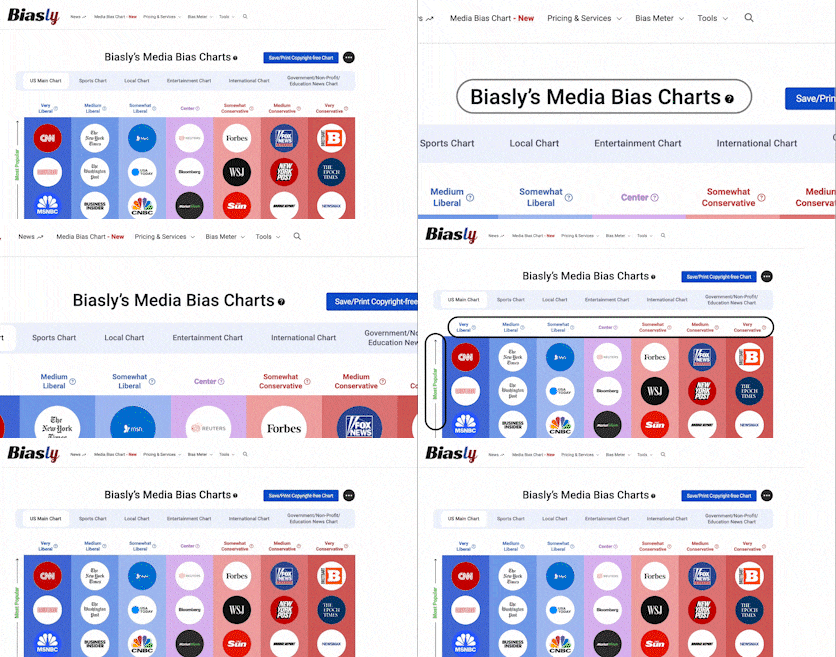
Readers who wish to further explore how National Review compares with other publications can visit Biasly’s Media Bias Chart to analyze tone and word choice in real time.
Funding and Ownership
Who Owns National Review?
William F. Buckley Jr. created National Review magazine in 1955 to advocate for conservative ideology. Sixty years later, National Review, Inc., which had expanded from physical to digital media, became a subsidiary of the National Review Institute (NRI). In 1991, William F. Buckley Jr. established the NRI as a 501(c)(3) charitable organization.

William F. Buckley, Founder, National Review Institute – Source: Wikipedia
Currently, Editor-in-Chief Rich Lowry leads the organization. Taking on the role in 1997 at only 29 years old, Lowry is responsible for the magazine and website’s direction, content, and editorial positions.

Rich Lowry, Editor-in-Chief, National Review – Source: Wikipedia
Moreover, he strongly supports right-wing political views while writing on current affairs and American conservatism.
For instance, Lowry took an aggressive stance against Hillary Clinton’s 2008 presidential election campaign, taking an indirect swipe against her by writing the following quote:
“Because liberalism typically doesn’t sell in American presidential politics, liberal candidates tend to run as culturally conservative centrists — i.e., phonies.”
To support his claim, Lowry used past Democratic presidential candidates such as Al Gore and John Kerry as examples of politicians who also fell into this trap, appearing out-of-touch with American audiences (e.g., Kerry failing to order a Philly cheesesteak and Gore adopting three conflicting personas during each of the three 2000 presidential debates).
In short, National Review has actively promoted conservative ideology and shaped right-leaning thought in American politics. The criticism of liberal candidates and their strategies, demonstrated by Lowry’s position on Democratic figures and their personas, reflects the magazine’s commitment to conservative values and viewpoints.
Who Funds National Review?
National Review is funded by its parent company, National Review Institute (NRI), a non-profit organization. William F. Buckley, the founder of National Review, established this parent non-profit to financially support the mission of his news platform. The non-profit was founded in 1991 as a charitable organization and has been tax-exempt since then, unlike National Review itself, which became a non-profit in 2015.
According to ProPublica, the NRI is primarily funded by major contributions from varying types of donors, including large institutions. Approximately 95% of the parent company’s funding comes from contributions, with asset sales the second-largest source. Due to privacy legislation surrounding donors to non-profits like the NRI, the identities of these donors remain largely concealed. However, some financial supporters have been identified on Sourcewatch through grant disclosures, including prominent conservative donors like the Charles G. Koch Foundation and the Lynde and Harry Bradley Foundation.
Additional Insights
News Source Comparison
When comparing news sources, National Review should be evaluated among both conservative and liberal peers with similar levels of self-proclaimed bias. A similarly ideological magazine is The American Conservative, which espouses parallel traditional social perspectives. The American Conservative is also ranked similarly to National Review for bias, but not for reliability, indicating greater bias in its editorial practices. Other similar conservative news sources with varying degrees of bias and reliability compared to National Review include The Federalist, The American Spectator, and The Daily Wire.
At the other end of the spectrum, there exist sources that proclaim to be left-leaning news sources. The Nation is an example of a source like this, claiming to be “progressive” and often critiquing right-leaning perspectives, much like National Review critiques the left. Another source like this is The American Prospect, which is comparable to National Review, as both are smaller, donor-funded, ideological news platforms.
Notable Contributors and Authors
National Review features a large array of voices in conservative media that align with the source’s mission. William F. Buckley Jr., the most notable contributor to the source, was the founder and wrote numerous columns and books that aligned with the platform’s overall agenda. Ramesh Ponnuru is another large contributor to the contemporary version of the news source, who worked in the GOP and as an advisor to Mitt Romney.
Some other current writers for the source include Rich Lowry, the editor-in-chief, Charles C.W. Cooke, and Andrew C. McCarthy, a former federal prosecutor.
Related Tools and Resource Pages
To better understand how National Review fits into the broader media landscape, we recommend exploring these helpful resources:
- Media Bias Chart: See where National Review ranks among hundreds of media outlets across the political spectrum.
- Political Bias Chart: Visualize political slants of news sources across various policy areas.
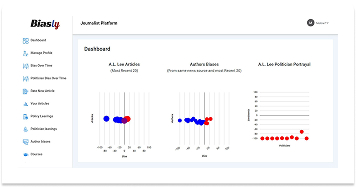
- Journalist Bias Analytics Platform: Explore how individual journalists contribute to bias within their publications.
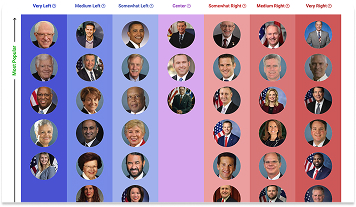
- Politician Bias Analytics Platform: Compare how politicians are framed differently by National Review and other outlets.
- Media Literacy Education Platform: Learn how to critically assess media sources, bias techniques, and news reliability.
Frequently Asked Questions
National Review is rated as Medium Right based on Biasly’s media bias algorithm, which assesses sentiment, article framing, and policy favorability.
National Review has been accused of fake news and mixing opinions with facts, largely from left-leaning critics. One large critique of the source is William F. Buckley Jr.’s personal beliefs, which, according to The American Prospect, included sympathy for white supremacy. Other accusations have been made by comparable media-bias rating organizations, which label the source as unreliable due to selection/omission bias and generally loaded emotional language.
Biasly uses both AI analysis and human analyst review to assess metrics for tone, factual accuracy, source quality, and media bias indicators. Learn more on our Bias Meter page.
Not entirely. The source should be seen through the lens of its self-proclaimed mission to represent conservative viewpoints in news and to uphold the legacy of its founder, William F. Buckley Jr. In this sense, National Review should not be examined like a news source that solely proclaims to report facts. The source prioritizes conservative perspectives, which can at times outweigh neutral framing.
Military Spending
| Date | Sentiment | Associated Article | Snippet |
|---|---|---|---|
| 08/25/2019 | 75% For | Trump Family Detentions Flores Agreement (link) | So, of course, the Trump administration is doing the opposite in a baldfaced |