




-8% Center
Bias Meter
Extremely
Liberal
Very
Liberal
Somewhat Liberal
Center
Somewhat Conservative
Very
Conservative
Extremely
Conservative
-100%
Liberal
100%
Conservative

Biasly determines media bias ratings through a dual-layered approach combining artificial intelligence and analyst review. The platform’s proprietary bias detection engine, Bias Meter, evaluates sentiment, policy position alignment, and language framing across thousands of data points in news articles. Analysts then verify and interpret the AI’s findings, providing additional context where needed. Learn more about ratings
- Profile
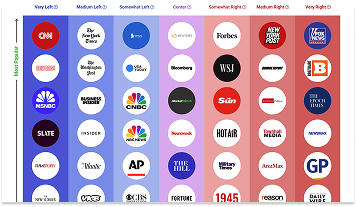
Quartz on the media bias chart
- Bias Rating
-8% Center
- Reliability89% Reliable GoodPolicy Leanings
0% Center
Extremely
LiberalVery
LiberalModerately
LiberalSomewhat Liberal
Center
Somewhat Conservative
Moderately
ConservativeVery
ConservativeExtremely
Conservative-100%
Liberal100%
Conservative
Good Reliability
*Our bias meter rating uses data science including sentiment analysis, machine learning and our proprietary algorithm for determining biases in news articles. Bias scores are on a scale of -100% to 100% with higher negative scores being more liberal and higher positive scores being more conservative and 0% being neutral. The rating is an independent analysis and is not affiliated nor sponsored by the news source or any other organization.
Politician Portrayal33% negative
Continue For Free
Create your free account to see the in-depth bias analytics and more.
By creating an account, you agree to our Terms and Privacy Policy, and subscribe to email updates.
Log In
Log in to your account to see the in-depth bias analytics and more.
Analysis of Quartz Articles
Analysis of Bias in Quartz Online Articles
Quartz has found that in-depth coverage of the business and economics is one of the most effective ways to drive subscriptions. It’s essential to ask: is Quartz truly biased?
To evaluate this, we can analyze select Quartz articles through several of Biasly’s bias rating criteria: Tone, Tendency, Author, Diction, and Expediency Bias.
- Tone: The overall attitude conveyed by the article
- Diction: Specific word choices made by the writer
- Author: The background and social presence of the journalist
- Tendency: Patterns of bias in the writer’s broader body of work
- Expediency Bias: Quick visual or textual indicators like headlines and photos that imply bias
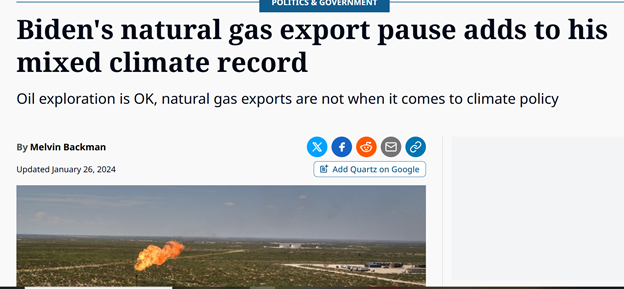
The first article we will observe is “Biden’s natural gas export pause adds to his mixed climate record,” by Melvin Backman. This report explains the pause instituted by President Biden’s administration on the approval of future natural gas export facility projects. Biasly rates this article as “Center-Right,” which is supported through its objective nature and clear presentation of facts. The only instance of bias is noted at the beginning of the piece, where the author writes:
“The Biden Administration is trying to have its cake and eat it too when it comes to fossil fuels and climate policy.”
This diction fosters a negative view of the president’s decisions regarding climate regulations. The tone, however, remains neutral throughout the remainder of the piece, and the tendency is notably consistent. The headline denotes that Biden’s choices have received mixed reactions, but it does not constitute expediency bias in this circumstance. Melvin Backman’s X, formerly known as a Twitter profile, is private. On Feb. 17, 2026, he changed his profile picture to Jesse Jackson to honor his legacy and passing.
In “Why Trump Might Waive the Jones Act to Help Lower Gas Prices,” the article shows bias in its discussion of the Jones Act and gas prices, even though it notes that the law is not directly affecting current fuel prices. The article explains that the Jones Act requires goods shipped between U.S. ports to be transported on ships that are built, owned, and crewed by Americans. It also states that waiving the law would likely have little or no effect on gasoline prices at this time. However, the way the topic is presented still shows certain types of bias.
One example is framing bias. The article focuses on the political discussion around waiving the law rather than presenting the issue as a broader policy debate. Even though it explains that the Jones Act is not responsible for higher gas prices, the story still centers on the idea that the law could be connected to the problem. This framing can make readers think the policy is more relevant to the price issue than it actually is.
There is also some source bias in the article. The information primarily comes from government officials and policy experts who discuss whether the law might be waived. The article does not spend as much time presenting perspectives from workers in the shipping industry or maritime unions who support the law. Because of this, readers may not see the full range of opinions about why the Jones Act exists and why some people believe it is important.
Another example is contextual bias. The article connects the discussion of the Jones Act to rising gas prices and political pressure to lower them. Even though it clearly states that the law does not affect prices, linking the policy to high fuel costs may still lead readers to associate the two topics.
The author, Joseph Zeballos-Roig, has historically been critical of Trump. He tweeted an article from The New York Times about Trump’s military operation in Venezuela, and called it “a diet” regime change.
“Among the options [Trump] suggested was an outcome similar to what he engineered in Venezuela, in which only the top leader was removed during an American military strike and much of the rest of the government remained in place”
So diet regime change?
https://t.co/6Ze9ZtzD4Y— Joseph Zeballos-Roig (@josephzeballos) March 2, 2026
Overall, the article provides factual information and clearly states that the Jones Act is not currently impacting gas prices. However, the focus on political debate and the limited range of perspectives create subtle bias in how the issue is presented to readers.
Analysis of Quartz Opinion Articles
To fully understand political bias in media, it’s important to distinguish between factual reporting and opinion pieces. While reporting aims to present facts and let readers form their own conclusions, opinion articles express personal viewpoints on current issues. Although the previous section examined factual reporting, this section turns to how bias surfaces through Quartz’s selection and tone of opinion content.
The article “The CVS Turnaround Is Real” shows a generally positive bias toward CVS’s performance by emphasizing strong financial results and framing the company’s recovery as evidence that its strategy is working. The piece highlights rising revenue, increased earnings, and stock gains, which present the turnaround as credible and significant, while giving comparatively less attention to ongoing concerns such as high medical costs, structural challenges in retail pharmacy, or consumer complaints about prices.
Although the article briefly acknowledges that results remain “choppy” and that trust in the U.S. healthcare system is complicated, these points are secondary to the dominant narrative of improvement. By focusing primarily on investor-relevant metrics and management claims about becoming “America’s most trusted health care company,” the article may reflect a business-oriented perspective that favors financial success over a fuller examination of patient experiences or systemic issues.
The article “Starbucks Credits Human Connection For Rebound. Baristas Say Otherwise” presents a subtle bias by contrasting the company’s optimistic narrative with workers’ criticism, but ultimately foregrounds the tension as a dramatic conflict rather than a balanced analysis. It highlights Starbucks’ claims that its “Back to Starbucks” strategy and customer-service focus are driving renewed growth, noting rising sales and increased visits, which support the idea of a corporate comeback. However, the article heavily features union baristas’ perspectives that the same policies increase pressure, emotional labor, and understaffing, suggesting the recovery may come at workers’ expense.
While this inclusion of employee voices reduces one-sided corporate bias, the piece still relies on anecdotal testimony from a few workers and limited data on broader labor conditions, which may skew readers’ perceptions. By framing the story as a clash between upbeat executives and frustrated baristas, without deeply examining independent evidence on workplace conditions. The article emphasizes narrative conflict over comprehensive context, revealing a bias toward storytelling rather than full analytical balance.
Quartz opinion articles tend to lean towards the corporate narrative. Although they aren’t completely biased, with sources that oppose their point often included, it’s still important to point out that Quartz articles focus on the corporate side of the story.
Analysis of Reliability in Quartz’s Online News Articles
“Consumer sentiment sinks as Iran conflict pushes gas price fears higher” The article published by Quartz is generally moderately reliable, but it has some limitations that readers should consider. It uses real economic data and expert commentary, but its framing and tone may influence how readers interpret the information.
One factor that supports the article’s reliability is its use of credible economic sources. The article discusses consumer sentiment using widely tracked economic indicators, such as surveys measuring how confident consumers feel about the economy. These types of surveys are commonly used by economists to understand spending behavior and expectations about inflation.
For example, other reporting notes that consumer sentiment indexes track worries about inflation, tariffs, and economic policy, which can influence household attitudes toward spending. This shows the article is using established economic tools rather than speculation.
Another reason the article is fairly reliable is that it connects consumer sentiment to real market events. Rising geopolitical tensions involving Iran have caused volatility in oil markets and increased concerns about fuel costs. Because oil prices strongly influence gasoline prices, analysts often expect consumers to react quickly to these changes.
For instance, energy analysts have warned that tensions in the Middle East can increase oil prices and potentially push gas prices higher if supply routes like the Strait of Hormuz are disrupted. This supports the article’s explanation of why consumers may feel more worried about prices.
However, the article’s reliability is somewhat limited by tone and framing. Quartz is a business-focused news outlet that often writes in an analytical or opinion-influenced style. In some sections, the article emphasizes worst-case economic outcomes or political context, which can make the situation appear more dramatic than the available data fully supports.
For example, market reactions and consumer fears may be discussed before long-term evidence confirms that gas prices will stay high.
Another limitation is that the article focuses mostly on short-term sentiment rather than long-term economic data. Consumer sentiment reflects how people feel about the economy, which can change quickly and may not always match actual economic conditions, such as employment, wages, or long-term inflation.
Overall, the article is reasonably reliable because it uses real economic indicators and expert analysis to explain changes in consumer confidence. However, readers should understand that it emphasizes consumer fears and market reactions, which means it reflects perceptions about the economy rather than guaranteed future outcomes.
In contrast to the aforementioned, there are articles found on Quartz that do not exhibit selection and omission bias. For example, Virginia considers a major expansion of gambling by legalizing ‘skill games’,” by Sarah Rankin. The coverage of Virginia’s possible gambling expansion is presented simply, with quotes from several angles that make the story impartial. Aaron Rouse, the VA state senator, is not depicted in a positive or negative light, allowing the reader to form their own opinions and reach their own conclusions. Biasly’s Chrome Extension supports this analysis with a “Good” source analysis score.
Quality of Sources and Facts Used
Quartz often uses credible sources from across the political spectrum. However, some articles lean too heavily toward how comprehensively they present opposing viewpoints.
The first article we will look at is “New US-China talks will address a top American complaint about Beijing’s economic model, Yellen says,” by Fatima Hussein and Ken Moritsugu, which focuses on ongoing efforts to achieve balanced economic growth between China and the United States. The report’s reliability is deemed “Excellent” by Biasly’s Chrome Extension. It includes two short quotes and three medium quotes from the following sources:
- S. Treasury Secretary Janet Yellen
- Xinhua (China’s official news agency)
While the article provides few quotes, they do a good job of objectively representing both American and Chinese perspectives.
It would have been beneficial to include quotes from more U.S. officials for additional detail, as well as from others managing economic relations with China. In terms of unique sources, the article is rated “Fair” because it references only AP News (Somewhat Liberal), the U.S. Department of the Treasury, and Xinhua.
A balanced report would include links to reports from a greater variety of news sources, perhaps from different sides of the political spectrum. Despite these things, the article remained informative and unbiased, which confirms Quartz central rating. The representation of the two sides is a bit skewed. Yellen is quoted nine times while Xinhua is only referenced three times.
Not every article is rated as highly as the previous one. For example, “Big Oil suddenly likes Joe Biden and his ‘pragmatic approach’,” by Melvin Backman is generally rated as “Fair,” but is lacking in the number and length of quotes, as well as in the inclusion of opposite and unique sources. There were only two quotes in this report: two short statements from ExxonMobil CEO Darren Woods, and one from Interior Secretary Deb Haaland. Perspectives from President Biden or other representatives of “Big Oil” were not included. The sources referenced were primarily other Quartz articles, with the exception of one link to The Wall Street Journal.
Selection and Omission Bias
There aren’t many clear examples of selection and omission bias in Quartz articles. They make an effort to remain impartial and provide factual frameworks of current issues.
“World Leaders Are Worried About Trade Wars Now- And AI Soon,” is one of the few Quartz articles that show problems with selection or omission bias. Overall, the article has minimal bias. However, this article is reliant on WEF surveys. Although this survey is breaking news and the reason this story is being covered, it shouldn’t be the only source that is used. No sources that support tariffs or AI are present. This makes tariffs and AI come off as “boogiemen” since we only see the WEF perspective.
“The Sell America Trade Is Back Because Trump’s DOJ Is Going After Fed Chair Jerome Powell,” is another example of selection or omission bias in a Quartz article. This article fails to showcase any sources that would support Trump’s fiscal policy. Sources like Goldman Sachs’ Chief Economists do showcase strong overall sourcing, but without any sources to counteract this perspective, the article feels skewed towards the traditional fiscal policies perspective.
However, these are rare examples. It’s important to emphasize that Quartz uses strong, fair sourcing more often than they don’t.
Quartz Bias Overview
Founded in 2012 by Kevin Delaney, Jay Lauf, and the team at Atlantic Media, Quartz was to provide a modern approach to business news and global affairs. The idea came from the founders’ desire to reach a new generation of readers who consume news on digital platforms and prefer concise, engaging content.
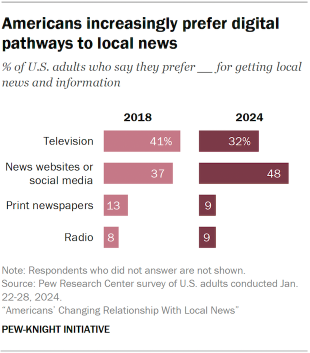
Source: Pew Research
They provide articles, analysis, and interactive content, making it a valuable resource for professionals and anyone interested in understanding the world of business and beyond. The publication often uses data visualization and interactive features to present information in a way that is both informative and visually appealing, setting it apart from traditional news outlets.
Is Quartz Biased?
Based on Biasly’s evaluations, Quartz is rated as Center.
By examining content patterns and the broader context of media influence, we aim to offer a balanced perspective on Quartz’s political bias and contribute to the ongoing discussion about bias in the news.
How Does Biasly Rate News Sources?
Biasly uses proprietary algorithms and a team of analysts to provide comprehensive bias evaluations across thousands of news outlets. Over 200,000 articles from more than 3,200 sources have been analyzed to identify the most accurate and unbiased stories.
Biasly assigns each outlet three key scores:
- Reliability Score – Reflects factual accuracy
- AI Bias Score – Generated via natural language processing
- Analyst Bias Score – Assessed by human political analysts
These scores are based on seven core metrics: Tone, Tendency, Diction, Author Check, Selection/Omission, Expediency Bias, and Accuracy. These elements help analysts and algorithms evaluate the political attitude conveyed by each article.
Biasly’s Bias Meter ranges from -100% (most left) to +100% (most right), with 0% indicating neutrality. The system evaluates individual articles based on political terms, policies, figures, and sentiment to calculate precise bias ratings.
Is Quartz Politically Biased?
Quartz earns a Center rating for its AI Bias Score and a Center for its Analyst Bias Score. The Analyst Bias Score is generated by reviewers from liberal, moderate, and conservative backgrounds. Analysts reviewed Quartz articles and noted that most articles do not show bias.
This Bias score is determined through natural language processing that evaluates the tone, word choice, and opinion embedded in the reporting.
How to Evaluate Bias
Although Biasly rates Quartz as Center, it’s important to remember that bias can vary from article to article. This complexity underscores the importance of examining each article individually. So, let’s learn how to evaluate media bias.
Recognizing media bias requires awareness and critical thinking. Often, readers trust news sources that affirm their existing beliefs, a psychological tendency known as confirmation bias. This makes it harder to identify slanted narratives or one-sided reporting.
To address this, it’s essential to challenge your assumptions by consulting multiple perspectives and verifying information through third-party analysis. Tools like Biasly’s media bias ratings allow readers to compare the same news story across the political spectrum.
Ultimately, bias isn’t always a matter of what is said—it’s also about what is left out, how topics are framed, and which stories are chosen for coverage. Learning to recognize these patterns can help readers make more informed decisions and develop greater media literacy.
To start comparing news outlets and gain a better understanding of bias, sign up for Biasly’s Media Bias & News Analytics Platform to see how stories vary between sources.
Quartz Reliability Overview
Is Quartz Reliable?
Quartz is generally considered reliable. Their excellent use of facts in nearly all of their articles helps their reputation in the news industry. One area they could improve on is their use of quotes, particularly using quotes from people who go against the narrative of the article.
At Biasly, we specialize in evaluating not just bias but also the reliability of media outlets. Let’s explore the accuracy and trustworthiness of Quartz.
How to Evaluate Reliability?
Reliability refers to how trustworthy or accurate a news source is. If we can’t trust what we read, then continuing to consume content from that outlet serves little purpose. So how do we evaluate a news outlet’s reliability?
There are several key indicators of reliability to consider when assessing a media source. Red flags of an unreliable article can include wild, unsubstantiated claims, facts that depend on other unreliable sources, heavy use of opinionated language, and more. In contrast, hallmarks of a reliable source include:
- Absence of subjective language
- Citing credible sources (e.g., .gov, .edu, academic references)
- Verifiable facts and statistics from multiple outlets
- Use of primary sources, like interviews or transcripts
- Consistency with coverage across other platforms
Biasly’s reliability scores incorporate these elements in evaluating media outlets.
So How Does Quartz Fare in Its Reliability?
The political reliability index developed by Biasly assesses both accuracy and trustworthiness. Quartz currently holds Good Reliability Score, which is calculated as a weighted average of:
- Fact Analysis Score – Evaluates the accuracy of claims, facts, and evidence.
- Source Analysis Score – Assesses the number, diversity, and credibility of sources and quotes used.
Quartz’s Source Analysis Score is Good at 70% Reliable. This suggests moderate trustworthiness in its sourcing practices. The score is AI-generated and considers quote length, frequency, diversity, and quality.
The Fact Analysis Score of Quartz is Excellent at 94% Reliable. This further shows how well Quartz supports its claims, addresses selection and omission bias, and presents verifiable evidence.
While Quartz leans toward factual reporting, occasional lapses, such as unbalanced viewpoints or incomplete data, can affect its reliability rating. These nuances emphasize the importance of analyzing individual articles.
Quartz’s Accuracy and Reliability
According to Biasly’s analysis, Quartz maintains Good Reliability Score, but individual articles may vary significantly. Let’s dive into the details.
Two common types of bias that affect factuality include:
- Selection Bias – Highlighting or omitting stories to fit a particular narrative.
- Omission Bias – Leaving out differing perspectives or relevant details to skew perception.
Biasly’s accuracy ratings use a scale from 1% (least accurate) to 100% (most accurate). Factors include supporting evidence, reliable internal and external sources, and balanced viewpoints.
For instance, Biasly gave The Daily Beast a Strong Liberal Bias and a high Analyst Reliability Score. Overall, the outlet’s reporting is considered fact-based and well-sourced, but its framing, story selection, and editorial tone frequently reflect progressive viewpoints on political and social issues. Coverage often emphasizes criticism of conservative figures and policies while highlighting perspectives aligned with Democratic leaders and liberal advocacy groups, which contributes to its left-leaning classification.
Despite this ideological tilt, the publication generally maintains solid journalistic standards, including the use of credible sources, clear attribution, and corrections when necessary, supporting its reputation for strong reliability.
So, is Quartz Reliable?
Overall, Quartz can be considered an outlet that is very reliable. The site regularly publishes fact-based reporting and demonstrates a commitment to credible sourcing across most of its content. While some opinion or editorial framing may appear, particularly in commentary sections, the majority of its coverage maintains journalistic integrity and a balanced presentation of perspectives. Occasional gaps in attribution or depth may occur, but they do not significantly undermine the outlet’s overall trustworthiness.
As media literacy improves, readers can more easily detect issues with selection bias, omission bias, and factuality. To strengthen your ability to assess reliability across the political spectrum, use Biasly’s News Bias Checker to compare how multiple outlets report the same story.
This empowers you to consume more accurate, balanced, and dependable news.
Quartz Editorial Patterns
Quartz’s coverage of political topics often reflects a Center bias, with consistent patterns in phrasing, source selection, and thematic focus that are Neutral. While the publication demonstrates journalistic standards in many of its reports, the choice of issues, framing, and word usage can indicate a political slant. The editorial patterns of Quartz suggest that they do not show strong bias on most issues.
Coverage of Liberal vs. Conservative Topics
Quartz focuses on global economics and business. When covering these issues, they generally don’t show favoritism toward either position. They also try to include other countries’ political positions, which can sometimes differ greatly from the U.S. political consensus.
Despite this, Quartz still covers plenty of topics related to the U.S. economy and business world. Recent coverage has focused heavily on technology, a growing policy and market issue in the U.S. Their coverage of technology tends to focus more on development than on potential regulations. Some could argue this would focus more on the Republican side of the issue, as Republicans generally support competitive capitalism. However, this could just be because their editorial focus is on business rather than on government policy. News media bias manifests in subtle ways.
Policy and Issue Framing
Quartz covers most issues with little bias. Abortion, environmental regulations, and the European Union are among their most-covered issues outside the business world. They cover these issues with little bias. Their ability to cover environmental regulations with minimal bias is notable, since many business-first publications may show bias against these regulations because they could hurt businesses.
However, there are some issues in which Quartz does show subtle liberal bias. Criminal justice, the death penalty, and stem cell research are issues where Quartz can be a little biased. However, none of these issues are covered extensively by Quartz. Regardless, it’s important to note that Quartz doesn’t cover every issue with no bias.
Even in neutral coverage, phrasing choices shape perception. Articles can describe liberal proposals as “expanding access” or “strengthening protections,” while conservative legislation may be described as “imposing limits” or “rolling back rights.” This consistent choice of words reflects an editorial direction that, even unintentionally, can contribute to bias in news media.
Coverage and Relevance
Quartz’s reporting often touches on key issues central to the business and the economy. As such, it serves as a compelling case study for examining source bias and news media bias in state-focused reporting.
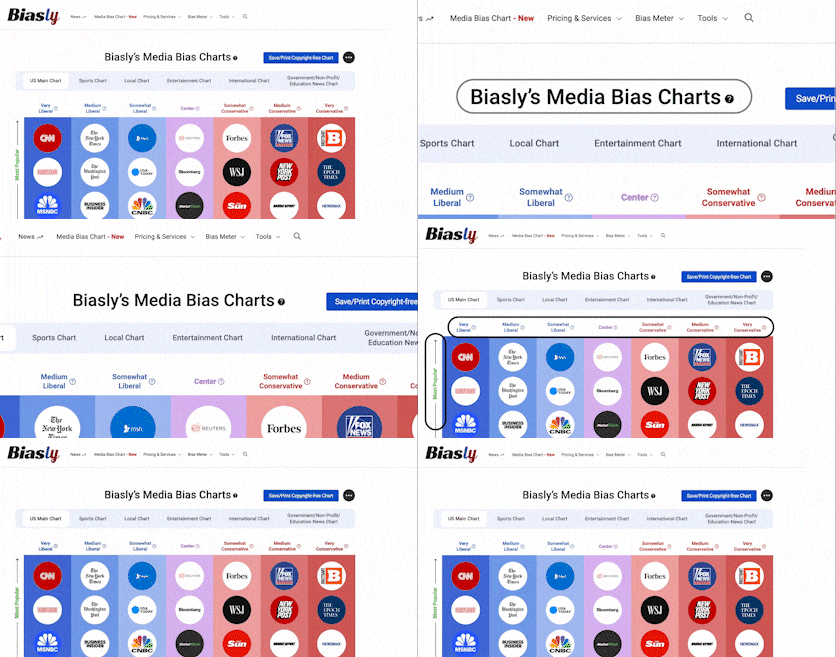
Readers who wish to further explore how Quartz compares with other publications can visit Biasly’s Media Bias Chart to analyze tone and word choice in real time.
Funding and Ownership
Who Owns Quartz?

Yusuke Umeda, Former CEO of Uzabase – Source: Wikimedia Commons
Atlantic Media sold Quartz to Japanese firm Uzabase in 2018. Axios estimates the sale was about $75 million to $100 million. Uzabase sold the company to G/O Media in 2022. In 2025, G/O Media sold the company to Redbrick, its current owner. This means that Quartz has been owned by 4 different companies since 2018. Redbrick is a Canadian software firm. They also own Duplex, which is a syndicated news discovery tool.
Who Funds Quartz?
Quartz does not have as many traditional banner ads, instead relying on native advertising and sponsored content. Sponsored content is a controversial practice in journalism, as some believe it can prevent a publication from being objective. They also have memberships that unlock access to special content. Their newsletters are one of the most notable privileges for premium members.
Additional Insights
News Source Comparison
When it comes to news source comparison, Quartz is often evaluated alongside other economics and business publications. Sources like Bloomberg, Forbes, and The Wall Street Journal often present similar tones and editorial philosophies. While Quartz maintains a Center media bias, it differs from strongly partisan sources in that it includes opposing viewpoints and strives for coverage balance.
This puts it in contrast with more biased media outlets that present consistently one-sided narratives without factual counterpoints. Readers seeking balanced political coverage may compare Quartz’s framing of issues with outlets rated as Center or Lean Right on our Media Bias Chart, or explore other regional papers on our Similar Sources page.
Notable Contributors and Authors
Quartz features a diverse range of reporters and columnists, many of whom are deeply familiar with economics and business. Quartz has become more reliant on freelance reporters over the past couple of years, but still employs many talented journalists.
Dan Hirschhorn is the current editor-in-chief of Quartz. He started as a reporter for The Bulletin in 2007. He worked for various Pennsylvania-based publications until joining Quartz. He was hired by Quartz in 2024 to be their editor in chief. As a writer, Hirschhorn focuses on stocks and technology. His leadership has helped the company grow despite being sold four times since 2018.
Shannon Carroll is another notable writer for Quartz. She got her start as a sports reporter for The Daily Californian in 2013. In 2022, she became a private editor. Quartz hired her as a freelance editor in 2024. In 2025, she was hired full-time as a lifestyle reporter. In August 2025, she was promoted to editor-at-large. She also writes Quartz’s daily brief newsletters. Biasly considers her a center-leaning reporter with average reliability.
Related Tools and Resource Pages
To better understand how Quartz fits into the broader media landscape, we recommend exploring these helpful resources:
- Media Bias Chart: See where Quartz ranks among hundreds of media outlets across the political spectrum.
- Political Bias Chart: Visualize political slants of news sources across various policy areas.
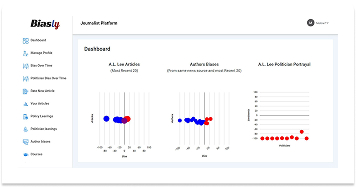
- Journalist Bias Analytics Platform: Explore how individual journalists contribute to bias within their publications.
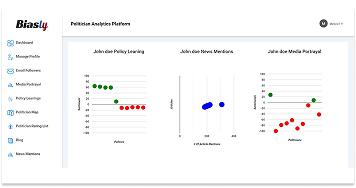
- Politician Bias Analytics Platform: Compare how politicians are framed differently by Quartz and other outlets.
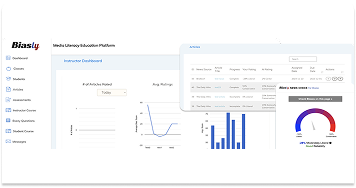
- Media Literacy Education Platform: Learn how to critically assess media sources, bias techniques, and news reliability.
Frequently Asked Questions
Quartz is rated as Center based on Biasly’s media bias algorithm, which assesses sentiment, article framing, and policy favorability.
Quartz has been accused of using AI to write articles and passing them off as human-written. The use of AI in journalism is a highly debated topic in journalism circles. However, almost everyone agrees that not being upfront about the usage of AI for writing is dishonest and deceitful.
Biasly uses a combination of AI sentiment analysis and human analyst review to assess tone, fact accuracy, source quality, and media bias indicators. Learn more on our Bias Meter page.
Generally, yes, though partisan framing and selective reporting can affect perceived reliability.
Military Spending
| Date | Sentiment | Associated Article | Snippet |
|---|---|---|---|
| 08/25/2019 | 75% For | Trump Family Detentions Flores Agreement (link) | So, of course, the Trump administration is doing the opposite in a baldfaced |