




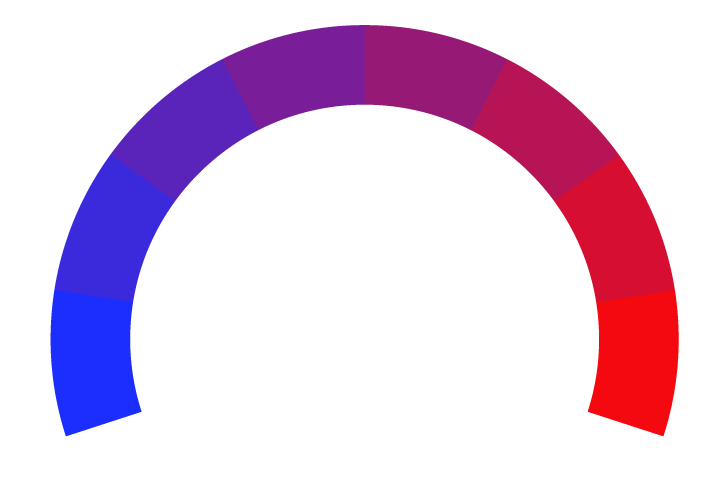
40% Somewhat Right
Bias Meter
Extremely
Liberal
Very
Liberal
Somewhat Liberal
Center
Somewhat Conservative
Very
Conservative
Extremely
Conservative
-100%
Liberal
100%
Conservative
Biasly determines media bias ratings through a dual-layered approach combining artificial intelligence and analyst review. The platform’s proprietary bias detection engine, Bias Meter, evaluates sentiment, policy position alignment, and language framing across thousands of data points in news articles. Analysts then verify and interpret the AI’s findings, providing additional context where needed. Learn more about ratings
- Profile
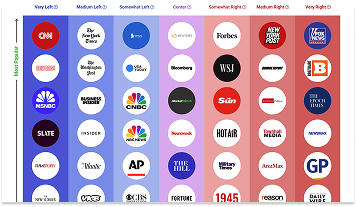
RedState on the media bias chart
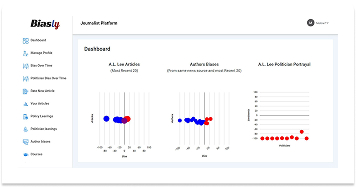
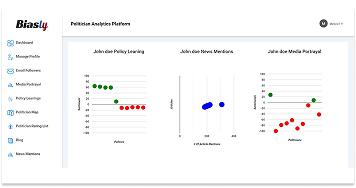
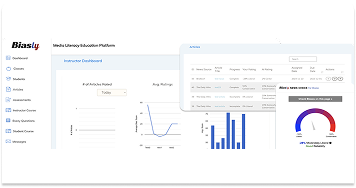
- Bias Rating
40% Somewhat Right
- Reliability49% Reliable AveragePolicy Leanings
10% Center
Extremely
LiberalVery
LiberalModerately
LiberalSomewhat Liberal
Center
Somewhat Conservative
Moderately
ConservativeVery
ConservativeExtremely
Conservative-100%
Liberal100%
Conservative
Average Reliability
*Our bias meter rating uses data science including sentiment analysis, machine learning and our proprietary algorithm for determining biases in news articles. Bias scores are on a scale of -100% to 100% with higher negative scores being more liberal and higher positive scores being more conservative and 0% being neutral. The rating is an independent analysis and is not affiliated nor sponsored by the news source or any other organization.
Politician Portrayal99% negative
Continue For Free
Create your free account to see the in-depth bias analytics and more.
By creating an account, you agree to our Terms and Privacy Policy, and subscribe to email updates.
Log In
Log in to your account to see the in-depth bias analytics and more.
Analysis of RedState Articles
Analysis of Bias in RedState Online Articles
RedState has found that in-depth coverage of the Jewish issues and Israel is one of the most effective ways to drive subscriptions. Given that much of its readership is over-50 and religious, is RedState truly biased?
To evaluate this, we can analyze select RedState articles through several of Biasly’s bias rating criteria: Tone, Tendency, Author, Diction, and Expediency Bias.
- Tone: The overall attitude conveyed by the article
- Diction: Specific word choices made by the writer
- Author: The background and social presence of the journalist
- Tendency: Patterns of bias in the writer’s broader body of work
- Expediency Bias: Quick visual or textual indicators like headlines and photos that imply bias
RedState doesn’t have a designated area for ‘news’ articles, as it tends to function more as a blog with an opinion disclaimer. Thus, there are limited articles in which RedState claims to be impartial or, at least, writes purely factually.
However, we can infer some of their hard-news biases by examining their parent site, Townhall. This website is more geared toward reporting and notably does not include the same ‘opinion’ disclaimer at the beginning of its articles, indicating that its articles are intended to be taken as news or, at least, as unbiased analysis.
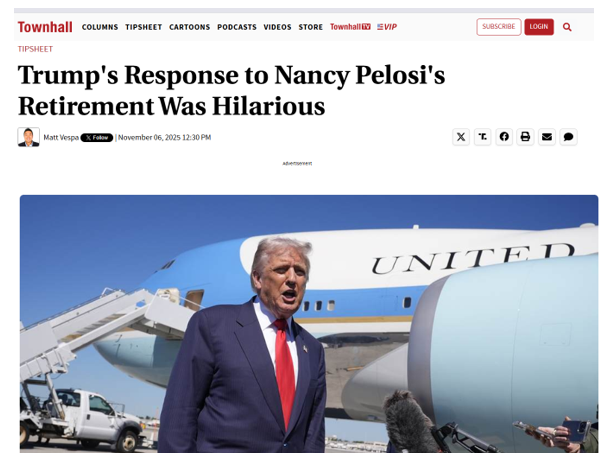
One of these articles, however, seems to beg to differ. There is something to be said about the tone of the title alone, “Trump’s Response to Nancy Pelosi’s Retirement Was Hilarious,” which falls under expediency bias. Expediency bias is the bias and leaning of the title, picture, and summary of text below the article; basically, the first impression when you first click on the article. The title alone makes Pelosi’s retirement comical, which inherently demeans the politician and paints the President as a comical and, importantly, positive figure. The remainder of the content is marked by judgment and explicit editorial and authorial bias.
The comment that the author, Matt Vespa, is referring to was posted by President Trump on Truth Social, where he wrote, “Nancy Pelosi’s retirement is a great thing for America. She was evil, corrupt, and only focused on bad things for our country… I’m very honored she impeached me twice and failed miserably.”
While sharing this comment is not inherently biased, framing it as humorous in the headline conveys a positive tone. His later comments only substantiate this claim even more: writing, “That’s vintage Trump right there. It’s perfect.” This framing indicates an evident bias, praising the President for essentially goading another elected official.
Additionally, this misunderstanding of issues has led to placing facts out of context to interpret their actual meaning incorrectly. For instance, in Jared Whitley’s article, “If We Want to Win the 21st Century Arms Race, We Can’t Afford to Keep Making Mistakes With the F-35,” Whitley writes,
“In mid-December, a brand-new F-35B crashed on a Fort Worth runway while its pilot was taking it for a test flight. As the video here shows, the craft bounced and tipped forward because of presumed engine problems, so the Pentagon has canceled deliveries until it can figure out what went wrong. The pilot wasn’t hurt, thank goodness, but we can’t say the same for the reputation of Pratt & Whitney, a subsidiary of Raytheon Technologies.”
Though it is, of course, less than ideal for a plane to crash on a test flight, this occurrence is not out of the ordinary at all. According to data on the F-35 flight mishap history, it is not uncommon for test flights to end in crashes. This is a relatively procedural aspect of the arms industry, to pay the financial cost now to avoid paying the human cost later, which is largely made up for by the robustness of
Analysis of RedState Opinion Articles
To fully understand political bias in media, it’s important to distinguish between factual reporting and opinion pieces. While reporting aims to present facts and let readers form their own conclusions, opinion articles express personal viewpoints on current issues. Although the previous section examined factual reporting, this section turns to how bias surfaces through RedState’s selection and tone of opinion content.
It is critical to distinguish between opinion and reporting. Reporting, which is intended to be neutral, gives the reader facts and quotes from primary sources and allows the reader to form their own opinion. Meanwhile, opinions are an outlet for columnists to express personal views on issues. While we saw some elements of factual reporting in the analysis above, it is clear that for the most part, RedState’s content puts forth their opinion first.
For example, consider another article with an emotionally loaded title such as “Kamala’s Huge Lie About Border Debunked as Illegal Aliens Thank Biden for Letting Them In.” The title contains obvious bias and language suggesting negative opinions and judgments about the Democratic Party. Extreme diction, such as “lie” and “illegal aliens,” indicates to us that the author does not intend to provide an objective reporting of facts in this article. Rather, he seeks to push his personal views and opinions to his like-minded conservative audience.
Another example with a more objective title is “Change of Heart? Bill De Blasio Decides More Police Is Better,” where Biasly rates this article in the Center, indicating that there is limited bias present and that the article will focus more on objectively relaying news information, such as
“Additionally, he’ll approve a $105 million budget increase for a new police precinct.”
Once again, these articles, in addition to those above, are only a small representation of RedState’s content; however, they indicate that this outlet is characterized by a great deal of opinion, once again highlighting the importance of being able to separate subjective writing from reporting.
Analysis of Reliability in RedState’s Online News Articles
RedState . The issue is that almost every article begins with the statement “The opinions expressed by contributors are their own and do not necessarily represent the views of RedState.com,” indicating that most are intended as opinion rather than fact. However, claims, whether explicit or implicit, reveal the biases.
Quality of Sources and Facts Used
RedState relies primarily on secondary reporting and speculative interpretation rather than verified primary documentation in this article. While the piece cites coverage from major outlets such as The Daily Mail, Fox News, and The New York Post, it does not provide original sources or independently verified records to substantiate several of its central claims. As a result, the article blends established facts with conjecture, thereby undermining its overall reliability.
For example, this RedState article states that Tyler Robinson’s roommate was identified as Lance Twiggs and suggests that he is the same individual described elsewhere as a “transgender partner.” However, the article itself acknowledges that this connection is unconfirmed. Despite this, the author goes on to draw conclusions based on appearance and speculation:
“Again, while the report says it’s ‘unclear’ if Twiggs is the aforementioned transgender partner reported first by Fox News… when you look at the picture of him, it’s certainly reasonable to conclude that.”
This reasoning is not supported by official statements, court filings, or law-enforcement confirmations. Instead, it relies on visual inference and commentary from tabloid-style reporting, which limits the article’s factual grounding.
The article further weakens source quality when addressing cultural references. It defines “furries” as a fetish within the LGBT community and asserts a direct ideological motive based on an inscription found on ammunition used in the crime. These claims are presented without citations to expert sources, academic definitions, or corroborating evidence. The interpretation of the phrase engraved on the ammunition is speculative and presented as definitive, despite the absence of any attribution from investigators or forensic analysis to confirm its meaning or intent.
Sources referenced in the article include:
- The Daily Mail reporting and affidavits cited therein
- Fox News reporting (via Brooke Singman)
- The New York Post
- Statements attributed to Utah Governor Spencer Cox (via press conference references)
- A quote from Jerry Twiggs, the grandfather of the identified roommate
The ideological balance of sources skews heavily toward conservative-leaning outlets, with no neutral experts, no law enforcement officials directly quoted, and no primary documents linked for reader verification. Liberal perspectives are referenced only indirectly and portrayed negatively, often characterized as engaging in bad-faith narratives rather than being substantively addressed. Additionally, speculative elements are framed assertively, which blurs the line between reporting and opinion.
Overall, the article relies largely on secondary sources, limited primary documentation, and interpretive commentary. The absence of corroborating official records, expert analysis, or opposing perspectives reduces the article’s factual reliability and demonstrates a tendency to prioritize ideological framing over verifiable evidence.
Selection and Omission Bias
A more extreme example from RedState shows an emotionally loaded title as “2024, Joe Biden, and Catastrophic Failures.” Author Ward Clark makes no attempt to be objective in his writing, expressing only negative opinions of Democrats and the Biden administration. Beyond this, the source consistently uses right-wing sources that corroborate his personal views; for example,
“If the Democratic Party is smart, they’ll already be looking for ways to ease old Joe Biden out the door. President Biden grows more befuddled by the day, his (handlers’) economic policies are a disaster, the southern border is an open wound, and he spends more time on the beach in Rehoboth than doing any actual work.”
Regarding diversity of sources and the presence of opposing sources, Biasly’s Chrome extension assigns a poor rating to opposing sources but a good rating to multiple sources. While the article does have some variety in its sources, its reliability remains questionable because it relies on a few opposing sources that provide a holistic view of the issue.
The author employs selection bias to construct a narrative that supports his ideological position, which clearly contradicts the Biden administration’s position. The author also omits any of the Biden administration’s positive work and qualities, once again exposing the reader only to the author’s political perspective.
In opinion pieces, issues with factuality, sourcing, selection, and omission bias are frequently present. So far, all of the articles we’ve covered have had right-leaning bias to some extent. Moreover, as a self-proclaimed conservative news organization, RedState does have a small incentive to continue to appeal to the conservative viewpoints of its right-wing readership. Now that we’ve gone over several examples of the quality of sources and facts, as well as omission and selection bias, you can keep these things in mind when reading future news pieces.
RedState Bias Overview
RedState is an online news platform that was founded in 2002 by a group of Orthodox individuals who were dedicated to providing comprehensive and up-to-date news and information to the Orthodox Jewish community. The idea behind Matzav.com was to create a news source that would cater to the specific interests and concerns of this community, offering a unique perspective on current events and issues that are relevant to their lives and beliefs, according to Biasly. This past March, RedState and Yeshiva World News announced a merger, combining two of the largest online news sites for the Orthodox Jewish community.
RedState is a self-described conservative political blog that provides an outlet for conservative columnists to express their personal opinions. Examining political typology in the United States is significant given the considerable polarization in American politics. Take a look at this chart from Pew Research, which highlights that partisan polarization shows divisions in both partisan coalitions:
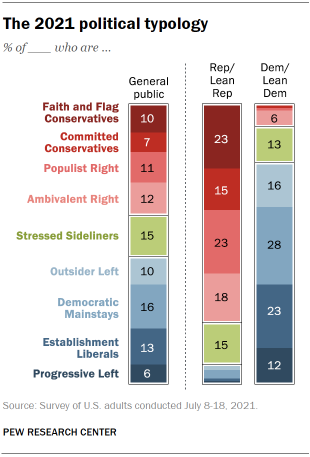
Source: Pew Research
Returning to the idea of political bias, Biasly rates RedState based on two scores: one from its AI algorithms and one from its Analysts. Biasly rated RedState with a Computer bias score of Moderately Conservative and an Analyst bias score of Very Conservative, meaning that overall this source provides political coverage from an American conservative political perspective.
Analyst scores are based on at least 15 articles, each being reviewed by one liberal, moderate, and conservative analyst. The more articles rated by Biasly’s analysts for a particular source, the more accurate the subsequent bias score will be. When Biasly rates more articles, the scores will overall become more accurate. You will also find that Biasly’s scores closely align with determinations from other third-party bias research agencies.
The remainder of this article will discuss different ways to identify bias to help you be able to determine opinions from facts and become the most informed consumer of news.
Before we begin, we need to discuss bias. Bias is a natural human tendency, and we can express it both consciously and unconsciously. Bias is one of the most fundamental forms of pattern recognition in humans. This isn’t to suggest that “everything is biased,” but rather to explain how we come to trust certain news organizations based on consistent patterns in their coverage.
On the media’s part, there is an incentive to retain audiences, encourage subscription, and elicit positive ratings. Bias is a two-way street: people want to see news stories about topics they care about, and the media needs viewers to sustain its operations. This creates a positive feedback loop that influences what stories are covered and from what perspective. This also explains the actions of more liberal news organizations.
As a popular blog, RedState plays a significant role in shaping public perception. Readers’ trust in the accuracy of local news may mirror the conclusions reached by Biasly’s media bias ratings. This article delves into RedState’s editorial tendencies to explore whether political bias is present and, if so, to what degree.
Is RedState Biased?
Based on Biasly’s evaluations, RedState is rated as Somewhat Right.
By examining content patterns and the broader context of media influence, we aim to offer a balanced perspective on RedState’s political bias—and contribute to the ongoing discussion about bias in the news.
How Does Biasly Rate News Sources?
Biasly uses proprietary algorithms and a team of analysts to provide comprehensive bias evaluations across thousands of news outlets. Over 200,000 articles from more than 3,200 sources have been analyzed to identify the most accurate and unbiased stories.
Biasly assigns each outlet three key scores:
- Reliability Score – Reflects factual accuracy
- AI Bias Score – Generated via natural language processing
- Analyst Bias Score – Assessed by human political analysts
These scores are based on seven core metrics: Tone, Tendency, Diction, Author Check, Selection/Omission, Expediency Bias, and Accuracy. These elements help analysts and algorithms evaluate the political attitude conveyed by each article.
Biasly’s Bias Meter ranges from -100% (most left) to +100% (most right), with 0% indicating neutrality. The system evaluates individual articles based on political terms, policies, figures, and sentiment to calculate precise bias ratings.
Is RedState Politically Biased?
RedState earns a Somewhat Right rating for its AI Bias Score and a Medium Right for its Analyst Bias Score. The Analyst Bias Score is generated by reviewers from liberal, moderate, and conservative backgrounds. Analysts reviewed several of RedState articles and noted preferences in areas like coverage of Israel and Republican policies, with neutral coverage of immigration. However, there are some areas of concern.
It must be noted that RedState has no intention to change anyone’s mind. The opening quote of one paywalled article titled “A Look Inside an Antifa ‘Anarchist Book Fair‘” reads: “Not that you needed any more examples of how the people involved with Antifa aren’t exactly Rhodes Scholars…” here is an obvious expectation that anyone reading %_SOURCE_NAME_ is already a staunch supporter of conservatism, or is at least sympathetic to conservative viewpoints.
Further, the Editor’s Note at the end of almost every article engages with extremely biased wording, with examples including:
- Thanks to President Trump and his administration’s bold leadership, we are respected on the world stage, and our enemies are being put on notice.
- At RedState, we’re committed to making sure that California craziness stays in California. We’ve been at the forefront of reporting on Gavin Newsom’s corruption and failures, and that has made us a target of the left and Big Tech.
- Do you enjoy [Insert Site’s] conservative reporting that takes on the radical left and woke media? Please support our work so that we can continue to bring you the truth.
- Thanks to President Trump’s leadership and bold policies, America’s economy is back on track.
- As our military ratchets up the pressure on drug cartels, military operations against Venezuela seem increasingly inevitable. To get the best and most up-to-date coverage, you can’t go wrong relying on RedState.
- The mainstream media isn’t interested in the facts; they’re only interested in attacking the president. Help us continue to get to the bottom of stories like the Jeffrey Epstein files by supporting our truth-seeking journalism today.
How to Evaluate Bias
Although Biasly rates RedState as Somewhat Right, it’s important to remember that bias can vary from article to article. RedState also covers a Democratic politician with objectivity on many issues, from state legislation to social developments. This complexity underscores the importance of examining each article individually. So, let’s learn how to evaluate media bias.
Recognizing media bias requires awareness and critical thinking. Often, readers trust news sources that affirm their existing beliefs—a psychological tendency known as confirmation bias. This makes it harder to identify slanted narratives or one-sided reporting.
To combat this, it’s essential to challenge your assumptions by consulting multiple viewpoints and verifying news through third-party analysis. Tools like Biasly’s media bias ratings allow readers to compare the same news story across the political spectrum.
Ultimately, bias isn’t always a matter of what is said; it’s also about what is left out, how topics are framed, and which stories are chosen for coverage. Learning to recognize these patterns can help readers make more informed decisions and develop greater media literacy.
To start comparing news outlets and gain a better understanding of bias, sign up for Biasly’s Media Bias & News Analytics Platform to see how stories vary between sources.
RedState Reliability Overview
Is RedState Reliable?
RedState is a conservative news and opinion outlet founded in 2004. Considering its reputation as an American conservative political blog, the source has an incentive to write in favor of its audience. In our previous article, we examined the presence of bias in RedState articles, which equally affects the source’s reliability. At Biasly, we look to evaluate the accuracy and reliability of all media outlets. Let us investigate the reliability and accuracy of RedState.
How to Evaluate Reliability?
Reliability refers to how trustworthy or accurate a news source is. If we can’t trust what we read, then continuing to consume content from that outlet serves little purpose. So how do we evaluate a news outlet’s reliability?
There are several potential measures of reliability to consider when assessing whether a media source is reliable. Red flags of an unreliable article can include unsubstantiated claims, reliance on other unreliable sources, frequent use of opinionated language, and more. In contrast, hallmarks of a reliable source include:
- Absence of subjective language
- Citing credible sources (e.g., .gov, .edu, academic references)
- Verifiable facts and statistics from multiple outlets
- Use of primary sources, like interviews or transcripts
- Consistency with coverage across other platforms
Biasly’s reliability scores incorporate these elements in evaluating media outlets.
So How Does RedState Fare in Its Reliability?
The political reliability index developed by Biasly assesses both accuracy and trustworthiness. RedState currently holds Average Reliability Score, which is calculated as a weighted average of:
- Fact Analysis Score – Evaluates the accuracy of claims, facts, and evidence.
- Source Analysis Score – Assesses the number, diversity, and credibility of sources and quotes used.
RedState’s Source Analysis Score is Average at 57% Reliable. This suggests moderate trustworthiness in its sourcing practices. The score is AI-generated and considers quote length, frequency, diversity, and quality.
The Fact Analysis Score of RedState is Average at 47% Reliable. This further shows how well RedState supports its claims, addresses selection and omission bias, and presents verifiable evidence.
RedState leans toward short-form blog posts that give columnists’ opinions on the news, but unbalanced viewpoints and incomplete data can affect its reliability rating, as described in earlier parts of this article. These nuances emphasize the importance of analyzing individual articles.
RedState’s Accuracy and Reliability
According to Biasly’s analysis, RedState maintains Average Reliability Score, but individual articles may vary significantly. Let’s dive into the details.
Political orientation plays a crucial role in how audiences perceive reliability. RedState has been accused of favoring a liberal narrative, potentially at the expense of factual reporting. To validate such claims, it’s essential to analyze whether the publication backs its assertions with sufficient evidence and diverse viewpoints.
Two common types of bias that affect factuality include:
- Selection Bias – Highlighting or omitting stories to fit a particular narrative.
- Omission Bias – Leaving out differing perspectives or relevant details to skew perception.
Biasly’s accuracy ratings use a scale from 1% (least accurate) to 100% (most accurate). Factors include the presence of supporting evidence, internal and external reliable sources, and balanced viewpoints.
Recall that our analysts give RedState a Average reliability rating. Although this score varies across articles and authors, the largest variation in reliability arises from selection and omission bias, which we examine below. Consider also an extreme left-wing source such as HuffPost UK, which has a rating of “Very Liberal” and is deemed to have “Good” reliability according to Biasly’s analysts. While they have one article rated with “Excellent” reliability titled “DHS Chief: U.S.-Mexico Border Is Closed, But Unaccompanied Minors Accepted,” whereas another article from the same source was only 44% reliable, titled “Calif. Venue Reportedly Boots Matt Gaetz, Marjorie Taylor Greene’s America First Rally.” As a result, this demonstrates that articles from the same source can heavily vary in terms of their reliability, and also articles with heavy political topics and leanings are less reliable than neutral reports.
“The plan is supported by Oklahoma State Superintendent Ryan Walters: The problem is that charter schools are considered public schools by default.”
For example, a RedState article titled “Trump ‘Dominates’ Florida Freedom Summit, Collects More Key Endorsements” is rated “Moderately Conservative.” Concerning selection and omission bias, the author does include the following regarding a political counterpart:
“NBC News– no friend of Trump– printed a headline about the evening proclaiming, ‘Trump dominates Florida Republican Party event on Ron DeSantis’ home turf.’”
With this being said, though, there is still an overwhelming amount of negative sentiments towards Democrats and the Biden administration, including that “he [Trump] nails Joe on the disastrous Biden-created border crisis” or that “things will change if he’s president again.”
It is also frequently subject to omission bias and to failing to present the full picture on many occasions. For example, while praising Ron DeSantis’s promise to accept NYPD officers who may want to flee New York if Zohran Mamdani is elected (before he had actually been elected), the article made several comments about Mamdani’s 2020 stances on the police. While these may be true, he has met with law enforcement several times and has made statements that appear to amend his prior positions. Further, despite citing Fox News, RedState failed to cite the interview Mamdani had given on the network, in which he reiterated his support for NYPD officers.
Another RedState article titled “Trump ‘Dominates’ Florida Freedom Summit, Collects More Key Endorsements” is rated “Moderately Conservative.” Concerning selection and omission bias, the author does include the following regarding a political counterpart:
“NBC News– no friend of Trump– printed a headline about the evening proclaiming, ‘Trump dominates Florida Republican Party event on Ron DeSantis’ home turf.’”
With this being said, though, there is still an overwhelming amount of negative sentiments towards Democrats and the Biden administration, including that “he [Trump] nails Joe on the disastrous Biden-created border crisis” or that “things will change if he’s president again.”
As such, this article adopts a conservative stance, expressing multiple negative sentiments toward the Biden administration, but also devotes considerable attention to Republican politics and the battle between Trump and DeSantis, with the majority of comments about the two Republican politicians being overwhelmingly positive compared to their counterparts. Had the article included a more balanced account of both parties and their agendas, it would have presented a more holistic perspective. Instead, this article can be viewed as only somewhat reliable due to selection and omission bias.
So, Is RedState Reliable?
Overall, RedState can be considered to be an outlet that is moderately reliable. It demonstrates a consistent goal of journalistic integrity and typically supports claims with sources and quotes. Occasional omissions and framing bias do appear, particularly on culturally sensitive or partisan issues.
As media literacy improves, readers can more easily detect issues with selection bias, omission bias, and factuality. To strengthen your ability to assess reliability across the political spectrum, use the News Bias Checker to compare how multiple outlets report the same story.
This empowers you to consume more accurate, balanced, and dependable news.
RedState Editorial Patterns
RedState’s coverage of political topics often reflects a Somewhat Right bias, with consistent patterns in phrasing, source selection, and thematic focus that are Slightly Conservative. Despite admittedly meaning to be a blog for those with conservative views in order to promote Republican ideas. This analysis examines how RedState frames liberal and conservative political issues in order to evaluate the degree to which and in which direction the publication is biased.
Coverage of Liberal vs. Conservative Topics
RedState’s articles frame progressive social causes, such as LGBTQ+ rights, racial justice, and climate policy, in an explicitly negative light. RedState makes frequent use of sources that call the LGBTQ+ community dangerous.
Practically all mentions of feminism are also framed negatively. Though the contents of the article itself are behind a VIP paywall, the headline of “Modern Feminism’s Purpose is to Punish Women” is quite telling. RedState has also accused the Defense Advisory Committee for Women in the Services (DACOWITS) of being a ‘root cause of woke’ and praised Pete Hegseth’s abolishment of it. That said, there have been some articles more critical of men as well, despite denouncing feminism.
In contrast, issues surrounding gay rights are constantly treated with patronization, as RedState seems to inject every mention of the LGBTQ+ community with the implication that it does not exist at all. For instance, trans people are ‘self-described “trans” people’ or ‘gender-confused children.’ The rise of the trans movement has been described as a war against biology and children, with headlines like this: Pride Was Never Enough: The LGBT War on Biology and Children
RedState’s coverage of abortion is conservative-leaning as well. Despite giving a broad picture of reproductive rights in the United States across party lines, the way that they handle certain specific stories indicates biased writing. Last April, they claimed, without a source or charts, that “most Americans disagree with revoking the option to end a pregnancy,” and framed the issue as causing Republicans ‘sting’, indicating a sympathetic light. Last August, they also accused the Democratic National Convention of offering free abortions and vasectomies in Chicago, calling it “SICK INDEED” in the headline. However, the Planned Parenthood mobile clinic that was offering these services was neither near the convention, affiliated with the DNC as a partner, nor mentioned in convention speeches.
On the other hand, articles covering conservative figures or Republican-led initiatives also adopt a critical tone. Biasly’s analysis of recent RedState articles reveals a tendency to highlight controversies or opposition surrounding the recent Israel-Hamas ceasefire deal brokered by President Trump. Similarly, a headline surrounding Jared Kushner’s recent comments on Israel began with “COME ON, JARED” and Vice President Vance’s comments as well. However, negative commentary about Republican policies and politicians is framed through Democratic leaders’ statements, whereas most editorial writing supports their causes.
It’s also critical to note that the most negative language is used against Republican legislators when they are making concessions to Democrats or when they are making remarks that are not in favor of Israel.
This news media bias manifests in subtle ways, such as its frequent employment of the term ‘woke’ as a derogatory term that overwhelmingly targets democratic lawmakers. Conservative voices are written more neutrally, even when speaking about the ‘correctness’ of an issue. Words like “fume,” “melt down”, and yet “dominant” make liberals seem delusional if not outright malignant, while conservative views are often framed as more nonpartisan and reasonable.
Policy and Issue Framing
In light of the 2025 government shutdown, RedState has repeatedly and explicitly stated that the shutdown is the sole fault of the Democrats. Not because of specific policies, but because of their nature as radicals who would rather ‘play politics’ than help the American people. Regardless of who is to ‘blame’ for the shutdown, it is an undeniably complex issue, and RedState elected to reduce it to one party’s weaknesses. The title alone is extremely biased: “Duffy Drops Bombshell Warning: Air Travel Will Soon Collapse Into ‘Chaos’ If Dems Keep Playing Politics.” That said, this is an opinion piece, so bias is to some degree expected. However, there is a notable Editor’s note:
Editor’s Note: The Schumer Shutdown is here. Rather than put the American people first, Chuck Schumer and the radical Democrats forced a government shutdown for healthcare for illegals. They own this.
Though many articles are much more negative about LGBT rights than others, even articles with a more neutral perspective have implicit bias in their language. For example, wrote, “Vice President Joe Biden voiced his support for same-gender couples having ‘the same exact rights’ as normal couples.” This has the obvious implication that there is such a thing as ‘normal’ couples, and that same-sex relationships do not qualify.
When covering issues such as racial justice, RedState frames them in a way that pits them against Democratic lawmakers, who are more likely to support them. RedState implied that To Kill a Mockingbird was banned in schools because of ‘woke’ (Democratic) sensitivities when, traditionally, book bans surrounding topics of racial discrimination are conservative-backed.
Coverage and Relevance
RedState’s reporting often touches on key issues in domestic politics, while also addressing Israeli news — including arrests of Orthodox Jews refusing to enlist, Trump’s recent deal, and US policy. As such, it serves as a compelling case study for examining source bias in the gray area between American and Israeli media.
As the publication is based in New York City, much of its coverage focuses on the metropolitan area, including the mayoral race. According to the Pew Research Center, 8% of New York City adults identify as Jewish, 19% of whom identify as Orthodox, according to the UJA Federation of New York. Thus, it’s reasonable for a paper catering to Jews, particularly orthodoxes, would have a particular focus on the city. That said, it does not cover New York exclusively.
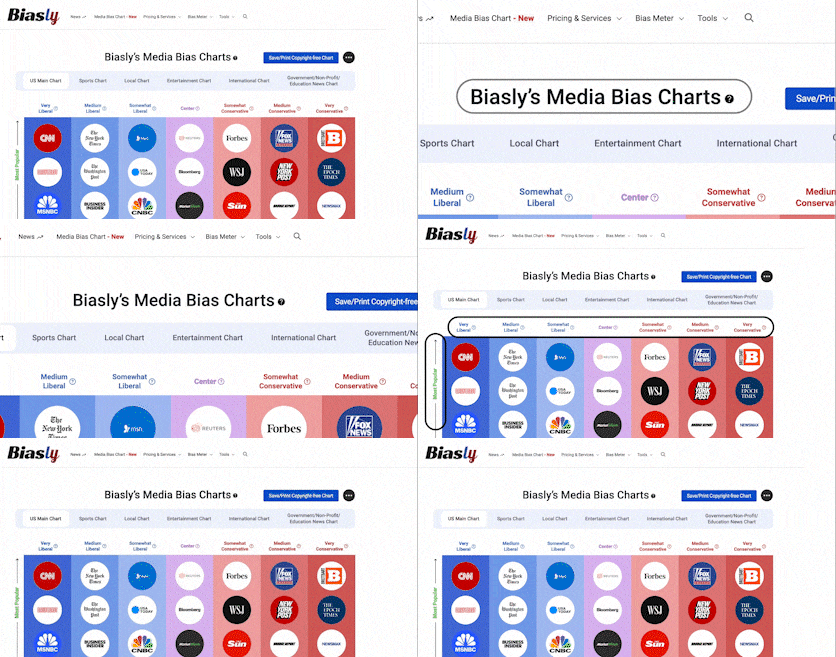
Readers who wish to further explore how RedState compares with other publications can visit Biasly’s Media Bias Chart to analyze tone and word choice in real time.
Funding and Ownership
Who Owns RedState?
Founded in 2004 as a community blog, RedState has grown into a leading platform for conservative news and opinion outlets. RedState is operated by Townhall Media, with Johnathan Garthwaite serving as the Senior Vice President, pictured below. Townhall Media is owned by Salem Media Group.

Johnathan Garthwaite, SVP, Townhall Media – Source: Wikimedia
Garthwaite has written sporadically for both Townhall and RedState, covering Kamala Harris’ campaign in “We Need to Fight Kamala with Everything We’ve Got,” and “I’m Getting Worried About Kamala.” In the former, he writes that Harris is a “leftist-Marxist-pro-Hamas-trans-promoting-race-bating liberal.”
The managing editor of RedState itself, however, is Jennifer Van Laar, who writes prolifically in criticism of Democratic lawmakers, particularly Gavin Newsom, accusing him of rigging elections.
Who Funds RedState?
RedState is funded primarily through digital advertising on its website and across the broader Townhall Media network, as well as through corporate support from its parent company Salem Media Group, a for-profit conservative multimedia company that generates most of its revenue from broadcast, digital advertising, and publishing businesses. In addition, RedState participates in Townhall Media’s VIP membership program, which offers paying subscribers ad-free access and exclusive content across affiliated sites, creating a reader-supported revenue stream alongside advertiser funding.
Because both its audience and many of its advertisers are ideologically conservative, there is an inherent risk that financial incentives could encourage RedState to favor viewpoints that resonate with this base or with sponsors, even if individual editors and writers aim to uphold journalistic standards. This does not mean every story is shaped by funders’ interests, but readers should be aware that advertiser and subscriber-driven models can subtly influence which topics are prioritized and how they are framed.
Additional Insights
News Source Comparison
In news source comparisons, RedState is often evaluated alongside other regional and national outlets that cover Jewish politics and interests. Sources like Forward, the Jewish News Syndicate, or Jewish Insider often present similar tones and editorial philosophies. RedState exhibits a Somewhat Right media bias, generally consistent with the sources it tends to cite, which are generally conservative.
Although they do not usually sway in a partisan direction, these media sources are significantly biased in how they portray politicians based on single issues and often fail to provide their stories with full context.
Notable Contributors and Authors
RedState frequently references its abundant contributors, most of whom are prolific writers.
Becky Noble, for instance, wrote articles like “New Report Gives Democrats Yet Another Warning That Their Far-Left Ideas Stink” and has written for Politichicks, The Black Sphere, and The Political Insider. She also has her own podcast and Substack, Gumshoe Politics. She writes in favor of religious freedom across the board, expresses concern for left-wing political violence, and speaks out on the death of Charlie Kirk. She self-admits to being ‘doing conservative journalism the right way’ and says ‘the left are inherently unhappy, miserable people.’ She tends to publish weekly, either an article, a podcast episode, or both.
Another notable contributor would be Stacey Matthews, who writes under the pen name Sister Toldjah and has written extensively about Democrats in Congress. Despite writing generally about hard news, judgment calls and biased language appear prolifically within her analysis of the news. For example, in her article, “The Spicy ‘Dems in Disarray’ Drama on the House Floor Pre-Shutdown Vote You Might Have Missed,” it begins with:
The words “Illinois Democrat” have become synonymous over the years with “rigging the system,” thanks in part to the rampant gerrymandering they still laughably pretend is “fair” and to the notorious “Chicago Way”-style politics.
The tone here is extremely conservative, making calls about lawmakers as a whole that are biased against their political affiliation. Additionally, these claims may have been analyzed in a separate article, but they are not addressed here, placing the accusations out of context and providing insufficient substantiating evidence. There may be a case for interpreting her use of the word “spicy” as referring to Latine lawmakers, possibly a purposeful choice.
Matthews maintained an X account, on which she continued to express conservative views until she stopped posting in 2021. She has accused a Palm Beach election supervisor of “when all else fails, play[ing] the race card,” and reposts cartoons criticizing those who call President Trump a racist. She also expresses support for the statements and actions of conservative lawmakers.
Related Tools and Resource Pages
To better understand how RedState fits into the broader media landscape, we recommend exploring these helpful resources:
- Media Bias Chart: See where RedState ranks among hundreds of media outlets across the political spectrum.
- Political Bias Chart: Visualize political slants of news sources across various policy areas.
- Journalist Bias Analytics Platform: Explore how individual journalists contribute to bias within their publications.
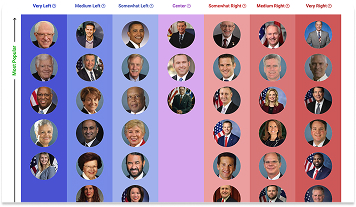
- Politician Bias Analytics Platform: Compare how politicians are framed differently by RedState and other outlets.
- Media Literacy Education Platform: Learn how to critically assess media sources, bias techniques, and news reliability.
Frequently Asked Questions
RedState is rated as Somewhat Right based on Biasly’s media bias algorithm, which assesses sentiment, article framing, and policy favorability.
After the storming of the U.S. Capitol in January 2021, RedState published an article claiming that no “riot”, “storming”, or “insurrection” took place. RedState later retracted the article; however, no accusations were made.
RedState was also connected to a recent example of misinformation stemming from the Trump White House, which reposted a video meant to show the “chaos” in Chicago and accuse Governor J.B. Pritzker of allowing crime to run the streets. The footage, however, is entirely footage of April ICE raids from Florida, complete with palm trees. The video footage is said to come from RedState.
Biasly uses a combination of AI sentiment analysis and human analyst review to assess tone, fact accuracy, source quality, and media bias indicators. Learn more on our Bias Meter page.
May not be. RedState is extremely selective with the facts that it employs, and there are many examples of it having published either accusations or outright misinformation. The website is more partial to opinion-based articles that make judgment calls, which, while not inherently false, are not based on fact. RedState is not a good source for hard news and reporting, but offers commentary on the news instead. Readers must only be aware of this.
Military Spending
| Date | Sentiment | Associated Article | Snippet |
|---|---|---|---|
| 08/25/2019 | 75% For | Trump Family Detentions Flores Agreement (link) | So, of course, the Trump administration is doing the opposite in a baldfaced |