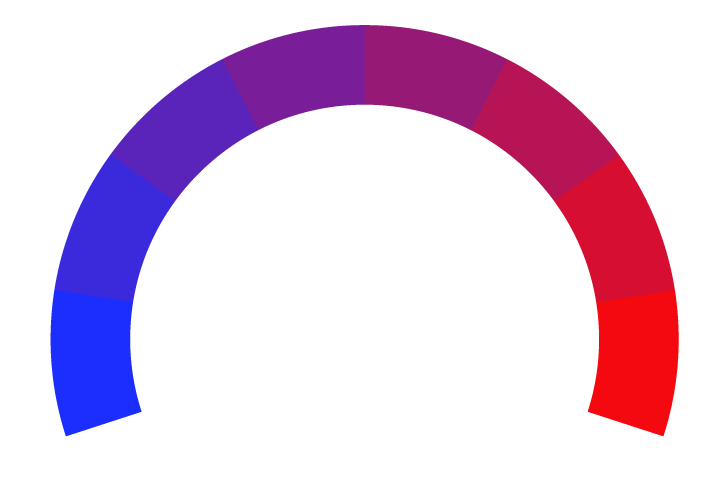
32% Somewhat Right
Bias Meter
Extremely
Liberal
Very
Liberal
Somewhat Liberal
Center
Somewhat Conservative
Very
Conservative
Extremely
Conservative
-100%
Liberal
100%
Conservative
Biasly determines media bias ratings through a dual-layered approach combining artificial intelligence and analyst review. The platform’s proprietary bias detection engine, Bias Meter, evaluates sentiment, policy position alignment, and language framing across thousands of data points in news articles. Analysts then verify and interpret the AI’s findings, providing additional context where needed. Learn more about ratings
- Profile

Sean Hannity on the media bias chart
- Bias Rating
32% Somewhat Right
- Reliability44% Reliable AveragePolicy Leanings
14% Somewhat Right
Extremely
LiberalVery
LiberalModerately
LiberalSomewhat Liberal
Center
Somewhat Conservative
Moderately
ConservativeVery
ConservativeExtremely
Conservative-100%
Liberal100%
Conservative
Average Reliability
*Our bias meter rating uses data science including sentiment analysis, machine learning and our proprietary algorithm for determining biases in news articles. Bias scores are on a scale of -100% to 100% with higher negative scores being more liberal and higher positive scores being more conservative and 0% being neutral. The rating is an independent analysis and is not affiliated nor sponsored by the news source or any other organization.
Politician Portrayal30% negative
Continue For Free
Create your free account to see the in-depth bias analytics and more.
By creating an account, you agree to our Terms and Privacy Policy, and subscribe to email updates.
Log In
Log in to your account to see the in-depth bias analytics and more.
Analysis of Sean Hannity Articles
Analysis of Bias in Sean Hannity Online Articles
Sean Hannity is known for covering hot-button issues for conservatives. Considering this, it’s essential to ask: is Sean Hannity truly biased?
To evaluate this, we can analyze select Sean Hannity articles through several of Biasly’s bias rating criteria: Tone, Tendency, Author, Diction, and Expediency Bias.
- Tone: The overall attitude conveyed by the article
- Diction: Specific word choices made by the writer
- Author: The background and social presence of the journalist
- Tendency: Patterns of bias in the writer’s broader body of work
- Expediency Bias: Quick visual or textual indicators like headlines and photos that imply bias

The first article we’ll examine is titled “JOE AT THE FOOD BANK: Biden Pitches in at Special MLK Event, Looks Confused.” The expediency bias against Joe Biden is evident from the title and image. The authors, who are unnamed staffers for Sean Hannity, wrote a title that paints U.S. President Joe Biden unfavorably and used an image to complement it. The use of an image of Biden appearing “confused” while standing next to a young volunteer was designed to generate the impression that he is too old and unfit to be president. It expresses a right-leaning view and attempts to portray Biden negatively by calling him “confused.” This clearly shows the author’s bias, as it casts a subjective lens over the article before the reader even begins.
Even beyond the title and image, and immediately scrolling through the article, the biased tone against Joe Biden is tough to miss. The authors poke fun at Joe Biden’s interactions with other volunteers by portraying them as slip-ups or awkward moments.
“But Biden’s visit wasn’t without a few signature Biden gaffes and strange moments.”
We also see an example of conservative diction in the quote. Conservatives have frequently used the term “gaffe” to describe Joe Biden’s mannerisms, even when they can be seen possibly as normal, everyday actions for an elderly person, whether he has alleged dementia or not. The authors use this term to describe Biden humorously asking a child at the food bank how old he is and discussing his wife’s education with another volunteer.
Sean Hannity authors also frequently use information in the form of tweets from X (formerly known as Twitter) to back up their explosive headlines with evidence. In this article’s example, the user RNC Research is tagged. RNC Research is a GOP-run account that typically has activity related to painting liberals and Joe Biden in particular in a negative light through a similar use of explosive language in tweets and clipped videos.
The authors’ tendency remains consistent among articles, regardless of which article you’re looking at. Let’s look at another Sean Hannity article, “‘UNCOMMITTED’: Biden Continues to See Significant Protest Votes in Primaries; Report.”
Sean Hannity frequently posts on social media. His posts generally consist of attacks on Democrats and defense of Republicans.
Fraud could be the last nail in the coffin for Gavin Newsom’s presidential hopes https://t.co/ALFseQejRR
— Sean Hannity 🇺🇸 (@seanhannity) April 17, 2026
The authors write about the relatively small percentage of Democratic primary voters casting a ballot for “Uncommitted” because they disapprove of the president’s stance on the Israel-Hamas War and how it presumably affected the administration’s relationship with Israel.
“Biden has been hemorrhaging support from his once-reliable coalition. In an effort to keep the support of Pro-Palestinian activists, Biden has announced new aid plans for Gaza and is being more vocal in opposing Israeli PM Benjamin Netanyahu.”
The tone remains consistently negative towards Biden but also Pro-Palestinian activists, who are also affiliated with the left. All these findings are consistent with Biasly’s rating for Hannity as Moderately Conservative.
Analysis of Sean Hannity Opinion Articles
To fully understand political bias in media, it’s important to distinguish between factual reporting and opinion pieces. While reporting aims to present facts and let readers form their own conclusions, opinion articles express personal viewpoints on current issues. Although the previous section examined factual reporting, this section turns to how bias surfaces through Sean Hannity’s selection and tone of opinion content.
One example is in the reposted opinion article “WSJ OP-ED: Anthony Fauci Fesses Up”. In this op-ed, mask mandates and social distancing measures are heavily criticized, as were the practices undertaken by Fauci during the COVID-19 Pandemic. While there is variation within both political parties, the dismissal of mask mandates and other precautionary measures, driven by skepticism about the danger of COVID-19, was primarily a conservative talking point. This was typically followed by a call to reopen the economy and stop social distancing. This opinion article shows its bias by only representing one side of the issue.
“POST OP-ED: Mamdani’s Only NYC Budget Idea is Wishing for All the Cash He Wants to Spend,” argues that Zohran Mamdani is essentially relying on tax increases and optimistic revenue assumptions to fund ambitious spending. While the tone is dismissive, suggesting he is “wishing” for money. However, it does touch on a real, widely reported tension.
Even critics across the political spectrum, not just conservative outlets, have pointed out that his agenda depends heavily on new revenue streams that are politically and practically uncertain. Despite its ideological slant, the article doesn’t rely heavily on obscure conspiracy or false claims. Instead, it leans on a recognizable critique.
Words like “wishing” or implying policy disagreements as incompetence rather than debate are examples of this article’s bias. It treats revenue proposals as unrealistic without exploring the phased implementation or partial-funding strategies discussed elsewhere. That combination can make it seem more balanced than it actually is, especially compared to more overtly partisan pieces. Its effectiveness comes from anchoring a partisan critique in widely acknowledged budget realities, then narrowing the lens to exclude competing interpretations. That’s often more persuasive than outright misinformation.
Analysis of Reliability in Sean Hannity’s Online News Articles
Sean Hannity aims to serve conservatives with articles that reinforce their beliefs. Its staff writers are mostly conservatives. Readers should distinguish between news reporting and opinion pieces to evaluate credibility effectively.
The article “PHILLIP’S FANTASY: CNN Host Claims NYC Terror Attack’s Target Was Zohran Mamdani [WATCH]” reflects an average level of reliability. On one hand, it is grounded in a real event: Abby Phillip did incorrectly state that a New York City terror incident targeted Zohran Mamdani and later issued a public correction acknowledging the mistake. This shows that the core factual claim highlighted in the article is accurate. However, like many pieces associated with Sean Hannity, the presentation is heavily shaped by partisan framing. The article uses emotionally charged language and selectively emphasizes criticism of CNN while omitting broader context, such as how quickly the correction was made or how common on-air corrections are in journalism. This imbalance introduces bias that can distort readers’ perception of the event.
As a result, while the article contains verifiable facts and useful direct quotes, its overall reliability is undermined by a lack of neutrality and a tendency toward exaggeration, meaning it should be supplemented with more balanced sources for a complete understanding.
Hannity’s tendency to promote a right-wing agenda over honest journalism has undermined its credibility as a news organization. It has been involved in multiple controversies where reporting was misleading. Examples include Hannity spreading and promoting unverified claims about Hillary Clinton’s health during the 2016 Presidential Election and the murder of DNC staffer Seth Rich. On Sean Hannity, an article titled, “FAILED EXPERIMENT: Liberals in Oregon Reverse Course, Recriminalize Hard Drugs After Overdoses Skyrocket,” reads more like an opinion piece with heavy conservative diction and tone. Each example was Hannity attempting to slander Democrats or question credible institutions to galvanize his conservative audience.
Quality of Sources and Facts Used
Some Sean Hannity articles lean too heavily toward how comprehensively they present opposing viewpoints.
In the article “DON’T MESS WITH TEXAS: Abbott Seizes Control of Park Along Border, Blocking Border Patrol,” The authors, who were unnamed Hannity staffers, used six quotes. Each quote is a lengthy sentence or two, which indicates high reliability if the source is reputable. However, the article relies on multiple sources that lean to the right, as shown before.
The sources were as follows:
- Fox News (conservative-leaning)
- Texas Military Department
- Greg Abbott, Governor of Texas (conservative-leaning)
- Brandon Judd, Border Patrol Agent
The authors used multiple unique, reasonably reliable sources that lacked diversity on both sides of the aisle. The Texas Military Department and Border Patrol are nonpartisan and provide exclusive insight into events surrounding the U.S./Mexican border. One thing missing from the article is statistics regarding the situation at the border. This includes the number of migrants entering the United States, the capacity of ports of entry such as Eagle Pass, and the number of law enforcement officers. Instead, all we get are quotes like the one below from the Texas Military Department (in response to Texas Governor Greg Abbott’s emergency declaration on the border).
The other sources used lacked diversity, as they were mostly right-leaning or conservative. One example is Texas Governor Greg Abbott, a prominent conservative voice on issues like border security and immigration, releasing a statement on X (quoted in the article) following his emergency declaration.
As caravans of migrants are moving through Mexico toward the U.S. border, we are making clear that Texas will be a tough place to cross. https://t.co/G4LJfKfiK3
— Greg Abbott (@GregAbbott_TX) January 12, 2024
“As caravans of migrants are moving through Mexico toward the U.S. border, we are making clear that Texas will be a tough place to cross.”
The Sean Hannity staffers also failed to hyperlink their sources, as in the Fox News report. Overall, the quality of sources could’ve been better if the authors had included ones that provided a full picture of the situation at the border and excluded significantly biased ones.
In “BOMB DROPPED: President Trump Says Iran Agrees To No Nukes, ‘They Will Never Have a Nuclear Weapon’ [WATCH]” the article is built around statements from Donald Trump claiming Iran has agreed (or will agree) to never obtain nuclear weapons. The problem is that there is no widely confirmed, finalized agreement reported by neutral outlets backing such a definitive claim. More importantly, recent fact-checking shows that many of Trump’s public statements about Iran’s nuclear status have been exaggerated or unsupported.
The article largely repeats Trump’s statement, treating it as breaking news or a major development. The tone suggests certainty (“bomb dropped,” decisive breakthrough), but the evidence base is thin, which creates a mismatch. A more dependable version of the story would require multiple independent sources, confirmation from diplomats or international agencies, and a clear distinction between claims, negotiations, and verified agreements.
Selection and Omission Bias
Sean Hannity provides extensive coverage of Utah’s Republican leaders, which is reasonable given the state’s political makeup. However, bias may still emerge through framing and story selection.
“TRUMP TORCHES IRAN’S LEADERSHIP: ‘Watch What Happens to These Deranged Scumbags Today’” demonstrates clear selection and omission bias in how it presents information about Donald Trump’s comments on Iran. It selectively highlights Trump’s most aggressive and provocative statements, such as calling Iranian leaders “deranged scumbags” and threatening imminent action, while framing them in a way that emphasizes strength and decisiveness rather than controversy. While these quotes are real and reported elsewhere, the article omits important contextual details that would give readers a fuller understanding of the situation.
For example, broader reporting notes that these remarks came amid escalating violence, civilian casualties, and a complex regional conflict involving multiple countries. The Hannity piece also leaves out criticism of Trump’s rhetoric, international reactions, and the humanitarian consequences of the conflict, all of which are essential for balanced coverage. By carefully choosing which facts to include (Trump’s statements) and which to exclude (context, consequences, and opposing perspectives), the article creates a one-sided narrative that reinforces a particular political viewpoint, reducing its overall objectivity and reliability.
In “DISMANTLING THE DOE: White House Hands Key Education Duties To Treasury, Signals Endgame,” the article selectively highlights sources and facts that reinforce the administration’s position. The article highlights specific statistics that make the policy look necessary and urgent. These facts are real, but they are selectively framed. This is selection bias in data framing, which involves choosing facts that point in one direction while omitting competing interpretations.
The most significant bias in the article comes from what it doesn’t say. The article presents dismantling the Department of Education as a progressing “endgame,” but omits a crucial reality: fully eliminating the department would require an act of Congress and major political support. This makes the policy far less certain than the article suggests.
The article frames the department mainly as bureaucracy and loan management, but omits its broader functions. The article does not mention the widely discussed concerns of ending the DOE.
The article’s bias is not primarily about false information; it’s about how reality is curated. Together, these biases produce a narrative that feels coherent and persuasive, but it is incomplete. The result is not outright misinformation, but a strategically narrowed version of reality that leads readers toward a predetermined conclusion.
Sean Hannity Bias Overview
Sean Hannity is the official website of Sean Hannity, a prominent conservative political and television host. The website was launched in the early 2000s as a platform for Hannity to share his views and connect with his audience. While the specific details of the website’s founding are not widely publicized, it is clear that the idea behind Sean Hannity was to provide a digital home for Hannity’s brand and his unique perspective on current events.

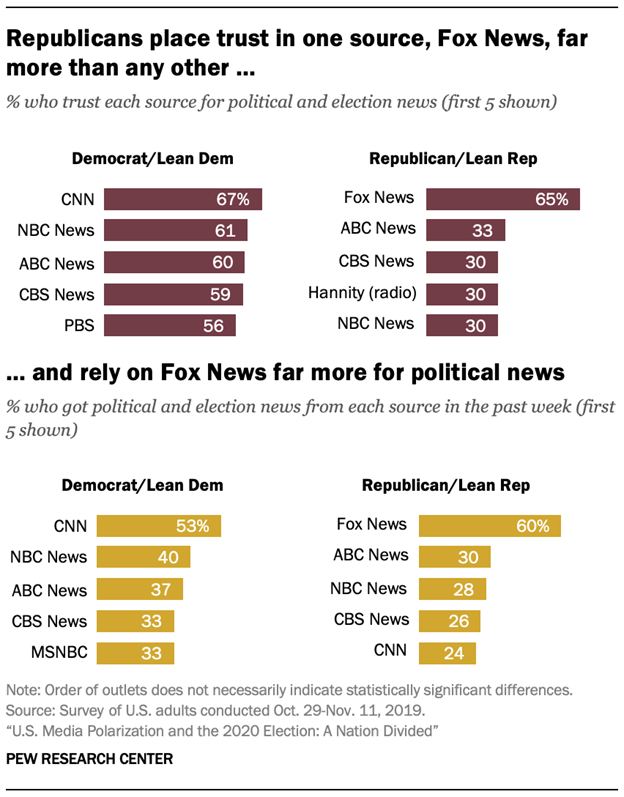
Source: Pew Research
The website serves as a hub for Hannity’s content, allowing his audience to access his commentary and analysis across various media sources, further strengthening his brand and reach within the conservative media landscape.
Is Sean Hannity Biased?
Based on Biasly’s evaluations, Sean Hannity is rated as Somewhat Right.
By examining content patterns and the broader context of media influence, we aim to offer a balanced perspective on Sean Hannity’s political bias—and contribute to the ongoing discussion about bias in the news.
How Does Biasly Rate News Sources?
Biasly uses proprietary algorithms and a team of analysts to provide comprehensive bias evaluations across thousands of news outlets. Over 200,000 articles from more than 3,200 sources have been analyzed to identify the most accurate and unbiased stories.
Biasly assigns each outlet three key scores:
- Reliability Score – Reflects factual accuracy
- AI Bias Score – Generated via natural language processing
- Analyst Bias Score – Assessed by human political analysts
These scores are based on seven core metrics: Tone, Tendency, Diction, Author Check, Selection/Omission, Expediency Bias, and Accuracy. These elements help analysts and algorithms evaluate the political attitude conveyed by each article.
Biasly’s Bias Meter ranges from -100% (most left) to +100% (most right), with 0% indicating neutrality. The system evaluates individual articles based on political terms, policies, figures, and sentiment to calculate precise bias ratings.
Is Sean Hannity Politically Biased?
Sean Hannity earns a Somewhat Right rating for its AI Bias Score and a Somewhat Right for its Analyst Bias Score. The Analyst Bias Score is generated by reviewers from liberal, moderate, and conservative backgrounds. Analysts reviewed Sean Hannity articles and noted preferences in areas like coverage of conservative positions.
How to Evaluate Bias
Although Biasly rates Sean Hannity as Somewhat Right, it’s important to remember that bias can vary from article to article. This complexity underscores the importance of examining each article individually. So, let’s learn how to evaluate media bias.
Recognizing media bias requires awareness and critical thinking. Often, readers trust news sources that affirm their existing beliefs—a psychological tendency known as confirmation bias. This makes it harder to identify slanted narratives or one-sided reporting.
To address this, it’s essential to challenge your assumptions by consulting multiple perspectives and verifying information through third-party analysis. Tools like Biasly’s media bias ratings allow readers to compare the same news story across the political spectrum.
Ultimately, bias isn’t always a matter of what is said—it’s also about what is left out, how topics are framed, and which stories are chosen for coverage. Learning to recognize these patterns can help readers make more informed decisions and develop greater media literacy.
To start comparing news outlets and gain a better understanding of bias, sign up for Biasly’s Media Bias & News Analytics Platform to see how stories vary between sources.
Sean Hannity Reliability Overview
Is Sean Hannity Reliable?
Sean Hannity finds itself toward the middle of the spectrum, with neither high nor low accuracy. Sean Hannity’s interview skills help add a level of reliability to his work. However, his biases can be seen in many of his works.
At Biasly, we specialize in evaluating not just bias but also the reliability of media outlets. Let’s explore the accuracy and trustworthiness of Sean Hannity.
How to Evaluate Reliability?
Reliability refers to how trustworthy or accurate a news source is. If we can’t trust what we read, then continuing to consume content from that outlet serves little purpose. So how do we evaluate a news outlet’s reliability?
There are several key indicators of reliability to consider when assessing a media source. Red flags of an unreliable article can include wild, unsubstantiated claims, facts that depend on other unreliable sources, heavy use of opinionated language, and more. In contrast, hallmarks of a reliable source include:
- Absence of subjective language
- Citing credible sources (e.g., .gov, .edu, academic references)
- Verifiable facts and statistics from multiple outlets
- Use of primary sources, like interviews or transcripts
- Consistency with coverage across other platforms
Biasly’s reliability scores incorporate these elements in evaluating media outlets.
So How Does Sean Hannity Fare in Its Reliability?
The political reliability index developed by Biasly assesses both accuracy and trustworthiness. Sean Hannity currently holds Average Reliability Score, which is calculated as a weighted average of:
- Fact Analysis Score – Evaluates the accuracy of claims, facts, and evidence.
- Source Analysis Score – Assesses the number, diversity, and credibility of sources and quotes used.
Sean Hannity’s Source Analysis Score is Average at 44% Reliable. This suggests moderate trustworthiness in its sourcing practices. The score is AI-generated and considers quote length, frequency, diversity, and quality.
The Fact Analysis Score of Sean Hannity is Pending at N/A. This further shows how well Sean Hannity supports its claims, addresses selection and omission bias, and presents verifiable evidence.
While Sean Hannity leans toward factual reporting, occasional lapses—such as unbalanced viewpoints or incomplete data—can affect its reliability rating. These nuances emphasize the importance of analyzing individual articles.
Sean Hannity’s Accuracy and Reliability
According to Biasly’s analysis, Sean Hannity maintains Average Reliability Score, but individual articles may vary significantly. Let’s dive into the details.
Political orientation plays a crucial role in how audiences perceive reliability. Sean Hannity has been accused of favoring a conservative narrative, potentially at the expense of factual reporting. To validate such claims, it’s essential to analyze whether the publication backs its assertions with sufficient evidence and diverse viewpoints.
Two common types of bias that affect factuality include:
- Selection Bias – Highlighting or omitting stories to fit a particular narrative.
- Omission Bias – Leaving out differing perspectives or relevant details to skew perception.
Biasly’s accuracy ratings use a scale from 1% (least accurate) to 100% (most accurate). Factors include supporting evidence, reliable internal and external sources, and balanced viewpoints.
For example, Biasly rates The Daily Wire as “Good,” indicating that much of its content is generally fact-based, though not without limitations. More detailed evaluation shows a strong “Fact Analysis” score, suggesting that many articles contain accurate information. Alongside a lower “Source Analysis” score, meaning the quality and diversity of sources cited can vary.
The analysis also notes that ideological bias can influence story framing through the selection or omission of information, which may affect how events are presented even when facts are used. Overall, the source indicates that while The Daily Wire is often considered fairly reliable in terms of factual content, its clearly stated conservative perspective can shape interpretation and coverage, making it important to evaluate individual articles and compare them with other sources.
So, is Sean Hannity Reliable?
Overall, Sean Hannity can be considered an outlet that is moderately reliable. The site often prioritizes opinion-driven content, with variable sourcing and occasional editorial framing on sensitive international topics. While some claims are supported with evidence, consistency in sourcing and balance could be improved to meet stronger journalistic standards.
As media literacy improves, readers can more easily detect issues with selection bias, omission bias, and factuality. To strengthen your ability to assess reliability across the political spectrum, use Biasly’s News Bias Checker to compare how multiple outlets report the same story.
This empowers you to consume more accurate, balanced, and dependable news.
Sean Hannity Editorial Patterns
Sean Hannity’s coverage of political topics often reflects a Somewhat Right bias, with consistent patterns in phrasing, source selection, and thematic focus that are Slightly Conservative. While the publication demonstrates journalistic standards in many of its reports, the choice of issues, framing, and word usage can indicate a political slant. Sean Hannity showcases many of the same biases as Hannity’s home network, Fox News.
Coverage of Liberal vs. Conservative Topics
Sean Hannity covers the actions of Washington, D.C., politicians carefully. Conservative politicians tend to receive favorable coverage. Interviews are generally only held with conservative politicians. Meanwhile, liberals receive more negative coverage and aren’t invited for interviews as often.
Policy and Issue Framing
Sean Hannity covers most issues with bias. Sean Hannity frequently covers abortion, the border wall, and border control. All of these issues are covered with conservative bias.

However, Sean Hannity covers some issues with less bias. Black lives matter, competitive capitalism, and the flat tax rate are all covered with less bias compared to other topics. None of these issues is covered extensively by Sean Hannity. However, these issues are often covered by other conservative platforms with bias. This shows that Sean Hannity can be unbiased with some issues.
Coverage and Relevance
Sean Hannity’s reporting often touches on key issues central to federal politics. As such, it serves as a compelling case study for examining source bias and news media bias in state-focused reporting.
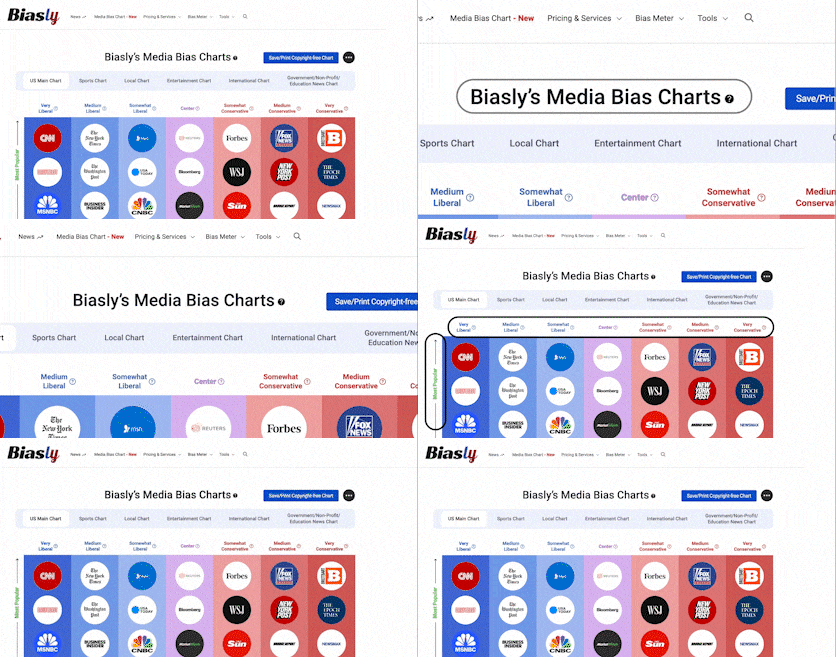
Readers who wish to further explore how Sean Hannity compares with other publications can visit Biasly’s Media Bias Chart to analyze tone and word choice in real time.
Funding and Ownership
Who Owns Sean Hannity?

Sean Hannity, founder of Sean Hannity, Source: Wikimedia Commons
Sean Hannity created Sean Hannity in the 2000s as the internet was becoming part of the mainstream news landscape. Hannity maintains full control over his website. However, he sometimes publishes content from his other TV and radio shows, owned by Fox and iHeartMedia, respectively. Despite this, Sean Hannity has many original works from Hannity and his staff.
Who Funds Sean Hannity?
It is unclear whether %SOURCE_NAME_% generates significant revenue. Although there are occasional pop-up ads, there are fewer than on other news websites. Along with this, Sean Hannity does not have any “premium” content. Hannity makes $25 million a year from Fox and an estimated $20 million from IHeartMedia. His website is likely more of a passion project than an economic venture.
Additional Insights
News Source Comparison
When comparing news sources, Sean Hannity is often evaluated alongside other right-leaning outlets. Sources like Fox News, Daily Wire, and NewsMax often present similar tones and editorial philosophies. While Sean Hannity maintains a Somewhat Right media bias, it differs from strongly partisan sources in that it occasionally includes opposing viewpoints and strives for regional coverage balance.
This contrasts with more biased media outlets that consistently present one-sided narratives without factual counterpoints. Readers seeking balanced political coverage may compare Sean Hannity’s framing of issues with outlets rated as Center or Lean Right on our Media Bias Chart, or explore other regional papers on our Similar Sources page.
Notable Contributors and Authors
Sean Hannity is the main writer for Sean Hannity. Hannity was hired by Fox News in 1996. He has become one of their most notable conservatives. Biasly considered him right-leaning and average in reliability.
Other Sean Hannity articles are published by writers codenamed “Hannity staff.” The website doesn’t reveal the identity of these writers. However, when reading their work, their writing reflects a similar ideological framing to Hannity’s.
Related Tools and Resource Pages
To better understand how Sean Hannity fits into the broader media landscape, we recommend exploring these helpful resources:
- Media Bias Chart: See where Sean Hannity ranks among hundreds of media outlets across the political spectrum.
- Political Bias Chart: Visualize political slants of news sources across various policy areas.
- Journalist Bias Analytics Platform: Explore how individual journalists contribute to bias within their publications.
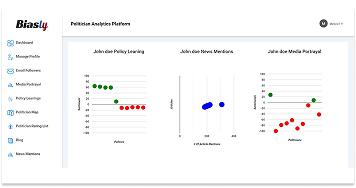
- Politician Bias Analytics Platform: Compare how politicians are framed differently by Sean Hannity and other outlets.
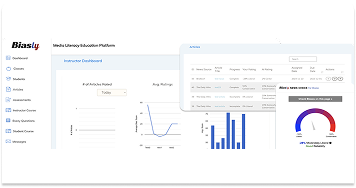
- Media Literacy Education Platform: Learn how to critically assess media sources, bias techniques, and news reliability.
Frequently Asked Questions
Sean Hannity is rated as Somewhat Right based on Biasly’s media bias algorithm, which assesses sentiment, article framing, and policy favorability.
Hannity promoted claims that the 2020 election was stolen, which have been widely disputed and rejected by courts and officials. This could be seen with his work with Fox News, iHeartMedia, and his website. In 2022, he admitted to the Jan. 6 congressional committee that he never believed the narrative that the election was stolen. Hannity was under oath during the testimony.
Biasly uses a combination of AI sentiment analysis and human analyst review to assess tone, fact accuracy, source quality, and media bias indicators. Learn more on our Bias Meter page.
Generally, yes, though partisan framing and selective reporting can affect perceived reliability.
Military Spending
| Date | Sentiment | Associated Article | Snippet |
|---|---|---|---|
| 08/25/2019 | 75% For | Trump Family Detentions Flores Agreement (link) | So, of course, the Trump administration is doing the opposite in a baldfaced |