




-32% Somewhat Left
Bias Meter
Extremely
Liberal
Very
Liberal
Somewhat Liberal
Center
Somewhat Conservative
Very
Conservative
Extremely
Conservative
-100%
Liberal
100%
Conservative

Biasly determines media bias ratings through a dual-layered approach combining artificial intelligence and analyst review. The platform’s proprietary bias detection engine, Bias Meter, evaluates sentiment, policy position alignment, and language framing across thousands of data points in news articles. Analysts then verify and interpret the AI’s findings, providing additional context where needed. Learn more about ratings
- Profile
Talking Points Memo on the media bias chart
- Bias Rating
-32% Somewhat Left
- Reliability57% Reliable AveragePolicy Leanings
12% Somewhat Right
Extremely
LiberalVery
LiberalModerately
LiberalSomewhat Liberal
Center
Somewhat Conservative
Moderately
ConservativeVery
ConservativeExtremely
Conservative-100%
Liberal100%
Conservative
Average Reliability
*Our bias meter rating uses data science including sentiment analysis, machine learning and our proprietary algorithm for determining biases in news articles. Bias scores are on a scale of -100% to 100% with higher negative scores being more liberal and higher positive scores being more conservative and 0% being neutral. The rating is an independent analysis and is not affiliated nor sponsored by the news source or any other organization.
Politician Portrayal36% negative
Continue For Free
Create your free account to see the in-depth bias analytics and more.
By creating an account, you agree to our Terms and Privacy Policy, and subscribe to email updates.
Log In
Log in to your account to see the in-depth bias analytics and more.
Analysis of Talking Points Memo Articles
Analysis of Bias in Talking Points Memo Online Articles
To evaluate this, we can analyze select Talking Points Memo articles using several of Biasly’s bias-rating criteria: Tone, Tendency, Author, Diction, and Expediency Bias. Two of the pieces discussed below are issues of Morning Memo, Talking Points Memo’s daily newsletter, which is written in a commentary-driven style rather than as straight news reporting.
- Tone: The overall attitude conveyed by the article
- Diction: Specific word choices made by the writer
- Author: The background and social presence of the journalist
- Tendency: Patterns of bias in the writer’s broader body of work
- Expediency Bias: Quick visual or textual indicators like headlines and photos that imply bias

Source: Talking Points Memo
One Morning Memo issue features a headline, “Former Olympian Charged with One Count of Felony Vandalism in Reflecting Pool Saga,” that focuses on the federal vandalism charge brought against former Olympic canoeist David Hearn in connection with damage to the Lincoln Memorial Reflecting Pool. The image portrays Jeanine Pirro, a U.S. Attorney for the District of Columbia, announcing former Olympian David Hearn’s charges before a grand jury. This headline and image do not show strong bias; framing the situation as ongoing could suggest left-leaning bias.
The piece portrays Hearn as being unfairly blamed for damage to the pool and characterizes the potential penalties as excessive.This issue features the Reflecting Pool as its primary story; however, it also covers Secretary of Defense Pete Hegseth’s claims, questions about President Trump’s taxes, the profits for President Trump’s sons, election integrity, and more.
While the headline may not seem overtly biased, the issue’s contents suggest otherwise. For example, the subheads use charged words to entice readers by stirring feelings of dislike or approval. Many of these subheads suggest a left-leaning bias.
“Did Trump Pay Taxes on His Massive Crypto Haul?”
“Trump’s Sons Are Reaping Huge Profits From the Wars He Promised Not To Start”
“Trump Deploys More Federal Resources For Disproved “Rigged Election” Obsessions”
The language of several of these subheads carries negative undertones about its subject, which in this case is President Trump or the Trump administration in general. Words such as “Obsessions” and “Reaping” in particular have negative connotations attached to them, which indicate a clear bias. Additionally, the tone and diction of the article display a clear frustration from its author, Sarah Posner. As Posner writes about the topic, there are clear statements of dislike throughout the text directed towards the Trump Administration.
“Federal prosecutors have obtained a one-count felony destruction of property indictment against David Hearn, the former Olympic canoeist who has been swept up in Trump’s very Trumpian pursuit of a scapegoat for his botched Reflecting Pool repairs.”
A “scapegoat” is a person blamed for wrongdoing they did not commit, or unfairly blamed for someone else’s fault, and the word “botched” refers to an unsuccessful procedure due to poor skills or performance. In this example, these words make this statement charged and biased in favor of left-leaning opinions.
Reporter Sarah Posner is known for her book “Unholy: How White Christian Nationalists Powered the Trump Presidency and the Devastating Legacy They Left Behind” and is the host of a podcast called “Reign of Error.” Her work commonly involves investigating the religious right in Republican Politics. Posner has a public presence on Bluesky, where her posts before May 2025 include political commentary critical of Trump, as in the post below. That is consistent with the left-leaning framing in this issue, although Biasly rates Posner herself as Center, so the finding here is about this article’s language rather than her overall rating.
Trump is a man of action because he used a real pen.
— Sarah Posner (@sarahposner.bsky.social) Apr 30, 2025 at 4:49 PM
Source: Talking Points Memo
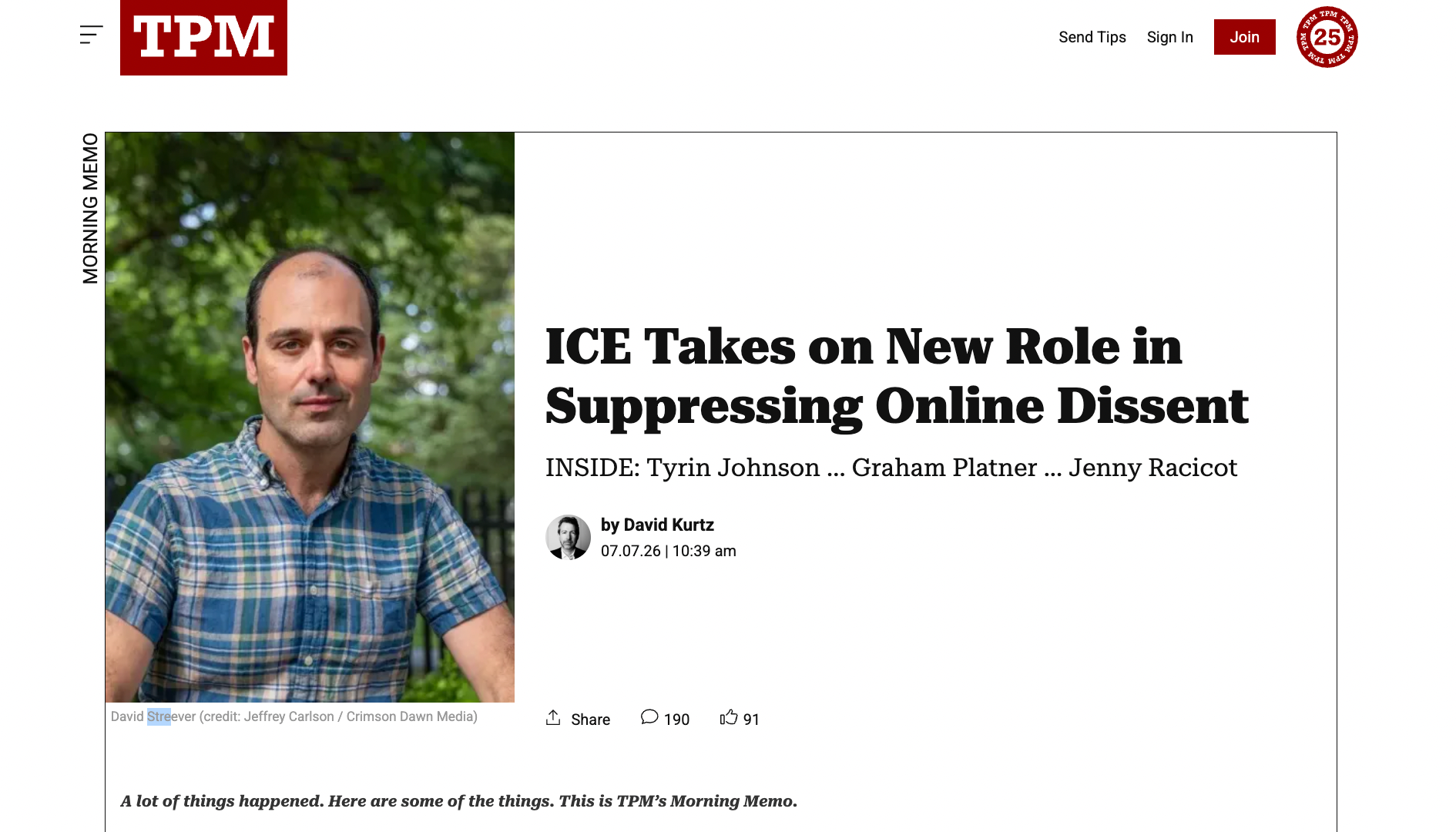
In a different Morning Memo issue, “ICE Takes on New Role in Suppressing Online Dissent,” by David Kurtz, there is language and framing in favor of left-leaning perspectives. The issue focuses on topics such as immigration, higher education, the Supreme Court, Graham Platner, and more. The reporting done by Kurtz throughout the issue remains largely factual despite the progressive lean.
Author bias is present in this article, as Kurtz has a social media presence on platforms such as Bluesky and X, suggesting he also holds left-leaning values. His Bluesky account highlights his political orientation and regularly provides commentary on Trump, MAGA, and other conservative goals in a negative way. Biasly rates Kurtz as Somewhat Left, which matches the lean in this piece.
Abrego Garcia is caught in vice between an anti-immigrant American president who almost never admits error and a Salvadoran president eager to please his new benefactor. Only the U.S. courts offer Abrego Garcia a chance of near-term relief, but they seem confounded by Trump’s defiance.
— David Kurtz (@davidkurtz.bsky.social) Apr 30, 2025 at 8:09 PM
While largely factual, there is still bias by omission of information in a small number of areas of the issue due to a lack of information on opposing political perspectives. In these cases, the lack of multiple viewpoints showcases a left-leaning bias. The issue’s lead image is a photograph of David Streever, one of the two men the piece is about.
In summary, the bias in Talking Points Memo varies by format: the Morning Memo issues carry the most charged language, the straight news reporting stays closer to neutral, and the TPM Cafe analysis is openly argumentative. While reporter Sarah Posner’s work contains more charged diction and opinionated statements that present a left-favoring perspective, Kurtz’s work is more factual in its reporting approach. This is not to say Kurtz remained perfectly objective, as the issue he wrote about suffered from omission bias despite attempts at balanced reporting. Despite select attempts at objective reporting, Talking Points Memo tends to favor left-leaning values in topics such as politics, election integrity, immigration, and religion.
Analysis of Talking Points Memo Opinion Articles
To fully understand political bias in media, it’s important to distinguish between factual reporting and opinion pieces. Although the previous section examined factual reporting, this section turns to how bias surfaces through Talking Points Memo’s selection and tone of opinion content. The two pieces examined here are posts on Talking Points Memo’s Editors’ Blog, which are not labelled opinion, but they are written in an openly argumentative style.
One example, by Josh Marshall, is titled “Netanyahu Made Israel’s Trumpy Bed. Now They Have to Sleep In It,” which employs language utilized to mock both Israeli Prime Minister Netanyahu and U.S. President Trump. The stance that this title takes portrays clear bias that favors progressive and left-leaning values. The title implies the author’s position before the article even begins.
The title’s lack of objective language frames the article as biased and opinionated against Trump, with no opposing viewpoint and no neutral tone. The article also uses the same language throughout.
“This is not only an example of how fast things can change for you in Trumpworld. It is also a perfect illustration of how your own loyalism, your own Trumpiness almost always gets wheeled around and used against it as soon as you zig when you were supposed to zag. Prime Minister Benjamin Netanyahu has left Israel marvelously exposed and isolated.”
The article’s opinionated language conveys a tone of both sarcasm and criticism towards President Trump and the overall outcome of placing faith in him. Made-up words such as “Trumpworld” and “Trumpiness” are contextually implied to have negative connotations without subtlety.
In another example, also by Josh Marshall, titled “What Would and Should Court Reform Look Like?,” it employs a more neutral and centrist language that prioritizes issues within a current major government institution. The immediate title does not imply any political leaning. The language and tone of the article also carry the same sentiments with few charged words and, rather than opinions, offer ideas as to how changes can be made and potential outcomes. Additionally, the author also acknowledges their potential lack of understanding to the reader.
“First, there are technical details I lack knowledge about and which others are more able to address.”
The examples suggest that, while Talking Points Memo publishes a range of opinion pieces, its editorial selections often lean toward center-left perspectives. Although this does not indicate a consistently liberal stance, the recurring emphasis on these viewpoints may contribute to perceptions of a modest ideological bias.
Analysis of Reliability in Talking Points Memo’s Online News Articles
The Talking Points Memo aims to provide readers with coverage on abuses of power as well as betrayals of public trust. Talking Points Memo provides coverage on topics such as U.S. politics, government, legal affairs, etc. While the outlet may take on more progressive editorial perspectives, it utilizes unofficial documents, public statements, and government institutions as sources of information and points for expansion and can be described as a relatively reliable source. Readers can also check individual articles with Biasly’s Bias Check Chrome Extension.
One notable example is a TPM Cafe analysis piece titled “When You Hear ‘Remigration,’ Know That It Means Ethnic Cleansing” by reporter Christopher Mathias. Mathias examines the use of the term ‘remigration’ in far-right politics, including in the context of Patriot Front’s July 4 march in Washington. To do so, Mathias made use of public statements, other news outlets (USA Today, HuffPost, The Guardian), a Department of Homeland Security post on X, and publications. Mathias relied on more factual rather than opinionated statements to convey the severity of the situation, as the term “remigration” has grown over the years to be used around the world in varying right-leaning political agendas. Because this is an analysis piece rather than a straight news report, it is discussed here for its framing; the news-report example with full statistics follows below.
The article is more left-leaning, with a warning, urgent tone. While the author uses quotes and information from both Democratic and Republican stances, the information is framed more toward left-leaning political perspectives in a way that portrays how dire and dangerous the situation could or has become, as the author inserts personal evaluative language into the work. Additionally, the author uses historical parallels and continuity to reinforce this urgency. In terms of diction, the text is rhetorically loaded with words such as “fascist lineages” and “neo-nazi” which generally have a negative connotation.
Talking Points Memo appears to have a tendency to devote more political attention to one political perspective over another, but does not completely neglect to include other viewpoints and instead provides other viewpoints with less emphasis.
Despite these limitations, this does not undermine its reliability; the information provided by Talking Points Memo is generally supported by verifiable facts and attributed quotes, making it still a credible information source. On this note, readers should still remain aware of Talking Points Memo’s editorial focus and continue to consult additional sources for broader perspectives on topics.
Quality of Sources and Facts Used
Talking Points Memo generally draws on credible sources from across the political spectrum. However, the depth and balance of opposing viewpoints vary between articles, with some offering only limited representation of alternative perspectives.
This is most evident in the article “When You Hear ‘Remigration,’ Know That It Means Ethnic Cleansing.” The article gives coverage focusing on the rise of white supremacist groups, commonly associated with far-right-leaning political perspectives. While the article is sufficiently supplied with sources, these sources are generally considered more left-leaning and can be seen supporting a favored primary political viewpoint. Sources that came from the opposing viewpoint were used to implicate the opposing political viewpoint to strengthen the article’s persuasiveness.
For example, quotes from Republican State representatives such as those below were used within the article.
“Rep. Brandon Gill (R-Texas) took to X to call for ‘More deportations, more denaturalizations, more remigration, no amnesty.’”
Rep. Andy Ogles (R-TN), meanwhile, introduced the ‘Remigration Act’ in Congress, which he said would denaturalize felons, fraudsters and terror supporters, remove anti-American agitators from the U.S., strip green cards from welfare abusers, and set up a federal denaturalization task force.
While these quotes were taken from public statements, it can create an imbalance within the article that can shift the reader’s inclination towards the author’s own political leaning.
In contrast, the article “READ: Detroit Responds to DOJ Sending Election Monitors to Three Blue Michigan Cities” maintains a relative degree of objectivity. The article focuses on how Detroit election officials are pushing back against the U.S. Department of Justice sending election monitors for the August 4, 2026 primary.
The reporter used a variety of sources, including official Department of Justice correspondence, Detroit’s written response, statements from Michigan officials, and public election administration records. Reporter Josh Kovensky also includes the central document evidence directly in the article for readers to see, improving transparency. Biasly rates Kovensky as Somewhat Left.
The article contains approximately 13 direct quotes in quotation marks, including partial quotes. The shortest quotes are 1 word, which are “audit,” “pretext,” and “welcomed.” The longest quote is 40 words. The average quote length is 15.6 words.
Most quotations came from Detroit City Clerk Janice Winfrey, who addressed Department of Justice concerns regarding election security and fairness.
Among the other quotations, about three came from Department of Justice Voting Section Deputy Chief Timothy Mellett, who had claimed to see serious concerns with voting. Several of these quotes were taken directly from correspondence between the Department of Justice and the City of Detroit.
While these quotes contained charged words and language, the reporter had given a balanced view of the situation by providing both sides of the issue and providing documentation to verify it.
However, the article is limited in outside perspectives, which could have expanded on the reliability of the article. Examples of this could have included independent election administration experts, voting rights scholars, nonpartisan election monitoring organizations, etc.
On linked sources, the article uses 7 hyperlinks, of which 4 direct viewers to internal Talking Points Memo pages, 2 direct viewers to The Detroit News, and 1 directs viewers to Michigan Advance. By left/center/right: Left = 5, Center = 2, Right = 0. Although most external hyperlinks point to media outlets or Talking Points Memo’s own coverage, the article relies substantially on primary governmental sources, including DOJ correspondence and Detroit’s official response.
Primary sources and entities referenced include:
- Janice Winfrey, Detroit City Clerk, response letter to the DOJ (institutional reference)
- Timothy Mellett, DOJ Voting Section Deputy Chief, letter to Detroit election officials (institutional reference)
- U.S. Department of Justice spokesperson, statement on election monitoring (institutional reference)
- Dana Nessel, Michigan Attorney General, statement on election monitoring (Left)
- The Detroit News, news outlet cited for the DOJ letters (Center)
- Michigan Advance, news outlet cited for the monitoring deployment (Left)
The sources indicate that the information favored center- and left-leaning perspectives, with Detroit officials carrying the city’s position and the DOJ’s own letters carrying the federal position. The phrase “Stop the Steal” is quoted in the article as the slogan behind the election-fraud claims, not as a source in its own right. These sources were used to present the situation of election monitoring within Detroit and Michigan and did so by conveying and presenting the primary correspondence between the two major parties involved. These original documents strengthened the reliability of the article and allowed readers to evaluate these claims directly.
With the direct evidence introduced, the reporter then introduced the two opposing viewpoints (City of Detroit and Department of Justice) and related the localized issue to a larger national issue of claims of election fraud and election oversight, which has become a rising topic of concern after the 2020 Presidential Election.
Overall, the sources and facts used are accurate, but Talking Points Memo’s reporting generally reflects progressive/center viewpoints more. Talking Points Memo is generally known for using sources such as official election results, court rulings, legal procedures, public statements, public records, and finding primary source correspondence, which was reflected in “READ: Detroit Responds to DOJ Sending Election Monitors to Three Blue Michigan Cities.” While it should be noted that the diversity of explanatory and opposing viewpoints is constrained, Talking Points Memo is generally factually accurate in the facts and sources represented.
Selection and Omission Bias
As aforementioned, Talking Points Memo commonly covers topics relating to abuse of power and betrayals of public trust. Topics that are most often highlighted under this are immigration, election integrity, the Trump Administration, and government institutions. Though Talking Points Memo maintains accuracy of sources, bias does emerge through story selection, framing, and selection or omission bias.
In the article “Kentucky Gov. Requests McConnell Update the Public on His Health Amid Weeks Long Hospitalization,” reporter Emine Yücel focuses on how Kentucky Governor Andy Beshear requests that Kentucky Senator Mitch McConnell give the public an update on the state of his health. In correspondence between the Kentucky Governor and Senator, the situation was framed as a request for government transparency due to the growing concerns of the public. While initially framed towards left-leaning opinions, Yücel also presented opposing viewpoints and possible reasons why Beshear would want an update.
“If McConnell vacates his seat, the governor will have to hold a speedy special election to fill that vacancy. If the vacancy happens within 56 days of an election and there is not enough time to hold one, the seat would remain vacant until the next regular election.”
In the case of “Kentucky Gov. Requests McConnell Update the Public on His Health Amid Weeks Long Hospitalization,” reporter Emine Yücel remained relatively objective by including multiple perspectives, quotes from official correspondence, as well as public statements from Senate Majority Leader John Thune and Sen. John Barrasso. Rep. Thomas Massie’s words appear only in an embedded X post, not in the article’s own prose.
The article includes a statement from McConnell’s office but does not explore in depth the privacy rationale for withholding more detailed medical information. There was a greater focus on government transparency and accountability over personal privacy. Aside from this, the reporting remains fact-based and supported by evidence rather than overt editorialization. Biasly rates Yücel as Somewhat Left.
In another example, “Graham Platner Drops Out of Maine Senate Race, Leaving Dems to Find Replacement,” reporter Kate Riga heavily focuses on the scandal of the sexual assault allegations made against Maine Democrat Graham Platner and the Democratic Party’s efforts to replace Platner in the Maine Senate Race. In this article, Riga gives little emphasis to Platner’s platform and rise and places selective emphasis on the scandal.
While it was articulated that allegations of rape were made against Platner and Platner’s denial of these allegations, the article states nothing about any charges or investigation, and none are known to exist. Biasly rates Riga as Center. This omission can limit the ability for readers to fully access the situation. This narrative emphasized the scandal and party response over a comprehensive examination.
Overall, Talking Points Memo has moderate selection and omission bias. Bias is observed to originate more from editorial choice than factual inaccuracies. Despite these tendencies, Talking Points Memo commonly incorporates verifiable facts and information and avoids overly extensive editorial language.
Talking Points Memo Bias Overview
Talking Points Memo originally began in 2000 as a solo blog by founder Josh Marshall, with a headquarters in New York City and a bureau in Washington, D.C. Talking Points Memo gained national recognition for its coverage of the 2006–07 U.S. attorney dismissal controversy, which received a George Polk Award. According to Similarweb estimates, the outlet drew roughly 1.8 million visits in September 2026.
As an independent news organization, the Talking Points Memo is dedicated to providing readers with transparent and accessible journalism. Talking Points Memo most commonly reports on American politics, public policy, and political culture.
Is Talking Points Memo Biased?
Based on Biasly’s evaluations, Talking Points Memo is rated as Somewhat Left.
By examining content patterns and the broader context of media influence, we aim to offer a balanced perspective on Talking Points Memo’s political bias—and contribute to the ongoing discussion about bias in the news.
How Does Biasly Rate News Sources?
Biasly uses proprietary algorithms and a team of analysts to provide comprehensive bias evaluations across thousands of news outlets. Over 200,000 articles from more than 3,200 sources have been analyzed to identify the most accurate and unbiased stories.
Biasly assigns each outlet three key scores:
- Reliability Score – Reflects factual accuracy
- AI Bias Score – Generated via natural language processing
- Analyst Bias Score – Assessed by human political analysts
These scores are based on seven core metrics: Tone, Tendency, Diction, Author Check, Selection/Omission, Expediency Bias, and Accuracy. These elements help analysts and algorithms evaluate the political attitude conveyed by each article.
Biasly’s Bias Meter ranges from -100% (most left) to +100% (most right), with 0% indicating neutrality. The system evaluates individual articles based on political terms, policies, figures, and sentiment to calculate precise bias ratings.
Is Talking Points Memo Politically Biased?
Talking Points Memo earns a Somewhat Left rating for its AI Bias Score and a Somewhat Left for its Analyst Bias Score. The Analyst Bias Score is generated by reviewers from liberal, moderate, and conservative backgrounds. Biasly’s evaluation places Talking Points Memo at a somewhat-left political bias, with articles ranging from left-leaning on coverage of Republican politicians, election integrity, and social issues. However, Talking Points Memo maintains neutrality through straightforward reporting on topics such as legal developments and political strategy.
While Talking Points Memo commonly maintains factual accuracy in information and sources, there is left-leaning political framing and moderate selection and omission bias. The main contributor to bias for Talking Points Memo comes from editorial selections such as coverage of political scandals and advocacy groups.
This Bias score is determined through natural language processing that evaluates the tone, word choice, and opinion embedded in the reporting. Bias perceived in Talking Points Memo can vary from article to article, and readers’ own political viewpoints can affect interpretation of bias within the covered topics.
How to Evaluate Bias
Although Biasly rates Talking Points Memo as Somewhat Left, it’s important to remember that bias can vary from article to article. Talking Points Memo covers national politics with objectivity on many issues, from federal legislation to social developments. This complexity underscores the importance of examining each article individually. So, let’s learn how to evaluate media bias.
Recognizing media bias requires awareness and critical thinking. Often, readers trust news sources that affirm their existing beliefs—a psychological tendency known as confirmation bias. This makes it harder to identify slanted narratives or one-sided reporting.
To address this, it’s essential to challenge your assumptions by consulting multiple perspectives and verifying information through third-party analysis. Tools like Biasly’s media bias ratings allow readers to compare the same news story across the political spectrum.
Ultimately, bias isn’t always a matter of what is said—it’s also about what is left out, how topics are framed, and which stories are chosen for coverage. Learning to recognize these patterns can help readers make more informed decisions and develop greater media literacy.
To start comparing news outlets and gain a better understanding of bias, sign up for Biasly’s Media Bias & News Analytics Platform to see how stories vary between sources.
Talking Points Memo Reliability Overview
Is Talking Points Memo Reliable?
Talking Points Memo finds itself towards the middle of the spectrum, with neither high nor low accuracy, being average in reliability. Talking Points Memo is known for its political reporting and employs multiple sources in its coverage, such as direct quotes, references to official documents, legal proceedings, public statements, public records, etc. Talking Points Memo’s use of multiple sources contributes to higher factual credibility.
Talking Points Memo’s focus on politics results in story selection and framing that may reflect a specific editorial perspective. Its political coverage can make readers perceive the information as less reliable due to ideological leanings. However, perceived political bias does not automatically compromise the factual accuracy of the information presented.
Further investigation is needed to determine whether bias or other factors are affecting its accuracy. At Biasly, we specialize in evaluating not just bias but also the reliability of media outlets. Let’s explore the accuracy and trustworthiness of Talking Points Memo.
How to Evaluate Reliability?
Reliability refers to how trustworthy or accurate a news source is. If we can’t trust what we read, then continuing to consume content from that outlet serves little purpose. So how do we evaluate a news outlet’s reliability?
There are several key indicators of reliability to consider when assessing a media source. Red flags of an unreliable article can include wild, unsubstantiated claims, facts that depend on other unreliable sources, heavy use of opinionated language, and more. In contrast, hallmarks of a reliable source include:
- Absence of subjective language
- Citing credible sources (e.g., .gov, .edu, academic references)
- Verifiable facts and statistics from multiple outlets
- Use of primary sources, like interviews or transcripts
- Consistency with coverage across other platforms
Biasly’s reliability scores incorporate these elements in evaluating media outlets.
So How Does Talking Points Memo Fare in Its Reliability?
The political reliability index developed by Biasly assesses both accuracy and trustworthiness. Talking Points Memo currently holds Average Reliability Score, which is calculated as a weighted average of:
- Fact Analysis Score – Evaluates the accuracy of claims, facts, and evidence.
- Source Analysis Score – Assesses the number, diversity, and credibility of sources and quotes used.
Talking Points Memo’s Source Analysis Score is Average at 57% Reliable. This reflects how Biasly rates the trustworthiness of its sourcing practices. The score is AI-generated and considers quote length, frequency, diversity, and quality.
The Fact Analysis Score of Talking Points Memo is Pending at N/A. This further shows how well Talking Points Memo supports its claims, addresses selection and omission bias, and presents verifiable evidence.
While Talking Points Memo leans toward factual reporting, occasional lapses—such as unbalanced viewpoints or incomplete data—can affect its reliability rating. These nuances emphasize the importance of analyzing individual articles.
Talking Points Memo’s Accuracy and Reliability
According to Biasly’s analysis, Talking Points Memo maintains a Average Reliability Score, but individual articles may vary significantly. Let’s dive into the details.
Political orientation plays a crucial role in how audiences perceive reliability.
Two common types of bias that affect factuality include:
- Selection Bias – Highlighting or omitting stories to fit a particular narrative.
- Omission Bias – Leaving out differing perspectives or relevant details to skew perception.
Biasly’s accuracy ratings use a scale from 1% (least accurate) to 100% (most accurate). Factors include supporting evidence, reliable internal and external sources, and balanced viewpoints.
For example, Biasly gave Legal Insurrection a Somewhat Right Bias Rating and an Average Analyst Reliability Score. Legal Insurrection primarily covers legal issues, conservative politics, free speech, etc. A somewhat right bias rating means that Legal Insurrection is more likely to have a more conservative-leaning framing and editorial perspective. While an average reliability score implies Legal Insurrection does and can provide factual information, readers should still be wary and approach the coverage critically.
In practical terms, Legal Insurrection is useful for understanding conservative perspectives. Still with an average reliability rating, it is important to verify claims with more neutral or highly rated sources before accepting the information as accurate or factual. These same practices should be applied to Talking Points Memo.
So, is Talking Points Memo Reliable?
Overall, Talking Points Memo can be considered to be an outlet that is moderately reliable. It demonstrates a consistent goal of journalistic integrity and typically supports claims with sources and quotes. Occasional omissions and framing bias do appear, particularly on culturally sensitive or partisan issues.
As media literacy improves, readers can more easily detect issues with selection bias, omission bias, and factuality. To strengthen your ability to assess reliability across the political spectrum, use Biasly’s News Bias Checker to compare how multiple outlets report the same story.
This empowers you to consume more accurate, balanced, and dependable news.
Talking Points Memo Editorial Patterns
Talking Points Memo’s coverage of political topics often reflects a Somewhat Left bias, with consistent patterns in phrasing, source selection, and thematic focus that are Slightly Liberal. While the publication demonstrates journalistic standards in many of its reports, the choice of issues, framing, and word usage can indicate a political slant. This content analysis examines how Talking Points Memo handles liberal and conservative issues and evaluates its language choices and editorial tendencies.
Coverage of Liberal vs. Conservative Topics
With an emphasis on coverage dealing with American politics, political culture, and public policy, Talking Points Memo covers various topics on the political spectrum. In Talking Points Memo’s coverage of topics that are more liberal, there is observed to be left-leaning framing within the work. This is evident in topics such as ICE, LGBTQ equality, and voter identification. There is more prominence of left-leaning viewpoints through tone, framing, and who is allowed to speak.
On the other end, Talking Points Memo tends to carry a more critical tone when discussing Republican politicians and conservative agendas and policies. In these cases, charged words and language are clear identifiers of these negative sentiments throughout the works.
Policy and Issue Framing
Talking Points Memo in their work often emphasizes voting rights, institutional norms, and scrutinizes efforts that could undermine democratic processes, such as abuse of power. When reporting on these subjects, Talking Points Memo often takes on a somewhat left media bias. They highlight information from relevant and reliable sources such as legal experts, advocates, and officials to frame the issue around transparency and democratic process.
In contrast, when covering conservative initiatives, Trump, ICE, or AI regulations, Talking Points Memo does so through the frame of potential legal or social consequences. This is contextualized through possible effects on communities or liberties. There is often less emphasis on conservative topics such as election integrity, limited government, national security, and rationales behind these policies.
Readers seeking more neutral coverage can compare Talking Points Memo’s framing with outlets rated Center on Biasly’s Media Bias Chart. Language, descriptions, tones, and framing can shape perceptions, and with Talking Points Memo’s somewhat left-leaning bias, it is advised that readers also verify claims through other neutral sources or media.
Coverage and Relevance
Talking Points Memo’s reporting often touches on key issues central to American national politics and political culture — including political news, government policies, elections, major American institutions, etc. As such, it serves as a compelling case study for examining source bias, framing, and news coverage.
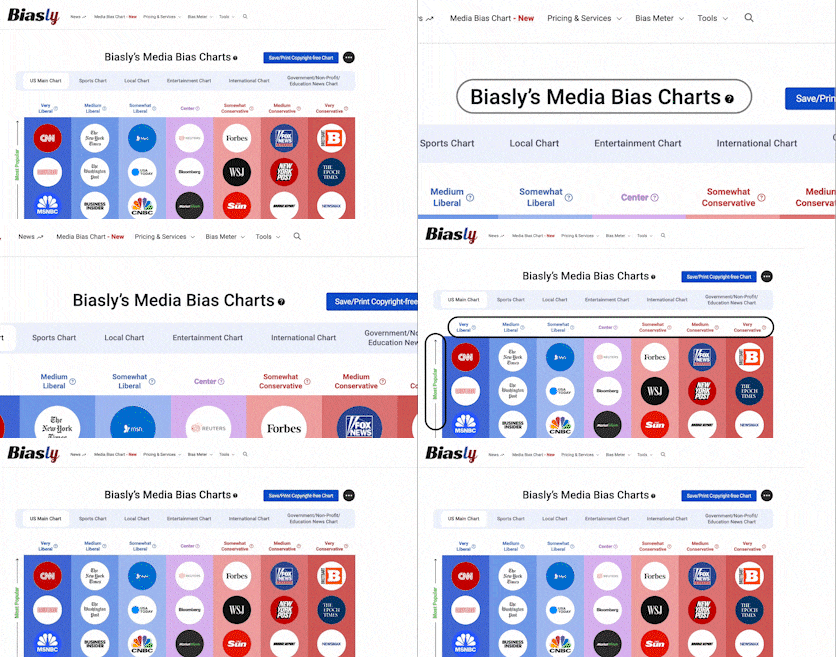
Readers who wish to further explore how Talking Points Memo compares with other publications can visit Biasly’s Media Bias Chart to analyze tone and word choice in real time.
Funding and Ownership
Who Owns Talking Points Memo?
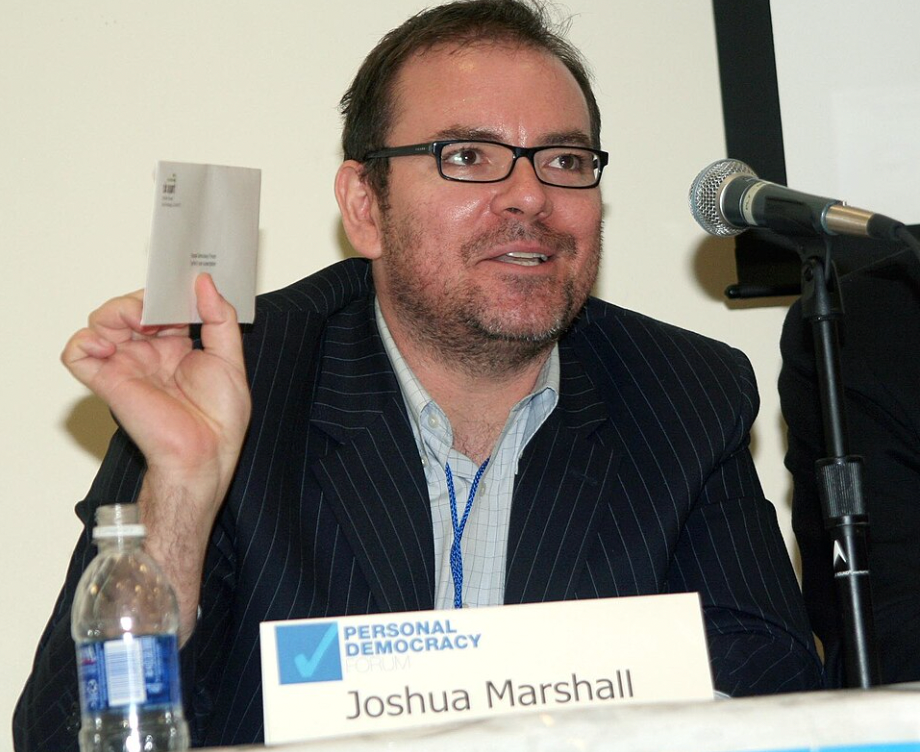
Josh Marshall, Founder and Editor-In-Chief of Talking Points Memo
Source: New America, CC BY 2.0, via Wikimedia Commons
Talking Points Memo was founded by Josh Marshall in 2000 initially as an independent blog and now employs a staff of editors and reporters. Unlike other media organizations that function under a parent company, Talking Points Memo is an independent media outlet. Biasly’s profile notes that it is currently owned by Marshall and a group of private investors. Editorial decisions come from the leadership team. The leadership structure within Talking Points Memo consists of Josh Marshall and executive and editorial staff who are responsible for coverage, audience strategy, and publishing.
Talking Points Memo focuses on investigative reporting, accountability, and coverage of government power. Talking Points Memo gained national recognition for its coverage of the 2006–07 U.S. attorney dismissal controversy, which received a George Polk Award in 2007. Talking Points Memo asserts that:
“The goal of our journalism is neither balance nor objectivity but accuracy, fairness and a fundamental honesty with our readers and members at all times.”
Their objective is not only to keep their readers updated with the latest news, but also to remain transparent in their process. This transparency is most evident through their funding.
Who Funds Talking Points Memo?
Talking Points Memo is more than 91% funded by membership fees and reader contributions. The remaining 9% comes from advertising. This allows readers to directly support the journalism of Talking Points Memo and decrease its reliance on traditional advertising revenue, as many of its colleagues do.
Talking Points Memo is also transparent about its expenses, ensuring that readers are entitled to know where their money goes. Of its expenses, 74% goes to payroll and benefits, 11% to office rent, 10% to legal and miscellaneous expenses, and 5% to web hosting.
Talking Points Memo initially started out as an independent blog operated by founder and editor-in-chief Josh Marshall and transformed into a news media outlet over time. Talking Points Memo is independently owned and is not controlled by a corporate parent. It is important to note that over 90% of Talking Points Memo’s funding originated from membership fees and reader contributions. A reader-funded model creates different financial incentives from an advertising- or corporate-owned model, although the funding structure alone does not establish editorial influence. So readers should consider how these revenue models and audience relationships can shape priorities and incentives over time.
Additional Insights
News Source Comparison
When comparing news sources, Talking Points Memo is often evaluated alongside other regional and national outlets that lean left or center-left. Sources like The Advocate or MSN International Edition often present similar tones and editorial philosophies. While Talking Points Memo maintains a Somewhat Left media bias, it differs from strongly partisan sources in that it includes opposing viewpoints and utilizes relatively strong, reliable sources such as official documents, public statements, legal proceedings, etc.
This puts it in contrast with more biased media outlets in that it prioritizes investigative reporting and factual analysis over ideological narratives. Readers seeking balanced political coverage may compare Talking Points Memo’s framing of issues with outlets rated as Center or Lean Right on our Media Bias Chart, or explore similar outlets on our Similar Sources page.
Notable Contributors and Authors
Talking Points Memo features a team of reporters, editors, and contributors who specialize in topics relevant to Talking Points Memo’s coverage. Some of these topics include government, politics, and investigative journalism.
Josh Marshall is founder and editor-in-chief of Talking Points Memo and built it into one of the first successful web-native political news organizations.
Josh Kovensky and Hunter Walker are responsible for the investigations desk, which focuses on political accountability and other in-depth reporting. Josh Kovensky previously worked for Kyiv Post, where he covered government and government corruption in Ukraine. Hunter Walker is featured in a variety of publications such as The New Yorker, Rolling Stone, and New York Magazine.
Other reporters, including Kate Riga, Emine Yücel, Khaya Himmelman, and Layla A. Jones, cover a range of political topics and current events.
Contributing writers such as Sarah Posner and Mike Rothschild provide additional analysis on issues involving politics, religion, extremism, and misinformation.
Related Tools and Resource Pages
To better understand how Talking Points Memo fits into the broader media landscape, we recommend exploring these helpful resources:
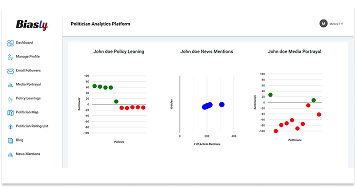
- Media Bias Chart: See where Talking Points Memo ranks among hundreds of media outlets across the political spectrum.
- Political Bias Chart: Visualize political slants of news sources across various policy areas.
- Journalist Bias Analytics Platform: Explore how individual journalists contribute to bias within their publications.
- Politician Bias Analytics Platform: Compare how politicians are framed differently by Talking Points Memo and other outlets.
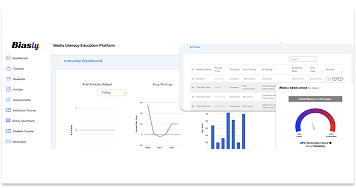
- Media Literacy Education Platform: Learn how to critically assess media sources, bias techniques, and news reliability.
Frequently Asked Questions
Talking Points Memo is rated as Somewhat Left based on Biasly’s media bias algorithm, which assesses sentiment, article framing, and policy favorability.
While Talking Points Memo is not widely known for promoting fake news, its articles can show selection and omission bias, especially in opinion-driven pieces. The news reporting examined here draws on primary documents and official correspondence, such as the Detroit election-monitoring article, and no major fact-check failures were found in the articles reviewed. One caution: after the Morning Memo issue analyzed here was published, the Department of Justice moved to dismiss the Hearn vandalism case on 31 July 2026, admitting that flawed contractor installation had damaged the pool.
Biasly uses a combination of AI sentiment analysis and human analyst review to assess tone, fact accuracy, source quality, and media bias indicators. Learn more on our Bias Meter page.
Generally, yes, though partisan framing and selective reporting can affect perceived reliability.
Military Spending
| Date | Sentiment | Associated Article | Snippet |
|---|---|---|---|
| 08/25/2019 | 75% For | Trump Family Detentions Flores Agreement (link) | So, of course, the Trump administration is doing the opposite in a baldfaced |