




2% Center
Bias Meter
Extremely
Liberal
Very
Liberal
Somewhat Liberal
Center
Somewhat Conservative
Very
Conservative
Extremely
Conservative
-100%
Liberal
100%
Conservative
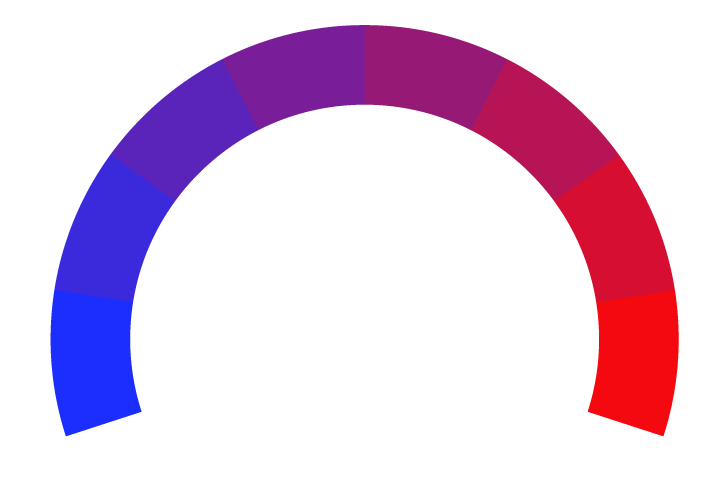
Biasly determines media bias ratings through a dual-layered approach combining artificial intelligence and analyst review. The platform’s proprietary bias detection engine, Bias Meter, evaluates sentiment, policy position alignment, and language framing across thousands of data points in news articles. Analysts then verify and interpret the AI’s findings, providing additional context where needed. Learn more about ratings
- Profile
Winston-Salem Journal on the media bias chart
- Bias Rating
2% Center
- Reliability68% Reliable AveragePolicy Leanings
28% Somewhat Right
Extremely
LiberalVery
LiberalModerately
LiberalSomewhat Liberal
Center
Somewhat Conservative
Moderately
ConservativeVery
ConservativeExtremely
Conservative-100%
Liberal100%
Conservative
Average Reliability
*Our bias meter rating uses data science including sentiment analysis, machine learning and our proprietary algorithm for determining biases in news articles. Bias scores are on a scale of -100% to 100% with higher negative scores being more liberal and higher positive scores being more conservative and 0% being neutral. The rating is an independent analysis and is not affiliated nor sponsored by the news source or any other organization.
Politician Portrayal71% negative
Continue For Free
Create your free account to see the in-depth bias analytics and more.
By creating an account, you agree to our Terms and Privacy Policy, and subscribe to email updates.
Log In
Log in to your account to see the in-depth bias analytics and more.
Analysis of Winston-Salem Journal Articles
Analysis of Bias in Winston-Salem Journal Online Articles
Winston-Salem Journal has found that in-depth coverage of North Carolina politics is one of the most effective ways to drive subscriptions. Given that much of its readership is NC-based, where regional issues take precedence, it’s essential to ask: is Winston-Salem Journal truly biased?
To evaluate this, we can analyze select Winston-Salem Journal articles through several of Biasly’s bias rating criteria: Tone, Tendency, Author, Diction, and Expediency Bias.
- Tone: The overall attitude conveyed by the article
- Diction: Specific word choices made by the writer
- Author: The background and social presence of the journalist
- Tendency: Patterns of bias in the writer’s broader body of work
- Expediency Bias: Quick visual or textual indicators like headlines and photos that imply bias
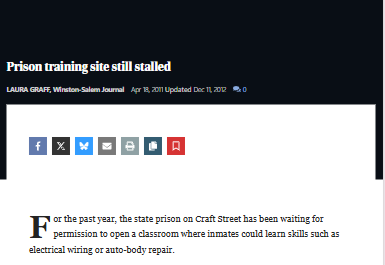
“Prison training site still stalled” has no obvious strong or overt bias, but there are a few subtle ways the article leans in tone and framing. The headline “Prison training site still stalled” is mostly factual but carries mild expediency bias through the phrase “still stalled.” This wording emphasizes delay and frustration, suggesting bureaucratic failure or lack of progress before the reader sees the full context. It does not appear strongly partisan, but it frames the issue negatively from the start.
Most of the perspective comes from one side: the prison superintendent (Wallace Shields), who is clearly frustrated by delays. The State Department of Corrections doesn’t respond (or didn’t return a call), so readers only hear criticism of “red tape” without an explanation from the other side. That creates a slight one-sided narrative.
“But red tape at the State Department of Corrections has so far gotten in the way.”
Phrases like “red tape” and “state government sometimes has other priorities” carry a negative connotation, subtly encouraging readers to view the delay as bureaucratic inefficiency rather than, say, safety checks, budgeting constraints, or policy requirements. That’s a form of framing bias, even if mild.
The article emphasizes positive outcomes (job skills like electrical wiring, plumbing, etc.), which makes the project seem obviously beneficial. There’s no discussion of possible downsides, costs, or reasons for delay, which nudges readers toward agreeing that the delay is unjustified.
One of the writers writing for Winston-Salem Journal is Laura Graff. She currently works in PR. She hasn’t used her X account since 2022.
“…a feat that only these reporters could pull off—a deep, expertly-told local story of corruption in the rural South with massive political repercussions nationally.” Congrats, @michaelngraff & @NickOchsnerWBTV! Can’t wait to see this book in the flesh (Nov. 16- preorder now!) https://t.co/pUnmOkiq18
— Laura Houston Graff (@laurahgraff) May 16, 2021
On the other hand, the article ‘Forsyth County manager recommends 1.3% property tax increase, nearly $600 million budget’ remains largely balanced and informational in tone. Rather than framing the tax increase or education funding debate emotionally, the article presents competing perspectives through direct statements from county officials and commissioners while grounding the discussion in budget figures, enrollment data, and legislative context. The piece focuses on explaining the proposed budget structure, projected revenue impacts, and policy risks without strongly editorializing about whether the budget is “good” or “bad.”
The article employs restrained and administrative diction that reinforces neutrality. Terms such as “recommended budget,” “projected revenue,” “funding formula,” “property tax increase,” and “operational costs” are technical and descriptive rather than emotionally persuasive. Even politically sensitive issues like school funding shortfalls and tax increases are presented through factual explanations and attributed statements rather than loaded language.
For example:
“Robinson stressed her budget recommendation ‘is not driven by new programs or major service expansions.’”
“Given our current economic environment, it simply was not feasible nor responsible to recommend funding every request.”
The article also balances multiple viewpoints within the same issue area. While Robinson explains why the county cannot fully meet the school board’s funding request, Commissioner Tonya McDaniel’s concerns about taxpayer burden are also included:
“Asking local taxpayers to bear the full burden of state-level funding failures without a balanced discussion of sustainability, enrollment trends, accountability and long-term fiscal responsibility is neither fair nor prudent governance.”
Similarly, the article includes both support for and opposition to North Carolina House Bill 1089, presenting comments from House Speaker Destin Hall alongside criticism from county officials and municipal organizations. Rather than telling readers which side is correct, the piece explains the practical implications of the legislation and allows readers to interpret the competing arguments themselves.
Overall, the article maintains a neutral tone through formal diction, extensive use of attributed statements, and reliance on concrete financial data. While the subject matter involves politically sensitive topics such as taxation, school funding, and state authority, the reporting style remains primarily explanatory rather than ideological.
Analysis of Winston-Salem Journal Opinion Articles
One opinion-oriented feature titled “Kamala Harris says she’s considering 2028 presidential run at Greensboro stop” presents a generally favorable framing of former Vice President Kamala Harris, though the article still maintains some elements of straightforward event reporting. Much of the piece centers on Harris’ reflections about the Trump administration, democracy, and civic engagement, while also highlighting supportive reactions from attendees at the event. The article includes emotionally resonant language from both Harris and her supporters, which contributes to a sympathetic tone toward her political future.
For example, the article emphasizes Harris’ criticism of Trump by quoting statements such as:
“Probably the most corrupt president we’ve ever had.”
and:
“Things are messed up … but we can’t give up. This is our country.”
These quotations frame Harris as a figure of resilience and civic responsibility while portraying the Trump administration negatively. The article further reinforces this perspective by including supportive audience reactions and personal testimonials from attendees who felt Harris had been “vindicated” by current events.
At the same time, the diction remains relatively restrained compared to overtly partisan commentary. Terms such as “supporters,” “campaign,” “criticized,” and “encouraged people to find ways to contribute in their communities” are descriptive rather than inflammatory. The article does not heavily editorialize in the reporter’s own voice, but the selection of quotes and emphasis on supportive audience responses contribute to a generally center-left framing.
Unlike more neutral political reporting that balances praise and criticism from multiple perspectives, this article devotes significantly more space to favorable reactions toward Harris and criticism of Trump than to opposing viewpoints. As a result, while the article retains many characteristics of standard political event coverage, its source selection and emotional framing create a subtly sympathetic portrayal of Harris and her political message.
In contrast, another article titled “What’s in proposed Winston-Salem city budget? Details coming Monday” maintains a far more neutral and informational tone. Unlike opinion-driven political coverage, the article functions primarily as a procedural update about the city’s upcoming budget process, focusing on meeting dates, public hearings, tax figures, and timelines rather than ideological debate or political persuasion.
The diction throughout the piece is restrained, administrative, and factual. Phrases such as “proposed budget,” “fiscal year,” “public hearing,” “timeline,” and “residents will have an opportunity to provide feedback” reinforce a straightforward civic-information style. Even potentially sensitive topics like rising tax bills are presented numerically and without emotionally charged framing:
“Last year, the median residential city tax bill rose nearly 29% to $1,394 after a property reassessment and a revised tax rate approved by the council in June.”
Rather than assigning blame or praising city leadership, the article simply contextualizes the increase using county data. Similarly, statements such as the one below serve a logistical and informational purpose rather than advancing a political argument.
“Council will also discuss the budget during special 2 p.m. meetings on May 12, May 14 and May 21.”
The article also avoids loaded language commonly associated with partisan framing. Words like “crisis,” “burden,” or “overspending” are absent, despite the topic involving taxes and government spending. Instead, the reporting focuses on process, transparency, and opportunities for public participation. This restrained approach contributes to an overall centrist tone and demonstrates how local government reporting can remain largely factual without strongly signaling ideological bias.
Analysis of Reliability in Winston-Salem Journal’s Online News Articles
Winston-Salem Journal often relies on official city documents, government funding proposals, and institutional statements when covering local development issues. This sourcing approach generally supports factual reporting, though some articles provide limited discussion of competing concerns or criticisms surrounding public policy decisions.
Consider the article titled “Winston-Salem reviews proposals for 360 apartments, new affordable homes.” The piece presents detailed information about affordable housing proposals, including the number of units, funding recommendations, income thresholds, and participating developers. Much of the reporting is grounded in city committee documents and Housing Development Department recommendations, which strengthens its factual reliability.
The article also clearly explains the city’s rationale for the projects, stating that they:
“…advance the City’s ongoing commitment to increasing and preserving the supply of safe, quality, and affordable housing for low- and moderate-income households.”
This framing emphasizes the public-benefit side of the proposals and aligns with broader pro-affordable-housing policy narratives.
However, the article offers little discussion of potential concerns or opposition related to the projects. There is no mention of possible taxpayer concerns, neighborhood resistance, infrastructure strain, zoning debates, or questions regarding long-term funding sustainability. Readers are presented almost entirely with the city’s development perspective and the benefits associated with the projects.
For example, while the article carefully details the millions of dollars in recommended city funding, it does not include perspectives from residents, fiscal conservatives, or housing critics who may question the allocation of public resources or the effectiveness of affordable housing incentives. Similarly, although one project was denied recommended funding, the reasoning behind that decision is not explored in depth.
This omission does not make the article inaccurate, but it does create a narrower framing of the issue. By focusing primarily on official recommendations and housing expansion goals without including meaningful counterarguments or broader debate, the article can leave readers with the impression that the proposals are broadly uncontested and universally beneficial.
Quality of Sources and Facts Used
Winston-Salem Journal often uses credible local government documents, public officials, and institutional records when reporting on municipal development and infrastructure issues. However, some articles lean heavily toward the perspectives of government agencies or community opponents without equally exploring the reasoning of all stakeholders involved.
Consider the article titled “$2.4 million sewer project set for Tanglewood Business Park as bids climb.” The article is largely factual and grounded in public records, budget figures, zoning information, and commissioner actions. It outlines the bidding process, the state grant, the property’s history, and infrastructure planning in a straightforward manner. Readers are given detailed financial figures and procedural context, which strengthens the article’s informational value.
The article contains approximately 11 direct quotations in quotation marks. The shortest quote is “the covenants are no longer relevant” (5 words), while the longest quote is approximately 39 words, discussing traffic impacts and roadway classification near Middlebrook Drive. The average quote length is roughly 17–20 words. Most quotations come from Clemmons Village Councilman Mike Combest and focus on concerns about density, traffic, infrastructure strain, and the removal of protective covenants. Because the article relies heavily on these longer concern-focused quotations, readers are repeatedly exposed to cautionary or skeptical framing surrounding the development project. By comparison, quotes from county officials supporting the project are fewer and more procedural in tone, generally explaining zoning or review processes rather than advocating for the project’s broader benefits.
For example, Combest is quoted as stating:
“Research shows there is no empirical evidence or analysis underpinning or supporting this statement.”
“In fact, a review of conditions shows they have become more challenging: traffic, density, etc.”
Meanwhile, county community and economic development director Kirby Robinson provides a shorter administrative explanation:
“The property will also have to be rezoned, which will involve a more in-depth review of the buyer’s development plans, traffic impact, etc.”
This imbalance in the emphasis of quotes subtly shifts the article’s narrative weight toward development concerns rather than economic opportunity or growth potential.
On linked and referenced sources, the article primarily relies on local institutional and governmental entities rather than partisan organizations. The sourcing footprint includes county agencies, local officials, developers, and state government entities. By ideological orientation: Left = 0, Center/Institutional = approximately 10–12, Right = 0. The article does not substantially rely on ideological advocacy groups or politically partisan commentary.
The primary sources and entities referenced include:
- Forsyth County Board of Commissioners (Center/Institutional)
- N.C. Department of Environmental Quality (Center/Institutional)
- Winston-Salem/Forsyth County Utilities Commission (Center/Institutional)
- Clemmons Village Councilman Mike Combest (Center/Local Government)
- Kirby Robinson, Forsyth County community and economic development director (Center/Institutional)
- J.R. Lynch Construction (Non-political/Corporate)
- Arden Homes affiliate bidder (Non-political/Corporate)
- Keystone Group Inc./Keystone Homes (Non-political/Corporate)
- Williams Development Group (Non-political/Corporate)
- Forsyth County government budget and zoning records (Center/Institutional)
The article’s sourcing structure is relatively narrow but appropriate for a local development and zoning story. However, while it incorporates both government and community voices, the article gives substantially more space and specificity to opponents’ concerns than to the county’s economic rationale for pursuing the project. Readers hear extensive detail about traffic studies, density worries, and covenant protections, but comparatively little about projected job creation, housing demand, economic growth, or strategic development goals tied to the property.
Grounded in its sourcing, diction, and quote distribution, the article reads closest to the center overall. It avoids emotionally loaded language and relies heavily on verifiable public information. However, the emphasis and repetition of community opposition concerns, combined with the relatively limited presentation of pro-development arguments, create a subtle framing effect that may leave readers more focused on the project’s risks than on its intended economic benefits.
Selection and Omission Bias
Winston-Salem Journal provides extensive coverage of local education issues and school district governance. However, bias may still emerge through framing, story selection, and which perspectives receive the greatest emphasis.
In the article “School board question: What it would cost to restore 12-month pay of athletic directors?”, selection bias appears through the article’s strong focus on the negative consequences of the school district’s cost-cutting measures. The story centers heavily on the frustrations of athletic directors and the practical burdens created by reducing their contracts from 12 months to 10 months.
For example, athletic director Patrick Cromwell is quoted extensively describing the workload:
“The grass isn’t going to stop growing in the summer.”
“The fields still need to be maintained.”
These details frame the staffing cuts as unrealistic and harmful to school operations. The article also highlights that two athletic directors are leaving the district and directly connects those departures to “increasing demands and a lack of support from the district’s administration.” This selection of facts naturally encourages reader sympathy toward the athletic directors and skepticism toward the district’s prior budget decisions.
However, the article gives comparatively little attention to the reasoning behind the original reductions implemented under former interim Superintendent Catty Moore. Readers are told the changes were part of “belt-tightening measures,” but there is minimal exploration of the district’s broader financial challenges, competing budget priorities, or why administrators believed the reductions were necessary at the time.
The article also omits perspectives from taxpayers, fiscal conservatives, or board members who may support maintaining the reduced staffing model to control spending. While Superintendent Don Phipps acknowledges the seriousness and cost of the issue:
“This is an expensive endeavor involving millions of dollars and people’s livelihoods,”
The article does not substantially explore arguments against restoring the positions to full 12-month status.
As a result, the framing leans toward presenting the staffing cuts as a problem to be corrected rather than as part of a broader financial balancing effort. Still, the reporting remains grounded in verifiable meetings, official discussions, and direct quotations rather than overt editorial commentary.
By comparison, the article does not attack district leadership directly or use emotionally loaded language from the reporter’s own voice. Instead, the sympathetic framing emerges primarily through source selection and emphasis. Overall, the article reads closest to center with a mild sympathetic lean toward school employees and staff restoration efforts.
Winston-Salem Journal Bias Overview
JournalNow.com is the online platform for the Winston-Salem Journal, which was first published in 1897 by Charles Landon Knight. Knight’s vision was to create a daily newspaper that would provide timely and relevant news to the residents of Winston-Salem, North Carolina.
JournalNow.com covers a diverse array of news, including Local and National News, Sports, Business, and Entertainment. It also reports on community-specific matters, providing a vital resource for the people in and around the Winston-Salem area.
Is Winston-Salem Journal Biased?
Based on Biasly’s evaluations, Winston-Salem Journal is rated as Center.
By examining content patterns and the broader context of media influence, we aim to offer a balanced perspective on Winston-Salem Journal’s political bias—and contribute to the ongoing discussion about bias in the news.
How Does Biasly Rate News Sources?
Biasly uses proprietary algorithms and a team of analysts to provide comprehensive bias evaluations across thousands of news outlets. Over 200,000 articles from more than 3,200 sources have been analyzed to identify the most accurate and unbiased stories.
Biasly assigns each outlet three key scores:
- Reliability Score – Reflects factual accuracy
- AI Bias Score – Generated via natural language processing
- Analyst Bias Score – Assessed by human political analysts
These scores are based on seven core metrics: Tone, Tendency, Diction, Author Check, Selection/Omission, Expediency Bias, and Accuracy. These elements help analysts and algorithms evaluate the political attitude conveyed by each article.
Biasly’s Bias Meter ranges from -100% (most left) to +100% (most right), with 0% indicating neutrality. The system evaluates individual articles based on political terms, policies, figures, and sentiment to calculate precise bias ratings.
Is Winston-Salem Journal Politically Biased?
Winston-Salem Journal earns a Center rating for its AI Bias Score and a Center for its Analyst Bias Score. The Analyst Bias Score is generated by reviewers from liberal, moderate, and conservative backgrounds. Analysts reviewed Winston-Salem Journal articles and noted minimal bias.
How to Evaluate Bias
Although Biasly rates Winston-Salem Journal as Center, it’s important to remember that bias can vary from article to article. Winston-Salem Journal also covers a conservative-leaning state with objectivity on many issues, from state legislation to social developments. This complexity underscores the importance of examining each article individually. So, let’s learn how to evaluate media bias.
Recognizing media bias requires awareness and critical thinking. Often, readers trust news sources that affirm their existing beliefs—a psychological tendency known as confirmation bias. This makes it harder to identify slanted narratives or one-sided reporting.
To address this, it’s essential to challenge your assumptions by consulting multiple perspectives and verifying information through third-party analysis. Tools like Biasly’s media bias ratings allow readers to compare the same news story across the political spectrum.
Ultimately, bias isn’t always a matter of what is said—it’s also about what is left out, how topics are framed, and which stories are chosen for coverage. Learning to recognize these patterns can help readers make more informed decisions and develop greater media literacy.
To start comparing news outlets and gain a better understanding of bias, sign up for Biasly’s Media Bias & News Analytics Platform to see how stories vary between sources.
Winston-Salem Journal Reliability Overview
Is Winston-Salem Journal Reliable?
Winston-Salem Journal finds itself toward the middle of the spectrum, with neither high nor low accuracy. Its status as a local news outlet contributes to its moderate reputation for reliability. According to Pew Research, Americans generally hold less politically polarized views of local news than of national media. In fact, 85% of adults regard local journalism as at least somewhat important to their community. However, another Pew study reports that satisfaction with local political news coverage remains disproportionately low relative to its airtime.
This suggests that Winston-Salem Journal’s popularity among Carolina residents may not stem from the reliability of its political news coverage. Further investigation is needed to determine whether bias or other factors are affecting its accuracy. At Biasly, we specialize in evaluating not just bias but also the reliability of media outlets. Let’s explore the accuracy and trustworthiness of Winston-Salem Journal.
How to Evaluate Reliability?
Reliability refers to how trustworthy or accurate a news source is. If we can’t trust what we read, then continuing to consume content from that outlet serves little purpose. So how do we evaluate a news outlet’s reliability?
There are several key indicators of reliability to consider when assessing a media source. Red flags of an unreliable article can include wild, unsubstantiated claims, facts that depend on other unreliable sources, heavy use of opinionated language, and more. In contrast, hallmarks of a reliable source include:
- Absence of subjective language
- Citing credible sources (e.g., .gov, .edu, academic references)
- Verifiable facts and statistics from multiple outlets
- Use of primary sources, like interviews or transcripts
- Consistency with coverage across other platforms
Biasly’s reliability scores incorporate these elements in evaluating media outlets.
So How Does Winston-Salem Journal Fare in Its Reliability?
The political reliability index developed by Biasly assesses both accuracy and trustworthiness. Winston-Salem Journal currently holds Average Reliability Score, which is calculated as a weighted average of:
- Fact Analysis Score – Evaluates the accuracy of claims, facts, and evidence.
- Source Analysis Score – Assesses the number, diversity, and credibility of sources and quotes used.
Winston-Salem Journal’s Source Analysis Score is Average at 68% Reliable. This suggests moderate trustworthiness in its sourcing practices. The score is AI-generated and considers quote length, frequency, diversity, and quality.
The Fact Analysis Score of Winston-Salem Journal is Pending at N/A. This further shows how well Winston-Salem Journal supports its claims, addresses selection and omission bias, and presents verifiable evidence.
While Winston-Salem Journal leans toward factual reporting, occasional lapses—such as unbalanced viewpoints or incomplete data—can affect its reliability rating. These nuances emphasize the importance of analyzing individual articles.
Winston-Salem Journal’s Accuracy and Reliability
According to Biasly’s analysis, Winston-Salem Journal maintains Average Reliability Score, but individual articles may vary significantly. Let’s dive into the details.
Political orientation plays a crucial role in how audiences perceive reliability.
Two common types of bias that affect factuality include:
- Selection Bias – Highlighting or omitting stories to fit a particular narrative.
- Omission Bias – Leaving out differing perspectives or relevant details to skew perception.
Biasly’s accuracy ratings use a scale from 1% (least accurate) to 100% (most accurate). Factors include supporting evidence, reliable internal and external sources, and balanced viewpoints.
For example, according to Biasly, NewsBusters has average reliability. Biasly also rates the outlet as Somewhat Right, meaning it tends to lean conservative in its framing and editorial perspective.
This suggests that NewsBusters can sometimes provide factual information, but readers should approach it critically because its coverage is influenced by a clear ideological viewpoint. Biasly notes that NewsBusters focuses heavily on criticizing what it sees as liberal bias in mainstream media rather than producing original reporting. That means much of its content is commentary, analysis, and opinion rather than straight news.
In practical terms, NewsBusters may be useful if you want to understand conservative critiques of media coverage or compare perspectives on a story. However, because its reliability is only rated average, it is wise to verify claims with more neutral or highly rated sources before accepting them as fact.
So, is Winston-Salem Journal Reliable?
Overall, Winston-Salem Journal can be considered to be an outlet that is moderately reliable. The site often prioritizes opinion-driven content, with variable sourcing and occasional editorial framing on sensitive international topics. While some claims are supported with evidence, consistency in sourcing and balance could be improved to meet stronger journalistic standards.
As media literacy improves, readers can more easily detect issues with selection bias, omission bias, and factuality. To strengthen your ability to assess reliability across the political spectrum, use Biasly’s News Bias Checker to compare how multiple outlets report the same story.
This empowers you to consume more accurate, balanced, and dependable news.
Winston-Salem Journal Editorial Patterns
Winston-Salem Journal’s coverage of political topics often reflects a Center bias, with consistent patterns in phrasing, source selection, and thematic focus that are Neutral. While the publication demonstrates journalistic standards in many of its reports, the choice of issues, framing, and word usage can indicate a political slant.
Coverage of Liberal vs. Conservative Topics
North Carolina is one of the politically divisive states in the U.S. Despite generally voting for Republicans in general elections, statewide elections have seen both parties win. This means North Carolina has many active voices from both political parties. Winston-Salem Journal covers political issues with minimal bias to ensure both parties get fairly represented.
Policy and Issue Framing
Winston-Salem Journal covers most issues with minimal bias. Affirmative action, border control, and criminal justice are covered extensively by Winston-Salem Journal. All of these issues are covered with minimal bias. As of April 18, Biasly has covered over 100 articles from Winston-Salem Journal related to criminal justice.
Abortion is also an issue covered extensively by Winston-Salem Journal. Unfortunately, Winston-Salem Journal covers this issue with some pro-life bias. This can be frustrating for abortion advocates, who are looking to increase the state’s 12-week limit on abortion.
Coverage and Relevance
Winston-Salem Journal’s reporting often touches on key issues central to local and national politics. As such, it serves as a compelling case study for examining source bias and news media bias in state-focused reporting.
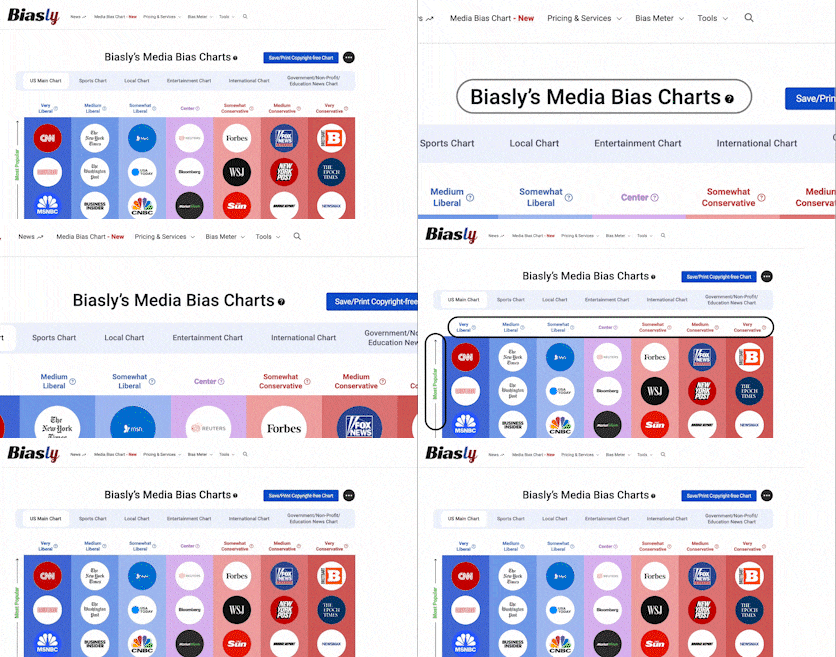
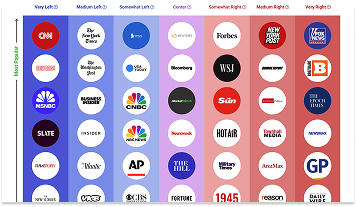
Readers who wish to further explore how Winston-Salem Journal compares with other publications can visit Biasly’s Media Bias Chart to analyze tone and word choice in real time.
Funding and Ownership
Who Owns Winston-Salem Journal?
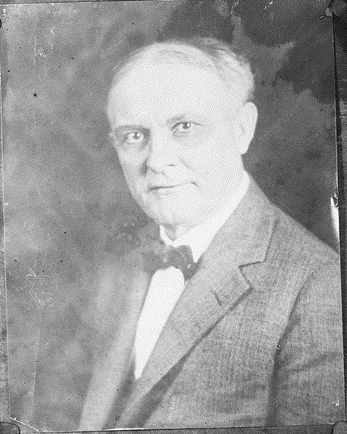
Charles Landon Knight, founder of Winston-Salem Journal, source: Wikimedia Commons
Lee Enterprises acquired Winston-Salem Journal from BH Media Group in 2020. Lee Enterprises publishes over 70 newspapers in 25 states. Lee Enterprise is focused on moving its readership to digital subscriptions. Kevin. D. Mowbray is the current CEO of Lee Enterprises.
Who Funds Winston-Salem Journal?
Winston-Salem Journal has a hard paywall. Articles can not even be viewed without a subscription. They have subscriptions for digital, print, and both. Unlike most paywalled news sites, there are no workarounds like the Wayback Machine. The only way to view a Winston-Salem Journal article without a subscription is through a news archive like ProQuest, which pays Winston-Salem Journal to keep archives of their articles.
Additional Insights
News Source Comparison
When it comes to news source comparison, Winston-Salem Journal is often evaluated alongside other regional and national outlets that lean center. Sources like ABC 7 New York, News Channel 8, and Mass Live often present similar tones and editorial philosophies. While Winston-Salem Journal maintains a Center media bias, it differs from strongly partisan sources in that it occasionally includes opposing viewpoints and strives for a balanced regional coverage.
This contrasts with more biased media outlets that consistently present one-sided narratives without factual counterpoints. Readers seeking balanced political coverage may compare Winston-Salem Journal’s framing of issues with outlets rated as Center or Lean Right on our Media Bias Chart, or explore other regional papers on our Similar Sources page.
Notable Contributors and Authors
Winston-Salem Journal features a diverse range of reporters and columnists, many of whom are deeply familiar with the Carolinas’ political and social climate.
Michael Hastings is the food editor for Winston-Salem Journal. He was hired by Winston-Salem Journal in 2000 and remains on staff today. In 2015, he created a separate marketing company called Michael Hastings Concepts. Biasly considers him a Medium Left reporter with average reliability.
Josh Boak is a frequent contributor to Winston-Salem Journal. He focuses on politics and economics. He started writing for The Toledo Blade in 2005. In 2013, he was hired by AP News. He does freelance work for many local publications like Winston-Salem Journal, The Boston Globe, and The Philadelphia Inquirer. Evaluations of his work by Biasly show that he writes with minimal bias and has good reliability.
Related Tools and Resource Pages
To better understand how Winston-Salem Journal fits into the broader media landscape, we recommend exploring these helpful resources:
- Media Bias Chart: See where Winston-Salem Journal ranks among hundreds of media outlets across the political spectrum.
- Political Bias Chart: Visualize political slants of news sources across various policy areas.
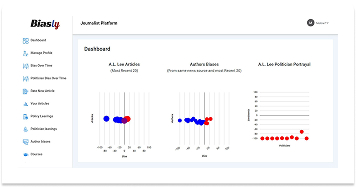
- Journalist Bias Analytics Platform: Explore how individual journalists contribute to bias within their publications.
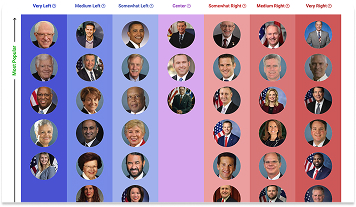
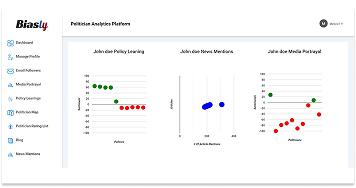
- Politician Bias Analytics Platform: Compare how politicians are framed differently by Winston-Salem Journal and other outlets.
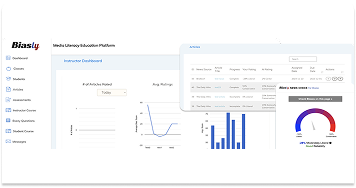
- Media Literacy Education Platform: Learn how to critically assess media sources, bias techniques, and news reliability.
Frequently Asked Questions
Winston-Salem Journal is rated as Center based on Biasly’s media bias algorithm, which assesses sentiment, article framing, and policy favorability.
While Winston-Salem Journal is not widely known for promoting fake news, some articles have shown selection and omission bias, especially in political reporting. Its factual reporting is generally sound. Some users have complained of clickbait titles and a lack of “on the ground” coverage of local events, which can create skewed perspectives.
Biasly uses a combination of AI sentiment analysis and human analyst review to assess tone, fact accuracy, source quality, and media bias indicators. Learn more on our Bias Meter page.
Generally, yes, though partisan framing and selective reporting can affect perceived reliability.
Military Spending
| Date | Sentiment | Associated Article | Snippet |
|---|---|---|---|
| 08/25/2019 | 75% For | Trump Family Detentions Flores Agreement (link) | So, of course, the Trump administration is doing the opposite in a baldfaced |