









How News Sources Portray Central Bank Digital Currencies Policy
This chart shows how major news sources across the ideological spectrum frame central bank digital currencies policy, from left to right-leaning perspectives.
















Unlike cryptocurrencies such as Bitcoin, a CBDC would be issued by the central bank and denominated in the same national unit of account as physical currency.
As digital payments become increasingly central to everyday life and as countries like China have moved aggressively toward launching their own digital currencies, the debate over whether the United States should develop a digital dollar has become one of the more consequential and increasingly partisan financial policy debates in Washington.
How News Sources Portray Central Bank Digital Currency Policy
Many of the media biases we observe, in both news coverage and political rhetoric, stem from the fundamental differences in policy stances held by the major political parties. One such key point of conflict is Central Bank Digital Currency (CBDC) policy.
As digital payments become increasingly central to global commerce and as countries around the world have begun piloting or launching government-backed digital currencies, the question of whether the United States should follow suit has emerged as a sharply contested policy issue.
Both parties agree that digital money is changing global finance. Where they split is on whether the U.S. should build its own version, and on what a digital dollar would mean for consumers, banks, and personal privacy.
The Democratic Stance on Central Bank Digital Currencies
The Democratic stance on Central Bank Digital Currencies has generally been one of cautious openness, not a full endorsement of a digital dollar, but a recognition that the United States needs to, at a minimum, research and evaluate the idea to stay competitive in a rapidly evolving global financial landscape. Democrats have tended to frame CBDCs through the lens of financial inclusion, consumer protection, and maintaining the U.S. dollar’s status as the world’s dominant reserve currency.
The Biden administration took the biggest step toward a U.S. CBDC in March 2022, when President Biden signed Executive Order 14067. It directed the federal government to place the “highest urgency” on research into how a U.S. CBDC might be designed and deployed, and asked several agencies to report on its risks and benefits. In September 2022, the White House followed up with a framework encouraging the Federal Reserve to keep studying the idea. President Trump revoked that order in January 2025.
Democratic supporters of CBDC research argue that a well-designed digital dollar could help the millions of Americans who are unbanked or underbanked, lower payment costs for consumers and small businesses, and keep the U.S. involved in setting international standards while China expands its digital yuan. They also argue that banning a CBDC outright, instead of studying it and building in protections, is a short-sighted answer to a complicated question.
Congresswoman Maxine Waters, the top Democrat on the House Financial Services Committee, led the opposition when Republicans brought their anti-CBDC bill to the House floor in May 2024. “By allowing other countries, especially China, to race ahead of us, H.R. 5403 directly threatens the primacy of the U.S. dollar,” she said. That argument, that a flat ban gives up America’s chance to shape global financial rules, captures the Democratic position well.
Democratic support for a CBDC is neither uniform nor especially enthusiastic. Most Democratic lawmakers have been cautious rather than promotional, and the party has never made a digital dollar a priority. The Biden White House said little more about it after September 2022. Many Democrats also voted for the 2026 housing package that included a temporary CBDC ban, a sign that the issue isn’t one most of them are willing to fight over.
Politicians Who Neutral Central Bank Digital Currencies
According to a 2023 Cato Institute survey, only 22% of Democrats support adopting a CBDC.

Joe Biden
“My Administration places the highest urgency on research and development efforts into the potential design and deployment options of a United States CBDC.”

Maxine Waters
“This bill is, instead, an attempt to stifle U.S. innovation and competitiveness abroad and to undermine the Federal agency that is the most critical to fighting inflation.”
The Republican Stance on Central Bank Digital Currencies
The Republican stance on Central Bank Digital Currencies is one of the clearest and most unified positions the party has taken on any financial technology issue. Republicans broadly oppose the creation of a U.S. CBDC, framing it primarily as a threat to individual privacy, financial freedom, and limited government, concerns that align closely with core conservative values about the proper role of the state in citizens’ lives.
The main Republican argument against a digital dollar is straightforward: a government-issued digital currency would, by its very nature, give federal authorities unprecedented visibility into how individual Americans spend their money. Unlike physical cash, which is essentially untraceable, a CBDC would leave a digital record of every transaction. According to DLNews, Republicans argue this creates the potential for government surveillance of financial activity and, in a worst-case scenario, the ability to restrict or control how citizens can use their money, a concern frequently illustrated by pointing to China’s digital yuan, which critics say the Chinese Communist Party uses as a tool of social control.
House Majority Whip Tom Emmer (R-MN) has led the push against a digital dollar in Congress. His CBDC Anti-Surveillance State Act passed the House in May 2024 (H.R. 5403, 216–192, with three Democrats voting yes) and again in July 2025 (H.R. 1919, 219–210, with two Democrats voting yes). No Republican voted against it either time. Emmer’s case is that unless a CBDC is built to work like cash, it would let the government watch and restrict how Americans spend their money, and he often points to China’s digital yuan and Canada’s 2022 freezing of protesters’ bank accounts as examples.
Opposing a CBDC also became a theme of the 2024 Republican primary. In January 2024, Donald Trump told a New Hampshire crowd he would “never allow the creation of a Central Bank Digital Currency.” Florida Governor Ron DeSantis had already signed a state law in May 2023, shortly before launching his own campaign, that keeps CBDCs out of Florida’s legal definition of money. The 2024 Republican platform also pledged to oppose a CBDC. Back in office, Trump signed Executive Order 14178 in January 2025, which bars federal agencies from creating, issuing, or promoting a CBDC and revoked Biden’s EO 14067.
Republicans have also raised concerns about the potential systemic risks a CBDC could pose to private banks and the existing U.S. financial system, arguing that a government-issued digital currency could displace private deposits and destabilize traditional banking.
Politicians Who Oppose Central Bank Digital Currencies

According to the same 2023 Cato Institute survey, 53% of Republicans oppose the creation of a U.S. Central Bank Digital Currency.
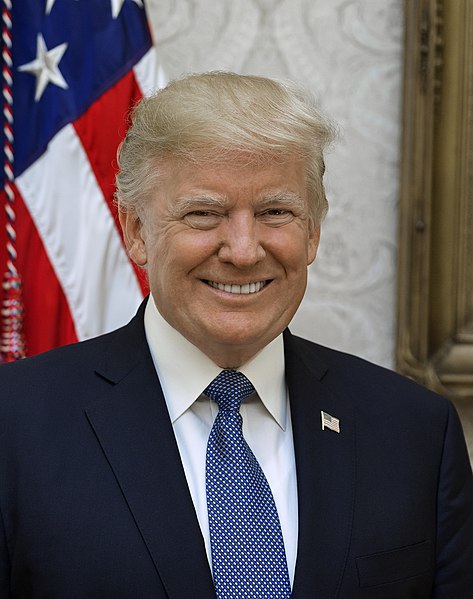
Donald Trump
“As your president, I will never allow the creation of a Central Bank Digital Currency. Such a currency would give our federal government absolute control over your money.”
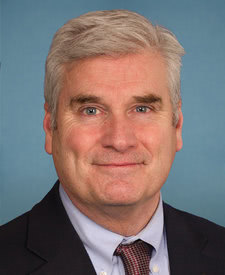
Tom Emmer
“It is government controlled, programmable money that, if it is not designed to emulate cash, could give the Federal Government the ability to surveil and restrict Americans’ transactions and monitor every aspect of their daily lives.”
Political Polarization and Public Policy on Central Bank Digital Currencies
The political positions on CBDCs have become increasingly reflective of broader ideological divides in American governance. While both parties acknowledge that digital currencies are an important and growing part of the global financial landscape, their approaches to the question of whether the United States should develop its own differ sharply, and those differences reflect deeper disagreements about privacy, the role of government, and America’s relationship to the global financial system.
At a high level, the divide can be summarized as follows:
- Democratic approach: Openness to research and careful evaluation of a potential U.S. CBDC, with emphasis on financial inclusion, consumer protection, maintaining dollar dominance, and keeping pace with global competitors
- Republican approach: Strong opposition to any government-issued digital currency, with emphasis on financial privacy, individual freedom from government surveillance, limited government intervention, and skepticism of centralized financial control
This split has shown up in real votes. Emmer’s permanent ban passed the House twice on near party-line votes but never got a Senate vote. Instead, a temporary ban running through 2030 was added to the 21st Century ROAD to Housing Act, a broad housing package that passed the Senate 89–10 and the House 358–32 before becoming law in July 2026. So the standalone fight is partisan, but the ban that actually passed got wide support from both parties as part of a bigger deal.
Public opinion on CBDCs reflects a population that is largely unfamiliar with the issue but increasingly concerned about privacy and government control. Key concerns shaping the debate include:
- Government surveillance of personal financial transactions
- The potential for the federal government to restrict or control how money is used
- Competition with China and other countries developing their own digital currencies
- The impact on private banks and the stability of the existing financial system
- Financial inclusion for unbanked and underbanked Americans
Industry and expert perspectives add further complexity. The Federal Reserve has taken a cautious position, stating it would not move forward with a CBDC “without clear support from the executive branch and from Congress, ideally in the form of a specific authorizing law.” Major banking associations have generally opposed consumer-facing CBDCs, citing risks to financial stability. Academic and policy researchers have produced mixed assessments, with some emphasizing the financial inclusion benefits and others highlighting privacy and systemic risks.
A Brief History of CBDC Policy in the U.S.
The history of CBDC policy in the United States is relatively short, reflecting the novelty of digital currencies as a policy issue. Early discussions emerged in the late 2010s as Bitcoin and other cryptocurrencies gained mainstream attention, prompting questions about whether the U.S. might issue its own digital currencies. The Federal Reserve began studying the question formally and published a white paper in January 2022 examining the potential benefits and risks of a U.S. CBDC, finding that while a digital dollar could make payments cheaper and easier for consumers, it might also pose risks to the stability of the financial system.
The most significant policy development came in March 2022 when President Biden signed Executive Order 14067, directing the federal government to urgently study a potential CBDC and submit reports on its design, risks, and benefits. This marked the first time a U.S. president had formally directed the executive branch to prioritize CBDC research.
Republican opposition grew through 2022 and 2023 as the issue got more attention. Florida became the first state to formally ban the use of a CBDC when Governor DeSantis signed legislation in 2023. In Congress, Representative Tom Emmer’s CBDC Anti-Surveillance State Act passed the House in May 2024 (H.R. 5403, 216–192) and again in July 2025 (H.R. 1919, 219–210).
By the mid-2020s, the politics had turned firmly against a consumer-facing digital dollar. In January 2025, President Trump’s Executive Order 14178 revoked Biden’s order and barred federal agencies from pursuing a CBDC. In July 2026, the 21st Century ROAD to Housing Act became law with a provision barring the Federal Reserve from issuing a CBDC until December 31, 2030. Emmer’s permanent ban is still waiting on the Senate.
Current Federal and International Policy on Central Bank Digital Currencies
Right now, U.S. law blocks a digital dollar. Title XI of the 21st Century ROAD to Housing Act (Public Law 119-101), which became law on July 11, 2026, bars the Federal Reserve from issuing a CBDC through December 31, 2030. Executive Order 14178 separately bars federal agencies from working toward one. The ban expires after 2030 unless Congress extends it, which is why Republicans are still pushing Emmer’s permanent version (H.R. 1919). It passed the House in July 2025 but has not passed the Senate.
At the state level, a small number of states, led by Florida, have enacted laws prohibiting the use of CBDCs within their borders, reflecting the strength of Republican opposition at the state government level.
Much of the rest of the world is moving the other way. According to the Atlantic Council’s CBDC Tracker, 146 countries and currency unions, which together make up more than 98% of global GDP, are exploring a CBDC. Only three have fully launched one: the Bahamas, Jamaica, and Nigeria. China’s digital yuan is the biggest project by far, with pilots reaching hundreds of millions of people.
In Europe, the European Central Bank is preparing for a possible digital euro. In July 2026, it picked 36 payment service providers for a 12-month pilot set to begin in the second half of 2027. The ECB says it could be ready for a first issuance in 2029, but only if EU lawmakers pass the regulation needed to create it.
The Bank of England is still weighing a digital pound. Supporters of U.S. research point to projects like these as a long-term risk to the dollar’s role in cross-border payments.
The International Monetary Fund and the Bank for International Settlements have both published guidance on how CBDCs could be designed. Their reports keep returning to the same trade-offs: privacy, financial stability, and getting different countries’ systems to work together.
What the Future Holds
The future of digital currency policy in the United States will depend on how the tension between privacy concerns and global competitiveness is resolved. Supporters of research argue that the strategic costs of remaining outside global digital currency development could increase. This is particularly true if dollar-denominated transactions begin to lose ground to digital yuan alternatives in international trade.
For now, though, Washington has largely settled the question. Law bans a CBDC through 2030, and the executive branch opposes one. The next real decision is whether Congress makes the ban permanent before it runs out or lets it lapse. With both the law and the White House against it, a U.S. digital dollar isn’t coming anytime soon.
Longer term, the debate will likely evolve as technology changes, other countries’ CBDC programs mature, and public familiarity with digital currencies grows. The specific design questions that have animated the privacy debate- whether a CBDC would be anonymous or identity-verified, whether the government would have transaction-level data, and whether spending could be restricted- will remain central to any future discussion.
The CBDC issue sits at the intersection of several of the most fundamental questions in American political life: the proper role of government in citizens’ financial lives, the balance between security and privacy, and America’s position in the global economic order. How policymakers answer those questions will shape not just digital currency policy, but broader debates about financial regulation, technological competition, and individual freedom for years to come.
To see where the parties stand on other issues, visit our US Political Party Stances page.
