









How News Sources Portray Coal Mining Policy
This chart shows how major news sources across the ideological spectrum frame coal mining policy, from left to right-leaning perspectives.














Bias in the media strongly influences how the public interprets energy debates—especially when livelihoods, electricity reliability, and local identities are at stake. In the debate over coal, competing narratives between the two major parties emphasize either environmental and health concerns or jobs, base-load stability, and the survival of mining-dependent communities. The central policy challenge is how to balance energy security, affordability, and environmental responsibility within a rapidly changing national framework.
Like they tend to be with other non-renewable energy sources, Republicans also demonstrate support for the coal industry. The Republican platform identifies coal as one of the ‘marketable’ sources of energy that the party supports the production and use of. Comparatively, the Democratic platform places priority on the production of renewable energy. Likewise, polling indicates that Republicans are far more supportive of coal mining, with 66% of conservative Republicans reporting support for the coal industry. This compares to just 9% of liberal democrats who would like to see the coal industry expand.
Coal policies sit at the intersection of energy security, economic development, and environmental risk. Over the past two decades, market dynamics have transformed the debate as much as political ideology. The defining divide today is whether coal remains vital for grid reliability and employment, or whether cheaper and cleaner alternatives should lead the energy transition.
From Congress to state legislatures, disputes often focus on the political implications of coal—how evolving regulations on coal mining reshape regions historically reliant on extraction. Federal frameworks such as the Federal Coal Mine Safety Act and state-level laws on coal mining set baselines for worker safety and reclamation. These operate alongside modern U.S. mining policy that must reconcile climate goals with fiscal stability and local adaptation.
A Brief History of Coal Mining Policy/Issue
Through most of the 20th century, coal powered U.S. industrial expansion and the electricity supply. Federal oversight deepened with the Federal Coal Mine Health and Safety Act of 1969 and the Mine Safety and Health Act of 1977, which created the Mine Safety and Health Administration (MSHA) for workplace enforcement. The Surface Mining Control and Reclamation Act (SMCRA) established the Office of Surface Mining, Reclamation and Enforcement (OSMRE) and land/water standards —explaining why coal mining regulations exist to prevent disasters, reduce black lung, and protect ecosystems.
During the 1970s and 1980s, the Clean Air Act accelerated scrubber adoption and lower-sulfur fuels, while the Straggers Rail Act of 1980 reduced rail costs and expanded access to Western coal. Research shows productivity gains and, later, cheap natural gas—not regulation alone—reshaped dispatch economics. This sustains the core question: is coal mining declining due to policy constraints or because market competition has reduced coal’s cost advantage?
By the 2000s, coal’s share of U.S. generation fell from roughly half to below 20 percent in the early 2020s as gas surged and renewables scaled. According to Lazard’s Levelized Cost of Energy (LCOE) analysis, wind and solar often undercut new coal on price, transforming the effect of coal mining on the economy across Appalachia and the Midwest via closures, tax-base erosion, and displaced workers.
Democrats’ Stances on Coal Mining Policy/Issue
The Democratic stance on coal mining emphasizes environmental protection, emission reduction, and a fair transition toward clean energy. Democrats support strong regulations on extraction, the accelerated retirement of aging coal plants, and “just transition” funding to assist miners and affected communities. Their vision connects environmental sustainability with local revitalization through investments in clean infrastructure, battery storage, and modernized transmission systems.
Democrats argue that national policy must internalize the full social and environmental costs of coal—air pollution, mercury emissions, and public health burdens. They uphold the Federal Coal Mine Safety Act as a foundation of worker protection and demand strict enforcement of reclamation obligations under the OSMRE Abandoned Mine Land (AML) Reclamation Program. Their core belief is that managing decline responsibly safeguards mining communities more effectively than resisting inevitable change.
Policy positions vary across regions. Lawmakers from coal-producing states often support carbon capture pilots, technology-neutral tax incentives, and reclamation subsidies to sustain local employment. This variation appears when Democrats back reliability measures while maintaining strict laws on coal mining compliance. For the party, coal policy is not about abolishing the industry but ensuring its social, economic, and ecological costs are transparently measured and responsibly addressed.
Politicians Who Oppose Coal Mining

9% of liberal democrats who would like to see the coal industry expand.

Joe Biden
“We're going to be shutting these plants down all across America and having wind and solar power. ... No one is building new coal plants because they can’t rely on it. Even if they have all the coal guaranteed for the rest of the existence of the plant. ... It's going to save them a hell of a lot of money and using the same transmission line that they transmitted the coal-fired electric on... It is literally cheaper to generate electricity from wind and solar than it is from coal and oil. Not a joke.”

Bernie Sanders
“We've got to end all of the tax breaks for the oil companies and coal companies and I'm going to introduce legislation to do just that.”
Republicans’ Stances on Coal Mining Policy/Issue
The Republican stance on coal mining prioritizes affordability, fuel diversity, and national security. Republicans regard coal as essential baseload capacity and a strategic safeguard against energy disruptions. They contend that the industry’s decline reflects overregulation and environmental overreach rather than economic inevitability and argue that reliable thermal generation remains critical to national stability.
GOP leaders consistently advocate permitting reform, expanded federal leasing, and relief from what they describe as duplicative or excessive environmental rules. Their energy philosophy embraces an “all-of-the-above” strategy that includes renewables while resisting prescriptive federal mandates. Republicans emphasize market choice—favoring innovation and private investment over centralized regulation—and maintain that competition, not bureaucracy, forms the foundation of long-term energy resilience.
Many in the party also cite extreme weather events to underscore the continuing need for dispatchable generation until large-scale energy storage becomes viable. Reforms to the National Environmental Policy Act (NEPA) and related procedural frameworks are presented as essential not only for fossil projects but also for renewable infrastructure. For Republicans, the guiding priorities remain on continuity, cost control, and national energy security—not rapid or government—directed decarbonization.
Politicians Who Support Coal Mining

66% of conservative Republicans reported support for the coal industry.
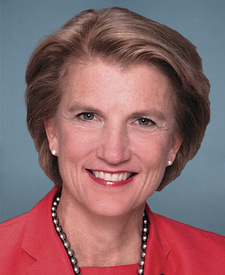
Shelley Moore Capito
“I've been working day and night on [permitting reform], and I hope I'm very successful because I think it'll be great for coal and coal mining and really all energy development. You all know what a nightmare permitting is at the federal level. It's just provision upon provision. It's expensive. It stalls out projects, people abandon projects, or they don't even invest in projects because they don't have the certainty that it's going to happen. ... These are good-paying jobs that are very respected jobs, and I think it will have a good impact on West Virginia.”

Mitch McConnell
“You talk about morality? I'll tell you what's immoral: to pursue ideological policies that will have little meaningful impact on the environment but have a very real and very negative impact on our economy, on jobs, and on our way of life. It's immoral to put more and more people out of work who only seek to make a decent living to provide for their families and provide a reliable source of energy for us all, as their fathers and their fathers' fathers did before them.”
Political Implications and the “War on Coal” Debate
The phrase “War on Coal” emerged in the 2010s as more than a debate over energy—it evolved into a struggle over recognition and representation. As the national energy transition accelerated, coal shifted from a fuel source to a symbol of political identity, with many communities defending local autonomy against what they perceived as remote or technocratic policymaking.
The debate reframed energy policy into a broader contest over who governs economic transformation. Republicans invoked the narrative to mobilize regions marginalized by globalization, while Democrats presented environmental reform as a moral and intergenerational responsibility. The slogan thus embodied a clash between survival and sovereignty on one side, and stewardship and modernization on the other.
This reframing gave coal-mining regions outsized symbolic weight in national politics. Decline came to signify not only economic hardship but also warning confidence in federal authority, turning regional downturns into metaphors for inequality and alienation. Disputes over coal exclusion policy and mining moratoriums now center less on market economics than on questions of governance legitimacy—illustrating how coal’s decline continues to shape both political geography and institutional trust in the United States.
What the Future Holds
Coal will continue to contract but persist in niche roles such as metallurgical production, reserve generation, and limited co-firing pilots. Future U.S.mining policy will pivot on three pillars: supporting transition communities, advancing cost-effective Carbon capture, utilization, and storage (CCUS) technologies, and reforming permitting processes to coordinate new generation and transmission capacity.
Compliance frameworks such as Virginia mining laws and clear laws on coal mining will define bonding, liability, and investor certainty. National coal policies must balance reliability with emission reduction so that the effect of coal mining on the economy remains socially sustainable. The U.S. does not have a national “coal mining banned” framework; instead, states and federal institutions share authority over siting, safety, and reclamation.
The real question is not “is coal mining legal” but how to govern decline fairly. Market forces—not a single “war”—explain most of coal’s decline, and effective policymaking therefore requires managing this transition transparently rather than resisting it, pairing diversification with worker protections to avoid further polarization.
To explore how each political party views other key policy topics, visit Biasly’s full list of Political Party Policy Stances.
To unlock more data-driven insights into media bias, explore political leanings with research-backed tools, and customize your news feed around what matters most to you, sign up for a Biasly Premium News Membership.
