









How News Sources Portray Socialism Policy
This chart shows how major news sources across the ideological spectrum frame socialism policy, from left to right-leaning perspectives.











The Democratic platform expresses support for systems of socialized healthcare such as Medicare, Medicaid, and the Affordable Care Act. Meanwhile, the Republican platform acknowledges the importance of socialized healthcare programs such as Medicare and Medicaid, but expresses a desire to limit access to these programs to just the elderly and absolute impoverished. The Republican platform also condemns many aspects of the Affordable Care Act, implying a limit to the extent of socialized healthcare that the party will tolerate. On the Affordable Care Act specifically, public support is pretty consistently split along party lines; 64% of Republican voters reported that they regarded the ACA negatively, while 67% of Democratic voters reported the opposite.
Democratic Stance on Socialism
Democrats generally do not endorse socialism in the traditional sense of full state ownership of the economy, but many Democrats support policies commonly associated with democratic socialism, such as expanded public healthcare, stronger social welfare programs, and greater government involvement in reducing economic inequality. Biasly’s Socialism policy page frames the Democratic position through support for programs such as Medicare, Medicaid, and the Affordable Care Act. Public opinion data also shows a significantly more favorable Democratic view of socialism than among Republicans: 65% of Democrats and Democratic-leaning independents had a positive view of socialism in a 2021 Gallup poll, and Gallup later found Democrats were the only partisan group more positive toward socialism than capitalism, at 66% positive toward socialism in 2025.
Within the Democratic coalition, support for socialism often means support for a stronger social safety net rather than support for abolishing markets altogether. Many Democrats argue that government should play a larger role in guaranteeing healthcare, education, housing assistance, and worker protections, especially where markets alone are seen as producing unequal outcomes. In that sense, the Democratic stance is usually less about adopting socialism as a total economic system and more about incorporating redistributive and welfare-oriented policies into a mixed-market economy.
This position reflects the broader ideological diversity within the Democratic Party. The party includes both moderates who favor regulated capitalism with social protections and progressives who are more comfortable with the language of democratic socialism. Even so, the common thread is support for using government policy to soften economic inequality and expand access to essential services.
Politicians Who Support Socialism
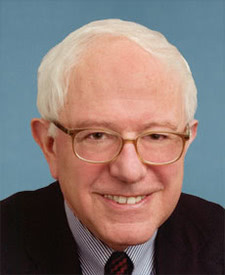
Bernie Sanders
“Democratic socialism means that we must create an economy that works for all, not just the very wealthy. Democratic socialism means that we must reform a political system in America today which is not only grossly unfair but, in many respects, corrupt. ... In my view, it's time we had democratic socialism for working families, not just Wall Street, billionaires, and large corporations.”

Alexandria Ocasio-Cortez
“For me, democratic socialism is about getting a modern and moral and wealthy society. No person in America should be too poor to live. To me, what that means is value—we value funding public education, we value healthcare as a right, we value treating people with dignity at work.”
Republican Stance on Socialism
Republicans generally oppose socialism and treat it as fundamentally incompatible with American political and economic traditions. While Biasly’s Socialism policy page notes that Republicans accept limited public programs such as Medicare and Medicaid, the party typically resists expanding socialized systems beyond narrowly defined safety-net functions. Republicans have also been consistently critical of the Affordable Care Act, which Biasly uses as an example of how public attitudes on “socialized” policy questions often split by party. On that measure, 64% of Republican voters reported a negative view of the ACA, while Democrats were more favorable, according to Biasly’s summary on the page.
Broader public opinion data also shows that Republicans overwhelmingly reject socialism as a political and economic model. In a 2021 Gallup poll, only 14% of Republicans had a positive view of socialism, and in Gallup’s 2025 update, Republicans remained strongly more favorable to capitalism than socialism. Republicans tend to argue that socialism leads to excessive government control, reduced individual freedom, weaker incentives for innovation, and economic decline.
In practice, the Republican stance favors free-market competition, lower taxes, private enterprise, and limited redistribution. Even when Republicans support certain public benefits for the elderly or poor, they generally reject using those programs as a justification for broader socialist-style economic planning. As a result, socialism is often framed by Republicans not as a policy adjustment, but as a warning against expanding the state too far into economic life.
Politicians Who Oppose Socialism
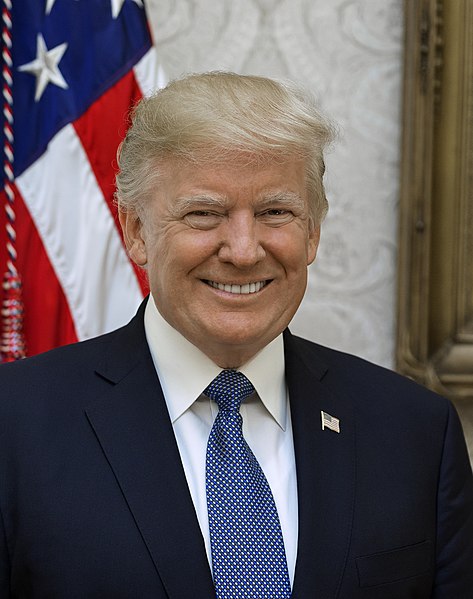
Donald Trump
“Here, in the United States, we are alarmed by new calls to adopt socialism in our country. America was founded on liberty and independence — not government coercion, domination and control. We are born free, and we will stay free. ... Tonight, we renew our resolve that America will never be a socialist country.”
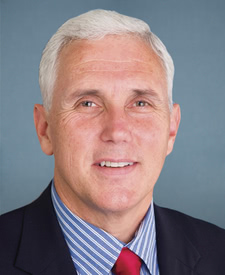
Mike Pence
“Before us are two paths: one based on the dignity of every individual, and the other on the growing control of the state. Our road leads to greater freedom and opportunity. Their road leads to socialism and decline.”
Political Implications
Socialism remains one of the most ideologically charged terms in American politics, and the partisan divide around it is unusually sharp. Democrats are significantly more open to the term and to the policy agenda associated with it, while Republicans overwhelmingly reject it. Gallup found that 65% of Democrats had a positive view of socialism in 2021, while only 14% of Republicans said the same. That gap helps explain why the term “socialism” functions so differently across the two parties: for many Democrats, it can signal social justice and economic fairness, while for many Republicans, it signals coercion, dependency, and state overreach.
These differences shape campaign rhetoric, policy branding, and voter persuasion. Democrats often face internal strategic questions about whether policies like universal healthcare, tuition-free college, or expanded labor protections should be framed in explicitly socialist terms or in more moderate language. Republicans, by contrast, frequently use the label “socialist” to attack Democratic proposals, especially on healthcare, taxation, and climate spending. This makes socialism both a substantive policy debate and a symbolic political weapon.
The issue also highlights a deeper divide over how Americans understand freedom and fairness. For Democrats open to socialist ideas, fairness often means ensuring that basic needs are met and that wealth is more evenly distributed. For Republicans, fairness more often means preserving individual choice, rewarding private initiative, and limiting government interference. That ideological clash ensures that socialism will continue to carry outsized political significance even when specific policy proposals are more moderate than the label suggests.
What the Future Holds
The future of socialism as a political issue in the United States will likely depend less on whether either party formally embraces the term and more on how voters respond to the policy ideas associated with it. Debates over universal healthcare, student debt, labor rights, housing affordability, and wealth taxation will continue to raise questions about how far government should go in redistributing resources and managing economic risk. Public opinion suggests Democrats remain considerably more receptive to these ideas than Republicans, though even within the Democratic Party there is variation in how positively the term itself is received. Pew has documented these divisions in its analysis of attitudes toward socialism and capitalism.
For Republicans, socialism will likely remain a central warning label used to oppose expansions of the federal government and defend market-based alternatives. For Democrats, the more important question may be whether policies associated with democratic socialism continue to gain mainstream support even when the word “socialism” itself remains contested. In that sense, the future debate may center not on labels alone, but on whether Americans believe government should play a much larger role in providing economic security.
If current trends continue, socialism will remain a durable fault line in U.S. politics — less as a literal choice between economic systems and more as a shorthand for competing visions of inequality, public obligation, and the proper reach of the state.
