









How News Sources Portray Competitive Capitalism Policy
This chart shows how major news sources across the ideological spectrum frame competitive capitalism policy, from left to right-leaning perspectives.
















Bias in the media strongly influences how the public perceives political and economic systems, shaping attitudes toward markets, regulation, and government intervention. In a polarized environment, selective framing often decides whether citizens treat capitalism as a system of opportunity or inequality. These biases help explain why debate over the competitive capitalism meaning and its role in democracy has become so ideologically charged.
Competitive capitalism refers to a political and economic system in which businesses are free of public interference.
Polling indicates that both Republicans and Democrats hold positive views of competitive capitalism; 78% of Republicans viewed capitalism positively, as did 55% of Democrats. However, it can also be noted that Democrats expressed similar support for elements of socialism, with 65% viewing it positively. However, since 2020, the Democratic Party platform has supported socialist policies that diminish competitive capitalism, such as policies mentioned in their Ending Poverty, Raising Wages and Promoting Workers’ Rights, Universal Healthcare, and Free-College Education sections.
Competitive market capitalism sits at the intersection of innovation, labor rights, and social equity. Over two decades, globalization, automation, and financialization have reshaped the structure of market competition capitalism as much as ideology. The defining question is whether competition remains the engine of growth or must be balanced by stronger social protections—a conflict over the scope of capitalist policy and democratic legitimacy.
A Brief History of Competitive Capitalism Debate
The origins of competitive capitalism in the U.S. trace back to the 18th and 19th-century liberalism, where thinkers like Adam Smith argued that rivalry and prices can align private incentives with public welfare. Industrialization embedded the qualities of capitalism—entrepreneurship, property rights, and voluntary exchange—into institutions that linked economic freedom with political liberty. Over time, competition became both a measure of efficiency and a symbol of civic autonomy.
The 20th century tested the balance between freedom and fairness. The Great Depression precipitated regulatory agencies, social insurance, and Keynesian macro-management to stabilize markets, while postwar antitrust policy aimed to keep competition open. Late-century neoliberal reforms—deregulation, privatization, and trade liberalization—revived faith in markets yet intensified disputes over inequality and deindustrialization.
In the 21st century, the debate is increasingly partisan but also pragmatic. Republicans emphasize limited government and tax restraint to preserve dynamism, while Democrats stress predistribution, antitrust, and public investment to uphold inclusion. The durability of capitalism rests on whether competition can coexist with perceived fairness—or, put differently, why is competition important in capitalism when public trust erodes?
Democrats’ Stances on Competitive Capitalism
Democrats generally defend the competitive capitalism definition as the growth baseline, but argue that markets require rules to stay open and legitimate. Their economic policies include higher minimum wages, collective bargaining, and corporate transparency, coupled with antitrust enforcement to counter concentration in key sectors. Executive Order 14036 (“Promoting Competition in the American Economy”) frames competition as vital to worker mobility and small-business opportunity.
Since the New Deal, Democrats have pursued capitalist policies that blend private enterprise with public investment and protection. The party’s platforms consistently link prosperity to inclusivity, promoting universal healthcare, affordable education, and worker protections as mechanisms that strengthen—not constrain—market competition. The 2020 platform endorses robust competition policy, inclusive growth, and guardrails on corporate power as compatible with innovation rather than opposed to it. In this view, regulation is “maintenance,” not control, ensuring that capitalist policies reward work, not just wealth.
At the party’s left edge, debates surface over industrial policy and democratic socialism, but the center of gravity favors “inclusive capitalism.” That means progressive taxation, worker upskilling, and evidence-based rules for digital markets. The goal is to answer why is competition good for capitalism with practical reforms that keep entry barriers low and bargaining power more evenly distributed.
Politicians Who Oppose Competitive Capitalism Rights
55% of Democrats viewed competitive capitalism positively.
Republicans’ Stances on Competitive Capitalism
Republicans portray competition as the moral and economic cornerstone of American prosperity. Their approach limits state intervention to contract enforcement, property rights, and sound money, arguing that high taxes and thick rulebooks distort incentives and slow growth. The 2016 Republican Platform underscores that prosperity flows from private initiative, not centralized control, aligning with the party’s Republican stance on government regulation.
Modern GOP policy emphasizes deregulation, lower marginal rates, and private-sector leadership over public management. In this framing, “Is capitalism a policy?” is the wrong question; capitalism is a system, and policy should get out of its way except to protect freedom and competition. That stance also informs the republican stance on business regulation across energy, finance, and tech.
For Republicans, competition is both a market mechanism and a safeguard of capitalism political freedom because it diffuses power among firms and individuals. The party resists expansive redistribution and sectoral micromanagement, arguing that prosperity and resilience emerge from entrepreneurial risk-taking and flexible markets. Is capitalism competitive? In the GOP view, it must be—by design and by default.
Politicians Who Support Competitive Capitalism Rights
78% of Republicans viewed competitive capitalism positively.
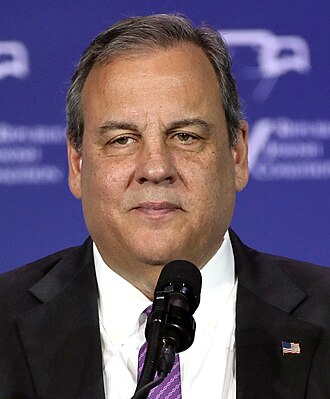
Chris Christie
“The American people love democracy, they love our Republic, and they love capitalism. They are not going to vote for a socialist for president of the United States.”
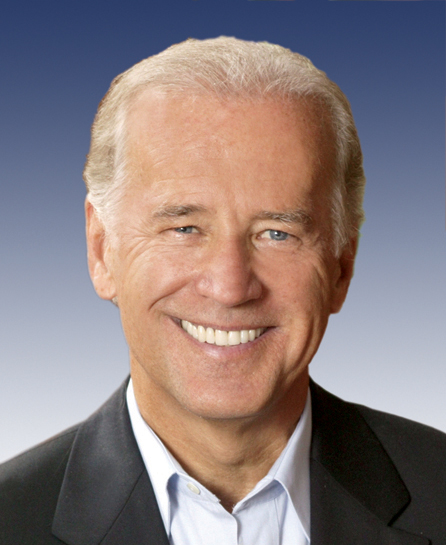
Joe Biden
“Capitalism without competition isnt capitalism. Its exploitation.”
Competitive Capitalism’s Political Implications
The capitalism debate now anchors partisan identity. Republicans cast capitalist policy as a guardian of liberty and upward mobility; Democrats recast competition as requiring active governance to check monopoly and narrow inequality. These competing moral frames shape how voters interpret justice, citizenship, and the size of the state.
Generational attitudes amplify the divide. Pew reports younger cohorts show more skepticism toward unregulated markets and greater openness to social-democratic ideas than older voters, while Republicans remain broadly favorable to capitalism even as overall support dips. That divergence refracts into different priorities on antitrust, labor standards, and public investment.
The international context adds strategic stakes. Advocates of liberal market democracy treat capitalism foreign policy—open trade, private enterprise, innovation—as soft power, while new political capitalism and varieties of state capitalism present alternative models. Scholarly work shows state capitalism pros and cons vary by context, with mixed ownership and strategic guidance sometimes accelerating growth but risking favoritism and dampened contestability.
What the Future Holds
The next phase will be shaped by how well policy keeps rivalry real. The task is practical: design rules that make entry, switching, and exit feasible, so competition supports both growth and public trust.
Democrats are expected to emphasize market design, guardrails on dominance, and worker mobility. Republicans will press for lower compliance costs, faster permitting, and predictable taxes to unlock investment; the workable overlap is clear: technology-neutral standards and swift, fair enforcement that apply across sectors.
Results should decide what stays. A small dashboard—new-firm formation, job-to-job mobility, market concentration and markups, and productivity—can determine whether a rule is widened, revised, or sunset. With those mechanics in place, targeted industrial support for chips, clean energy, or critical minerals can widen the field rather than entrench insiders, allowing competitive capitalism to deliver innovation and legitimacy together.
To explore how each political party views other key policy topics, visit Biasly’s full list of Political Party Policy Stances.
To unlock more data-driven insights into media bias, explore political leanings with research-backed tools, and customize your news feed around what matters most to you, sign up for a Biasly Premium News Membership.
