









How News Sources Portray Concealed Weapon Carry Policy
This chart shows how major news sources across the ideological spectrum frame concealed weapon carry policy, from left to right-leaning perspectives.













Bias in the media strongly influences how the public interprets major political and social issues. In today’s polarized environment, many policy debates have become partisan symbols rather than topics of genuine deliberation, shaping how citizens form opinions before evidence is even considered. Understanding how political polarization and media framing interact is essential for evaluating public attitudes toward policy. Few issues demonstrate this dynamic more clearly than gun control and the debate surrounding concealed weapon carry.
Concealed weapon carry refers to the right to carry a firearm on one’s own property or business.
The Second Amendment has long been a controversial topic, especially when discussing the idea of concealed carry. Concealed carry refers to the practice of carrying a concealed weapon on one’s person in public, and attitudes towards this practice are extremely polarized between Republicans and Democrats.
An overwhelming majority of Republican gun owners (87%) say they favor allowing people to carry concealed guns in more places, while only a fraction of Democrats (16%) support the carrying of concealed guns in more places. This belief in concealed carry expansion does not seem uniform throughout the political parties. House Bill H.R. 38 would establish a federal statutory framework to regulate the carry or possession of concealed firearms across state lines, specifically for individuals attempting to cross state lines with a firearm.
Many Republican representatives have strongly favored the bill, like Representatives McHenry (R-NC), Young (R-AK), and Hudson (R-NC). It passed by a 231–198 vote. Barring 6 Democratic representatives who crossed over the aisle to vote in favor, the rest of the Democrats were opposed to the bill. On the Republican side, all but 14 Republicans voted in favor of the bill.
This result clearly illustrates the depth of partisan polarization surrounding concealed weapon carry. To understand this divide, it is important to examine when and how it began, and how political actors have used the issue to mobilize their bases. The key question is whether differences in opinion create partisan identity or whether partisan identity shapes opinions themselves. While this relationship is complex, the evolution of party rhetoric and legislative behavior over time provides valuable clues about how attitudes toward gun rights have become embedded within broader partisan identities.
A Brief History of Concealed Weapon Carry Debate
The debate over concealed carry policy in the United States traces back to early disputes about the meaning of the 2nd amendment concealed carry right. Nineteenth-century states allowed open carry but banned concealed weapons, associating concealment with criminal intent.
During Reconstruction, Southern legislatures enforced these bans unequally, using weapon laws to disarm Black citizens while protecting white gun ownership. Early court decisions and police practices reflected this contradiction, showing how gun control was shaped as much by social hierarchy as by public safety.
By the early 1990s, the legal framework shifted toward regulation. The Sullivan Act of 1911 in New York required licenses for hidden firearms, establishing the foundation of modern concealed carry laws. Lawmakers and police authorities increasingly viewed regulation as necessary for urban safety, forming the origin of the modern police stance on gun control.
However, after the 1970s, states such as Georgia and Florida introduced shall-issue licensing, transforming local discretion into standardized rights. This shift—backed by the NRA and conservative legislators—framed gun ownership as a civil liberty rather than a privilege, while police unions warned about the risks of armed civilians during concealed carry police stop incidents.
The 21st century reshaped the argument again through major court rulings. In District of Columbia vs Heller (2008) and New York State Rifle & Pistol Association vs Bruen (2022), the Supreme Court affirmed that citizens have the right to carry firearms for self-defense beyond the home. These rulings accelerated permitless or “constitutional carry” trends, with more than half of the states not allowing carry without a permit.
Supporters argue this secures freedom under the 2nd amendment concealed carry, while critics, including many in law enforcement, stress that relaxed weapons policies complicate verification, increase risk during traffic checks, and heighten tension in concealed carry police interaction. The evolution of the debate reveals that the purpose of a concealed carry permit has always balanced two competing goals: ensuring personal protection while preserving public order.
Democrats’ Stances on Concealed Weapon Carry
Democrats frame concealed weapon carry within the broader goal of reducing gun violence and strengthening gun control laws. Under President Joe Biden, the Bipartisan Safer Communities Act (2022) became the first major federal reform in 30 years, expanding background checks for buyers under 21, funding red flag laws, and closing domestic violence loopholes. Democrats argue that limiting permitless carry and expanding screening align with public opinion: 86% of Democrats say it is too easy to obtain a gun legally, compared with only 34% of Republicans.
The Democratic platform emphasizes prevention over deregulation. Their 2024 DNC platform highlights opposition to nationwide reciprocity bills like H.R. 38, arguing that such laws weaken states’ ability to enforce concealed carry justification and public safety standards. Democratic governors, such as Kathy Hochul of New York, have labeled recent Supreme Court decisions expanding 2nd Amendment concealed carry rights as “reckless” and “reprehensible.” The party prioritizes community safety, licensing, and judicial discretion rather than automatic expansion of carry rights.
Democrats connect firearm regulation to civic responsibility, not restriction of freedom. They argue that concealed carry policies must protect officers and the public during concealed carry policy interactions, citing data showing bipartisan support for background checks and red flag laws. Their position defines regulation as the means to ensure responsible ownership—maintaining citizens’ right to self-defense while preventing unchecked proliferation of hidden firearms.
Politicians Who Oppose Concealed Weapon Carry
16% of Democrats support the carrying of concealed guns in more places.

Gavin Newsom
“But make no mistake: this is a radical decision... Today's Court thinks that gun regulations should be frozen in time.”
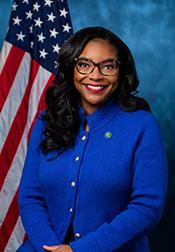
Emilia Strong Sykes
“This is a step in the wrong direction to end gun violence, restore trust and heal the deep wounds of division in our country.”
Republicans’ Stances on Concealed Weapon Carry
Republicans treat concealed weapon carry as a matter of individual liberty grounded in the 2nd Amendment, emphasizing self-defense and constitutional protection. They overwhelmingly support expanding concealed carry policy across state lines—87% of Republican gun owners favor allowing concealed firearms in more public places. In Congress, nearly every Republican backed H.R. 38, which sought to create nationwide reciprocity for concealed carry permits. After taking office in 2025, Donald Trump issued an executive order to review and roll back Biden-era firearm restrictions, including rules on ghost guns, enhanced background checks, and dealer oversight.
The Republican stance frames restrictions as government overreach and infringement on lawful citizens’ rights. Party leaders and groups such as the National Rifle Association argue that “constitutional carry” allows individuals to exercise their rights without excessive licensing barriers. The GOP’s 2024 RNC Platform reinforced this view, promising to “undo unconstitutional gun control policies” and expand lawful weapon carry conditions in all 50 states.
Republicans connect the right to concealed carry with public safety and deterrence rather than threat. They highlight that concealed carriers are statistically more law-abiding than the general population, arguing that armed citizens can prevent violent crimes. While Democrats emphasize regulation, Republicans assert that liberty itself ensures safety, believing that Republican politicians’ positions on gun rights sustain both freedom and deterrence in an increasingly polarized security environment.
Politicians Who Support Concealed Weapon Carry
87% of Republican gun owners say they favor allowing people to carry concealed guns in more places.
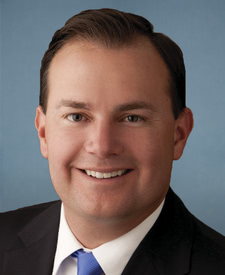
Mike Lee
“The Founders established a national right to keep and bear arms, not to ask for permission from hostile local officials, or risk imprisonment for crossing the wrong state line.”

Thomas Massie
“By prohibiting state or local restrictions on the right to bear arms, [we uphold] the original purpose of the Second Amendment—to ensure the security of a free state—while safeguarding individual liberties against government infringement. Eric Adams Today's Supreme Court decision may have opened an additional river that is going to feed the sea of gun violence in our city and in our nation.”
Political Implications
The politics of concealed weapon carry reveal how partisanship redefines the meaning of freedom and safety in America. For Democrats, stronger gun control laws represent a necessary condition for civic protection. For Republicans, regulation often symbolizes government intrusion on rights guaranteed by the 2nd Amendment. The conflict no longer centers on ownership itself but on the boundary between individual liberty and collective order.
This divide extends into legislative behavior and police enforcement. Divergent ccw policy standards and weapon carry conditions across states complicate jurisdictional cooperation and heighten risk during concealed carry police interaction. Democrats prioritize consistency through training and background checks, while Republicans stress uniform national reciprocity. The disagreement underscores how policy design—rather than ideology alone—shapes perceptions of justice and authority.
In practice, concealed carry has become a political barometer: candidates’ positions on it now predict partisan loyalty as reliably as taxes or abortion. The issue fuses moral conviction with institutional design, making it a test case for how a divided democracy governs fundamental rights under polarization.
What the Future Holds
The trajectory of concealed carry policy will hinge on how post-Bruen litigation and state-level reforms reconcile safety with constitutional freedom. Democrats are expected to expand red flag laws, universal background systems, and technology-driven licensing, while Republicans will pursue broader permitless carry and nationwide reciprocity. Both approaches attempt to define responsible gun ownership within their own ideological framework.
Future debates will move beyond legality to capability. Biometric locks, smart permits, and digital verification may modernize weapons policies, allowing states to verify eligibility instantly without restricting lawful possession. This shift reframes control as accountability—enhancing traceability and reducing misuse while preserving the right to self-defense.
To explore how each political party views other key policy topics, visit Biasly’s full list of Political Party Policy Stances.
To unlock more data-driven insights into media bias, explore political leanings with research-backed tools, and customize your news feed around what matters most to you, sign up for a Biasly Premium News Membership.
