









How News Sources Portray Critical Race Theory Policy
This chart shows how major news sources across the ideological spectrum frame critical race theory policy, from left to right-leaning perspectives.












Many of the media biases we observe, whether in news coverage or political rhetoric, stem from fundamental differences in policy perspectives held by major political parties. One of the many key points of conflict is critical race theory.
Critical race theory (CRT) is a movement based on the premise that race is a social construct used to oppress and exploit people of color. It contends that “American law and society are systemically racist.” This viewpoint has been questioned as an acceptable inquiry for American classrooms, contributing to disputes over race policy and the key components of critical race theory. Because CRT questions long-held assumptions about fairness, justice, and the country’s history, it has become a major point of conflict in political discourse.
Debates surrounding critical race theory often reflect broader disagreements about the role of schools, the purpose of education, how history should be taught, and whether acknowledging systemic racism is necessary progress or unnecessary division. As a result, critical race theory has become a symbolic issue that captures the larger tensions between the two political parties and the different ways Americans understand race, identity, and national values today.
The Democratic Stance on Critical Race Theory
Democrats generally support allowing educators to discuss CRT-informed ideas in schools, arguing that students benefit from learning about systemic racism and historical inequities. The party highlights the importance of critical race theory in education as an aid for students to understand America’s complex racial history through lessons on American history, inequality, and civil rights. They argue that CRT provides important context for understanding how race has shaped public institutions, laws, and social outcomes.
Democratic voters emphasize policy stance on critical race theory and often frame CRT as an educational tool rather than a political doctrine, falling under broader themes of understanding critical race theory in education. This aligns with the Democratic emphasis on diversity, inclusion, and expanding educational resources that help students understand systemic issues.
The Democratic Party opposes bans on critical race theory, viewing them as restrictions on academic freedom and honest discussion about race in America. Their focus is on improving racial literacy and preparing students to engage in a diverse society. Because of this, the party tends to support its own curriculum, which they believe promotes transparency rather than censorship.
Politicians Who Support Critical Race Theory
15% of Democrats disapproved of the teaching of critical race theory in public schools.
Joe Biden
“When asked about CRT in America in a debate with Trump, Biden said: “The fact of the matter is there is institutional racism in America, and we have always said we have never lived up to it that we hold these truths to be self-evident, all men and women are created equal. Well guess what? we have never ever lived up to it we constantly been moving the needle further and further to inclusion not exclusion…”
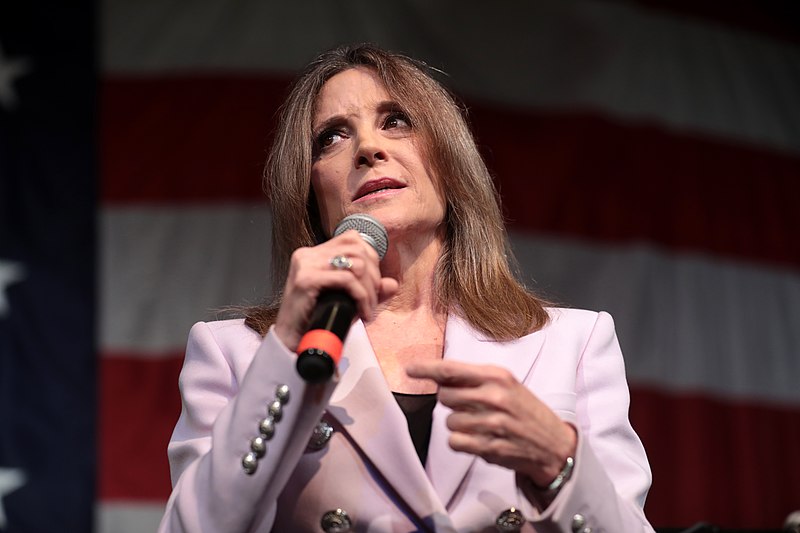
Marianne Williamson
“Do you agree with critical race theory?” “Critical race theory, it’s so misunderstood, it’s something that had to do with a legal theory. The people were talking about in like law school […] It has to do with the idea that many things are seen through and filtered through the lens of race, but many things that the parents have been lining up to complain about in school boards around the country just were anything that’s had to do with race and calling it in this almost Hysteria about critical race theory. I think there is a big difference between critical race theory and teaching children the truth about the history of the United States, which I believe, regardless of our politics, is a requirement for conscious citizenship.”
The Republican Stance on Critical Race Theory
The Republican stance on critical race theory generally opposes how it’s being taught in K-12 schools, arguing that it promotes division, guilt, and ideological indoctrination. They view it as divisive, ideologically driven, and inappropriate for children, depicting CRT as an overly negative interpretation of American institutions. This aligns with broader conservative arguments about parents’ rights and political content in schools.
Republican opposition is reflected in the argument that critical race theory contributes to ideological polarization in public education. This concern drives questions regarding critical race theory policy analysis and why the policy itself is being banned. In many Republican-led states, this is addressed through legislation that restricts or prohibits CRT-related content.
- White privilege: This teaches that white people inherently benefit from unearned societal advantages due to systemic racism; conservatives see it as an unfair label that promotes blame, ignores personal merit, and encourages reverse discrimination.
- Intersectionality: This analyzes how overlapping identities like race, gender, and class create unique experiences of oppression; conservatives view it as reducing individuals to victim categories and separatism, fostering division rather than unity, and undermining self-reliance and responsibility.
- Microaggressions: This covers subtle, everyday racial insults or slights that perpetuate inequality; conservatives argue it promotes hypersensitivity and defensiveness, stifles free speech, and creates a victimhood culture by mislabeling normal interactions or consequences in life as racist.
- Systemic racism in institutions: This examines how racism is embedded in systems like policing, housing, and education; Republicans contend it exaggerates differing perspectives and biases, ignores civil rights progress past historical racism, and pushes changes that weaken meritocracy and institutions.
- The 1619 Project: This frames U.S. history with slavery’s 1619 arrival as the nation’s central founding event; conservatives criticize it for distorting facts, diminishing the 1776 Declaration of Independence and American Revolution, and promoting an anti-American narrative that erodes patriotism.
- White fragility: This discusses defensive reactions by white people to racism talks as a barrier to progress; conservatives see it as a manipulative tactic to silence disagreement or alternative perspectives, enforce conformity, and advance polarization of the racial narrative.
Politicians Who Oppose Critical Race Theory
78% of Republicans disapproved of the teaching of critical race theory in public schools.
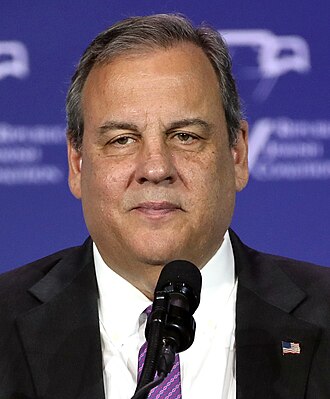
Chris Christie
“We have the public sector unions politicizing this educational system across the country. Critical race theory is just one element of it. We need to be concerned about all of it”.”
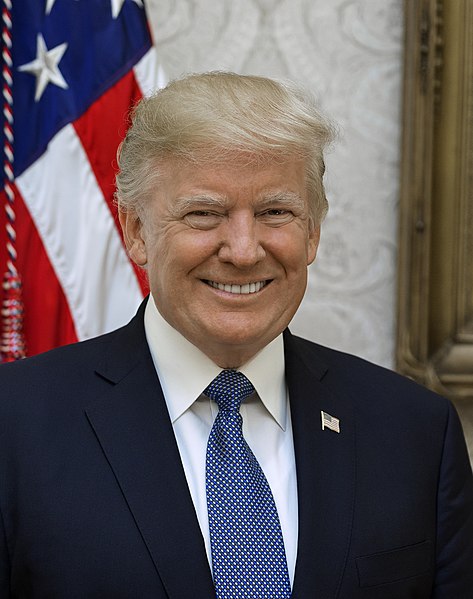
Donald Trump
“Our universities are inundated with critical race theory. This is a Marxist doctrine holding that America is a wicked and racist nation that even young children are complicit in oppression and there are entire society must be radically transformed. critical race theory is being forced into our children’s schools, is being imposed into workplace trainings…”
Policy on Critical Race Theory in the United States
Policy debates on critical race theory focus on whether state governments should shape, restrict, or expand race-related concepts taught in public schools. Many GOP-controlled states have passed or proposed laws that prohibit instruction described as CRT, while Democratic-led states generally oppose such restrictions.
A Monmouth University poll found that 78% of Republicans disapproved of the teaching of critical race theory in public schools compared with 15% of Democrats. 16% of Republicans approved of the teaching of critical race theory compared with 75% of Democrats.
This is an ongoing debate reflected in broader discussions of the importance of critical race theory in schools. Republican-led policies often attempt to limit “divisive concepts”, while Democratic-led policies tend to protect teachers’ ability to discuss systemic racism. These policies raise larger questions about academic freedom, race education, and whether critical race theory belongs in K-12 settings or should remain a theory primarily discussed in law schools and universities.
A Brief History of Critical Race Theory in the U.S.
Critical race theory originated in the 1970s-1980s among legal scholars who argued that racism is embedded within legal systems and not simply a product of individual prejudice. Originally, critical race theory was an academic legal framework, not part of the K-12 curriculum.
Over time, concepts in critical race theory influenced research in sociology, education, political science, and public policy. Terms like “systemic racism” and “institutional bias” began to rise as opponents began associating CRT with broader cultural and educational challenges. Recent political debates have centered around whether CRT is actually taught in K-12 schools. Supporters argue it is not, while opponents claim it influences diversity lessons or discussions about racism.
The historical debate now includes discussing the basic tenets of critical race theory and how to define it. This illustrates how the theory has expanded beyond academia and entered public discourse.
What the Future Holds
The future of critical race theory in America will continue to be shaped by political divides, state-level legislation, school board decisions, and national debates about how race should be taught in schools. As Republicans continue pushing for bans and Democrats defend the inclusion of systemic racism in curricula, CRT will remain a high-profile issue. Understanding the role of critical race theory in public education will remain central to national conversations about identity, history, and civil learning.
To explore how each political party views other key policy topics, visit Biasly’s full list of Political Party Policy Stances.
To unlock more data-driven insights into media bias, explore political leanings with research-backed tools, and customize your news feed around what matters most to you, sign up for a Biasly Premium News Membership.
