









How News Sources Portray Gun Control Policy
This chart shows how major news sources across the ideological spectrum frame gun control policy, from left to right-leaning perspectives.













Many of the media biases we observe, whether in news coverage or political rhetoric, stem from fundamental differences in policy perspectives held by major political parties. One of the many key points of conflict is gun control.
Gun control refers to “the prevention or restriction of gun usage or ownership.” This topic is one of the most debated in the United States, demonstrating how different political parties view safety and personal rights.
Gun control, a broad category of policies that aim to reduce access to gun ownership, is typically advocated for by Democrats and opposed by Republicans. Democrats often advocate for stronger gun control laws that help reduce gun violence and mass shootings, as Republicans view these laws as policies that strip away people’s rights and go against the Second Amendment. Discussions regarding policies on gun control typically become a major issue, specifically after school shootings.
The Democratic Stance on Gun Control
Democrats prefer strong gun control, generally supporting measures that help prevent shootings and reduce gun-related deaths. The 2016 Democratic Party Platform outlined the party’s commitment to reducing gun violence by implementing universal background checks, closing loopholes in firearm sales regulations, and restricting access to assault weapons.
The Democratic Party believes that the government should take more action to protect communities from gun violence, as demonstrated by its political stance on gun control. For example, former President Biden has called to renew the assault weapons ban, holding gun makers accountable for the misuse of their products. Instead of viewing this policy issue as a matter that takes away rights, Democrats view it as a matter of public safety in order to save lives and prevent atrocities.
Politicians Who Support Gun Control
86% of Democratic-leaning voters support stricter gun legislation.
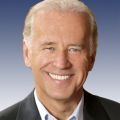
Joe Biden
“Ban assault weapons. Require safe storage of firearms. Require background checks for all gun sales. Eliminate gun manufacturers immunity from liability. We can and must do these things now.”

Kamala Harris
“Were not taking anyones guns away, so stop with the continuous lying about this stuff”. “I have personally seen what assault weapons do to the human body, and so I feel very strongly that it is consistent with the Second Amendment and your right to own a gun to also say we need an assault weapons ban,”
The Republican Stance on Gun Control
The Republican Party generally opposes newer gun laws, stating they limit constitutional rights under the Second Amendment. The Republican Party Platform expresses firm commitment to the Second Amendment and opposition to any measures that would infringe on access to firearms. They believe most gun owners are responsible people, and that the problem is crime, not gun ownership.
Republicans prefer focusing on enforcing previous laws that support the right to carry arms while opposing bans on specific types of guns. Rather than pushing for new legislation, they urge the government to enforce existing laws upheld by influential interest groups. For example, the National Rifle Association (NRA) strongly supports and influences the Republican stance on gun control laws, promoting the idea that self-defense and freedom are core American values.
Politicians Who Oppose Gun Control
31% of Republican-leaning voters support stricter gun legislation.
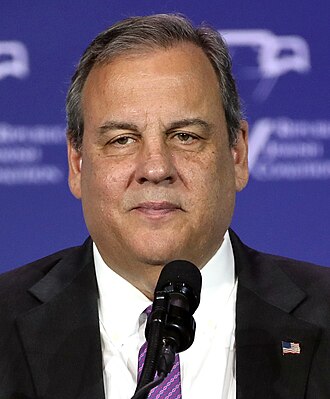
Chris Christie
“I dont think with 350 million or so guns out there that tighter gun control is going to keep the gun out of the hands of someone whos going to do what happened in Las Vegas or what happened in Uvalde or what happened in Sandy Hook.”
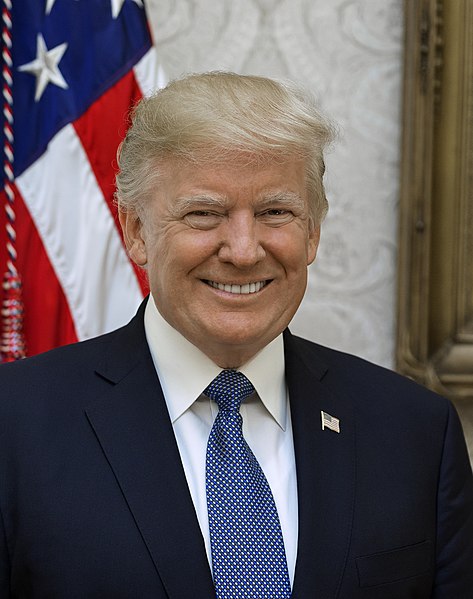
Donald Trump
“Every single Biden attack on gun owners and manufacturers will be terminated my very first week back in office, perhaps my first day.”
Policy on Gun Control in the United States
Gun control policy in the United States differs from state to state. At the federal level, background checks and general restrictions limit individuals from accessing guns. At the state level, however, they have the power to add new gun controls or maintain fewer restrictions.
Aside from state differences, political differences are also crucial in this debate. Democratic states have stricter laws on gun sales and ownership, while Republican states have looser rules that focus on protecting the right to bear arms. In addition, party platforms appear to be consistent with public opinion; 86% of Democratic-leaning voters support stricter gun legislation, while only 31% of Republican-leaning voters do.
Policy stance on gun control demonstrates that both parties have key differences in how they advocate their ideas and goals.
A Brief History of Gun Control in the U.S.
Gun laws and policies have been rooted in U.S. history ever since the establishment of the Constitution. On December 15th, 1791, the second amendment to the Bill of Rights read, “A well-regulated Militia, being necessary to the security of a free State, the right of the people to keep and bear Arms, shall not be infringed.” This already became a precedent to allow gun use in a newly established country, which later on was altered depending on the rise of gun-related crimes and school shootings.
Fast forward to 1934, the National Firearms Act (NFA) became the first major law to control automatic weapons by imposing a tax on the manufacturing, selling, and transporting of firearms as part of President Franklin Delano Roosevelt’s “New Deal for Crime.” In 1939, the Supreme Court held in United States v. Miller that a sawed-off double-barrel shotgun was not protected under the Second Amendment, further creating a deeper divide between Democrats and Republicans regarding gun control.
After a streak of political assassinations in the 1960s, including President John F. Kennedy, his brother Bobby Kennedy, and Martin Luther King Jr., President Lyndon B. Johnson advocated for the Gun Control Act of 1968. The policy banned gun imports of firearms without a “sporting purpose” and limited firearm ownership to those without felony convictions and mental illness.
In 1994, the Assault Weapons Ban under the Violent Crime Control and Law Enforcement Act temporarily prohibited the sale of semi-automatic weapons from 1994 to 2004.
District of Columbia v. Heller (2008) held that the Second Amendment protects an individual’s right to possess a firearm for self-defense in the home. The Court struck down Washington, D.C.’s handgun ban and its requirement that firearms be kept unloaded and either disassembled or secured with a trigger lock, finding those measures unconstitutional. At the same time, the Court emphasized that the right is not unlimited and allows for a range of reasonable gun regulations.
An increase in gun violence over the years, and a spate of mass shootings, including the 2022 killing of 19 elementary school children in Uvalde, Texas, resulted in the Bipartisan Safer Communities Act. It passed in the Senate 65 to 33 with 15 Republicans joining Democrats in favor of the measure. In the House, it passed 234-193, with 14 Republicans voting alongside Democrats. President Biden signed it into effect in June 2022. It is considered the most significant federal legislation aimed at gun violence since 1994. Overall, it demonstrates that both parties can sometimes work together, despite differing on how far gun control should go.
What the Future Holds
The different stances on gun control show constituents that the debate is deeply rooted in drastic political ideologies between Democrats and Republicans. Policy on gun control is likely to continue being a widely debated issue, pushing Democrats to advocate for stronger laws and Republicans to advocate for the protection of constitutional rights.
Finding a common ground will be difficult, but with small efforts and compromise, many future policies might support both perspectives, offering freedom to own guns responsibly while maintaining safety and stronger protections against violence. It will all largely depend on political leadership, public opinion, and major national events that push for more bipartisan talks.
To explore how each political party views other key policy topics, visit Biasly’s full list of Political Party Policy Stances.
To unlock more data-driven insights into media bias, explore political leanings with research-backed tools, and customize your news feed around what matters most to you, sign up for a Biasly Premium News Membership.
