









How News Sources Portray Guns in Classrooms Policy
This chart shows how major news sources across the ideological spectrum frame guns in classrooms policy, from left to right-leaning perspectives.






Gun violence in America is a contentious issue grounded in the constitutional framework surrounding the Second Amendment. Less than a dozen countries on the globe have governmental protections for citizens to bear arms, making America a unique case for the discussion of implementing guns in classrooms. According to Pew Research polls, a majority of American elementary and high school teachers fear the possibility of a shooting happening at their school.
These concerns take place in the context of rising gun deaths in America, with 2023 data showing a 33% increase since 2014. The Republican Party and the Democratic Party hold opposing views about how to handle the issue of gun violence, especially within schools. Republicans overwhelmingly support the idea of arming elementary and high school teachers and officials as a solution to school shootings.
At the same time, Democrats favor increasing gun control measures to curb gun violence in schools. These beliefs are fundamentally founded on differing individual and partisan perspectives about self-defense, the root problem of gun violence, and the interpretation of the Second Amendment in contemporary times.
Republican Stance onbnbnbbnn Guns in Classrooms
The Republican Party represents the group most in favor of the original interpretation of the Second Amendment in modern times, influencing their anti-regulation-oriented solutions to increasing gun violence. Around 74% of the Republican Party views arming teachers and school officials as a possible solution to school shootings.
This belief is reflected in the subsequent proposed policy by Republicans Rep. Scott Allen and Sen. Cory Tomczyk of Wisconsin in 2025, which would allow for teachers and school officials with gun licenses to carry firearms on campus. Gun legislation of this nature represents the positive Republican perspective about guns and their perceived ability to assist with gun violence.
While nearly 58% of American adults favor increasing the strictness of gun laws, the Republican Party constitutes the majority who would disagree with this sentiment. One point in the Republican perspective, besides the steadfast support of Second Amendment rights, is that gun ownership is a crime deterrent. Supported by U.S. Department of Justice data, more handguns are used to prevent crime than by criminals attempting acts of crime with them.
With these statistics in mind, the Republican Party does not agree with limiting gun ownership or increasing gun regulation as effective methods for limiting gun violence in schools. Another important statistic to consider is that 45% of Republicans polled by the Pew Research Center say they own a firearm, compared to only about 20% of Democrats. These fundamental differences between the relationships of each party with guns undoubtedly influence how each respective party wishes to change legislation to prevent gun violence in schools.
Politicians Who Support Guns in Classrooms

Around 74% of the Republican Party views arming teachers and school officials as a possible solution to school shootings.
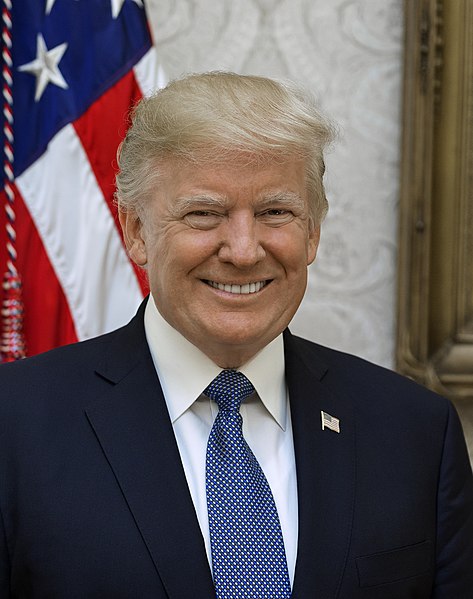
Donald Trump
“This would only obviously be for people who were very adept at handling a gun, and it would be... called concealed carry, where a teacher would have a concealed gun on them. They’d go for special training and they would be there and you would no longer have a gun-free zone... If a potential 'sicko shooter' knows that a school has a large number of very weapons talented teachers (and others) who will be instantly shooting, the sicko will NEVER attack that school. Cowards won't go there, problem solved. Must be offensive, defense alone won't work!”

Ken Paxton
“We can’t stop bad people from doing bad things. We can potentially arm and prepare and train teachers and other administrators to respond quickly. That, in my opinion, is the best answer. ... The reality is, we don't have the resources to have a law enforcement officer at every point of entry of every school... First responders typically can't get there in time to prevent a shooting. It's got to be people on the ground.”
Democratic Stance on Guns in Classrooms
The Democratic Party adamantly believes that regulation on gun ownership and how Americans obtain guns is the most effective way to limit gun violence in schools. Nearly 86% of Democrats say, according to the Pew Research Center, that it is too easy to purchase a gun in America. These beliefs are related to the lower percentage of gun owners in the Democratic Party, as the poll demonstrates that non-gun owners, 80% of Democrats, are more fearful of guns and guns in the household.
The distinct relationship between Democratic Party members and guns has led to contrasting solutions to the problem of gun violence in schools. Opposed to increased gun ownership, especially for teachers to combat shootings, the Democratic Party prefers legislation that makes obtaining a gun more difficult, aiming to limit gun ownership amongst those who would commit violence at schools.
With this in mind, it is also true that nearly 61% of Americans agree with Democrats about gun ownership being too easy in the nation, pointing to a consensus about one cause for gun violence in schools. Some of these specific Democratic solutions include red flag laws and universal background checks to curb guns from landing in the hands of those who present a danger to society or themselves.
In contrast to Republican gun policies in schools, which prioritize Second Amendment rights, Democrats are more willing to reinterpret and redefine American Second Amendment rights for the purpose of increasing national safety.
Politicians Who Oppose Guns in Classrooms
Nearly 86% of Democrats say that it is too easy to purchase a gun in America.

Kamala Harris
“While you try to create safe and welcoming places where our children can learn, extremists attack our freedom to live safe from gun violence. They have the nerve to tell teachers to strap on a gun in the classroom. ... Our teachers want to focus on teaching, not on being sharpshooters or security guards.”

Christopher Murphy
“Teachers don't want this. Parents don't want this. Only [the administration] and the gun industry think the best way to stop a school shooting is to load schools up with guns. Arming teachers... won't make our kids any safer. It's nonsensical and dangerous. We know what will make our schools safer. We need to give schools resources to support educators and meaningfully help struggling students. And we need to tighten our gun laws...”
History of Guns in Classrooms
Gun violence and gun safety have been landmark issues in American history, beginning largely in the early to mid-20th century. In the 1950s, before school shootings were major American headlines, a school in Indiana offered a gun safety and hunting safety course with the intention of reducing gun violence through education. This course, taken only by students whose parents signed an acknowledgment, attempted to teach basic firearm safety techniques and thought processes.
This class took place in response to the growing number of gun deaths in Indiana and certain practices that did not promote firearm safety. Certain insights into this history can be gained from photos of children in the 1920s at schools with BB guns, and regardless of the weapons’ lethality, the photos demonstrate a very different attitude towards guns in the classroom nearly a century ago.
In the early 1990s, in response to an unprecedented level of gun violence and crime, the 1990 Gun-Free School Zones Act and 1994 Gun-Free Schools Act were passed to promote a safe learning environment for children. Zero tolerance was enforced for any student or person who was caught carrying a weapon on school campuses, and drug enforcement on campuses increased subsequently.
Despite ongoing gun violence on school campuses, including major incidents like Columbine in 1999 and Sandy Hook in 2012, there have been few significant gun policy changes as the ongoing partisan debate to curb this issue continues. The 2022 Bipartisan Safer Communities Act was the first piece of gun legislation passed in nearly thirty years, with the intention of improving mental health services and enhancing background checks for gun buyers under the age of twenty-one.
Policies on Guns in Classrooms Going Forward
The fundamental issue that lies within the epidemic of school shootings in America is the differing perspectives about the Second Amendment in a modern context.
Many, often Democrats, argue that the Second Amendment, laid out in the Bill of Rights, is antiquated because of advances in military and firearm technology— something the founding fathers would not have been able to conceive. On the other end of the spectrum, Republicans and those supporting the Second Amendment as it is today remain steadfast in their belief about the importance of American rights enshrined in the Bill of Rights, especially in the modern world.
Given the intricacy of each partisan argument for solving this issue, this debate will likely continue as future politicians propose and enact policies that support their party’s stance. With a Republican administration in office, for example, the proposed policy will reflect their underlying constitutional beliefs towards guns and opt to better protect and secure schools by introducing more firearms. Contrarily, a Democratic administration in office might broadly reconsider current firearm rights and regulations, convinced that policy solutions will lower instances of guns in the classroom, even if it is considered an uphill battle against the Second Amendment and its supporters.
