









How News Sources Portray Iran Sanctions Policy
This chart shows how major news sources across the ideological spectrum frame iran sanctions policy, from left to right-leaning perspectives.







U.S. sanctions on Iran block government assets, limit trade, prohibit foreign assistance, and prevent arms sales. Since the Iranian takeover of the American Embassy in Tehran in 1979, the United States and the Islamic Republic of Iran have had no formal diplomatic relations. America has viewed Iran’s ambitions to lead the Islamic world, support for terrorists, and pursuit of nuclear weapons with deep suspicion and hostility. Several rounds of sanctions have been imposed on Iran over the years. Both political parties’ stances differ when it comes to addressing Iran’s capacity for violence.
A Pew Research Center survey taken in 2015 found Republicans (79%) far more likely than Democrats (52%) to view Iran’s nuclear program as a significant threat. In 2015, Iran signed the Nuclear Deal known as the Joint Comprehensive Plan of Action (JCPOA) along with six other countries, including the United States, to limit its nuclear activities in exchange for international inspections, in return for the lifting of economic sanctions.
In 2018, President Donald Trump pulled the US out of the nuclear deal and reinstated economic sanctions against Iran. Iran did not immediately withdraw from the agreement, hoping that cooperation with the remaining powers involved in the JCPOA would help mitigate the financial impact of U.S. sanctions. However, after a U.S. drone strike in 2020 killed Iran’s top military commander, Gen Qasem Soleimani, Iran pulled back from its commitments.
Current Sanctions on Iran
The U.S. policy on Iran has involved imposing several sanctions following the Iranian Hostage Crisis in 1979, when Iranian students seized the U.S. Embassy in Tehran and detained over 50 Americans. These sanctions have targeted Iran’s oil and gas sectors, financial system, and access to international trade and investment. These restrictions aim to constrain Iran’s nuclear program, support for terrorism, and influence in the region.
The European Union has a timeline for imposing increasingly limiting sanctions on Iran. These restrictions have also been placed on entities involved in trading illegal arms and human rights violations linked to Iran. The EU has also put further restrictive measures on Iran, such as asset freezes and travel bans, for their military cooperation with Russia, the delivery of drones deployed by Russia against Ukraine, and its repression of ongoing protests within the country.
The United Nations Security Council has also imposed sanctions on Iran, particularly in response to concerns over Iran’s nuclear program. Concerns emerged in 2005 when the International Atomic Energy Agency (IAEA) declared Iran non-compliant with their obligations. Sanctions imposed by the Security Council are unanimous and binding on all member states—initial restrictions were implemented on technology, trade, and materials related to missile programs. Subsequent international sanctions were imposed on humanitarian aid, imports, oil, and financial institutions. While international sanctions are not as extensive as those imposed by the United States and European Union, they have had a profoundly negative impact on Iran’s economy.
Sanctions on Iran have resulted in reduced oil exports, a devalued currency, and increased inflation and unemployment rates. The sanctions have disrupted Iran’s access to essential medical equipment and medicines, resulting in adverse effects on the country’s healthcare system and public health. This has prompted Iran to develop strategies to mitigate its impact, such as building alliances with other countries and creating a “resistance economy.”
Republican Party Stance on Iran Sanctions
Republicans have taken a rigid policy stance on Iran sanctions, which supports imposing and maintaining strict economic sanctions. Right-wing politicians have been critical of the Iran nuclear deal (JCPOA) negotiated under the Obama administration, arguing that it did not go far enough in constraining Iran’s nuclear program or regional activities. They have pushed for a more confrontational approach towards Iran and favor a policy of “maximum pressure,” arguing that sanctions are necessary to counter Iran’s destabilizing regional influence, support for terrorism, and ballistic missile program.
The consensus among the Republican Party is that Iran poses a significant threat to U.S. interests. The republican stance on Iran has been more vocal in advocating for a hardline stance, including the potential use of military force if diplomacy fails, and has criticized the Biden administration’s efforts to revive the JCPOA, arguing that any sanctions relief would empower Iran and undermine U.S. leverage.
Politicians Who Support Iran Sanctions
Republicans (79%) are more likely to view Iran’s nuclear program as a significant threat.

Tom Cotton
“I applaud our European allies for taking the necessary step of initiating snapback sanctions. Iran must never be allowed to have a nuclear weapon. The ayatollahs have clearly shown they have no intention of abandoning their nuclear ambitions despite the catastrophic blows inflicted on their nuclear program by America and Israel. The triggering of these sanctions will keep the pressure on Iran and choke off the funds it uses to finance its terror network and build ballistic missiles.”
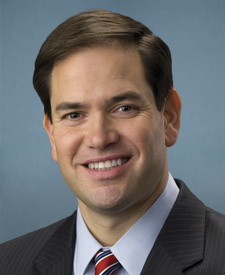
Marco Rubio
“Operation Economic Fury continues to impose maximum pressure on the Iranian regime and what remains of their already frail economy. ... U.S. sanctions enforcement is stepping up. It's moving in lockstep with the naval blockade to degrade Iran's capacity to generate, to move, and repatriate revenue. It directly targets the regime's primary revenue lifelines. ... Any foreign financial institution or commercial actor that enables Iran's sanctions evasion is going to face secondary sanctions exposure and a loss of access to the U.S. financial system.”
Democratic Party Stance on Iran Sanctions
The Democratic Party has not come to a coherent stance on Iran, with some Democrats supporting U.S. sanctions on Iran while others are more hesitant. However, the general Democratic approach seems to favor re-establishing international institutions and agreements, such as the Iran Nuclear Deal (JCPOA), rather than continuing the unilateral sanctions approach of the Trump administration.
Democrats are likely to prioritize rehabilitating existing international institutions and agreements over creating new ones, with the intention of re-engaging Iran diplomatically. This could mean re-establishing the Iran nuclear talks. While Democrats may continue to use economic sanctions as a tool for foreign policy with Iran, there are indications that they may seek to weaken or soften the sanctions regime compared to the previous Republican administration
Some Democratic lawmakers have expressed support for a more targeted sanctions approach that focuses on specific individuals or entities rather than comprehensive sanctions that broadly impact the Iranian economy and population. This reflects a desire to minimize the humanitarian impact of sanctions. Overall, the Democratic perspective appears to favor a return to multilateral diplomacy and engagement with Iran, in contrast to the more unilateral and confrontational approach of the Republicans.
Politicians Who Support Iran Sanctions
Democrats (52%) are more likely to view Iran’s nuclear program as a significant threat.
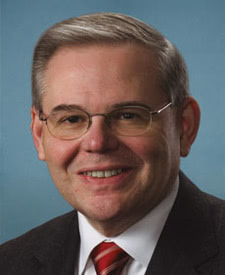
Robert Menendez
“One of the greatest—if not the greatest—threats to the security of our nation and our allies is the concerted effort by the government of Iran to acquire the technology and materials to create a nuclear weapon. ... We must do everything in our power to prevent Iran from obtaining a nuclear weapon and this amendment will starve the Iranian regime of the money it needs to achieve its nuclear goals. Simply put, it says that you have a choice—to do business with the United States or to do business with Iran.”
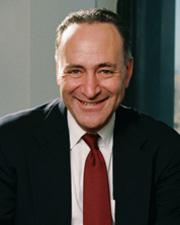
Charles E. Schumer
“A nuclear Iran is an unacceptable scenario. I believe the only way Iran will voluntarily stop their march for nuclear weapons is if they know that tougher and tougher sanctions will be enacted if they fail to come to a strong agreement that prohibits them from obtaining nuclear weapons. The only thing that brought Iran to the table were strong sanctions, not the goodness of their hearts. ... If Iran does not come to an agreement... I stand ready to vote for additional sanctions.”
Further Implications for Sanctions
After Israel launched Operation Rising Lion in June of 2025, striking over 100 top Iranian military officials and key nuclear facilities, significantly damaging the political stability of Iran. Since the strike, tensions between Iran and the international community have escalated tremendously. Immediately after the attack, Iran paused negotiations with the United States for another nuclear deal, alleging that Israel would not have acted so aggressively without their support.
The U.S. is believed to be the only country with a non-nuclear bomb (the GBU 57/B Massive Ordnance Penetrator) large enough to destroy Iran’s Fordow Nuclear Site, one of Iran’s two main uranium enrichment sites necessary for the country to create nuclear weapons. According to a poll by YouGov America, 65% of Democrats oppose getting involved with the conflict between Israel and Iran, compared to 53% of Republicans. While conflict between Israel and Iran continues to boil, it is still undetermined if the U.S. will enter the war, which would undeniably put more pressure on the international community to increase sanctions on Iran further.
To learn how to find more reliable news and avoid misinformation, check out Biasly’s AI-powered Bias Meter. If you want to unlock even more data-driven insights into media bias, explore political leanings with research-backed tools, and customize your news feed around what matters most to you, sign up for Biasly Premium News Membership.
