









How News Sources Portray Isolationism Policy
This chart shows how major news sources across the ideological spectrum frame isolationism policy, from left to right-leaning perspectives.






To simply explain isolationism, it is a government policy or doctrine that involves taking no role in the affairs of other nations. According to Morning Consult, a greater number of Republicans (46%) prefer more isolationist policies compared to Democrats (32%) who support more international collaboration. Moreover, a survey by Pew Research in November 2018 found that Democrats are more likely than Republicans to prioritize promoting democracy in other nations (22% vs 11%), promoting and defending human rights abroad (39% vs 20%), and helping improve living standards in developing nations (32% vs 12%). Despite these statistics, the House passed a resolution in October 2019 condemning President Trump’s decision to pull U.S. troops from northern Syria by a vote of 354–60.
Another Pew Research survey from March 2022 found that 73% Republicans support working closely with allies in response to the Russian invasion of Ukraine as the right approach, compared with 85% of Democrats. Moreover, the majority of Republicans (85%) and Democrats (88%) favor maintaining strict economic sanctions on Russia. Most Republicans (75%) and Democrats (81%) also favor keeping large numbers of U.S. military forces in NATO countries near Ukraine in response to the conflict. To see what side of the spectrum your news falls under, check out Biasly’s news reliability checker to make sure you’re hearing all sides of the story.
A Brief History of Isolationism in the United States
The United States largely supported an isolationist policy after WWI by rejecting the League of Nations and instead prioritizing domestic issues over further involvement in European entanglements. The disillusionment of WWI defined the 1920s and 1930s as a period when the American public was primarily opposed to foreign wars. This was exemplified by Congress’s passage of the Neutrality Acts, which forbade the government from selling arms to foreign nations at war and reflected a deep isolationist sentiment.
During World War II, the U.S. tried for as long as possible to avoid becoming engaged in the conflict even as Nazi Germany and Japan expanded. This led Roosevelt to push for “Lend-Lease” policies and additional aid for allies, which began to break down the barriers of isolationism slowly. However, when Pearl Harbor was bombed in 1941, America was quickly thrown out of its state of isolationism. Paving the way for its entrance into WWII and its dramatic shift towards a more permanently engaged international leader.
At the end of WWII, the U.S. emerged as an international superpower that fully embraced its role to contain communism. The creation of NATO, the Marshall Plan, and advancements in both Korea and Vietnam all contributed to the further rejection of isolationist policies. However, some began to criticize the habit of engaging in endless wars in Congress and started to revive the idea of isolationism as a way to address the government’s persistent involvement in foreign affairs.
In the 21st century, the country began to experience severe intervention fatigue after the invasions of Afghanistan and Iraq. Public opinion turned against the engagement in costly wars, and the modern rhetoric of “America First” began to emerge. While America First policies were not necessarily isolationist, they reflected a deep skepticism of alliances and the country’s numerous overseas commitments.
More recently, the Russo-Ukrainian War in 2022 has resurfaced divisions over a new policy of isolationism, where the Biden Administration’s strong support for Ukraine and commitment to European security clash against the Republican “America First” ideals. There is conflict among some Republicans who have argued for reducing aid, citing America First priorities and fatigue with foreign conflicts, which has led to a persistent debate over isolationism and the extent to which the United States ought to be involved in foreign affairs.
Democratic Stance on Isolationism
The Democratic Party has continued to support military aid and diplomatic backing for Ukraine, arguing that deterring authoritarian aggression is essential to preserve the international order. In contrast to government isolationism, Democrats endorse maintaining strong alliances and multilateral institutions through diplomacy and foreign aid. Under the Biden administration, the U.S. returned to organizations such as the WHO and the U.N. Human Rights Council. It reaffirmed commitments to agreements such as the Paris Agreement and organizations like NATO, while fostering stronger partnerships in Asia and Europe.
Although the Democratic Party is typically supportive of global engagement, it usually advocates for focused responses, rather than open-ended occupations, by insisting on congressional oversight for military action. One clear example of this is Tim Kaine’s push for AUMF authority on ISIS in Syria.
Additionally, Left-leaning policymakers argue that recent cuts in diplomatic staffing and foreign aid have eroded U.S. influence, resulting in a loss of power to rivals like China. Others warn that the growing isolationist sentiment in the U.S. may weaken alliances in which the U.S. is considered a leader and further embolden authoritarian regimes such as Russia.
Politicians Who Oppose Isolationism
Democrats (32%), unlike Republicans, support more international collaboration instead of isolationist policies.
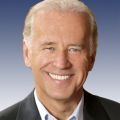
Joe Biden
“We stay firmly with Japan and with other nations not to let that [invasion of Taiwan] happen. My expectation is it will not happen, it will not be attempted. And my expectation is a lot of it depends on just how strongly the world makes clear that that kind of action is going to result in long-term disapprobation by the rest of the community.”

Kamala Harris
“If we only look inward, we cannot defeat threats from outside; isolation is not insulation. In fact, when America has isolated herself, threats have only grown..”
Republican Stance on Isolationism
The Republican Party’s stance of isolationism is inherent in its actions that often oppose continued aid for Ukraine and argue that the U.S. shouldn’t try to police global conflicts. These ideals are usually characterized by opposing free trade and foreign entanglements under the slogan of “America First,” often through the reinforcement of nationalist, tariff-based, or anti-global rhetoric.
However, other hawkish Republicans support military aid to Ukraine by emphasizing the importance of upholding commitments to organizations such as NATO and pushing back against isolationist ideals. This is exemplified by the support of right-wing policymakers like Mitch McConnell and Michael McCaul, who are staunch supporters of Ukraine and its president, Volodymyr Zelenskyy, who advocate for the U.S. to do more, not less, in supporting Ukraine. Arguing that abandoning Ukraine would undermine the credibility of the U.S., empower adversaries, and cause harm to the current global order
Politicians Who Oppose Isolationism

A greater number of Republicans (46%) prefer more isolationist policies.
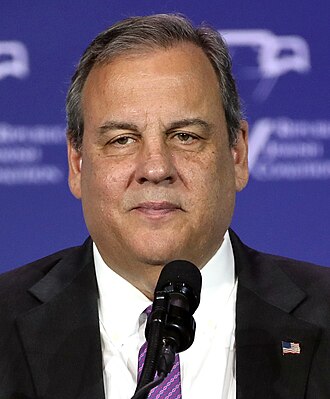
Chris Christie
“When some folks talk about ‘America first’, what they really mean is ‘America alone’. They mean fill the moat and pull up the drawbridge. These are not our problems, and we have lived this before. Nobody in this room doesn’t want America to be first; all of us do. It’s how America becomes first that is the argument inside our party right now. Do we become first by turning our back on the rest of the world? Do we become first by saying, ‘Well, this problem, this hate, this murder, this terrorism, is not our problem’? Don’t be fooled, everyone. There are voices in our party, and our own party today, who only want to focus on certain hate, certain violence. That’s unacceptable because what we know is that hate and violence and discrimination anywhere can be spread everywhere if good people don’t stand up to fight.”
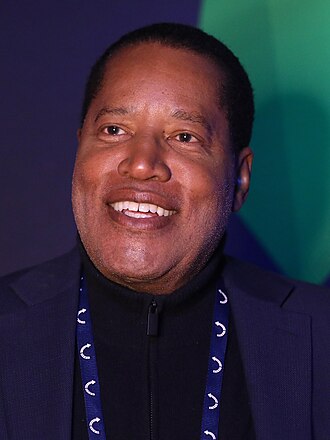
Larry Elder
“America’s status as the world’s sole superpower is essential not only for our own security and prosperity but also for maintaining the liberties of hundreds of millions of freedom-loving people around the world … This includes investing in our military’s readiness while keeping the Pentagon focused on national defense, not left-wing social experimentation; asserting American dominance in the South China Sea and reassuring our Pacific allies …”
Future Prospects of Isolation
The Democrats largely reject current policies of isolationism, embrace multilateralism, endorse sustaining support for Ukraine, and seek to maintain commitments to alliances like NATO. However, Republicans appear to be increasingly split on the issue of isolationism. Many right-wing lawmakers have joined the “America First” faction to oppose increasing foreign aid and question traditional alliances. At the same time, the party’s hawkish wing continues to support efforts that champion the United States’ position as an international leader by supporting efforts abroad. This polarization continues to reflect modern ideological differences over modern political party stances on issues such as the global responsibility of the United States and our role as a world leader in the 21st century.
