









How News Sources Portray Labor Unions Policy
This chart shows how major news sources across the ideological spectrum frame labor unions policy, from left to right-leaning perspectives.













Labor Unions are simply an organized association of workers formed to protect and further their rights and interests. The labor movement in the United States emerged from the need to protect the common interests of workers. For those in the industrial sector, organized labor unions fought for better wages, reasonable hours, and safer working conditions. The point of contention between Republicans and Democrats regarding labor unions is whether they have a positive or negative impact on the American economy.
According to a Pew Research poll, around three-quarters of Democrats (74%) say labor unions have a positive effect on the country’s direction. In contrast, only about one-third of Republicans (34%) believe unions have a positive impact. House Bill 842, which proposed to expand supportive labor union policy, mirrored this sentiment when it narrowly passed with 220 “yea” votes from the Democrats and 206 “nay” votes from the Republicans. For more on party biases, visit Biasly’s overview of Political Party Stances.
Early Labor Unions
Labor Unions in the United States can be traced back to the late 18th century, when workers in skilled trades such as shoemaking, printing, and carpentry began to organize locally as guilds and journeymen’s societies to protect wages and working conditions. However, these groups were often localized and temporary. As the U.S. began to industrialize in the 19th century, factories soon replaced artisans, and wage labor became more common.
With workers being forced to work long hours for low pay in unsafe conditions, they responded by organizing large-scale strikes and forming local unions. Notably, in 1835, workers in Philadelphia went on strike to successfully establish a 10-hour workday, and in 1842, Massachusetts courts upheld the workers’ right to strike in the Commonwealth v. Hunt. Then, in 1869, the Knights of Labor was formed to create the first large national labor organization, followed by the American Federation of Labor (AFL) being formed that same year. The AFL continues to operate to this very day, representing over 15 million people and embodying the success of the labor unions’ objective.
When the Great Depression hit in 1929, massive unemployment and poverty significantly increased the labor rights movement. To address concerns of the rising labor shortage and the rights of workers, Franklin D. Roosevelt introduced the New Deal. The New Deal consisted of a series of government programs enacted between 1933 and 1939, including the passage of the Wagner Act (National Labor Relations Act) in 1935, which guaranteed workers’ right to organize and outlawed unfair labor practices by employers. Following the Wagner Act, union membership surged, and workers achieved significant victories through sit-down strikes, such as the 1936-1937 GM Flint Strike.
Labor Unions Post-WWII
During WWII, unions agreed to refrain from striking to support the war effort, winning wage gains and increased membership as a result of the compromise. In the 1950s, about one-third of U.S. workers were unionized. However, the fight for workers was not over as a decline in manufacturing and the rise of the service sector began to disempower union strongholds. Additionally, while some unions like the UAW (United Auto Workers) supported civil rights, others excluded Black and Latino workers.
The Reagan era led to further union decline when, in 1981, President Ronald Reagan fired the striking PATCO air traffic workers, symbolizing a stricter policy stance on labor unions. Right-to-work laws spread to many states, and union membership declined as jobs in automation and manufacturing shifted overseas. Eventually, private sector union membership fell below 10%.
Today, public-sector unions remain the strongest. This includes the unions of teachers and other government workers. However, new unionization efforts have emerged in low-wage sectors, such as Starbucks, Amazon, warehouses, and rideshare services. Additionally, in 2021, burnout stemming from the COVID-19 pandemic and the tight labor markets of the Great Resignation culminated in “Striketober,” during which over 100,000 workers authorized strikes in October across various industries, including manufacturing, healthcare, and the film industry. Still, in 2024, the union membership rate of public sector workers (32.2%) was more than five times higher than that of private sector workers (5.9%).
Republican Party Stance on Labor Unions
The Republican stance on labor unions has historically been more skeptical of organized labor than that of Democrats. Right-wing lawmakers have shown overwhelming support for right-to-work laws that ban mandatory union membership and dues in unionized workplaces, arguing that these laws protect worker freedom of choice and foster business growth. Additionally, the Republican Party often criticizes unions for spending heavily on Democratic candidates, believing it distorts the political process and fails to represent all workers.
Many GOP leaders, such as Scott Walker, have demonstrated a right bias against public sector unions as a central cause of high public spending and pension debt, especially at the state and local level. Moreover, Republicans generally oppose policies that make unionization easier (card-check) and increasing the minimum wage, claiming that it hurts American businesses and the economy.
Politicians Who Oppose Labor Unions
One-third of Republicans (34%) believe unions have a positive impact.
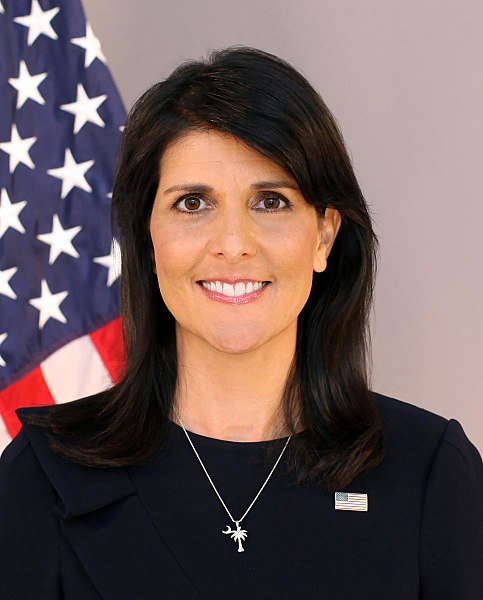
Nikki Haley
“We discourage any companies that have unions from wanting to come to South Carolina because we don't want to taint the water. ... You've heard me say many times I wear heels. It's not for a fashion statement. It's because we're kicking them [unions] every day, and we'll continue to kick them.”

Tim Scott
“Tipping the scales in favor of big labor unions instead of hardworking families only serves to wreak havoc on innovation and devastate the backbone of our economy... Under this administration, top-down policies have concentrated bargaining power in the hands of the big labor unions. They have subjected American workers and small businesses to a barrage of union harassment and disrupted opportunities for our families.”
Democratic Party Stance on Labor Unions
Ever since the New Deal of Franklin D. Roosevelt, the Democratic Party has been the political home of organized labor and has consistently shown great support for national labor union strategies. Although the alliance between labor and Democrats has weakened since the 1970s, unions remain central to the party’s base, even as leftists expand their appeal to professional and suburban voters.
Democrats strongly oppose right-to-work laws, arguing they weaken unions and hurt workers. They also favor workers’ rights to organize unions, negotiate wages, benefits, and working conditions. In contrast to GOP-led states, there is often more support for unionization among government employers that allows them to bargain collectively in states with Democratic leadership. Furthermore, leftwing policymakers tend to support raising the minimum wage, strengthening the National Labor Relations Board (NLRB), and cracking down on employer union-busting tactics.
Politicians Who Support Labor Unions
Three-quarters of Democrats (74%) say labor unions have a positive effect on the country's direction.
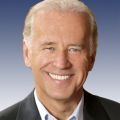
Joe Biden
“The middle class built the country, and unions built the middle class! ... [We are] attaching labor standards to funding to help create more good union jobs... because when the middle class does well, everybody does well.”

Kamala Harris
“Each and every day in ways big and small, unions change lives, unions negotiate better wages and safer working conditions for millions of workers around our country. Let us be clear, even if you are not a member of a union, you thank unions for every benefit that you receive.”
Polarization Over Labor
The sharp contrast between the Republican and Democratic parties over organized labor conveys deeper themes of the ideological divide between the two parties over the role of government, business, and workers in the economy. Democrats see unions as essential for promoting economic justice and reducing inequality. On the other hand, Republicans tend to advocate for further restrictions on labor unions as they perceive them as obstacles to business growth, individual choice, and a vehicle of undue political influence.
This polarization boils down to a more profound economic philosophy where the left favors an interventionist approach to labor relations, whereas Republicans prioritize market freedom and deregulation. As unions experience a resurgence in sectors such as logistics, services, and technology, the partisan clash over their role in the economy is likely to remain a defining feature of American politics. To see where you stand on the political spectrum, take our Personal Bias Survey.
