









How News Sources Portray LGBTQ Equality Policy
This chart shows how major news sources across the ideological spectrum frame lgbtq equality policy, from left to right-leaning perspectives.
















Over the past several decades, LGBTQ policy issues have emerged as a defining issue in American politics. While same-sex marriage once stood at the forefront of public debate, the modern conversation now extends to a broader range of concerns, including civil rights protections, gender identity, access to healthcare, and the role of schools and families. As public attitudes have evolved, so too have the positions of the Democratic and Republican parties, each offering distinct perspectives rooted in differing values and priorities. Understanding these perspectives, their points of agreement, divergence, and ongoing tension, is essential to fostering informed dialogue about the future of LGBTQ+ rights in the United States.
One of the first significant victories for the LGBTQ rights movement came in 2015, when the US Supreme Court ruled in Obergefell v. Hodges that the 14th Amendment requires all states to license marriages between same-sex couples and to recognize all lawful marriages that were conducted in other states. A NPR/PBS NewsHour/Marist poll conducted in December 2022 found 43% of Republicans support same-sex marriage compared to 87% of Democrats. However, the Respect for Marriage Act passed the Senate 61 to 3, with 12 Republicans crossing party lines to vote in favor of the legislation. In December 2022, President Biden signed the Respect for Marriage Act, enshrining federal protections for same-sex couples. Still, today, there is much discrepancy in determining where party lines are drawn when it comes to LGBTQ rights. still remains To find the most reliable news, check out Biasly’s news reliability checker.
What is LGBTQ?
LGBTQ stands for Lesbian, Gay, Bisexual, Transgender, and Queer. It refers to a diverse community of individuals whose sexual orientations differ from the heterosexual (straight) or those who identify as cisgender (the gender assigned at birth). Over time, LGBTQ policies in the United States have expanded to become more inclusive, now often referred to as LGBTQ+, to acknowledge a broader spectrum of identities such as intersex, asexual, non-binary, and more. Historically, this community has faced social and legal challenges as it continues to advocate for equal rights and protection.
In the early 20th century, LGBTQ+ identities were widely criminalized in Western societies, including the United States, with homosexuality being treated as a mental illness, leading to imprisonment or institutionalization for same sex marriages. During the Cold War era from the 1950s to 60s, these individuals were targeted as part of the “Lavender Scare,” where thousands of federal employees were fired or forced to resign because of their sexuality. Then, in 1969, the Stonewall Riots in New York sparked a visible LGBTQ+ rights movement when patrons resisted a police raid at the Stonewall Inn.
When the 1980s AIDS crisis disproportionately affected gay men, the homosexual community was met with public stigma and government inaction. However, as activists demanded government-funded healthcare and research, the LGBTQ+ rights movement began to grow. Legal battles over same-sex marriage intensified in the 1990s, and many countries, including the US, started to pass civil rights legislation. Although there have been significant victories for the LGBTQ+ community in the 21st century, including the repeal of “Don’t Ask, Don’t Tell” and Obergefell v. Hodges, transgender rights have remained contested mainly throughout the United States.
Democratic Stance on LGBTQ+ Rights
The Democratic Party has positioned itself as a strong advocate for LGBTQ+ rights over the past few decades, making it one of the defining left policy stances. Its platform now supports equal protection under the law, non-discrimination policies, and expanding civil rights for these individuals. Through legislation, such as the Equality Act, the Democrats have led the charge to support the legalization of anti-discrimination protections based on gender identity and sexual orientation in sectors including employment, housing, healthcare, and education. Sarah McBride, representative of Delaware and the first transgender woman in Congress, states, “We know we belong. We belong in workplaces, we belong in the military, and yes, we belong in the halls of Congress.” With other leftwing representatives such as Representative Mark Takano from California showing support by saying, “We will not stop until the Equality Act is the law of the land.”
Moreover, leftwing policy makers have advocated for the rights of transgender individuals to broaden their access to healthcare, change gender markers on identification, and lessen public discrimination. Many of the leftist politicians also oppose bans on gender-affirming care for minors in states like California, where Senate Bill 107 protects families who seek out-of-state gender transitions for their children and prevents out-of-state investigations into care provided in California.
The Democrats also largely oppose restrictions on transgender individuals serving in the military, with one Gallup Poll taken in 2025 showing most Democrats (88%) support allowing openly transgender troops to serve in the military compared to less than a quarter of Republicans (23%). Furthermore, the Democratic platform states that “LGBTQ+ youth and adults suffer from significant health disparities, including mental health and substance use disorders.” Therefore, their platform promised to “expand mental health and suicide prevention services,” and ban the practice of “conversion therapy.”
The party has also promoted LGBTQ policies as a matter of U.S. foreign policy by seeking to protect individuals abroad, especially under the Biden Administration, which condemned anti-LGBTQ+ laws in Uganda and reinstated the right of U.S. embassies to fly the Pride flag on official government property during LGBTQ+ awareness month.
Politicians Who Support LGBTQ Equality Rights

87% of Democrats support same-sex marriage.
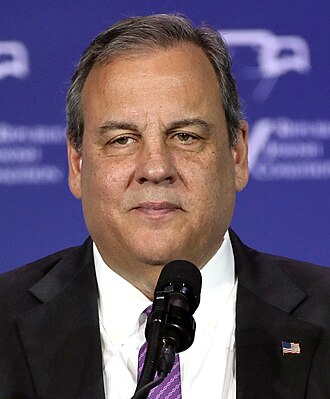
Chris Christie
“[T]his past week or two Pope Francis is now allowing blessings of same-sex couples; even the Church is changing. Society has changed and what people are accepting in our country now is different than when I was growing up, certainly than when I was your age. And you know I dont have any objection to it [same-sex marriage] any longer. In the end, I think Ive been convinced.”
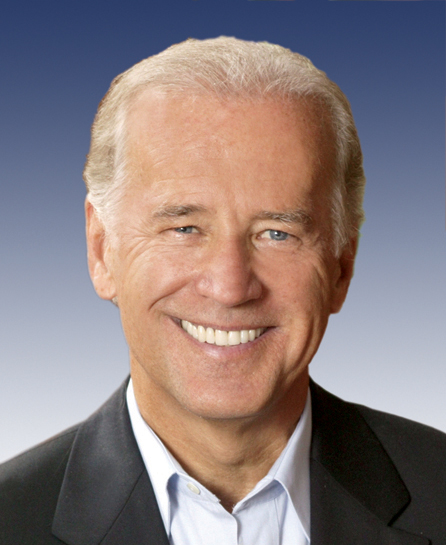
Joe Biden
“LGBTQI+ rights are human rights.”
Republican Stance on LGBTQ+ Rights
The Republican Party has historically taken a conservative stance on LGBTQ+ issues through the emphasis of traditional family values, religious freedom, and states’ rights. While views within the party remain diversified, especially amongst younger Republicans, most elected Republicans have placed limits on specific aspects of LGBTQ+ protections, such as restricting gender-affirming care and limiting transgender participation in sports. Republicans argue that these measures are necessary to protect children and preserve the fairness of competition, especially in women’s sports.
One major priority for many right lawmakers has been ensuring that parents have a say in what their children are taught regarding gender and sexuality in public school. Some support laws that require parental notification if a child identifies as transgender at school or limit LGBTQ+ curriculum in early education. Many Republican-led states have also passed laws banning gender-affirming care for minors, restricting drag performances near children, and limiting the discussion of LGBTQ+ topics in classrooms through legislation like the Parental Rights in Education Act.
The GOP has historically opposed same-sex marriage; however, recent public opinion has been fluctuating. A Gallup Poll from 2024 shows that almost half of Republicans (46%) support gay marriage, which is slightly lower than the support received in 2022 (55%). Still, this is a significant jump from the 22% of Republicans who supported gay marriage in 2004. Many rightwing lawmakers today also express concerns about the long-term societal impact of same-sex marriage and call for the issue to be left ot the states. Furthermore, many Republicans argue that adding sexual orientation and gender identity to federal civil rights laws could infringe on religious liberty, and advocate for religious exemptions and protections for conscience rights.
Politicians Who Oppose LGBTQ Equality Rights

43% of Republicans support same-sex marriage.
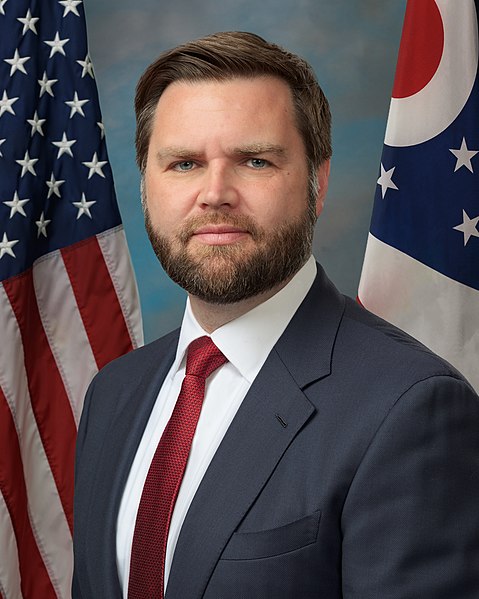
J.D. Vance
“The last thing the State Department should be doing is wasting its time and your tax dollars pushing far-left gender ideology…There are only two genders passports issued by the United States government should recognize that simple fact. I am proud to introduce this bill to restore some sanity in our federal bureaucracy.”
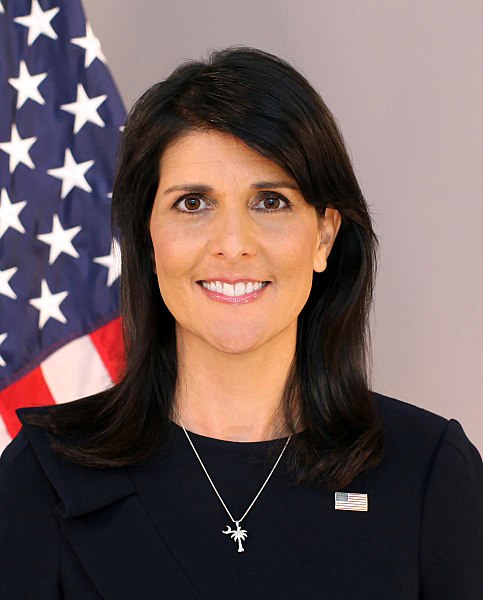
Nikki Haley
“They can find a place for trans kids to play sports, but biological boys should not be playing in girls sports. My daughter ran track in high school. I dont know how I would even have that conversation with her. How do we tell our girls that its OK to have a biological boy in their locker room? Its not. In no scenario … We have to remember that strong girls become strong women. Strong women become strong leaders. That doesnt happen by putting biological boys in womens sports. Youve got women who have worked so hard all their life to really get to points in high school and college where they want to, and to have a biological man, whos physiologically different, athletically, go and take that away from those women, no, were not gonna erase the women like that. You cant do that. You can find other ways of dealing with this, but it doesnt have to be on the backs of our girls, who were trying to make strong. Its the wrong thing to do, and Ill always fight against that.”
The Partisan Divide
Today, the partisan divide over LGBTQ+ rights reflects more profound ideological differences between the two major parties. The Democratic Party essentially promotes expansive protections across all areas of public life with federal guarantees. Republicans, while increasingly diverse in their views, tend to prioritize religious liberty, parental rights, and limited federal intervention. As the landscape around these issues continues to evolve, from marriage equality to LGBTQ policies in healthcare and education, the divide is not only political but deeply cultural. Bridging this gap will require ongoing dialogue and a commitment to balancing freedoms and societal values in a diverse democracy. For more bias-free news, check out the best news sources for all ends of the political spectrum.
