









How News Sources Portray Mandatory Minimums Policy
This chart shows how major news sources across the ideological spectrum frame mandatory minimums policy, from left to right-leaning perspectives.














Mandatory minimum sentences, laws that require fixed prison terms for specific crimes (often drug-related), have played a central role in American criminal justice policy for decades. Initially championed by Republican lawmakers as part of a tough-on-crime agenda, these statutes have drawn increasing scrutiny across the political spectrum. A 2015 national poll found that a majority of Americans, regardless of party, oppose such compulsory sentencing. Yet the partisan gap remains: 83% of Democrats voiced opposition to mandatory minimums compared to 66% of Republicans, signaling differing views on justice, rehabilitation, and the role of discretion in sentencing. For more political bias across party lines, other than mandatory minimum statistics, check out Biasly’s political party stances on issues.
Brief History of Mandatory Minimums
Mandatory minimum sentencing laws first gained traction in the mid-20th century with the Boggs Act of 1951 and the Narcotics Control Act of 1956 imposing harsh minimum penalties for drug crimes. Backlash over inflexible penalties led to a rollback of many of these laws in the 1970s; however, the 1980s saw a resurgence of mandatory minimums during the Reagan administration’s “War on Drugs.” The Anti-Drug Abuse Act of 1986 included the infamous 100-to-1 disparity between crack powder and cocaine quantities. Republicans primarily supported these laws, but many Democrats joined under pressure to appear “tough on crime.”
The controversial impact of mandatory minimums became clear in the 1990s with the dramatic rise in incarceration among Black and Latino Americans. Critics argued the laws led to unjust sentences for nonviolent offenders and unfairly affected marginalized communities. Efforts like the 1994 Crime Bill, sponsored by then-Senator Joe Biden, added fuel to the mass incarceration trend.
Most recently, we have seen bipartisan momentum for mandatory minimum repeal in the 21st century to move away from minimum compulsory sentencing. The Fair Sentencing Act of 2010 reduced the disparity of crack & powder cocaine cases signed by Obama, and the First Step Act of 2018, signed by Donald Trump, allowed for increased judicial flexibility and sentence reductions for some inmates. With public opinion shifting, the growing support for rehabilitation over punishment and the reevaluation of mandatory minimums is evident across party lines.
Democratic Stance on Mandatory Minimums
During the 1980s and 1990s, many Democratic lawmakers supported mandatory minimums as part of the broader “tough on crime” legislation. At the time, the party sought to appeal to concerns about rising crime rates, but the support for mandatory minimums later drew criticism from within the party itself.
In a shift towards reform in the early 2000s, Democrats’ policy stance on mandatory minimums has increasingly strayed away from harsh sentencing laws, passing legislation such as the Fair Sentencing Act of 201o, signed by President Obama, to reduce the disparity between crack and powder cocaine offenses. This was a significant step in correcting racial inequality, and President Obama became the first sitting president to visit a federal prison and grant clemency to hundreds of nonviolent drug offenders sentenced under outdated mandatory minimums.
Today, the Democratic Party broadly supports reducing or eliminating mandatory minimum sentences, with the 2020 Democratic Platform calling for an end to compulsory minimums due to their role in mass incarceration and racial injustice. While progressive Democrats argue for broader reform that includes investments in rehabilitation, mental health treatment, and alternatives to incarceration, moderates focus on law enforcement partnerships with a consensus within the party that mandatory minimums are outdated.
Politicians Who Oppose Mandatory Minimums

83% of Democrats voiced opposition to mandatory minimums.

Elizabeth Warren
“We can start by ending mandatory minimums for individuals — the cruel sentencing requirements that could have caused Terri [a nonviolent offender] to be sent to jail for life. We also need to end the practice of jailing people because they can't afford bail or other fines and fees. We should legalize marijuana and wipe clean the records of those who have been unjustly jailed for minor marijuana crimes; end private prisons and the profit incentives that pervert the goal of our justice system...”
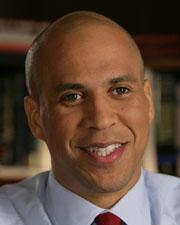
Cory A. Booker
“So now you have a mandatory minimum of five years and you have a 17-year-old kid doing nothing different than 17-year-old kids of other races… Now you're out of school and now you have a felony conviction and what does that mean for your life? It means you can't get a Pell grant, it means you can't get a job… it means you can't get a business license… And now you wonder why that kid has had all his economic viability taken away from him. You think the system is unfair. You know it is...”
Republican Stance on Mandatory Minimums
Mandatory minimums were championed mainly by Republican lawmakers in the 1980s and ‘90s under Reagan’s War on Drugs, leading to legislation such as the Anti-Drug Act of 1986 that imposed harsh mandatory minimums for drug crimes. It was one of many right policy stances aimed at deterring crime and promoting law and order, with an emphasis on public safety. Into the early 2000s, rightwing lawmakers continued to defend mandatory minimums as the policy was seen as a key tool in combating drug trafficking, violent crime, and perceived judicial leniency.
This era eventually led to growing concerns among conservatives about the cost of incarceration and the loss of judicial discretion, leading some Republicans to reexamine mandatory minimums from a fiscal and constitutional perspective. Influential conservatives like Governor Rick Perry from Texas began to advocate against state mandatory minimums, instead supporting sentencing reform, citing wasteful spending, prison overcrowding, and overreach of federal power. The First Step Act of 2018, signed by President Trump, marked a bipartisan breakthrough by allowing judges to reduce some mandatory minimum sentences for nonviolent drug offenders.
Today, the party is split on mandatory minimums, with traditional conservatives still supporting new mandatory minimum laws for serious offenses, and essential to deterrence. However, libertarian-leaning and reform-minded Republicans argue for limiting or even entirely eliminating them where low-level drug offenses are concerned. While the party’s platform does not explicitly call for an end to mandatory minimums, many GOP lawmakers support reform in specific areas.
Key movements like the Right on Crime and Koch-backed organizations within the Republican party have promoted alternatives to incarceration and the rollback of harsh sentencing laws. Furthermore, Republican-led states such as Texas, Georgia, and South Carolina have enacted successful criminal justice reforms that reduce prison populations and maintain public safety.
Politicians Who Support Mandatory Minimums

66% of Republicans voiced opposition to mandatory minimums.

Jeff Sessions
“It is a core principle that prosecutors should charge and pursue the most serious, readily provable offense. This policy affirms our responsibility to enforce the law, is moral and just, and produces consistency. This policy fully utilizes the tools Congress has given us. By definition, the most serious offenses are those that carry the most substantial guidelines sentence, including mandatory minimum sentences.”

Tom Cotton
“Rioters of any immigration status who assault ICE officers and engage in acts of violence should face stiff consequences. My bills make clear that Americans will not tolerate lawless rioting... [by] establishing and increasing mandatory minimum sentences for violent offenders and by requiring deportation within 60 days of any non-citizen convicted of a criminal offense during a protest.”
A Shifting Partisan Divide
The debate of whether mandatory minimums are effective in the long run illustrates the challenges of bipartisan criminal justice reform. While the compulsory sentencing policies were historically rooted in Republican-led initiatives, support for mandatory minimums has eroded across both ends of the political spectrum. Democrats have broadly supported eliminating such policies and prefer rehabilitation and individualized sentencing. On the other hand, Republicans have shown an increasing openness to reform, which has been driven by concerns over fiscal responsibility and the unintended consequences of rigid sentencing laws.
Despite these shifts, the partisan divide persists as Democrats call for broad systemic change and Republicans support more targeted reforms. However, the shared acknowledgment that mandatory minimums often fail to deliver serves as a rare point of convergence in today’s polarized society. With public opinion continuing to evolve, the future of sentencing reform may depend on whether both parties can create long-lasting bipartisan solutions. Check out our media bias checker Chrome extension to know what side of the political spectrum you’re getting your news from.
