









How News Sources Portray Police Funding Policy
This chart shows how major news sources across the ideological spectrum frame police funding policy, from left to right-leaning perspectives.











Many of the media biases we observe, whether in news coverage or political rhetoric, stem from the fundamental differences in policy perspectives held by major political parties. One of the many key points of conflict is police funding.
Police funding refers to “the federal and state funding of police departments.” Recently, protests against or limiting police funding have taken place, highlighting the topic as central to discussions about public safety, civil rights, and community trust.
Policymakers often focus on how to distribute police funding and whether to expand, maintain, or reduce budgets for law enforcement agencies. Advocates argue that funding can ensure safety and order in communities, while critics believe excessive spending diverts resources from social services that address the root causes of crime. The debates over police funding allocation highlight the challenge of balancing community needs with law enforcement responsibilities. Public opinion remains divided, making police funding one of the most politically sensitive topics in American policy today.
The Democratic Stance on Police Funding
The Democratic platform’s policy stance on police funding generally supports a community-centered approach to police funding in the U.S., prioritizing accountability, training, and transparency. Although the party doesn’t call for “defunding” in the abolitionist sense, its emphasis on restructuring how resources are allocated reflects a moderated form of defunding. This approach shifts funding toward community-based services to address the root causes of crime rather than eliminating policing altogether. A portion of Democrats advocate for reallocating funds from traditional policing to social programs—such as mental health services, housing, and education—to emphasize that safety depends on community well-being.
Democrats generally believe that effective policing requires reform and oversight, not an increase in spending. Many also point to police funding vs social services as a way to rebalance priorities for long-term prevention rather than short-term enforcement. Overall, Democrats tend to advocate for reforms that ensure fair treatment, professional training, and de-escalation practices while maintaining adequate funding to keep communities secure.
Politicians Who Oppose Police Funding

34% of Democrats and independents lean in favor of increasing spending on police.

Alexandria Ocasio-Cortez
“Defunding police means defunding police. It does not mean budget tricks or funny math. It does not mean moving school safety officers from the NYPD budget to the Department of Education budget so the total amount of money stays the same.”
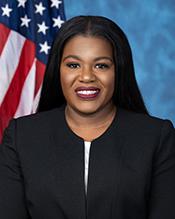
Cori Bush
“Defunding the police has to happen. We need to defund the police and put that money into social safety nets because we're trying to save lives.”
The Republican Stance on Police Funding
Republicans have traditionally emphasized strong support for law enforcement and opposed measures that reduce police funding or redirect resources away from departments. Their stance reflects a belief that maintaining or increasing funding is essential for safety, morale, and effectiveness in combating crime.
The Republican stance on police reform argues that calls to “defund” police agencies weaken national security and harm communities, especially those most affected by crime. The party highlights that officers face rising challenges and require proper tools and training to battle them. In this perspective, reducing budgets would lead to understaffed and undertrained departments, increasing crime and response times. It reflects the broader Republican focus on funding police and public safety policy, which prioritizes law and order as the foundation of a stable society.
Politicians Who Support Police Funding

61% of Republicans and independents lean in favor of increasing spending on police.

Tim Scott
“But instead of defunding them, let's re-fund the police. Let's give them the money they need.”
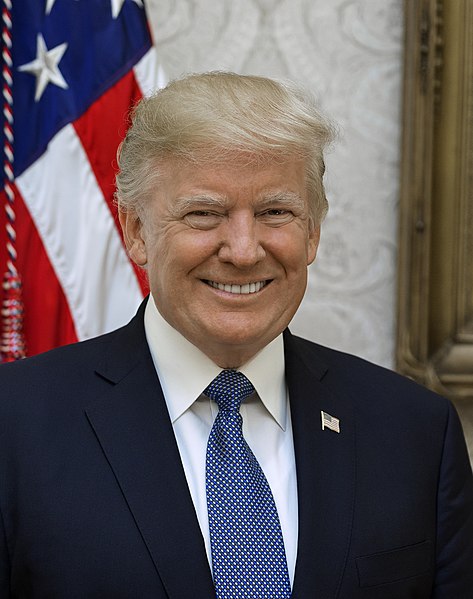
Donald Trump
“We won't be defunding our police. There won't be dismantling of our police. There's not going to be any disbanding of our police.”
Policy on Police Funding in the United States
Police funding statistics reveal that a large share of local government budgets goes to policing and public safety. At the federal level, grants and special programs provide this monetary support, while states manage their own allocations.
Since 2020, nationwide protests and shifted public sentiment have given rise to discussions surrounding defunding police agencies. A survey on police funding in 2021 by the Pew Research Center found 61% of Republicans and independents leaning in favor of increasing spending on police compared to 34% of Democrats and independents. Despite partisan differences, both parties recognize that effective funding policies are crucial for maintaining public order and trust.
Generally, Democrats emphasize oversight and community collaboration, while Republicans focus on strengthening traditional law enforcement capacity. Together, they shape a balanced framework on how policing functions across the United States.
A Brief History of Police Funding in the U.S.
In the early 20th century, local police departments were funded primarily by city and county governments with minimal federal involvement. The role of the federal government expanded during the 1960s through the Law Enforcement Assistance Administration (LEAA), which provided grants for training equipment. In the 1980s and 1990s, the “tough on crime” era led to a significant rise in legislation aimed at combating drug offenses and violent crimes.
According to the Urban Institute, from 1977 to 2021, “state and local government spending on police increased from $47 billion to $135 billion, an increase of 189 percent.” Police spending has accounted for roughly 4 percent of direct state and local general expenditures, including spending on police, sheriffs, state highway patrols, and other governmental departments charged with protecting public safety.
The national debate over how these resources should be allocated intensified in 2020 following the murder of George Floyd and other high-profile police killings, including Daunte Wright who was fatally shot by a police officer during a traffic stop and Amir Locke who was shot and killed by a Minneapolis SWAT team officer while a search warrant was being executed at an apartment where he was sleeping on a couch.
These incidents brought unprecedented public scrutiny to policing practices and spending priorities, pushing conversations about reallocation, oversight, and public safety while fueling widespread calls to “defund the police”. However, over the following years, the demands evolved into more nuanced discussions focused on reform, accountability, and strategic reallocation rather than full budget cuts. Since then, data transparency initiatives and accountability measures have reshaped how communities evaluate funding effectiveness, signaling the beginning of modern reform efforts in the 21st century.
What the Future Holds
The future of police funding in the United States will depend on how policymakers balance safety and social priorities. As the years go by, crime rates and technology evolve, and both parties will continue to debate on how to distribute funds. Local governments are exploring data-driven funding models that allocate resources based on community needs, population density, and public safety outcomes. Technology also plays a crucial and greater role with body cameras, data analysis systems, and predictive policing tools, which all require investment that accounts for modernization efforts.
Some policymakers will continue to advocate redirecting funding toward prevention-based programs such as youth outreach, mental health crisis response, and substance abuse treatment, reflecting a broader belief that proactive strategies can reduce long-term crime rates while strengthening community trust. At the same time, law enforcement advocates will argue that underfunded police departments can face burnout, recruitment challenges, and limited response capacity, highlighting a need for an increase in police funding as essential to national security and local safety.
Ultimately, police funding is crucial when ensuring the stability, responsiveness, and professionalism of law enforcement agencies while maintaining fairness and equity in their operations. Whether through reform, oversight, or expansion, the issue of police funding will remain a defining element of public policy and political discourse in the years ahead.
To explore how each political party views other key policy topics, visit Biasly’s full list of Political Party Policy Stances.
To unlock more data-driven insights into media bias, explore political leanings with research-backed tools, and customize your news feed around what matters most to you, sign up for a Biasly Premium News Membership.
