









How News Sources Portray Protectionist Trade Policy
This chart shows how major news sources across the ideological spectrum frame protectionist trade policy, from left to right-leaning perspectives.










Many of the media biases we observe, whether in news coverage or political rhetoric, stem from the fundamental differences in policy perspectives held by major political parties. One of the many key points of conflict is protectionist trade.
Protectionist trade refers to “government policies that restrict international trade to help domestic industries.” In other words, it is a way for governments to protect their country’s businesses from too much foreign competition. Trade protectionist policies aim to limit imports by imposing higher tariffs while encouraging local production. This ensures imported goods become more expensive, forcing people to buy domestic products instead. The Democratic and Republican parties often debate on this issue, illustrating a significant divide in how these policies affect jobs, prices, and the nation.
The Democratic Stance on Protectionist Trade
The Democratic Party tends to favor free trade over strict protectionism. Polling suggests that Democrats are more opposed to protectionist trade measures, arguing that open markets encourage innovation and lower prices. The 2016 Democratic Party platform expressed that global trade is a key component in promoting competition, lowering prices, and strengthening international relationships. Democrats view trade as a tool for cooperation efforts that highlight global prosperity.
Despite this idea, the democratic stance on trade also supports limited trade protection policies, especially when it comes to protecting workers’ rights or national security. For example, Democratic lawmakers have promoted measures that prevent unfair trade practices, such as child labor or poor environmental standards. They have also focused on protecting jobs in critical industries, such as technology or renewable energy.
Generally, the Democratic Party supports a more balanced approach to the protectionist trade debate, linking economic growth to ethical standards and global fairness. This allows them to push for free trade while ensuring it is fair trade.
Politicians Who Oppose Protectionist Trade
67% of Democrats view free trade agreements positively.
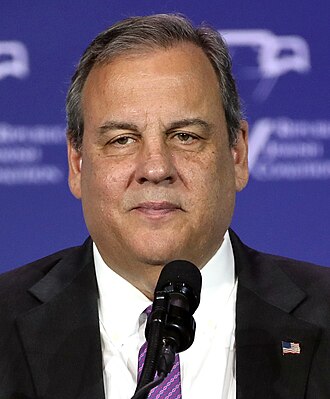
Chris Christie
“And I will say this about what I heard from Nikki [Haley] earlier. She said that Donald Trump was good on trade.He wasn’t. And the proof that he wasn’t good on trade with China is that all he did was impose tariffs, which raise the prices for every American. You want to know what has contributed to inflation in this country? Yes, it’s more government spending. Yes, it’s the fact that we’re printing too much money. Absolutely. But it is also the increase in prices that were driven by Donald Trump’s tariffs.And one last thing. You can’t say he was good on trade because he didn’t … change one Chinese policy in the process. He failed on it.”
Joe Biden
“Trumps tariff war with China is crushing American farmers. It’s easy to talk tough when someone else feels the pain. We need to be tough AND smartworking with allies to curb Chinas abusive trade practices, not isolating us from our closest partners.”
The Republican Stance on Protectionist Trade
Unlike the Democrats, the Republican Party tends to favor protectionist trade policies. The Republican platform appears more cautious about free trade agreements, favoring protectionist trade measures. In fact, many Republicans believe open trade has gone too far and has hurt American jobs and industries. They raise concerns about imports undermining U.S. workers and weakening national independence.
Under President Trump’s administration, US protectionist policies increased through tariffs on steel, aluminum, and Chinese goods. They became a major part of the Republican agenda, reducing dependency on foreign markets and supporting local industries. The Republican ideology asserts that raising tariffs on imports will allow domestic production to boom while encouraging companies to bring jobs back to the U.S. This is a distinct concept from the Democratic platform, but with the same focus on enhancing economic growth.
Generally, many Republicans argue that protectionist trade is essential to strengthen the economy and promote economic independence.
Politicians Who Support Protectionist Trade
63% of Republicans view free trade agreements negatively.
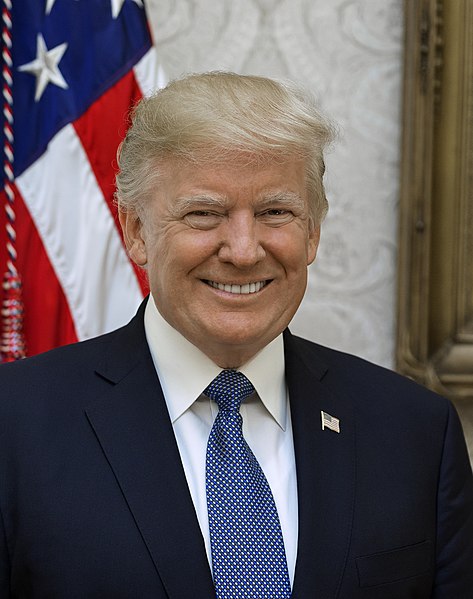
Donald Trump
“If China or any other country makes us pay a tariff of, lets say 100 [percent], or 200 [percent], or even 300 percent, and they do that, we will make them pay a reciprocal identical tariff of 100 [percent] or 200 [percent] or 300 percent right back. Its called you screw us, and we screw you. Very simple. As tariffs on foreign countries go up, taxes on American workers and families will come down very substantially.”
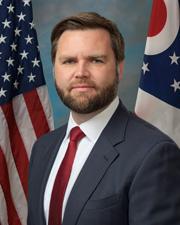
J.D. Vance
“Well, look, I’m not gonna speak for Donald Trump, but I certainly agree that we need to apply some broad based tariffs, especially on goods coming in from China and not just solar panels and EV stuff. We need to protect American industries from all of the competition. Because here- here’s the thing, [ … ] the reason China beats us, it’s not because they have better workers, it’s because they’re willing to use slaves to make things there. We want American – we want American workers to make this stuff at good wages.”
Policy on Protectionist Trade in the United States
Currently, the United States operates using a mix of protectionist and free trade policies, highlighting a nation where Democratic and Republican ideologies are combined. Despite polls demonstrating that 63% of Republicans view free trade agreements negatively, compared to 67% of Democrats who view them positively, the policy stance on protectionist trade is usually balanced with limited and enhanced political support.
While the U.S. supports open market policies with organizations like the World Trade Organization (WTO), it still employs protectionist policies such as tariffs, import quotas, and subsidies to protect key industries and defend economic interests. However, partisan conflicts may arise as Congress and the President change trade policies as they see fit. Democratic politicians might push for environmental and labor protections, while Republicans advocate for tariffs and import restrictions.
The policy of protectionism was meant to create fair competition, though it often leads to trade disputes. At the same time, the U.S. has cooperated in free trade agreements, prioritizing global trade partnerships despite having protectionist measures.
A Brief History of Protectionist Trade in the U.S.
Protectionism has deep roots in U.S. history. In the 19th century, one of the principal sources of federal revenue was tariffs, which encouraged the growth of American industries. During the Great Depression, the Smoot-Hawley Tariff Act raised import taxes on thousands of goods to protect American businesses and farmers. Despite its intent to protect American farmers and workers, it worsened the economic crisis of the time by reducing international trade.
In the 20th century, the General Agreement on Tariffs and Trade (GATT) reduced trade barriers, boosting economic recovery after World War II. Following GATT came the World Trade Organization (WTO), which covered trade in services and intellectual property. The North American Free Trade Act (NAFTA) eliminated trade barriers and most tariffs on imported products, opening trade with Canada and Mexico. This reflected a wide shift between free trade and protectionism. Then the United States-Mexico-Canada Agreement (USMCA) replaced NAFTA and enforced stricter labor and production laws to support American workers.
The consistent change in these protectionist trade policy examples demonstrates the ongoing balance between openness and protection in the United States. It reflects on America’s dependence on its economic and political needs.
What the Future Holds
The future of protectionist trade will likely remain a policy issue between Democrats and Republicans, reflecting political division, but also growing cooperation in certain areas. While the Democratic Party may continue supporting global fair trade, Republicans may push for stronger domestic protection, making trade protection policies an ongoing conflict between the parties.
As global tensions rise, this could lead to a common ground for protectionist trade policies, aiming to protect crucial sectors such as technology and energy. The U.S. will have to balance its domestic priorities with international trade rules, possibly employing targeted tariffs, trade limits, and subsidies for years to come. The debate between free trade and protectionism will persist, shaping America’s economic future and how the U.S. interacts on the global stage.
To explore how each political party views other key policy topics, visit Biasly’s full list of Political Party Policy Stances.
To unlock more data-driven insights into media bias, explore political leanings with research-backed tools, and customize your news feed around what matters most to you, sign up for a Biasly Premium News Membership.
