









How News Sources Portray Qualified Immunity Policy
This chart shows how major news sources across the ideological spectrum frame qualified immunity policy, from left to right-leaning perspectives.












Many of the media biases we observe—in both news coverage and political rhetoric—stem from the fundamental differences in policy stances held by the major political parties. One of many key points of conflict is qualified immunity.
Qualified immunity is a type of legal immunity that “protects a government official from lawsuits alleging that the official violated a plaintiff’s rights, only allowing suits where officials violated a clearly established statutory or constitutional right.” Recently, it has been contested in cases of police brutality.
With the recent case of Derek Chauvin, the qualified immunity policy has become a highly contentious topic strictly based on circumstance. Whether officers and those in government positions deserve immunity from some things is a difficult question. Coverage on the issue has reflected a broader ideological split between Democrats and Republicans, shaping how the public understands the role of qualified immunity in regard to the law and society.
The Democratic Stance on Qualified Immunity
The Democratic Party generally opposes qualified immunity, describing it as a tool hindering accountability and justice. Democrats argue that eliminating qualified immunity is important to making sure police officers and federal officials are held responsible when violating civil rights.
A research study conducted by the Pew Research Center found that 84% of Democrats strongly believe civilians should be able to hold officers and government officials responsible for abuse of power. Legislation has helped in restricting or abolishing qualified immunity, though have been halted in Congress due to a clash of ideas.
Despite this, Democrats have continued to push for accountability measures, framing qualified immunity as a key component of racism, police brutality, and civil rights issues. After the death of George Floyd, the George Floyd Justice in Policing Act was sought as a restriction on this policy. Attempts have been made to battle against it, but most of the time, they fall short.
The democratic stance on political issues such as this one is usually focused on pushing for victims’ rights, arguing that the current qualified immunity standard too often prevents them from pursuing justice. The party’s goal is to protect civil rights and call for police reform to end abuse of power.
Overall, many politicians in the Democratic Party state that the qualified immunity doctrine is unconstitutional, hindering efforts to achieve equality and justice.
Politicians Who Oppose Qualified Immunity
84% of Democrats strongly believe civilians should be able to hold officers and government officials responsible for abuse of power.

Ayanna Pressley
“Qualified immunity is an unjust, court-invented legal doctrine that says law enforcement misconduct can be excused. That includes violations of constitutional rights. ... If victims of violence can sue state and local law enforcement, they should also be able to sue federal law enforcement. Step two: we need to abolish qualified immunity.”
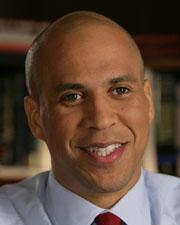
Cory A. Booker
“For too long our courts have closed their doors to people seeking redress when police violate their constitutional rights. We've got to ensure that there is access to justice to truly hold police accountable for their misconduct. This resolution is just the first step of moving forward to ensure people can use our courts to achieve the justice they deserve.”
The Republican Stance on Qualified Immunity
The Republican Party tends to support qualified immunity laws, as they cite the benefits of qualified immunity for protecting officers and officials who act in good faith under pressure. The good faith protection usually applies when officials do not violate “clearly established” constitutional or statutory rights. This means if the law was not clear at the time, they are shielded from punishment. This circumstance is crucial as it is a shield against the endless lawsuits brought by law enforcement brutality cases.
In the Pew Research Center study, 53% of Republicans believe that Police Officers require some sort of safeguard in order to protect them against lawsuits accusing them of excessive force/conduct. This contrasts with the Democratic view, as Republicans frame reforms as governmental overreach, arguing that it removes needed protections and weakens the effectiveness of law enforcement.
Republicans also highlight concerns regarding multiple unnecessary lawsuits being filed against officers. They argue that indemnification already exists, making the government cover costs if an officer is sued, which usually allows officers to be held accountable without completely getting rid of qualified immunity.
Politicians Who Support Qualified Immunity

53% of Republicans believe that Police Officers require some sort of safeguard in order to protect them against lawsuits accusing them of excessive force/conduct.

Tom Cotton
“Contrary to the misinformed and disingenuous arguments of critics, qualified immunity does not elevate police officers above the law, nor does it make it impossible to sue an officer for violating your rights. ... When police officers strap on their guns and vests, and put their lives at risk to protect the people in their community, they shouldn't have to worry about financial ruin just for doing their job. We should protect those who protect us — and that means protecting qualified immunity.”

Tim Scott
“From the Republican perspective, and the president has sent a signal that qualified immunity is off the table. They see that as a poison pill on our side. ... We know that any poison pill in legislation means we get nothing done. That sends the wrong signal, perhaps the worst signal, right now in America.”
Policy on Qualified Immunity in the United States
At the federal level, qualified immunity protects much more than just police officers. It reaches a grand scope of individuals in the United States and even reaches the government. There are many officials, as well as officers who fall under this category, such as politicians and public servants, who enjoy the benefits of qualified immunity.
So far, Congress has not passed legislation to eliminate or reform qualified immunity, though bills and acts have been passed to try and lessen its effect.
At the state level, things vary. In 2020, Colorado passed Senate Bill 20-217, the Enhance Law Enforcement Integrity Act, which removed the qualified immunity defense for law enforcement officers and allowed civil lawsuits for constitutional violations. This effectively bypassed federal law and set a framework for the state, while other states have resisted change. It has proceeded to become a constant political debate, affecting many areas of social life and the law.
A Brief History of Qualified Immunity in the U.S.
The qualified immunity history begins as early as 1871 with the Civil Rights Act of 1871 (Section 1983), which focused on holding officials accountable for their violations of civil rights. Then, in 1967, the Supreme Court case Pierson v. Ray came about. Officers who arrested civil rights activists claimed immunity, which resulted in the court ruling that the “Good Faith Defense” could be used to protect officials who reasonably believed their actions were lawful. This idea laid the foundation for qualified immunity, making it harder for people to sue officials even when their rights were violated.
Later, in 1982, the Supreme Court redefined the idea of qualified immunity in Harlow v. Fitzgerald, assessing the objective legality of an official’s actions rather than the subjective intent. This removed the need to prove an official’s intent or good faith, focusing on whether the official violated an established right.
More recently, Taylor v. Riojas in 2020 ruled that officers could not use qualified immunity for protection when misconduct is obvious.
What the Future Holds
The future of qualified immunity is surrounded by mixed opinions. In total, both political parties have a majority of 66% that believe it’s best to revoke qualified immunity and hold officials accountable for their wrongdoings. However, qualified immunity is applied based on specific circumstances. If an official acts in good faith or without clearly violating the established law, they may still be protected. If one commits acts in which misconduct is clear and unlawful, qualified immunity becomes limited.
Democrats are more likely to continue striving for reforms, while Republicans resist them. Since this often results in gridlock, the federal government can’t take action, and the states might have to pass their own laws if they see fit. New court rulings may also change the scope of qualified immunity, revoke it, or enforce it as the years go by.
The debate over qualified immunity demonstrates a broad struggle between protection and accountability. With increasing public scrutiny and the rise of political controversies, pressure for change may continue to grow.
To explore how each political party views other key policy topics, visit Biasly’s full list of Political Party Policy Stances.
To unlock more data-driven insights into media bias, explore political leanings with research-backed tools, and customize your news feed around what matters most to you, sign up for a Biasly Premium News Membership.
