









How News Sources Portray Separation of Church and State Policy
This chart shows how major news sources across the ideological spectrum frame separation of church and state policy, from left to right-leaning perspectives.














Separation of church and state in the United States refers to a policy that prevents the declaration of an official religion. It means that the government should not pick a side on the topic of religion, nor consider one religion as superior to any others. The concept of separation of church and state was established in the Bill of Rights and later affirmed in numerous Supreme Court cases.
In modern times, religiosity in the United States has been declining, particularly among younger Americans, though support for declaring the U.S. a Christian nation remains high among Republicans. This has resulted in a number of controversies surrounding the broader idea of religious freedom.
The History of Separation of Church and State in the U.S.
Throughout America’s original 13 colonies, religion was an important subject. Some colonies adopted official religions and established state churches, while others sought more diversity in their beliefs. For example, the founder of the Rhode Island colony, Roger Williams, said that a “hedge or wall of separation between the garden of the church and the wilderness of the world” was necessary. Nevertheless, Christianity remained the predominant religion above all else, encompassing the Quakers, Puritans, and other Protestants.
Later, in an 1802 letter responding to fears about an official religion, Founding Father Thomas Jefferson referenced Roger William’s work when describing the purpose of the United States Constitution’s newly created First Amendment. It read, “Congress shall make no law respecting an establishment of religion, or prohibiting the free exercise thereof.” As president, Jefferson refused to declare Thanksgiving as a national day of prayer as his predecessors, including George Washington, had.
In contrast, Jefferson’s successor, James Madison, repeatedly declared Thanksgiving as a day of prayer during his term. Still, Madison vetoed bills for violating the First Amendment, highlighting his support for a separation of church and state. At the time, however, the First Amendment only applied to the federal level, so for many decades after its creation, official religions and churches continued at the state level.
This policy changed in 1947. Following the Everson v. Board of Education Supreme Court decision, the Establishment Clause of the First Amendment applied to both the state and federal levels, meaning that many of the practices observed in the states prior to this point would have been deemed as unconstitutional. Additional lawsuits were filed throughout the decades, but the Supreme Court consistently ruled in the favor of a separation of church and state.
In spite of America’s policy of separation of church and state, the phrase “under God” remains a part of the Pledge of Allegiance, which has been revised over time. The initial version in 1892 read, “I pledge allegiance to my Flag and the Republic for which it stands, one nation, indivisible, with liberty and justice for all.”
In the decades to follow, the Pledge was tweaked for clarity to ensure that foreign-born people were pledging allegiance to the United States and not to another country. By 1924, it read, “I pledge allegiance to the Flag of the United States of America and to the Republic for which it stands, one nation, indivisible, with liberty and justice for all.” Neither the original version nor the later versions made any explicit reference to religion.
Finally, in 1954, President Dwight D. Eisenhower signed into law the Pledge as it is recognized today: “I pledge allegiance to the flag of the United States of America, and to the Republic for which it stands, one Nation under God, indivisible, with liberty and justice for all.”
During the Civil War, President Abraham Lincoln uttered the words “under God” in his Gettysburg Address, serving as the reference point for people hoping to add the phrase to the Pledge. Later, Americans adopted the phrase during the Cold War as a contrast to the communist nations advocating for atheism. A Gallup poll in 1953 found that 69% of Americans supported the words “under God” as part of the Pledge.
The Democratic Response on Separation
The Democratic Party stance is in favor of a separation of church and state. Democrats believe that the United States was founded on an idea of religious freedom, where people are free to practice any religion they want, or no religion at all.
In a 2021 Pew Research poll, only 22% of Democrats supported religious symbols on public property, 18% supported teachers leading Christian prayers in schools, and 13% favored an end to the separation of church and state. Democrats overwhelmingly believed that the United States Constitution reflected humans’ vision, not necessarily God’s, that the government should never declare an official religion, and that morals can be shared by people of many faiths.
However, the same poll indicated some nuance at the demographic level. Black Americans and Hispanic Americans, both strongly Democratic groups, were about as equally likely as White Americans to support increased religiosity in society.
In addition, Democrats have shown some belief that religious freedom is not absolute. In a 2023 PRRI poll, 82% of Democrats felt that small businesses should not be allowed to refuse service to LGBT Americans because of their beliefs, a right that the Supreme Court has nevertheless upheld.
In 2025, Senate and House Democrats reintroduced the Equality Act, which would make sexual orientation and gender identity protected classes in the same manner as race, religion, sex, and national origin. If passed, people and businesses could no longer refuse service to LGBT people on the basis of their orientation.
Politicians Who Support Separation of Church and State
22% of Democrats supported religious symbols on public property, 18% supported teachers leading Christian prayers in schools, and 13% favored an end to the separation of church and state.

John F. Kennedy
“I believe in an America where the separation of church and state is absolute—where no Catholic prelate would tell the President (should he be Catholic) how to act, and no Protestant minister would tell his parishioners for whom to vote—where no church or church school is granted any public funds or political preference...”
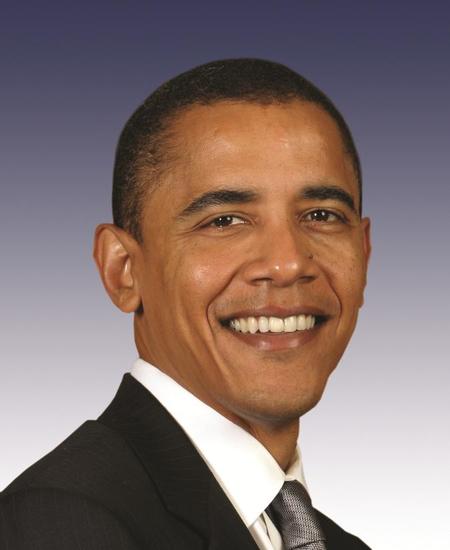
Barack Obama
“The United States is one of the most religious countries in the world... And one of the reasons is that our founders wisely embraced the separation of church and state. Our government does not sponsor a religion, nor does it pressure anyone to practice a particular faith, or any faith at all.”
The Republican Response on Separation
The Republican Party stance is more divided on church-state separation. Many Republicans are Christians, believing that the United States is a Christian nation shaped by God, resulting in starkly different views to the Democratic Party.
In a 2021 Pew Research poll, 60% of Republicans supported religious symbols on public property, 45 percent felt that teachers should be allowed to lead Christian prayers, and 27% felt that the government should stop enforcing separation of church and state. About 3-in-10 Republicans felt that the United States Constitution reflected God’s vision for America, that the government should declare the United States a Christian nation, and that the government should advocate for Christian values above all.
In other words, although a plurality of Republicans still support a separation of church and state, the GOP appears more amicable to increased Christianity in modern American society. This is particularly true for highly religious, White evangelicals.
Politicians Who Oppose Separation of Church and State
60% of Republicans supported religious symbols on public property, 45% supported teachers leading Christian prayers in schools, and 27% favored an end to the separation of church and state.
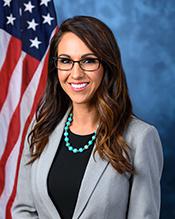
Lauren Boebert
“The church is supposed to direct the government. The government is not supposed to direct the church. That is not how our Founding Fathers intended it. And I'm tired of this separation of church and state junk — that's not in the Constitution. It was in a stinking letter and it means nothing like what they say it does.”
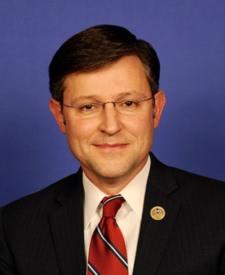
Mike Johnson
“The separation of church and state is a misnomer. People misunderstand it. Of course, it comes from a phrase that was in a letter that Jefferson wrote. It's not in the Constitution. ... The founders wanted to protect the church from an encroaching state, not the other way around.”
The Future of Separation
Despite Republican support for at least some increase in religiosity across American society, religious service attendance has been declining for decades in the United States. A 2024 Gallup publication showed that these declines were spread across almost all major religions in America.
Meanwhile, a 2025 Pew Research publication found that the percentage of Americans identifying as Christians may have leveled off for the first time in 2024. Importantly, the survey found that religiosity among younger Americans remains far lower than other groups. Only 46% of 18-24 year olds identified as Christians compared to 80% of Americans aged 74+.
The decline in religiosity across decades, especially among young Americans, suggests that the separation of church and state in the United States is unlikely to lose majority appeal any time soon.
