









How News Sources Portray Socialized Healthcare Writeup Policy
This chart shows how major news sources across the ideological spectrum frame socialized healthcare writeup policy, from left to right-leaning perspectives.













Whether due to media bias or biased news, many topics are becoming increasingly polarizing and defining political parties in contemporary politics, one of which is socialized healthcare. Socialized healthcare is a highly partisan issue, and political party stances on healthcare differ, as most Democrats support socialized healthcare, while most Republicans oppose it.
What is Socialized Healthcare?
Socialized healthcare refers to the provision of publicly owned healthcare, which includes Medicaid, Medicare, and the Affordable Care Act (ACA). It’s a healthcare system where the government owns and operates the healthcare facilities and employs healthcare professionals, mainly funded through increased taxes. Healthcare professionals are employed by the government rather than the private health sector.
Social healthcare revolves around two main factors: socialized medicine and the social determinants of health. Socialized medicine is a system where the government funds healthcare through taxation and provides it to all citizens. Social determinants of health are non-medical factors that influence health, such as socioeconomic status, education, and environment. Social policy in healthcare includes government programs such as Medicare and Medicaid that receive federal funds.
Medicare provides health insurance for Americans 65 or older or young people with disabilities, and Medicaid provides health insurance for American adults and children who otherwise cannot afford it. Support for Medicare and Medicaid spending is thought to increase as one moves left on the spectrum, and decrease as one moves right on the spectrum.
Is Healthcare a Social Policy?
Healthcare can be considered a social policy, as it falls under a broader category of social policies, which are government initiatives designed to promote the well-being of citizens. Other social policies can include education and income support. Healthcare can help address social issues, as those who receive poor or no healthcare tend to be disproportionately minorities or those in poverty. Poverty and racial discrimination persist as powerful causes of death from illness, and improved healthcare can reduce or eliminate these social issues.
Republican Stance on Healthcare
Republicans’ stance on healthcare is generally negative, as they argue that there should be “vigorous competition” in the healthcare industry and are against a universal approach to healthcare. Polling shows that 68% of Republicans argue that it is not the government’s responsibility to provide healthcare for all citizens. Republicans acknowledge the importance of socialized healthcare programs such as Medicare and Medicaid, but express a desire to limit access to these programs to just the elderly and the impoverished.
Furthermore, 28% of Republicans support Medicare-for-all, which is starkly different from Democrats. 64% of Republicans also reported that they regarded the ACA negatively and often condemned many aspects of it. The White House claims that President Donald Trump will not cut Medicare, Medicaid, or Social Security benefits, despite being a strong Republican, but DOGE (the Department of Government Efficiency) is thought to cut federal spending.
24% of Republicans believe that the government spends too much money on Medicare funding and that the government should reduce Medicare spending. Around 34% of Republicans contend that the federal government spends too much money on Medicaid, and 32% of Republicans believe that the government doesn’t spend enough. Medicaid spending appears to be more evenly split within the Republican Party. Republicans are generally less worried than other parties about the coverage of Medicaid and Medicare.
Politicians Who Oppose Socialized Healthcare Writeup
68% of Republicans argue that it is not the government’s responsibility to provide healthcare for all citizens.
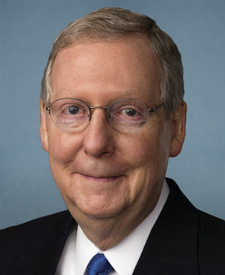
Mitch McConnell
“Medicare for All' is a 'raw deal' for the American people and taxpayers... This radical scheme would be serious bad news [for America's hospitals]... leading to more than 180 million Americans being thrown off their private health plans that many of them like – no choices, no options, no alternatives.”
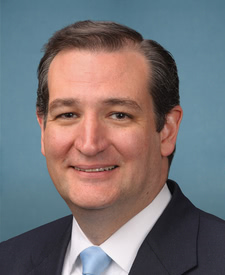
Ted Cruz
“Socialized medicine is a disaster. It does not work. If you look at the countries that have imposed socialized medicine, that have put the government in charge of providing medicine, what inevitably happens is rationing.”
Democratic Stance on Healthcare
Democrats contend that the healthcare industry should be more easily accessible to all citizens without limitations or obstacles, including cost, and support a universal approach to healthcare. Polling shows that 85% of Democrats argue that it’s the government’s responsibility to provide healthcare for all citizens, compared to just 68% of Republicans.
More specifically, Democrats also express support for systems of socialized healthcare, such as Medicaid, Medicare, and the ACA. 86% of Democrats support Medicare and Medicaid-for-all, indicating that Democrats seek to expand Medicare coverage and benefits nationwide; however, the specifics of this system vary from candidate to candidate. Kamala Harris, for example, supported Medicare-for-all, but did not advocate for eliminating private insurance, which is a key component of Medicare-for-all. 67% of Democrats also say that they regard the ACA positively, compared to 36% of Republicans.
A small percentage (<8%) of Democrats believe that the government spends too much money on Medicare; in fact, 60% believe that the government spends too little money on it, compared to just 43% of Republicans. Another small percentage of Democrats argue that the government is spending too much on Medicaid (<5%), while 62% believe that the government doesn’t spend enough.
Politicians Who Support Socialized Healthcare Writeup
85% of Democrats argue that it’s the government’s responsibility to provide healthcare for all citizens.

Pramila Jayapal
“It is a travesty when 85 million people are uninsured or underinsured and millions more are drowning in medical debt in the richest nation on Earth. We don't suffer from scarcity in America, we suffer from greed. That's most clear in our broken health care system, which is why we need Medicare for All. People deserve and want comprehensive health care that covers mental health, long-term care, reproductive care, dental, vision and hearing, all without copays, private insurance premiums, sky-high deductibles or other hidden fees. Health care is a human right, that is exactly why it's time to pass Medicare for All.”
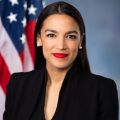
Alexandria Ocasio-Cortez
“When you can't provide for your kids working a full-time job, working two full-time jobs. When you can't have health care. That is not dignified... No one asks how we're going to pay for this Space Force. No one asked how we paid for a $2 trillion tax cut. We only ask how we pay for it on issues of housing, health care and education. How do we pay for it? With the same exact mechanisms that we pay for military increases for this Space Force.”
Recent Socialized Healthcare News (2025)
In May 2025, the 119th Congress proposed a bill that concerns work requirements under Medicaid for able-bodied adults that would be in place by 2026. It requires that individuals between 18 and 65 who are able to work (i.e., do not have any physical disabilities that prevent them from doing otherwise) must work or volunteer at least 20 hours a week to qualify for Medicaid. The bill would also reduce funding for state Medicaid expansion.
As of July 2025, President Trump’s One Big Beautiful Bill was passed in the House and Senate, and signed by the president, thus becoming law. The law enacts deep cuts to Medicaid and Medicare, as it will cut federal spending to Medicaid and the Children’s Health Insurance Program (CHIP) by an estimated $1.02 trillion. The law also adds eligibility restrictions to Medicaid, which severely cuts down on those who will receive Medicaid, such as the elderly and the disabled.
Socialized Healthcare and Political Affiliation
Medicare, Medicaid, and the ACA are all polarizing topics that dramatically separate Democrats and Republicans. The direction that the federal government leans can often predict its stances on Medicare and Medicaid spending, which greatly influences voters’ decisions. Each person and voter has biases that they are unaware of. Analyzing the differences in media bias and political bias allows us to obtain a better understanding of each party and what to expect from a right- or left-leaning government.
To learn more about biases and party affiliation, visit www.biasly.com. Biasly also offers a Premium Membership for an in-depth analysis of current news and access to bias analytics, discussions, and more.
