









How News Sources Portray Universal Healthcare Policy
This chart shows how major news sources across the ideological spectrum frame universal healthcare policy, from left to right-leaning perspectives.












Whether due to media bias or biased news, many topics are becoming increasingly polarizing and defining political parties in contemporary politics, one of which is universal healthcare. The presence of universal healthcare varies across the political spectrum, and is often an issue that candidates must explain their stance on to gain (or lose) supporters.
Universal healthcare refers to a national system of health care where all citizens have equal access to health-related services. Universal healthcare includes government-offered services and platforms, including Medicare, Medicaid, and the Affordable Care Act. The political views on universal healthcare vary from one side of the political spectrum to the other – healthcare in itself is largely a partisan issue, and Republicans and Democrats disagree on the presence and role of healthcare in the U.S.
Republican Stance on Universal Healthcare
Republicans generally argue that there should be “vigorous competition” in the healthcare industry and are against a universal approach to healthcare. Polling shows that 68% of Republicans argue that it is not the government’s responsibility to provide healthcare for all citizens. Furthermore, 28% of Republicans support Medicare-for-all, which is starkly different from Democrats. The White House claims that President Donald Trump will not cut Medicare, Medicaid, or Social Security benefits, despite being a strong Republican, but DOGE (the Department of Government Efficiency) is thought to cut federal spending.
Republicans tend to oppose universal healthcare systems like Medicare for All because they believe these plans would expand government control, increase taxes, reduce patient choice, and possibly harm healthcare quality and innovation. Instead, they usually support private insurance, competition, price transparency, state flexibility, and targeted assistance for specific groups.
Overall, Republicans believe healthcare reform should focus on lowering costs while preserving individual choice and limiting federal government involvement. They tend to prefer market-based solutions over a government-run universal system.
Politicians Who Oppose Universal Healthcare
68% of Republicans argue that it is not the government’s responsibility to provide healthcare for all citizens.
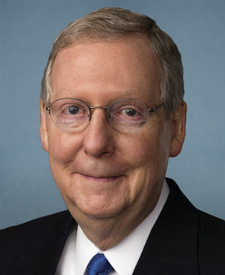
Mitch McConnell
“Not as long as I'm majority leader. It ought to be called Medicare for none... 180 million Americans would lose private health insurance. You want to turn America into a socialist country, this is the first step.”
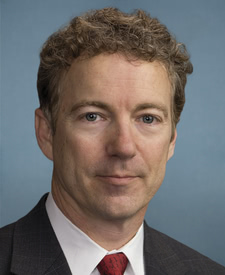
Rand Paul
“With regard to the idea of whether you have a right to health care, you have to realize what that implies. It's not an abstraction. I'm a physician. That means you have a right to come to my house and conscript me. It means you believe in slavery... Basically, once you imply a belief in a right to someone's services... You're saying you believe in taking and extracting from another person.”
Democratic Stance on Universal Healthcare
Democrats contend that the healthcare industry should be more easily accessible to all citizens without limitations or obstacles, including cost, and support a universal approach to healthcare. Polling shows that 85% of Democrats argue that it’s the government’s responsibility to provide healthcare for all citizens, compared to just 68% of Republicans. More specifically, 86% of Democrats support Medicare and Medicaid-for-all, meaning that Democrats sought to expand Medicare coverage and benefits throughout the country; however, the specifics of this system differ from candidate to candidate. Kamala Harris, for example, supported Medicare-for-all, but did not advocate for eliminating private insurance, which is one major element of Medicare-for-all.
Democrats generally believe healthcare should be more affordable, accessible, and equitable for all Americans. They often frame healthcare as a right or public good rather than something that should depend mainly on income, job status, or private insurance. Because of this, Democrats usually support expanding public healthcare programs such as Medicare, Medicaid, and the Affordable Care Act, lowering prescription drug prices, reducing premiums and deductibles, and protecting people from medical debt.
Still, Democrats are somewhat divided on how to achieve universal healthcare. Progressive Democrats often support Medicare for All, a single-payer system that would provide government-funded coverage to everyone, while more moderate Democrats tend to support a public option, Medicaid expansion, Medicare expansion, or improvements to the Affordable Care Act. Overall, Democrats generally agree that the government should play a major role in reducing healthcare inequality, protecting coverage during crises, and making sure more people can get quality care without facing serious financial hardship.
Politicians Who Support Universal Healthcare
85% of Democrats argue that it’s the government’s responsibility to provide healthcare for all citizens.

Pramila Jayapal
“It is a travesty when 85 million people are uninsured or underinsured and millions more are drowning in medical debt in the richest nation on Earth. We don't suffer from scarcity in America, we suffer from greed. That's most clear in our broken health care system, which is why we need Medicare for All... Health care is a human right, that is exactly why it's time to pass Medicare for All.”
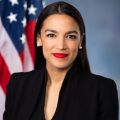
Alexandria Ocasio-Cortez
“One of the things that we need to realize when we look at something like 'Medicare for all' — 'Medicare for all' would save the American people a very large amount of money... What we see as well is that these systems are not just 'pie-in-the-sky.' Many of them are accomplished by every modern civilized democracy in the western world.”
Universal Healthcare: Opposing Viewpoints
Arguments against universal healthcare mainly surround individual freedom concerns, potential for government overreach, and the negative impact it could have on the economy. With universal healthcare, the government would offer fewer health services to its people. The people would then have fewer options for healthcare, which opponents argue restricts their choices and threatens individual freedom.
Furthermore, opponents fear that a government-run system (i.e., universal healthcare) would lead to excessive government control over the people’s decisions. Republicans tend to support a smaller government that offers fewer services to the people due to their desire for increased individual freedoms, which correlates to their worries about implementing universal healthcare. Fewer government-run services could also reduce the quality of the care provided.
Opponents of universal healthcare stress the economic impact that universal healthcare would have. Universal healthcare would limit competition and eliminate different health businesses, including reducing the role of private health insurance. Additionally, funding for universal healthcare would increase taxes for all taxpayers. Some contend that maintaining and implementing universal healthcare would exacerbate the national debt.
Universal Healthcare: Supporting Viewpoints
Arguments in favor of universal healthcare include equal access to care for everyone, economic benefits, and improved public health. Supporters argue that universal healthcare would promote equity as everyone would have equal access to healthcare. Current health services can be quite expensive, even if one can afford insurance to partially cover the expenses. Most people can’t afford current health services, and supporters argue that universal healthcare would cover those expenses.
Because citizens would have equal access to care, supporters argue that more people would utilize healthcare services provided by the government under universal healthcare, thereby improving public health and making the country healthier by reducing health disparities. Cost would no longer be an issue for some lower- and middle-class citizens, and they would be more likely to use provided health services. Supporters also argue that mortality rates would likely decrease, as people in poor health would use health services.
Possible economic benefits of universal healthcare include lower overall costs in the long term for the individual. Although it initially may increase taxes, supporters argue that these costs would essentially neutralize as health services would be free. Additionally, because people are healthier and more would be able to work, universal healthcare could lead to increased productivity in the workforce.
Is Universal Healthcare Possible in the U.S.?
Albeit complex, universal healthcare is possible in the U.S., though it may not be implemented anytime soon, especially under the Trump Administration. Although he has mixed and contradictory opinions on it, he has unsuccessfully attempted to repeal and replace the Affordable Care Act, which has elements of universal healthcare. It’s unlikely that a Republican-run government would implement universal healthcare at this time.
There are several ways that the U.S. could adopt universal healthcare, including expanding Medicare to cover more people or passing legislation to expand coverage for all. However, implementing universal healthcare into the current system in the U.S. would be rather difficult. The current U.S. healthcare system consists of private and public insurance, and unifying them could be tough. Cost would be another barrier, as developing universal healthcare would require significant financial investment at the government level. As discussed above, there are many opponents to universal healthcare, and there would have to be enough people to agree on a system.
Most countries have universal healthcare; in fact, the U.S. is the only developed country without universal healthcare. Most of Europe, Canada, Mexico, New Zealand, Australia, and more countries have some sort of universal healthcare, though it differs from country to country. Data shows that 7.7% of the U.S. population is uninsured as of 2023, which, despite decreasing from 13% in 1987, is still ~25 million people. Those 25 million people most likely can’t afford insurance, but could get access to free care if the U.S. had a universal healthcare system.
To learn more about biases and party affiliation, visit www.biasly.com. Biasly also offers a Premium Membership for an in-depth analysis of current news and access to bias analytics, discussions, and more.
