









How News Sources Portray Welfare Policy
This chart shows how major news sources across the ideological spectrum frame welfare policy, from left to right-leaning perspectives.















In contemporary politics, many topics are becoming increasingly polarizing and highly partisan, one of which is social and general welfare contributions. News sites tend to have intentionally biased news towards one side, which unfairly covers important topics. Welfare politics tend to be biased and highly partisan, and are a subject for debate when candidates are running for top office. Welfare policies include a variety of government programs, from Medicare to SNAP food stamps. It seeks to address issues such as poverty, healthcare, housing, and unemployment, and to benefit those who cannot otherwise afford to live.
A survey was conducted to see how many Americans prioritize welfare spending and funding versus fixing the budget deficit. The results note that 69% of all Americans say it’s more important to maintain Social Security and Medicare benefits than to reduce the budget deficit. 51% of Americans would rather cut military spending to reduce the deficit instead of reducing welfare spending.
The Republican Stance on Welfare Spending
Republicans’ stance on welfare is generally in opposition due to their support for a culture of independence. The Republican Party often rejects government support and intervention into daily lives, which corresponds with their stance on welfare spending.
Polling indicates that 55% of Republicans argue that reducing the deficit should be prioritized over welfare spending for Social Security and Medicare. Republicans prefer to reduce welfare spending over military spending. More Republicans would also rather minimize spending for the poor and needy than reduce spending for Social Security and Medicare.
Politicians Who Oppose Welfare Rights
55% of Republicans argue that reducing the deficit should be prioritized over welfare spending for Social Security and Medicare.
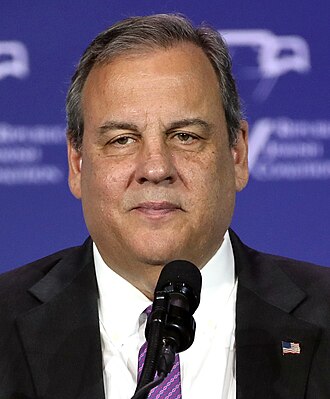
Chris Christie
“The governor said his actions (vetoing raise in monthly welfare benefits) “protected taxpayers” from the “irresponsible” spending by the Democrats who control the Legislature: “Unfortunately, the Legislature has continued its annual ritual of attempting to pass additional unbudgeted spending for selected interests.”
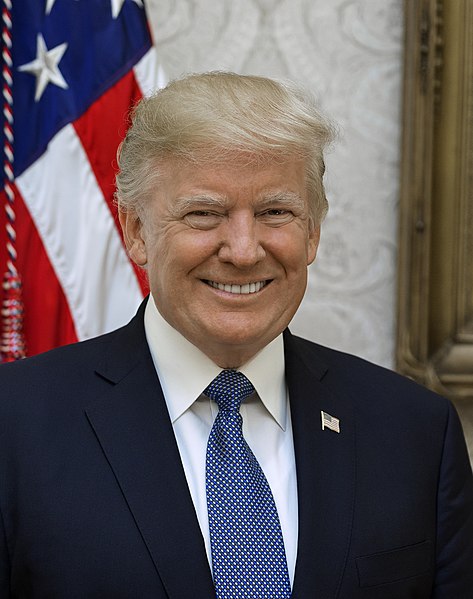
Donald Trump
“The welfare system still traps many recipients, especially children, inpoverty and is in need of further reform and modernization in order to increase self-sufficiency, well-being, and economic mobility.”
The Democratic Stance on Welfare Spending
The Democratic stance on welfare tends to be more positive than that of Republicans, as more Democrats support welfare programs. The Democratic Party supports funding for programs such as SNAP and Medicaid, and criticizes Republican efforts to reduce the financing of said programs.
The same poll mentioned above shows that 84% of Democrats would prioritize spending for the poor and needy over reducing budgetary deficits. Democrats would generally rather reduce military spending than welfare spending.
Politicians Who Support Welfare Rights
84% of Democrats would prioritize spending for the poor and needy over reducing budgetary deficits.

Kamala Harris
“I want families to not just be able to get by, but be able to get ahead,”
U.S. Social Welfare Policy
Social welfare seeks to improve the well-being of a society by improving poverty conditions, assisting the retired, and those who are unemployed. These policies share a close relationship with mental health; they seek to prevent and treat mental disorders, ensure equal access to necessary care, and seek to reduce anxiety and stress around food, shelter, and healthcare. They often focus on groups that are more vulnerable to exploitation or those who are unable to take care of themselves, such as children, the elderly, and those in poverty.
Social welfare policies initially evolved with the implementation of retirement programs for government employees, including teachers, police officers, and firefighters, which were established in the late 1800s. The government later enacted a federal law to cover government employees in dangerous occupations, known as workers’ compensation. These laws were in effect in all but four states by 1929. The government launched New Deal programs during the Great Depression in the 1930s, which focused on creating jobs to reduce unemployment and providing funding to assist those in need. The Social Security Act, introduced in the mid-1930s, sought to help retired and unemployed Americans.
Since then, social welfare policies in the U.S. have expanded to cover healthcare, food security, housing, and child welfare. The National Association of Social Work listed issues such as child welfare, immigration, Medicare, and older adults’ health as areas of emphasis. Some social welfare policy examples include Social Security, Medicare, Medicaid, and SNAP (Supplemental Nutrition Assistance Program). SNAP supports families in need by helping them purchase healthy foods at grocery stores.
Political Stances on Social Warfare
Republicans’ stance on social welfare correlates with their stance on general welfare, and the same goes for Democrats. A survey reports that a majority of Republicans in 2024 (65%) believe government aid to the poor does more harm than good. This decreased from 2022 (70%) and 2021 (72%), but vastly differs from Democrats. In 2024, 65% of Republicans contend that the government shouldn’t do any more to help the needy than it already is, according to another survey. This percentage also decreased from 2020 to 2024 due to the COVID-19 pandemic.
Polling indicates that a majority of Democrats in 2024 (76%) think that government aid to the poor does more good than harm. This increased slightly from 2022 and 2021 (both 75%). These results conclude that Democrats are more willing to provide aid to the poor than Republicans. Most Democrats in 2024 (72%) contend that the government should do more to help the needy. This decreased slightly from 2020 (79%), most likely due to the COVID-19 pandemic.
Economic Security and Welfare
One welfare policy that promotes economic security includes the Earned Income Tax Credit (EITC). The EITC is a program that helps low-to-moderate income workers and families get a tax break. Those who have a low-to-moderate income qualify for the EITC, but the amount of credit may change if one has children or dependents, is disabled, etc. Those who qualify can use the credit to reduce the taxes that they owe. The EITC is widely regarded as an anti-poverty tool, and also incentivizes work by rewarding people with more credit to reduce their taxes.
Because the EITC is a welfare program that also contributes to economic security, Republicans may be more open to it. Furthermore, the EITC was originally a Republican idea implemented by the Ford Administration in 1975. Reagan and Bush also supported and expanded the EITC during their presidencies. However, Republicans hold varying opinions on the EITC, as some seek to cut and defund it, while others support the idea of helping both the economy and social welfare.
When it comes to general and social welfare, Republicans and Democrats are polar opposites. Republicans tend to be strongly against it, while Democrats tend to be strong supporters of it. Nonetheless, there are some welfare policies that Republicans may support, such as the EITC, if it ensures that the economy will maintain and foster success.
To learn more about biases and party affiliation, visit www.biasly.com. Biasly also offers a Premium Membership for an in-depth analysis of current news and access to bias analytics, discussions, and more.
