




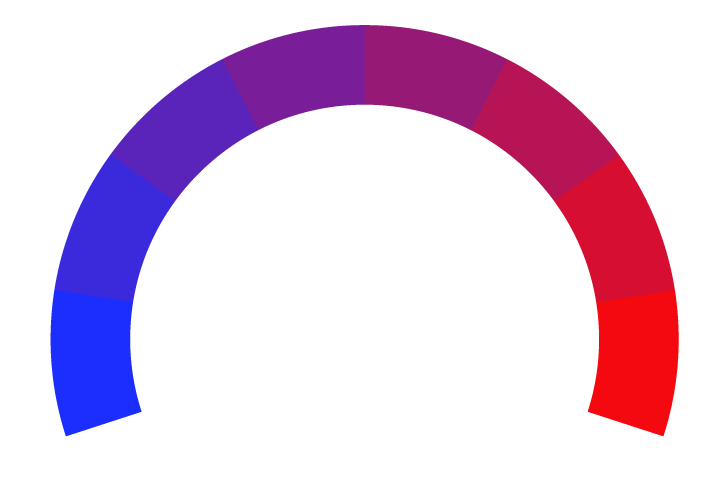
-14% Somewhat Left
Bias Meter
Extremely
Liberal
Very
Liberal
Somewhat Liberal
Center
Somewhat Conservative
Very
Conservative
Extremely
Conservative
-100%
Liberal
100%
Conservative
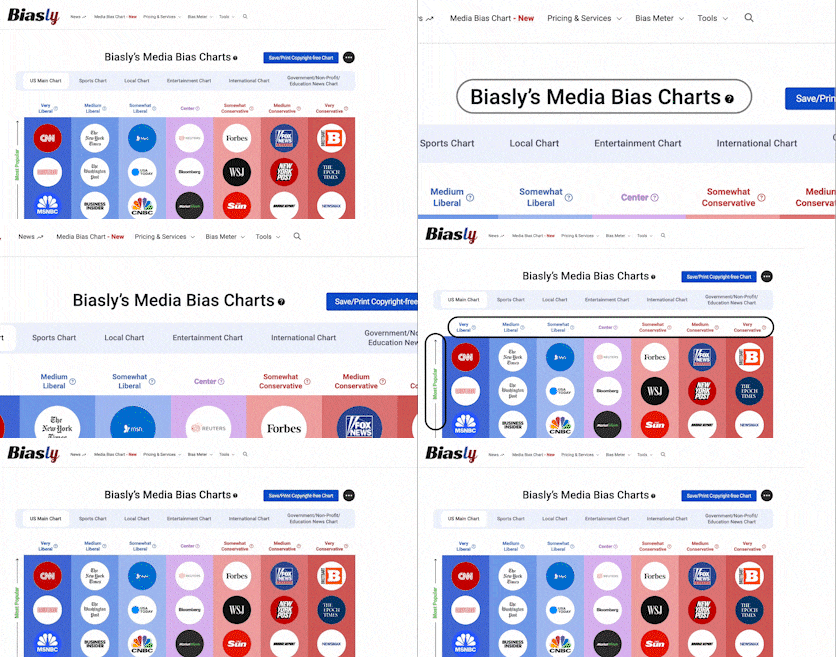
Biasly determines media bias ratings through a dual-layered approach combining artificial intelligence and analyst review. The platform’s proprietary bias detection engine, Bias Meter, evaluates sentiment, policy position alignment, and language framing across thousands of data points in news articles. Analysts then verify and interpret the AI’s findings, providing additional context where needed. Learn more about ratings
- Profile
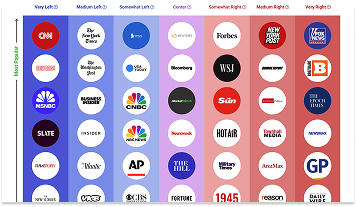
ABC News on the media bias chart
- Bias Rating
-14% Somewhat Left
- Reliability72% Reliable GoodPolicy Leanings
-12% Somewhat Left
Extremely
LiberalVery
LiberalModerately
LiberalSomewhat Liberal
Center
Somewhat Conservative
Moderately
ConservativeVery
ConservativeExtremely
Conservative-100%
Liberal100%
Conservative
Average Reliability
*Our bias meter rating uses data science including sentiment analysis, machine learning and our proprietary algorithm for determining biases in news articles. Bias scores are on a scale of -100% to 100% with higher negative scores being more liberal and higher positive scores being more conservative and 0% being neutral. The rating is an independent analysis and is not affiliated nor sponsored by the news source or any other organization.
Politician Portrayal55% negative
Continue For Free
Create your free account to see the in-depth bias analytics and more.
By creating an account, you agree to our Terms and Privacy Policy, and subscribe to email updates.
Log In
Log in to your account to see the in-depth bias analytics and more.
Analysis of ABC News Articles
ABC News covers the United States political and legal landscape through reporting that often emphasizes institutional accountability, civil rights enforcement, and procedural legitimacy. Because the outlet has national reach and agenda-setting influence, a useful question is whether these recurring emphases reflect consistent framing tendencies rather than isolated editorial choices.
To evaluate this, the section reviews select ABC News articles using Biasly bias metrics. The aim is not to infer intent. The aim is to identify observable cues in tone, diction, and sourcing that can shape audience interpretation.
- Tone: The general attitude or emotional posture the piece projects—calm and neutral, skeptical, indignant, approving, dismissive, etc.
- Diction: The particular vocabulary and phrasing the writer uses, especially any loaded terms, labels, or value judgments that influence framing.
- Author: The journalist’s professional history and public footprint—prior work, areas of focus, and visible commentary (including social media) that can shape context for their perspective.
- Tendency: Consistent signals across the author’s wider output, such as repeated storylines, preferred sources, or habitual angles that point to a recurring slant.
- Expediency Bias: Quick, high-salience cues that nudge interpretation at a glance—headlines, imagery, captions, and other prominent presentation choices that suggest a bias.
Source: ABC News
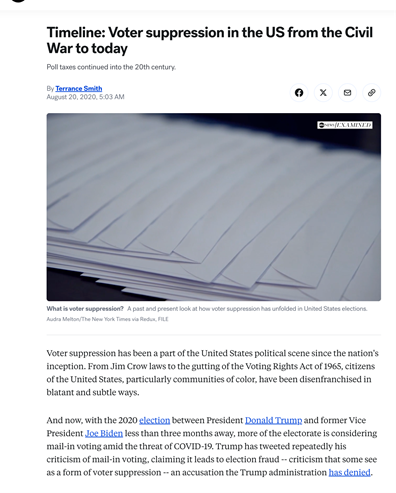
One ABC News article, ‘DOJ sues Alabama, state’s top election official for allegedly purging voters too close to the election,’ examines the Department of Justice’s lawsuit against the State of Alabama for allegedly purging voters too close to a federal election. The article demonstrates expediency bias primarily through its headline framing and visual placement, which immediately positions the story around an alleged violation—“purging voters too close to election”—before readers engage with the full legal context. The use of the word “purging” carries a strong negative connotation, creating an initial impression of wrongdoing rather than a neutral administrative action under dispute.
The article opens with the Justice Department’s legal position and prominently features quotations from federal officials and voting rights advocates, establishing the interpretive frame early in the narrative.
Additionally, the placement of the DOJ lawsuit in the opening sentence, combined with the absence of the state official’s response until later, front-loads the federal government’s perspective. The inclusion of election trust polling content and emotionally resonant imagery further reinforces urgency and sensitivity around voting rights, subtly shaping reader perception before a balanced presentation of viewpoints is fully developed.
“The right to vote is one of the most sacred rights in our democracy,” Clarke said. “As Election Day approaches, it is critical that Alabama redress voter confusion resulting from its list maintenance mailings sent in violation of federal law.”
“I was elected Secretary of State by the people of Alabama, and it is my Constitutional duty to ensure that only American citizens vote in our elections.” – Alabama Secretary of State Wes Allen
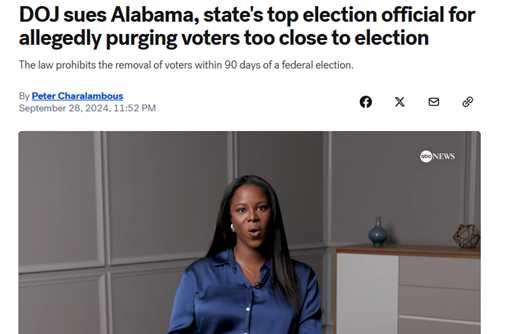
While the article later includes a response from Alabama Secretary of State Wes Allen asserting his constitutional duty to ensure that only U.S. citizens vote, this perspective appears after the federal government’s claims and receives comparatively less elaboration. The sequencing of sources places federal authority and civil rights concerns at the forefront before the state’s administrative justification is introduced.
Diction further reinforces this framing. Terms such as “purging voters,” “targeted,” and “intimidated” appear more prominently than neutral administrative language used to describe voter roll maintenance procedures. Under Biasly’s Tone and Diction metrics, this language reflects characteristics often associated with liberal-leaning interpretations, even though the article remains factually grounded and accurately cites applicable federal law.
The article was written by Peter Charalambous, a ABC News reporter who primarily covers the Department of Justice and federal courts. A review of his public-facing activity, including his Twitter profile, shows little evidence of author-level ideological signaling.
His feed consists almost entirely of reposted ABC News coverage and colleagues’ reporting, with minimal original commentary, providing no substantive material for tweet-level embedding. This supports the interpretation that the framing observed in this article reflects issue-contingent conventions in DOJ civil rights litigation coverage rather than a consistent, author-driven partisan tendency.
NEW: Satellite images show the extent of the East Wing demolition. Sept. 26 compared to today.
Credit: @Planet Labs PBC pic.twitter.com/FrFoh2NJMM
— Peter Charalambous (@PCCharalambous) October 23, 2025
President Trump will likely name the new $300 million ballroom after himself, I’m told by senior admin officials. Already, officials are referring to it as “The President Donald J. Trump Ballroom” and that name will likely stick.
— Katherine Faulders (@KFaulders) October 24, 2025
Peter Charalambous maintains a relatively professional presence on X (formerly Twitter), primarily using the platform to share reporting updates and amplify coverage from ABC News and fellow journalists. His posts largely consist of reposts of breaking news, investigative reporting, and updates from colleagues, suggesting that his account serves primarily as a professional extension of his reporting rather than a space for personal political commentary. The feed contains very limited original opinion and focuses mostly on promoting articles, visual reporting elements such as satellite imagery, and developments in ongoing political or legal stories. While some of the reposted content covers political figures such as former President Donald Trump, the tone of the posts generally remains informational and tied to reporting on developments. Overall, the account appears primarily journalistic, with no clear pattern of overt ideological advocacy.
A similar pattern appears in the coverage of congressional reactions to the partial release of the Epstein files. Articles emphasizing Democratic leaders’ responses foreground phrases such as “blatant cover-up,” “withheld evidence,” and “failure to comply,” framing the issue primarily through allegations of executive misconduct. Republican or administration responses are included, but they are more often presented as rebuttals rather than as parallel interpretive positions.
This imbalance in emphasis and headline framing is most relevant under Biasly’s Expediency Bias metric. While multiple viewpoints are technically present, the prominence and framing of critical language may influence readers’ perceptions by giving greater weight to accountability claims than to defensive explanations.
By contrast, another ABC News article covering the return of Israeli soldier Hadar Goldin’s remains from Gaza demonstrates a markedly different reporting approach. The article presents developments in chronological order and relies almost exclusively on official statements from Israeli authorities, the Red Cross, and forensic institutions.
“Netanyahu’s office announced Sunday that Israel received a coffin from the Red Cross inside the Gaza Strip. His office said the remains still have to undergo an official identification process.”
The language in this coverage is restrained and formal. Words such as “announced,” “received,” and “undergo identification” are informational rather than evaluative, and the article avoids emotionally charged phrasing or domestic partisan framing. As a result, this reporting exhibits lower bias indicators and aligns more closely with neutral tone expectations under Biasly’s metrics.
Here’s a revised version that explicitly refers to one tweet, while keeping the tone measured and consistent with your prior sections:
A review of David Brennan’s social media activity shows little evidence of overt ideological bias. His posts largely consist of reposts and links to his own reporting or related foreign policy analysis, with a strong focus on international security, Russia’s war in Ukraine, and NATO dynamics. The tone across his feed is analytical and informational, emphasizing expert perspectives and corroboration rather than personal commentary.
One example is a tweet Brennan reshared that highlights a Ukrainian perspective on the risks of overestimating a heavily publicized counteroffensive and acknowledges Russia’s territorial gains. By amplifying this analysis, Brennan signals an interest in strategic realism and nuanced assessment rather than partisan framing. Overall, his social media activity mirrors his reporting style, reinforcing a professional, globally focused approach without clear ideological signaling.
Interesting Ukrainian perspective here on risk of putting too much hope in heavily hyped counteroffensive and recognizing that, despite its heavy losses, Russia has made big territorial gains that strengthen its negotiating position. By @DavidBrennan100 https://t.co/qFLADX5BHx
— Matthew Tostevin (@TostevinM) April 18, 2023
A similar neutral tone is evident in reporting on immigration court proceedings involving Kilmar Abrego Garcia. Although the article details judicial criticism of government actions, it does so primarily through direct quotations from the presiding judge and court records rather than through editorial commentary. The emphasis remains on procedural legality rather than ideological positioning.
These examples suggest that ABC News exhibits issue-contingent framing rather than uniform partisanship. Domestic political disputes more frequently employ accountability-oriented language and source sequencing that may align with liberal-leaning interpretations, whereas coverage of international affairs and judicial procedure tends to maintain a more restrained, procedural tone.
In contrast, reporting on international affairs, security-related developments, and judicial procedure tends to maintain a more neutral posture through restrained language, chronological structure, and reliance on official documentation. These differences help explain why Biasly’s outlet-level bias rating reflects aggregated tendencies across issue domains rather than consistent bias within every article.
Analysis of ABC News Opinion Articles
To evaluate political bias accurately, it is essential to distinguish between straight news reporting and opinion content. While news articles are expected to prioritize factual accuracy and balanced sourcing, opinion pieces are explicitly interpretive and advance normative judgments or policy preferences. This section examines how political bias manifests within ABC News’s opinion and commentary content, rather than its general news reporting.
One illustrative opinion article is titled “It’s time to overhaul our gun violence prevention system.” The piece argues that mass-casualty gun violence represents a systemic failure of political leadership and that expanded regulatory frameworks are a necessary moral response rather than a contested policy choice.
“America is in the throes of an epidemic of mass-casualty gun violence, and the toxic political environment in Washington has crippled efforts to curb the growing threat.”
This framing immediately establishes a prescriptive and evaluative tone, characterizing gun violence as an “epidemic” and attributing blame to a “toxic political environment.” Under Biasly’s Diction metric, such language is value-laden and emotionally charged, reinforcing a sense of moral urgency rather than neutral policy assessment.
The article consistently advances a normative conclusion that community-based threat assessment systems and expanded red-flag laws are both effective and necessary. While critics of gun regulation are briefly acknowledged, their objections are framed as misconceptions about due process rather than substantive policy disagreements:
“Critics of strict red-flag laws and more robust background checks often lament those restrictions as capricious, arbitrary, and lacking due process. But every day, in courthouses from coast to coast, judges resolve questions like this through due process.”
This argumentative structure aligns with Tendency Bias, as the article repeatedly reinforces a liberal policy position while minimizing engagement with constitutional or federalism-based counterarguments. Concerns commonly raised by gun rights advocates—such as enforcement overreach, unintended consequences, or Second Amendment jurisprudence—are not substantively explored.
This selective engagement supports a Selection/Omission Bias, where opposing viewpoints are acknowledged only to be dismissed rather than examined.
Another opinion-oriented commentary, “Judge blocks Trump administration from requiring proof of citizenship to register to vote,” focuses on voting rights and election administration following a federal court ruling against a Trump administration executive order requiring proof of citizenship for voter registration.
“Donald Trump’s unilateral effort to reshape election processes is an attempt to ‘short-circuit Congress’s deliberative process by executive order.’”
The article frames the issue primarily as a crisis of constitutional and democratic legitimacy, emphasizing judicial authority, separation of powers, and civil rights protections. Under Biasly’s Diction metric, phrases such as “short-circuit Congress’s deliberative process” and “unlawful” carry normative weight, positioning the executive action as inherently illegitimate rather than contestable.
While the piece references legal reasoning and judicial findings, conservative arguments, such as concerns about election integrity, administrative authority, or fraud prevention, are either briefly mentioned or omitted entirely. The narrative centers on federal intervention and judicial restraint as unquestionably justified, reinforcing a one-sided interpretive frame.
This pattern reflects Tendency Bias, as the article consistently advances a liberal framing of voting access as a civil rights imperative while marginalizing alternative policy rationales. The limited presentation of counterarguments further contributes to selection bias, shaping readers’ interpretations toward a single ideological conclusion.
ABC News’s opinion content exhibits a consistent pattern of liberal-leaning normative advocacy. Across topics such as gun violence prevention and voting rights, opinion articles employ prescriptive framing, value-laden language, and selective evidence to advance progressive policy positions. While such selectivity is expected within opinion journalism, its consistency across issue areas reinforces a recognizable ideological orientation.
Importantly, the presence of bias in opinion content does not inherently undermine the outlet’s overall reliability. Opinion articles are not designed to meet the same neutrality standards as straight news reporting. However, the volume, thematic consistency, and directional alignment of ABC News’s opinion offerings contribute meaningfully to audience perceptions of the outlet’s broader political stance and are appropriately reflected in Biasly’s AI and Analyst Bias Scores.
Analysis of Reliability in ABC News’s Online News Articles
In evaluating ABC News’s reliability, Biasly analysts examine whether articles clearly distinguish between factual reporting and interpretation, whether claims are supported by primary or authoritative sources, and whether opposing viewpoints are represented in a manner proportionate to their relevance.
One area where reliability concerns may arise is domestic political reporting involving voting rights, civil liberties, and executive accountability. In several articles reviewed by Biasly analysts, ABC News relies heavily on statements from federal officials, civil rights organizations, and institutional authorities early in the narrative.
These sources are credible and relevant; however, their prominence can shape readers’ interpretation when alternative administrative or legal perspectives receive comparatively less elaboration.
For example, in coverage of Department of Justice litigation against state election officials, articles often open with federal claims and warnings regarding voter suppression, supported by quotations from senior DOJ officials. Responses from state officials are typically included later in the article and framed as rebuttals rather than parallel interpretive positions. While this sequencing does not render the reporting inaccurate, it may influence perceived balance under Biasly’s Selection/Omission metric.
Diction also plays a role in shaping perceptions of reliability. Terms such as “purged voters,” “targeted communities,” or “intimidation” appear more frequently than neutral administrative language describing voter-roll maintenance procedures. Although these terms may accurately reflect the concerns of quoted sources, their repeated use can contribute to evaluative framing, even in otherwise factually grounded reporting.
By contrast, ABC News’s coverage of international affairs, hostage recovery, military operations, and judicial proceedings tends to exhibit stronger reliability indicators. Articles in these domains often follow chronological structures, rely on official statements from multiple parties, and employ restrained, informational diction. In such cases, Biasly analysts observe fewer issues related to omission or narrative imbalance, and reliability scores tend to be higher.
Overall, these patterns suggest that ABC News’s reliability varies by issue domain rather than by outlet-wide practice. Articles focused on high-salience domestic political disputes are more susceptible to framing effects that can affect perceived reliability, while reporting on international or security-related topics generally adheres more closely to neutral factual standards.
Quality of Sources and Facts Used
ABC News articles generally rely on a mixture of government officials, institutional data, and expert commentary when covering political developments. The reporting style tends to combine direct quotations from policymakers with supporting data from recognized organizations. However, the degree of balance varies depending on the subject of the article and which voices are included.
Consider the article “Trump Faces Escalating Oil Crisis Over Iran Blocking Strait of Hormuz.” The piece covers the geopolitical and economic implications of disruptions to global oil shipping routes and contains multiple direct quotes from U.S. officials and political figures. The article contains six identifiable quotations, including statements from President Donald Trump, Energy Secretary Chris Wright, and White House officials. The longest quotation is approximately 40 words, while the shortest quotation is around 10 words, with an estimated average quote length of about 25–30 words.
These quotes provide direct attribution to policymakers and help establish transparency regarding the claims being made in the article.
In addition to quotes, the article relies on institutional data to contextualize the crisis.
The piece cites the International Energy Agency (IEA) for global oil supply data and references AAA gasoline price statistics to explain domestic economic impacts. The article also incorporates statements from administration officials regarding the potential use of the Strategic Petroleum Reserve and military escorts for oil tankers.
Sources appearing in the article include:
- International Energy Agency (IEA) – an intergovernmental energy organization providing oil market data (Institutional)
- AAA – consumer organization providing national gasoline price statistics (Institutional)
- Donald Trump – U.S. President, quoted in interviews and social media statements (Right)
- Chris Wright – U.S. Secretary of Energy, quoted regarding policy decisions (Right / Administration official)
- Karoline Leavitt – White House press secretary providing official administration statements (Right / Administration official)
- Fox News – outlet referenced for an interview with the president (Right-leaning media)
- CNBC – business news network cited for an interview with the energy secretary (Center)
- Brian Kilmeade – Fox News host referenced in the article (Right)
When evaluating the balance of quotes and linked sources, the article shows a clear concentration of perspective within U.S. government and administration-aligned voices, supplemented by a limited number of institutional data references. While organizations like the International Energy Agency and AAA provide credible, nonpartisan economic context, the quoted narrative is dominated by Trump administration officials, including the president, cabinet members, and White House representatives.
There are no direct quotes from independent analysts, foreign policy experts, international officials, or opposing political figures, which narrows the interpretive range of the piece. In terms of linked sources, the article includes several internal ABC News hyperlinks for background reporting, along with references to Fox News and CNBC for interviews, creating a mostly center-to-right media linkage footprint.
Overall, while the article is factually supported and transparent in attribution, the imbalance in quoted voices and limited diversity of external perspectives means the framing is shaped more by official U.S. narratives than by a fully multi-sided analysis of the situation.
A second example appears in the article “Democratic Senators File War Powers Resolution to Check Trump on Cuba.” This story is attributed to the Associated Press and focuses on Senate Democrats introducing legislation intended to restrict military action against Cuba without congressional approval. The article contains four identifiable direct quotations, including statements from Senator Tim Kaine, Senator Ruben Gallego, and President Trump. The shortest quotation is about 12 words, while the longest is approximately 40 words, with an average quote length of roughly 25 words.
The sources referenced in the article include:
- Tim Kaine – Democratic U.S. Senator advocating the war powers resolution (Left)
- Ruben Gallego – Democratic U.S. Senator supporting the resolution (Left)
- Adam Schiff – Democratic U.S. Senator co-sponsoring the legislation (Left)
- Donald Trump – U.S. President, quoted regarding Cuba policy (Right)
- Marco Rubio – U.S. Secretary of State, referenced regarding negotiations (Right)
- S. Congress – legislative institution referenced in the constitutional debate (Institutional)
In this article, most of the direct commentary comes from Democratic lawmakers, reflecting the story’s focus on their legislative effort. While Trump’s remarks are included, the article does not include statements from Republican senators defending the administration’s position on Cuba policy. As a result, the source distribution is somewhat uneven in terms of political voices, although the article still provides verifiable quotations and identifiable public officials.
Overall, the factual foundation of both articles is generally supported by official statements, institutional data, and identifiable public figures, which are typical elements of mainstream political reporting. However, because the articles rely heavily on quotes from political actors involved in the events being reported, readers must consider that these statements may reflect political messaging rather than neutral expert analysis.
Selection and Omission Bias
Selection bias and omission bias can appear in political reporting when certain perspectives, actors, or contextual information are emphasized while others receive limited attention. Even when articles rely on accurate data and direct quotations, framing choices—such as which voices are highlighted or which contextual elements are omitted—can influence how readers interpret a story.
One example appears in the article “Largest Gap Between Democrats and Republicans on Abortion Legality in Nearly 20 Years.” The piece is primarily built around polling data from the Pew Research Center and accurately presents several statistical findings regarding partisan attitudes toward abortion. The article includes detailed percentages for Democrats, Republicans, and the general public, along with the methodology of the survey and its margin of error.
However, the piece largely focuses on partisan polarization rather than presenting substantive arguments from political leaders or policy advocates on either side of the abortion debate. While the article successfully summarizes polling results, it omits a deeper discussion of the legal, ethical, or policy arguments that contribute to the divide.
As a result, readers receive a clear picture of how opinions differ, but less explanation of why those differences exist, which may limit the contextual depth of the reporting.
Another example of framing choices appears in the article “Democratic Rep. Jim Clyburn Says He’s Running for Reelection After All.” The story centers on Representative Jim Clyburn’s decision to seek another term in Congress and includes multiple direct quotes from Clyburn explaining his reasoning. The article also references praise from former President Joe Biden and highlights Clyburn’s role in Biden’s 2020 presidential campaign.
However, the article does not include perspectives from political opponents, Republican leaders, or critics who may have commented on the decision. While this omission is understandable given that the story focuses on a Democratic announcement, the absence of opposing viewpoints means the article largely presents the event through the lens of Clyburn and his political allies.
Similarly, the article emphasizes Clyburn’s long career and continued influence within the Democratic Party, while giving less attention to broader debates about age and leadership turnover in Congress, aside from a brief statistical reference to the average age of lawmakers. This selective emphasis does not necessarily introduce factual inaccuracies, but it shapes the narrative toward Clyburn’s political legacy rather than exploring criticisms or alternative interpretations of his continued candidacy.
Overall, these examples illustrate how ABC News articles often rely on accurate data, official statements, and direct quotes, but may occasionally exhibit selection bias in their framing, featured voices, or contextual depth. In most cases, the reporting remains grounded in verifiable information, though readers seeking a broader range of perspectives may benefit from consulting additional sources that include more extensive debate or policy analysis.
ABC News Bias Overview
Founded in 1945, ABC News has grown into one of the most prominent broadcast news organizations in the United States, operating as a national television and digital news network covering domestic politics, public policy, and international affairs. As part of Disney General Entertainment Content, ABC News occupies a central position within the American media landscape, with editorial decisions that reach a broad and diverse audience.
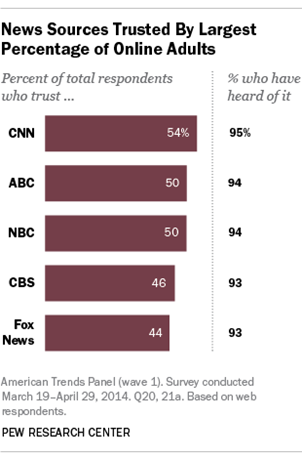
Source: Pew Research
According to Biasly’s assessments, ABC News is among the most widely recognized national news outlets evaluated for political bias and reliability. Pew Research Center data indicates that a substantial share of U.S. adults report familiarity with the outlet, situating it alongside other major broadcast networks in terms of public visibility and reach.
Biasly’s AI systems and human analysts evaluate ABC News’s political reporting by examining recurring patterns in topic selection, source diversity, framing, and diction across a broad sample of articles. Based on this aggregate analysis, ABC News is rated as Somewhat Left. This rating reflects observed tendencies across political coverage rather than judgments derived from individual articles in isolation.
As a leading national outlet, ABC News plays a significant role in shaping how political events and policy debates are presented to the public. The analysis above focuses on identifying consistent framing and language patterns that may influence audience interpretation, while recognizing that bias can vary across articles, topics, and reporting contexts.
Is ABC News Biased?
Based on Biasly’s evaluations, ABC News is rated as Somewhat Left.
By examining content patterns and the broader context of media influence, we aim to offer a balanced perspective on ABC News’s political bias—and contribute to the ongoing discussion about bias in the news.
How Does Biasly Rate News Sources?
Biasly uses proprietary algorithms and a team of analysts to provide comprehensive bias evaluations across thousands of news outlets. Over 200,000 articles from more than 3,200 sources have been analyzed to identify the most accurate and unbiased stories.
Biasly assigns each outlet three key scores:
- Reliability Score – Reflects factual accuracy
- AI Bias Score – Generated via natural language processing
- Analyst Bias Score – Assessed by human political analysts
These scores are based on seven core metrics: Tone, Tendency, Diction, Author Check, Selection/Omission, Expediency Bias, and Accuracy. These elements help analysts and algorithms evaluate the political attitude conveyed by each article. Biasly’s Bias Meter ranges from -100% (most left) to +100% (most right), with 0% indicating neutrality. The system evaluates individual articles based on political terms, policies, figures, and sentiment to calculate precise bias ratings.
Is ABC News Politically Biased?
ABC News earns a Somewhat Left rating for its AI Bias Score and a Somewhat Left for its Analyst Bias Score. The Analyst Bias Score is generated by reviewers from liberal, moderate, and conservative backgrounds. Analysts reviewed multiple ABC News articles and identified recurring patterns in coverage of Democratic officials, civil rights enforcement, and election administration. At the same time, the outlet demonstrated greater neutrality in certain areas, including straight news reporting on international conflicts and hostage recovery.
In reporting on voting rights and election law, coverage frequently emphasizes concerns related to voter access, disenfranchisement, and federal oversight. Articles addressing voter roll maintenance, election-related litigation, and Department of Justice enforcement actions often foreground statements from Democratic lawmakers and civil rights officials warning of voter suppression.
These framing patterns are among the factors reflected in Biasly’s outlet-level bias rating, which is derived from aggregated analyses of articles rather than from any single narrative choice.
A ABC News reporter quoted a senior Justice Department official in coverage related to voting rights enforcement:
“The right to vote is one of the most sacred rights in our democracy,” Assistant Attorney General Kristen Clarke said, emphasizing the Justice Department’s role in protecting eligible voters.
While this quotation is presented as a direct statement from a federal official, the repeated prominence of similar perspectives places institutional authority and civil rights advocacy at the center of the narrative. Conservative counterarguments, when included, are often introduced later in the article or framed primarily as responses to criticism rather than as independently developed policy positions. This sequencing may influence how readers weigh competing viewpoints.
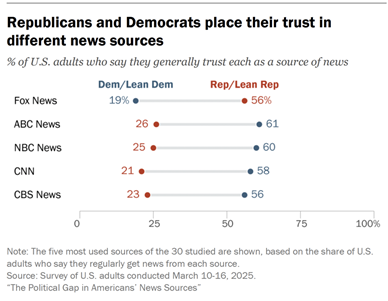
Source: Pew Research
Audience composition provides additional context for understanding how ABC News’s coverage is received. Pew Research Center indicates that audiences that align more closely with Democratic policy positions are more likely to express trust in ABC News than audiences that align more closely with Republican policy positions.
This disparity in audience trust helps contextualize why the outlet’s reporting may resonate differently across ideological groups, without implying that audience preferences determine editorial decisions.
Biasly’s AI evaluations further examine tone, diction, and sentiment embedded in reporting. Recent assessments identify left-leaning framing tendencies in articles discussing Republican-led election policies, immigration enforcement, and civil rights disputes, while coverage of certain international and national security developments remains closer to neutral. These findings contribute to the overall bias rating by reflecting consistent patterns observed across multiple topic areas and time periods.
How to Evaluate Bias
Although Biasly rates ABC News as Somewhat Left, it is important to recognize that political bias can vary from article to article within any news organization. Individual pieces may differ in tone, sourcing, and framing depending on the topic, author, and context. This variability underscores the importance of evaluating coverage at the article level rather than relying solely on outlet-wide labels.
Recognizing media bias requires awareness and critical thinking. Often, readers trust news sources that affirm their existing beliefs—a psychological tendency known as confirmation bias. This makes it harder to identify slanted narratives or one-sided reporting.
To combat this, it’s essential to challenge your assumptions by consulting multiple viewpoints and verifying news through third-party analysis. Tools like Biasly’s media bias ratings allow readers to compare the same news story across the political spectrum.
Ultimately, bias isn’t always a matter of what is said—it’s also about what is left out, how topics are framed, and which stories are chosen for coverage. Learning to recognize these patterns can help readers make more informed decisions and develop greater media literacy.
To start comparing news outlets and gain a better understanding of bias, sign up for Biasly’s Media Bias & News Analytics Platform to see how stories vary between sources.
ABC News Reliability Overview
ABC News Reliable?
ABC News is a national broadcast news organization founded in 1945 and operates as one of the major network news outlets in the United States. As a widely consumed source of political and public affairs reporting, ABC News plays a significant role in shaping audiences’ understanding of national and international events. This reach increases the importance of evaluating not only its political bias but also the accuracy and reliability of its reporting.
In earlier sections, we examined patterns of bias in ABC News’s coverage and noted that, in certain cases, bias can intersect with reliability through selective sourcing, framing choices, or emphasis. At Biasly, however, reliability is evaluated independently from bias and is assessed using two core metrics: Accuracy and Selection/Omission.
This section evaluates ABC News’s reliability by examining how consistently its reporting presents verifiable facts, relies on credible sources, and avoids systematic omission or selective emphasis across individual articles, rather than relying on outlet-level generalizations alone.
How to Evaluate Reliability?
Reliability refers to how trustworthy or accurate a news source is. If we can’t trust what we read, then continuing to consume content from that outlet serves little purpose. So how do we evaluate a news outlet’s reliability?
There are several potential measures of reliability to look out for when trying to determine whether a media source is reliable or not. Red flags for an unreliable article can include the presence of wild, unsubstantiated claims, facts dependent on other unreliable sources, heavy use of opinionated language, and more. In contrast, hallmarks of a reliable source include:
- Absence of subjective language
- Citing credible sources (e.g., .gov, .edu, academic references)
- Verifiable facts and statistics from multiple outlets
- Use of primary sources, like interviews or transcripts
- Consistency with coverage across other platforms
Biasly’s reliability scores incorporate these elements in evaluating media outlets.
So How Does ABC News Fare in Its Reliability?
The political reliability index developed by Biasly assesses both accuracy and trustworthiness. ABC News currently holds Good Reliability Score, which is calculated as a weighted average of:
- Fact Analysis Score – Evaluates the accuracy of claims, facts, and evidence.
- Source Analysis Score – Assesses the number, diversity, and credibility of sources and quotes used.
ABC News’s Source Analysis Score is Average at 52% Reliable. This suggests moderate trustworthiness in its sourcing practices. The score is AI-generated and considers quote length, frequency, diversity, and quality. The Fact Analysis Score of ABC News is Good at 78% Reliable. This further shows how well ABC News supports its claims, addresses selection and omission bias, and presents verifiable evidence.
While ABC News leans toward factual reporting, occasional lapses—such as unbalanced viewpoints or incomplete data—can affect its reliability rating. These nuances emphasize the importance of analyzing individual articles.
ABC News’s Accuracy and Reliability
According to Biasly’s analysis, ABC News maintains a Good reliability rating, reflecting generally consistent adherence to factual reporting standards across its national and international coverage. As a major broadcast and digital newsroom, ABC News produces a high volume of straight news reporting, which places a premium on accuracy, verifiable sourcing, and institutional accountability.
At the same time, reliability at ABC News varies systematically by issue domain rather than randomly across articles. As with other large national outlets, individual pieces may vary depending on topic area, source selection, and framing choices. Biasly’s reliability assessment, therefore, focuses on article-level accuracy and sourcing practices, rather than assuming uniform reliability based solely on outlet reputation.
Political orientation can influence how audiences perceive reliability. ABC News is sometimes criticized by conservative audiences for privileging institutional or civil-rights-oriented perspectives in domestic political reporting. To assess whether these critiques reflect reliability concerns rather than ideological disagreement, Biasly evaluates whether articles present verifiable facts, rely on credible sources, and avoid systematic selection or omission that could materially mislead readers.
Two recurring mechanisms that can affect perceived reliability in political reporting include:
- Selection Bias – emphasizing certain facts, actors, or interpretations while minimizing others in a way that shapes narrative direction
- Omission Bias – excluding relevant contextual information or alternative perspectives that would materially affect the reader’s understanding
Biasly’s accuracy ratings operate on a scale from 1% (least accurate) to 100% (most accurate) and incorporate factors such as source diversity, evidentiary support, transparency of claims, and consistency with publicly available records.
So, is ABC News Reliable?
Overall, ABC News can be considered to be an outlet that is very reliable. It demonstrates a consistent goal of journalistic integrity and typically supports claims with sources and quotes. Occasional omissions and framing bias do appear, particularly on culturally sensitive or partisan issues.
As media literacy improves, readers can more easily detect issues with selection bias, omission bias, and factuality. To strengthen your ability to assess reliability across the political spectrum, use the News Bias Checker to compare how multiple outlets report the same story.
This empowers you to consume more accurate, balanced, and dependable news.
ABC News Editorial Patterns
This section examines recurring editorial patterns in ABC News’s political coverage, focusing on how topic selection, framing choices, and language usage vary across ideological contexts. Rather than attributing bias to individual articles, the analysis evaluates whether consistent patterns emerge when comparing coverage of liberal- and conservative-aligned policy issues. Particular attention is given to diction, emphasis, and sourcing practices that may influence the portrayal of political actors or initiatives.
Coverage of Liberal vs. Conservative Topics
A review of recent ABC News political reporting shows that coverage frequently centers on policy areas such as voting rights, gun regulation, racial justice, and civil rights protections. Articles addressing these issues often emphasize institutional impacts, legal implications, or advocacy perspectives, with recurring references to Democratic officials, civil rights organizations, and subject-matter experts.
By contrast, reporting on Republican-led initiatives or conservative policy proposals more often foregrounds legal disputes, administrative challenges, or public controversy surrounding those measures. In several cases reviewed by Biasly analysts, conservative rationales are presented alongside critiques or counterarguments, although the relative weight and sequencing of perspectives vary across articles.
These differences also appear at the level of diction and emphasis. In coverage of liberal-aligned policies, terms associated with expansion or protection—such as safeguarding access or addressing systemic concerns—occur more frequently. Coverage of conservative-aligned initiatives, meanwhile, more commonly incorporates language emphasizing restriction, limitation, or opposition.
While these linguistic patterns do not constitute explicit advocacy, their repeated use contributes to discernible framing tendencies across the outlet’s political reporting.
Policy and Issue Framing
When covering election law and voting policy, ABC News frequently emphasizes questions of access, disenfranchisement, and democratic legitimacy. Articles in this domain often foreground statements from Democratic officials, civil rights organizations, and election law experts who argue that certain voting regulations may suppress participation or undermine electoral fairness.
This framing reflects a recurring focus on institutional impact and rights-based interpretation rather than administrative justification.
By comparison, conservative arguments related to election administration, voter identification requirements, or other regulatory justifications are typically presented in a more limited scope. In several articles reviewed by Biasly analysts, these perspectives appear later in the narrative or are introduced primarily as responses to criticism rather than as independently elaborated policy positions. While such viewpoints are not excluded, the relative sequencing and depth of explanation vary across articles.
Differences in framing also emerge through recurring diction and emphasis. Policies aligned with liberal platforms are more frequently described in terms of expansion or protection, such as safeguarding access or protecting democratic norms. Conservative-backed initiatives, by contrast, are more commonly characterized using terms that emphasize restriction, controversy, or legal challenge.
These linguistic patterns do not constitute explicit advocacy but may influence how readers interpret the scope and intent of competing policy approaches.
Coverage and Relevance
ABC News regularly reports on issues central to broader discussions of media political bias, including election integrity, civil rights, gun policy, and immigration. As a nationally consumed broadcast and digital outlet, it is relevant that its framing decisions shape readers’ understanding of how news media bias manifests through topic emphasis, sourcing choices, and language use across high-salience political issues.
Readers interested in comparing how ABC News’s political coverage aligns with other national outlets may consult Biasly’s Media Bias Chart, which allows for cross-source comparison of tone, framing, and ideological positioning over time.
Funding and Ownership
Who Owns ABC News?
ABC News operates as a commercial broadcast television and radio news network rather than a nonprofit newsroom. The outlet is owned by The Walt Disney Company, one of the largest publicly traded media conglomerates in the United States. ABC News functions under Disney Entertainment Television, the division responsible for overseeing Disney’s domestic television networks and news operations.
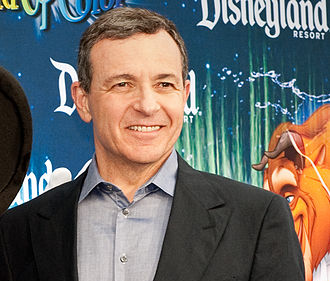
Bob Iger, Disney CEO, Source: Wikipedia
Unlike nonprofit news organizations governed by independent boards or donor-based oversight, ABC News operates within a corporate ownership structure. Executive leadership and strategic oversight are determined by Disney’s senior management, with ABC News serving as the corporation’s primary news division. This structure places editorial operations within a profit-oriented media environment rather than an institutionally autonomous model.
Under this ownership framework, ABC News maintains formal editorial standards and established journalistic practices, and the network does not publicly endorse political candidates. At the same time, ABC News does not operate with structural separation from its corporate parent. Ultimate organizational authority resides in Disney’s corporate governance, which can indirectly influence newsroom priorities through brand positioning, audience strategy, and reputational risk management, rather than through direct editorial intervention.
This ownership context is relevant for assessing political bias. Patterns identified in ABC News’s coverage are more plausibly linked to institutional culture, market positioning, and audience expectations than to explicit ownership directives. As with other large commercial broadcasters, corporate structure functions as a background condition shaping issue salience and framing tendencies over time.
Who Funds ABC News?
ABC News is funded through a commercial revenue model typical of major U.S. broadcast networks. As a subsidiary of The Walt Disney Company, it derives primary revenue from national advertising, affiliate fees, content licensing, and cross-platform distribution agreements integrated into Disney’s broader media ecosystem.
Because ABC News does not rely on reader donations, philanthropic foundations, or membership contributions, it does not face the donor-dependence dynamics commonly associated with nonprofit journalism. However, reliance on advertising revenue and audience reach introduces distinct incentives, including responsiveness to viewer demographics, advertiser preferences, and brand alignment across platforms.
In practice, this funding structure means that editorial incentives are shaped less by individual contributors and more by market performance and corporate strategy. While ABC News operates under professional newsroom norms, its position within a large entertainment conglomerate makes commercial considerations a persistent contextual factor when evaluating long-term patterns in topic selection, framing, and editorial prioritization.
Additional Insights
News Source Comparison
In news source comparisons, ABC News is most often evaluated alongside other national broadcast and legacy media organizations that fall within the Center-to-Lean-Left range on Biasly’s Media Bias Chart. Outlets such as NBC News and CBS News frequently exhibit comparable institutional framing approaches, particularly in coverage of federal governance and civil rights enforcement.
While ABC News holds a Somewhat Left media bias rating, it differs from more ideologically driven outlets in its reliance on professional newsroom standards, editorial oversight, and separation between straight news reporting and opinion content. ABC News regularly incorporates opposing viewpoints in its reporting, especially through direct quotations from officials across party lines, even when narrative emphasis varies by topic.
Compared with more explicitly partisan media organizations, ABC News demonstrates greater consistency in factual sourcing and institutional accountability. Readers seeking to contextualize ABC News’ political framing may compare its coverage with outlets rated as Center or Lean Right on Biasly’s Media Bias Chart, or explore additional national broadcasters and print outlets listed on Biasly’s Similar Sources page.
Notable Contributors and Authors
ABC News employs a large national newsroom composed of correspondents, investigative reporters, and subject-matter specialists covering politics, law, foreign affairs, and public policy. Many of its journalists have extensive experience reporting on federal institutions, elections, and international events, contributing to the outlet’s credibility and public visibility.
Because ABC News operates primarily through a broadcast-driven newsroom model, individual bylines may appear less frequently than in print-focused outlets. Nevertheless, recurring correspondents and anchors play a central role in shaping the continuity of coverage. While individual journalists may differ in tone or emphasis, ABC News’ editorial structure constrains personalized ideological expression in straight news reporting.
For readers interested in evaluating bias at the journalist level, tracking recurring correspondents over time can help distinguish between outlet-level framing tendencies and individual reporting styles.
Related Tools and Resource Pages
To better understand how ABC News fits into the broader media ecosystem, readers may find the following Biasly resources useful:
- Media Bias Chart: Compare ABC News’s political positioning with other national and regional outlets.
- Political Bias Chart: Examine how political slants vary across issue areas and policy domains.
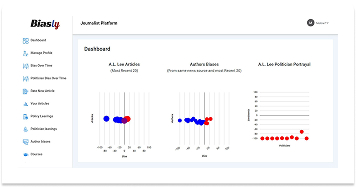
- Journalist Bias Analytics Platform: Analyze bias patterns at the individual journalist level.
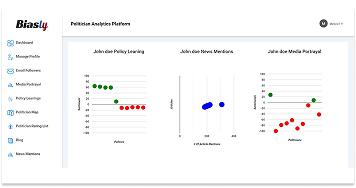
- Politician Bias Analytics Platform: Compare how political figures are framed by ABC News and peer outlets.
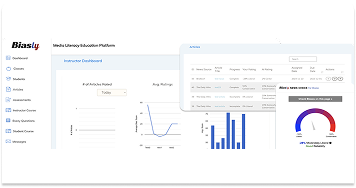
- Media Literacy Education Platform: Learn how to evaluate framing, sourcing, and reliability in news reporting.
Frequently Asked Questions
ABC News is rated Somewhat Left by Biasly, based on aggregated analysis of article sentiment, framing patterns, and policy-related language.
In recent years, ABC News has faced heightened criticism from the White House and allied officials. In November 2025, the administration issued an official statement labeling ABC News as “fake news,” accusing the network of partisan hoaxes, biased reporting, and misinformation directed at the administration.
In 2017, ABC News suspended investigative reporter Brian Ross for four weeks without pay after he falsely reported that Donald Trump had directed Michael Flynn to contact Russian officials before the 2016 election. The mistake led to a “clarification” and later a “correction”.
Biasly combines AI-based sentiment analysis with human analyst review to evaluate tone, diction, source selection, factual accuracy, and patterns of omission. Additional details are available on Biasly’s Bias Meter page.
Generally, yes. While framing choices may vary by topic, ABC News consistently meets professional standards for factual reporting and source credibility.
Military Spending
| Date | Sentiment | Associated Article | Snippet |
|---|---|---|---|
| 08/25/2019 | 75% For | Trump Family Detentions Flores Agreement (link) | So, of course, the Trump administration is doing the opposite in a baldfaced |