




-12% Somewhat Left
Bias Meter
Extremely
Liberal
Very
Liberal
Somewhat Liberal
Center
Somewhat Conservative
Very
Conservative
Extremely
Conservative
-100%
Liberal
100%
Conservative

Biasly determines media bias ratings through a dual-layered approach combining artificial intelligence and analyst review. The platform’s proprietary bias detection engine, Bias Meter, evaluates sentiment, policy position alignment, and language framing across thousands of data points in news articles. Analysts then verify and interpret the AI’s findings, providing additional context where needed. Learn more about ratings
- Profile
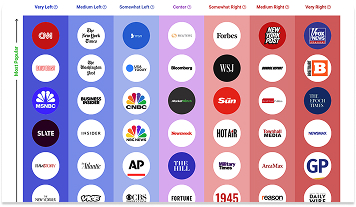
Balloon Juice on the media bias chart

- Bias Rating
-12% Somewhat Left
- Reliability65% Reliable AveragePolicy Leanings
-2% Center
Extremely
LiberalVery
LiberalModerately
LiberalSomewhat Liberal
Center
Somewhat Conservative
Moderately
ConservativeVery
ConservativeExtremely
Conservative-100%
Liberal100%
Conservative
Average Reliability
*Our bias meter rating uses data science including sentiment analysis, machine learning and our proprietary algorithm for determining biases in news articles. Bias scores are on a scale of -100% to 100% with higher negative scores being more liberal and higher positive scores being more conservative and 0% being neutral. The rating is an independent analysis and is not affiliated nor sponsored by the news source or any other organization.
Politician Portrayal44% negative
Continue For Free
Create your free account to see the in-depth bias analytics and more.
By creating an account, you agree to our Terms and Privacy Policy, and subscribe to email updates.
Log In
Log in to your account to see the in-depth bias analytics and more.
Analysis of Balloon Juice Articles
Analysis of Bias in Balloon Juice Online Articles
To evaluate this, we can analyze select Balloon Juice articles through several of Biasly’s bias rating criteria: Tone, Tendency, Author, Diction, and Expediency Bias.
- Tone: The overall attitude conveyed by the article
- Diction: Specific word choices made by the writer
- Author: The background and social presence of the journalist
- Tendency: Patterns of bias in the writer’s broader body of work
- Expediency Bias: Quick visual or textual indicators like headlines and photos that imply bias

Source: Balloon Juice
The first article we will look at is titled, “This Week in Trans: Bile Chant.” In this article, the author criticizes Republicans for their treatment of the transgender community. The author takes shots at legislation and comments made by Republicans on gender affirming care and bathroom policies.
“Meanwhile the DOJ has found a far-right judge in Texas to be its eager attack-dog to eliminate trans healthcare for kids—one who’s now in possession of the most intimate details of their lives.”
Throughout the article, the author uses a critical tone and harsh language to describe the proposed legislation, policies, and Republican officials. The author’s personal opinion is evident while reading the article. It is a strong tendency present consistently throughout the article.
“Wednesday, House Republicans—along with eight traitorous Democrats—passed a Don’t Say LBG-And-Especially-T bill that would also require schools to out trans students, even if doing so would put them in physical danger.”
The article’s strongly critical language contributes to its left-leaning framing. Readers should distinguish this editorial perspective from the factual accuracy of the claims, which requires separate verification. Balloon Juice would need to adopt a more neutral tone and less harsh language to decrease the overall bias present in its articles.
The article was published under the pseudonym Sister Golden Bear. Although the contributor’s legal identity is not established by the byline, published articles and public social media activity provide material for evaluating patterns in the contributor’s commentary.
The byline on this article is Sister Golden Bear, a pseudonymous front-page contributor who also posts on Bluesky. Her public post is consistent with the direction of the article. In October 2026, she wrote:
Most Democrats are holding the line, for now—but those who are throwing trans people under the bus will do the same to others.
— Sinister Golden Bear (@sistergoldenbear.bsky.social) 11:57 AM · Oct 12, 2026
The post is consistent with the left-leaning framing of the article. It criticizes members of her own party, but it stays on the left, and a single post is not enough to establish her overall tendency.
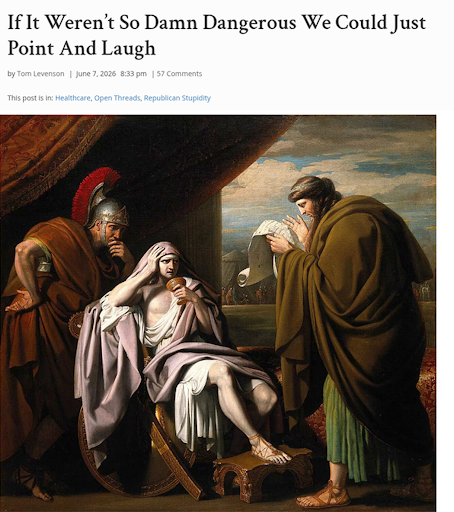
Another article we will look at is titled, ”If It Weren’t So Damn Dangerous We Could Just Point And Laugh.” In this article, the author explains that U.S. Health Secretary Robert F. Kennedy is pursuing access to most Americans’ medical records, according to reporting by KFF Health News, in order to research a link between vaccines and autism.
The author explains how dangerous this is. He argues that the proposal would destroy patient confidentiality and describes the claimed link between vaccines and autism as serially debunked. Throughout the article, the author warns readers about how harmful this is and the potential consequences.
“On one level, that’s all any reader needs: RFK Jr. wants to know everything about you in the hopes he’ll be able cobble together some story of a correlation that could be dressed up in causal costume.”
“This data grab that would destroy US patient confidentiality in the (unlikely) hope that somewhere in the mountain of information to be stolen from each of us he’ll find the proof that has eluded the anti-vaccine movement for over a quarter of a century.”
The author makes his opinion of RFK Jr. known to the audience. The author uses strongly critical language to characterize Kennedy’s proposal, describing a “data grab” and information “stolen” from patients, while emphasizing potential privacy concerns and questioning the scientific basis for the proposed research. By reading the article, you can see what the author thinks of RFK Jr.’s policies.
The author, Tom Levenson, is a science writer who teaches science writing at MIT and cross-posted this piece from his newsletter, Inverse Square. His X account has been mostly quiet since he moved to Bluesky and Mastodon, but this public post is consistent with the critical framing of Republican politics seen in the article, although a broader review would be needed to establish his overall political tendency. In August 2023, he wrote that outlets like the New York Times:
“need to understand, then cover Trump AND the GOP as the anti-democratic radicals they are telling us they are.”
The post is consistent with the critical framing of Republican politics seen in the article, although a single post does not establish the author’s overall tendency.
Good for @AP to cover the Heritage Soc-led putsch aiming to finish the coup Trump attempted on 1/6. b) Opinion-leading outlets like @nytimes need to understand, then cover Trump AND the GOP as the anti-democratic radicals they are telling us they are.
https://t.co/MMsJKD9EDj)
— Thomas Levenson, Zṓiarchos (@TomLevenson) August 29, 2023
Expediency bias refers to the quick visual and textual cues, such as headlines, images, and category labels, that suggest a slant before a reader gets to the first paragraph. Both articles discussed above show these cues on the page.
The title “This Week in Trans: Bile Chant” has no photo, so the headline and the labels under the byline do the work. “Bile Chant” is a loaded phrase that signals disapproval of its subject before any facts appear. The category tags, which include “Trans Discrimination” and “Trans Eradication,” frame the whole post as a story about attacks on trans people, which tells readers the author’s position up front.
Source: Balloon Juice
The second headline, “If It Weren’t So Damn Dangerous We Could Just Point And Laugh,” states a verdict through the words “dangerous” and “point and laugh” before the article reports anything. One of the labels under the byline is “Republican Stupidity,” a category name that signals the author’s political slant. The article’s only image is Benjamin West’s painting of Alexander the Great and his physician, which is artwork rather than a news photo. It can be read as a reference to trust in medical authorities, but it does not depict any politician, so the expediency bias here comes from the wording of the headline and the category tags rather than from the picture.
Analysis of Balloon Juice Opinion Articles
Balloon Juice does not have a dedicated opinion section. Balloon Juice describes itself as a blog, leaving the chance for every article to have the personal opinions of the authors. Balloon Juice being a blog also allows for readers to comment, post, and create conversations surrounding political topics.
Analysis of Reliability in Balloon Juice’s Online News Articles
Balloon Juice aims to keep readers informed about politics through commentary, analysis, and discussion of the day’s news. Because Balloon Juice is a community blog rather than a traditional newsroom, much of what it publishes is opinion and reaction to reporting from other outlets rather than original, straight news coverage. Reliability therefore varies from post to post and from author to author.
Some posts quote and link to the reporting they respond to, which gives readers a way to check the facts, while others rely mainly on the author’s own interpretation. As readers continue to consume online articles and see how they are rated using Biasly, reliability indicators such as sourcing, quotes, and balance become easier to spot. In the meantime, a bias and reliability gauge like Biasly’s Bias Check Chrome Extension can help determine the reliability of any article.
Quality of Sources and Facts Used
The Balloon Juice article, “Trump Gets Weaker Every Day. Are We Getting Stronger?”, is a short opinion piece that argues President Trump’s political position is deteriorating while raising the question of whether Democrats and Trump’s opponents are becoming more effective in response.
Rather than presenting a detailed news report, the article functions as a political commentary and reflection. The tone is strongly critical of Trump and his administration, while also expressing cautious optimism about Democratic resistance.
The overall bias is clearly left-leaning, with the author framing Trump as corrupt and dangerous while portraying Democratic efforts as morally justified. (Balloon Juice)
The article contains no direct quoted material from outside sources in its main body. While there are rhetorical questions and references to political figures, there are no attributed quotations or quoted passages presented as evidence. As a result, the longest, shortest, and average quote lengths are all effectively 0 words.
Because the article relies entirely on the author’s own observations and opinions rather than quoted evidence, readers must evaluate its claims based on the author’s reasoning rather than independently verifiable source material. In general, longer quotations from identifiable sources tend to increase reliability because they provide context and reduce the risk of selective paraphrasing, but that type of evidence is largely absent here.
The article uses no distinct, linked news or research sources within the main text. Consequently, the source breakdown is 0 left-leaning sources, 0 center sources, and 0 right-leaning sources.
The post is primarily an editorial commentary rather than a sourced analysis, meaning readers are asked to engage with the author’s interpretation of events rather than a collection of external reporting or evidence.
Because there are no external sources, the article cannot be considered balanced in a traditional sourcing sense. There is no opportunity for ideological diversity, competing viewpoints, or source triangulation because the author does not cite supporting evidence from left, center, or right publications. The argument therefore rests entirely on the author’s own perspective.
The author uses personal interpretation as the primary framing device. Trump and his administration are described negatively, while Democratic resistance is discussed more favorably.
Skepticism is directed almost entirely at Trump, Republican institutions, and perceived corruption within government and parts of the judiciary. Since alternative perspectives are not presented or seriously examined, the article’s framing goes largely unchallenged.
Based on the language, framing, and absence of counterarguments, the author-bias rating would be left-leaning.
Regarding factual accuracy, the article’s broad claims reflect arguments that have appeared in other political commentary and analysis during 2026, including discussions of Trump’s approval challenges, concerns about institutional conflicts, and debates over Democratic political strategy.
However, because the article provides little supporting evidence, many of its central claims remain assertions rather than documented conclusions.
Other reporting from outlets such as the Washington Post has noted that Trump has faced declining national standing while still maintaining substantial influence within the Republican Party, suggesting a more nuanced reality than the article presents. Independent reporting has also documented ongoing political, economic, and legal controversies surrounding the administration, but these reports generally provide evidence and competing viewpoints that are absent here.
Overall, the article’s factual claims are not obviously contradicted by available reporting, but its lack of sourcing makes it more persuasive commentary than verifiable analysis.
In contrast, the Balloon Juice article “Rep. Ilhan Omar Is An Infinitely Better American Than Donald Trump,” published on October 12, 2026 by Anne Laurie, is built almost entirely from quoted material. The post reacts to the federal search of Rep. Ilhan Omar’s Washington home, but the headline is the only explicit editorial statement. Nearly all of its substance is quoted material, so readers can check most of what it says against the original reporting.
The article contains 9 quoted blocks, 8 of which include text; the ninth is a link-only embed. The shortest quote is 9 words, the longest is 393 words, and the average is about 98 words. Two of the quotes are long excerpts from news articles, while the rest are short social media posts. In general, long excerpts from named reporting give readers more context than a few selected phrases, which makes this article more transparent than the no-quote example above.
“The search of Omar’s home appears to be the type of action that law enforcement officials have typically avoided so close to an election in the past.”
“The Trump administration’s raid on Congresswoman Ilhan Omar’s home is deeply disturbing and raises serious questions about the continued corrupt weaponization of the federal government against Donald Trump’s adversaries.”
The author links directly to 2 distinct news outlets, the Washington Post and the New York Times, and both are rated as left-leaning by Biasly. The remaining sources are Bluesky posts from five individual users, all supportive of Omar and critical of the Trump administration, plus an X post by Omar herself. The source breakdown is therefore 2 left-leaning, 0 center, and 0 right-leaning, and no right-leaning or administration sources are quoted. The statement from the Justice Department appears only as a paraphrase inside the Washington Post excerpt, and Fox News, which also reported the search, is not cited.
- Anne Laurie, Balloon Juice contributor and author of the post (Left)
- Balloon Juice (balloon-juice.com), blog and publisher (Left)
- The Washington Post, news outlet quoted twice, once through a Bluesky news alert and once through an article excerpt (Left)
- The New York Times, news outlet quoted once through an article excerpt (Left)
- Ilhan Omar, U.S. Representative and subject of the search, quoted through her statement on X (Left)
- Hakeem Jeffries, House Democratic leader, quoted through a joint leadership statement (Left)
- Katherine Clark, House Democratic leader, co-signer of the joint leadership statement (Left)
- Pete Aguilar, House Democratic leader, co-signer of the joint leadership statement (Left)
- Ayanna Pressley, U.S. Representative, reaction to the search described in a Bluesky post (Left)
- Jason Chavez, Minneapolis city council member, quoted in the New York Times excerpt (Left)
- Congressional Black Caucus, statement on the investigation described in a Bluesky post (Left)
- Mark Jacob, Bluesky user whose post is embedded (Left)
- Jenn Budd, Bluesky user whose link-only post is embedded (Left)
- Oliver Willis, Bluesky user whose post is embedded (Left)
- Jen Bendery, Bluesky user with two embedded posts, one linking to a HuffPost live blog (Left)
- Chatham Harrison, Bluesky user whose post is embedded (Left)
- HuffPost, news outlet linked inside a Bluesky post (Left)
- Donald Trump, U.S. President, criticized throughout but not a sourced voice (Right)
- Tom Homan, border czar, referenced in a Bluesky post but not a sourced voice (Right)
- U.S. Department of Justice, agency that confirmed a court-authorized warrant in the Washington Post excerpt (Center/Institutional)
- Homeland Security Investigations, federal agency that carried out the search (Center/Institutional)
Because every source and every reaction comes from the same side, the article is not balanced in a traditional sourcing sense, even though the excerpts themselves are straight news reporting. The headline and the choice of reactions from Hakeem Jeffries, Ayanna Pressley and Omar’s supporters frame the search as political retaliation. Based on that framing and the lack of opposing voices, the author-bias rating would be left-leaning.
Independent reporting supports the facts in the excerpts. The ABC News, CBS News, Associated Press and Fox News all reported that Homeland Security Investigations carried out a Justice Department-secured search warrant at Omar’s home on October 12, 2026, as part of an ongoing criminal investigation, and ABC News, CBS News and Fox News tied it to her immigration paperwork. The Democratic leadership statement and Omar’s statement on X were also reported with the same wording. These reports did not announce any charges.
Overall, the quotations themselves are accurate, but the post is a one-sided selection of reactions rather than a balanced look at the investigation. One quoted social media post says the Trump Justice Department “killed” an earlier probe of border czar Tom Homan, which the New York Times, ABC News and Reuters reported as closed, though officials said a review found no credible evidence of wrongdoing. Readers should treat posts like this as opinion, not as verified reporting.
Selection and Omission Bias
Selection and omission bias are selecting parts of a story to fit a certain narrative and omitting certain parts of a story from readers. It is very important to recognize when both selection and omission bias are taking place. Let’s look at an article from Balloon Juice to see how selection and omission bias affect an article.
The article we will look at is titled “Another Bold Move By Democrats.” This article is about a lawsuit filed by the Democratic National Committee (DNC) seeking government plans for potential law enforcement, military, and federal agents around polling locations for the 2026 midterms.
To start, omission bias is prevalent in the article. The article mostly focuses on the DNC’s lawsuit and concern over federal involvement in polling locations.
The article does not include why specific agencies are being sued, the reasons from the Trump administration for why government records production has been delayed, or evidence of the plan that law enforcement would be at polling locations.
The article does not go into depth on the crux of the issue. Readers are not getting the full story. The limited information suggests the article’s political perspective and does not fully inform the readers of every action being taken in this lawsuit.
To continue, selection bias is also present in the article. The author highlights quotes that portray government agencies as uncooperative and evasive.
“This has apparently been going on since October 2025 – 7 months, by my count!Told to turn them over by March (oops!)The dog apparently ate their homework!”
The article also uses favorable language toward the DNC’s position.
“I don’t have a lot to say about this, but I do think this is one more example of what I talked bout this morning, where our side seems to be meeting the moment.It took awhile to get our bearings, but I do this Dems are rising to the occasion.”
The article also sees the Democrats taking action as strong evidence for the case, but it still does not discuss any potential evidence that can be used in court. The author also focuses on concerns about voter intimidation without discussing the evidence that would prove that to be true. Everything is still speculative.
The evidence in this article is not necessarily inaccurate, but it is selective. The author is selectively choosing to support an opinion that Democrats are taking serious action against a serious threat with little evidence.
Balloon Juice Bias Overview
Balloon Juice was founded in 2002 by John Cole as a personal blog. Today, Balloon Juice is independently operated by John Cole and a team of contributors who help manage the website. Balloon Juiceaims to serve readers with current political events and developments, and engage with its audience about political content. According to SimilarWeb, Balloon Juice has an average of 300,000 monthly visitors. With a strong, loyal fanbase, Balloon Juice serves as an engaging study for bias and reliability.
Is Balloon Juice Biased?
Based on Biasly’s evaluations, Balloon Juice is rated as Somewhat Left.
By examining content patterns and the broader context of media influence, we aim to offer a balanced perspective on Balloon Juice’s political bias—and contribute to the ongoing discussion about bias in the news.
How Does Biasly Rate News Sources?
Biasly uses proprietary algorithms and a team of analysts to provide comprehensive bias evaluations across thousands of news outlets. Over 200,000 articles from more than 3,200 sources have been analyzed to identify the most accurate and unbiased stories.
Biasly assigns each outlet three key scores:
- Reliability Score – Reflects factual accuracy
- AI Bias Score – Generated via natural language processing
- Analyst Bias Score – Assessed by human political analysts
These scores are based on seven core metrics: Tone, Tendency, Diction, Author Check, Selection/Omission, Expediency Bias, and Accuracy. These elements help analysts and algorithms evaluate the political attitude conveyed by each article.
Biasly’s Bias Meter ranges from -100% (most left) to +100% (most right), with 0% indicating neutrality. The system evaluates individual articles based on political terms, policies, figures, and sentiment to calculate precise bias ratings.
Is Balloon Juice Politically Biased?
Balloon Juice earns a Somewhat Left rating for its AI Bias Score and a Somewhat Left for its Analyst Bias Score. The Analyst Bias Score is generated by reviewers from liberal, moderate, and conservative backgrounds. Analysts reviewed 15 Balloon Juice articles and noted preferences in areas like coverage of liberal politicians and policy topics such as abortion rights and clean energy. However, the paper maintained objectivity on topics like education and national security.
For example, coverage of racial minorities and affirmative action laws reflects a mostly neutral tone, but articles involving Black Lives Matter contributed significantly to the liberal score, with a Somewhat Liberal bias.
How to Evaluate Bias
Although Biasly rates Balloon Juice as Somewhat Left, it’s important to remember that bias can vary from article to article. Balloon Juice also covers a conservative-leaning state with objectivity on many issues, from state legislation to social developments. This complexity underscores the importance of examining each article individually. So, let’s learn how to evaluate media bias.
Recognizing media bias requires awareness and critical thinking. Often, readers trust news sources that affirm their existing beliefs—a psychological tendency known as confirmation bias. This makes it harder to identify slanted narratives or one-sided reporting.
To address this, it’s essential to challenge your assumptions by consulting multiple perspectives and verifying information through third-party analysis. Tools like Biasly’s media bias ratings allow readers to compare the same news story across the political spectrum.
Ultimately, bias isn’t always a matter of what is said—it’s also about what is left out, how topics are framed, and which stories are chosen for coverage. Learning to recognize these patterns can help readers make more informed decisions and develop greater media literacy.
To start comparing news outlets and gain a better understanding of bias, sign up for Biasly’s Media Bias & News Analytics Platform to see how stories vary between sources.
Balloon Juice Reliability Overview
Is Balloon Juice Reliable?
Balloon Juice has an average reliability. Balloon Juice has a loyal fanbase that regularly reads and comments on its threads and articles. Its average monthly viewership of 300,000 readers suggests its popularity among a broad audience. Biasly specializes in evaluating not just bias but also the reliability of media outlets. The sections below explore the accuracy and trustworthiness of Balloon Juice.
How to Evaluate Reliability?
Reliability refers to how trustworthy or accurate a news source is. If we can’t trust what we read, then continuing to consume content from that outlet serves little purpose. So how do we evaluate a news outlet’s reliability?
There are several key indicators of reliability to consider when assessing a media source. Red flags of an unreliable article can include wild, unsubstantiated claims, facts that depend on other unreliable sources, heavy use of opinionated language, and more. In contrast, hallmarks of a reliable source include:
- Absence of subjective language
- Citing credible sources (e.g., .gov, .edu, academic references)
- Verifiable facts and statistics from multiple outlets
- Use of primary sources, like interviews or transcripts
- Consistency with coverage across other platforms
Biasly’s reliability scores incorporate these elements in evaluating media outlets.
So How Does Balloon Juice Fare in Its Reliability?
The political reliability index developed by Biasly assesses both accuracy and trustworthiness. Balloon Juice currently holds Average Reliability Score, which is calculated as a weighted average of:
- Fact Analysis Score – Evaluates the accuracy of claims, facts, and evidence.
- Source Analysis Score – Assesses the number, diversity, and credibility of sources and quotes used.
Balloon Juice’s Source Analysis Score is Average at 65% Reliable. This suggests moderate trustworthiness in its sourcing practices. The score is AI-generated and considers quote length, frequency, diversity, and quality.
The Fact Analysis Score of Balloon Juice is Pending at N/A. This further shows how well Balloon Juice supports its claims, addresses selection and omission bias, and presents verifiable evidence.
While Balloon Juice leans toward factual reporting, occasional lapses—such as unbalanced viewpoints or incomplete data—can affect its reliability rating. These nuances emphasize the importance of analyzing individual articles.
Balloon Juice’s Accuracy and Reliability
According to Biasly’s analysis, Balloon Juice maintains Average Reliability Score, but individual articles may vary significantly. Let’s dive into the details.
Political orientation plays a crucial role in how audiences perceive reliability. Balloon Juice has been accused of favoring a liberal narrative, potentially at the expense of factual reporting. To validate such claims, it’s essential to analyze whether the publication backs its assertions with sufficient evidence and diverse viewpoints.
Two common types of bias that affect factuality include:
- Selection Bias – Highlighting or omitting stories to fit a particular narrative.
- Omission Bias – Leaving out differing perspectives or relevant details to skew perception.
Biasly’s accuracy ratings use a scale from 1% (least accurate) to 100% (most accurate). Factors include supporting evidence, reliable internal and external sources, and balanced viewpoints.
For instance, Biasly gave the BBC a center bias and an average reliability rating. One BBC article, titled “Israeli air strikes hit Lebanese city of Tyre despite Iranian warning to stop attacks,” has a low reliability rating for limited opposing sources and quotes. Another BBC article, titled “Trump to end protected status for Afghans and Cameroonians,” has an average reliability rating due to a lack of diverse viewpoints and sources. Reporters Thomas Mackintosh and Regan Morris provided an in-depth explanation of why the Trump administration is ending protected status for Afghans and Cameroonians.
So, is Balloon Juice Reliable?
Overall, Balloon Juice can be considered to be an outlet that is moderately reliable. It demonstrates a consistent goal of journalistic integrity and typically supports claims with sources and quotes. Occasional omissions and framing bias do appear, particularly on culturally sensitive or partisan issues.
As media literacy improves, readers can more easily detect issues with selection bias, omission bias, and factuality. To strengthen your ability to assess reliability across the political spectrum, use Biasly’s News Bias Checker to compare how multiple outlets report the same story.
This empowers you to consume more accurate, balanced, and dependable news.
Balloon Juice Editorial Patterns
Coverage of Liberal vs. Conservative Topics
Balloon Juice primarily covers liberal topics in its articles. Its articles mainly focus on progressive issues such as abortion, LGBTQ+ rights, climate policy, racial injustice, and much more. These topics are often covered with supportive and affirming language. The articles also encourage lawmakers to make changes and create inclusive policies.
Balloon Juice mostly covers conservative topics when they are politically current. Balloon Juice typically adopts a critical tone and uses very harsh language when describing conservative policies and Republican lawmakers.
Policy and Issue Framing
Balloon Juice frequently presents progressive policy positions in supportive language. Its articles call for expanded legal protections for the LGBTQ+ community and for protection of Americans’ civil rights. This aligns with Balloon Juice’s Somewhat Left. Balloon Juice’s articles consistently call for urgency surrounding social issues, including voter registration, elections, and immigration.
Coverage and Relevance
Balloon Juice’s reporting often touches on key issues central to the media political bias discussion — elections, culture, political candidates, and biased media narratives. As such, it serves as a compelling case study for examining source bias and news media bias in state-focused reporting.
Readers who wish to further explore how Balloon Juice compares with other publications can visit Biasly’s Media Bias Chart to analyze tone and word choice in real time.
Funding and Ownership
Who Owns Balloon Juice?
Balloon Juice is funded and operated by its founder, John Cole. Balloon Juice started as a solo operation, but today, the site operates as a collaborative community with a team of various authors and contributors. Cole has a message on the website welcoming old and new readers to the site. The message can be found here.
“The name started as a joke because the blog would be the random musings of one particular idiot: me, John Cole. In fact, our tag line started out as ‘Consistently wrong since 2002.’ Now it’s ‘Come for the politics, stay for the snark.’”

Source: Balloon Juice
Who Funds Balloon Juice?
Balloon Juice is funded independently by direct donations, merchandise sales, and advertising. There is a section on the website where readers can donate to help support Balloon Juice. Balloon Juice mostly tries to remain ad-free and has a Patreon where readers can support the site.
Additional Insights
News Source Comparison
When it comes to news source comparison, Balloon Juice is often evaluated alongside other regional and national outlets that lean left or center-left. Sources like The Guardian, Los Angeles Times, or The Seattle Times often present similar tones and editorial philosophies. While Balloon Juice maintains a Somewhat Left media bias, it differs from strongly partisan sources in that it occasionally includes opposing viewpoints and strives for regional coverage balance.
This puts it in contrast with more biased media outlets that present consistently one-sided narratives without factual counterpoints. Readers seeking balanced political coverage may compare Balloon Juice’s framing of issues with outlets rated as Center or Lean Right on our Media Bias Chart, or explore other regional papers on our Similar Sources page.
Notable Contributors and Authors
Balloon Juice is written by a roster of front-page contributors rather than a conventional newsroom staff. Owner John Cole, who started the site in 2002, is joined by recognized writers including Anne Laurie, who has written for the site since 2009 and describes herself as its first female front-pager; Betty Cracker, who joined in 2012 after the group blog Rumproast disbanded; and Adam Silverman, who became a front-pager in 2015 and draws on his experience deploying to Iraq in 2008. Other front-page writers listed on the site include Tom Levenson, Tim F, DougJ, mistermix, TaMara, WaterGirl, and Rose Judson.
Many of these contributors write under handles or pseudonyms, and several began as longtime commenters before becoming front-page authors. Some authors post regularly, while others are one-off posts by readers. This mix of recurring bylines, pseudonymous contributors, and guest posts makes it harder to evaluate individual authors’ bias over time, but it also gives the site a distinct, community-driven voice.
Related Tools and Resource Pages
To better understand how Balloon Juice fits into the broader media landscape, we recommend exploring these helpful resources:
- Media Bias Chart: See where Balloon Juice ranks among hundreds of media outlets across the political spectrum.
- Political Bias Chart: Visualize political slants of news sources across various policy areas.
- Journalist Bias Analytics Platform: Explore how individual journalists contribute to bias within their publications.
- Politician Bias Analytics Platform: Compare how politicians are framed differently by Balloon Juice and other outlets.
- Media Literacy Education Platform: Learn how to critically assess media sources, bias techniques, and news reliability.
Frequently Asked Questions
Balloon Juice is rated as Somewhat Left based on Biasly’s media bias algorithm, which assesses sentiment, article framing, and policy favorability.
While Balloon Juice is not widely known for promoting fake news, some articles have shown selection and omission bias, especially in political reporting. It’s considered a blog with a strong reader base.
Biasly uses a combination of AI sentiment analysis and human analyst review to assess tone, fact accuracy, source quality, and media bias indicators. Learn more on our Bias Meter page.
Generally, yes, though partisan framing and selective reporting can affect perceived reliability.
Military Spending
| Date | Sentiment | Associated Article | Snippet |
|---|---|---|---|
| 08/25/2019 | 75% For | Trump Family Detentions Flores Agreement (link) | So, of course, the Trump administration is doing the opposite in a baldfaced |