




-36% Somewhat Left
Bias Meter
Extremely
Liberal
Very
Liberal
Somewhat Liberal
Center
Somewhat Conservative
Very
Conservative
Extremely
Conservative
-100%
Liberal
100%
Conservative
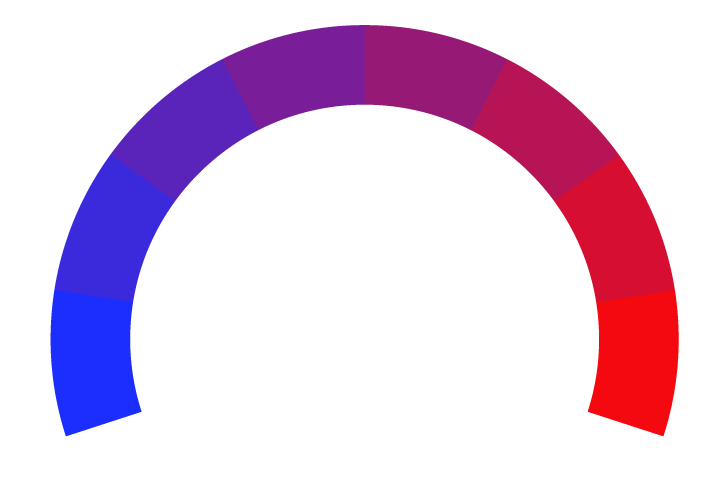
Biasly determines media bias ratings through a dual-layered approach combining artificial intelligence and analyst review. The platform’s proprietary bias detection engine, Bias Meter, evaluates sentiment, policy position alignment, and language framing across thousands of data points in news articles. Analysts then verify and interpret the AI’s findings, providing additional context where needed. Learn more about ratings
- Profile
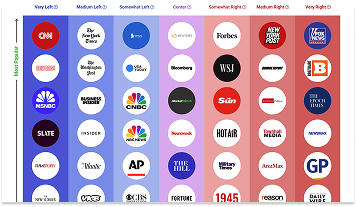
CBS News on the media bias chart
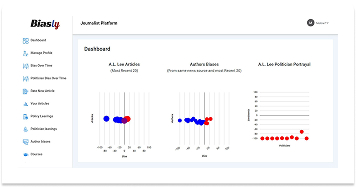
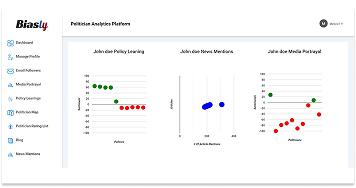
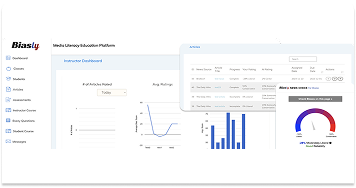
CBS News has a Bias Score of -36% Somewhat Left which is based on a variety of factors including its policy and politician leanings, article ratings, and the use of biased language. Its Reliability is rated as Good, and additional analytical insights are available in the other tabs.

- Bias Rating
-36% Somewhat Left
- Reliability77% Reliable GoodPolicy Leanings
-20% Somewhat Left
Extremely
LiberalVery
LiberalModerately
LiberalSomewhat Liberal
Center
Somewhat Conservative
Moderately
ConservativeVery
ConservativeExtremely
Conservative-100%
Liberal100%
Conservative
Average Reliability
*Our bias meter rating uses data science including sentiment analysis, machine learning and our proprietary algorithm for determining biases in news articles. Bias scores are on a scale of -100% to 100% with higher negative scores being more liberal and higher positive scores being more conservative and 0% being neutral. The rating is an independent analysis and is not affiliated nor sponsored by the news source or any other organization.
Politician Portrayal100% negative
Continue For Free
Create your free account to see the in-depth bias analytics and more.
By creating an account, you agree to our Terms and Privacy Policy, and subscribe to email updates.
Log In
Log in to your account to see the in-depth bias analytics and more.
Policy Leanings Analysis
Policy | Bias score |
|---|
CBS News Editorial Patterns
CBS News’s coverage of political topics often reflects a Somewhat Left bias, with consistent patterns in phrasing, source selection, and thematic focus that are Slightly Liberal. While CBS News is generally rated as left-leaning, long-term academic research suggests its tone shifts depending on political context and governing administration. This content analysis examines CBS News’s handling of left and right-leaning issues, along with its word choices and editorial preferences.
Coverage of Liberal vs. Conservative Topics
CBS News’s articles tend to sympathize with left-leaning perspectives, but some research demonstrates that the platform is simply anti-establishment. The European Journal of Political Economy found that CBS News is often more critical of Republicans, but that the platform’s biases have varied with the sitting leadership. For example, under Barack Obama’s administration, the news source became less left and more critical of Democrats than it had been during George W. Bush’s administration, when it had been more critical of Republicans. Despite this large-scale political study, the source predominantly maintains a Somewhat Left slant in its reporting.
One example includes CBS News’s coverage of the increased presence of ICE in cities following Trump’s 2024 inauguration. An article by Nicole Sganga and Camilo Montoya-Galvez presented ICE officers in Minnesota with a left-leaning slant. Specifically, the article included inflammatory comments by President Trump and depicted Tim Walz in a more professional light. The article calls Trump’s language “incendiary” and labels Tim Walz’s defense against his state’s fraud allegations as “pushing back.” Because the article’s discussion of Walz’s perspective is less emotionally evocative, a left-biased conclusion is drawn. This example demonstrates subtle bias techniques, indicative of Biasly’s analysis that CBS News is left-leaning.
Another topic discussed below is CBS News’s reporting on LGBTQ+ issues with a left-leaning slant. While this subject could be labeled a left-leaning topic, this article maintains the perspective of the LGBTQ+ population as the victims and the Republican policymakers as the culprits who threaten their rights. Whether covering topics such as ICE, fraud, or LGBTQ+ rights, CBS News appears more sympathetic to left-leaning opinions and more critical of right-wing perspectives.
Policy and Issue Framing
When covering gender rights, CBS News often supports movements for expanded legal protections. This aligns with Biasly’s analysis of the source, which identifies left-leaning perspectives as framed more sympathetically than right-leaning perspectives. Another exemplary instance of left-leaning bias from CBS News’s articles is in the topic of abortion. Biasly analyzed over 250 articles related to abortion and found more than 10 were left-leaning and none leaned right. An article by Melissa Quinn personifies this bias, describing the victimization of women during the overturning of Roe v. Wade, but providing no other perspectives about the deeply complex and nuanced topic.
Even in articles that do not exhibit overt bias by the author, editorial choices still reflect a slant. When discussing the Trump administration or right-wing voices related to a news topic, words like “restrict” or “imperil” paint the Republican position as harmful. These words were specifically chosen in an article to describe the right-leaning viewpoint about health care for transgender youth. Still, no discussion about the negative effects of hormone blockers on children is included in the article. Framing biases like this embolden the left’s perspective and diminish the opposition viewpoint by ignoring points that are aligned with the Republican Party.
Coverage and Relevance
CBS News’s reporting includes some of the largest stories in domestic and world politics, as well as health and entertainment. Although the source is less popular than other TV news outlets, it is consistently ranked among the top-tier news sources in terms of online visits and viewership. Regardless of any biases, the platform will cover most topics since they are relevant to its large global audience.
Readers who wish to explore further how CBS News compares with other publications can visit Biasly’s Media Bias Chart to analyze tone and word choice in real time.
CBS News Bias Analysis
Founded in 1929, CBS News is an American division of television and radio services. Within their category, they are ranked as the 25th best news source. According to Similarweb.com, CBS News had 67.7 million visits to its website in May 2023.
CBS News is a quality news organization known for its highly factual reporting. This brings us to the question: Can CBS News be biased? According to the Reuters Institute, the platform is the most trusted American news source, only beaten by local TV news.
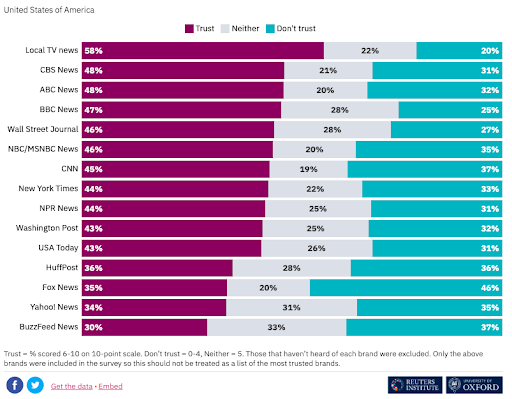
Source: Reuters
Is CBS News Biased?
Based on Biasly’s evaluations, CBS News is rated as Somewhat Left.
By examining content patterns and the broader context of media influence, we aim to offer a balanced perspective on CBS News’s political bias—and contribute to the ongoing discussion about bias in the news.
How Does Biasly Rate News Sources?
Biasly uses proprietary algorithms and a team of analysts to provide comprehensive bias evaluations across thousands of news outlets. Over 200,000 articles from more than 3,200 sources have been analyzed to identify the most accurate and unbiased stories.
Biasly assigns each outlet three key scores:
- Reliability Score – Reflects factual accuracy
- AI Bias Score – Generated via natural language processing
- Analyst Bias Score – Assessed by human political analysts
These scores are based on seven core metrics: Tone, Tendency, Diction, Author Check, Selection/Omission, Expediency Bias, and Accuracy. These elements help analysts and algorithms evaluate the political attitude conveyed by each article.
Biasly’s Bias Meter ranges from -100% (most left) to +100% (most right), with 0% indicating neutrality. The system evaluates individual articles based on political terms, policies, figures, and sentiment to calculate precise bias ratings.
Is CBS News Politically Biased?
CBS News earns a Somewhat Left rating for its AI Bias Score and a Somewhat Left for its Analyst Bias Score. The Analyst Bias Score is generated by reviewers from liberal, moderate, and conservative backgrounds.
Biasly’s AI Score for CBS News is Slightly Liberal, and they have a policy leaning score of Somewhat left. This means that CBS News provides coverage of the news from a somewhat left perspective. They have clear preferences and are biased toward the left, but do a commendable job of trying to remain centrist.
Biasly’s scores closely align with those of many other third-party research agencies, and CBS News tends to attract readers with moderate political leanings, as per Biasly’s “Medium Left” rating. This is due to the news organization’s inclination towards left-leaning causes and individuals. Throughout this article, we will discuss various methods for detecting bias to distinguish between factual information and personal opinions. Thereby, it enables you to become a more knowledgeable consumer of news.
Before we begin, we need to discuss bias. Bias is a natural human tendency, and we can express it both consciously and unconsciously. Bias is one of the most fundamental forms of pattern recognition in humans. This isn’t to lower the bar and say that “all things are biased,” but to explain the process by which we may come to trust certain news organizations that display patterns of coverage.
On the media’s part, there is an incentive to retain audiences, encourage them to subscribe, and elicit positive product ratings. Bias is a two-way street: people want to see news stories about issues they care about, and the media needs viewers to sustain its operations. This creates a positive feedback loop that influences what stories are covered and from what perspective. This also explains the actions of more left-wing news organizations.
Analysis of Bias in CBS News Online Articles
Pew Research reports that 33% of CBS News viewers are Democrats and 26% are Republicans. Given the balanced viewership, despite its slight left leanings, is it biased if both sides are willing to watch it? We will examine additional articles by them below to identify the signs.
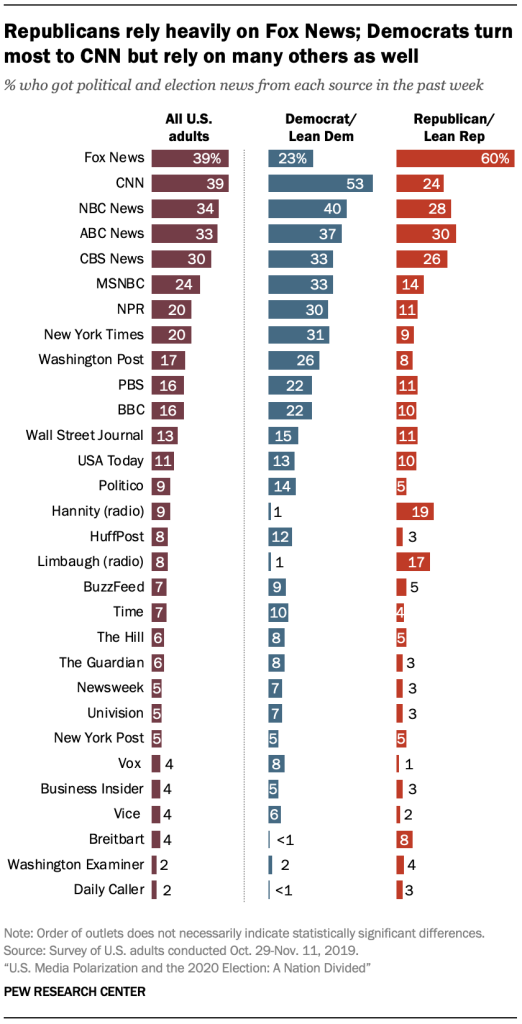
Source: Pew Research
When assessing bias, common metrics include Tone, Author, and Diction, which we will focus on below. Tone refers to the attitude of the writing and is related to but distinct from diction, which is the writer’s word choices. The Author metric refers to the author of the article and his or her demonstrated stance on issues through past articles and social media posts.
- Tone: The overall attitude conveyed by the article
- Diction: Specific word choices made by the writer
- Author: The background and social presence of the journalist
- Tendency: Patterns of bias in the writer’s broader body of work
- Expediency Bias: Quick visual or textual indicators like headlines and photos that imply bias
Expediency bias can specifically be exemplified in one article by Joe Walsh. The article is headlined, “Judge lashes out over ruling striking down Texas’ redistricting: ‘The opinion would deserve an “F”’”. This is considered expediency bias because the headline serves as an instant bias indicator against the judge’s ruling rather than simply laying out the facts of the case. This initial textual indicator is directly mentioned as a component of expediency bias, in this case by writer Joe Walsh.
The second article we will examine is titled, “CDC says vaccinated children and teachers won’t need masks in class this fall.” Biasly has rated this article as Somewhat Left because it maintains a slightly left-leaning tone despite its many faults. The article’s tone consistently supports the Biden administration and COVID-19 policies, without remaining neutral. The left-leaning tone is consistent throughout the article, making it difficult to claim the story is unbiased. One quote demonstrating the tone in this article reads,
“However, some states have already dispensed with those other preventative strategies. In Iowa and Texas, school districts have been barred from instituting mask mandates, which has been one tool used by administrators to lessen the spread of the virus, in the event of significant transmission.”
Before this quote, the article spoke favorably about the implementation of COVID-19 policies in largely blue states. Iowa and Texas are singled out in this manner because they were not complying with certain CDC procedures, some of which were later refuted and corrected by the CDC itself. The bias in this article exposes itself during its critique of right-leaning states and their procedures, while claiming the contrary opinion should be followed. An example of a more neutral approach to the topic in the same article is as follows,
“For students and staff who are unvaccinated, the CDC recommends wearing a mask indoors and in crowded outdoor settings. The agency also reiterated earlier guidance for the general public that masks will continue to be required on public transportation, like school buses.”
Although this quote’s tone is less biased than the previous one, the article still conveys a clear authoritative tone regarding its CDC source. Regardless, this quote is a much better example of fact-based reporting without a tone or diction slant.
The diction in this article is also problematic, as the author advocates for the left without providing right-leaning perspectives. The author does not provide an objective lens to look through in this article, and through phrases like:
“Weingarten said it’s discouraging to see some governors put politics above public health and that it’s “ironic” that conservative states that defend states’ rights “for political reasons, take away that local decision-making from those localities.”
Calling the conservative states’ decisions during COVID-19 “ironic” is a choice of diction that clearly hints at bias. In a separate article concerning abortion rights following the overturning of Roe v. Wade under the Trump administration, we can see a different example of how diction can frame a story. The phrase used to describe the people protesting the Supreme Court decision was “fueled by passion, anger, and overall emotion.” This choice of diction presents the story from the perspective of the victimized women, rather than telling a neutral account that includes details about this specific protest.
The author tries to impose his opinion on readers rather than letting them form their own. This is an example of a neutral topic that is intentionally left-leaning. The article departs from traditional reporting because the author seeks to impose their opinions on the audience.
Regarding author bias, Max Bayer has previously demonstrated bias against Conservatives. Some of his Twitter posts include ongoing criticism of conservative viewpoints. Even though Max Bayer has moved on from CBS News since this article’s release, he still shows bias in the articles he now writes. This may not change.
in other news: pic.twitter.com/YXTpbGLug1
— Max Bayer (@maxonwifi) August 26, 2021
A well-reported and critical story on the experience of many lawful refugees in Minnesota with no criminal record, who are being detained by federal agents and flown to Texas to be re-interviewed. Some have then been released without a way to get home. https://t.co/S6jN2SPKhY
— Max Bayer (@maxonwifi) January 26, 2026
Even though the original CDC article is identified as leaning left, bias can vary between articles and authors, even on the same news platform. This demonstrates the importance of identifying bias in any article by examining tone, diction, and the author’s bias.
Additionally, we will examine a CBS News article that shows little to no bias. This article is titled, “IRS now sending millions more additional stimulus checks,” and Biasly’s AI rating gave it a center rating. First, let’s start with the tone: it’s completely informative in this article. The article discusses the last wave of stimulus checks, known as “plus-ups,” and presents neutral information. Throughout the article, the tone remains consistent, leaving little room for bias.
The author’s language is not overly biased and provides clear information about the issue. The author refrains from using biased language throughout. For example,
“The latest round of payments is part of the Biden administration’s efforts under the American Rescue Plan to deliver $1,400 to each eligible adult and child. The IRS said it has now delivered more than 171 million payments worth more than $400 billion, with the last batch of checks amounting to more than $4 billion.”
As shown above, there is no use of tonal language, and this consistency holds throughout the piece. The only little sense of bias that we get is from this author’s Twitter feed, which favors left-leaning perspectives. However, despite the author’s political preferences, they remain neutral and provide informative reporting to their viewers. This allows readers of the article to form their own opinions rather than having the author impose one.
Analysis of CBS News Opinion Articles
In journalism, opinion-style reporting provides a fitting platform for journalists to articulate their viewpoints and convictions. However, it is worth noting that excessive opinion may not be appropriate when producing a standard news article. While opinion pieces are subjective and less reliable, they can still provide valuable insights into different political perspectives.
CBS News opinion pieces have had a few issues in the past with reliability and a tendency to promote leftist ideologies and individuals; the group has been involved in minimal controversies, during which they have been charged with low credibility. The article, “Former Treasury Secretary Robert Rubin Condemns Threats to Default on U.S. gov’t debt,” is a brief piece on the U.S. debt ceiling crisis from a former Treasury Secretary who served in 1995. As far as opinion pieces go, this is an excellent example of a typical opinion article. Author Robert Rubin shares his experiences and beliefs about the effects of raising the debt ceiling, without misleading his audience.
In terms of selection and omission bias, as well as the quality of the sources used, the author has some room to improve. He is indeed an expert in his field, and using himself as a source is valid for an opinion piece; however, he could do better by providing more sources and facts about his topic. It is okay to use oneself as a source, but quality pieces bring more to the table.
How to Evaluate Bias
Although Biasly rates CBS News as Somewhat Left, it’s important to remember that bias can vary from article to article. Although CBS News received a Somewhat Left Biasly rating, bias varies per article, and the platform does not always lean left. In reality, it is well known to have previously published certain items with a right or centrist slant. General news articles are often regarded as less biased than opinion pieces; other article types tend to exhibit greater or lesser bias. To determine the bias of your favorite news articles, Biasly has a news media checker at your disposal. While every story you read will have some bias, some will keep to the facts more closely than others. For this reason, it is critical to utilize Biasly’s products to help you assess the bias of what you read in every article. So, let’s learn how to evaluate media bias.
Recognizing media bias requires awareness and critical thinking. Often, readers trust news sources that affirm their existing beliefs—a psychological tendency known as confirmation bias. This makes it harder to identify slanted narratives or one-sided reporting.
To combat this, it’s essential to challenge your assumptions by consulting multiple viewpoints and verifying news through third-party analysis. Tools like Biasly’s media bias ratings allow readers to compare the same news story across the political spectrum.
Ultimately, bias isn’t always a matter of what is said—it’s also about what is left out, how topics are framed, and which stories are chosen for coverage. Learning to recognize these patterns can help readers make more informed decisions and develop greater media literacy.
To start comparing news outlets and gain a better understanding of bias, sign up for Biasly’s Media Bias & News Analytics Platform to see how stories vary between sources.
CBS News Reliability Analysis
Is CBS News Reliable?
It can be argued that CBS News is a generally trustworthy news source with a strong reputation for journalistic integrity, but there are exceptions that indicate the degree of truth in its publications may fluctuate.
The more you research media reliability and accuracy, the simpler it will be for you to spot problems with sources, selection, omission, and factuality. To help with this, you can use Biasly’s News Bias Checker to uncover reliability problems and assist you in finding the most accurate and dependable news.
How to Evaluate Reliability?
Reliability refers to how trustworthy or accurate a news source is. If we can’t trust what we read, then continuing to consume content from that outlet serves little purpose. So how do we evaluate a news outlet’s reliability?
There are several potential measures of reliability to look out for when trying to determine whether a media source is reliable or not. Red flags for an unreliable article can include the presence of wild, unsubstantiated claims, facts dependent on other unreliable sources, heavy use of opinionated language, and more. In contrast, hallmarks of a reliable source include:
- Absence of subjective language
- Citing credible sources (e.g., .gov, .edu, academic references)
- Verifiable facts and statistics from multiple outlets
- Use of primary sources, like interviews or transcripts
- Consistency with coverage across other platforms
Biasly’s reliability scores incorporate these elements in evaluating media outlets.
So How Does CBS News Fare in Its Reliability?
The political reliability index developed by Biasly assesses both accuracy and trustworthiness. CBS News currently holds Good Reliability Score, which is calculated as a weighted average of:
- Fact Analysis Score – Evaluates the accuracy of claims, facts, and evidence.
- Source Analysis Score – Assesses the number, diversity, and credibility of sources and quotes used.
CBS News’s Source Analysis Score is Average at 56% Reliable. This suggests moderate trustworthiness in its sourcing practices. The score is AI-generated and considers quote length, frequency, diversity, and quality.
The Fact Analysis Score of CBS News is Good at 83% Reliable. This further shows how well CBS News supports its claims, addresses selection and omission bias, and presents verifiable evidence.
Scores are based on averages; therefore, individual articles vary in trustworthiness depending on context, author, and other factors. Our findings indicate that CBS News is mostly factual but not entirely, due to past retractions/unfactual pieces.
Let’s analyze CBS News’s ranking data and discuss trustworthy news source red flags.
CBS News’s Accuracy and Reliability
According to Biasly’s analysis, CBS News maintains Good Reliability Score, but individual articles may vary significantly. Let’s dive into the details.
The credibility of news organizations is significantly impacted by bias and political orientation. Like numerous other media organizations, CBS News has occasionally been accused of prioritizing the left-leaning agenda above facts. We can evaluate the integrity of CBS News stories, assess the evidence supporting them, and verify these accusations. We will examine selection and omission bias as we assess the articles’ accuracy and factual accuracy.
Selection bias occurs when stories/facts are chosen or omitted ideologically to support the source’s narrative. Omission bias, on the other hand, leaves out opposing opinions, exposing readers only to the author’s ideological view. It’s important to keep in mind these two types of biases when trying to assess an article’s level of accuracy.
Biasly assigns a percentage score to accuracy, with 1 indicating the least accurate and 100 indicating the most accurate. Ratings weigh assertions against evidence, reliable internal sources, and reliable external sources. A full page at Biasly’s website includes dependability and accuracy ratings for newly released CBS News stories. As we previously stated, according to the reports analytics have assessed, CBS News has generally “Good” reliable as of 2026. Scores vary by article; extreme swings in reliability stem from omission and selection bias. Consider also American Military News, which exhibits a medium right bias and is rated only “Good” for reliability by Biasly. For example, they had one article that was “Excellent” reliability titled, ”U.S. Marine Corps account attacks Fox’s Tucker Carlson on Twitter, then deletes it, apologizes,” and another article called, “Op-ed: Guns, Politics, and Media Influence,” that is only “Fair” reliability. As a result, stories displaying political leanings are less reliable than neutral ones.
For instance, CBS News has a ‘Good’ reliability article: “Biden officials defend border response as the number of migrant children in U.S. custody tops 20,000.” This article is rated medium-left. Considering selection/omission bias, author Camilo Montoya-Galvez uses mostly Biden-favoring quotes over neutral ones. For example, Montoya-Galvez says this in his article,
“‘We have made significant progress,’ one senior Biden administration official who requested anonymity said during a call with reporters on Wednesday. The official, however, cautioned that ‘nobody should have the expectation this is going to be solved overnight,’ saying the Biden administration is digging itself out of a ‘hole’ created by former President Donald Trump’s asylum restrictions and reluctance to expand shelter bed space for migrant children.”
Here, we see a quotation favoring the Biden Administration that adds no new information to the story. By doing this, Galvez limits the readers’ ability to form their own opinions about the border. This demonstrates the author’s selection/omission bias by shaping the reader’s point of view.
This article adopts a Medium Left stance, primarily by portraying Biden as handling immigration effectively and attributing setbacks to the former president, which runs counter to the grain of many CBS News stories. However, Montoya-Galvez fails to balance his sources and commentary when reporting on this challenging subject. Including border workers alongside anonymous White House officials would have provided a more holistic view. Therefore, this article can be considered somewhat reliable.
We will take a closer look at more examples like this below, providing a further investigation into the reliability of CBS News’s articles. This will include its use of selection bias, omission bias, and the quality of its sources and facts used.
Analysis of Reliability in CBS News’s Online News Articles
The editor-in-chief of CBS News, following the merger with Skydance Media, is Bari Weiss, who also operates the Free Press section of the news source. Some editorial decisions under this new leadership have raised concerns about the credibility and reliability of the sources. Most prominently, 60 Minutes, a television news broadcast owned by CBS News, censored an episode revolving around the humanitarian crises in El Salvador prisons that harshly portrayed Donald Trump’s 2025 deportations. Bari Weiss defended the episode’s removal, although many viewed it as censorship of an inconvenient story for the 2025 administration. CBS News correspondent Sharyn Alfonsi, who spent the time researching for the episode, labeled the decision as politically motivated.
Regardless of contemporary shifts in editorial reliability inside the news platform, the source has mostly upheld a policy of straightforward reporting. As previously mentioned, any lapses in reliability should largely be regarded as exceptions to a positive reliability record for CBS News. Biasly’s reliability rating score mirrors this sentiment.
Quality of Sources and Facts Used
CBS News can be good at using reliable sources from both sides of the ideological divide and citing facts as evidence; however, this is not the case for every article. For instance, think about “Charles Blow on Tyre Nichols’ Death, and America’s Shame.” In this article, author Charles Blow gives his take on the death of a young Black American named Tyre Nichols. In his piece, the author offers his assessment of the state of America based on the events surrounding Nichols’ death. In this article, Blow only cites other articles by CBS News, and in the “for more info” section, he includes a single link to his personal profile page, which offers no additional insight into the story. Additionally, the article lacks any quotes whatsoever, and, given these details, his grandiose statements could mislead readers about the objective truth, making this a poor example of opinion writing. The author’s lack of quotations and reputable sources undermines his ability to make a convincing argument for his position.
The next article we examine will be a good example of opinion writing, with strong sources and facts. CBS News posted an article by Steven Portney that talks about the murder of journalists. The article, titled “Remembering murdered journalist George Polk,” goes into detail about the murder of George Polk during the Cold War and his pursuit of truth for others. The sources cited in this article include the George Polk Awards and the Committee to Protect Journalists, also citing supporting articles written by the news organization itself. Statements as such:
“Today, around the world, journalist killings and detentions are on the rise. The Committee to Protect Journalists says 67 media workers were killed last year alone.”
In “Remembering Murdered Journalist George Polk,” CBS News correspondent Steven Portnoy reflects on the legacy of George Polk on the 75th anniversary of his murder while reporting during the Greek Civil War — a death that helped inspire the annual George Polk Awards for courageous journalism. The article reads as a commemorative piece with an appreciative tone rather than an investigative report, blending historical context with modern parallels about dangers journalists face worldwide. This analysis will examine the use of quotes, linked sources, sourcing balance, author framing, and factual accuracy throughout the piece.
There is one clear direct quotation within the article attributed to Edward R. Murrow describing George Polk. Its length is 14 words, making it both the longest and shortest quoted passage. The average quote length therefore is also 14 words. Because the piece relies on this single quotation — a vivid character description from a highly respected journalist — the quote has emotional impact but offers limited breadth of sourced material. Generally, longer quotes drawn from primary documents or interviews can improve reliability by showing context and voice directly; here, the singular, brief quotation enhances color but does not deeply substantiate factual claims.
This CBS News article includes five distinct linked sources, though all are tightly centered around journalism industry or related informational sites. Specifically, one link points to the George Polk Awards page managed by Long Island University, three link to the Committee to Protect Journalists or related CPJ reporting on journalist killings, and one links to an external site with award data. All are either clearly informational or centered on journalism advocacy. There are no links to partisan political sources. Most links reside in a journalistic or civil liberties context rather than political commentary.
- George Polk Awards, historical and award information.
- The Committee to Protect Journalists, statistical reporting on journalist deaths.
- Report: Deadly year for journalists as killings rose sharply in 2022 (CPJ).
- Data on 2022 killings of journalists and media workers (CPJ).
- (Implicit) link on Jamal Khashoggi, Austin Tice, Evan Gershkovich contextual mentions.
Because all linked sources relate to journalism, press freedom organizations, or historical records about awards named for George Polk, the article does not attempt to balance ideological perspectives across a left/center/right media spectrum — it stays within mainstream informational and advocacy resources. There are no clearly partisan-leaning sources included, nor is there a mix of political viewpoints; the sources’ shared purpose is to contextualize the legacy of journalistic risk and honor rather than debate broader political issues.
Within the article, sources are used positively to support Portnoy’s narrative about the importance of remembering journalists who are killed on the job. Framing is set by CBS and CPJ data and history, and claims about journalist danger or Polk’s legacy go largely unchallenged because this is a commemorative and contextual piece rather than a contested debate. Skepticism — if present — is directed at historical injustices around suppressed truths rather than at any particular source’s reliability.
Author bias rating: Center — the article’s sourcing and focus on journalism history and human rights does not push a strong partisan political agenda but maintains a broadly mainstream perspective.
When measured against other historical accounts of George Polk’s life and death, the article’s factual grounding is accurate. Polk was indeed a CBS correspondent murdered in Greece in 1948 while covering the civil war, and the George Polk Awards were established in his name to honor him and other journalists. Facts about the civil war context, Polk’s work exposing corruption, and modern dangers to journalists align with independent biographies and encyclopedia entries and reporting by journalist advocacy groups. The piece doesn’t introduce disputed claims; rather, it reflects well-established historical points and current CPJ statistics on journalist threats, making its factual content reliable within the context it covers.
Selection and Omission Bias
In a more extreme example, we will examine selection and omission bias in a CBS News article. The article, titled “Threatened by Climate Change, Guatemalans See Opportunity in Migrating to the U.S.,” has some major problems with its selection and omission bias, among other problems.
The author focuses solely on the positive left-leaning perspective, providing no information from the opposing side. Additionally, the headline and leading image are favorable to the issue of climate change and immigration, showing a noticeable bias towards the left-leaning agenda. By choosing not to incorporate opposing viewpoints and failing to remain objective in their reporting, they make their article heavily biased. Whether it is selection bias, omission bias, author bias, or choosing a minimal amount of credible sources, they plague their article with opinions and tone to sway the reader. For example, they rely on only one expert source to bolster their claim and on only one directly affected witness.
Throughout the article, the author employs inflammatory language that disparages those who oppose immigration and climate action. The author omits that immigration isn’t just happening from climate change, but rather tries to convince us that climate change is the sole reason for the uptick in immigration.
In the article we inspected earlier, “Former Treasury Secretary Robert Rubin Condemns Threats to Default on U.S. gov’t debt,” the sources, as we discussed earlier, are not enough. He has only three sources, all other articles on the debt ceiling crisis. By choosing to omit any other opinions or reliable sources in his piece, he drives an opinion into each of his readers’ minds. Given its length, this article remains a good example of an opinion piece. However, like any story, it needs to be analyzed on a case-by-case basis, as there is still considerable room for improvement. Even in his story, he omits any contradictory opinions and instead links to other articles that sway the reader toward his position.
In opinion pieces, issues with factuality, sources, selection, and omission are frequently present. The articles we’ve covered so far are mostly good; however, each must be examined closely. When we do examine articles, we will find, even at CBS News, articles that exclude adequate relevant background and information that may contradict the author’s position. As a news organization with a left slant, CBS News has a small incentive to continue appealing to left-leaning viewpoints to maintain the interests of its sizable left-wing readership. But now that we’ve enumerated typical trustworthiness indications, you may stay current by keeping yourself informed on the most accurate news.
So, is CBS News Reliable?
Overall, CBS News can be considered to be an outlet that is very reliable. It demonstrates a consistent goal of journalistic integrity and typically supports claims with sources and quotes. Occasional omissions and framing bias do appear, particularly on culturally sensitive or partisan issues.
As media literacy improves, readers can more easily detect issues with selection bias, omission bias, and factuality. To strengthen your ability to assess reliability across the political spectrum, use Biasly’s News Bias Checker to compare how multiple outlets report the same story.
This empowers you to consume more accurate, balanced, and dependable news.
Funding and Ownership
Who Owns CBS News?

Larry Ellison, Source: Wikimedia
CBS News was owned by Paramount Global, formed in 2019 when Viacom merged with CBS Corporation. The primary shareholder of Paramount Global until 2025 was National Amusements, owned by the Redstone family. Paramount Global also owns Paramount Pictures, MTV, Nickelodeon, and the streaming service Paramount+. On August 7, 2025, Skydance Media, owned by David Ellison, acquired National Amusements and the Redstone family’s controlling stake in Paramount Global. With the large financial backing of his billionaire father, Larry Ellison, co-founder of tech giant Oracle, David Ellison now owns the controlling stake in Paramount Global, CBS News’s parent company, and thereby CBS News.
Who Funds CBS News?
CBS News is mostly funded by advertising and affiliate fees, along with subscription revenue from its parent company. Paramount-Skydance owns an array of streaming services, TV networks, studios, and digital outlets that generate substantial advertising revenue for the parent company of CBS News.
Specific revenue figures are difficult to ascertain, given that Paramount Global is a publicly traded conglomerate. In 2021, ViacomCBS reported approximately $29 billion in revenue, which serves as a useful benchmark since the 2025 merger.
Additional Insights
News Source Comparison
In news source comparisons, CBS News is often evaluated alongside other national outlets such as ABC, NBC, and FOX News. While each of these large media institutions expresses varying levels of ideological bias, they maintain fixtures in the news media sphere in the same way as CBS News. Biasly’s bias and reliability ratings for the source place it in the upper echelon of biased news sources, compared with those previously listed, but within the normal range of reliability.
ABC and NBC News are rated as much less biased than CBS News and FOX News, which are on opposite sides of the political spectrum. All comparable sources maintain a decent level of reliability, indicating that they do not necessarily tamper with the facts to push bias; however, verbiage, selection, and omission bias, as well as biased editorial tendencies, persist.
Notable Contributors and Authors
CBS News features a diverse range of reporters and broadcasters, many of whom have been previously mentioned. The current anchor of CBS Evening News is Emmy winner Tony Dokoupil, known for noteworthy interviews with powerful world leaders. The CBS Mornings co-host Gayle King has been inducted into the Broadcasters Hall of Fame and famously covered the Sandy Hook tragedy in Newtown, Pennsylvania.
Related Tools and Resource Pages
To better understand how CBS News fits into the broader media landscape, we recommend exploring these helpful resources:
- Media Bias Chart: See where CBS News ranks among hundreds of other media outlets across the political spectrum.
- Political Bias Chart: Visualize the political slants of news sources across various policy areas.
- Journalist Bias Analytics Platform: Explore how individual journalists contribute to bias within their publications.
- Politician Bias Analytics Platform: Compare how politicians are framed by CBS News and comparable outlets.
- Media Literacy Education Platform: Learn how to critically assess media sources, bias techniques, and news reliability.
Frequently Asked Questions
CBS News is rated as Somewhat Left based on Biasly’s media bias algorithm, which assesses sentiment, article framing, and policy favorability.
CBS News has faced several accusations of fake news or misinformation. Most prominently, in 2004, Dan Rather reported that a series of documents related to George W. Bush’s service record were factual. Later, after briefly defending the documents, the source admitted that they had been misled about the information, which led to subsequent firings and Dan Rather’s retirement shortly after the scandal.
Along with the 2025 killing of Aflonsi’s 60 Minutes segment under David Ellison and Bari Weiss’ new leadership, the source has also been accused of occasionally using misleading information or withholding relevant facts.
Biasly uses a combination of AI sentiment analysis and human analyst review to assess tone, fact accuracy, source quality, and media bias indicators. Learn more on our Bias Meter page.
Generally, yes, although partisan framing and selective reporting do exist in select instances in CBS News’s articles.
Ratings are based on recent news using data science and A.I. technology.
Military Spending
| Date | Sentiment | Associated Article | Snippet |
|---|---|---|---|
| 08/25/2019 | 75% For | Trump Family Detentions Flores Agreement (link) | So, of course, the Trump administration is doing the opposite in a baldfaced |