




-8% Center
Bias Meter
Extremely
Liberal
Very
Liberal
Somewhat Liberal
Center
Somewhat Conservative
Very
Conservative
Extremely
Conservative
-100%
Liberal
100%
Conservative

Biasly determines media bias ratings through a dual-layered approach combining artificial intelligence and analyst review. The platform’s proprietary bias detection engine, Bias Meter, evaluates sentiment, policy position alignment, and language framing across thousands of data points in news articles. Analysts then verify and interpret the AI’s findings, providing additional context where needed. Learn more about ratings
- Profile
Honolulu Star Advertiser on the media bias chart

Honolulu Star Advertiser has a Bias Score of -8% Center which is based on a variety of factors including its policy and politician leanings, article ratings, and the use of biased language. Its Reliability is rated as Average, and additional analytical insights are available in the other tabs.
- Bias Rating
-8% Center
- Reliability38% Reliable AveragePolicy Leanings
14% Somewhat Right
Extremely
LiberalVery
LiberalModerately
LiberalSomewhat Liberal
Center
Somewhat Conservative
Moderately
ConservativeVery
ConservativeExtremely
Conservative-100%
Liberal100%
Conservative
Average Reliability
*Our bias meter rating uses data science including sentiment analysis, machine learning and our proprietary algorithm for determining biases in news articles. Bias scores are on a scale of -100% to 100% with higher negative scores being more liberal and higher positive scores being more conservative and 0% being neutral. The rating is an independent analysis and is not affiliated nor sponsored by the news source or any other organization.
Politician Portrayal100% negative
Continue For Free
Create your free account to see the in-depth bias analytics and more.
By creating an account, you agree to our Terms and Privacy Policy, and subscribe to email updates.
Log In
Log in to your account to see the in-depth bias analytics and more.
Policy Leanings Analysis
Policy | Bias score |
|---|
Honolulu Star Advertiser Editorial Patterns
Honolulu Star Advertiser’s coverage of political topics often reflects a Center bias, with consistent patterns in phrasing, source selection, and thematic focus that are Neutral. While the publication demonstrates journalistic standards in many of its reports, the choice of issues, framing, and word usage can indicate a political slant. This content analysis examines how Honolulu Star Advertiser handles liberal and conservative issues and evaluates its language choices and editorial tendencies.
Coverage of Liberal vs. Conservative Topics
Honolulu Star Advertiser’s articles include many different topics, such as Hawaii’s internal problems, the environment, and politics at both the state and national levels. These issues are typically presented factually, without the writer’s opinion. However, there may sometimes be a slight liberal bias, as seen through Honolulu Star Advertiser’s bias analysis. In some articles, the perspective that Honolulu Star Advertiser has on the issue may be closer to that of the Democratic Party, yet the vast majority of articles tend to stay grounded in the center.
Articles covering conservative figures or Republican-led initiatives are addressed in the same manner as liberal ones. Biasly’s analysis of recent Honolulu Star Advertiser articles reveals a tendency to maintain objectivity, regardless of which party the article centers on. For example, in political campaign coverage, both parties receive the same amount of scrutiny, and the candidates are analyzed equally.
News media bias may manifest in subtle ways, such as placing greater prominence on one side’s voices, or using emotional diction when describing certain causes, while offering more detached language in other contexts. The language used may indicate what lean each source has. Honolulu Star Advertiser uses mostly neutral language within its articles, such as “described”, “depending upon”, and “according to the source”. This sort of language allows the audience to make up their own mind, without outside influence from the writer.
Policy and Issue Framing
When covering healthcare, Honolulu Star Advertiser often references scientists and doctors who tend to be in favor of greater reforms in the United States’ healthcare system. This aligns with its Center rating with a slight left lean, and especially so in Hawaii, which has voted blue in almost all elections since 1980. Coverage of national politics is also analyzed through the same neutral perspective as most other issues. Politicians from each respective issue are quoted within the articles, and the situation is explained with facts.
Other pressing issues like government spending, taxes, or civil rights — typically associated with conservative platforms — are covered in a more cautious or critical tone. These stories are often contextualized through the lens of their impact on marginalized groups or framed as polarizing. Even in otherwise neutral coverage, phrasing choices can shape reader perception. Consistent word choice reflects an editorial direction that, even unintentionally, can contribute to bias in news media.
Coverage and Relevance
Honolulu Star Advertiser’s reporting often touches on key issues central to the media political bias discussion — including Hawaiian residents’ concerns, governmental debate, and biased media narratives. As such, it serves as a compelling case study for examining source bias and news media bias in state-focused reporting.
Readers who wish to further explore how Honolulu Star Advertiser compares with other publications can visit Biasly’s Media Bias Chart to analyze tone and word choice in real time.
Honolulu Star Advertiser Bias Analysis
Honolulu Star Advertiser is a combination of two older news sources that came together to form Honolulu Star Advertiser in 2010. Today, it functions as an innovative news organization, operating primarily through advertising revenue. Honolulu Star Advertiser positions itself as a community asset focused on being an independent voice for the citizens of Hawaii. It is a news source that does its best to stay down to Earth with its readers, striving to provide easily digestible news for the public.
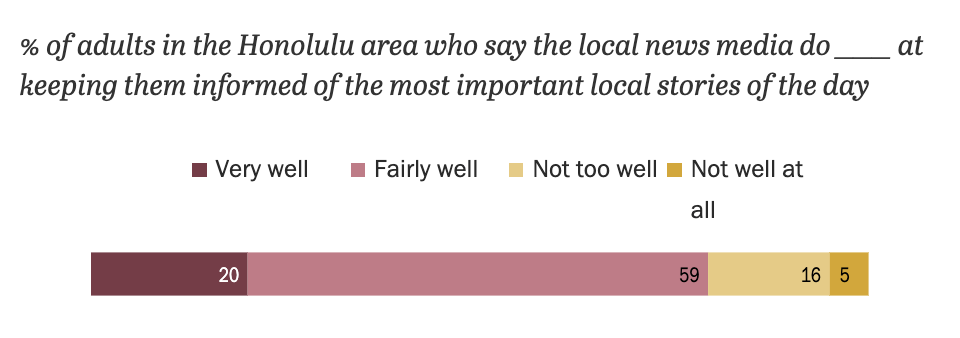
According to Similar Web, Honolulu Star Advertiser reached an average of 2,856,000 monthly visits. When it comes to media bias, both AI and media analysts have evaluated its content, sources, and funding to determine its political leaning.
Source: Pew Research
As a leading media outlet in Hawaii, Honolulu Star Advertiser plays a significant role in shaping public perception. Readers’ trust in the accuracy of local news may mirror the conclusions reached by Biasly’s media bias ratings. This article delves into Honolulu Star Advertiser’s editorial tendencies to explore whether political bias is present and, if so, to what degree.
Is Honolulu Star Advertiser Biased?
Based on Biasly’s evaluations, Honolulu Star Advertiser is rated as Center.
By examining content patterns and the broader context of media influence, we aim to offer a balanced perspective on Honolulu Star Advertiser’s political bias—and contribute to the ongoing discussion about bias in the news.
How Does Biasly Rate News Sources?
Biasly uses proprietary algorithms and a team of analysts to provide comprehensive bias evaluations across thousands of news outlets. Over 200,000 articles from more than 3,200 sources have been analyzed to identify the most accurate and unbiased stories.
Biasly assigns each outlet three key scores:
- Reliability Score – Reflects factual accuracy
- AI Bias Score – Generated via natural language processing
- Analyst Bias Score – Assessed by human political analysts
These scores are based on seven core metrics: Tone, Tendency, Diction, Author Check, Selection/Omission, Expediency Bias, and Accuracy. These elements help analysts and algorithms evaluate the political attitude conveyed by each article.
Biasly’s Bias Meter ranges from -100% (most left) to +100% (most right), with 0% indicating neutrality. The system evaluates individual articles based on political terms, policies, figures, and sentiment to calculate precise bias ratings.
Is Honolulu Star Advertiser Politically Biased?
Honolulu Star Advertiser earns a Center rating for its AI Bias Score and a Center for its Analyst Bias Score. The Analyst Bias Score is generated by reviewers from liberal, moderate, and conservative backgrounds. Analysts reviewed Honolulu Star Advertiser articles and noted that there does not tend to be a preference toward either party’s positions. However, it consistently covers policy areas such as Indigenous representation and clean energy. These topics, alongside the rest that Honolulu Star Advertiser covers, are done so without involving much bias.
For example, coverage of racial minorities and affirmative action laws reflects a mostly neutral tone, even though they are topics that may be very divisive. Regardless of the political orientations of Honolulu Star Advertiser’s writers, almost all topics are presented solely factually. There are some topics that may include a higher amount of opinionated language, but for the most part, there is no editorialization within the articles.
Hawaii’s political climate agrees with this rating. According to 270ToWin, Hawaii has voted consistently blue since its admission into the Union in 1959. It has only voted Republican twice in that time period, and the rest of the elections have gone to the Democratic Party’s candidate. This is in accordance with Honolulu Star Advertiser’s bias analysis, as it reveals that while Honolulu Star Advertiser remains in the center, it leans slightly to the left.
This means Hawaii is more liberal, which could explain differing perceptions of Honolulu Star Advertiser’s content. The paper may draw mixed reactions depending on readers’ political orientations.
This Bias score is determined through natural language processing that evaluates the tone, word choice, and opinion embedded in the reporting. Recent AI evaluations highlight constant talking points within articles that discuss the political situation in Hawaii and environmental concerns.
Analysis of Bias in Honolulu Star Advertiser Online Articles
Honolulu Star Advertiser has found that in-depth coverage of Hawaii’s internal issues is an effective way to garner more viewers. Given that much of its readership is Hawaii-based—where state-wide problems are a genuine concern—it’s essential to ask: is Honolulu Star Advertiser truly biased?
To evaluate this, we can analyze select Honolulu Star Advertiser articles through several of Biasly’s bias rating criteria: Tone, Tendency, Author, Diction, and Expediency Bias.
- Tone: The overall attitude conveyed by the article
- Diction: Specific word choices made by the writer
- Author: The background and social presence of the journalist
- Tendency: Patterns of bias in the writer’s broader body of work
- Expediency Bias: Quick visual or textual indicators like headlines and photos that imply bias
Source: Honolulu Star Advertiser
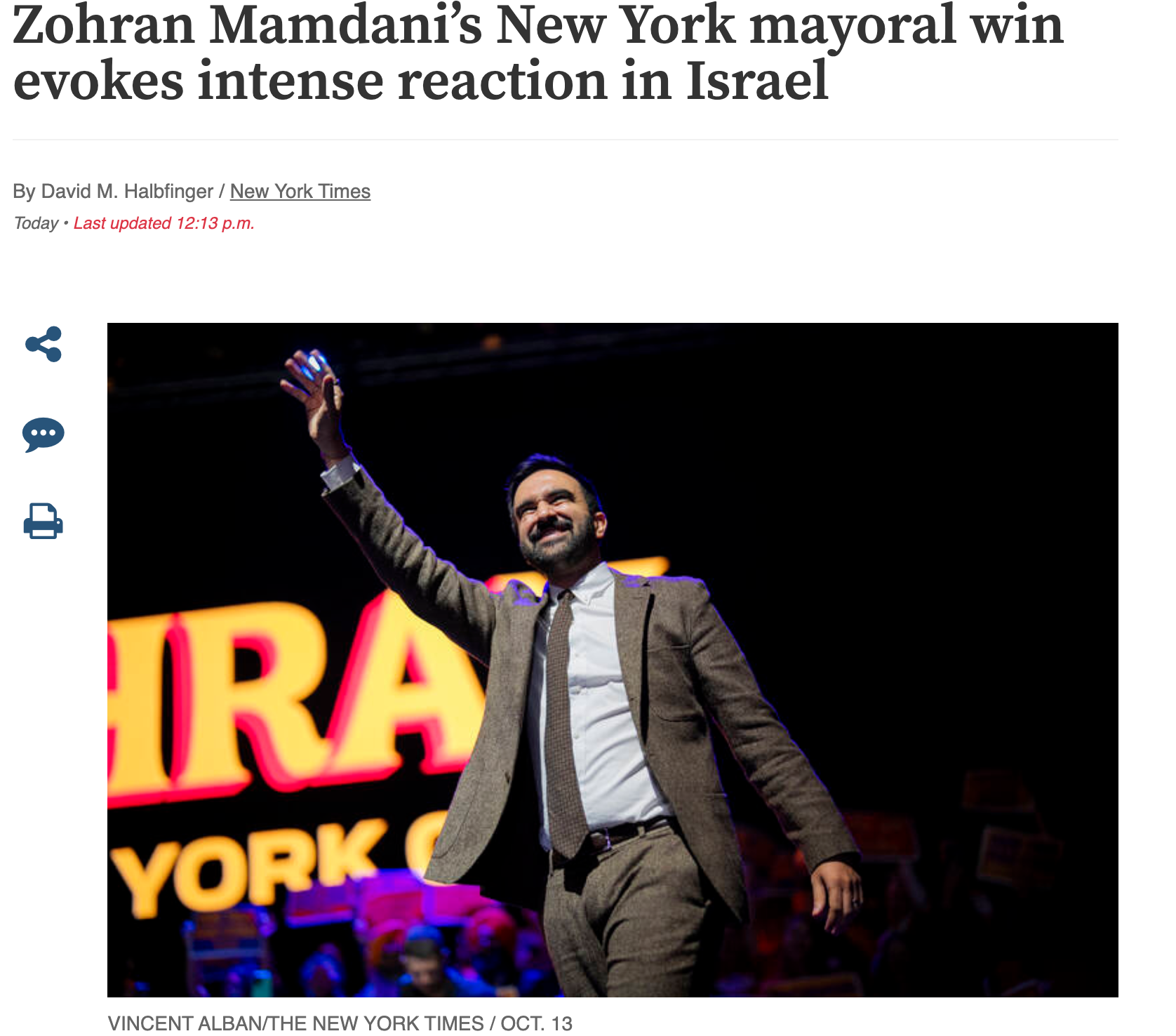
One such article features a headline that features newly elected New York mayor Zohran Mamdani in the context of Israel’s worries. The photo makes Mamdani look powerful, with the bold lettering behind him and the triumphant pose. The article begins by detailing the situation and explaining why Israeli politicians are worried about his future candidacy.
Reporter David M. Halbfinger outlines Mamdani’s rise to NYC’s mayorship and how Israel is vehemently against him. For instance, several quotes from the Israeli ambassador, Danny Danon, are used frequently. An example of one is as follows:
“Danny Danon, the Israeli ambassador to the United Nations, was more sober, vowing in a post on social media to work with New York’s Jewish leaders “to ensure their security and well-being.”
The article does not lean in either direction during its explanation of Mamdani’s win and the Israelis’ reaction. Halbfinger also includes differing perspectives within the article, specifically from Mamdani’s Palestinian supporters. These opposing perspectives allow the audience to see what people on either side of the spectrum are saying. It lays out the facts in a way that lets the reader have an opinion of their own, instead of what the writer wants to communicate.
David M. Halbfinger’s Twitter activity reflects a restrained but perceptible editorial perspective shaped by his long career covering foreign affairs and conflict. His posts frequently amplify reporting from established journalists and outlets, often emphasizing humanitarian impact, institutional accountability, and corrections when errors occur. While some reposts and endorsements suggest a center-left worldview, particularly in how international conflicts and U.S. political narratives are contextualized, his own language remains measured and aligned with professional journalistic norms rather than overt advocacy. Let’s take a closer look at one of Halbfinger’s tweets that reflects his approach to journalistic accountability and public correction:
When we mess up, we own it. https://t.co/E16yySIxva
— David Halbfinger (@halbfinger) October 23, 2023
Halbfinger posted this statement while sharing a New York Times editors’ note acknowledging errors in the paper’s initial coverage of an explosion at a Gaza hospital. The Times conceded that early reporting relied too heavily on unverified claims from Hamas officials and that the prominence of the headline created a misleading impression before key facts were confirmed. By amplifying this correction, Halbfinger signaled an emphasis on institutional accountability and transparency rather than partisan framing.
Another article titled “Trump seeks end of Senate filibuster as record-breaking shutdown continues” is slightly more biased. It remains mostly factual, but it includes brief instances of left-leaning bias. Phrases such as “help low-income Americans pay for private health insurance” and “described jettisoning the filibuster as a mathematical impossibility” reinforce this belief. The current governmental situation is very tense, and some of that tenseness is expressed in the article:
“During today’s gathering, Trump played down concerns that the Democrats could take power. He argued that if the Senate eliminates the filibuster, Republicans will be able to maintain power by jamming through what he sees as popular legislation.”
The article employs language that may be viewed as slightly inflammatory, in accordance with its pre-existing bias. Terms like “impact” and “record-breaking” are rather heavy terms, even if they are still informative. The words are emotionally charged, and the quotes used may be strategically placed in order to cater to the left.
To sum it up, Honolulu Star Advertiser shows inconsistent bias across its reporting. While Halbfinger’s Mamdani coverage maintains neutrality through balanced presentation and opposing viewpoints, the Senate filibuster article is slightly more biased in its language. The employment of inflammatory statements further compromises the bias analysis. Yet within most of its reporting, Honolulu Star Advertiser’s tendency remains to present both sides evenly, without any editorialization. This may further audience trust in Honolulu Star Advertiser.
Analysis of Honolulu Star Advertiser Opinion Articles
To fully understand political bias in media, it’s important to distinguish between factual reporting and opinion pieces. While reporting aims to present facts and let readers form their own conclusions, opinion articles express personal viewpoints on current issues. Although the previous section examined factual reporting, this section turns to how bias surfaces through Honolulu Star Advertiser’s selection and tone of opinion content.
One example is the article titled “‘No Kings’ protesters march across America at anti-Trump rallies”. The title itself covers a topic that may lean more to the left, as it is a protest against a Republican government. It implies dissatisfaction with the political status quo—particularly under the Trump administration—and analyzes the effects of the uprising against Donald Trump’s current administration.
In contrast, another opinion piece titled “Millions face steep SNAP cuts as shutdown stalls full payments” employs more centrist language. Its title also does not lean toward any political side, and the article includes many facts that back up the claims. The article avoids emotionally loaded phrasing, indicating that the piece may be less ideologically charged.
How to Evaluate Bias
Although Biasly rates Honolulu Star Advertiser as Center, it’s important to remember that bias can vary from article to article. Honolulu Star Advertiser also covers a liberal-leaning state with objectivity on many issues, from issues like the environment to political developments. This complexity underscores the importance of examining each article individually. So, let’s learn how to evaluate media bias.
Recognizing media bias requires awareness and critical thinking. Often, readers trust news sources that affirm their existing beliefs—a psychological tendency known as confirmation bias. This makes it harder to identify slanted narratives or one-sided reporting.
To combat this, it’s essential to challenge your assumptions by consulting multiple viewpoints and verifying news through third-party analysis. Tools like Biasly’s media bias ratings allow readers to compare the same news story across the political spectrum.
Ultimately, bias isn’t always a matter of what is said—it’s also about what is left out, how topics are framed, and which stories are chosen for coverage. Learning to recognize these patterns can help readers make more informed decisions and develop greater media literacy.
To start comparing news outlets and gain a better understanding of bias, sign up for Biasly’s Media Bias & News Analytics Platform to see how stories vary between sources.
Honolulu Star Advertiser Reliability Analysis
Is Honolulu Star Advertiser Reliable?
Honolulu Star Advertiser finds itself toward the middle of the spectrum, with neither high nor low accuracy. Its status as a Hawaii-specific news outlet contributes to its moderate reputation for reliability. According to Pew Research, Americans generally hold less politically polarized views toward local news compared to national media. In fact, 85% of adults regard journalism as at least somewhat important to their community. However, another Pew study reports that satisfaction with local political news coverage remains disproportionately low relative to its overall airtime.
This suggests that Honolulu Star Advertiser’s popularity among Hawaiian residents may not stem from the reliability of its political news coverage. Further investigation is needed to determine whether bias or other factors are affecting its accuracy. At Biasly, we specialize in evaluating not just bias but also the reliability of media outlets. Let’s explore the accuracy and trustworthiness of Honolulu Star Advertiser.
How to Evaluate Reliability?
Reliability refers to how trustworthy or accurate a news source is. If we can’t trust what we read, then continuing to consume content from that outlet serves little purpose. So how do we evaluate a news outlet’s reliability?
There are several potential measures of reliability to look out for when trying to determine whether a media source is reliable or not. Red flags for an unreliable article can include the presence of wild, unsubstantiated claims, facts dependent on other unreliable sources, heavy use of opinionated language, and more. In contrast, hallmarks of a reliable source include:
- Absence of subjective language
- Citing credible sources (e.g., .gov, .edu, academic references)
- Verifiable facts and statistics from multiple outlets
- Use of primary sources, like interviews or transcripts
- Consistency with coverage across other platforms
Biasly’s reliability scores incorporate these elements in evaluating media outlets.
So How Does Honolulu Star Advertiser Fare in Its Reliability?
The political reliability index developed by Biasly assesses both accuracy and trustworthiness. Honolulu Star Advertiser currently holds Average Reliability Score, which is calculated as a weighted average of:
- Fact Analysis Score – Evaluates the accuracy of claims, facts, and evidence.
- Source Analysis Score – Assesses the number, diversity, and credibility of sources and quotes used.
Honolulu Star Advertiser’s Source Analysis Score is Average at 38% Reliable. This suggests moderate trustworthiness in its sourcing practices. The score is AI-generated and considers quote length, frequency, diversity, and quality.
The Fact Analysis Score of Honolulu Star Advertiser is Pending at N/A. This further shows how well Honolulu Star Advertiser supports its claims, addresses selection and omission bias, and presents verifiable evidence.
While Honolulu Star Advertiser leans toward factual reporting, occasional lapses—such as omitting certain viewpoints or skewed data—can affect its reliability rating. These nuances emphasize the importance of analyzing individual articles.
Honolulu Star Advertiser’s Accuracy and Reliability
According to Biasly’s analysis, Honolulu Star Advertiser maintains Average Reliability Score, but individual articles may vary significantly. Let’s dive into the details.
Political orientation plays a crucial role in how audiences perceive reliability. Honolulu Star Advertiser is a source that typically remains unbiased, yet may sometimes favor a more liberal viewpoint in some articles. This is potentially at the expense of factual reporting. To validate such claims, it’s essential to analyze whether the publication backs its assertions with sufficient evidence and diverse viewpoints.
Two common types of bias that affect factuality include:
- Selection Bias – Highlighting or omitting stories to fit a particular narrative.
- Omission Bias – Leaving out differing perspectives or relevant details to skew perception.
Biasly’s accuracy ratings use a scale from 1% (least accurate) to 100% (most accurate). Factors include the presence of supporting evidence, internal and external reliable sources, and balanced viewpoints.
For instance, Biasly gave CNN a Very Left Bias and a Good Analyst Reliability Score. One CNN article, titled “From ‘mazel tov’ to ‘conflicted’, Jewish New Yorkers react to Zohran Mamdani’s mayoral win” showed an Excellent reliability rating for using multiple quotes from very varied sources. There was language both critical and supportive of Mamdani from the perspective of New York City’s Jewish population. Author Eric Levenson complements his selection of positive and negative opinions very well, offering the reader a balanced perspective. However, another piece from the outlet, titled “Supreme Court to weigh longshot bid to overturn same-sex marriage precedent,” featuring legal and political sources, was rated as Center and scored Average for accuracy. The article includes many quotes and statements from people who are on both sides of the disagreement, yet the quote lengths are not as properly executed as they could be.
We will take a closer look at more examples like this below to provide a further investigation into the reliability of Honolulu Star Advertiser’s articles. This will include its use of selection bias, omission bias, and the quality of its sources and the facts it uses.
Analysis of Reliability in Honolulu Star Advertiser’s Online News Articles
Honolulu Star Advertiser aims to serve Hawaiians with reporting that covers things they truly care about. Its staff includes writers from varying ideological backgrounds, which can help balance coverage. However, readers should distinguish between news reporting and opinion pieces to evaluate credibility effectively.
One notable example is the article titled “Judge orders Trump to fully fund SNAP benefits by Friday”. Reporters Nate Raymond and Leah Douglas covered the judgment passed, which requires Donald Trump’s administration to fully fund the SNAP benefits throughout the government shutdown. The article refrains from editorial commentary, sticking to quotes and fact-based language. Much like Honolulu Star Advertiser’s Center rating, this piece illustrates factual neutrality.
Quality of Sources and Facts Used
Honolulu Star Advertiser often uses credible sources from across the political spectrum. However, some articles may skew in how comprehensively they present opposing viewpoints.
Consider this article: “U.S. Supreme Court hears bid to restrict birthright citizenship”. This article is well-documented and supported by legal references and various quotes from Supreme Court justices. There are perspectives from Justices on both sides, though most of the coverage remains veered toward Justices who hold a negative view of the bid. This speaks to the author’s own opinion, as they all may have decided to purposefully include more quotes that support their own viewpoints.
However, readers can still find some of the opposing perspectives within this article. An example comes through with a quote from Conservative Justice Samuel Alito:
“Conservative Justice Samuel Alito asked Kelsi Corkran, a lawyer for some of the plaintiffs, “Should we decide or make up our minds on the underlying birthright citizenship question without briefing and argument and deliberation?”
Concerning the remainder of conservative justices who supported the bid, there is no mention of the data or reasoning behind their support. This lack of information gives readers the impression that the bid in question had no grounds for being heard, despite making it all the way up to the Supreme Court.
In contrast, the article “U.S. revokes visas for 6 foreigners over Charlie Kirk comments” maintains objectivity. It features multiple accounts from foreigners and the U.S. Department of State without any editorial slant. The author refrains from making any personal assessments about the information presented, even if it is a situation that may draw public opinion. This allows readers to interpret the differences in thought on their own.
The article gains credibility through its 4 quotes from the U.S. Department of State, all 4 of them being long quotes. These quotations strengthen reliability by providing full context and minimizing misunderstandings, offering readers a more authentic and trustworthy account from primary sources.
The article features two main sources, primarily important sources from Donald Trump’s current administration, along with quotes from foreigners who had their visas revoked. The ideological range is limited to the GOP, yet it includes the messages that had the foreigners expelled, creating contrast between the U.S. Department of State’s harsh stance and the foreigners criticizing Charlie Kirk.
- S. Department of State
- Donald Trump, current President of the United States
The article accurately reflects what the Department of State was conveying with its visa revocation. Controversial statements—such as what the foreigners said about Charlie Kirk—are presented as-is, leaving room for reader interpretation.
The article primarily relies on primary sources, which are highly valid and enhance its reliability. Given its focus on how the U.S. Department of State revoked visas for some travelers, including more right-leaning perspectives, would likely increase reliability. However, this may not apply here, as the article’s purpose is specifically to highlight what occurred without opining on it.
Selection and Omission Bias
Honolulu Star Advertiser provides extensive coverage of Hawaii’s internal issues, which is reasonable given that it is a news source based in Hawaii. However, bias may still emerge through framing and story selection.
In “Hawaii joins 19 states suing Trump over immigration threats”, selection bias surfaces through the article’s emphasis on negative aspects of the immigration threats. The article does not explore positive initiatives led by Donald Trump’s administration, nor does it present contrasting viewpoints. Still, it remains rooted in verifiable quotes.
The article does not highlight any proactive or positive measures taken by Donald Trump’s current administration, focusing only on the states that have sued, including Hawaii. Therefore, the article leans slightly left in its framing. The author addresses the threats as a very negative problem throughout the administration, without exploring broader or contrasting perspectives. That said, the reporting does not cross into overt editorializing and is still grounded in verifiable facts and quotes for the most part.
By comparison, the article “Trump begins demolition to prepare for White House Ballroom” shows a stronger balance. Reporters Trevor Hunnicutt and Andrea Shalal include quotes directly from Donald Trump.
The authors use a number of sources that display the information factually when read. The article integrated conversations that took place on a Louisiana university campus and included direct quotes from Donald Trump regarding the ballroom. Overall, the authors used a well-rounded approach to delivering unbiased news to readers of Honolulu Star Advertiser.
In opinion pieces, issues with factuality, sources, selection, and omission are frequently present. The articles we’ve covered so far reflect Honolulu Star Advertiser’s Center views, but this is not detrimental to its reliability. Its story selection may very rarely favor liberal viewpoints, yet almost all of its articles remain positioned in the center. The contents of Honolulu Star Advertiser’s article maintain accuracy and tend to cite evidence from numerous and varied sources.
So, is Honolulu Star Advertiser Reliable?
Overall, Honolulu Star Advertiser can be considered to be an outlet that is moderately reliable. It demonstrates a consistent goal of journalistic integrity and typically supports claims with sources and quotes. Occasional omissions and framing bias do appear, particularly on culturally sensitive or partisan issues.
As media literacy improves, readers can more easily detect issues with selection bias, omission bias, and factuality. To strengthen your ability to assess reliability across the political spectrum, use Biasly’s News Bias Checker to compare how multiple outlets report the same story.
This empowers you to consume more accurate, balanced, and dependable news.
Funding and Ownership
Who Owns Honolulu Star Advertiser?

Source: Oahu Publications
Honolulu Star Advertiser operates under a business model that gains its revenue from advertisements. Honolulu Star Advertiser was created in 2010 because of the merger of two long-standing Hawaiian news sources, the Honolulu Star Bulletin and the Honolulu Advertiser. It is operated by Oahu Publications Inc., and Dennis Francis is the current president.
Under its current structure, Honolulu Star Advertiser’s income is gained mostly through advertisements. This lack of supporting either party (as the advertisements are mostly innocuous things that vary based on where the person resides) improves viewer trust and confidence in Honolulu Star Advertiser’s reporting.
This reinforces the paper’s public commitment to transparency in journalism, helping ensure that financial contributions do not bias editorial content. While some biases may still arise due to staff perspectives or editorial practices, they are not easily attributed to external funding. This approach may provide added reassurance to readers seeking a news outlet that values independence and editorial integrity.
Who Funds Honolulu Star Advertiser?
Honolulu Star Advertiser is owned and operated by Oahu Publications Inc., a subsidiary of Carpenter Media Group. The outlet was acquired by Oahu Publications Inc. from its original company, Black Press Media, in 2024. Its funding now comes primarily from reader memberships and advertising sales. There is also an option for readers to donate to Honolulu Star Advertiser on Honolulu Star Advertiser’s website, but it is not a primary source of funding.
In practice, Honolulu Star Advertiser does not donate to politicians, nor does it let its sources of funding shape its published articles. Nevertheless, as with any outlet, funding sources and board priorities can shape newsroom incentives over time and should be monitored by readers.
Additional Insights
News Source Comparison
When it comes to news source comparison, Honolulu Star Advertiser is often evaluated alongside other regional and national outlets that lean center or center-left. Sources like Bloomberg, The Hill, or CNBC often present similar tones and editorial philosophies. Honolulu Star Advertiser maintains a Center media bias, and it differs from strongly partisan sources in that it occasionally includes opposing viewpoints and strives for regional coverage balance.
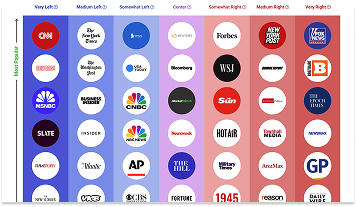
This puts it in contrast with more biased media outlets that present consistently one-sided narratives without factual counterpoints. Readers seeking balanced political coverage may compare Honolulu Star Advertiser’s framing of issues with outlets rated as Lean Right on our Media Bias Chart, or explore other regional papers on our Similar Sources page.
Notable Contributors and Authors
Honolulu Star Advertiser features a diverse range of reporters and columnists, many of whom are deeply familiar with Hawaii’s social climate. Reporters like Trevor Hunnicutt, who frequently covers political controversies, exemplify the outlet’s strength in proper state-wide journalism.
Other contributors focus on the environment, Hawaii’s problems, or political discourse in the greater United States—topics central to Hawaii communities. While some contributors may be seen as leaning left in tone or topic selection, their work is generally grounded in factual reporting. The presence of recurring bylines helps readers evaluate individual journalists’ bias over time.
Related Tools and Resource Pages
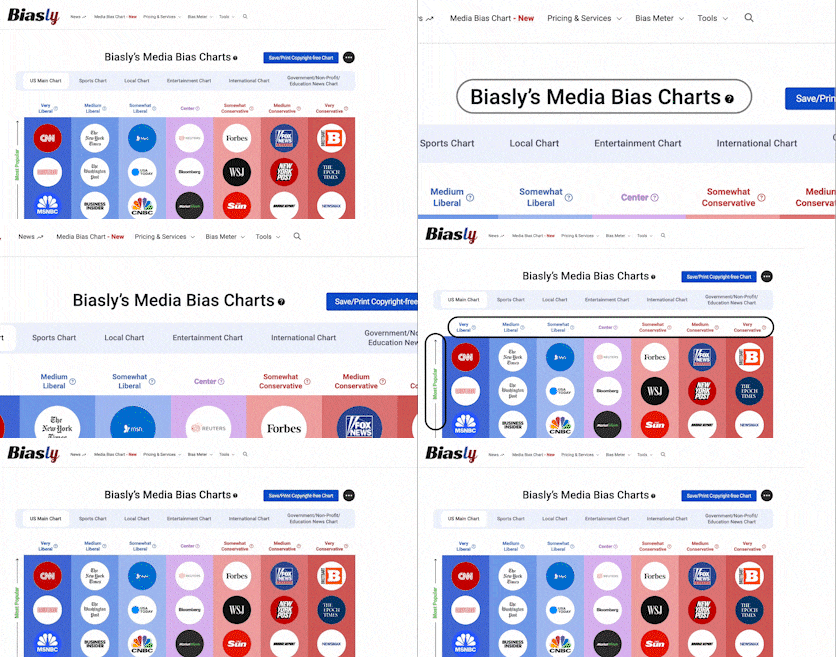
To better understand how Honolulu Star Advertiser fits into the broader media landscape, we recommend exploring these helpful resources:
- Media Bias Chart: See where Honolulu Star Advertiser ranks among hundreds of media outlets across the political spectrum.
- Political Bias Chart: Visualize political slants of news sources across various policy areas.
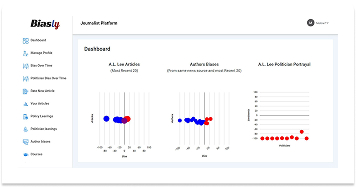
- Journalist Bias Analytics Platform: Explore how individual journalists contribute to bias within their publications.
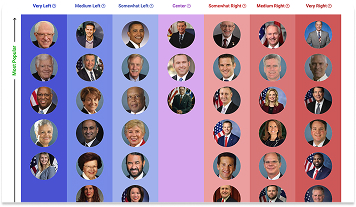
- Politician Bias Analytics Platform: Compare how politicians are framed differently by Honolulu Star Advertiser and other outlets.
- Media Literacy Education Platform: Learn how to critically assess media sources, bias techniques, and news reliability
Frequently Asked Questions
Honolulu Star Advertiser is rated as Center based on Biasly’s media bias algorithm, which assesses sentiment, article framing, and policy favorability.
Honolulu Star Advertiser is not widely known for promoting fake news, and many of its articles remain in the center of the political spectrum. Its factual reporting is generally sound, though it is always recommended to read cautiously in case of any instances of bias.
Biasly uses a combination of AI sentiment analysis and human analyst review to assess tone, fact accuracy, source quality, and media bias indicators. Learn more on our Bias Meter page.
Generally, yes, though partisan framing and selective reporting can affect perceived reliability.
Ratings are based on recent news using data science and A.I. technology.
Military Spending
| Date | Sentiment | Associated Article | Snippet |
|---|---|---|---|
| 08/25/2019 | 75% For | Trump Family Detentions Flores Agreement (link) | So, of course, the Trump administration is doing the opposite in a baldfaced |