




-68% Medium Left
Bias Meter
Extremely
Liberal
Very
Liberal
Somewhat Liberal
Center
Somewhat Conservative
Very
Conservative
Extremely
Conservative
-100%
Liberal
100%
Conservative
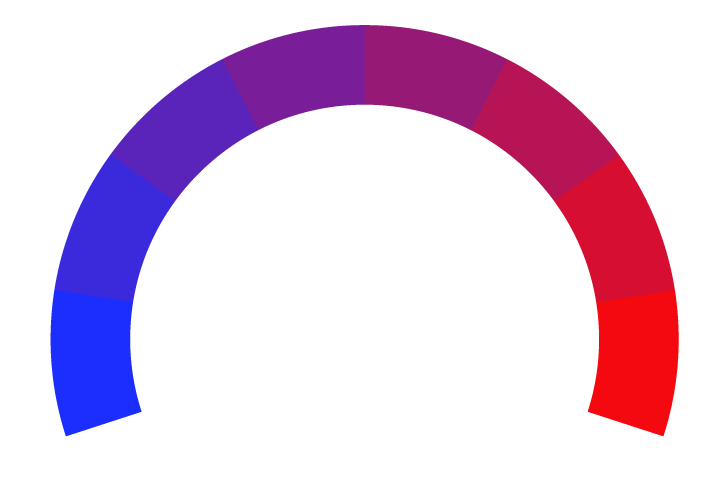
Biasly determines media bias ratings through a dual-layered approach combining artificial intelligence and analyst review. The platform’s proprietary bias detection engine, Bias Meter, evaluates sentiment, policy position alignment, and language framing across thousands of data points in news articles. Analysts then verify and interpret the AI’s findings, providing additional context where needed. Learn more about ratings
- Profile
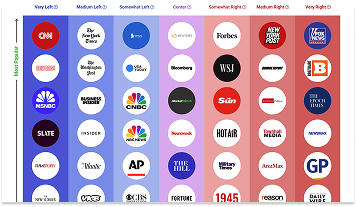
Jezebel on the media bias chart
- Bias Rating
-68% Medium Left
- Reliability73% Reliable GoodPolicy Leanings
-2% Center
Extremely
LiberalVery
LiberalModerately
LiberalSomewhat Liberal
Center
Somewhat Conservative
Moderately
ConservativeVery
ConservativeExtremely
Conservative-100%
Liberal100%
Conservative
Good Reliability
*Our bias meter rating uses data science including sentiment analysis, machine learning and our proprietary algorithm for determining biases in news articles. Bias scores are on a scale of -100% to 100% with higher negative scores being more liberal and higher positive scores being more conservative and 0% being neutral. The rating is an independent analysis and is not affiliated nor sponsored by the news source or any other organization.
Politician Portrayal100% negative
Continue For Free
Create your free account to see the in-depth bias analytics and more.
By creating an account, you agree to our Terms and Privacy Policy, and subscribe to email updates.
Log In
Log in to your account to see the in-depth bias analytics and more.
Analysis of Jezebel Articles
Analysis of Bias in Jezebel Online Articles
Biasly determines political bias using its Bias Meter, in which Biasly’s team analyzes media sources’ reliability and bias and produces three scores: a Reliability Score that measures the accuracy of media sources, an A.I. Bias Score, evaluated by A.I., and an Analyst Bias Score, evaluated by political analysts. These scores are rated based on seven rating metrics, including Tone, Tendency, Diction, Author Check, Selection/Omission, Expediency Bias, and Accuracy. These metrics help our analysts to determine the political attitude of the article.
- Tone: This represents the attitude of the writing, formed distinctively but related to the author’s word choices or diction.
- Diction: The specific words chosen by the writer.
- Author: A metric related to the article’s author, taking into account their history of stance on issues based on past articles and social media posts.
- Tendency measures how consistently an author shows bias in their work, including factors like their tone and perspective.
- Expediency Bias relates to the immediate impression created by elements like the article’s headline, images, or summary, indicating if they favor a particular viewpoint.
Let’s start with a sample article published by Jezebel:
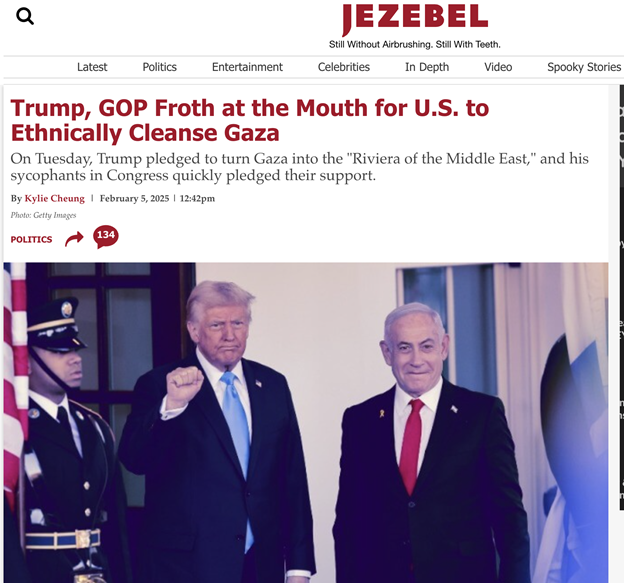
Source: Jezebel, 2025
This article immediately holds a jarring tone from the second the headline is read. The use of the phrase “Froth at the Mouth” has a satirical and radical take on the GOP’s actions in regard to Gaza. This clearly polarized language is already compelling evidence to place the article on the liberal side, as the word choice has an obvious pejorative tone to it and is used against the GOP. Moving past the headline, the subheading does not stray from this fearless tone. It includes calling the members of Congress who pledged to back the notion “sycophants” – a term used to paint them in a very deliberate negative light. Moving on, the article image can be seen as a more center-leaning piece of media at least superficially.
Perhaps, after reading the article, and more specifically the line, “The convicted felon and war criminal spent the day side-by-side”, the image may represent two heinous figures side by side. Otherwise, it is just a headshot of two political figures that objectively did meet up and conduct business together without painting their faces or body language in any radical way. However, bias is most commonly found in the actual content of articles. Below is a key case study on how this article can be more closely analyzed to show potential points of bias.
“We all knew Trump would be awful—on this and all issues.”
This is a straightforward judgment that aligns with a deeply liberal perspective, suggesting that Trump’s actions or policies are predictably bad, particularly in areas like foreign policy and human rights. The sentence implies that any reasonable person would have expected Trump to make harmful or misguided decisions.
“Two dumb—and genocidal—bitches telling each other ‘exactlyyy.”
This phrase uses derogatory language to insult both Trump and Netanyahu. Calling them “dumb” and “genocidal” is an inflammatory way to dismiss their views as not only ignorant but also morally reprehensible. The use of “bitches” here further serves to discredit their positions and to delegitimize their leadership, reflecting a liberal disdain for both figures.
“Trump’s heinous comments.”
Describing Trump’s comments as “heinous” is a moral judgment meant to provoke strong emotional reactions from readers. This type of language is often used to create a sense of moral superiority over the target of the criticism – in this case, Trump. The term implies that Trump’s words are not just wrong, but deeply immoral.
And, lastly:
“Mutually salivating over the prospect of ethnically cleansing Gaza.”
The term “ethnically cleansing” is emotionally loaded, as it refers to actions that are associated with extreme human rights violations. The choice of words like “salivating” further heightens the emotional charge of the statement. This language is meant to paint Trump and Netanyahu as eagerly and irresponsibly planning or supporting actions that would harm a population in a grave manner, which can be seen as part of a broader condemnation of Israeli policies towards Palestinians.
Before analyzing the next article, let’s get through some theories. Bias, by definition, is an “inclination or prejudice for or against one person or group, especially in a way considered to be unfair.” With a definition like that, it’s no wonder bias is seen as an abstract, often subjective, and always hard-to-pin-down concept. No one wants to think of themselves as biased, but it is a normal and expected trait that rises naturally with the experiences and connections people live and form.
If you see a friend or family member playing a sports match, you’re likely to root for their team to win. You’re biased towards that person because you hold a certain affinity towards them. Likewise, this approach to deconstructing bias can apply to a multitude of contexts in daily life: alliances at work, preferences of any variety, even just knowing something can hold a bias for you over something you’ve never heard of.
So, how do we know when we are consuming bias? How does bias manifest itself in the news? Can apparent objectivity be replaced with subtle subjectivity?
Everyone has heard the tired complaints of Fox News being too conservative and CNN being too liberal. If these are news sources, how can they have bias at all? The answer is a simple one: everyone has bias. Everyone, whether conscious of it or not, holds preferences towards one group of ideas or people rather than another. With this in mind, it is important to note that bias is not necessarily a bad or good thing, and learning to understand and recognize bias can be crucial to better understanding another person’s side of the argument. Bias is a natural function of humans, and we can express it both consciously and unconsciously.
Bias is one of the most fundamental forms of pattern recognition in humans. This isn’t to lower the bar and say that “all things are biased,” but to explain the process by which we may come to trust certain news organizations that display patterns of coverage.
On the media’s part, there is an incentive to retain audiences, encourage them to subscribe, and encourage them to rate products positively. Bias is a two-way street. People want to see news stories about things they care about, and the media needs viewers to continue their operations. This creates a positive feedback loop that influences what stories are covered and from what perspective.
Measuring bias in a news source often means comparing the number of opinion-based articles to journalistic ones, analyzing the tone or voice of the article, looking for specific word choice, and identifying the use of polarizing and divisive language.
By examining content patterns and the broader context of media influence, we aim to offer a balanced perspective on Jezebel’s political bias—and contribute to the ongoing discussion about bias in the news.
Our AI is a machine-learning system that employs natural language processing and entity-specific sentiment analysis to examine individual articles and determine their bias levels. By analyzing key terms in an article, such as policies, biased phrases, political terminology, politicians, and their nicknames, the algorithms can rate the text’s attitude.
Bias scores range from -100 to 100, with higher negative scores indicating greater liberalism and higher positive scores indicating greater conservatism, and 0 indicating neutrality. Biasly has analyzed 200,000+ news articles from more than 3,200 news sources through our A.I. technology and team of political analysts to find the most factual, unbiased news stories.
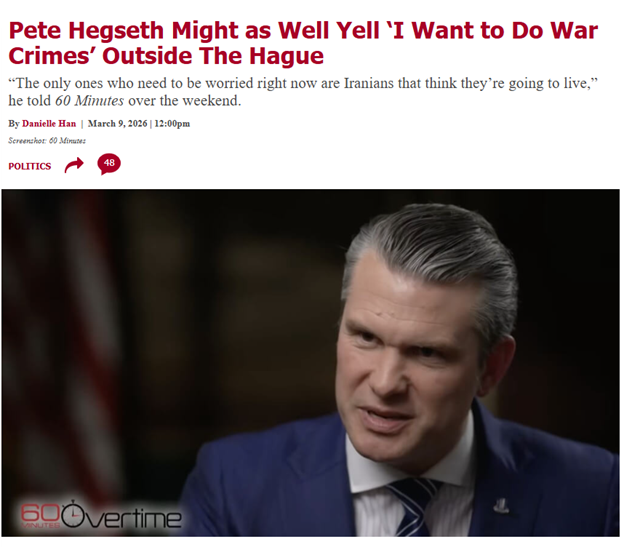
Source: Jezebel, 2026
Let’s take a look at another article titled, “Pete Hegseth Might as Well Yell ‘I Want to Do War Crimes’ Outside The Hague.” This piece covers the 2026 military conflict between Iran, the United States, and Israel. From the very beginning, signs of bias are already present. The title suggests that Secretary of War Pete Hegseth is openly envious of committing war crimes against Iran. While the subtitle is a simple quote extracted from a 60 Minutes interview he is participating in, the photo at the top of the article can reasonably be interpreted as portraying Hegseth nefariously.
Moving through the article, the very first paragraph strikes out the word “war” in Pete Hegseth’s official title, instead replacing it with “defense.” This is seemingly in defiance of the 2025 renaming of the Department of Defense to the Department of War. This act of defiance suggests bias against the administration in and of itself. The article continues on and offers the quote:
“Not like he doesn’t make a career out of endangering Americans, too, but who’s counting??”
This quote includes a hyperlink to an article titled, “Pete Hegseth Really, Really Doesn’t Want Women in the Military.” While the piece focuses on Hegseth’s opposition to women serving in combat roles in the United States military, it also ends by accusing him of being a rapist, alcoholic, and misogynist. Yet, absent from this article is any information that may justify why the current analyzed article accuses him of endangering Americans. Moving on, the article continues:
“Aside from Hegseth perhaps manifesting his own Hague tribunal trial years from now, this is genuinely one of the most unsettling things he’s said in his career as defense secretary—which has been an undeniable chronology of one heinous clusterfuck after another.”
Here, the author accuses Hegseth of manifesting his own Hague tribunal trial, which encompasses the International Criminal Court that is responsible for hearing war crimes charges. It then characterizes his ongoing position as secretary of war as one “heinous clusterfuck after another,” which is incredibly biased language. In describing the ongoing conflict more holistically, the author states:
“Unfortunately, this does feel like the natural conclusion of Hegseth splurging over a billion dollars in September to rebrand the Department of Defense to the Department of War: the U.S. is now neck-deep in a Middle East conflict that pretty much no one in the U.S. wants; that seemingly no one in the administration can definitively provide a motive for, and that Congress failed to put a stop to last week.”
Using the term “splurging” implies that Hegseth wasted or spent an exorbitant amount of money on renaming the Department of War when it could have gone to more pressing political matters. Yet, this segment, while quite pointed, is actually more defensible than the other quotes to date. In characterizing the war as a conflict that nobody wants, they cite a CNN poll showing that nearly 6-in-10 Americans oppose the war. Saying “pretty much no one” supports it is a bit too far considering that breakdown, but they are correct in portraying the conflict as something a majority are against.
The article says that nobody in the administration can provide a definitive motive for the war, and they link to an article by The Guardian detailing President Trump’s shifting justifications. This characterization appears accurate. Finally, they note that Congress failed to stop the war, as evidenced by votes in the Senate and House of Representatives that failed to rein in the president’s powers. The article then ends with the following quote:
“Genuinely, someone get this man to the Hague—now”
Unfortunately, this again harks back to the author suggesting Hegseth is guilty of, and gleeful for, committing war crimes against the Iranian government and its citizens. This underscores how Jezebel makes little to no effort to maintain neutrality in some political matters, nor to provide adequate evidence, particularly in matters involving the Trump administration.
Outside of published articles, we can also look at the online presence of Jezebel’s sole staff writer, Danielle Han. Her Twitter profile is consistent with a clear liberal bias. While she does not post many messages of her own, she often retweets others who are sharply critical of the Trump administration.
Analysis of Jezebel Opinion Articles
Jezebel does not have a dedicated op-ed section. However, readers should always keep in mind the difference between straight reporting and opinion articles, especially involving political matters.
Analysis of Reliability in Jezebel’s Online News Articles
When a news source isn’t centered around orthodox fact-and-repeat reporting, it can be a more nuanced issue to judge the reliability of its actual contents. Jezebel offers a very intrepid and, in their own words, “toothy” commentary in addition to the actual news they’re reporting on. The traditional metric of reliability in terms of being judged by the authenticity of what is framed to be a fact matters and applies to magazines like Jezebel as well, but how about the commentary? Let’s look at some of their articles.
Quality of Sources and Facts Used
As exemplified in the previous section, Jezebel tends to rely on high-quality sources for its own articles. At least in the example above, those organizations span the ideological spectrum from left to center to right. As always, the way in which journalists frame information provided by reliable sources is often as important, if not more important, than where the information originates to begin with. In contrast to the above example, let’s consider the article, “DOJ Drops More Epstein Files Detailing Trump’s Alleged Abuse of a Minor”.
The Jezebel article covers the DOJ’s March 2026 release of previously withheld FBI interview documents related to a woman who alleged Donald Trump sexually abused her at age 13 in 1983, allegations that first surfaced publicly through an NPR investigation and confirmed by multiple major outlets. The piece is written in Jezebel’s signature editorial voice: fast, indignant, and unapologetically opinionated.
From the headline forward, it frames these developments as damning to both Trump and the DOJ, presenting the story less as a neutral news report and more as an act of advocacy journalism. Readers should go in knowing the article does not pretend to be objective.
The article contains approximately 9 direct quotes (including partial quotes in quotation marks). Most quotes are drawn directly from official government documents, FBI interview summaries, DOJ social media statements, and a House Oversight spokesperson, which lends them a reasonable degree of reliability.
Quotes pulled verbatim from primary documents carry higher evidentiary weight, as document text doesn’t have the interpretive variability of spoken testimony. The shorter, more fragmentary quotes (e.g., selective phrases from DOJ statements) are more susceptible to decontextualization, though Jezebel does not appear to misattribute any of them.
The core facts in the Jezebel piece hold up well against reporting from NPR, which first reported that the DOJ withheld more than 50 pages of FBI interviews related to a woman who accused Trump of sexual abuse when she was a minor, and from ABC News, which confirmed that the DOJ released three previously withheld FBI interview reports from 2019 related to a woman who made uncorroborated allegations that she was abused by Trump in the 1980s, when she was a minor.
The article’s claim about a 24-19 bipartisan House Oversight vote to subpoena AG Pam Bondi is confirmed by NBC News, which reported that the Republican-led House Oversight Committee voted 24-19 to subpoena Bondi for testimony on the DOJ’s handling of the files.
The Jezebel piece accurately describes the DOJ’s explanation – the department stated the interview summaries were initially withheld because they were believed to be duplicative of other documents, though it editorializes that explanation rather than presenting it neutrally. One area of factual nuance the article glosses over: the allegations remain uncorroborated, and the new files do not shed light on how credible federal investigators viewed the woman’s claims. Jezebel does not suppress this, but it de-emphasizes it significantly compared to center and right-center outlets. Overall, the reported facts are accurate; the distortion comes from tone and omission rather than fabrication.
Yet, the sourcing is not balanced. Left-leaning and Democratic institutional voices, House Oversight Democrats, a progressive journalist, and outlets such as the Associated Press and NPR dominate both the number of sources and the total quoted word share. The only right-side voice given space is Karoline Leavitt’s dismissal, which is included but immediately undermined by the article’s editorial framing. No Republican defenders, legal experts skeptical of the allegations, or neutral analysts are consulted.
The DOJ’s own statements are included but characterized with visible skepticism (“Sure Jan” appears directly after citing the DOJ’s explanation for the missing files). Right-leaning sources such as GV Wire and Wall Street Journal are only used in passing.
The author uses sources almost entirely in a reinforcing fashion – each one adds momentum to the primary thesis that the DOJ mishandled the files and that the allegations are serious. Leavitt’s statement is the only counterpoint, and it is sandwiched between editorial commentary that clearly dismisses it. The framing belongs entirely to critics of the Trump administration; their claims go unchallenged, while DOJ and White House statements are met with skepticism and sarcasm.
Based on the numeric breakdown (roughly 5:1 left-to-right sourcing ratio), tone, framing, and absence of any genuine challenge to the accusatory narrative, the article is likely best described as Very Left in author bias. The full list of direct sources is presented below.
- GV Wire (com), news outlet/publisher (Right)
- NPR (com), news outlet/publisher (Left)
- Department of Justice (Center/institutional reference)
- Forbes (com), news outlet/publisher (Left)
- Amber Woods, investigative journalist (Left)
- Karoline Leavitt, White House press secretary (Right)
- Wall Street Journal (com), news outlet/publisher (Right)
- Sara Guerrero, spokeswoman for the Democrats on the House Oversight Committee (Left)
- Associated Press (apnews.com), news outlet/publisher (Left)
In another instance, the article, “Brittney Griner Testifies in Court That Her Rights Were Never Read to Her”, appears to be a factual recounting of Brittney Griner’s testimony and her legal situation in Russia. The article draws from reputable sources, including the New York Times, Reuters, and AP, which are known for their journalistic integrity.
It also provides a detailed narrative of Griner’s legal troubles and testimony, incorporating relevant information about her legal defense, her statements in court, and her personal situation. Below are some of the sources mentioned in Jezebel’s article and their relevance to the article.
- The New York Times (com), news outlet/publisher (Left)
- Reuters (com), news outlet/publisher (Center)
- The Associated Press (com), news outlet/publisher (Left)
- TASS (com), news outlet/publisher (Right)
- ABC News (com), news outlet/publisher (Left)
Based on this article, Jezebel appears to be only somewhat reliable in terms of its factual reporting, especially since it references primarily left-leaning sources such as The New York Times, The Associated Press (AP), and ABC News. The article seems to accurately relay the events surrounding Brittney Griner’s trial and testimony, which aligns with the reports from these respected outlets.
Selection and Omission Bias
However, even if the facts presented by these news sources are accurate, if these sources are all typically leaning towards one side of the spectrum, it is entirely likely that they contain some bias towards the left side of the spectrum and thus are rendered less reliable in the face of neutrality or objectivity. Relying solely on liberal sources can lead to a biased or incomplete understanding of issues.
Such sources often present a particular viewpoint, reinforcing ideological beliefs while overlooking or downplaying opposing perspectives. This can result in selective reporting, framing issues in a way that aligns with a specific political agenda. To get a well-rounded view, it is important to engage with a variety of sources, including those with differing political ideologies, to ensure a more balanced and accurate representation of the facts.
That said, as with any publication, it’s always good practice to cross-reference multiple sources for complex stories. However, in this instance, the factual accuracy of the article and its reliance on reputable outlets make it reasonable to consider Jezebel reliable for this particular piece.
Jezebel Bias Overview
Any new visitor to Jezebel’s website may quickly pick up on the type of articles that Jezebel is best known for. The women-targeted online magazine specializes in “toothy” reporting that could include opinions, satire, and raw commentary at any given point within an article. While most people may not rely on Jezebel as a main news source, the website attracts more than 37 million views each month.
Is Jezebel Biased?
Based on Biasly’s evaluations, Jezebel is rated as Medium Left.
How Does Biasly Rate News Sources?
Biasly uses proprietary algorithms and a team of analysts to provide comprehensive bias evaluations across thousands of news outlets. Over 200,000 articles from more than 3,200 sources have been analyzed to identify the most accurate and unbiased stories.
Biasly assigns each outlet three key scores:
- Reliability Score – Reflects factual accuracy
- AI Bias Score – Generated via natural language processing
- Analyst Bias Score – Assessed by human political analysts
These scores are based on seven core metrics: Tone, Tendency, Diction, Author Check, Selection/Omission, Expediency Bias, and Accuracy. These elements help analysts and algorithms evaluate the political attitude conveyed by each article.
Biasly’s Bias Meter ranges from -100% (most left) to +100% (most right), with 0% indicating neutrality. The system evaluates individual articles based on political terms, policies, figures, and sentiment to calculate precise bias ratings.
Is Jezebel Politically Biased?
Jezebel earns a Medium Left rating for its AI Bias Score and a Medium Left for its Analyst Bias Score. The Analyst Bias Score is generated by reviewers from liberal, moderate, and conservative backgrounds. Analysts reviewed 15 Jezebel articles and noted consistent preferences in the liberal perspective across a variety of political topics.
How to Evaluate Bias
Although Biasly rates Jezebel as Medium Left, it’s important to remember that bias can vary from article to article. Jezebel also covers a conservative-leaning state with objectivity on many issues, from state legislation to social developments. This complexity underscores the importance of examining each article individually. So, let’s learn how to evaluate media bias.
Recognizing media bias requires awareness and critical thinking. Often, readers trust news sources that affirm their existing beliefs—a psychological tendency known as confirmation bias. This makes it harder to identify slanted narratives or one-sided reporting.
To address this, it’s essential to challenge your assumptions by consulting multiple perspectives and verifying information through third-party analysis. Tools like Biasly’s media bias ratings allow readers to compare the same news story across the political spectrum.
Ultimately, bias isn’t always a matter of what is said—it’s also about what is left out, how topics are framed, and which stories are chosen for coverage. Learning to recognize these patterns can help readers make more informed decisions and develop greater media literacy.
To start comparing news outlets and gain a better understanding of bias, sign up for Biasly’s Media Bias & News Analytics Platform to see how stories vary between sources.
Jezebel Reliability Overview
Is Jezebel Reliable?
When a news source isn’t centered around orthodox fact-based reporting, it can be a more nuanced issue to judge the reliability of its actual contents. Jezebel offers a very intrepid and, in their own words, “toothy” commentary in addition to the actual news they’re reporting on. The traditional metric of reliability in terms of being judged by the authenticity of what is framed to be a fact matters and applies to magazines like Jezebel as well, but how about the commentary?
The answer is found in analyzing various metrics of reliability, one of which is framing. Framing can leave your article completely reliable as long as it’s appropriately labeled as those things. Framing is a big reason why opinion articles need to include a disclaimer that they are opinions and won’t try to present their information as fact, but rather disclose their following information as subjective.
How to Evaluate Reliability?
Reliability refers to how trustworthy or accurate a news source is. If we can’t trust what we read, then continuing to consume content from that outlet serves little purpose. So how do we evaluate a news outlet’s reliability?
There are several key indicators of reliability to consider when assessing a media source. Red flags of an unreliable article can include wild, unsubstantiated claims, facts that depend on other unreliable sources, heavy use of opinionated language, and more. In contrast, hallmarks of a reliable source include:
- Absence of subjective language
- Citing credible sources (e.g., .gov, .edu, academic references)
- Verifiable facts and statistics from multiple outlets
- Use of primary sources, like interviews or transcripts
- Consistency with coverage across other platforms
Biasly’s reliability scores incorporate these elements in evaluating media outlets.
So How Does Jezebel Fare in Its Reliability?
The political reliability index developed by Biasly assesses both accuracy and trustworthiness. Jezebel currently holds Good Reliability Score, which is calculated as a weighted average of:
- Fact Analysis Score – Evaluates the accuracy of claims, facts, and evidence.
- Source Analysis Score – Assesses the number, diversity, and credibility of sources and quotes used.
Jezebel’s Source Analysis Score is Good at 73% Reliable. This suggests moderate trustworthiness in its sourcing practices. The score is AI-generated and considers quote length, frequency, diversity, and quality.
The Fact Analysis Score of Jezebel is Pending at N/A. This further shows how well Jezebel supports its claims, addresses selection and omission bias, and presents verifiable evidence.
Jezebel’s Accuracy and Reliability
According to Biasly’s analysis, Jezebel maintains Good Reliability Score, but individual articles may vary significantly. Let’s dive into the details.
Of the many factors that influence reliability, bias is perhaps the most potent. Bias is not a one-dimensional issue and can, unfortunately, be expressed in a multitude of modalities. Even if a news source only reports objectively true facts and stories, if they’re only reporting from the perspective of one side, they cannot be seen as credible and therefore reliable. This would lead to a confirmation and selection bias in their reporting, and their readers would likely take on this bias, especially if their news sources are not varied. Of the many options, two of the most common kinds of biases we can observe in journalism and fact-based reporting are selection bias and omission bias.
Selection bias is when stories and facts are selected or deselected, often on ideological grounds, to create a narrative in support of the news source’s ideology. Omission bias, on the other hand, is when different opinions and political views regarding a situation are left out so that the reader is only exposed to the ideological perspective supported by the author. It’s important to keep in mind these two types of biases when trying to assess an article’s level of accuracy.
Biasly assigns a percentage score to accuracy, with 1 being the least accurate and 100 being the most. Ratings are calculated by weighing assertions with supporting evidence, the number of reliable internal sources, and the number of reliable external sources employed. A full page at Biasly’s website includes dependability and accuracy ratings for newly released Jezebel news stories.
As we previously stated, according to the reports, analytics have assessed, Jezebel has a Good reliability score. This score can vary from article to article, though, and the most extreme variations in dependability are caused by bias, notably omission and selection bias.
In Jezebel’s article titled, “Brittney Griner Testifies in Court That Her Rights Were Never Read to Her,” Biasly rated it Very Liberal. What kind of bias can we observe in the article? The answer can once again be summed up with framing. Here, the author, Emily Leibert, uses a sympathetic tone when discussing Griner’s case and even includes the word “nightmare,” which carries considerable weight.
Additionally, we can observe the framing of Griner’s detention. The article consistently refers to Griner as a “political hostage” and discusses her as a victim of the Russian legal system, a narrative that aligns with the stance taken by the U.S. government and many human rights organizations. While this framing is backed by the fact that the U.S. officially considers her detention wrongful, the term “political hostage” can imply a specific perspective on the nature of her arrest and the motivations behind it, which could be seen as presenting a particular viewpoint on the case. Below are a few examples:
“There are currently no estimates for how long the trial will run, but a court extended Griner’s detention through at least Dec. 20. Her nightmare continues.”
“Griner… told the courtroom at Khimki District Court that no one explained her rights to her at the time of her detention, as she was entrenched in a confusing foreign judicial system that offered little to no support or guidance.”
“Brittney Griner, the WNBA star and political hostage who has been wrongfully detained in Russia for over five months…”
As this article exemplifies, fact-based reporting is not enough to render a news source credible and reliable. Closer analysis of a source and its subsequent articles can have a huge impact depending on how much bias is present and what is selectively reported or omitted. Jezebel and the author of the above article could have delivered a more well-rounded analysis of Griner’s case, perhaps including other testimonies.
As another example, Biasly assigned The Economist a Center Bias and a Good Reliability Score. Broadly, The Economist appears to provide information neutrally without a consistent liberal or conservative bias. Although the organization appears to adopt a slightly liberal point of view on matters such as the border and clean energy, this is counteracted by a slightly conservative view on topics such as capitalism and Black Lives Matter protests.
In addition, it uses sources that are both high-quality and varied ideologically. Unlike many other organizations that discuss politicians in a deeply negative light, the overall politician portrayal is actually positive here.
So, is Jezebel Reliable?
Overall, Jezebel can be considered to be an outlet that is very reliable. It commonly uses sources that are well-established as reputable sources of information for political content. Yet, Jezebel’s reliability is also inhibited by the way in which its authors choose to present the information to readers.
In conclusion, the reliability of Jezebel depends on its adherence to journalistic standards, including accuracy, transparency, and balanced reporting. While the publication often cites credible sources such as official documents, direct statements, and publicly available data, the reliability of its reporting ultimately hinges on how these sources are interpreted and presented.
If the Jezebel article on Brittney Griner’s lawsuit faithfully represents its primary sources without bias or distortion, it can be considered a reliable account. However, other articles suggest that Jezebel selectively frames political matters in a way that concurs with the liberal perspective. This is especially true under the Trump administration. Readers should remain cautious of any potential framing or editorial slant and cross-check key claims with the original sources for a fuller understanding.
It’s always a smart approach to gather news from a variety of sources and to be aware of who is behind the reporting. If you ever feel uncertain after reading an article or wonder whether you’re unknowingly influenced by your own biases—or even the biases of the news outlets you rely on most—the Biasly Chrome extension can be a valuable tool. It automatically scans and analyzes any article from any news source, providing a detailed, expert assessment of the article’s biases, identifying the specific ways it may lean, and pointing out which parts are affected. This allows readers to better understand the subtle cues that signal bias, helping them become more discerning consumers of news.
As media literacy improves, readers can more easily detect issues with selection bias, omission bias, and factuality. To strengthen your ability to assess reliability across the political spectrum, use Biasly’s News Bias Checker to compare how multiple outlets report the same story.
This empowers you to consume more accurate, balanced, and dependable news.
Jezebel Editorial Patterns
Jezebel’s coverage of political topics often reflects a Medium Left bias, with consistent patterns in phrasing, source selection, and thematic focus that are Moderately Liberal. While the publication demonstrates journalistic standards in many of its reports, the choice of issues, framing, and word usage can indicate a political slant. This content analysis examines how Jezebel handles liberal and conservative issues and evaluates its language choices and editorial tendencies.
Coverage of Liberal vs. Conservative Topics
Jezebel’s coverage of political topics often reflects a Medium Left bias, with consistent patterns in phrasing, source selection, and thematic focus that are Moderately Liberal. While the publication often maintains journalistic standards by citing reliable sources, the framing and interpretation of this information cause a strong political slant. This content analysis examines how Jezebel handles liberal and conservative issues and evaluates its language choices and editorial tendencies.
Originally founded with a feminist perspective on political matters, Jezebel exhibits a strong liberal bias on matters involving women’s rights, such as abortion and women’s involvement in the United States military. However, this bias also extends to broader subjects such as charter schools, critical race theory, the death penalty, and government interference, all of which are rated Very Liberal in Jezebel’s coverage.
Policy and Issue Framing
Some of the biggest problems with Jezebel’s coverage originate from how they choose to frame issues. Consistently across their articles, %_SOUCE_NAME_% paints the actions of right-wing politicians as nefarious, deadly, and antithetical to expanding human rights. By contrast, the organization commonly praises and pushes support for more liberal positions that, for example, expand access to abortion, voting rights, and discrimination laws. Stricter policies, such as tighter regulations for voting, increased security at the border, or support for the death penalty, are sharply criticized. Politicians who hold similar positions, or conservative positions more broadly, are painted in a negative light. More liberal elected officials, such as Adam Schiff, receive comparatively more positive coverage.
Coverage and Relevance
Jezebel devotes a significant amount of its organization to covering central matters in American politics. With approximately 37 million page views a month and about 200,000 unique visitors per day, Jezebel commands a wide audience, underscoring the importance that readers understand what level of bias their articles may convey.
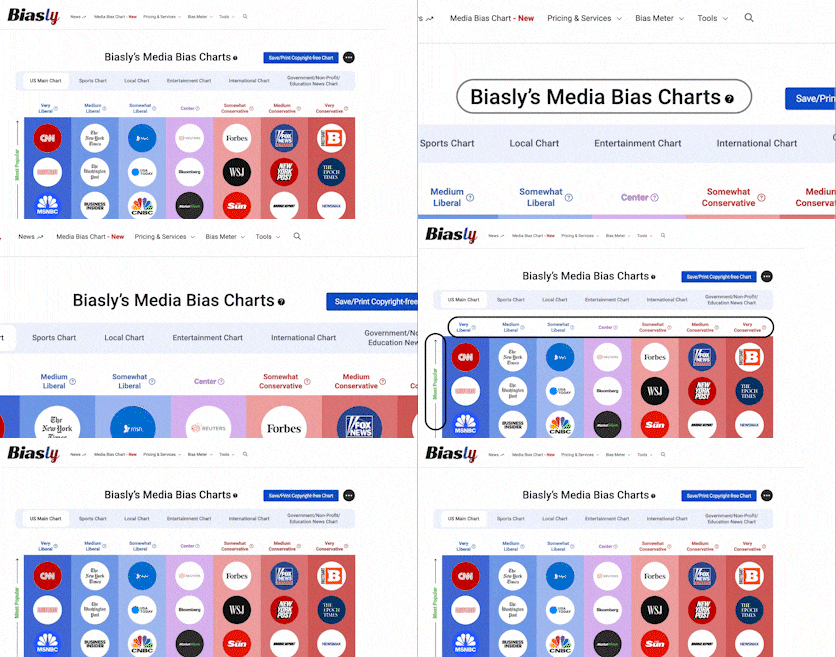
Readers who wish to further explore how Jezebel compares with other publications can visit Biasly’s Media Bias Chart to analyze tone and word choice in real time.
We will begin by looking at the reader demographics for Jezebel. Jezebel’s audience is 54% female and 46% male. Additionally, the largest age group of visitors is 55-64 year olds.
Originally offered up as a feminist alternative to traditional women’s magazines such as Cosmopolitan and Vogue, Jezebel has become a strong resort for all things politics, entertainment, and celebrities. Upon browsing just one or two articles, new readers can quickly gauge that the news source offers uncensored takes on current events – or, in their words, “with teeth”.
So, how does this unorthodox way of reporting news measure up with bias in a universally accepted way or by appropriate metrics? While the articles are consistently unfiltered and raw, they all tend to very clearly lean towards the liberal side. Jezebel has a bias rating of Medium Liberal, which is based on a variety of factors, including its policy and politician leanings, article ratings, and the use of biased language. Its Reliability is rated as Good, and additional analytical insights are available in the other tabs.
Funding and Ownership
Who Owns Jezebel?

Anna Holmes is an award-winning writer and author as well as the founder of the website Jezebel. A journalism graduate from New York University, Holmes has been an active member of the journalistic field for over 20 years. In 2007, she founded Jezebel, which aimed to provide a fresh take for women’s magazines in the face of a content mess of “unattainable ideals of beauty and an endless (heterosexual) preoccupation with men.” The website was launched through Gawker Media, with Anna Holmes as the working editor.
She is likely to lean liberal, especially in the context of political publications, due to personal experiences with gender inequality, social justice, and empathy for marginalized groups that she has written about while working for the New Yorker, The New York Times, and the Washington Post.
For many, issues such as women’s rights, equal pay, reproductive rights, and access to healthcare are fundamental concerns that align with liberal ideologies. When publications claim figures like Donald Trump are misogynistic, this could reinforce her perspective, particularly if she perceives his actions and rhetoric as harmful to women.
For example, Trump’s controversial comments about women, his history of sexual assault accusations, and his stance on reproductive rights may lead a woman to view him as a misogynist. Liberal media often emphasize these aspects, framing them within a broader conversation about gender equality, which resonates with women who prioritize these issues.
Who Funds Jezebel?
Jezebel was originally bought by Univision Communications in August 2016. It was sold three years later alongside several other publications under the umbrella name of G/O Media. In 2023, G/O Media suspended the publication of Jezebel after failing to sell the company. Later that year, Paste magazine acquired the group, facilitating its relaunch. In addition to the tumultuous funding evolution, Jezebel has at times faced allegations of a hostile work environment and mistreatment of staff.
Additional Insights
News Source Comparison
When it comes to news source comparison, Jezebel is often evaluated alongside other regional and national outlets with a substantial left bias. Sources like Business Insider, The New Yorker, and Buzzfeed News often present similar tones and editorial philosophies. This also places the level of bias provided by Jezebel closer to partisan sources such as CNN (left) and Fox News (right) rather than more neutral sources.
Notable Contributors and Authors
Jezebel maintains a small group of devoted writers. The editor-in-chief is Lauren Tousignant, the sole staff writer is Danielle Han, and the sole contributing editor is Nora Biette-Timmons. There are two senior contributing writers: Kady Ruth Ashcraft and Susan Rinkunas.
Related Tools and Resource Pages
To better understand how Jezebel fits into the broader media landscape, we recommend exploring these helpful resources:
- Media Bias Chart: See where Jezebel ranks among hundreds of media outlets across the political spectrum.
- Political Bias Chart: Visualize political slants of news sources across various policy areas.
- Journalist Bias Analytics Platform: Explore how individual journalists contribute to bias within their publications.
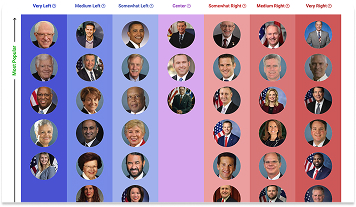
- Politician Bias Analytics Platform: Compare how politicians are framed differently by Jezebel and other outlets.
- Media Literacy Education Platform: Learn how to critically assess media sources, bias techniques, and news reliability.
Frequently Asked Questions
Jezebel is rated as Medium Left based on Biasly’s media bias algorithm, which assesses sentiment, article framing, and policy favorability.
Although Jezebel has not been accused of fake news or misinformation at a high-profile level, the organization faced controversy in September 2025 surrounding the death of Charlie Kirk. Two days prior to his assassination, Jezebel published an article claiming they paid Etsy witches to curse him. At the behest of their lawyers, they released a statement on the evening of Charlie Kirk’s assassination, stating they wished him no physical harm, the article was simply satire, and the piece had been retracted.
Biasly uses a combination of AI sentiment analysis and human analyst review to assess tone, fact accuracy, source quality, and media bias indicators. Learn more on our Bias Meter page.
They are reliable in terms of the sources they use to report on political content, though the framing and word choice presented raise serious concerns about bias.
Military Spending
| Date | Sentiment | Associated Article | Snippet |
|---|---|---|---|
| 08/25/2019 | 75% For | Trump Family Detentions Flores Agreement (link) | So, of course, the Trump administration is doing the opposite in a baldfaced |