




-12% Somewhat Left
Bias Meter
Extremely
Liberal
Very
Liberal
Somewhat Liberal
Center
Somewhat Conservative
Very
Conservative
Extremely
Conservative
-100%
Liberal
100%
Conservative
Biasly determines media bias ratings through a dual-layered approach combining artificial intelligence and analyst review. The platform’s proprietary bias detection engine, Bias Meter, evaluates sentiment, policy position alignment, and language framing across thousands of data points in news articles. Analysts then verify and interpret the AI’s findings, providing additional context where needed. Learn more about ratings
- Profile
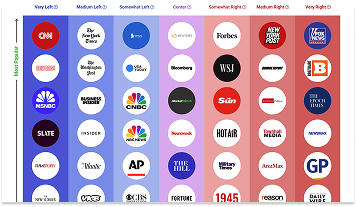
matzav .com on the media bias chart
Biasly Rating for matzav .com
matzav .com is rated as Somewhat Left by Biasly. This evaluation is based on various factors, including the outlet’s tone, the emphasis on Zionist talking points, and its framing of liberal legislators. Biasly’s AI-powered analysis, complemented by human review, suggests that matzav .com often presents stories with language and angles more supportive of pro-Israel viewpoints while offering conservative-leaning coverage of domestic US politics.
- Bias Rating
-12% Somewhat Left
- Reliability40% Reliable AveragePolicy Leanings
0% Center
Extremely
LiberalVery
LiberalModerately
LiberalSomewhat Liberal
Center
Somewhat Conservative
Moderately
ConservativeVery
ConservativeExtremely
Conservative-100%
Liberal100%
Conservative
Average Reliability
*Our bias meter rating uses data science including sentiment analysis, machine learning and our proprietary algorithm for determining biases in news articles. Bias scores are on a scale of -100% to 100% with higher negative scores being more liberal and higher positive scores being more conservative and 0% being neutral. The rating is an independent analysis and is not affiliated nor sponsored by the news source or any other organization.
Politician Portrayal100% negative
Continue For Free
Create your free account to see the in-depth bias analytics and more.
By creating an account, you agree to our Terms and Privacy Policy, and subscribe to email updates.
Log In
Log in to your account to see the in-depth bias analytics and more.
matzav .com Editorial Patterns
matzav .com’s coverage of political topics often reflects a Somewhat Left bias, with consistent patterns in phrasing, source selection, and thematic focus that are Slightly Liberal. While the publication demonstrates journalistic standards in many of its reports, the choice of issues, framing, and word usage can indicate a political slant. This content analysis examines how matzav .com handles liberal and conservative issues and evaluates its language choices and editorial tendencies.
Coverage of Liberal vs. Conservative Topics
matzav .com’s articles frame progressive social causes, such as LGBTQ+ rights, racial justice, and climate policy, in an explicitly negative light. matzav .com makes frequent use of sources that call the LGBTQ+ community more dangerous than Islamic terrorists and ‘pure evil’ across multiple articles.
matzav .com’s coverage of abortion is conservative-leaning as well. Despite giving a broad picture of reproductive rights in the United States across party lines, the way that they handle certain specific stories indicates biased writing. Last April, they claimed, without a source or charts, that “most Americans disagree with revoking the option to end a pregnancy,” and framed the issue as causing Republicans ‘sting’, indicating a sympathetic light. Last August, they also accused the Democratic National Convention of offering free abortions and vasectomies in Chicago, calling it “SICK INDEED” in the headline. However, the Planned Parenthood mobile clinic that was offering these services was neither near the convention, affiliated with the DNC as a partner, nor mentioned in convention speeches.
On the other hand, articles covering conservative figures or Republican-led initiatives also employ critical tones. Biasly’s analysis of recent matzav .com articles reveals a tendency to highlight controversies or opposition surrounding the recent Israel-Hamas ceasefire deal brokered by President Trump. Similarly, a headline surrounding Jared Kushner’s recent comments on Israel began with “COME ON, JARED,” and Vice President Vance’s comments as well. However, negative commentary about Republican policies and politicians is reported through the lens of Democratic leaders’ remarks, whereas most editorial writing supports their causes.
It’s also critical to note that the most negative language is used against Republican legislators when they are making concessions to Democrats or when they are making remarks that are not in favor of Israel.
This news media bias manifests in subtle ways, such as its frequent employment of the term ‘woke’ as a derogatory term that overwhelmingly targets democratic lawmakers. Conservative voices are written more neutrally, even when speaking about the ‘correctness’ of an issue. Words like “fume,” “melt down”, and yet “dominant” make liberals seem delusional if not outright malignant, while conservative views are often framed as more nonpartisan and reasonable.
Policy and Issue Framing
When covering gender rights, matzav .com consistently plays down their importance. Oftentimes, they refer to legislation that has to do with expanding gender diversity and rights as a radical movement.
Though many articles are much more negative about LGBT rights than others, even articles with a more neutral perspective have implicit bias in their language. For example, wrote in ‘Biden: ‘Comfortable’ Giving Equal Rights To Same-Gender Couples,’ “Vice President Joe Biden voiced his support for same-gender couples having ‘the same exact rights’ as normal couples.” This has the obvious implication that there is such a thing as ‘normal’ couples, and that same-sex relationships do not qualify.
When covering issues like racial justice, matzav .com frames them in a way that pits them against Democratic lawmakers who are more likely to support them. matzav .com implied that To Kill a Mockingbird was banned in schools because of ‘woke’ (Democratic) sensitivities when, traditionally, book bans surrounding topics of racial discrimination are conservative-backed.
Generally, however, racial justice is covered through the lens of the Jewish experience. This applies to most issues, which don’t reveal a partisan bias as much as a religious or nationalistic one. Similarly, US intervention in Ukraine is framed as an impediment to US military aid to Israel.
Even in neutral coverage, phrasing choices shape perception. Articles will describe liberal proposals as “concerning” or “passionate,” while conservative legislation and legal victories may be described as “poised” or “victorious.” This consistent choice of words reflects an editorial direction that, even unintentionally, can contribute to bias in news media.
Coverage and Relevance
matzav .com’s reporting often touches on key issues in domestic politics, while also addressing Israeli news, including arrests of Orthodox Jews refusing to enlist, Trump’s recent deal, and US policy. As such, it serves as a compelling case study for examining source bias in the gray area between American and Israeli media.
As the publication is based in New York City, much of the news it covers deals specifically with the metropolitan area, such as its coverage of the mayoral race. According to the Pew Research Center, 8% of New York City adults identify as Jewish, 19% of whom identify as Orthodox, according to the UJA Federation of New York. Thus, it’s reasonable for a paper catering to Jews, particularly orthodoxes, would have a particular focus on the city. That said, it does not exclusively cover New York.
Readers who wish to further explore how matzav .com compares with other publications can visit Biasly’s Media Bias Chart to analyze tone and word choice in real time.
matzav .com Bias Analysis
matzav .com is an online news platform that was founded in 2002 by a group of Orthodox individuals who were dedicated to providing comprehensive and up-to-date news and information to the Orthodox Jewish community. The idea behind Matzav.com was to create a news source that would cater to the specific interests and concerns of this community, offering a unique perspective on current events and issues that are relevant to their lives and beliefs, according to Biasly. This past March, matzav .com and Yeshiva World News announced a merger, combining two of the largest online news sites for the Orthodox Jewish community.
Though religious identities are not inherently liberal or conservative-leaning, Pew Research has shown that Orthodox Jews tend to be more conservative, with 75% of Orthodox Jews voicing support for the Republican Party, the most conservative of all major Jewish groups.
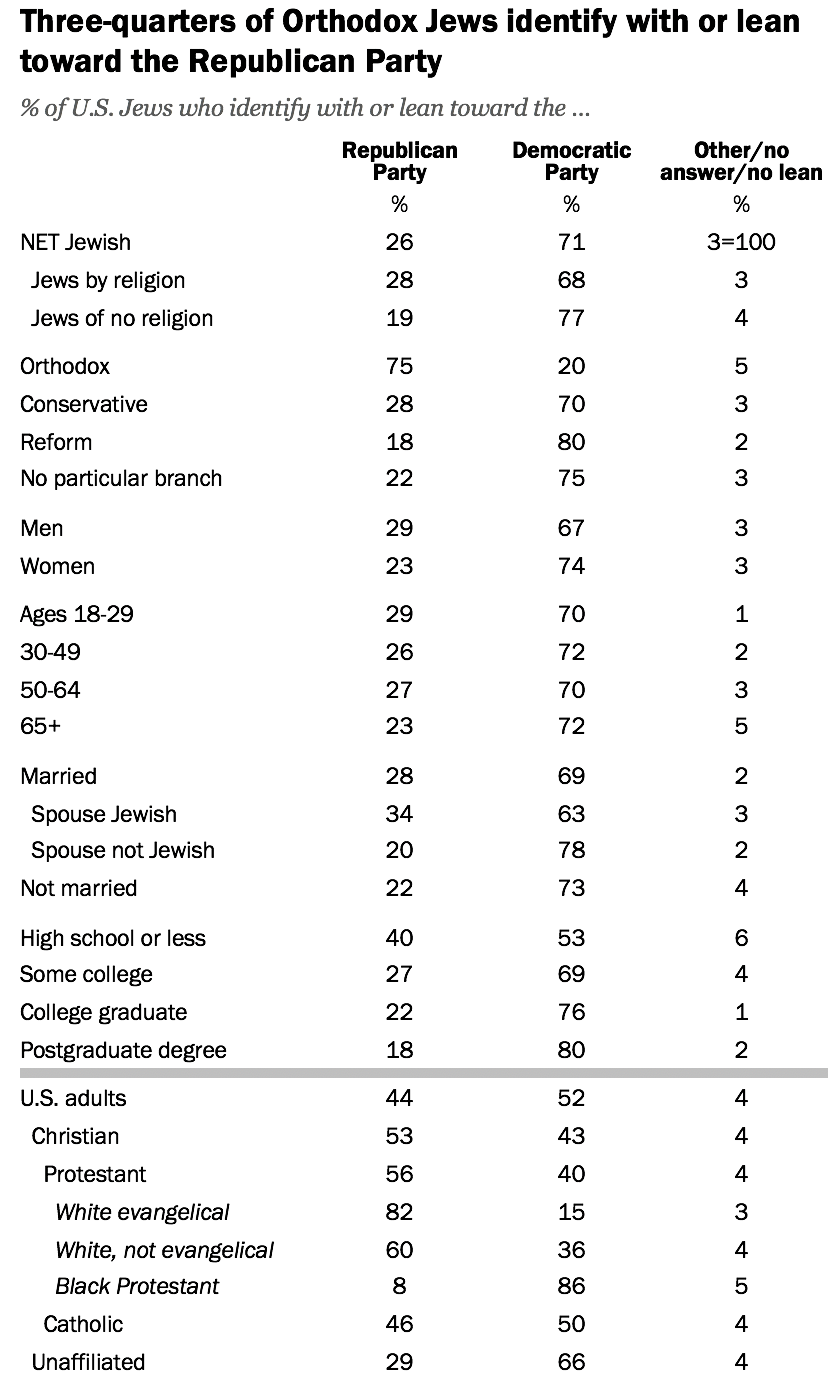
Source: Pew Research
As the leading Jewish Orthodox media outlet in America, matzav .com plays a significant role in shaping public perception. Readers’ trust in the accuracy of local news may mirror the conclusions reached by Biasly’s media bias ratings. This article delves into matzav .com’s editorial tendencies to explore whether political bias is present and, if so, to what degree.
Is matzav .com Biased?
Based on Biasly’s evaluations, matzav .com is rated as Somewhat Left.
By examining content patterns and the broader context of media influence, we aim to offer a balanced perspective on matzav .com’s political bias, and contribute to the ongoing discussion about bias in the news.
How Does Biasly Rate News Sources?
Biasly uses proprietary algorithms and a team of analysts to provide comprehensive bias evaluations across thousands of news outlets. Over 200,000 articles from more than 3,200 sources have been analyzed to identify the most accurate and unbiased stories.
Biasly assigns each outlet three key scores:
- Reliability Score – Reflects factual accuracy
- AI Bias Score – Generated via natural language processing
- Analyst Bias Score – Assessed by human political analysts
These scores are based on seven core metrics: Tone, Tendency, Diction, Author Check, Selection/Omission, Expediency Bias, and Accuracy. These elements help analysts and algorithms evaluate the political attitude conveyed by each article.
Biasly’s Bias Meter ranges from -100% (most left) to +100% (most right), with 0% indicating neutrality. The system evaluates individual articles based on political terms, policies, figures, and sentiment to calculate precise bias ratings.
Is matzav .com Politically Biased?
matzav .com earns a Somewhat Left rating for its AI Bias Score and a Somewhat Left for its Analyst Bias Score. The Analyst Bias Score is generated by reviewers from liberal, moderate, and conservative backgrounds. Analysts reviewed several of matzav .com articles and noted preferences in areas like coverage of Israel and Republican policies, with neutral coverage of immigration. However, there are some areas of concern.
For example, coverage of racial minorities and affirmative action laws reflects a mostly neutral tone, but articles involving gender-nonconforming attitudes, Israel, and Democratic lawmakers contributed significantly to the conservative score.
A consistent frame of reference and focus area is Orthodox Jewish populations, which is quite substantial in New York, where the paper is based. Though this does not inherently imply political bias, it provides context for many of the opinions expressed in its pieces.
Analysis of Bias in matzav .com Online Articles
matzav .com has found that in-depth coverage of the Jewish issues and Israel is one of the most effective ways to drive subscriptions. Given that much of its readership is over-50 and religious, is matzav .com truly biased?
To evaluate this, we can analyze select matzav .com articles through several of Biasly’s bias rating criteria: Tone, Tendency, Author, Diction, and Expediency Bias.
- Tone: The overall attitude conveyed by the article
- Diction: Specific word choices made by the writer
- Author: The background and social presence of the journalist
- Tendency: Patterns of bias in the writer’s broader body of work
- Expediency Bias: Quick visual or textual indicators like headlines and photos that imply bias
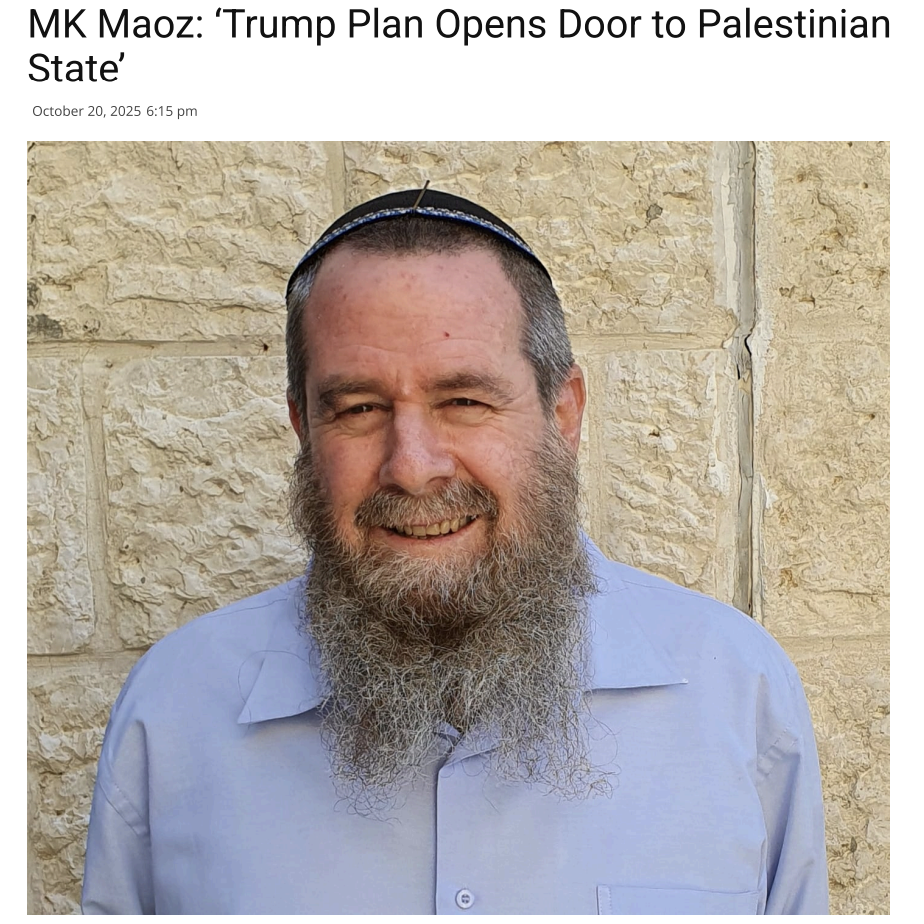
Source: matzav .com
One such article features a headline that points to MK Avi Maoz, leader of Noam, the far-right Israeli party. His face is seen smiling on the cover, well-intentioned and reasonable as he voices his concern. The article frames him in a positive light, emphasizing his analysis of a controversial strategic move, one of much concern to Orthodox audiences.
However, the sourcing of Maoz’s quotes in the first place is slightly questionable; there is no accredited author to speak of in this article, like many on Matzav. Their coverage of the man is also incomplete, failing to mention that Maoz resigned from government in March or the nature of his politics. By portraying him in a neutral-positive light, the author also reveals agreement with some of his controversial words.
“I am very concerned that we are sliding back into the ‘victims of peace’ concept post-Oslo,” Maoz told Arutz Sheva, referring to Hamas’ blatant violation of the ceasefire when it attacked Israeli soldiers. “The Prime Minister ordered the closure of the crossings, halting the entry of humanitarian aid trucks, and after a few hours, under American pressure, we reversed this and returned to the ceasefire.”
The article, under the guise of communicating Moaz’s opinions, implicitly agrees with him on several statements that transnational organizations, such as the UN, have disproved. Out of direct quotes, the author writes how Moaz “reminded that both Hamas and the Palestinian Authority share the same ultimate goal, the elimination of Israel,” framing it as a fact to be ‘reminded’ of. This framing, while seeming to be objective reporting, subtly situates the subjects within an ideological lens, further underscoring the article’s ideological slant.
Another matzav .com article focuses on recent contributions from New York City elite businesspeople to combat Zohran Mamdani’s bid as mayor of NYC. Although the article was not focused on policy, Mamdani’s proposals were portrayed as ‘sweeping’ impositions on the wealthy and corporations.
The article’s headline itself, “BATTLING HATE: NYC Business Leaders Drop $3 Million Over 2 Days Into Mayoral Race In Bid To Stop Anti-Semite Mamdani,” inherently positions Mamdani as a hateful anti-Semite. There is a more objective story here about increased investment in Andrew Cuomo, but instead the author chooses to focus on claims of hate that, true or not, are irrelevant to the piece. The article continues:
“Mamdani’s campaign, meanwhile, dismissed the onslaught of billionaire-funded opposition as meaningless. “Another day, another ineffective billionaire-backed PAC that won’t make a dent in the movement Zohran Mamdani is building to make New York City more affordable,” said campaign spokeswoman Dora Pekec.”
The body of the article makes no effort to follow up on the claims the headline implies, but consistently positions Mamdani as dangerous, idealistic, and delusional, as in the above quote. It also positions Cuomo in a much more neutral light, further indicating that bias. That said, Cuomo is not a conservative candidate, having run as a Democrat before becoming an Independent candidate.
On the other hand, another article titled “Obama Tells Whining Democrats: Drop the ‘Fetal Position’ and Start Fighting” is similarly nuanced in its biases. Despite uplifting former President Barack Obama, a known Democrat, matzav .com seems to put editorializing words in his mouth and use Obama to promote (unnamed) authors’ opinions, writing:
“He challenged attendees not to retreat from politics out of disillusionment, insisting that now is the moment for action. “You know, don’t tell me you’re a Democrat, but you’re kind of disappointed right now, so you’re not doing anything. No, now is exactly the time that you get in there and do something,” he reportedly said, taking aim at those who have grown apathetic or cynical.”
The article employs diction and language that are notably negative when speaking about Democrats. Terms like “challenges” and “advocate” are informative but measured, conveying the dynamics of the race without implying aggression or favoritism. On the other hand, though Republicans are sparingly mentioned, they are referred to neutrally when they are, describing only their ‘cheerful’ reaction to the passing of the bill.
An egregious example of a misleading headline in a news article, however, is found in a June headline reading “Times Square Billboard: ‘Free Palestine’ Calls for Genocide Against Jews.” By reading this headline, one might assume that proponents of ‘freeing Palestine’ put up a billboard in Times Square calling for a Jewish genocide. This would be an incorrect analysis, as the article is actually about a Jewish Orthodox advocacy group that:
“…rolled out a bold digital campaign in the heart of Times Square, directly equating the popular anti-Israel phrase “Free Palestine” with incitement to genocide and warning that the ideology behind it poses a growing threat to the United States.”
Considering the heavy pro-Israel lean of matzav .com, it’s not unreasonable to argue that this wording was done on purpose in order to frame the ‘Free Palestine’ slogan as inherently anti-Semitic to the point of violence. Though its meaning has been contested, it is generally regarded as arguing in favor of Palestinian self-determination and an end to the Israeli occupation.
Analysis of matzav .com Opinion Articles
To fully understand political bias in media, it’s important to distinguish between factual reporting and opinion pieces. While reporting aims to present facts and let readers form their own conclusions, opinion articles express personal viewpoints on current issues. Although the previous section examined factual reporting, this section turns to how bias surfaces through matzav .com’s selection and tone of opinion content.
It’s necessary to note that the vast majority of the featured opinion pieces published on matzav .com have to deal with Orthodox Jewish practices, the state of the Jewish community, and religious reflections. While religion can indicate bias, it is not often black and white. Nevertheless, there are some clearer examples of bias.
One prominent example is the op-ed titled “This Deal Is A Strategic Catastrophe – No Matter Who Signed It.” The title itself signals a persuasive tone and a clear alignment against the Trump administration’s deal. That said, it is not a progressive piece. It rather criticizes Trump’s actions as not being forceful enough, urging Jews to be wary of the deal. This is one of the few pieces with a credited author, Avi Abelow, who has proclaimed being ‘politically incorrect’ on his X.
MUST SEE video of Dershowitz, a lifelong Democrat, saying the harsh truth about Biden and the Democrats.
Dershowitz schools the Israeli media in this interview with the truth about the horrific implications of the Biden administration and the Democrats, who are destroying… pic.twitter.com/DTDeDPQlqh
— Avi Abelow (@aviabelow) March 26, 2024
Rules of war for dummies.
You don’t want your homes destroyed? You don’t want to lose land?
Then don’t launch an attack, with thousands of terrorists and unarmed civilians, against the Jewish state of Israel, massacring over 1,000 innocent civilians, including grandmothers,… pic.twitter.com/tHJVHl4IM5
— Avi Abelow (@aviabelow) March 30, 2024
Interestingly, though many of his views are aligned with conservative values, he is against the Trump administration’s handling of the ceasefire, revealing the real bias: Israel. He has called the Muslim fasting holiday Ramadan a terror month, and not only does Abelow live in Israel, but he is also a former IDF soldier, and his son is currently deployed in the Gaza Strip. He is a frequent contributor to Pulse of Israel as well, a creator of short videos about Israel.
In contrast, another opinion piece titled “Speechless” employs more apolitical language. It documents the reflections of Rabbi Pinchos Lipschutz, who considered traveling to Europe for vacation before thinking better of it, writing, “Why should I travel to a country whose soil is soaked with Jewish blood? Why spend a single penny there? Why reward them for their complicity?” Instead, Lipschutz elects to visit Yerushalayim (Jerusalem) in Israel. Though the piece itself doesn’t reference a specific political party or express partisan views, it does have a clear religious bias.
These pieces underscore the biases at play here. Despite most of the opinion pieces not representing a particularly partisan viewpoint, the paper’s opinion section seems to reflect a single-issue bias toward Israel. Otherwise, the opinion section is largely reserved for religious discussion, which, though in favor of traditional Orthodox practices, is not outright conservative.
How to Evaluate Bias
Although Biasly rates matzav .com as Somewhat Left, it’s important to remember that bias can vary from article to article. matzav .com also covers a Democratic politician with objectivity on many issues, from state legislation to social developments. This complexity underscores the importance of examining each article individually. So, let’s learn how to evaluate media bias.
Recognizing media bias requires awareness and critical thinking. Often, readers trust news sources that affirm their existing beliefs, a psychological tendency known as confirmation bias. This makes it harder to identify slanted narratives or one-sided reporting.
To combat this, it’s essential to challenge your assumptions by consulting multiple viewpoints and verifying news through third-party analysis. Tools like Biasly’s media bias ratings allow readers to compare the same news story across the political spectrum.
Ultimately, bias isn’t always a matter of what is said; it’s also about what is left out, how topics are framed, and which stories are chosen for coverage. Learning to recognize these patterns can help readers make more informed decisions and develop greater media literacy.
To start comparing news outlets and gain a better understanding of bias, sign up for Biasly’s Media Bias & News Analytics Platform to see how stories vary between sources.
matzav .com Reliability Analysis
Is matzav .com Reliable?
matzav .com finds itself toward the middle of the spectrum, with neither high nor low accuracy. Its status as a news aggregation website contributes to its moderate reputation for reliability. PEN America released a study regarding how perceived threats to identity are linked to misinformation. It would not be unreasonable to extrapolate that the events of October 7th have led to allowances regarding the accuracy of data for Orthodox populations.
This suggests that matzav .com’s popularity among orthodox Jews may not stem from the reliability of its political news coverage. Further investigation is needed to determine whether bias or other factors are affecting its accuracy. At Biasly, we specialize in evaluating not just bias but also the reliability of media outlets. Let’s explore the accuracy and trustworthiness of matzav .com.
How to Evaluate Reliability?
Reliability refers to how trustworthy or accurate a news source is. If we can’t trust what we read, then continuing to consume content from that outlet serves little purpose. So how do we evaluate a news outlet’s reliability?
There are several potential measures of reliability to look out for when trying to determine whether a media source is reliable or not. Red flags for an unreliable article can include the presence of wild, unsubstantiated claims, facts dependent on other unreliable sources, heavy use of opinionated language, and more. In contrast, hallmarks of a reliable source include:
- Absence of subjective language
- Citing credible sources (e.g., .gov, .edu, academic references)
- Verifiable facts and statistics from multiple outlets
- Use of primary sources, like interviews or transcripts
- Consistency with coverage across other platforms
Biasly’s reliability scores incorporate these elements in evaluating media outlets.
So How Does matzav .com Fare in Its Reliability?
The political reliability index developed by Biasly assesses both accuracy and trustworthiness. matzav .com currently holds Average Reliability Score, which is calculated as a weighted average of:
- Fact Analysis Score – Evaluates the accuracy of claims, facts, and evidence.
- Source Analysis Score – Assesses the number, diversity, and credibility of sources and quotes used.
matzav .com’s Source Analysis Score is Average at 40% Reliable. This suggests moderate trustworthiness in its sourcing practices. The score is AI-generated and considers quote length, frequency, diversity, and quality.
The Fact Analysis Score of matzav .com is Pending at N/A. This further shows how well matzav .com supports its claims, addresses selection and omission bias, and presents verifiable evidence.
While matzav .com leans toward short-form blog posts that aggregate news, occasional lapses, such as unbalanced viewpoints or incomplete data, can affect its reliability rating, as described in earlier parts of this article. These nuances emphasize the importance of analyzing individual articles.
matzav .com’s Accuracy and Reliability
According to Biasly’s analysis, matzav .com maintains Average Reliability Score, but individual articles may vary significantly. Let’s dive into the details.
Political orientation plays a crucial role in how audiences perceive reliability. matzav .com has been accused of favoring a liberal narrative, potentially at the expense of factual reporting. To validate such claims, it’s essential to analyze whether the publication backs its assertions with sufficient evidence and diverse viewpoints.
Two common types of bias that affect factuality include:
- Selection Bias – Highlighting or omitting stories to fit a particular narrative.
- Omission Bias – Leaving out differing perspectives or relevant details to skew perception.
Biasly’s accuracy ratings use a scale from 1% (least accurate) to 100% (most accurate). Factors include supporting evidence, reliable internal and external sources, and balanced viewpoints.
Recall that our analysts give RedState a reliability rating of 47%. Although this score varies across articles and authors, the greatest variation in reliability stems from selection and omission bias, which we will explore below. Consider also an extreme left-wing source such as HuffPost UK, which has a rating of “Very Liberal” and is deemed to have “Good” reliability according to Biasly’s analysts. While they have one article rated with “Excellent” reliability titled “DHS Chief: U.S.-Mexico Border Is Closed, But Unaccompanied Minors Accepted ” whereas another article from the same source was only 44% reliable, titled “Calif. Venue Reportedly Boots Matt Gaetz, Majorie Taylor Greene’s America First Rally.” As a result, this demonstrates that articles from the same source can vary widely in reliability, and that articles with strong political topics and leanings are less reliable than neutral reports.
“The plan is supported by Oklahoma State Superintendent Ryan Walters: The problem is that charter schools are considered public schools by default.”
This quotation is characteristic of Saxena’s writing throughout the article, as her unique variation of sources and more extensive quotes produced Good and Excellent reliability ratings on Biasly.
We will take a closer look at more examples like this below to provide a further investigation into the reliability of matzav .com’s articles. This will include its use of selection bias and omission bias, as well as the quality of its sources and the facts it uses.
Analysis of Reliability in matzav .com’s Online News Articles
matzav .com aims to serve Orthodox Jews with objective, fact-based reporting. It does not do so to completion, promoting opinions that are already in line with Zionism, which are typically (but not exclusively) conservative-leaning.
Quality of Sources and Facts Used
matzav .com frequently misconstrues facts, such as in the earlier example with the DNC and Planned Parenthood, but, more than that, on the occasion that the website is not taking news or video from other platforms, it is very rare for matzav .com to credit an author with what they’re writing, making it incredibly difficult to make an analysis on the partisanship of who is writing.
Consider this recent article: “IDF and Shin Bet Wipe Out Eight October 7 Terrorists Behind Massacre and Abductions.” This article makes an effort to portray itself factually, and, whether it is, there is extremely little supporting evidence for any of its claims. Assuming that the subjects were members of Hamas and complicit in Israeli hostage-taking (for which no evidence is provided in this article), from where the article got its information, is completely in the air. If a reporter from matzav .com interviewed anyone for it, they are not credited, and if the information is from a different news source, it is not linked. Regardless of the actual truth value of this article, it makes it difficult to establish the credibility of any of their articles.
“Rav Tzvi Tau: US Fires Due To Support For LGBT Agenda” is a short Matzav.com write-up reporting comments attributed to Rav Tzvi Tau that connect Los Angeles-area wildfires to what he describes as America’s “post-modern culture” and the LGBT movement. The article is written in a concise, declarative style and largely presents the rabbi’s remarks without counterargument. Overall, the tone is sympathetic to the speaker’s worldview and reads more like amplification of a moral critique than a neutral, evidence-driven news report.
The article contains 10 direct quotes in quotation marks. The shortest quote is 4 words (“America is giving us…”), the longest quote is 54 words (“In Los Angeles there was a week of fires… because the firefighting was handed over to women.”), and the average quote length is about 19 words. Quoting a speaker directly can improve reliability by showing what was actually said, and the longer excerpts here do provide more context than a few isolated phrases would. That said, quotes alone don’t verify the underlying claims. Because the quoted material includes sweeping cause-and-effect assertions (linking fires to social policy and to women firefighters), the reporting would be more reliable if it paired these quotes with neutral context, data, or direct confirmation from primary sources.
On linked sourcing, the article uses 1 distinct linked source, and it is not a reporting source about the underlying claims—it’s a promotional link to Matzav’s WhatsApp (“Follow Matzav on Whatsapp”). There are no links to fire officials, government reports, mainstream coverage, transcripts of the rabbi’s remarks, or any documentation about Los Angeles firefighting operations or water supply. With that in mind, the link breakdown is Left: 0, Center: 0, Right: 0 for substantive sourcing, because there are effectively no external evidence links used to support or test the claims presented.
Sources referenced (for Biasly linking):
- Rav Tzvi Tau, rosh yeshiva of Har Hamor Yeshiva
- com Israel (as the credited publisher/desk line)
The sourcing in this piece is not balanced. It relies almost entirely on one viewpoint: Rav Tau’s comments, presented at length, with no additional voices to contextualize, challenge, or verify the assertions. There is also no competing quoted word share because no other perspectives are quoted at all. Even the brief final sentence about the wildfire (“started north of Los Angeles… forced the evacuation of tens of thousands”) is presented without sourcing or links that would allow readers to confirm details.
The author’s approach is largely to let the speaker set the frame and to carry his conclusions forward without scrutiny. The write-up does not signal skepticism toward the causal claim (that LGBT “endorsement” led to fires), and it does not test the factual subclaims embedded in the quotes (for example, whether firefighting “was handed over to women,” whether equipment was painted with pride flags, or whether “there is no water” was the operative reason suppression failed). Because the story elevates a culturally conservative moral narrative and provides no balancing context, the author-bias signal, based on sourcing and framing, is best described as Somewhat Right (and socially conservative in emphasis), though it is more accurate to say the piece is single-perspective rather than overtly partisan in a U.S. party sense.
On factual accuracy, the article’s core claim is not presented with verifiable evidence, and the post does not provide the basic tools readers would need to check it (links to official fire reports, local government statements, or credible contemporaneous coverage). When compared with mainstream wildfire reporting, causal explanations for fire spread typically focus on weather, fuel conditions, infrastructure, and operational constraints—not on a city’s social agenda. The piece may accurately quote Rav Tau, but accuracy about what he said is different from accuracy about what caused the fires. To evaluate the claims rigorously, the next step would be to compare the article’s specific assertions (women firefighters, pride-flag equipment, lack of water, duration and scale of burns) against reporting from Los Angeles fire agencies, major local outlets, and official incident summaries.
Selection and Omission Bias
matzav .com provides extensive coverage of Israeli politics as well as the conditions of the recently released Hamas hostages. While these events are actively occurring and not necessarily incorrect, matzav .com repeatedly fails to acknowledge harm caused to the Palestinian people.
In “‘Israel Committing Genocide In Gaza,’ UN Inquiry Concludes,” the attitudes are generally neutral for the majority of the piece. The sources cited are UN reports throughout the extensive article, and although only Israeli sources offer reactionary comments, this makes sense given the publication’s focus.
However, despite not expressing an editorial opinion on this accusation in that article, matzav .com makes its bias clear in later headlines when referring to politicians who align with the UN’s consensus. When the Global Scholars’ Association accused Israel of genocide a week before the UN, they were said to have “TWISTED MINDS” in the headline. After the UN’s report came out, this pattern remained the same. Zohran Mamdani was called a jihad supporter, despite never having advocated for jihad law, and a sick man for accusing Israel of genocide.
So, Is matzav .com Reliable?
Overall, matzav .com can be considered to be an outlet that is moderately reliable. It demonstrates a consistent goal of journalistic integrity and typically supports claims with sources and quotes. Occasional omissions and framing bias do appear, particularly on culturally sensitive or partisan issues.
As media literacy improves, readers can more easily detect issues with selection bias, omission bias, and factuality. To strengthen your ability to assess reliability across the political spectrum, use the News Bias Checker to compare how multiple outlets report the same story.
This empowers you to consume more accurate, balanced, and dependable news.
Funding and Ownership
Who Owns matzav .com?
matzav .com operates under a for-profit business model, overseen by a board of 11 volunteer directors. There is extremely little information about who the major writers and editors are for the publication, much less who owns it. However, matzav .com recently merged with Yeshiva world news, which is described as independently run with freelance writers.
This Matzov’s private ownership may provide added insight to readers seeking a news outlet that values independence but raises questions about editorial integrity.
Who Funds matzav .com?
matzav .com is a for-profit news organization that receives most of its funding through ad revenue from ads for Kosher products, Jewish travel, Yeshivas, Torah books, etc. The bulk of revenue, however, is received from donations on behalf of the Jewish community.
Additional Insights
News Source Comparison
When it comes to news source comparison, matzav .com is often evaluated alongside other regional and national outlets that have to do with Jewish politics and interests. Sources like Forward, the Jewish News Syndicate, or Jewish Insider often present similar tones and editorial philosophies. matzav .com maintains a Somewhat Left media bias, which is generally in line with these sources, which tend to be conservative.
Despite not usually swaying in a partisan direction, these media sources are significantly biased in how they portray politicians based on single issues and often fail to provide their stories with full context.
Notable Contributors and Authors
The vast majority of matzav .com’s articles are not credited to an author. The ones that are overwhelmingly opinion pieces, usually about a religious issue. They are listed as having been written by ‘editor,’ but that editor’s name is often not mentioned.
Related Tools and Resource Pages
To better understand how matzav .com fits into the broader media landscape, we recommend exploring these helpful resources:
- Media Bias Chart: See where matzav .com ranks among hundreds of media outlets across the political spectrum.
- Political Bias Chart: Visualize political slants of news sources across various policy areas.
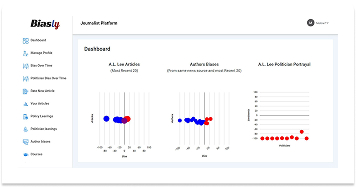
- Journalist Bias Analytics Platform: Explore how individual journalists contribute to bias within their publications.
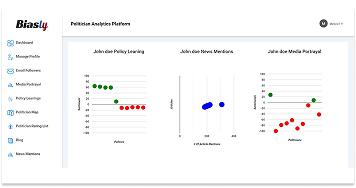
- Politician Bias Analytics Platform: Compare how politicians are framed differently by matzav .com and other outlets.
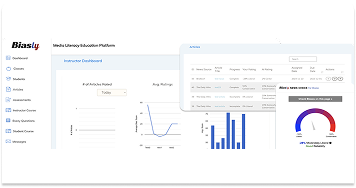
- Media Literacy Education Platform: Learn how to critically assess media sources, bias techniques, and news reliability.
Frequently Asked Questions
matzav .com is rated as Somewhat Left based on Biasly’s media bias algorithm, which assesses sentiment, article framing, and policy favorability.
While matzav .com is not widely known for promoting fake news, some articles have shown selection and omission bias, especially in political reporting. Its factual reporting is generally sound.
Biasly uses a combination of AI sentiment analysis and human analyst review to assess tone, fact accuracy, source quality, and media bias indicators. Learn more on our Bias Meter page.
Yes, but with caution. matzav .com is extremely selective in the facts it employs, and there are many examples of it publishing either accusations or outright misinformation. That said, this is not true for all its articles.
Military Spending
| Date | Sentiment | Associated Article | Snippet |
|---|---|---|---|
| 08/25/2019 | 75% For | Trump Family Detentions Flores Agreement (link) | So, of course, the Trump administration is doing the opposite in a baldfaced |