




-46% Medium Left
Bias Meter
Extremely
Liberal
Very
Liberal
Somewhat Liberal
Center
Somewhat Conservative
Very
Conservative
Extremely
Conservative
-100%
Liberal
100%
Conservative

Biasly determines media bias ratings through a dual-layered approach combining artificial intelligence and analyst review. The platform’s proprietary bias detection engine, Bias Meter, evaluates sentiment, policy position alignment, and language framing across thousands of data points in news articles. Analysts then verify and interpret the AI’s findings, providing additional context where needed. Learn more about ratings
- Profile
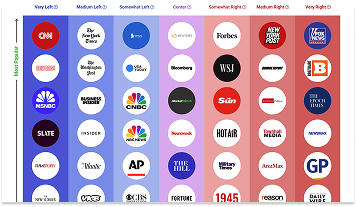
Mediaite on the media bias chart
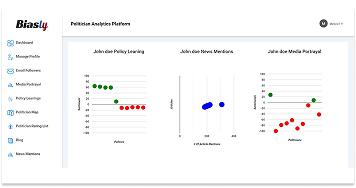
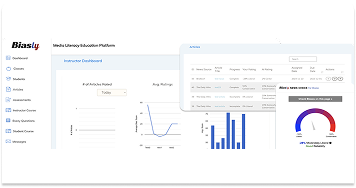
Mediaite has a Bias Score of -46% Medium Left which is based on a variety of factors including its policy and politician leanings, article ratings, and the use of biased language. Its Reliability is rated as Good, and additional analytical insights are available in the other tabs.
- Bias Rating
-46% Medium Left
- Reliability82% Reliable GoodPolicy Leanings
-2% Center
Extremely
LiberalVery
LiberalModerately
LiberalSomewhat Liberal
Center
Somewhat Conservative
Moderately
ConservativeVery
ConservativeExtremely
Conservative-100%
Liberal100%
Conservative
Average Reliability
*Our bias meter rating uses data science including sentiment analysis, machine learning and our proprietary algorithm for determining biases in news articles. Bias scores are on a scale of -100% to 100% with higher negative scores being more liberal and higher positive scores being more conservative and 0% being neutral. The rating is an independent analysis and is not affiliated nor sponsored by the news source or any other organization.
Politician Portrayal6% negative
Continue For Free
Create your free account to see the in-depth bias analytics and more.
By creating an account, you agree to our Terms and Privacy Policy, and subscribe to email updates.
Log In
Log in to your account to see the in-depth bias analytics and more.
Policy Leanings Analysis
Policy | Bias score |
|---|
Mediaite Editorial Patterns
Mediaite’s coverage of political topics often reflects a Medium Left bias, with consistent patterns in phrasing, source selection, and thematic focus that are Moderate Left. While the publication demonstrates journalistic standards in many of its reports, it is considered left-leaning by many. This analysis will look at how Mediaite attempts to refrain from bias and be considered reliable by readers.
Coverage of Liberal vs. Conservative Topics
Mediaite’s articles include progressive topics such as immigration, reproductive care, and climate change. Mediaite uses a sympathetic tone and empowering language to promote these social causes. For instance, coverage on abortion care and racial injustice will frequently align with liberal viewpoints and adopt affirmative and inclusive language.
On the other hand, conservative topics will be framed in a negative light. Headlines may invoke outrage or oversimplify issues, increasing the risk of misinformation. Republican-led initiatives and Republican officials are typically portrayed in a negative light, or the report downplays the legislation’s positives.
Policy and Issue Framing
When covering immigration, and departments such as ICE, Mediaite often references expanded legal protections for immigrants and restrictions against ICE agents. This aligns with a Medium Left bias. Similarly, other topics relating to immigration, such as border control and the border wall, adopt sympathetic language and framing, urging lawmakers to make new policies to create changes in existing legislation.
Other topics, such as abortion, clean energy, and competitive capitalism, remain center-leaning, refraining from any emotional or charged language. Conservative topics are rarely reported on by this publication, suggesting a liberal slant in story selection.
Coverage and Relevance
Mediaite’s reporting mainly focuses on politics and policies that are key issues to Americans today. Something interesting about Mediaite is that the publication will hold journalists, news organizations, and public figures accountable for their actions and statements. With an emphasis on truthful journalism, Mediaite serves as a compelling case for examining news and source bias in reporting.
Readers can use tools like Biasly’s Media Bias Chart to compare Mediaite’s coverage alongside other outlets.
Mediaite Bias Analysis
Mediaite was launched in 2009 as a news and opinion website by founder Dan Abrams. Today, with publications, journalists, and public figures being called out for incorrect information or misleading statements, Mediaite has earned the trust of many readers. According to Mediaite, it saw its biggest audience ever in 2023, of over 700 million pageviews. In August of 2024 alone, Mediaite saw 84.3 million pageviews.
With such high viewership, which seems to be only increasing, Mediaite plays a significant role in how politics are viewed by its readers. This article will delve into whether Mediaite’s political bias is strong or even present.
Is Mediaite Biased?
Based on Biasly’s evaluations, Mediaite is rated as Medium Left.
By examining content patterns and the broader context of media influence, we aim to offer a balanced perspective on Mediaite’s political bias—and contribute to the ongoing discussion about bias in the news.
How Does Biasly Rate News Sources?
Biasly uses proprietary algorithms and a team of analysts to provide comprehensive bias evaluations across thousands of news outlets. Over 200,000 articles from more than 3,200 sources have been analyzed to identify the most accurate and unbiased stories.
Biasly assigns each outlet three key scores:
- Reliability Score – Reflects factual accuracy
- AI Bias Score – Generated via natural language processing
- Analyst Bias Score – Assessed by human political analysts
These scores are based on seven core metrics: Tone, Tendency, Diction, Author Check, Selection/Omission, Expediency Bias, and Accuracy. These elements help analysts and algorithms evaluate the political attitude conveyed by each article.
Biasly’s Bias Meter ranges from -100% (most left) to +100% (most right), with 0% indicating neutrality. The system evaluates individual articles based on political terms, policies, figures, and sentiment to calculate precise bias ratings.
Is Mediaite Politically Biased?
Mediaite earns a Medium Left rating for its AI Bias Score and a Somewhat Left for its Analyst Bias Score. The Analyst Bias Score is generated by reviewers from liberal, moderate, and conservative backgrounds. Analysts reviewed 15 Mediaite articles and noted preferences in areas such as coverage of liberal politicians and policy topics, including elections and affirmative action. However, the paper maintained objectivity on topics like clean energy and national security.
For example, an article about a bill to abolish ICE discussed a bill introduced by Democratic Representative Shri Thanedar. The entire article is one-sided. Author Sean James only includes perspectives and quotes from Democrats. There is only one quote from Department of Homeland Security Secretary Kristi Noem, and it isn’t a response to the bill; it’s a response to something else entirely.
“Noem said she was ignoring Frey’s call for ICE to “get the f*ck out” of Minneapolis and sending “hundreds more” agents to the city this week.”
This gives readers only one side of the story. Not offering a perspective from a Republican lawmaker or someone from the Department of Homeland Security limits the article’s credibility and suggests an ideological slant.
Analysis of Bias in Mediaite Online Articles
Mediaite provides in-depth coverage of United States politics. Given Mediaite’s huge readership—it’s essential to ask: is Mediaite truly biased?
To evaluate this, we can analyze select Mediaite articles through several of Biasly’s bias rating criteria: Tone, Tendency, Author, Diction, and Expediency Bias.
- Tone: The overall attitude conveyed by the article
- Diction: Specific word choices made by the writer
- Author: The background and social presence of the journalist
- Tendency: Patterns of bias in the writer’s broader body of work
- Expediency Bias: Quick visual or textual indicators like headlines and photos that imply bias
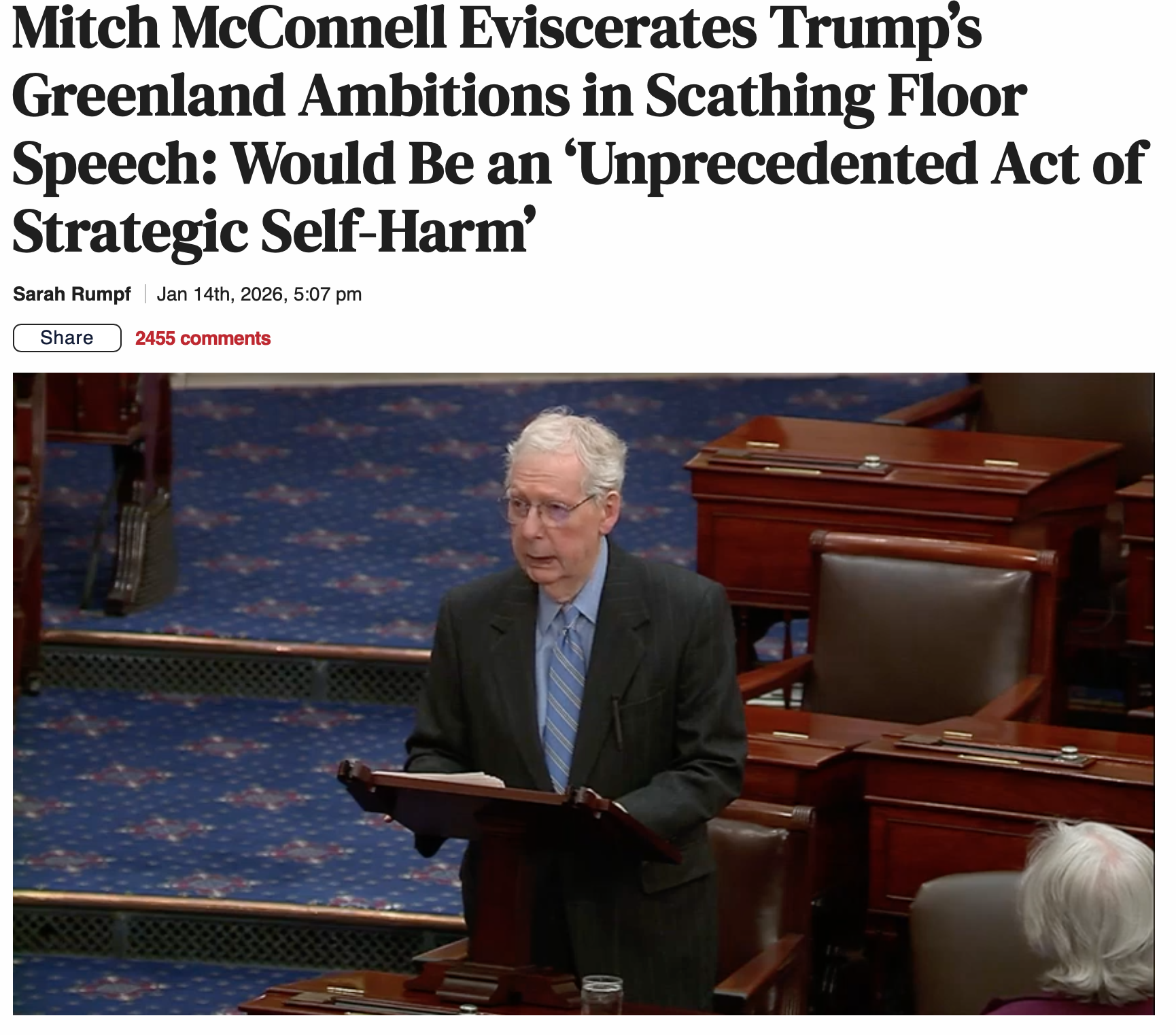
Source: Mediaite
The title of the article, “Mitch McConnell Eviscerates Trump’s Greenland Ambitions in Scathing Floor Speech,” is a bit misleading. While McConnell does warn that Trump’s Greenland ambitions are ill-advised, that is not the main focus of the speech. The speech mostly focuses on the dangers of a war for the American people and the possibility of attacking a NATO alliance country. McConnell states:
““The American people knew the costs of war,” McConnell emphasized. “And they knew they’d rather preserve the peace.””
Given that the main focus of McConnell’s speech was not on criticizing Trump, the article title could spark political discourse and misinformation. McConnell’s speech is about the effect of a possible war on everyday Americans and European allies, not coming after President Trump.
Author Sarah Rumpf’s tone is mixed throughout the article. Sometimes she remains neutral and doesn’t display any opinions. On the other hand, the tone is critical, specifically towards President Trump. When reporting on McConnell, Rumpf mostly remains centered, but when it comes to President Trump, the tone shifts to critical. Additionally, the article is only from a singular perspective: Mitch McConnell’s. There has been no response from President Trump or any official in the Trump administration, making the story one-sided.
With no opposing sources, a misleading title, and a critical tone toward President Trump, the article demonstrates a left-leaning bias. The story is framed to fit a certain narrative and paint President Trump and his administration in a negative light.
The article employs harsh, charged language to describe President Trump and his decision-making. Phrases such as “scathing critique” and “loudly rejected.” The few quotes about President Trump in the article also display negative sentiments.
“Any “good progress” Trump had made in pushing our allies to increase their defense spending “would be for nothing if his Administration’s ill-advised threats about Greenland were to shatter the trust of our allies,” said McConnell, predicting that “following through on this provocation would be more disastrous for the President’s legacy than withdrawing from Afghanistan was for his predecessor.””
The charged language can be neutralized and help round out the article. The language, however, raises the point that a story’s framing can be misleading. The title refers to McConnell eviscerating President Trump. However, the article discusses how McConnell agrees with President Trump in his speech about certain political benefits to Greenland.
“Specifically on the matter of Greenland, McConnell said Trump “is right that Arctic security is a central concern in our strategic competition with major adversaries, and he’ll find similar interest in Arctic security among allies like Denmark, which is investing billions of dollars in its own capabilities in the region.”
The word eviscerate seems too harsh for this circumstance. How can McConnell eviscerate President Trump, while agreeing with him on some level? Word choices are important. They can influence how readers interpret information and form their opinions on political matters. The word choices used in this article suggest a liberal bias because of the negative sentiments against President Trump and the framing of the article to paint President Trump as being scolded by another senior Republican lawmaker.
Author Sarah Rumpf is a contributing editor for Mediaite. She also comments on politics on television, the radio, and podcasts. Her X account shows her liberal bias. Rumpf mostly responds to support for liberal topics such as immigration and criticisms of ICE. An example of one of those posts can be found here.
Horrific, evil, un-American. https://t.co/7ZxrcUJejD
— Sarah Rumpf 🇺🇸❤️🇺🇦 (@rumpfshaker) January 13, 2026
The article tends to pick and choose from McConnell’s speech to fit a certain narrative. As stated above, the article’s title claims that McConnell “eviscerates” President Trump, but it mostly discusses the effects of war on everyday Americans. This is an example of the author cherry-picking to fit a certain narrative. The article’s title draws readers in, but it isn’t the focus of the entire piece. This isn’t the only example. At the beginning of the article, Rumpf calls McConnell’s speech a “scathing critique” against Trump. However, later in the article, Rumpf quotes McConnell agreeing with Trump on certain points. This makes the article pieces of a puzzle that don’t necessarily fit, but are put together anyway to fit a certain narrative. It can mislead readers and frame the story against President Trump.
Analysis of Mediaite Opinion Articles
Many news organizations publish two different types of reporting: factual and opinion pieces. Opinion pieces express personal thoughts on current issues, inviting readers to read and listen to different or similar viewpoints. Although the section above focused on factual reporting, this section below will focus on opinion pieces and how bias surfaces through this form of reporting.
An op-ed titled “Enough is Enough” discusses the political climate of the country and states that the executive branch is acting with unlimited power and unchecked balances. The op-ed mostly relies on knowledge that the author knows and links back to Mediaite as evidence for the author’s argument. Additionally, the author implies dissatisfaction through language and tone against both Republican and Democratic lawmakers. The author doesn’t blame any political party, which helps reduce political bias. Even though there is criticism against both parties, the author mostly goes after President Trump and his administration over their immigration policy.
This article is an example of how opinion pieces can express negative sentiments toward both political parties while still showing a strong bias against a specific political group. The author uses harsh language to express his displeasure with the current administration’s handling of immigration policies.
Another article titled “Four Hard Truths About the Tragic Minneapolis ICE Shooting” applies a more sympathetic tone. The author mostly sticks to facts that we know about the shooting, while giving some of his personal opinion. The article mostly maintains a sympathetic tone towards Renee Good and attempts to remain neutral in describing the altercation. The only shift in tone and language occurs when the author describes how President Trump and his administration handled the issue. The author criticizes how they handled the situation and the language they used to describe Renee Good.
This article demonstrates how an opinion piece isn’t always harsh or critical. Opinion pieces can be anything, and an editorial that sways more sympathetically is not uncommon.
How to Evaluate Bias
Although Biasly rates Mediaite as Medium Left, it’s important to remember that bias can vary from article to article. Mediaite also covers a liberal-leaning state with objectivity on many issues, from state legislation to social developments. This complexity underscores the importance of examining each article individually. So, let’s learn how to evaluate media bias.
Recognizing media bias requires awareness and critical thinking. Often, readers trust news sources that affirm their existing beliefs—a psychological tendency known as confirmation bias. This makes it harder to identify slanted narratives or one-sided reporting.
To combat this, it’s essential to challenge your assumptions by consulting multiple viewpoints and verifying news through third-party analysis. Tools like Biasly’s media bias ratings allow readers to compare the same news story across the political spectrum.
Ultimately, bias isn’t always a matter of what is said—it’s also about what is left out, how topics are framed, and which stories are chosen for coverage. Learning to recognize these patterns can help readers make more informed decisions and develop greater media literacy.
To start comparing news outlets and gain a better understanding of bias, sign up for Biasly’s Media Bias & News Analytics Platform to see how stories vary between sources.
Mediaite Reliability Analysis
Is Mediaite Reliable?
Mediaite has pretty reliability. According to SimilarWeb, Mediaite has over 11 million monthly visitors. With consistent viewership amongst readers, additional investigation is needed to see whether Mediaite’s bias affects its reliability. At Biasly, we specialize in evaluating not just bias but also the reliability of news organizations. Let’s explore the accuracy and factuality of Mediaite.
How to Evaluate Reliability?
Reliability refers to how trustworthy or accurate a news source is. If we can’t trust what we read, then continuing to consume content from that outlet serves little purpose. So how do we evaluate a news outlet’s reliability?
There are several potential measures of reliability to look out for when trying to determine whether a media source is reliable or not. Red flags for an unreliable article can include the presence of wild, unsubstantiated claims, facts dependent on other unreliable sources, heavy use of opinionated language, and more. In contrast, hallmarks of a reliable source include:
- Absence of subjective language
- Citing credible sources (e.g., .gov, .edu, academic references)
- Verifiable facts and statistics from multiple outlets
- Use of primary sources, like interviews or transcripts
- Consistency with coverage across other platforms
Biasly’s reliability scores incorporate these elements in evaluating media outlets.
So How Does Mediaite Fare in Its Reliability?
The political reliability index developed by Biasly assesses both accuracy and trustworthiness. Mediaite currently holds Good Reliability Score, which is calculated as a weighted average of:
- Fact Analysis Score – Evaluates the accuracy of claims, facts, and evidence.
- Source Analysis Score – Assesses the number, diversity, and credibility of sources and quotes used.
Mediaite’s Source Analysis Score is Average at 52% Reliable. This suggests moderate trustworthiness in its sourcing practices. The score is AI-generated and considers quote length, frequency, diversity, and quality.
The Fact Analysis Score of Mediaite is Excellent at 90% Reliable. This further shows how well Mediaite supports its claims, addresses selection and omission bias, and presents verifiable evidence.
While Mediaite leans toward factual reporting, occasional lapses, such as unbalanced viewpoints or incomplete context, can affect its reliability rating. These nuances emphasize the importance of analyzing individual articles.
Mediaite’s Accuracy and Reliability
According to Biasly’s analysis, Mediaite maintains Good Reliability Score, but individual articles may vary significantly. Let’s dive into the details.
Political orientation plays a crucial role in how audiences perceive reliability. Mediaite has been accused of favoring a liberal policy narrative, potentially at the expense of even-handed reporting. To confirm, it’s important to analyze the evidence and viewpoints provided by Mediaite.
Two common types of bias that affect factuality include:
- Selection Bias – Highlighting or omitting stories to fit a particular narrative.
- Omission Bias – Leaving out differing perspectives or relevant details to skew perception.
Biasly’s accuracy ratings use a scale from 1% (least accurate) to 100% (most accurate). Factors include the presence of supporting evidence, internal and external reliable sources, and balanced viewpoints.
Analysis of Reliability in Mediaite’s Online News Articles
Mediaite aims to provide political commentary and analysis to readers. Its diverse staff with differing opinions can help balance out reporting. Readers, however, should distinguish between opinion and factual reporting in order to evaluate credibility.
One example is an article titled, “Nobel Peace Committee Trolls Trump with Post Reminding ‘It Cannot Be Revoked, Shared, or Transferred to Others.” Reporter Sarah Rumpf covered the Nobel Peace Committee’s response to winner María Corina Machado wanting to give her prize to President Trump. The article remains neutral in tone and language, but the headline is a little misleading. The Nobel Peace Committee gave examples of former winners auctioning the prize off for charity or loaning it to a museum. As stated in the article:
““But one truth remains,” the post continued. “As the Norwegian Nobel Committee states: ‘Once a Nobel Prize is announced, it cannot be revoked, shared, or transferred to others. The decision is final and stands for all time.’”
“A medal can change owners, but the title of a Nobel Peace Prize laureate cannot,” the post concluded.”
While the statement is clarifying, it is hardly considered trolling. The headline is a bit of a reach and may sway readers to have a certain opinion.
Quality of Sources and Facts Used
When writing an article, especially about politics, it is important that the evidence used in the article is factual and not taken out of context. Let’s look at the sources that Mediaite uses while reporting to determine its credibility and reliability.
The first article we will look at is an article titled “Trump Is Reportedly Funneling Money From Venezuelan Oil Sales To a Bank Account in Qatar.” Author Michael Luciano covers President Trump allegedly funneling the proceeds from the sale of Venezuelan oil to a bank account in Qatar. Only one of the 5 links in the article is from a different news organization other than Mediaite. The article speaks in fact, but much of the information is not common knowledge. Additionally, the article only features the Semafor report, the source of this claim, and two quotes from Democratic Senator Elizabeth Warren.
This article needs more evidence, opposing sources, and quotes from people like President Trump or someone in his administration. The article is one-sided, and all the information comes from Mediaite. In order to further this article’s credibility, the claims and statements made in the article need to be backed up or supported by evidence, quotes, and reports.
Another article titled, “Denmark Fumes Trump’s Greenland Goal Is ‘Totally Unacceptable’ After Short White House Meeting,” has a lot more variety in its sources. Reporter Sean James reports on the meeting between Danish Foreign Minister Lars Løkke Rasmussen and President Trump about Trump’s desire to acquire Greenland. James adds more sources to this article and quotes Republicans who oppose Trump’s pursuit of Greenland. Those referenced in the article include:
- Danish Foreign Minister Lars Løkke Rasmussen
- Reuters bias: Center
- President Donald Trump (R)
- Senator Rand Paul (R)
- ABC News bias: Somewhat Left
This helps round out the article and increases the article’s reliability. Every piece of information used is backed up by another source or is a quote directly from Minister Rasmussen or President Trump. This mix of political stances from the sources also helps decrease any bias present in the article. James gives readers a well-rounded view of the situation without putting personal opinion into the report.
Selection and Omission Bias
Bias can arise in many ways. One way bias can arise is through framing and story selection. We will take a look at Mediaite’s articles to see if selection and omission bias surface through reporting.
An article titled “Tom Homan Says ICE Agent ‘In Hiding’ After Shooting Renee Good” will be the first article we look at. Author Sean James explained that White House Border Czar Tom Homan claims that the ICE agent who shot Renee Good is in hiding with his kids and family after death threats. However, other news sources, such as CBS News and ABC News, state that the agent is recovering from internal bleeding in the hospital. Additionally, DHS Secretary Kristi Noem also stated publicly that the agent was injured and at the hospital recovering.
This is an example of omission and selection bias. Certain parts of the story are omitted, causing misinformation for viewers. Furthermore, this is also selection bias because the story is cherry-picked to invoke a certain reaction. If readers were to read the headline of the article, they may come up with an opinion that is not entirely correct and share it with others. This can be misleading. Researchers from Reuters found that only 51% of people actually read the article before sharing it. 26% just read part of the article, and 22% just look at the headline or read a few sentences. It is important that readers dig a little deeper to make sure the information they are reading is sound and factual.
So, Is Mediaite Reliable?
Overall, Mediaite can be considered to be an outlet that is very reliable. It demonstrates a consistent goal of journalistic integrity and typically supports claims with sources and quotes. Occasional omissions and framing bias do appear, particularly on culturally sensitive or partisan issues.
As media literacy improves, readers can more easily detect issues with selection bias, omission bias, and factuality. To strengthen your ability to assess reliability across the political spectrum, use Biasly’s News Bias Checker to compare how multiple outlets report the same story.
This empowers you to consume more accurate, balanced, and dependable news.
Funding and Ownership
Who Owns Mediaite?

Dan Abrams, Founder, Mediaite – Source: Wikimedia Commons
Mediaite was founded by media and legal analyst Dan Abrams in 2009. Mediaite has expanded beyond politics to include sports, entertainment, and the media industry. Abrams also works for other news organizations. He is a chief legal analyst for ABC News, host of On Patrol: Live on Reelz, host of SiriusXM radio’s “The Dan Abrams Show”, and the host and executive producer of “Court Cam” on A&E Network. He has also appeared as a guest on shows like NBC’s The Tonight Show and ABC’s Jimmy Kimmel Live!
Who Funds Mediaite?
Mediaite is owned by Abrams Media, and is primarily funded through subscriptions and advertisements. It is one of the few major websites in the country that is personally funded. Owner Dan Abrams believes that this allows Mediaite to stay truly independent and not focus solely on profit. This demonstrates major growth from Mediaite and highlights ways news organizations can remain independent and successful.
Additional Insights
News Source Comparison
Mediaite is often compared with center to center-left national outlets. Sources like the New York Times, The Washington Post, or Business Insider often present similar tones and editorial philosophies. While Mediaite maintains a Medium Left media bias, it differs from other sources in that it strives to maintain independence.
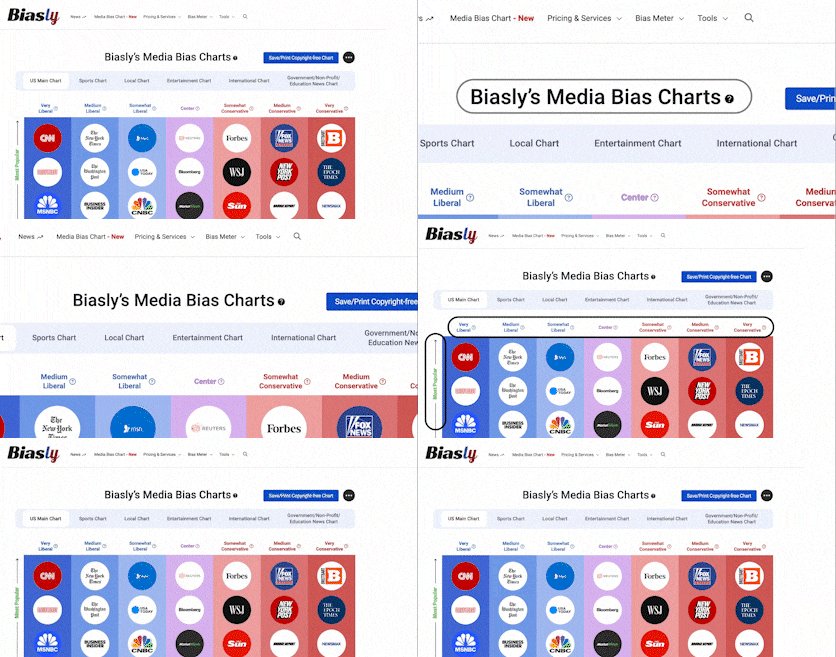
This contrasts with outlets funded by outside investors, who may influence news content. Readers seeking balanced political coverage may compare Mediaite’s framing of issues with outlets rated as Center, Somewhat Right, or Lean Right on our Media Bias Chart, or explore other national papers on our Similar Sources page.
Notable Contributors and Authors
Mediaite employs a range of diverse perspectives that are deeply familiar with U.S. politics. One notable example is Jennifer Bowers Bahney, a two-timed-award nominated author, with over 30 years of experience in journalism. Another notable example is Sarah Rumpf, a contributing editor who focuses on law, politics, and the media. She has written for Fox News, the National Review, and The Daily Beast.
Related Tools and Resource Pages
To better understand how Mediaite fits into the broader media landscape, we recommend exploring these helpful resources:
- Media Bias Chart: See where Mediaite ranks among hundreds of media outlets across the political spectrum.
- Political Bias Chart: Visualize political slants of news sources across various policy areas.
- Journalist Bias Analytics Platform: Explore how individual journalists contribute to bias within their publications.
- Politician Bias Analytics Platform: Compare how politicians are framed differently by Mediaite and other outlets.
- Media Literacy Education Platform: Learn how to critically assess media sources, bias techniques, and news reliability.
Frequently Asked Questions
Mediaite is rated as Medium Left based on Biasly’s media bias algorithm, which assesses sentiment, article framing, and policy favorability.
Mediaite is not widely known for promoting fake news, but some stories have been shown to have selection and omission bias.
Biasly uses a combination of AI sentiment analysis and human analyst review to assess tone, fact accuracy, source quality, and media bias indicators. Learn more on our Bias Meter page.
Generally, yes, though partisan framing and selective reporting can affect perceived reliability.
Ratings are based on recent news using data science and A.I. technology.
Military Spending
| Date | Sentiment | Associated Article | Snippet |
|---|---|---|---|
| 08/25/2019 | 75% For | Trump Family Detentions Flores Agreement (link) | So, of course, the Trump administration is doing the opposite in a baldfaced |